19 Clothes Rail and Walk-In Closet Ideas for Better Storage
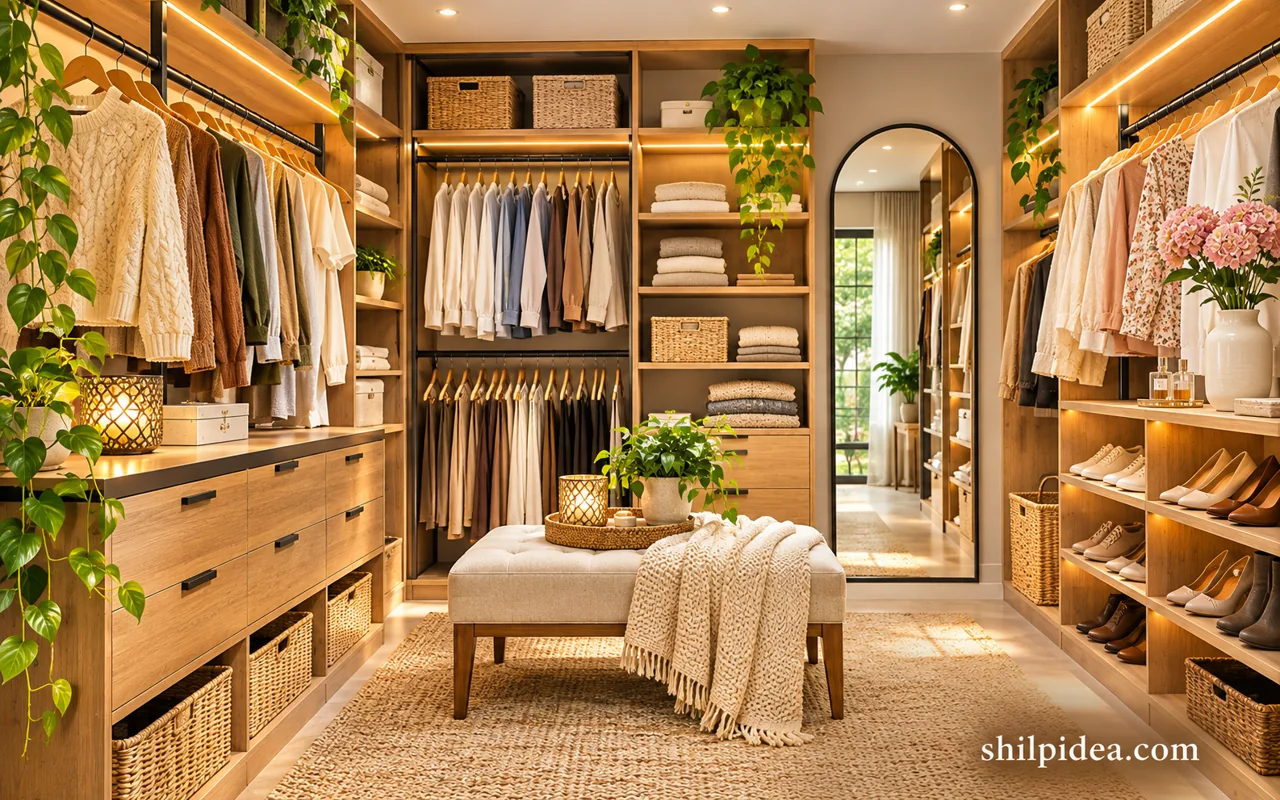
A crowded wardrobe makes a bedroom feel smaller. These clothes rail and walk-in closet ideas help you see your outfits, reclaim floor space, and stop accessories piling up.
Combine rails, shelves, drawers, and baskets without replacing every cabinet. A small corner benefits from the zoning used in compact entryway storage, especially when everyday pieces stay within easy reach.
From fitted walk-ins to freestanding rails, compare hanging heights, shelves, light, and shoe zones. Borrow ideas from bench-and-basket layouts where a low storage shelf could serve two purposes.
1. White Walk-In Closet with Balanced Hanging Rails
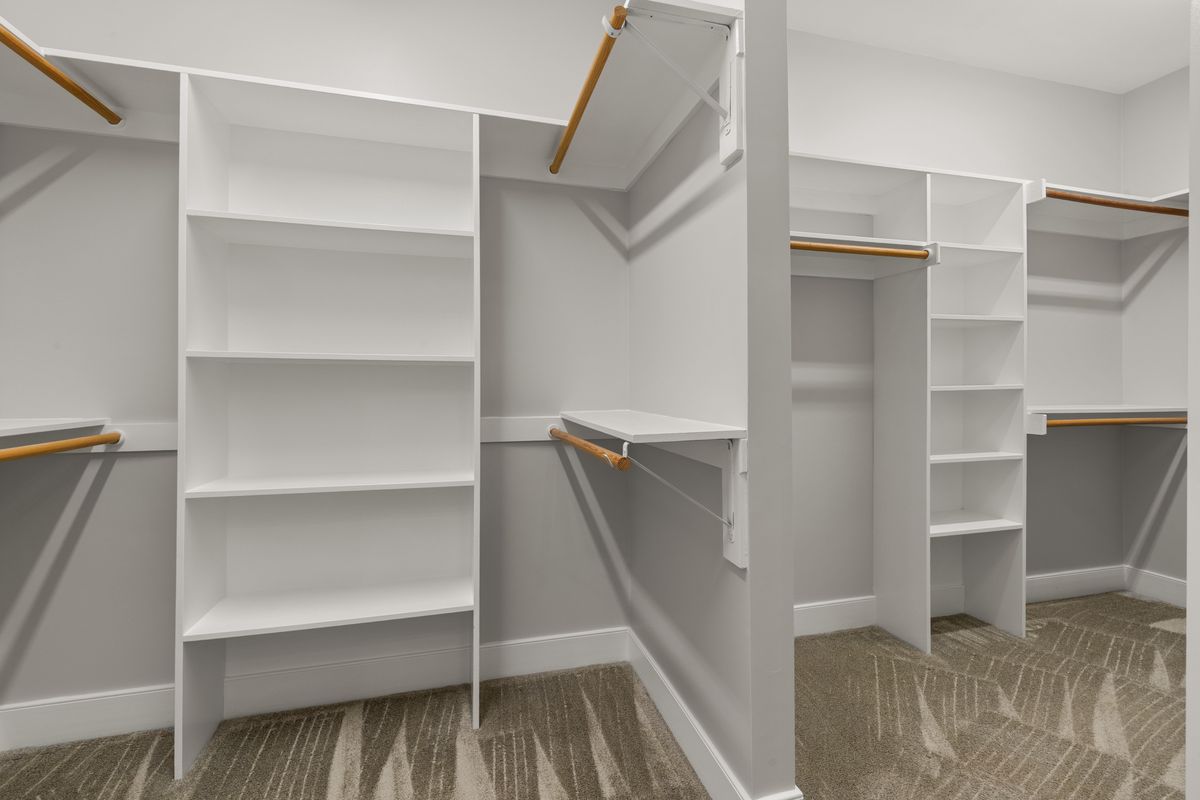
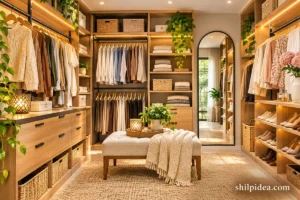
A symmetrical walk-in gives clothes their own zones instead of crowding everything onto one pole. Reserve one side for short shirts and jackets, and leave a full-height section for dresses or long coats. The pale framing makes the rail layout easy to read. Before buying fittings, measure your longest garment and the reach to the upper bar so the layout stays comfortable after clothing is added.
2. Arrange Rails Around a Daylit Closet Window
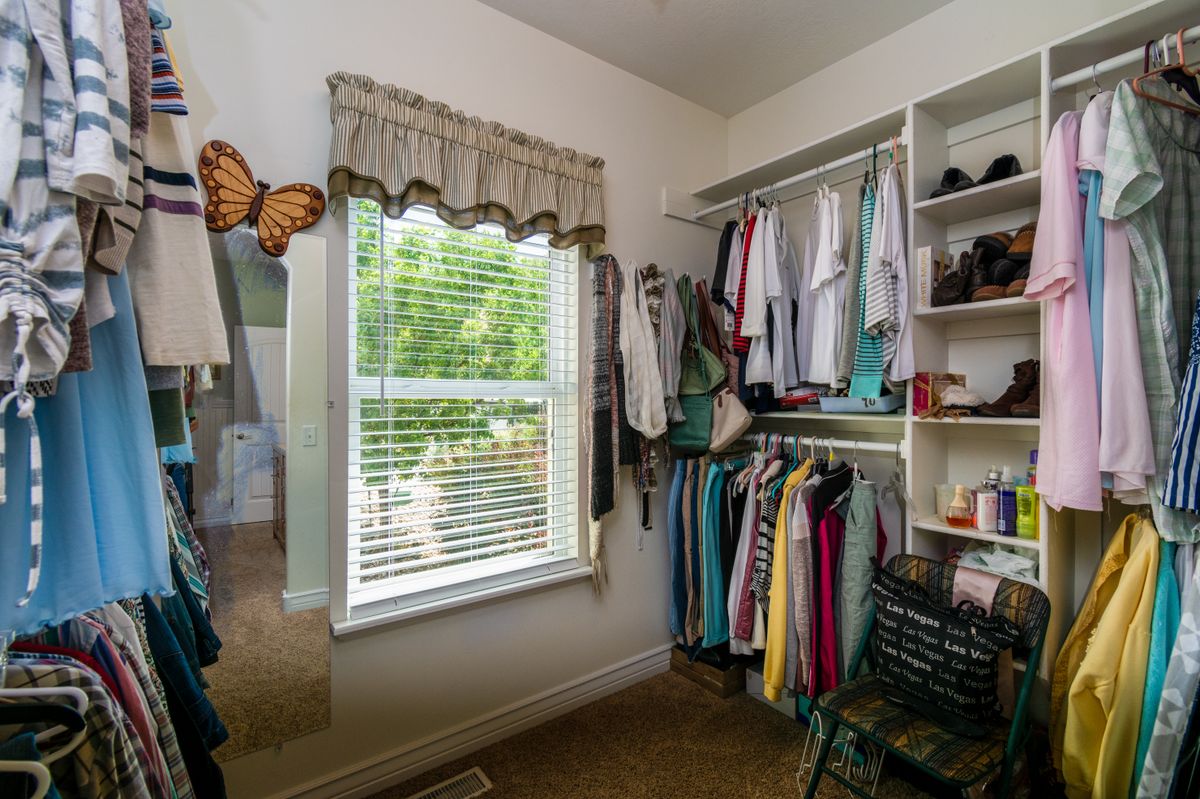
A window can brighten a dressing space, but an oversized wardrobe unit may block the light. This example uses the wall around the opening while keeping the center clear. Put frequently worn outfits on the nearest rail, with lighter accessories on side shelves. Keep fabrics away from moisture-prone window frames and use blinds or a shade if direct sun could fade dark garments. Natural light also makes it easier to check colors.
3. Plan an Adjustable Rail-and-Shelf Recess
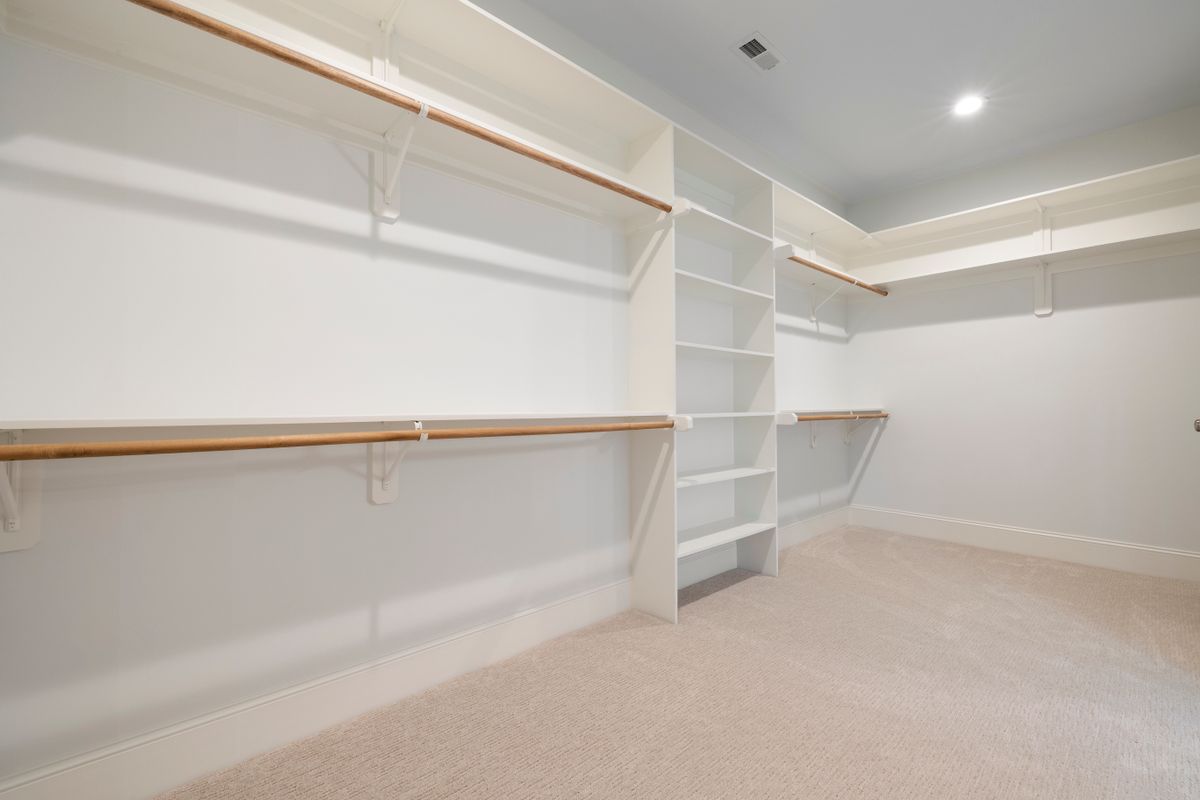
An empty closet shell shows why planning the structure first matters. Start with the clothes you actually own, then assign a longer hanging section and several short-hang bays before fitting shelves. Adjustable holes or tracks are useful when your collection changes by season. Set the bottom shelf high enough to clean beneath it, and do not overload unsupported spans. This configuration suits a reach-in recess as well as a separate walk-in.
4. Place a Drawer Tower Between Hanging Sections
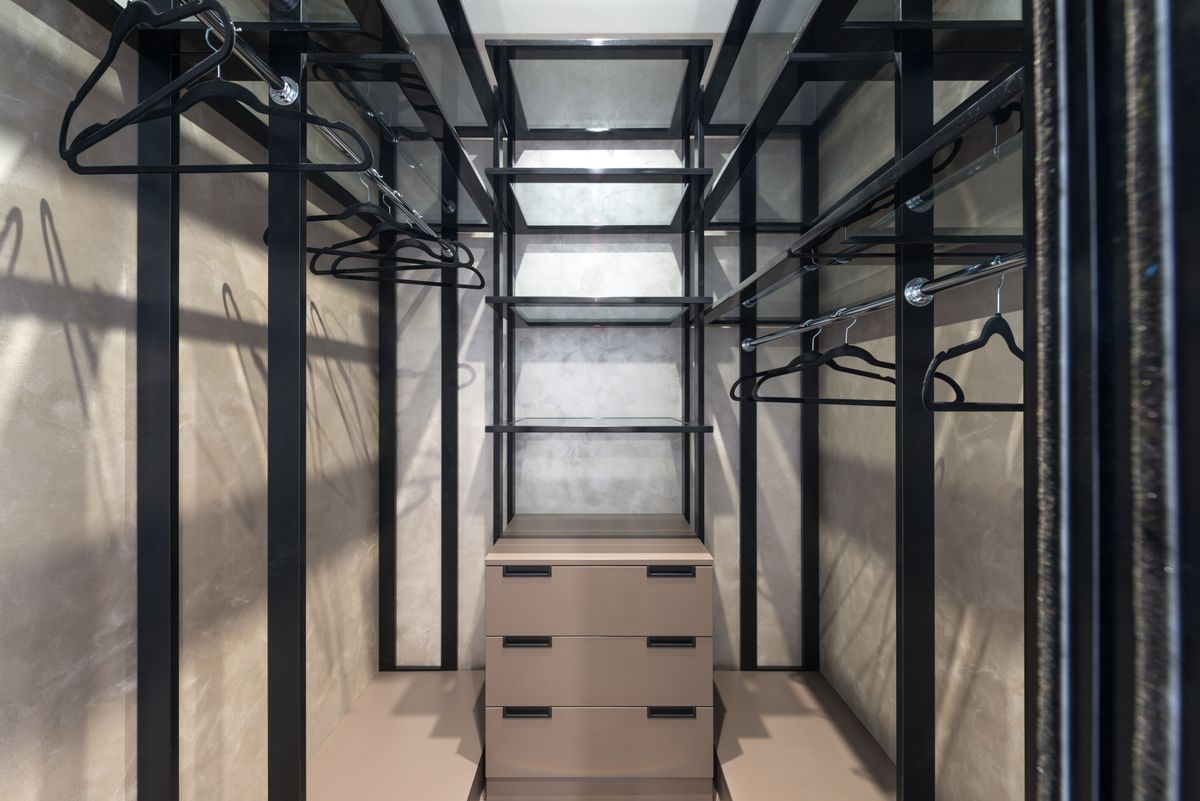
A central drawer bank breaks up a long wall of clothing while giving small items an enclosed home. Dedicate shallow drawers to socks, belts, and folded tees; keep the adjacent rails for pieces that wrinkle. In a shared closet, the drawers can also divide two personal zones. Test drawer extension against the opposite wall before installation, and avoid placing a pull-out where it would block the only walkway.
5. Mix Warm Wood Shelves with a Simple Hanging Rod
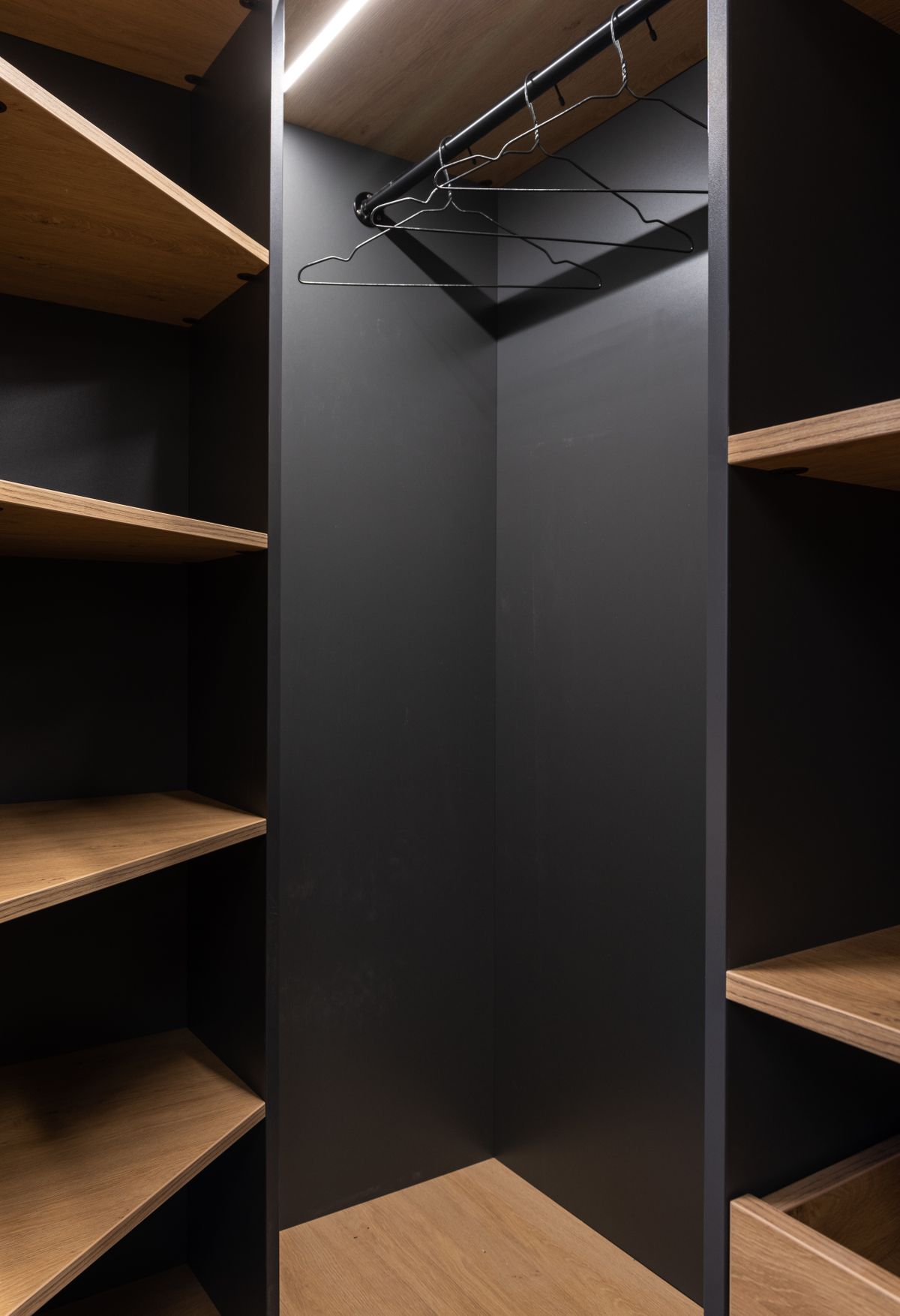
Wood-finish shelves soften the practical look of a metal hanging rod. Keep the rail at a usable height, then position a shelf above for folded items or lightweight storage cases. The open frame works particularly well for a curated wardrobe rather than an overflowing one. Leave a little space between hangers so sleeves do not crush together. Choose a finish that coordinates with the bedroom furniture instead of introducing too many competing wood tones.
6. Build a Dressing Zone Around a Full-Length Mirror
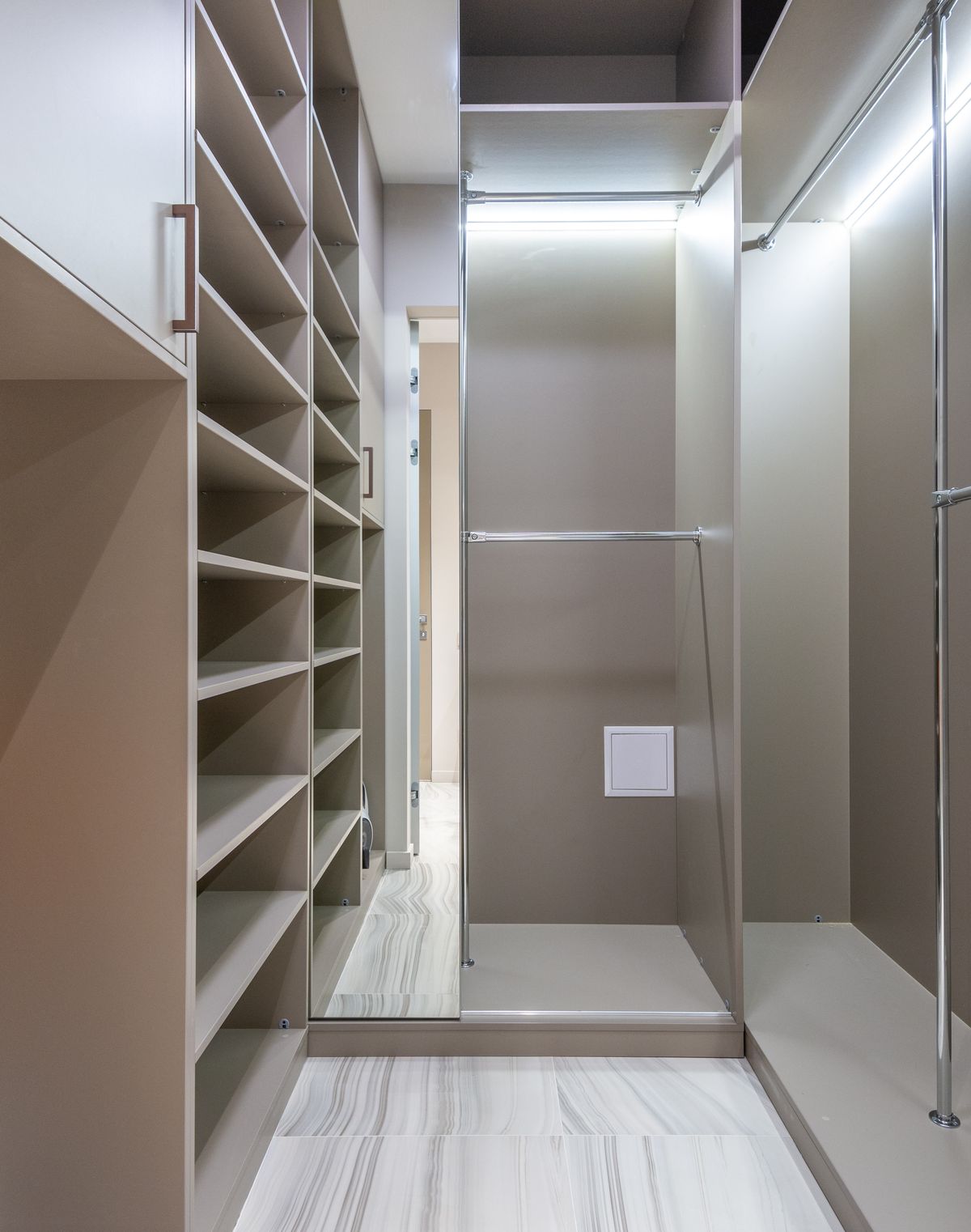
A mirror near the wardrobe turns an ordinary storage wall into a useful dressing station. The open shelving shown here leaves room to check an outfit without carrying items across the bedroom. Allow enough clear floor for stepping backward and opening drawers, and position lighting so it reaches your face rather than shining only from behind. For more placement options, explore full-length mirror styling ideas in other small rooms.
7. Use Wall-Mounted Wire Shelving for Flexible Storage
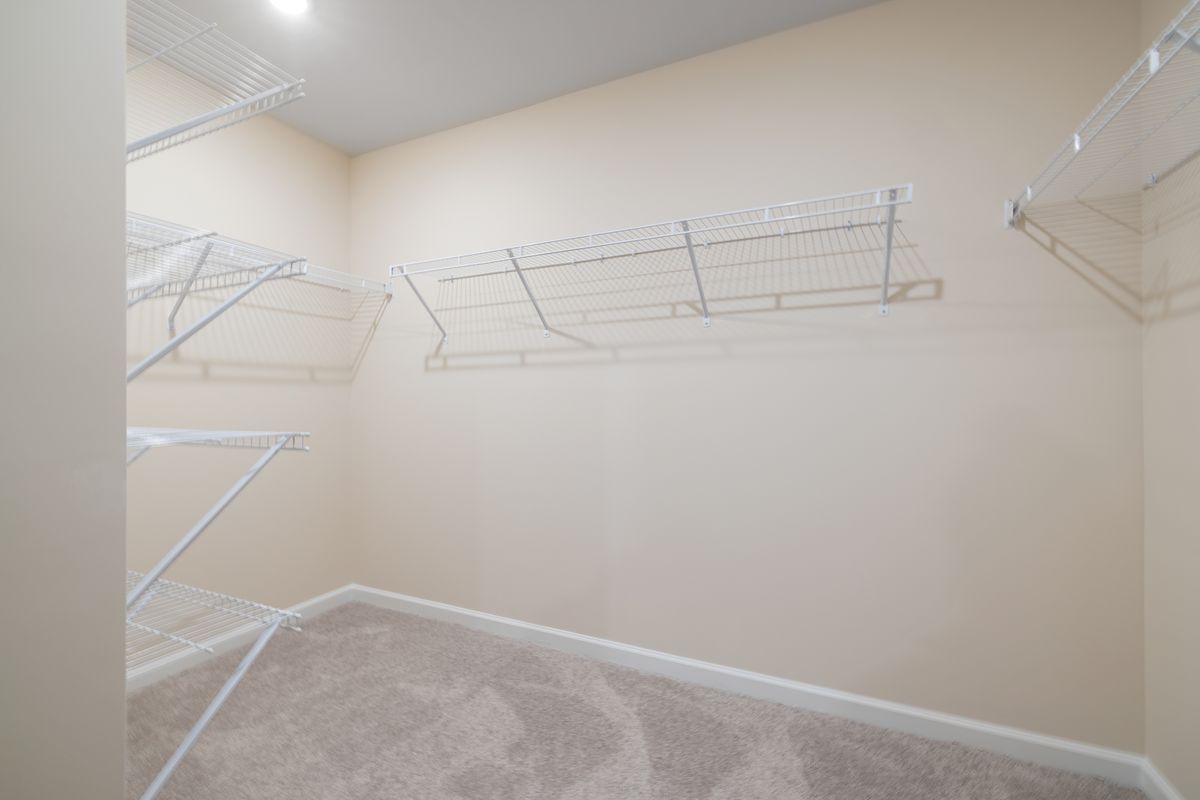
Wire shelving is a straightforward choice when you want visible storage without heavy cabinetry. The empty setup in the photo can support folded clothing, baskets, and a separate hanging rail once the system is correctly installed. Choose fittings rated for the wall type and the intended load, and use a solid shelf liner for delicate knits that may catch on wires. Keep the highest level for seasonal storage rather than items needed every morning.
8. Reserve the Top Shelf for Seasonal Baskets
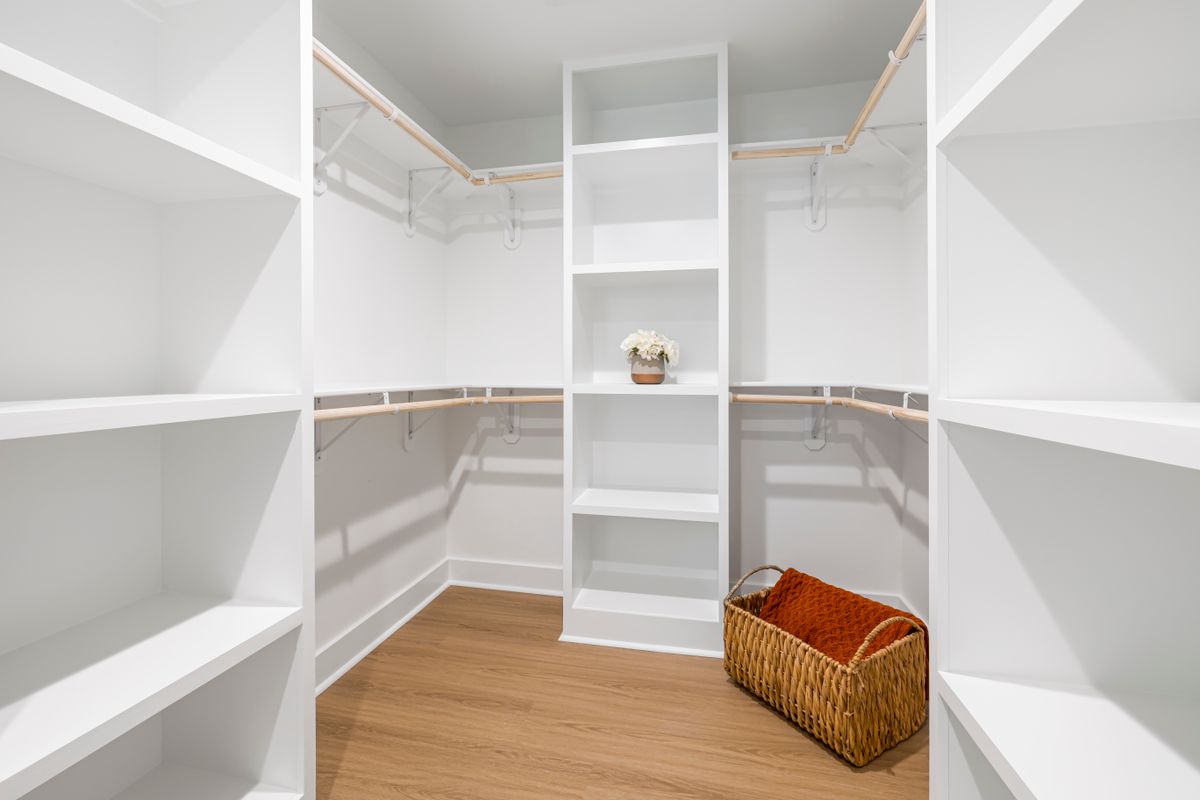
The upper reaches of a walk-in are useful for things you do not need daily. Lightweight labeled baskets can hold scarves, spare linens, or accessories, leaving the lower rail for clothing in rotation. The photo shows a light-colored closet shell with storage space above; fill it thoughtfully instead of packing every open compartment. Keep heavy objects below shoulder height, and never climb on a drawer or unstable chair to reach an upper basket.
9. Pair Shoe Shelves with the Main Clothing Rail
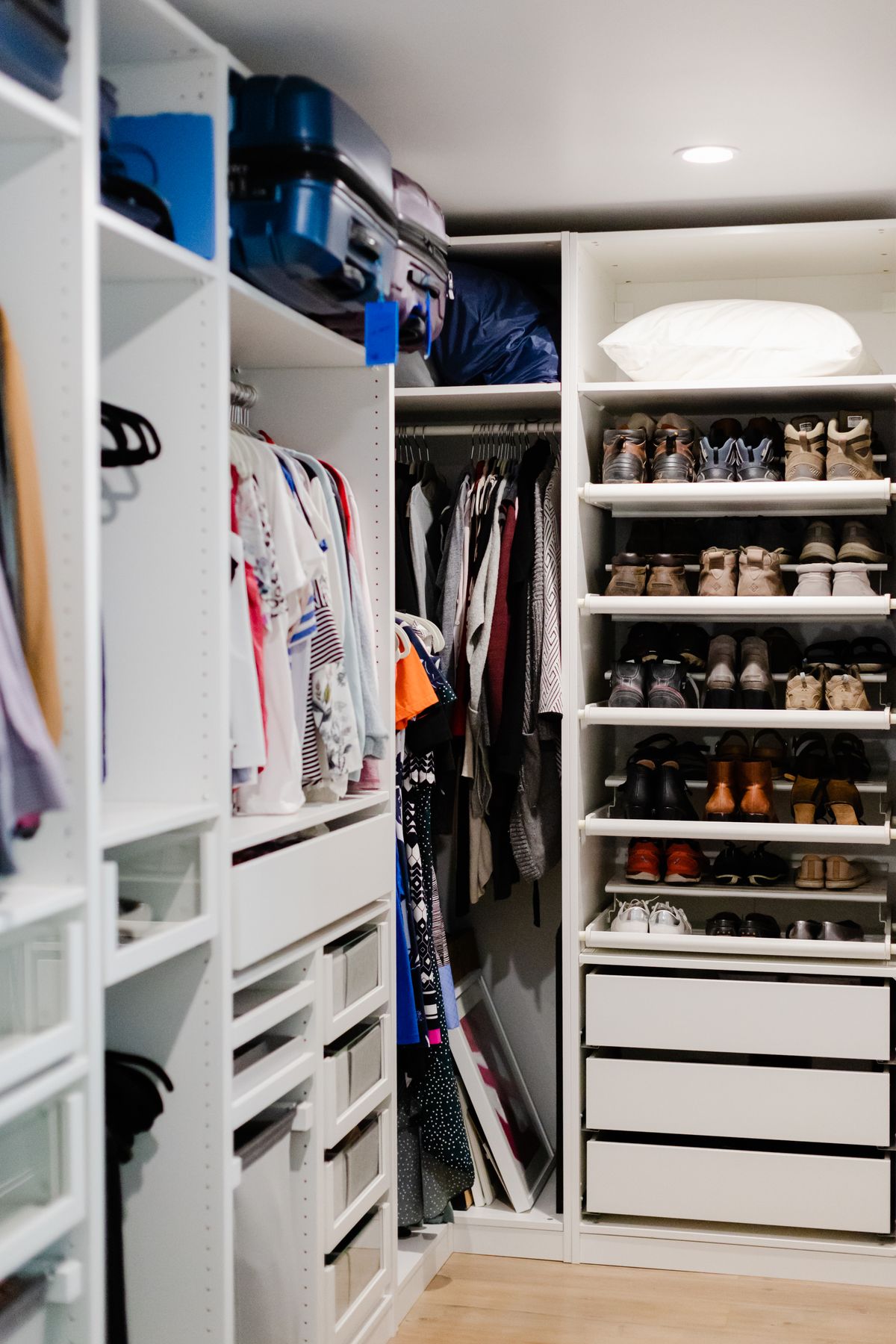
A rail-and-shoe combination keeps complete outfits in one place. Arrange everyday footwear on open shelves below eye level and store special-occasion pairs in boxes above or elsewhere. Give shoes a little room to dry before returning them to a closed cabinet, especially after wet weather. This photograph shows how a dedicated footwear zone can coexist with hanging clothes without leaving pairs scattered on the floor. Keep a few empty spaces for easy retrieval.
10. Dedicate a Lower Bay to Boots and Bags
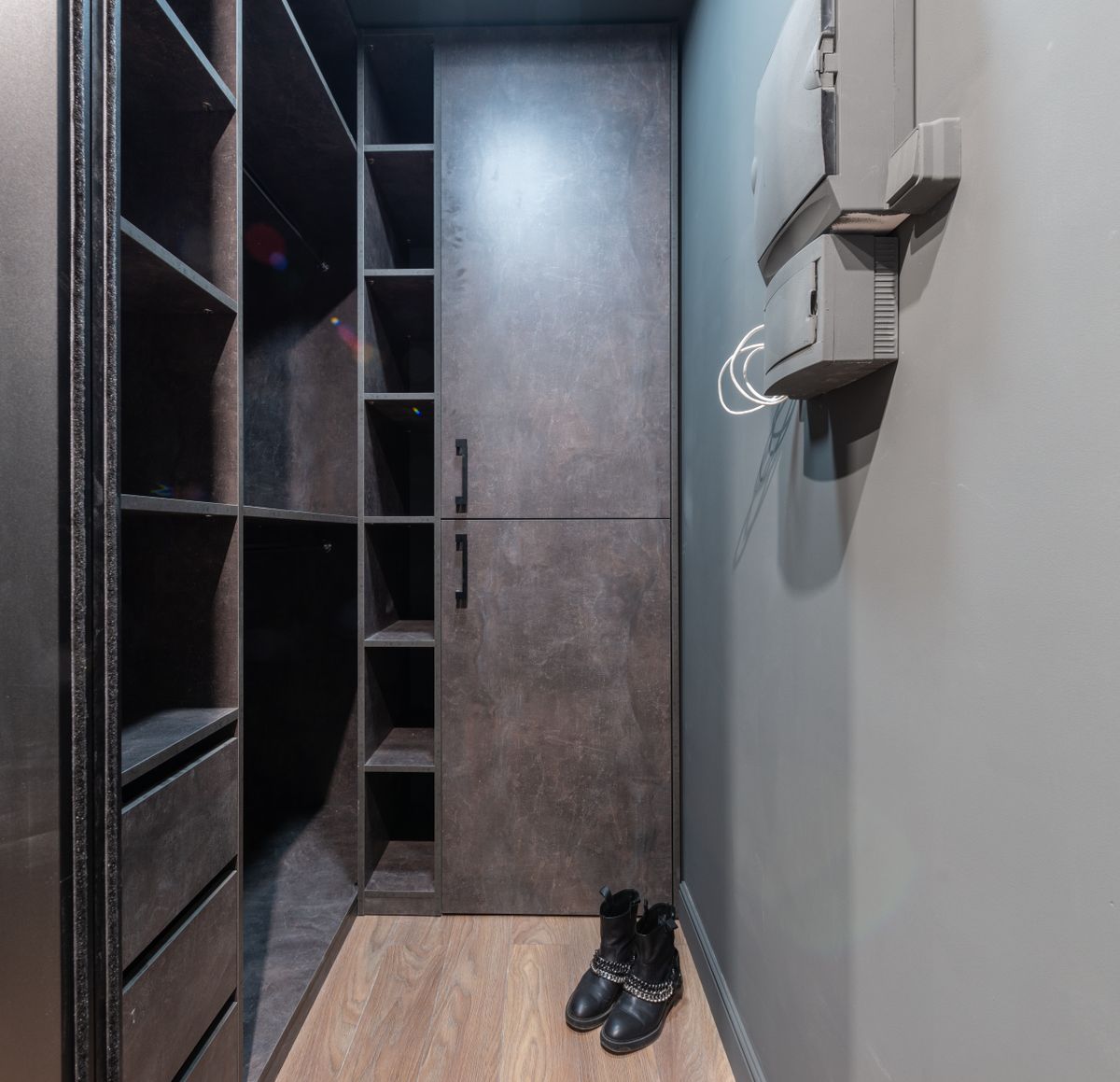
Bulky boots do not fit neatly into the same cubbies as flats or folded knitwear. Assign a lower shelf with more vertical room for taller pairs, and place handbags or small containers on the adjoining level. The photographed wardrobe has a generous open storage area; matching that proportion to your own shoe sizes is more important than copying its finish. Use washable floor protection beneath frequently worn shoes and avoid pressing leather bags flat against a wall.
11. Keep a White Wraparound Shelf System Visually Light
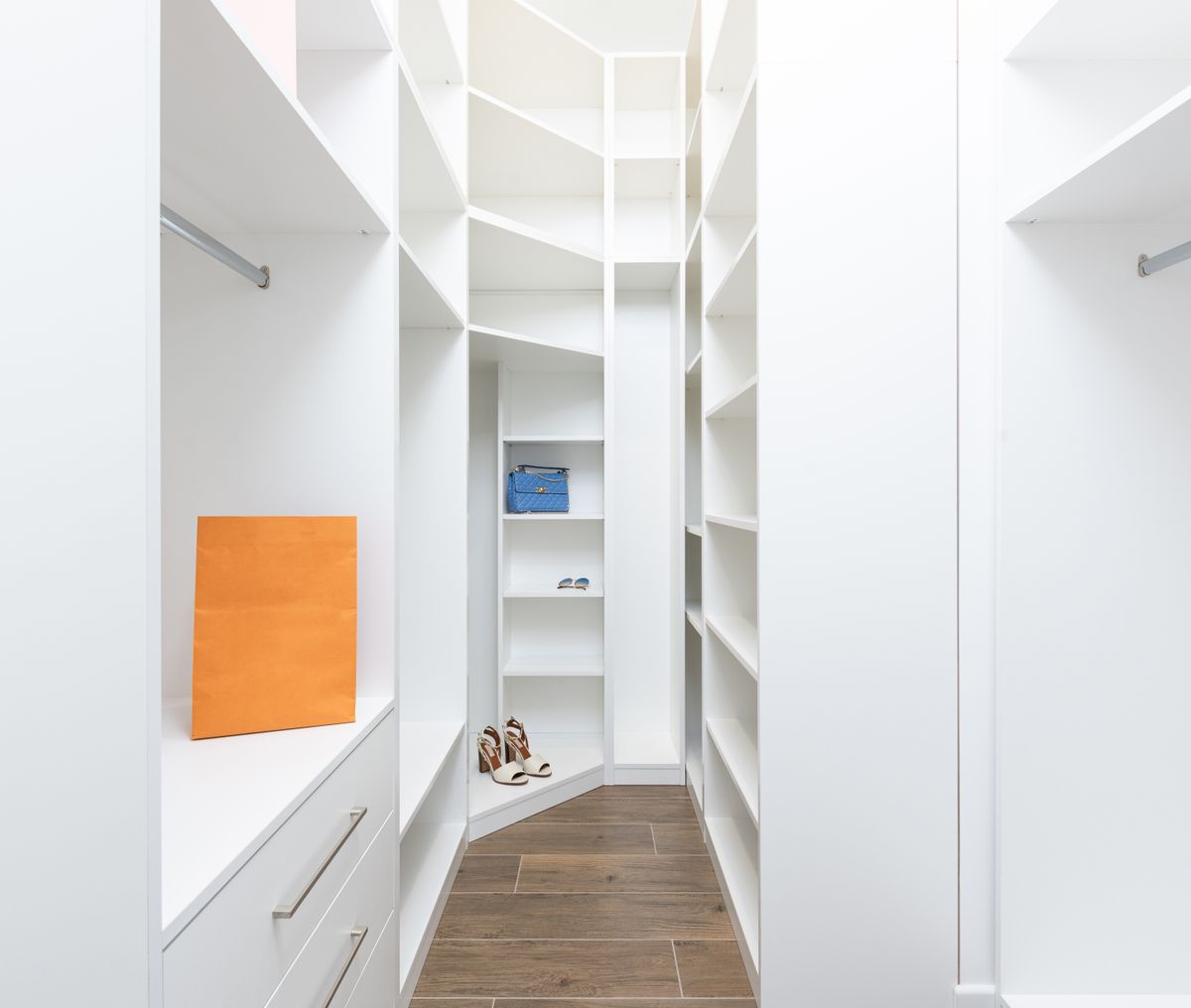
A white shelf-and-rail system can make a compact dressing area feel orderly because the framework visually recedes. Rather than stacking garments to the ceiling, alternate hanging, folded shelves, and one or two covered boxes. In the empty example, the available compartments are easy to see; the real design challenge is leaving enough breathing room once the clothes arrive. Choose a consistent hanger shape and repeat only a few basket finishes for a calmer effect.
12. Choose Dark Wood Shelves for a Boutique Feel
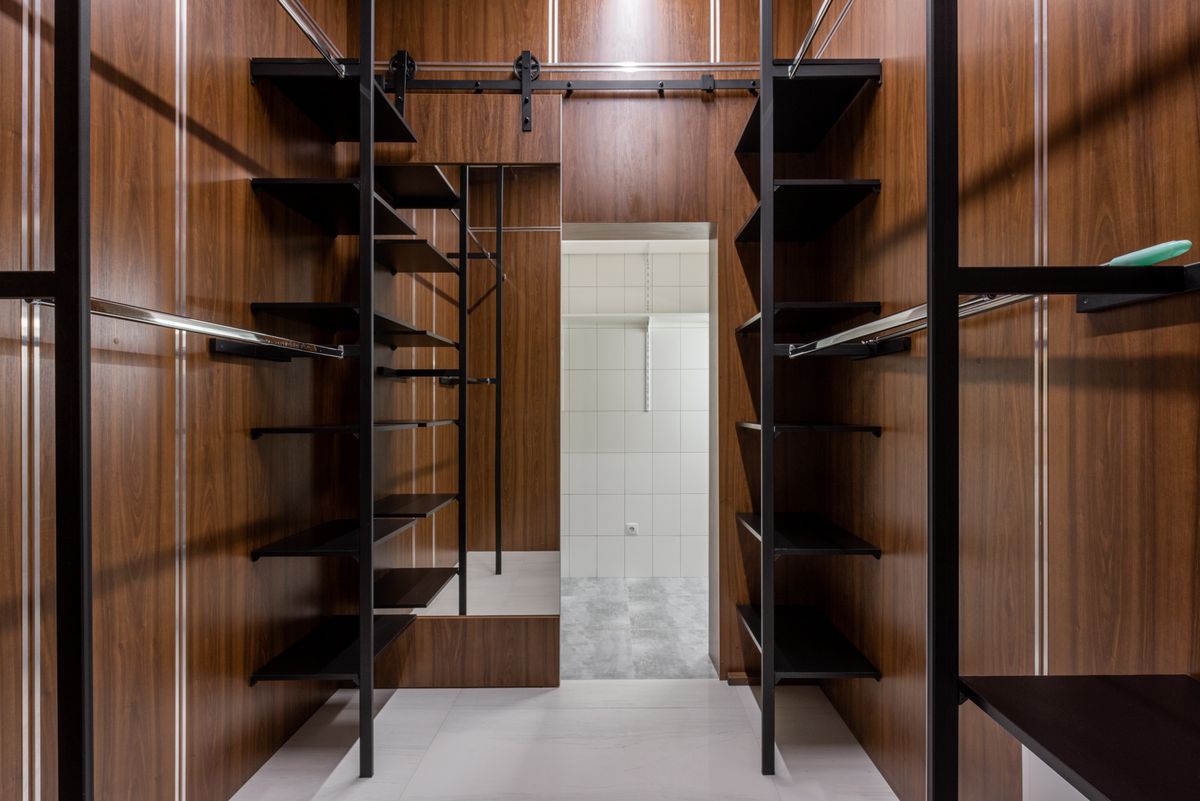
Deep wood tones create a more tailored dressing-room atmosphere, especially beside a mirror and warm overhead lighting. The photo shows an unfurnished closet interior, so think of it as a layout reference rather than a finished clothing display. Add soft light inside deep shelf cavities so dark shoes do not disappear into shadows. Limit decorative accessories to one or two positions and keep the middle shelves for items used most often.
13. Start Small with a Freestanding Clothes Rail
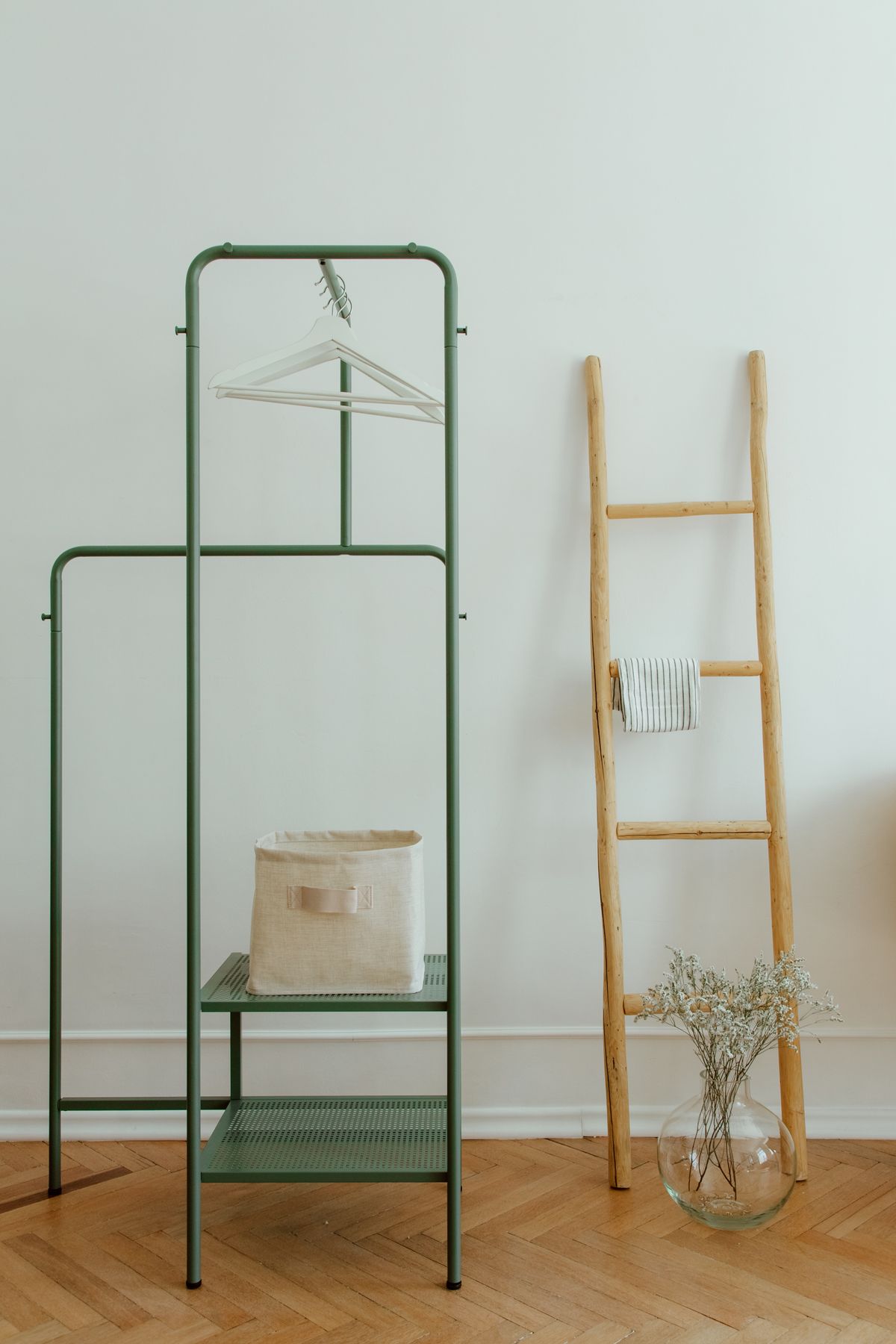
A slim freestanding rail is an option when built-in cabinetry is not practical, including in a rental or temporary bedroom. It offers quick access to the outfits worn during the week, but it works best when you treat it as a small edited wardrobe rather than overflow storage. Check its weight rating and floor stability before loading heavy coats. A narrow basket below the rail can contain folded accessories without creating a separate pile on the floor.
14. Use a Wooden Clothing Rail in a Soft Neutral Room
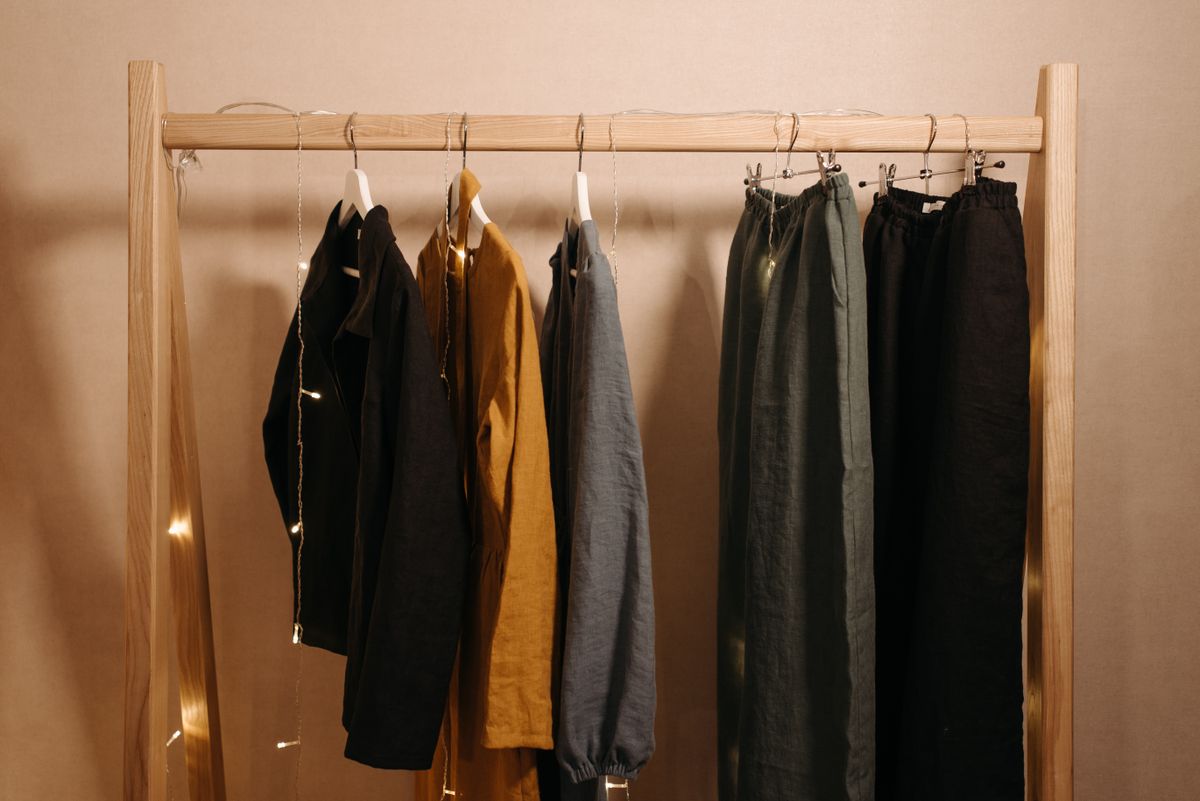
A simple wooden rail can feel like part of the bedroom furniture if its finish coordinates with the bed frame or side table. Keep outfits grouped in loose categories, then leave the lower area clear enough to sweep. The photographed styling adds a little ambient light, but do not drape electrical lighting directly against clothing or leave decorative lights unattended. Pairing the rack with a closed chest nearby helps conceal items that are better folded.
15. Add a Handy Basket Beneath an Open Rail
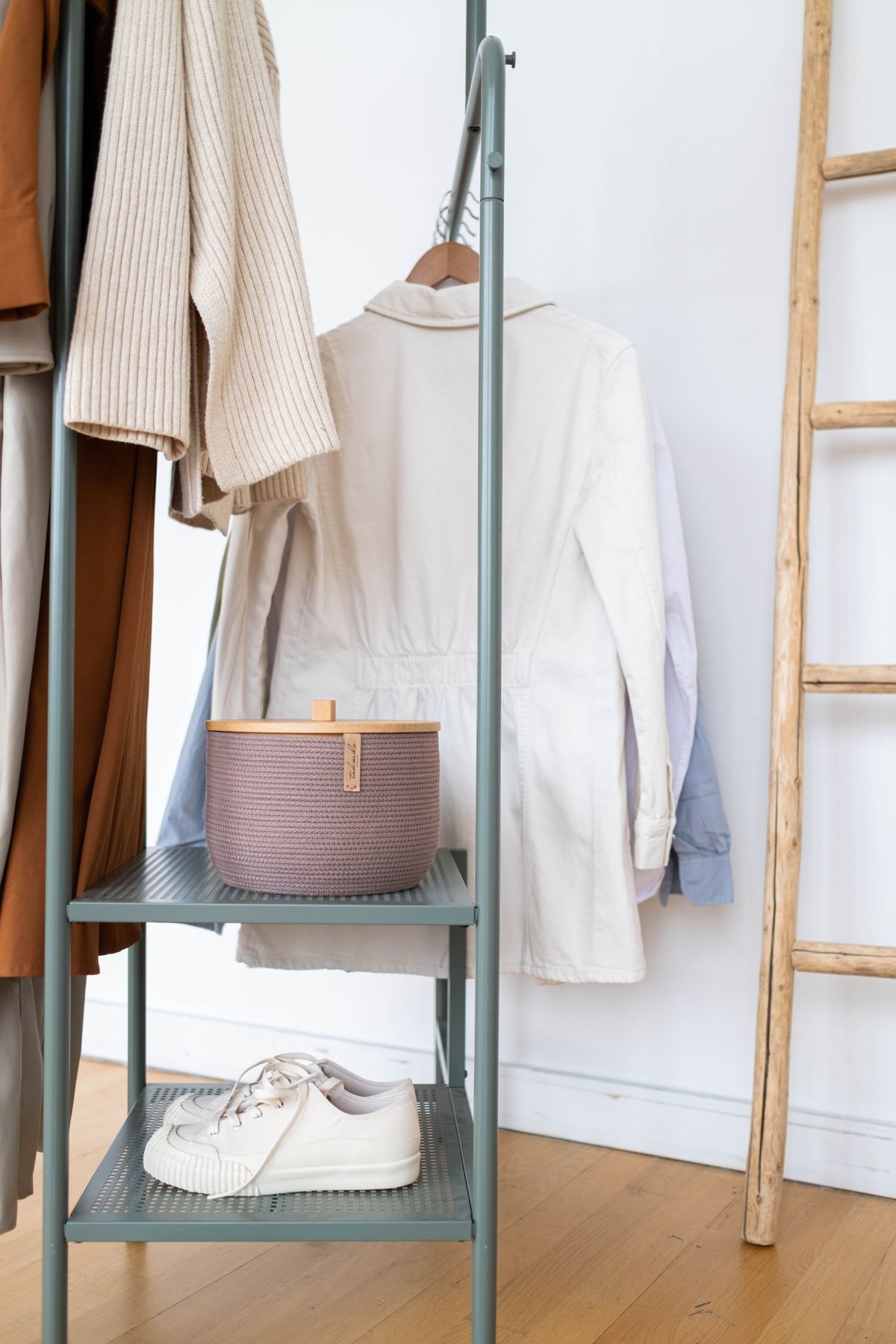
The space beneath hanging pieces is often wasted. A compact basket can catch belts, spare hangers, and soft accessories while the visible rail remains easy to browse. The reference image shows a basket close to layered clothing rather than a large built-in unit, so this idea is especially suitable for a guest room or studio apartment. If the entrance also collects coats, winter entryway storage principles can help you separate outerwear from daily bedroom garments.
16. Try a Monochrome Capsule Rail for Faster Outfits
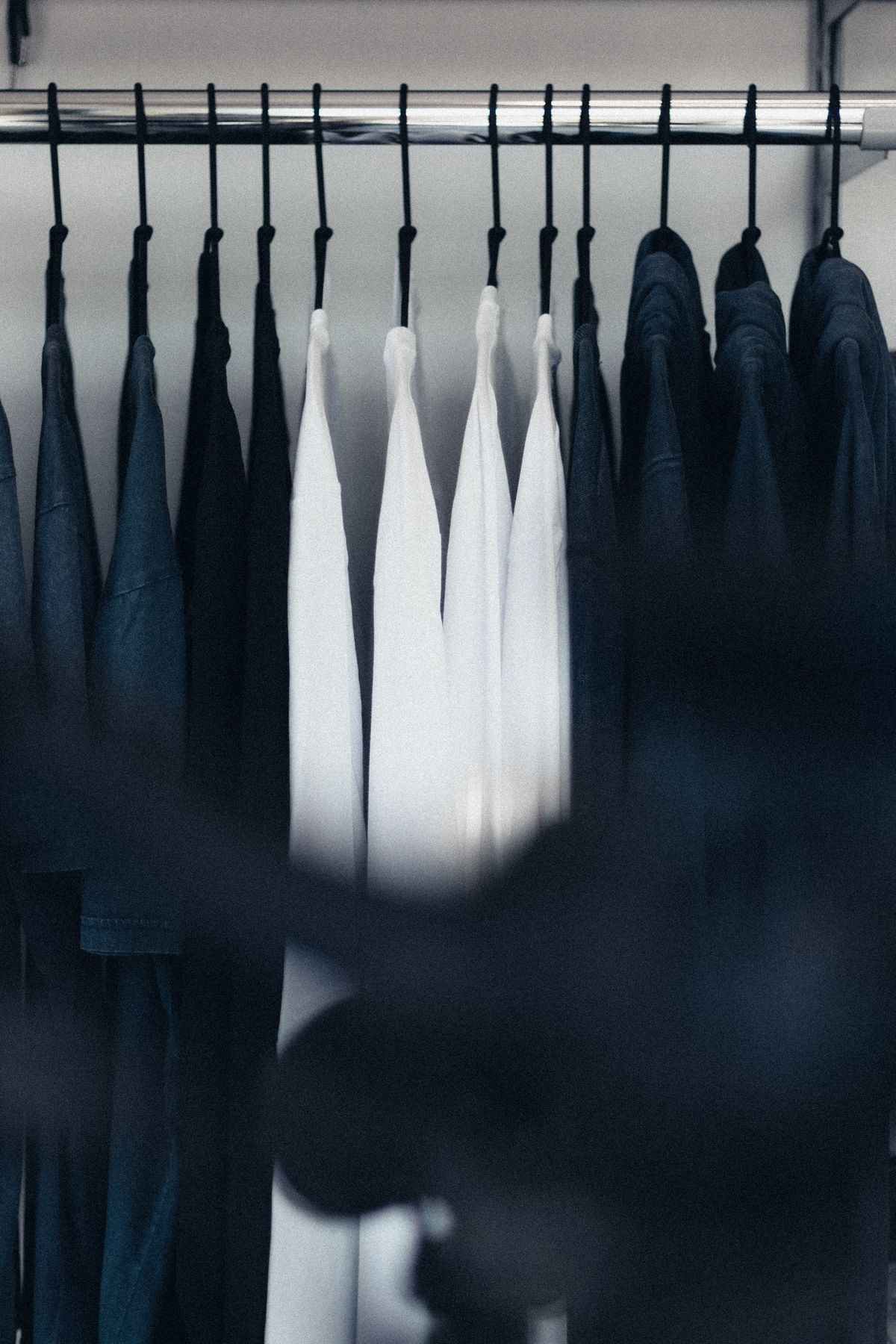
A black-and-white rail is less about decor perfection than spotting combinations quickly. Arrange pieces by category first, then move from light to dark within each group so trousers, shirts, and outer layers are easy to find. This approach can help a small wardrobe look less busy without buying any additional furniture. Keep room for frequently worn accent colors if you use them; a capsule layout should support your actual routine, not limit it artificially.
17. Coordinate Hanger Shapes to Gain Usable Rail Space
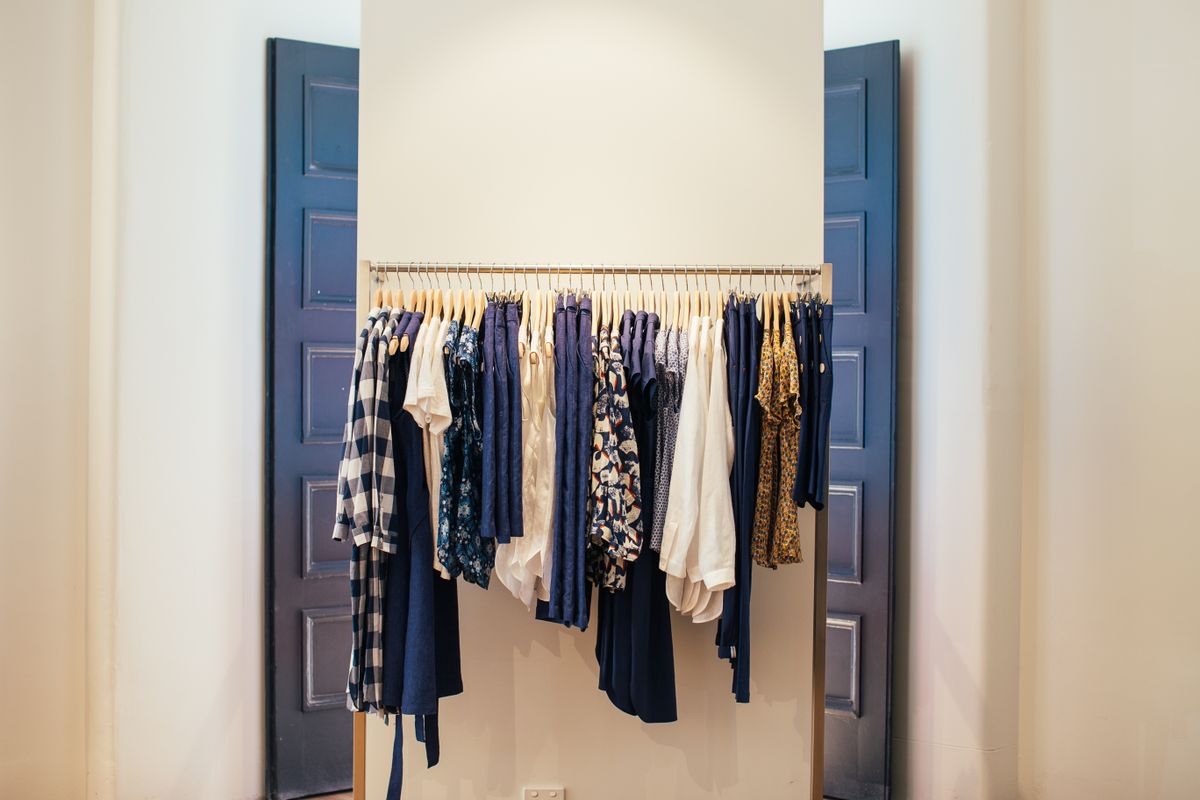
Matching hangers create a cleaner line along the rail and can make items easier to slide and inspect. Use sturdy shapes for jackets, nonslip finishes for delicate tops, and avoid overcrowding even when slim hangers save a little space. The photographed wardrobe offers a good close-up of the hanging area rather than a complete room makeover. Remove empty hangers as laundry cycles through so they do not hide usable capacity at the back.
18. Arrange Clothes by Color Inside Existing Cabinets
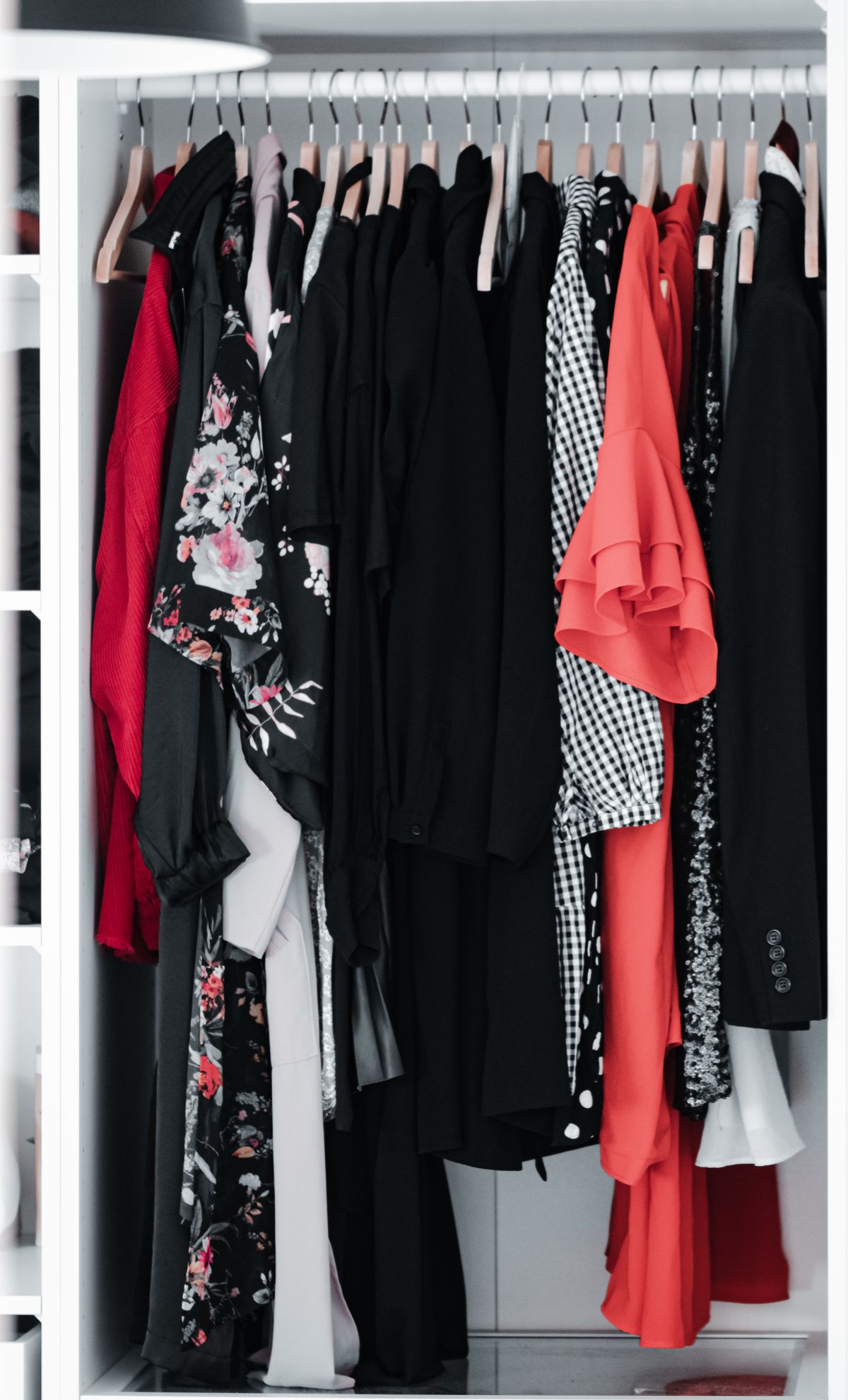
You can refresh an existing closet without replacing its frame. A color progression helps the eye locate a particular shirt, while grouping similar garment types prevents the rail from becoming a jumble of lengths. The photo shows varied clothing already stored on hangers, making it a useful reference for this low-cost reset. Make a small donation pile before reorganizing, then return only clean pieces that fit and still suit your daily wardrobe.
19. Fit Vertical Shelves into a Narrow Wardrobe Bay
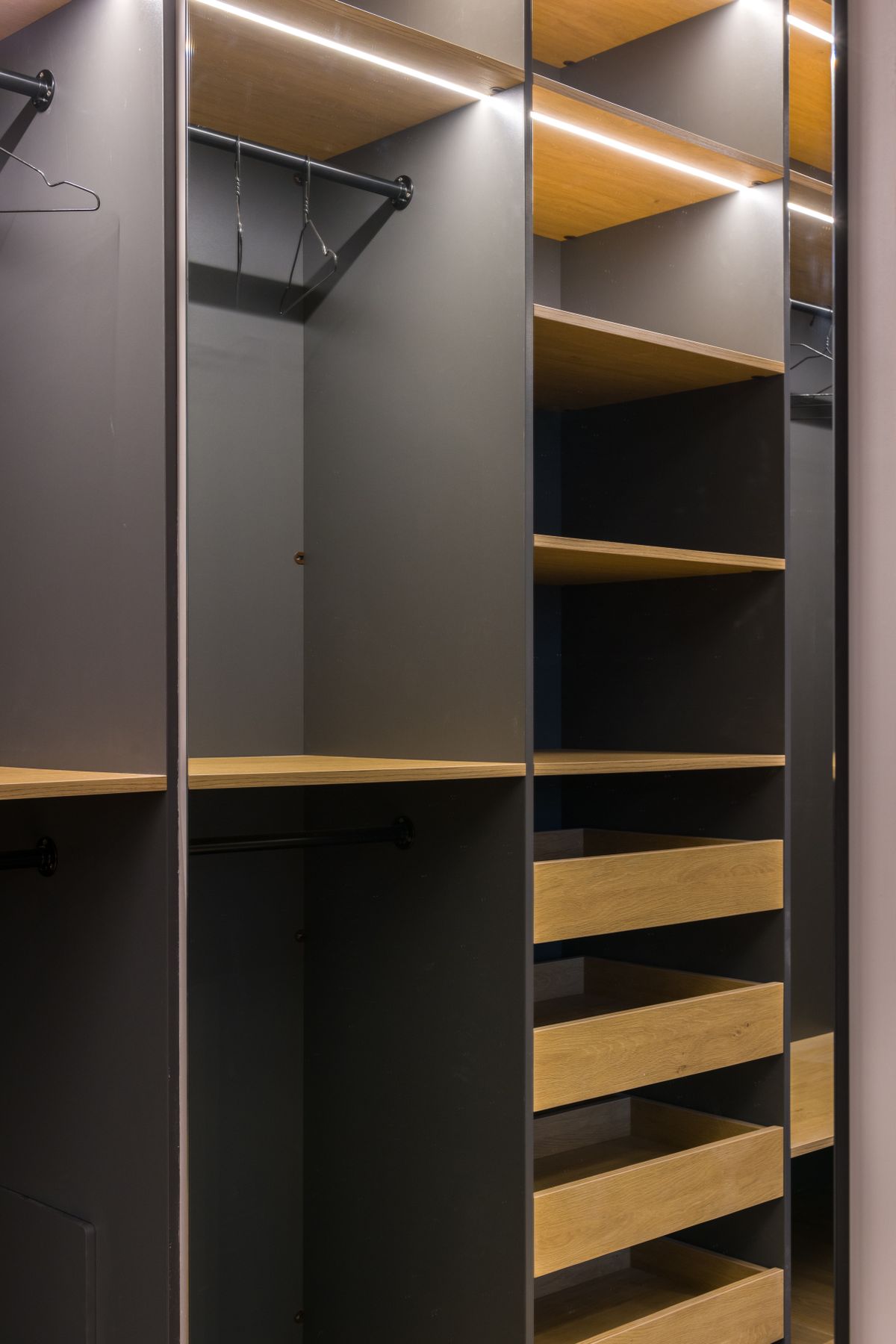
A tall, narrow wardrobe section can carry more than one function. Keep a short rail above a shelf, then use the lower portion for stacked storage cases or shoes depending on the space available. The empty built-in shows the vertical framework clearly; verify hinge, door, and drawer clearance before buying any inserts. If a nearby room needs supplies stored in the same way, small craft-corner storage ideas can help with labeled bins and flexible shelf heights.
More Small-Space Storage Projects to Try
A good clothing rail works best when the surrounding room has a place for shoes, bags, and day-to-day clutter. These related Shilpidea projects offer more ways to keep small corners practical, organize items by frequency of use, and make storage feel like part of the room instead of an afterthought. Choose the idea that matches your space and your routine.
- Mudroom bench and basket storage ideas
- Small corner entryway organization ideas
- Winter coat and boot storage ideas
- Large mirrors for bedrooms and hallways
- Small-space craft corner organization ideas
- Modern living room layout inspiration
Which closet arrangement would solve your biggest storage problem: double rails, open shelves, or an accessible shoe section? Share your favorite setup and the challenge you want to tackle next in the comments.


















0 Comments