15 Natural Thanksgiving Table Ideas for a Cozy Gathering
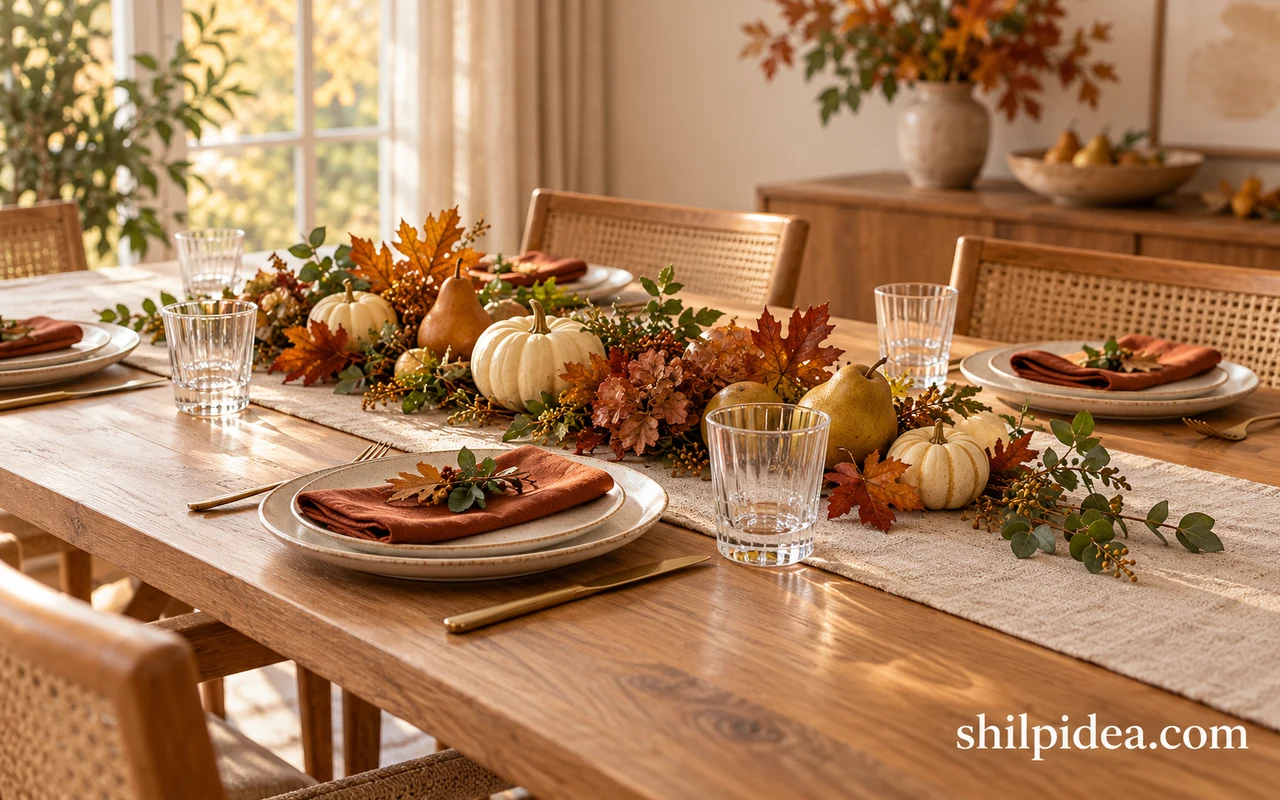
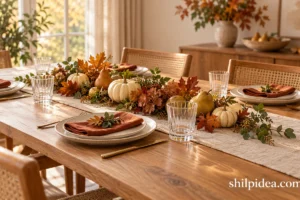
Natural Thanksgiving table decorations bring warmth through simple materials: a few pumpkins, autumn leaves, soft linen, or a small arrangement of flowers. The most useful ideas leave plenty of room for the people and food.
These 15 creator examples focus on color, texture, and table layout rather than complicated projects. Choose one main feature, then add only the details that support it.
Start with the dishes and table you already have. A small seasonal change can make them feel ready for a gathering.
1. Let White Flowers Brighten a Rustic Table

White flowers create a fresh center against warm wood and muted table linens. The darker flower centers add enough contrast that the arrangement does not disappear into the pale dishes. Borrow the balance with a modest bunch rather than a large formal display. Keep its height low enough for guests to see one another comfortably across the table.
See the original project: Let White Flowers Brighten a Rustic Table by Sugar and Charm.
2. Run Pale Pumpkins Through Autumn Leaves

A line of pale pumpkins becomes more interesting when loose leaves weave between them. The leaves provide a warm background, so the pumpkins can stay simple and undecorated. Choose a few different sizes and leave natural gaps for serving dishes. Keep any gathered material off food-contact surfaces and remove pieces that shed onto the place settings.
See the original project: Run Pale Pumpkins Through Autumn Leaves by Ella Claire Inspired.
3. Build a Woodland Runner with Mixed Textures

Mossy greens, seed heads, and small gourds give this table a collected woodland character. The different textures are more important than perfect symmetry. Start with a contained section down the middle rather than covering the entire surface. A washable liner beneath natural material can protect the table and make it easier to clear before the meal is served.
Get the tutorial: Build a Woodland Runner with Mixed Textures by Home Is Where the Boat Is.
4. Use Softly Colored Heirloom Pumpkins

Soft peach, cream, and muted green pumpkins make a gentler seasonal palette than bright orange alone. Their uneven shapes bring variety without requiring extra patterned accessories. Try a handful in the center of the table and repeat one of the colors through linen. Leave the stems visible; they are part of what gives the arrangement its natural character.
See the original project: Use Softly Colored Heirloom Pumpkins by Ella Claire Inspired.
5. Keep a Round Table Arrangement Compact

A round table benefits from a centerpiece that gathers inward rather than stretching from end to end. This arrangement keeps the greenery and pale pumpkins together, leaving the place settings readable around the edge. Use your largest serving platter as a scale reference before choosing the display. Guests should still have comfortable space for glasses and everyday movement.
See the original project: Keep a Round Table Arrangement Compact by 2 Ladies and a Chair.
6. Give a Leaf Garland Room to Breathe

A leafy runner can connect individual pumpkins without needing a solid mass of decoration. Here, the pale pumpkins remain the main shapes while the leaves soften the spaces between them. A few loose turns feel more relaxed than a tightly packed line. Check the table from a seated position so the arrangement does not crowd the nearest plates.
See the original project: Give a Leaf Garland Room to Breathe by Kelley Nan.
7. Use a Pumpkin Shape to Hold the Flowers

A rounded pumpkin-shaped vessel makes the flowers feel connected to the season before any additional decorations are added. The soft colors keep the arrangement warm without relying on a dark orange palette. Use a watertight liner or a suitable vessel inside any decorative shell. Keeping moisture contained matters just as much as choosing the flower colors.
See the original project: Use a Pumpkin Shape to Hold the Flowers by Sanctuary Home Decor.
8. Bring Plaid into the Place Settings

A plaid napkin adds small-scale pattern around simple plates and a natural centerpiece. It gives each setting a finished look without introducing another decorative object. Pull one color from the fabric into the flowers or pumpkins so the table feels connected. A modest fold lets the pattern show while leaving room for utensils and the rest of the meal.
See the original project: Bring Plaid into the Place Settings by Inspired by Charm.
9. Add a Small Rosemary Accent
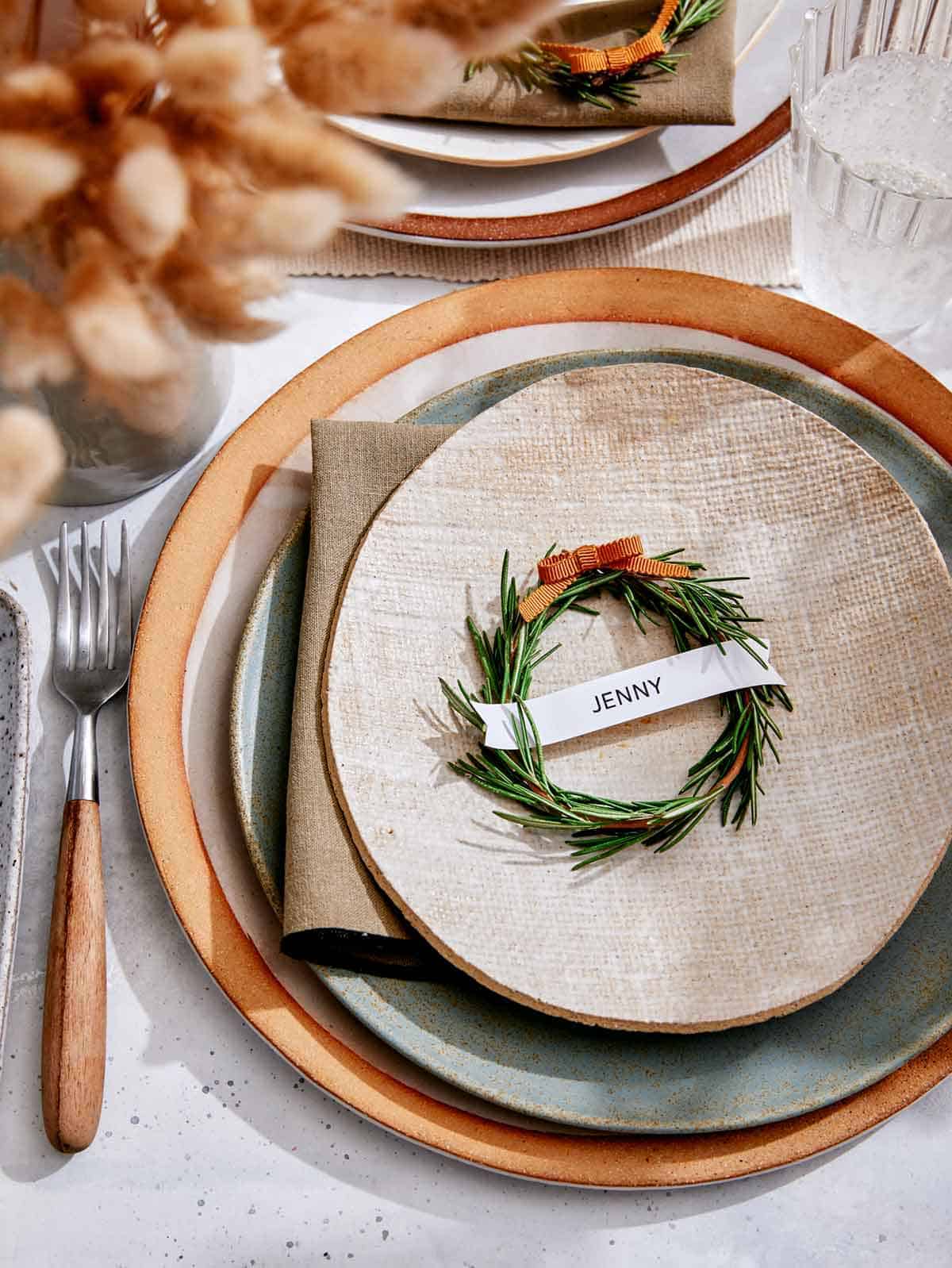
A little rosemary brings a fine, needle-like texture to a place setting. Its green outline works well against pale plates and neutral fabric, especially when the central arrangement is already generous. Treat the herb as one small detail rather than adding several competing motifs. Use clean culinary sprigs and keep any paper labels separate from food and drink.
Get the tutorial: Add a Small Rosemary Accent by Spoon Fork Bacon.
10. Layer a Leaf Shape Beneath Simple Dishes

A leaf-inspired layer beneath the plate adds a seasonal shape without taking over the center of the table. It gives each place setting a little texture and helps connect the dishes to the surrounding greenery. Keep the top plate practical for the meal itself. Decorative materials belong beneath food-safe dishes rather than directly against anything guests will eat.
See the original project: Layer a Leaf Shape Beneath Simple Dishes by Home Stories A to Z.
11. Arrange Flowers in Separate Small Vessels

Several small flower arrangements can feel lighter than one large centerpiece. The individual vessels allow the flowers to follow the table’s length while leaving useful gaps between them. This is especially helpful when serving family-style food. Choose stable containers with enough weight at the base, and leave space to move one aside without disturbing the whole display.
12. Mix Pinecones with Low Greenery

Pinecones introduce a rougher texture beside leaves and softer plant material. Their small scale makes them useful for filling a gap without building a taller arrangement. Keep the pieces grouped rather than sprinkling them across every setting. If you add a glow nearby, use flameless lights and keep all electrical parts dry and clear of the natural material.
13. Pair a Handwritten Detail with Natural Fabric

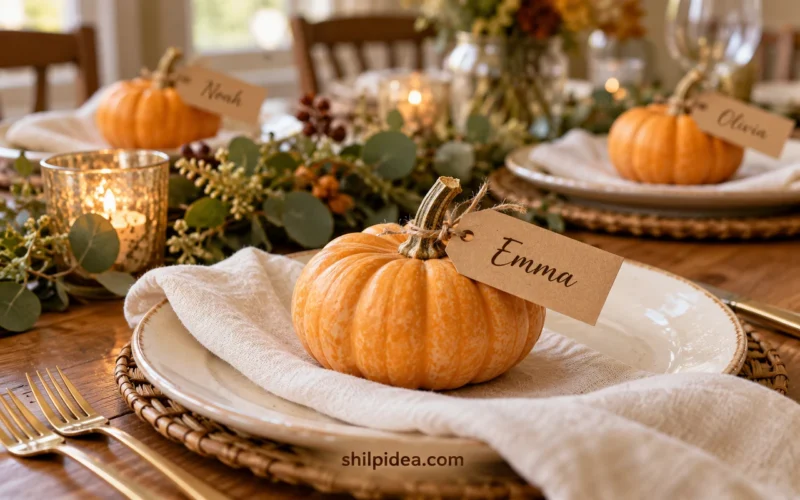
A small handwritten message makes a plain napkin feel personal without needing a heavily themed table. The natural fabric keeps the detail quiet and comfortable beside the other textures. Use a short word, a guest’s name, or a note of thanks. Keep the tag easy to remove so it becomes a keepsake rather than an obstacle during dinner.
14. Warm the Table with Copper Tones

Copper-colored cups and warm metallic details bring a gentle shine beside flowers and pumpkins. The contrast works because the rest of the table has softer, less reflective surfaces. Try one metallic finish rather than mixing several. If you use decorative vessels, check that anything intended for drinking is suitable for the beverage being served and follow its care directions.
15. Let Mustard Linen Add a Harvest Color

A mustard-colored napkin adds warmth beside white dishes and green leaves. It is a small change that can make a familiar place setting feel ready for fall. Choose a shade that works with your existing table and chairs rather than matching a pumpkin exactly. Keeping the plates simple helps the fabric color remain the main accent at each seat.
Finish the Table with a Few Personal Details
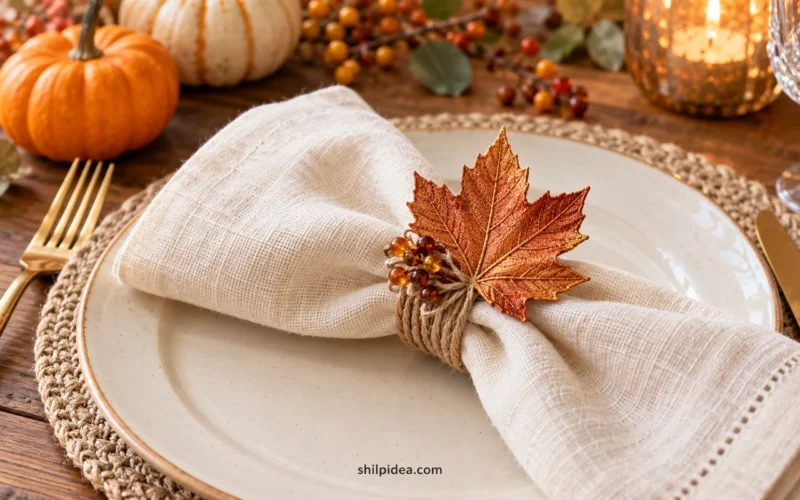
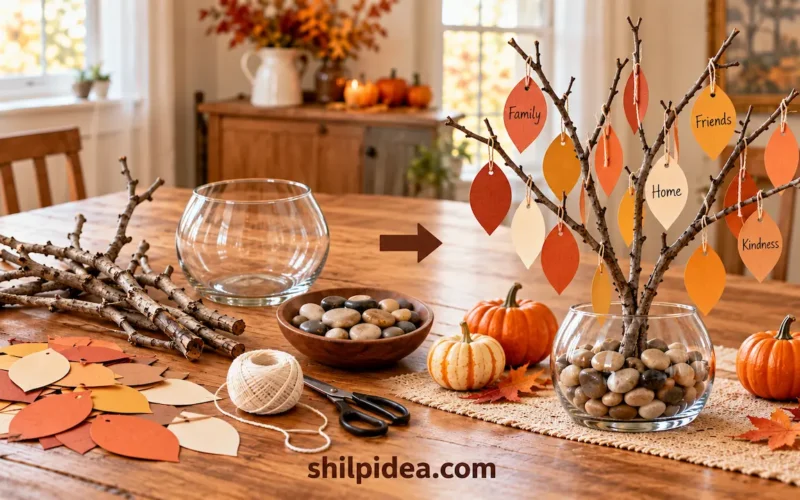
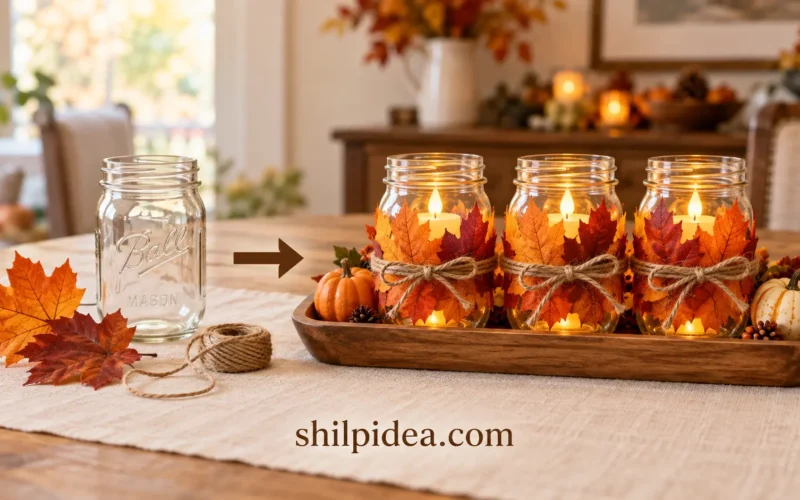
Once the main colors and textures are settled, consider the smaller details guests will notice at their seats. A napkin ring, a name card, or a small note of gratitude can make the gathering feel more personal. Use one or two of these collections to finish the table without crowding it with every possible decoration.
- 15 Fall Leaf Napkin Ring Ideas for Thanksgiving Table Decor
- 15 Pumpkin Place Card Ideas for a Thanksgiving Dinner Table
- How to Make a Thankful Tree for Thanksgiving Decor











0 Comments