18 Paper Spiderweb Decorations for Windows and Party Tables
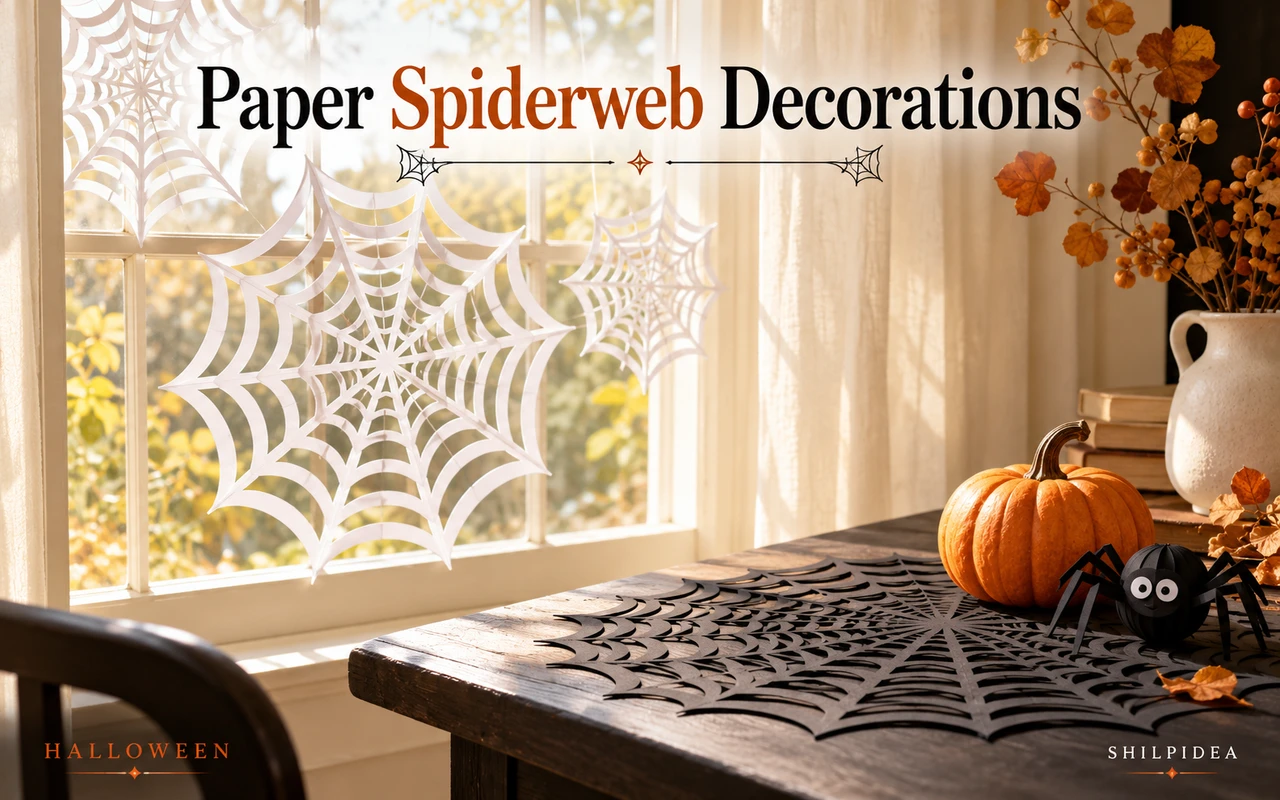
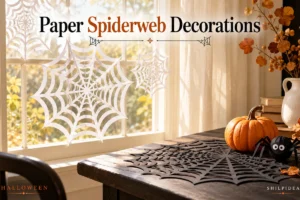
Paper spiderweb decorations can make a window or party table feel ready for Halloween without taking up much space. A few bold cutouts often have more impact than a crowded layer of small details.
These 18 ideas compare paper crafts, surface treatments, and styling variations. You will find translucent window designs, dark table accents, oversized shapes, and links to the original creators.
Choose a size and color that suit the spot you want to decorate. Keep delicate paper clear of drinks, heat, and moving hardware, and test removable attachments before filling a whole display.
1. A Loose Cluster of White Window Webs

Several white webs can turn one window into a light, layered display. The Artful Parent’s arrangement leaves gaps between the pieces, so the view and daylight still show through. Varying the shapes keeps the cluster from looking like a repeated stencil. Begin with a few pieces near one side of the glass, then check the balance from across the room before adding more. Test any removable attachment on the surface first.
See The Artful Parent’s tutorial.
2. A Black Paper Web Beneath a Plate

A dark papercut web gives a pale plate a strong outline. Lia Griffith’s place setting keeps the motif centered beneath the dinnerware, with a coordinated spider detail nearby. It is a useful way to carry Halloween onto the table without adding height. Keep decorative paper clear of spills and direct food contact, and use the creator’s source page for its pattern and file-access details.
3. An Oversized Kraft-Paper Web

Changing the scale can make a familiar paper cutout feel dramatic. Babble Dabble Do’s large kraft-paper example uses broad strips that stay readable from a distance. A piece like this can fill a wide window or act as a backdrop behind a buffet. Check the actual available space before cutting, and support several points around the outer edge rather than letting the full weight hang from one thin bridge.
See Babble Dabble Do’s tutorial.
4. A Rainbow Cutout with a Small Spider

Color gives this coffee-filter web a playful character. Pink, blue, and orange move across the cut strips, while a small spider makes the theme clear. A single piece can brighten a window or sit on a dark backing near the party table. Keep the surrounding decorations fairly quiet so the changing colors remain the focus.
See One Little Project’s tutorial.
5. A Corner Web for a Window or Shelf

A corner-shaped web can decorate an edge that a full round cutout would overwhelm. Sprinkle of Happiness shows one tucked into a bookcase, which is a useful placement reference for a window corner too. Keep the straight edges aligned with the frame and leave the opening clear. The shape can work behind a party table without needing to cover the entire wall. Use a light attachment that suits the surface.
6. A Colorful Spiderweb Suncatcher
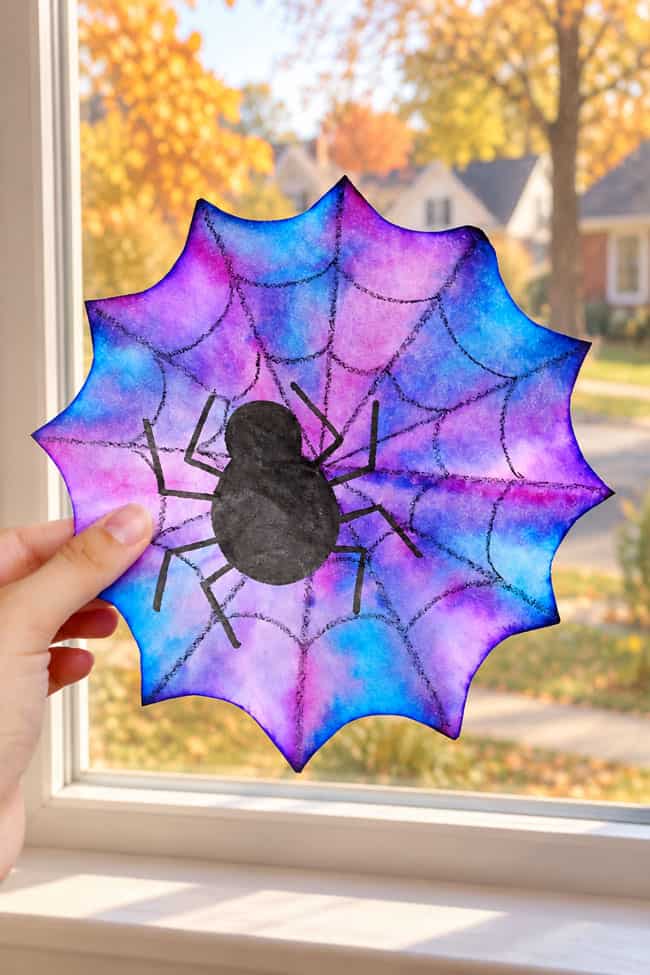
Translucent color becomes especially noticeable when daylight passes through the paper. This coffee-filter design combines a drawn web with a dark spider, giving it a different effect from a completely cut-open piece. Try it in a bright window where the pattern can be seen from indoors. Leave some glass empty around it so the shape has a clear outline. Let the colored paper dry completely before attaching it.
7. An Overlapping Paper-Web Table Runner

Connecting several cutouts can give small paper webs the presence of a full table runner. Alison’s project uses a repeated geometric shape to link the arrangement around existing ornaments. Keep the line narrow enough to leave space for plates and serving dishes. The paper is decorative rather than protective, so use a separate surface underneath anything warm or damp. Battery candles are a practical choice beside delicate cut paper.
See Alison / Adventures in Making, via So, There.’s tutorial.
8. White Paper Against a Charcoal Background

A dark backing makes the fine white strips of a paper web stand out clearly. The small purple spider adds one accent without taking over the pattern. This contrast works on a party-table display board or beside a window with pale curtains. Keep the background plain so the thin cut shapes do not disappear into a busy print. A complete round outline is the part that gives this arrangement its tidy finish.
9. A Trio of Jewel-Colored Paper Webs

Three different colors give these small paper webs a lively rhythm. The shared circular shape connects them even when their cut patterns differ. On a window, keep a little space between each piece; on a table, set them against one neutral surface. A simple trio is easier to balance than a large scatter of tiny cutouts. Choose colors that repeat something already in the room or on the party table.
10. A Mixed-Size Black-and-White Cluster

A few dark webs can anchor a wider arrangement of pale pieces. The different sizes create depth without adding bulk. Keep the darkest shapes near the visual center and let smaller webs fill the edges. Check the overall silhouette before adding a banner or extra spiders to the same display.
11. A Bright Web Mounted on Colored Paper

A paper backing turns a delicate web into a small piece of Halloween art. FirstPalette’s yellow-and-purple example uses strong contrast, with the spider kept near the lower part of the shape. A mounted piece is easier to stand on a party table than a loose cutout. Use a simple frame or a display stand that supports the whole sheet, and keep it away from drinks.
12. Drawn Webs in Purple, Blue, and Green
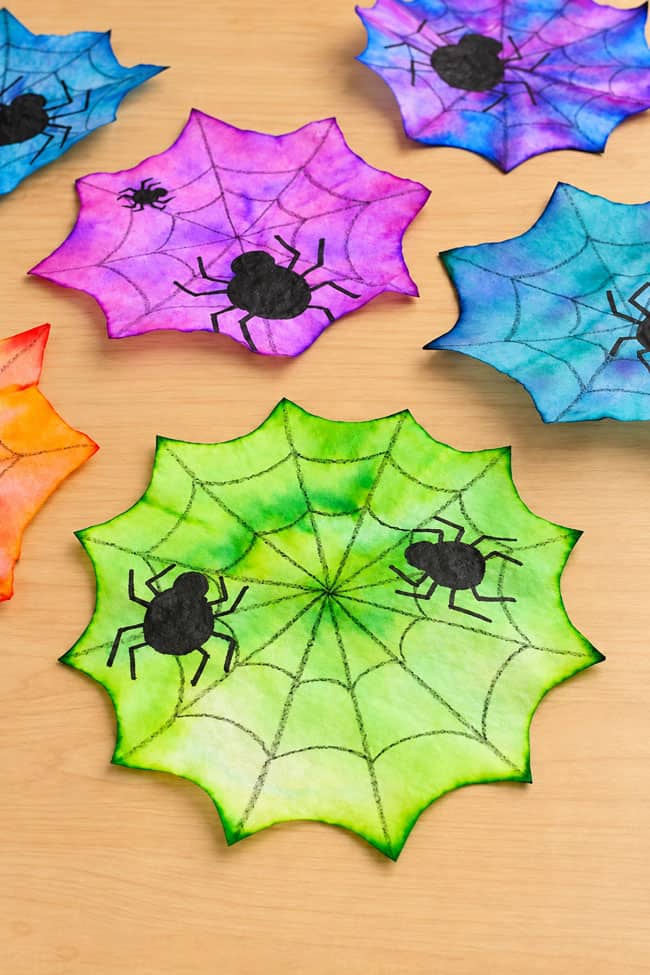
A drawn web keeps the paper surface intact, which gives these colorful circles a softer, stained-glass effect. The black spiders add a clear point of focus to each piece. A small group can work in a window or on a table display board. Let one or two colors dominate rather than using every shade at once. The creator’s project page explains the original coffee-filter technique.
13. Two Dark Webs with Overlapping Edges
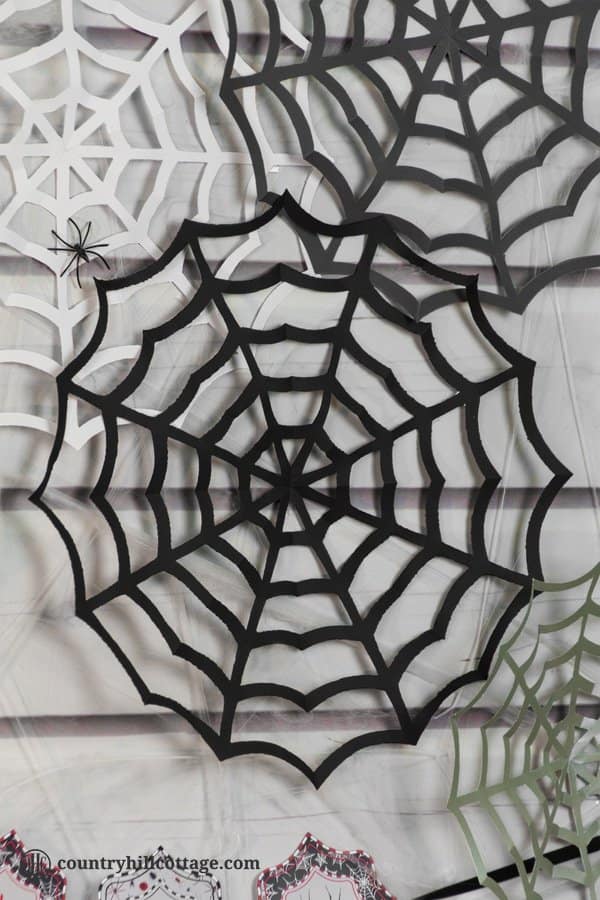
Two bold cutouts can decorate a small area without covering the whole window. Let their edges overlap slightly, but keep the centers readable. This is a styling variation of the same mixed-paper project, rather than another cutting method. A pale background gives the darker paper its clearest and strongest outline.
14. A Single White Web with a Black Spider

A single web can be enough for a small pane of glass. The dark spider gives the pale paper a clear focal point and helps the cut pattern read from across the room. Keep the shape away from a handle or sliding section. This is useful when you want a Halloween detail that still leaves most of the window open. A simple flat silhouette is easy to connect with nearby paper bat decorations.
15. A Web Place Setting with an Orange Napkin

An orange napkin changes the mood of the same black paper-web placemat. The warm fabric gives the dark cutout a seasonal contrast, while a small spider repeats the theme higher in the setting. This is a styling option from the original table project. Keep the dinnerware simple so the web outline remains visible. For an evening table, choose flameless lights around the paper details.
16. A Metallic Web for a Pale Display

Silver-toned paper catches light differently from flat black or white. The broad strips keep the web readable when its surface reflects the room. Use one metallic piece as an accent instead of making every web shiny. Keep the surrounding colors restrained, and leave the small dark spider easy to see.
17. A White Web Suspended Near the Window

Suspending a complete web lets daylight define the open spaces between its strips. FirstPalette’s example uses a simple white shape with a small dark spider near the center. A single piece can work near a window or behind a party table. Keep it out of the moving part of a door or window, and avoid long loose cords where people need to pass. A lightweight hanging display does not need heavy trim.
18. Small Webs as a Repeated Table Motif
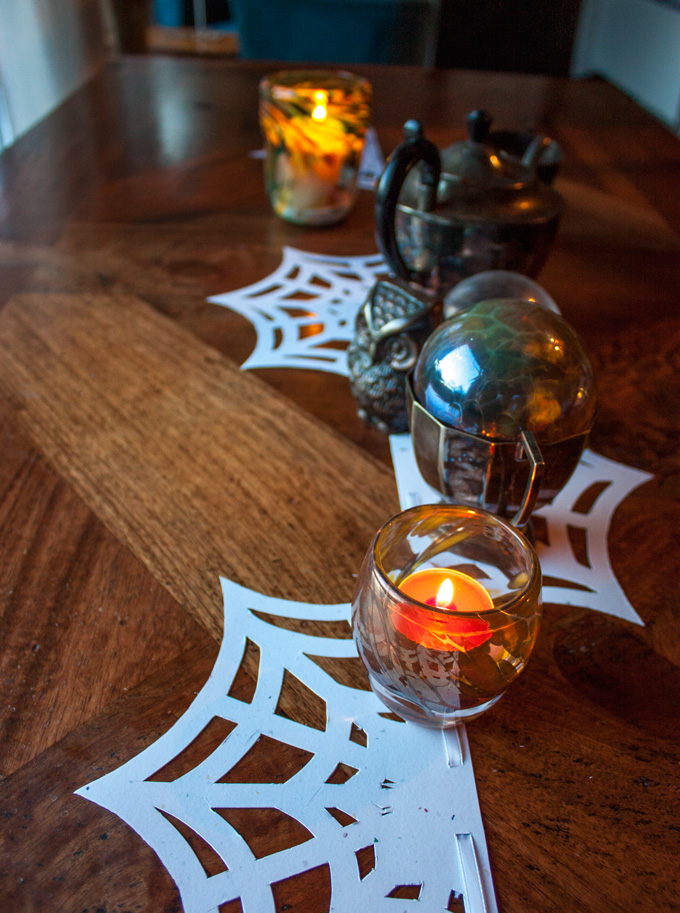
The same geometric pieces used in a runner can also inspire smaller accents along a table. This view shows how repeated white shapes connect a group of darker ornaments. Leave open space between the main objects so the paper pattern remains visible. If you prefer separate pieces, arrange a few on the table before committing to a continuous runner. Coordinate them with a low LED centerpiece rather than adding more tall decorations.
Repeat the Web Motif Around the Party
Look at the window and table together before adding more decorations. If one area has a large web cluster, a smaller paper accent elsewhere can be enough to connect the room. Repeat a couple of colors in the doorway sign, treat holders, or centerpiece, and leave practical space for guests to move and serve food. These collections offer a few ways to carry the theme further.
- 30 Halloween Table Centerpieces with LED Lights
- 25 Halloween Door Signs Made with Paper and Foam Board
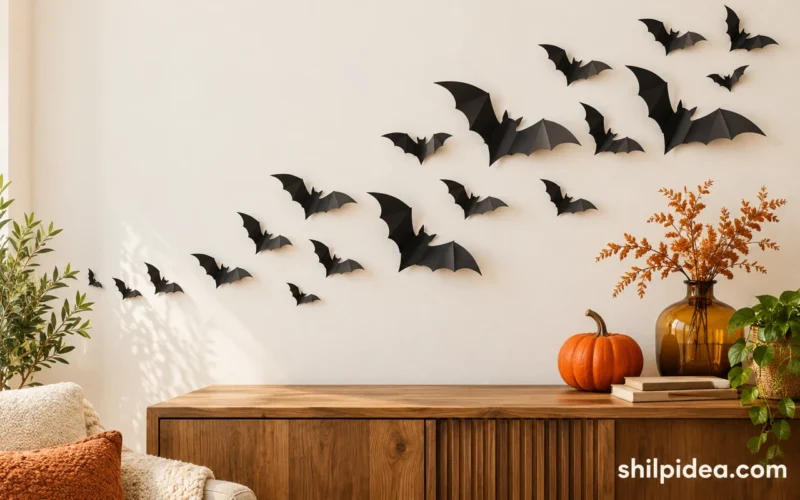
- 18 Paper Bat Wall Decorations for a Last-Minute Halloween Party
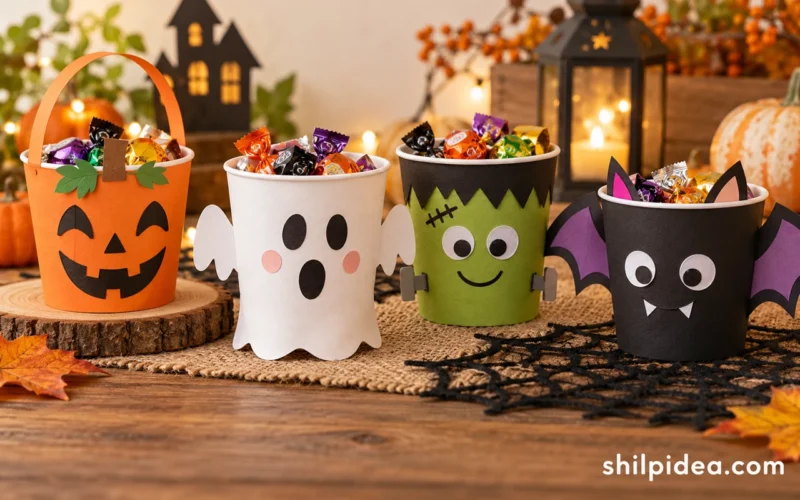
- 18 Halloween Candy Holder Ideas Made from Paper Cups
Where would you add paper spiderwebs first—your window, the party table, or a small corner display? Tell us in the comments.













0 Comments