20 Small Corner Entryway Ideas with Hooks and Shoe Storage
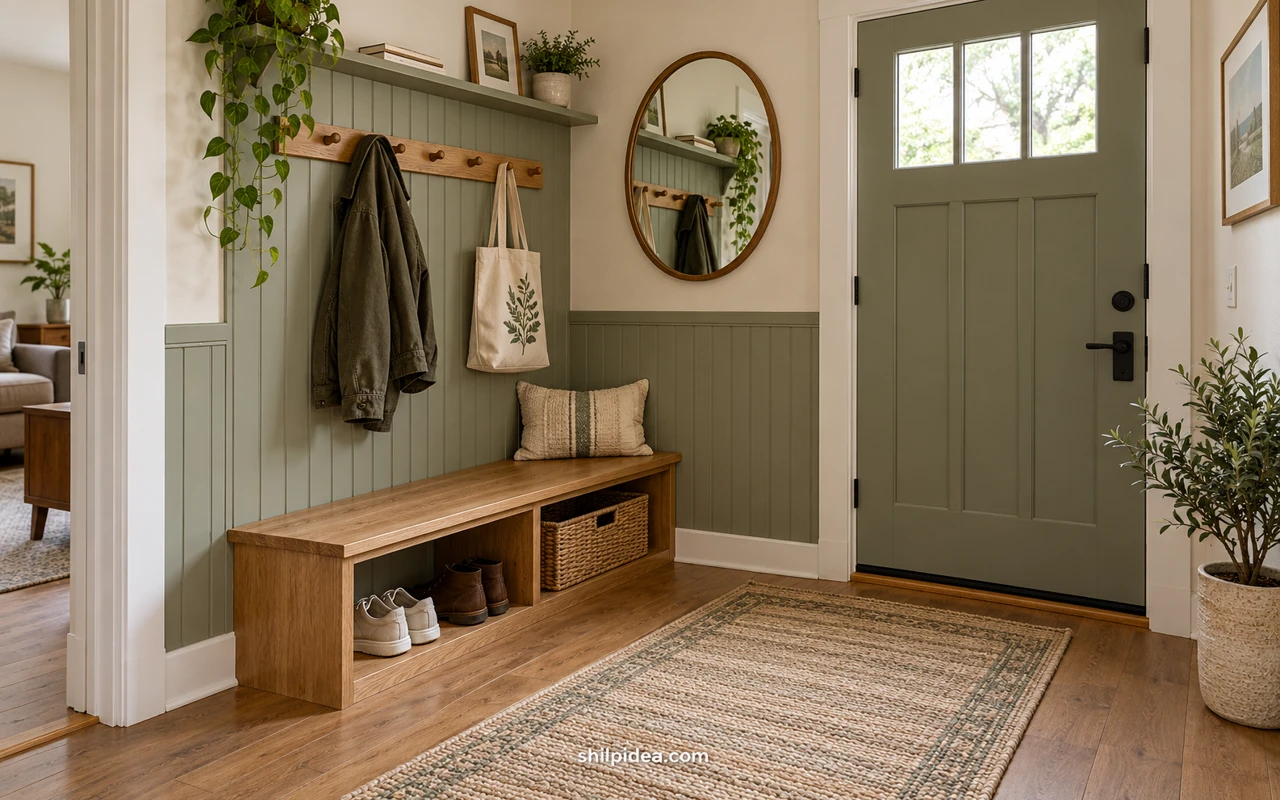
A small entry corner has a lot to handle: shoes, coats, bags and the things you need on your way out. Giving each of those jobs a clear place can make the space feel more useful without filling it with furniture.
Start with the storage you need, then borrow a finishing detail from these interior design ideas to help the corner feel connected to the room.
These creator examples include compact pieces and larger layouts you can adapt. Measure the door swing and walking space before choosing a bench, cabinet or wall organizer.
1. Use the Wall for a Slim Shoe Rack and Peg Rail
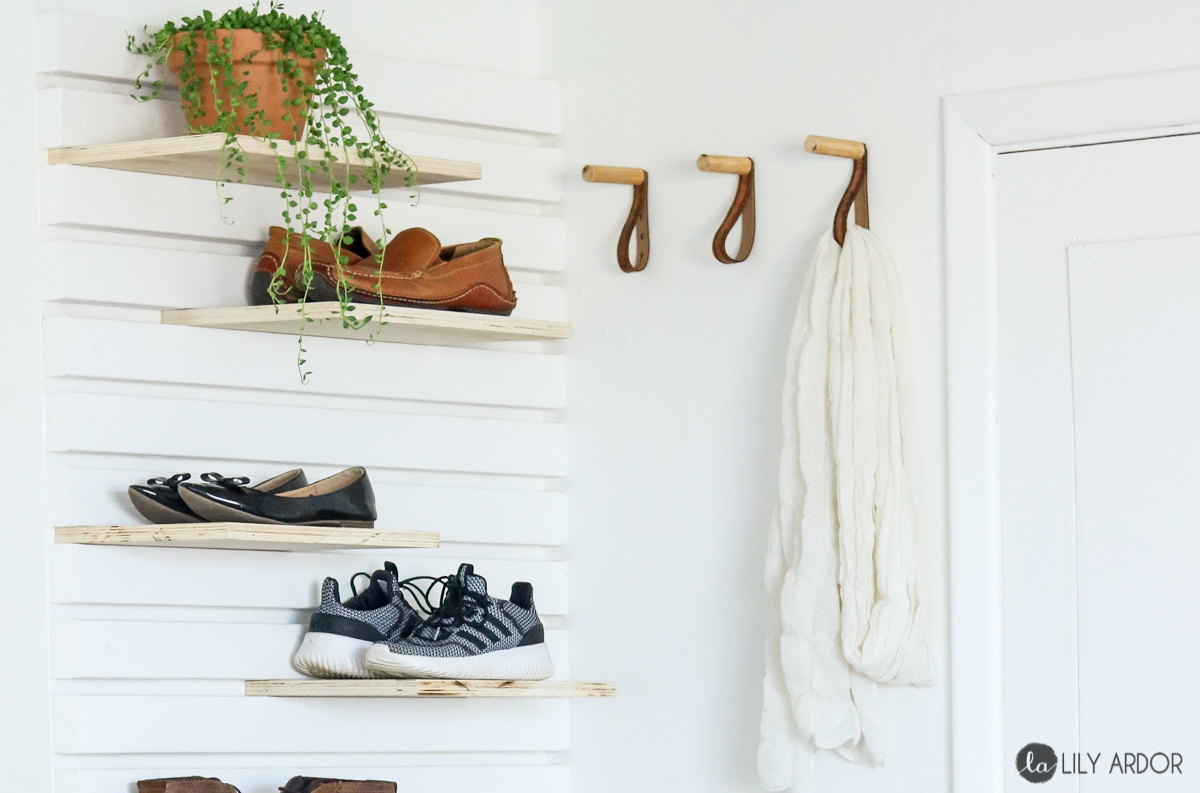
A shallow wall-mounted shoe arrangement can leave more floor visible than a deep cabinet. Pair it with a peg rail so shoes and outerwear have separate places. Measure the door swing and the space used by hanging coats before choosing a depth. The useful goal is an entry where people can arrive and move through without shifting stored items first.
Get the tutorial: Use the Wall for a Slim Shoe Rack and Peg Rail by Lily Ardor.
2. Create One Compact Hall-Tree Station

A hall tree brings a seat, hooks and shoe storage into one piece. It can be useful when a small corner needs a clear purpose rather than several unrelated furnishings. Check the full footprint, including the space a seated person needs in front. Tall furniture should be secured appropriately, and hooks should suit the weight of the bags you plan to hang.
Get the tutorial: Create One Compact Hall-Tree Station by Shara / Woodshop Diaries.
3. Give Shoes Their Own Pull-Out Baskets
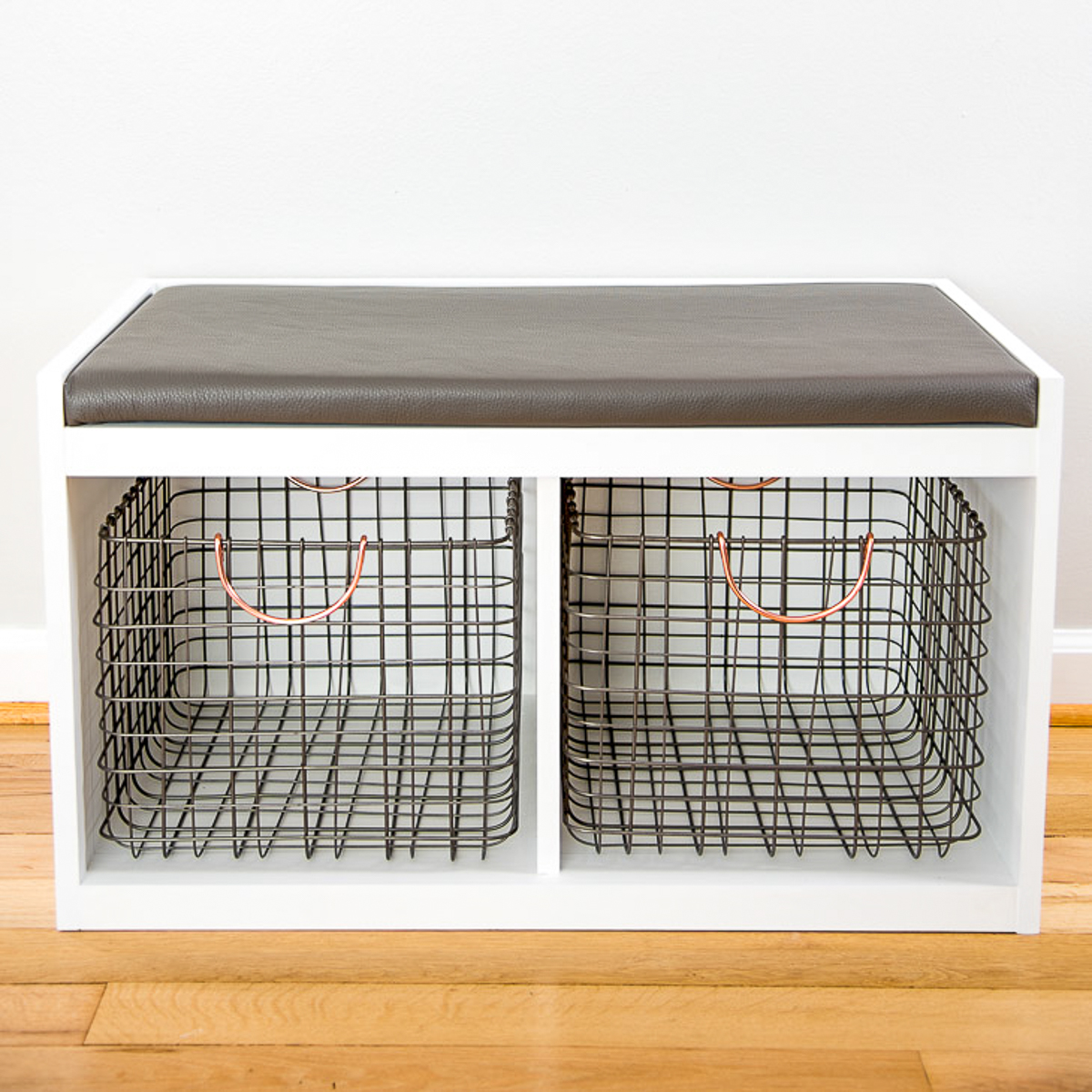
Baskets beneath a bench make it easier to separate shoes by person or by use. The wire bins in this example let you see the contents without emptying them. Check that the bins slide out comfortably and have no sharp edges where hands will reach. Leave space around the bench so someone can sit while another person passes through the entry.
Get the tutorial: Give Shoes Their Own Pull-Out Baskets by Vineta Jackson / The Handyman’s Daughter.
4. Connect the Storage with a Perforated Wall Panel

A perforated panel can bring several small storage jobs together in a narrow hall. Hooks and attachments can be arranged around the items your household actually carries. Keep the busiest daily pieces within easy reach and avoid filling every opening. A matching lower cabinet gives shoes a separate home so the wall does not have to do all the work.
Get the tutorial: Connect the Storage with a Perforated Wall Panel by Linda / TOSIZE.
5. Fit Open Shoe Cubbies Beneath a Simple Seat

Open cubbies make the daily shoe routine easy to understand: each pair has a visible place. The bench above adds somewhere to sit without requiring a separate chair. Size the compartments around the shoes you use most often rather than an idealized display. Tall boots may need a different space, while frequently used trainers should be easy to reach.
Get the tutorial: Fit Open Shoe Cubbies Beneath a Simple Seat by DIY Decor Mom.
6. Use a Nook for Storage Above and Below the Bench
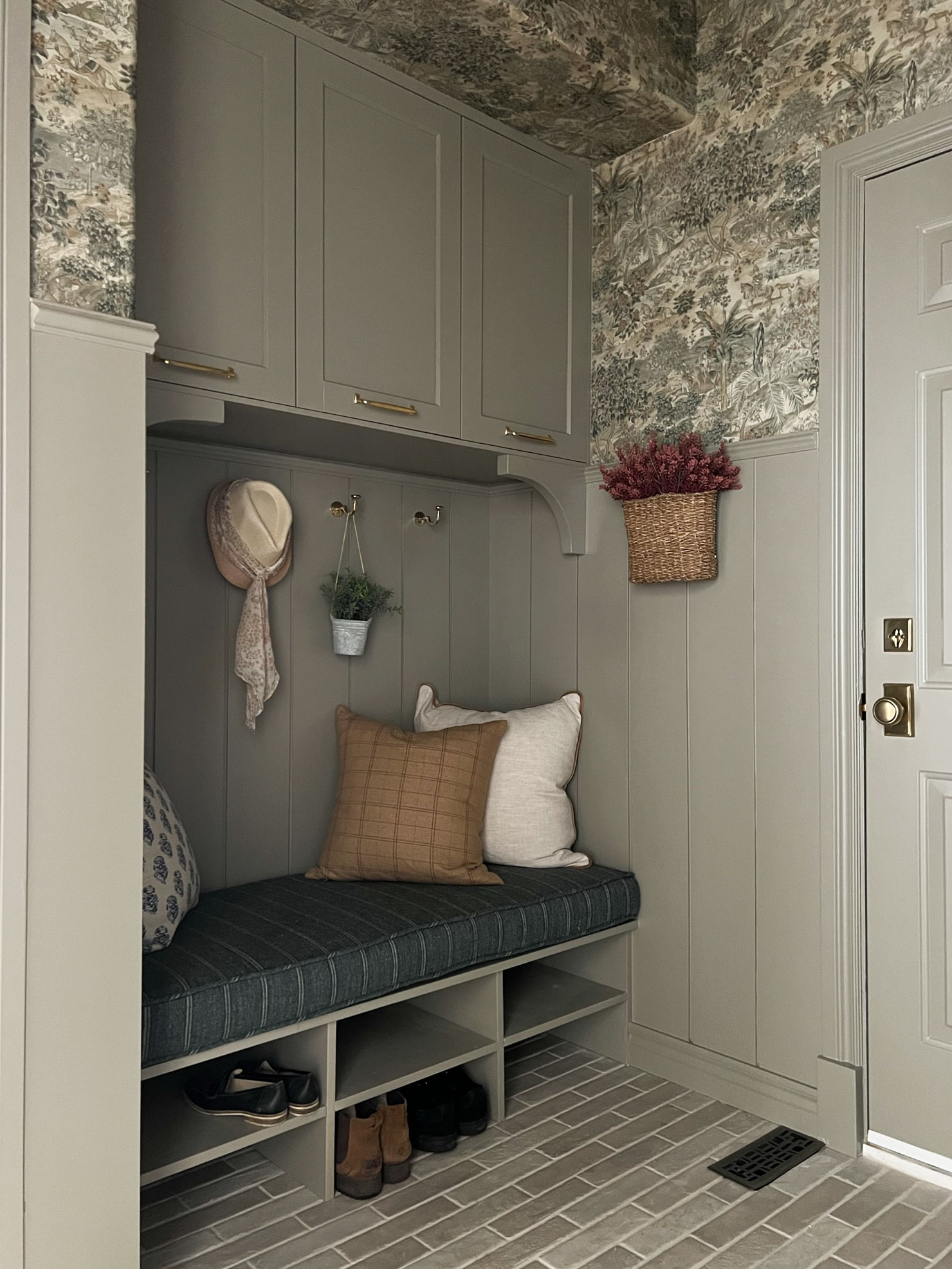
A recessed nook can hold several storage layers without extending every part into the hallway. Here, upper cabinets, hooks and lower shoe spaces work together. Borrow the layout rather than assuming the pictured dimensions will fit your home. Keep the hooks accessible and reserve the upper cupboards for things that do not need to be reached on every trip outside.
Get the tutorial: Use a Nook for Storage Above and Below the Bench by Erin Zubot Design.
7. Let a Long Low Rack Define the Edge of an Entry

A low shoe rack can help define an arrival area in a room that has no separate foyer. The slim outline in this example keeps the surrounding space visually open. Use only the length your corner can spare and keep the front edge out of the walking route. Pair it with a small wall hook zone rather than adding a bulky coat stand.
Get the tutorial: Let a Long Low Rack Define the Edge of an Entry by Instructables.
8. Choose a Bench with Two Clear Shoe Levels
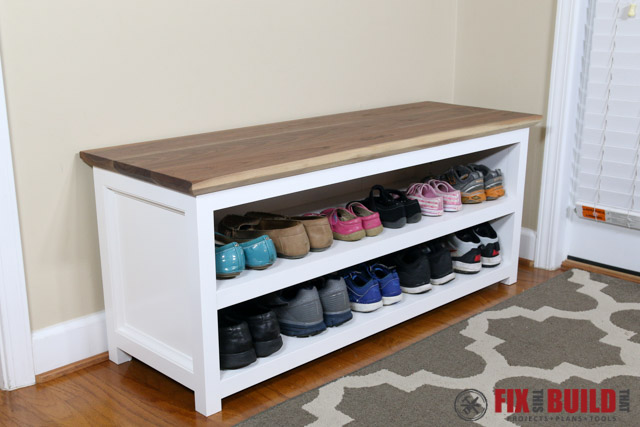
Two open levels can make a compact bench useful without dividing it into many tiny compartments. Keep the lower shelf high enough to clean beneath or make sure the whole unit can be moved safely for cleaning. The top should remain a usable seat rather than becoming another shelf. Add a separate hook rail above only where hanging clothes will not obstruct it.
Get the tutorial: Choose a Bench with Two Clear Shoe Levels by Fix This Build That.
9. Leave Extra Height for Boots and Larger Bags

An open rack with a generous upper shelf can suit boots that do not fit into small shoe cubbies. Keep the tallest items to one side so the arrangement remains easy to use. The upper surface can hold a bag temporarily, but avoid turning it into a permanent pile. A nearby hook gives a daily bag a more reliable home.
Get the tutorial: Leave Extra Height for Boots and Larger Bags by Angela Marie Made.
10. Assign a Hook and Shoe Space to Each Person

A few individual stations can make a shared entry easier to maintain. The bags above and shoes below create a clear vertical relationship in this example. Set the number of stations around the household’s daily needs rather than adding more hooks than the space can support. Keep bulky school bags from projecting into the route to the door.
Get the tutorial: Assign a Hook and Shoe Space to Each Person by Bunnings Workshop / DIYgals.
11. Mix Closed Drawers with an Open Hook Area
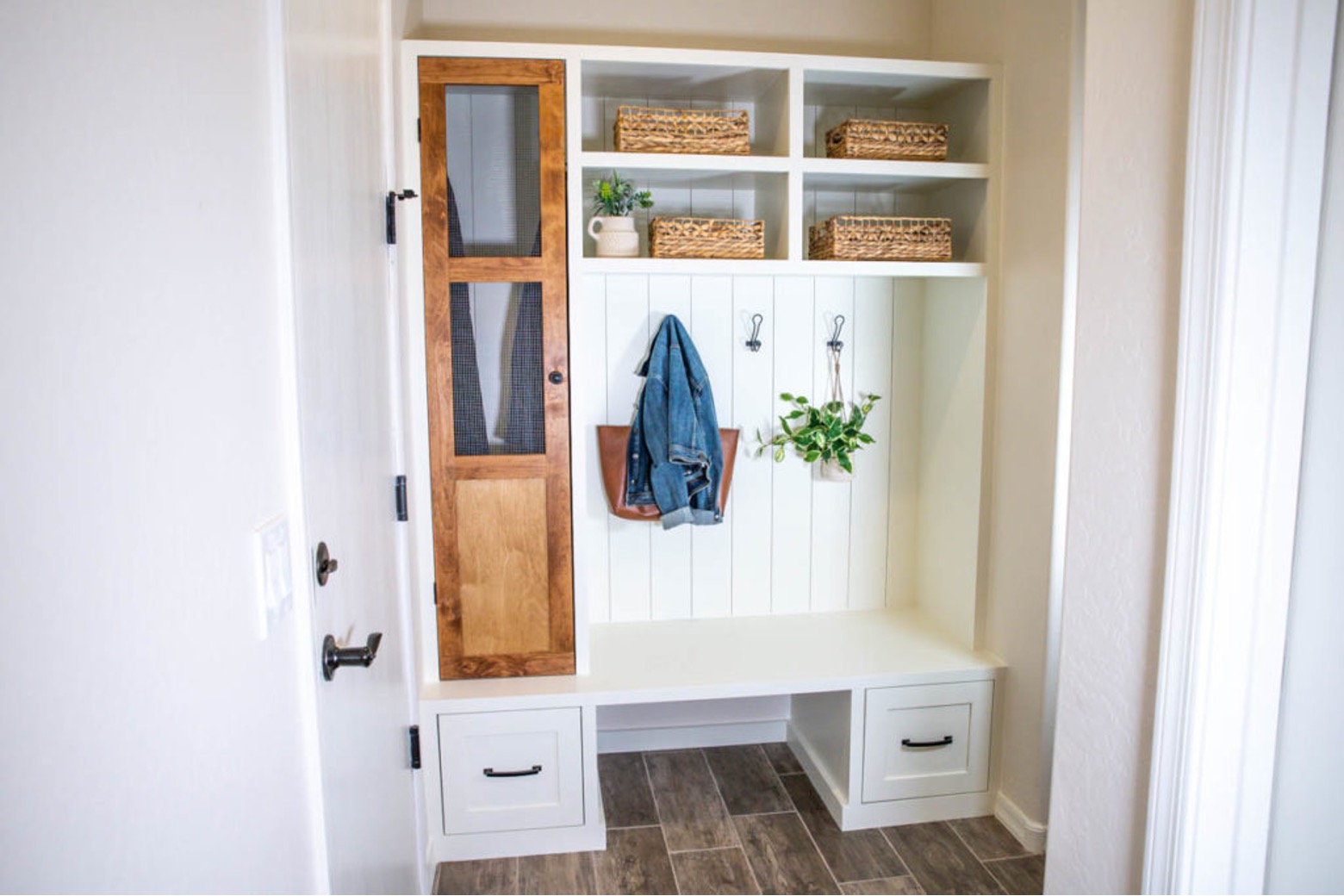
Closed drawers can hold the small items that make an entry look cluttered, while hooks keep coats easy to grab. A taller cabinet can take less frequently used pieces out of the main routine. This fuller built-in is best treated as layout inspiration for a smaller corner. Choose the storage jobs you need before deciding how much cabinetry to include.
Get the tutorial: Mix Closed Drawers with an Open Hook Area by Addicted 2 DIY.
12. Keep the Floor Clear with a Shallow Shoe Cabinet

A shallow shoe cabinet can make a narrow hall feel more manageable when open racks would project too far into the path. The top provides a small landing place for keys, while the shoes remain contained. Check how the compartments open before positioning a bench nearby. Secure the cabinet according to its instructions and keep the surrounding wall arrangement simple.
Get the tutorial: Keep the Floor Clear with a Shallow Shoe Cabinet by The DIY Mommy / Cozy DIY Home.
13. Use a Narrow Shelf Unit Where a Bench Will Not Fit

A shoe shelf can be useful even when there is no room for a seat. The shallow format here leaves the wall above available for hooks or a small mirror. Measure the largest shoes that need to fit, including any overlap at the front. Keep the most frequently used pairs visible and store seasonal footwear elsewhere when the entry is very tight.
Get the tutorial: Use a Narrow Shelf Unit Where a Bench Will Not Fit by Gardenista.
14. Combine Shoe Shelves with One Taller Compartment

A taller compartment can make a simple shoe bench more flexible. It can hold a bag or another item that would not fit into the shallow shoe levels beside it. Think about the objects that repeatedly end up on your floor, then choose the mix of spaces around those. Keep the top clear enough to remain useful for changing shoes.
Get the tutorial: Combine Shoe Shelves with One Taller Compartment by The DIY Plan.
15. Keep a Small Landing Surface Beside the Main Storage

A compact landing surface gives keys or mail a place to pause while you take off a coat. In a tight corner, it should support the entry routine rather than becoming another large furniture piece. Pair it with nearby hooks and a defined shoe area. A mirror can help the grouping feel finished without taking up more floor space.
16. Use a Paneled Backdrop to Define a Tiny Nook
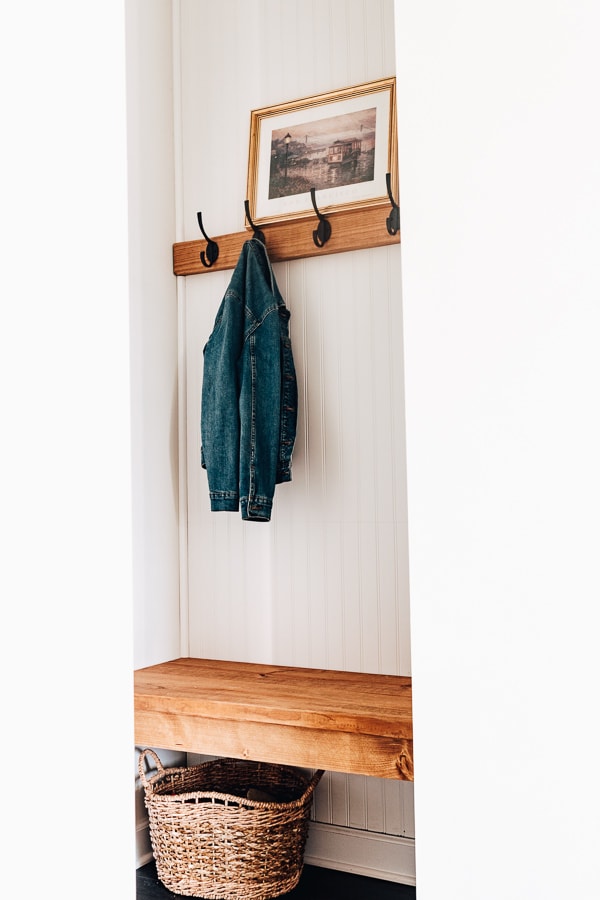
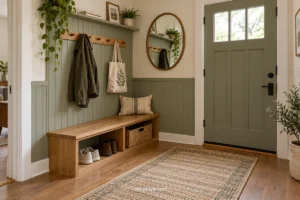
A small panel behind the hooks can make a corner feel like a deliberate entry station. The bench below gives the arrangement a clear base. Keep the trim and hook spacing suited to the actual wall rather than squeezing in a larger plan. For the surrounding wall, these shelf and wall display ideas can help you choose a restrained finishing detail.
Get the tutorial: Use a Paneled Backdrop to Define a Tiny Nook by Decor Hint.
17. Hang a Compact Shoe Holder Behind the Door
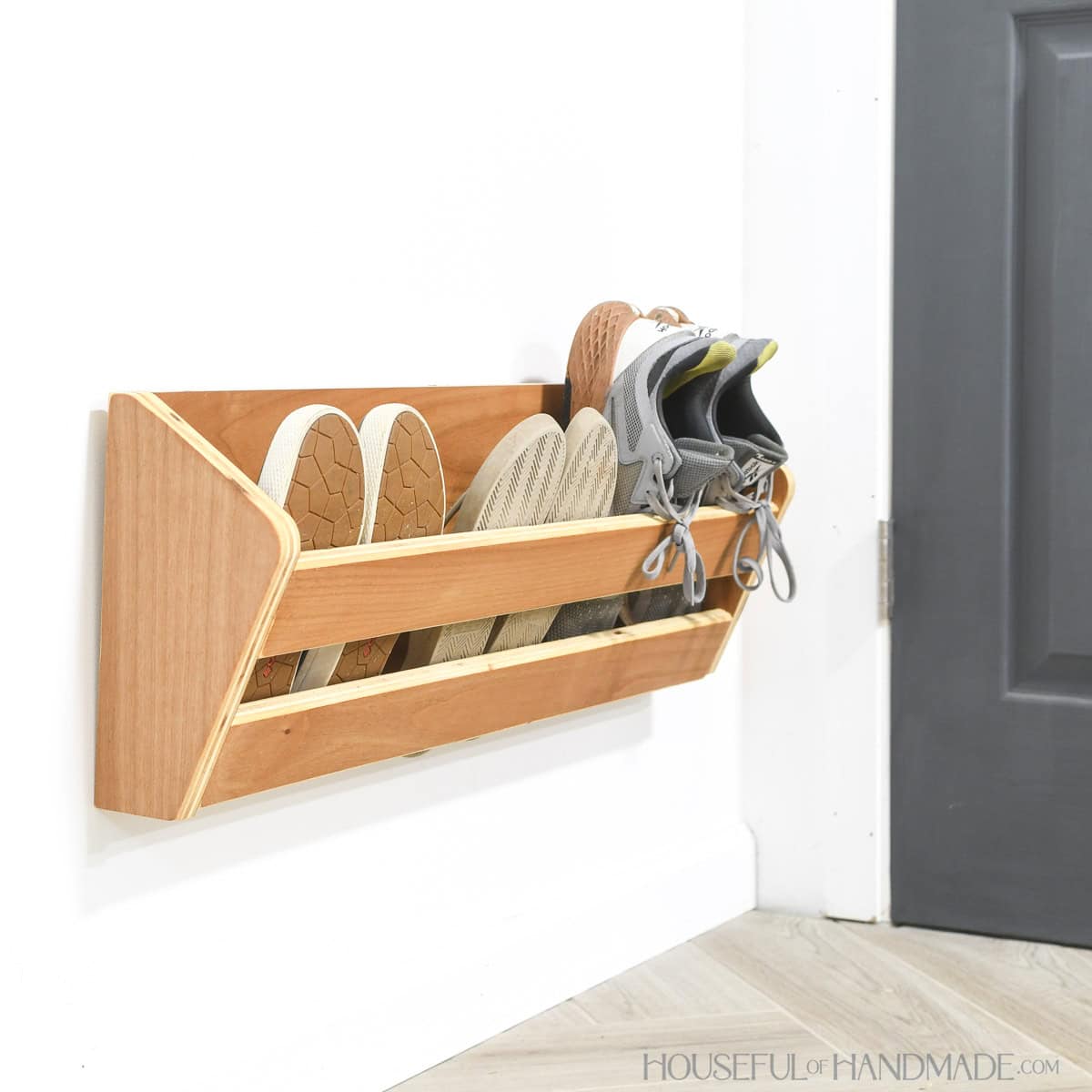
A wall-mounted holder can use a shallow strip of space that ordinary furniture would miss. Check the complete door swing before choosing the position, including handles and any shoes projecting from the rack. Use fixings appropriate to the wall and expected load. This approach can work best for a small daily selection rather than the household’s entire shoe collection.
Get the tutorial: Hang a Compact Shoe Holder Behind the Door by Houseful of Handmade.
18. Use a Storage Ladder with a Mirror and Small Baskets
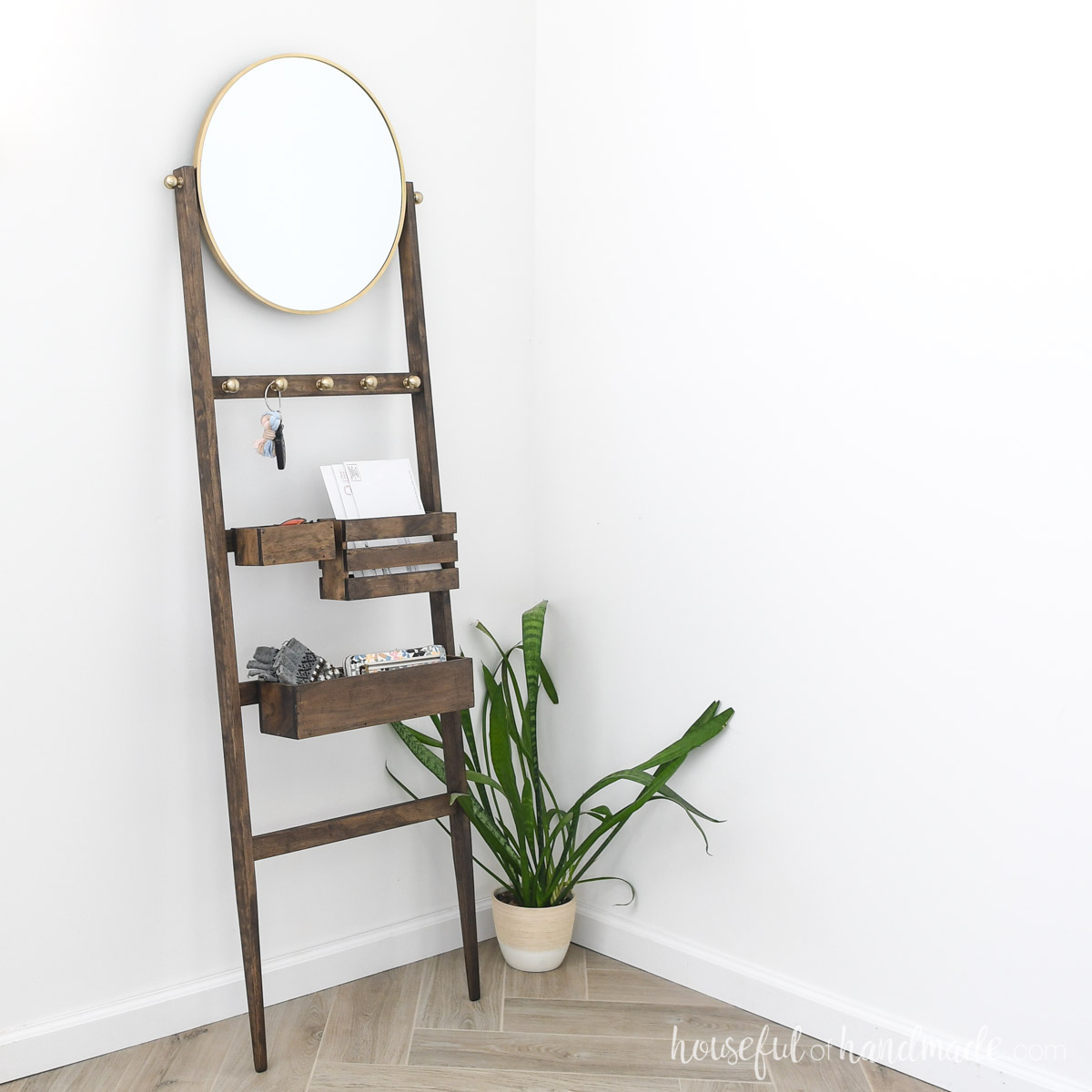
A storage ladder gives a narrow corner a vertical arrangement of useful details. The mirror and baskets can handle smaller arrival items while a separate low shoe space does the heavier work. Secure the unit as the creator’s design requires rather than relying on appearance alone. Keep basket contents light enough that the piece remains stable and easy to use.
Get the tutorial: Use a Storage Ladder with a Mirror and Small Baskets by Houseful of Handmade.
19. Choose a Modular Wall Organizer for Changing Needs
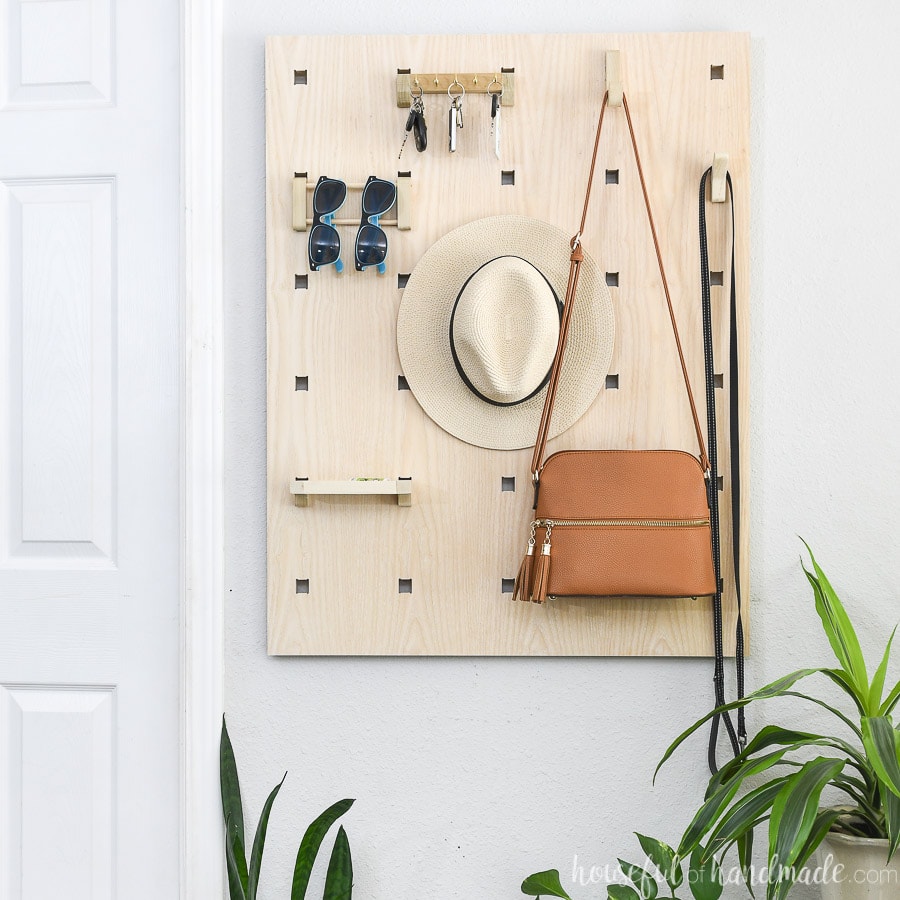
A modular organizer can be adjusted when the daily mix of coats, bags and small items changes. Keep a few attachments dedicated to the things that are easiest to lose, and leave open space around larger bags. Pair the wall unit with a modest shoe rack below. The aim is a routine that can change without rebuilding the whole corner.
Get the tutorial: Choose a Modular Wall Organizer for Changing Needs by Houseful of Handmade.
20. Use Height with a Compact Shoe Tower

A compact shoe tower can make use of height where a wide rack would crowd the door. Check that the shelf spacing suits the shoes you own and that the unit can be secured appropriately. Keep the heaviest items low and the daily pairs easy to reach. A small hook rail nearby can complete the station without increasing the tower’s footprint.
Get the tutorial: Use Height with a Compact Shoe Tower by Charleston Crafted.
Help the Corner Feel Like Part of Your Home
Once the shoes and bags have a reliable place, add only the details that make the corner pleasant to use. A mirror, a small wall display or a plant in a suitable position can be enough. These collections offer ideas for finishing the area while keeping the storage easy to reach.
- Creative Interior Design Ideas to Refresh Your Home
- Wall Shelf and Plant Display Ideas for Home Decor
- Indoor Plant Decoration Ideas for Your Home
Which idea would make the biggest difference in your entryway? Tell us your favorite in the comments, or share what you are planning for your own corner. If you have already solved a tricky shoes-and-coats problem, we would love to hear what worked in your home.












0 Comments