21 Forest-Themed Living Room Ideas with Natural Textures
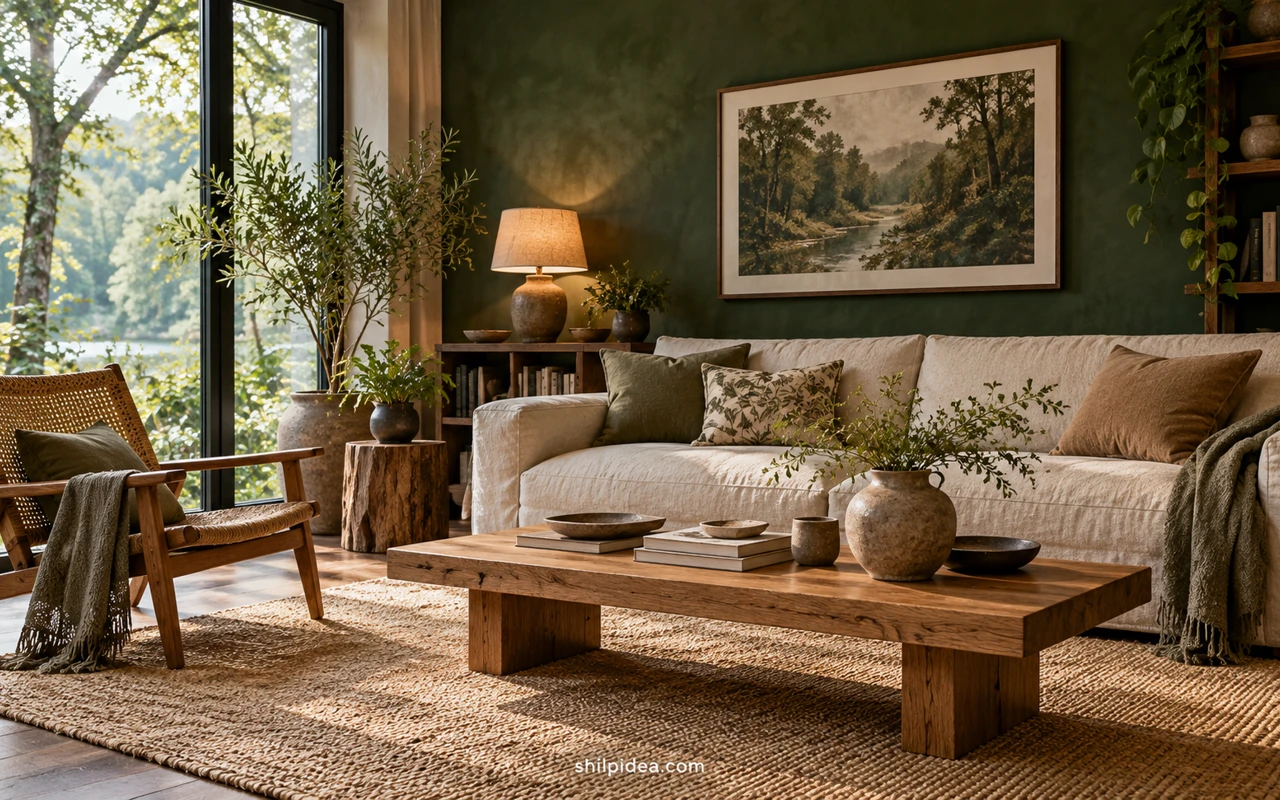
A forest-inspired living room can begin with the things that make the woods appealing: layers of green, warm timber, soft light and textures that feel good to live with. You can borrow that atmosphere without turning the room into a themed display.
Start with a leafy corner from these indoor plant decoration ideas, or choose one green furniture piece as your starting point.
These visual references include photographs and clearly credited interior visualizations. Use them to explore materials, layouts and smaller details that suit your own room.
1. Start with a Deep Green Sofa and Warm Wood

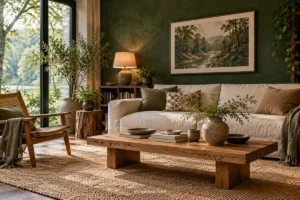
A deep green sofa can give a room its woodland color without requiring green walls. The warm wooden table keeps the combination from feeling flat, while a nearby plant connects the upholstery with living foliage. Begin with the largest piece you already own, then repeat its tone in one or two smaller details rather than replacing the whole room at once.
2. Build a Layered Plant Corner Around the Seating

Plants at several heights can give a living room a leafy outline without filling every surface. This room mixes floor plants, furniture-height greenery and trailing shapes. Leave enough space to water and check each pot easily. Choose plants for the light in the actual corner; the best-looking arrangement is one you can maintain without constantly moving it around.
3. Use Wood-Paneled Walls as the Main Texture

Wood paneling can supply the strongest forest connection in a room before any accessories are added. The visible grain and repeated boards create a warm background for simple seating. Keep nearby furniture shapes relatively clear so several timber patterns do not become overwhelming. If your room already has paneling, try changing the textiles and lighting before covering it.
4. Style a Small Leafy Collection on a Cabinet

A cabinet top can hold a concentrated patch of greenery when floor space is limited. Mix a few leaf shapes and pot heights, keeping the arrangement shallow enough that it does not become difficult to reach. The cabinet remains part of the room’s furniture rather than disappearing beneath plants. Our shelf and plant display ideas offer more ways to use vertical space.
5. Make a Quiet Reading Corner with Dark Green Seating

A dark green chair and warm wooden surroundings can create a small woodland-inspired retreat within a larger room. The window gives the corner a clear focus, while the deeper colors make the seat feel settled. Keep a useful surface within reach and choose a lamp for the way you read. A corner works best when it is comfortable as well as photogenic.
6. Balance Brown Seating with Botanical Wall Art

Botanical pictures can bring a leafy theme into a room without adding another pot to look after. In this interior visualization, brown seating and pale walls give the green details room to stand out. Keep a few frames aligned so the wall has a clear structure. You can begin with one print and add pieces gradually as you find images you enjoy.
7. Let a Woodland View Shape the Seating Area

A real view of trees can be the strongest forest feature in the room. Keep the main seating positioned so the view can be enjoyed comfortably, then use quiet materials around it. Avoid filling the window with tall furniture or a crowded display. The interior does not need to reproduce everything outside; a few related colors and textures can make the connection.
8. Use Tactile Upholstery for Depth

Textured green upholstery gives a simple sofa a richer surface than a flat block of color. Keep nearby cushions from covering all of that texture, especially if the fabric is the room’s main visual detail. Pair it with a smoother table or plain curtains so the materials can be noticed separately. The effect can work in a modest room without many accessories.
9. Give a Plant-Filled Room a Clear Furniture Layout

A room can hold plenty of greenery and still feel practical when the seating has a defined arrangement. Here, the chairs and sofa make a conversation area while plants occupy the edges and shelves. Leave the main path open rather than adding pots wherever there is a gap. That clear circulation helps the leafy details feel relaxed rather than difficult to live around.
10. Combine Green Seating with a Strong Natural Pattern

A large patterned artwork can provide a room with the same visual movement as leaves or branches. Keep its colors connected to the seating so it feels part of the arrangement. A wooden accent adds another texture without needing a literal forest mural. Choose the artwork for what you enjoy looking at, then let it guide a few smaller details.
11. Use the Window Area for a Soft Green Outline

Plants near a bright window can soften the room’s outline and connect the indoors with the view beyond. Keep curtains and blinds usable, and leave enough space to open windows safely. A few hanging or raised plants can add height without taking over the floor. Check each plant’s light needs rather than assuming every leafy variety wants the sunniest position.
12. Bring Cabin Texture into a Comfortable Seating Group

A cabin-like room does not need a large collection of rustic ornaments. Timber surfaces, soft seating and a few useful textiles can carry the feeling on their own. The patterned rug here adds a separate layer beneath the furniture. When adapting the idea, begin with one strong wooden element and keep the seating comfortable for the way your household actually uses the room.
13. Mix Green Seating with Rounded Leaves and Soft Color

Rounded leaves can make a leafy arrangement feel gentler beside upholstered furniture. This interior visualization combines green seating with several other soft colors, showing that a nature-inspired room does not have to stay entirely green and brown. Repeat one tone across the cushions, art or pots. Give flowers and foliage enough empty space that their shapes remain easy to see.
14. Keep a Natural Room Light with Pale Upholstery

Pale seating can balance a room with large windows, warm wood and plenty of green outside. The quiet upholstery leaves room for the view and the natural materials to carry the atmosphere. Choose a fabric and care routine that suit your home rather than selecting a pale color only for its appearance. A textured throw can add another layer without changing the palette.
15. Use Open Shelves to Link Books and Greenery

Books and plants can share a shelf when there is enough space for both to remain useful. Vary the height of a few objects, but keep watering access clear and protect the shelf from moisture. Avoid placing a pot where it must be lifted over books each time. A small repeated color in the pots can bring the arrangement together without making it rigid.
16. Choose One Warm Wood Piece as the Center

A warm wooden coffee table can anchor a room filled with pale walls and softer green details. Let its shape and grain remain visible instead of covering the surface with a large tray collection. Keep a practical place for a drink or book. Repeating the same wood tone elsewhere is optional; a room can hold different finishes when the overall palette feels calm.
17. Let the Greenery Inside Echo the Landscape Outside

A room with a broad outdoor view can use plants to make the transition feel natural. Keep the largest indoor leaves to the sides so they frame the view without blocking it. Simple seating and low tables leave the landscape visible from more positions. Use the amount of greenery your room can support comfortably rather than trying to create a dense indoor jungle.
18. Add a Woodland Mood with a Small Art Corner

A timber-lined corner can take on a woodland character through one piece of art and a few practical furnishings. The compact arrangement shows how a smaller area can carry the theme without a full room makeover. Keep the artwork at a comfortable viewing height and avoid adding so many small objects that the corner loses its quiet focus.
19. Use a Mirror to Keep a Leafy Corner Feeling Open

A mirror can add another layer to a plant arrangement by reflecting light and the shapes nearby. This interior visualization uses a cabinet and wall mirror to make the greenery part of a broader furniture grouping. Check the reflected view from the main seats before fixing the mirror in place. Choose secure mounting and keep the cabinet useful for everyday storage.
20. Repeat Green in Smaller Seating and Accessories

A green chair or a few cushions can introduce a woodland palette without changing the main sofa. Keep the supporting materials warm and simple so the green details feel connected to the room. This is a useful way to test a color before committing to a larger purchase. Look at it in daylight and evening light alongside the pieces you already own.
21. Balance a Plant Group with Clear Wall Space

An interior visualization can be useful for noticing proportion as well as choosing individual objects. Here, greenery sits within a defined seating arrangement while the wall art leaves a clear rhythm above it. Use that balance as a starting point for your own room. A few well-positioned plants can feel more intentional than filling every corner with a pot.
Carry the Woodland Feeling into the Smaller Details
Once you have a direction for the main seating area, look at the shelves, walls and plant displays around it. Repeating one wood tone or a few green details can connect those spaces without making everything match. These collections offer more ways to develop the room at your own pace.
- Creative Interior Design Ideas to Refresh Your Home
- Wall Shelf and Plant Display Ideas for Home Decor
- Indoor Plant Decoration Ideas for Your Home
Which of these rooms or details would you love to bring into your own living space? Share your favorite in the comments, or tell us what you are planning to change. If you already have a nature-inspired corner at home, we would love to hear how you made it feel personal.


















0 Comments