18 Portrait Photography Ideas for Kids and Families
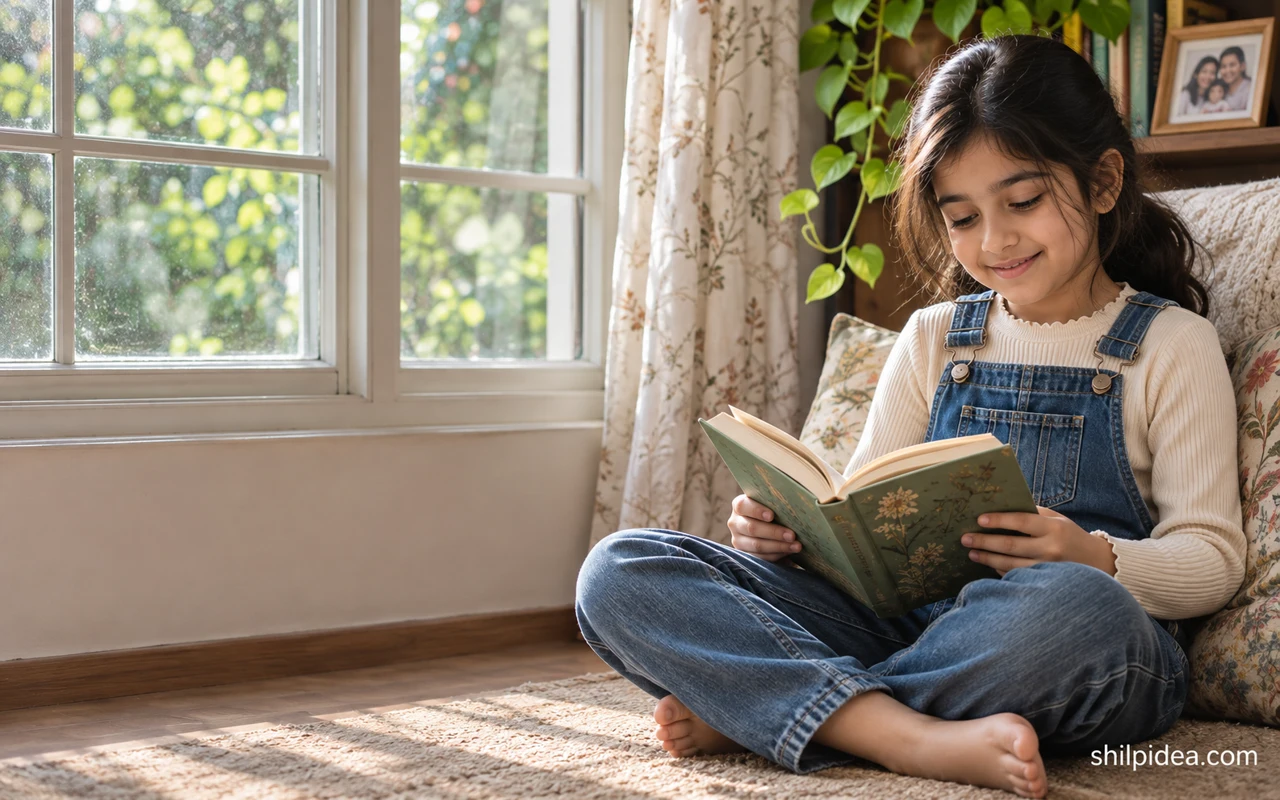
A familiar window, favorite book, or patch of open shade can be all you need for a child’s portrait. Start with a place and activity they already enjoy.
Look for clean backgrounds and light you can move around. These evening photography ideas can help you plan an outdoor session.
The examples below use simple activities, close framing, and wider views. Try taking one portrait and one detail shot, borrowing ideas from garden macro photography.
1. An Outdoor Portrait Against Dark Leaves
Put the child a few steps in front of a leafy backdrop and look for light that falls across the face. In this portrait, the dark foliage separates the lit face and folded arm from the background. Move sideways until a leaf or branch no longer crosses the outline of the head.
2. A Wide Farm Portrait With Chickens

Meg Loeks leaves space for the birds on both sides of the child. Frame the yard before the chickens wander into it, then wait for the child to glance toward one. Keeping the camera still for a moment helps you notice when the figures separate clearly against the background.
3. A Quiet Activity at Ground Level
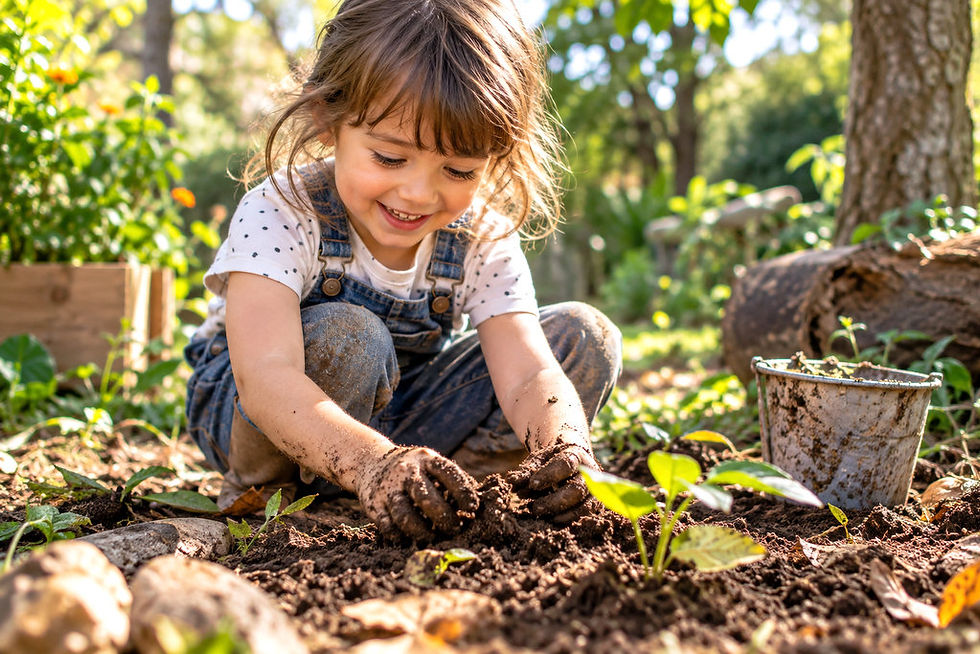
Kneel near the garden bed so the child’s face, hands and patch of soil fit in one frame. Let the activity continue while you move into position. Wait for the hands to pause over the soil; that small gap makes the gesture readable in the finished photograph.
4. A Garden Portrait at a Kitten’s Level

The low viewpoint leaves a band of grass in front of the kitten and gives the child room to reach into the picture. Crouch before the interaction begins and leave space between the hand and the edge of the frame. Let the kitten set the distance; a glance toward it can tell the story just as well as a touch.
5. A Family Conversation on the Porch Steps
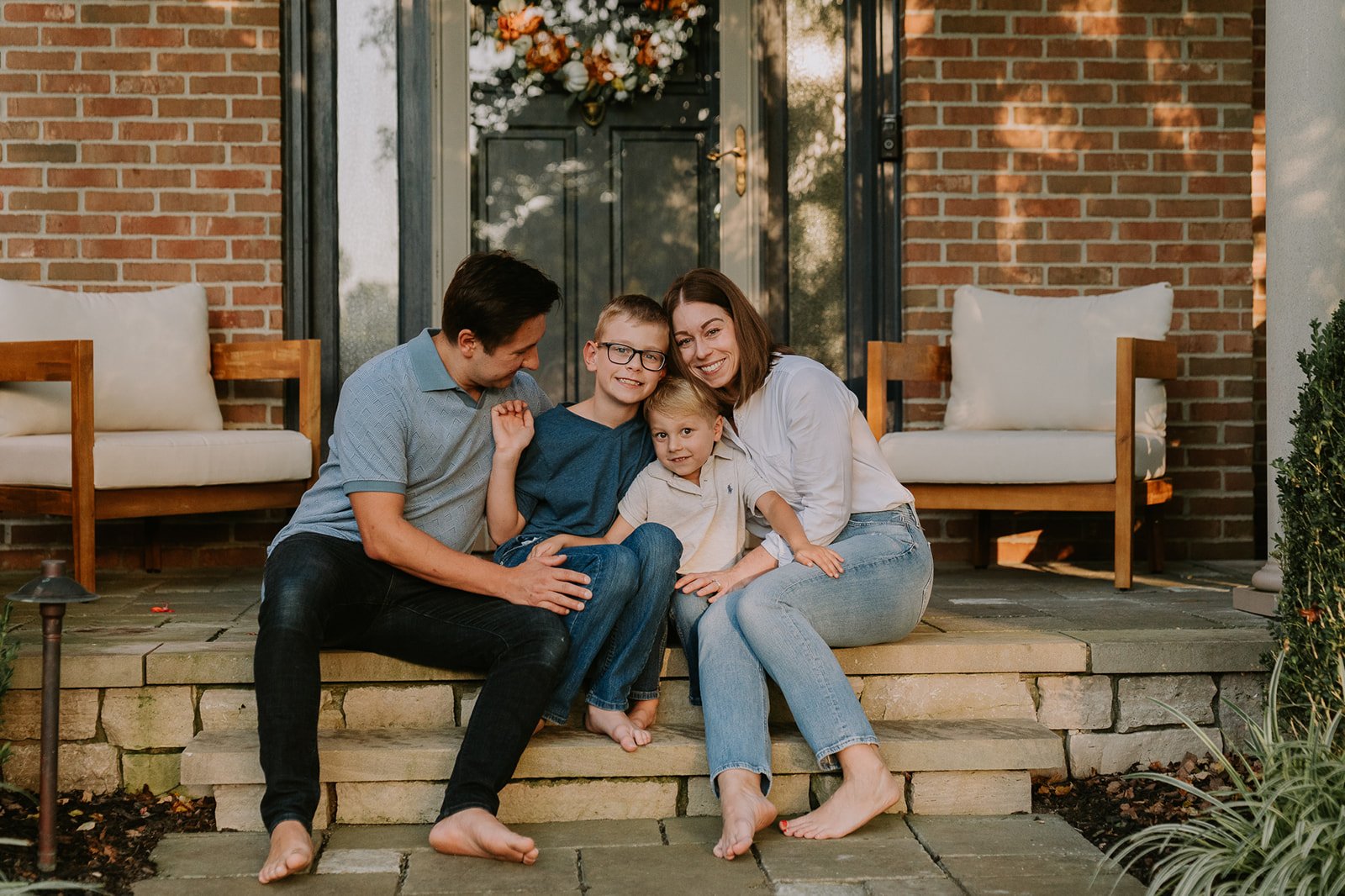
Front steps give a family somewhere to settle and turn toward each other. The doorway frames this small group while the chairs at either side tell you where they are. Start with a wide frame, then take a closer one when someone leans in or laughs.
6. An Eye-Level Portrait With Rabbits

Here the child bends toward the rabbits, bringing the faces close to the same height. Frame from the edge of the grass and leave space in front of the animals. With a familiar pet, wait for it to approach or move away on its own; the child’s attention gives you a natural expression to photograph.
7. A Quiet Portrait Beside a Bright Window
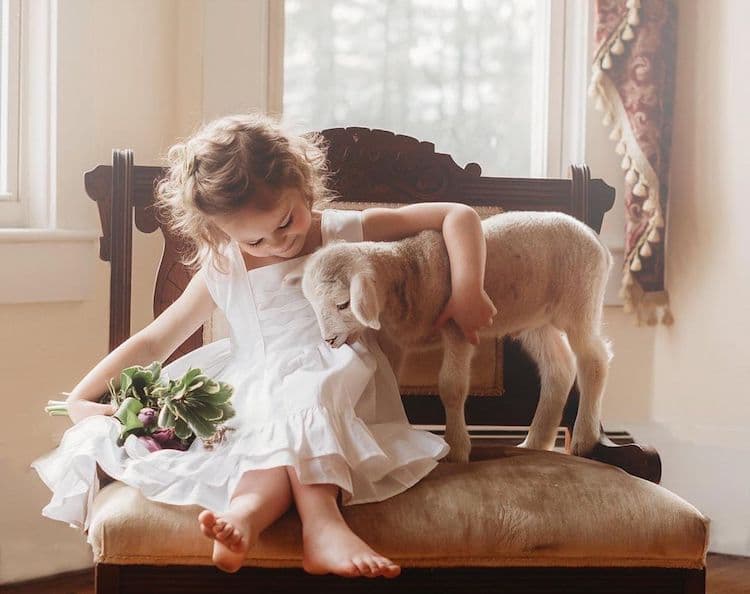
Daylight from the window outlines the child’s dress and the lamb beside her chair. To try the lighting at home, set a chair turned slightly away from a bright window and give the child a familiar object to look at. Expose for the cheek nearest the window so the white fabric retains its folds.
8. A Laugh Against a Soft Garden Background

Ariana Clare’s portrait leaves the background soft enough for the smile to hold your attention. Choose a shaded spot where the child can move, and leave a little space above the head. Keep shooting for a moment after the laugh begins; the expression often changes as the shoulders relax.
9. A Storybook Portrait in Warm Woodland Colors

Golden foliage and a pale bird give Elena Karneeva’s portrait its soft color palette. For a family version, choose two or three colors already in the setting and repeat one in the child’s clothes. A familiar soft toy held close can give the hands a natural position and create a similarly quiet mood.
10. Soft Light Beside a Window

Stand a step back from the window so daylight crosses the face from the side. Turn off nearby ceiling lights if their color clashes with daylight. Tap the nearer eye on your phone to set focus and check the bright side of the face before taking more frames. A thin curtain can soften direct sun when the window is especially bright.
11. Bubbles as a Movement Prompt

Give the child an activity and leave enough space in the frame for their hands and the bubbles. Start taking pictures before they reach out so you catch the changes in expression. A short burst helps when the action is quick. Try shooting from knee height so the bubbles are visible against the background instead of disappearing into bright sky.
12. A Close Frame Around the Face

Move in just enough to make the eyes and expression the main details. Step back and crop slightly if a phone’s widest lens makes the nose or forehead appear disproportionately large. Focus on the nearer eye when the face is turned. A plain background and an even patch of light help keep attention on the expression rather than everything around it.
13. An Activity Portrait at the Art Table

Let a painting session supply the gesture and expression. Include enough of the table to show what the child is making, then move closer for a second frame centered on the face or hands. Set the materials near the light before the activity starts. Once the child is absorbed, keep directions brief so the portrait still feels like a real moment.
14. Black-and-White Reading Portrait

Photograph a quiet reading moment with the book and hands visible. Look for a difference in brightness between the face, book, and background so the image still reads when you remove color. Make the conversion afterward if you want to compare both versions. Keep enough room beneath the face for the pages, since the book is the reason for the downward glance.
15. A Child Absorbed in Drawing

Photograph from a slight angle above the drawing surface so both the pencil and the child’s face remain visible. Let the drawing keep them occupied while you look for a natural pause or a concentrated expression. Try one wider frame with the page and one closer view of the hands. A clean working area makes the finished picture easier to read.
16. A Favorite Book as a Portrait Prop

A book gives a child something familiar to hold and a natural reason to look down. Frame from the side so you can include the cover, the hands, and a little of the face. Wait for a page turn or a pause rather than asking for the same pose repeatedly. For a quieter background, clear the area just behind the reading spot.
17. A Shared Moment With a Sibling or Friend

A conversation or quick side hug gives two children something to do together. Place them at roughly the same distance from the camera if you want both faces in focus. Look at the edges of the frame before shooting so one child does not crowd the other out. Pause if either child needs a break or wants to change the pose.
18. Fall Leaves as a Seasonal Backdrop

Use the leaves already on the ground to add color and give the child something to explore. Shoot low enough to include a patch of leaves and enough background to show the setting. Warm foliage can reflect color onto skin, so check a test frame. A simple top or jacket keeps the outfit from competing with the pattern underfoot. For a different mood, try soft evening light.
Try a Different Light or Angle Next Time
Start with one setup and make a small change between frames. Turn toward the window, move a step farther from the background, or give the child more room to move. Compare the results afterward so you know which change helped. These related projects offer more chances to practice working with light, reflections, movement, and small details.
- Garden Details in Macro Photography
- Use Evening Light in Photos
- Creative Mirror Photography With Reflections
- Photograph Birds and Other Animals
- India Gate in Evening Light
Would you start with A child absorbed in drawing, or did another portrait photography idea catch your eye? Tell us in the comments which project you’d pick and one detail you would change to make it fit what you have.




















0 Comments