Garden Macro Photography by Shilpidea
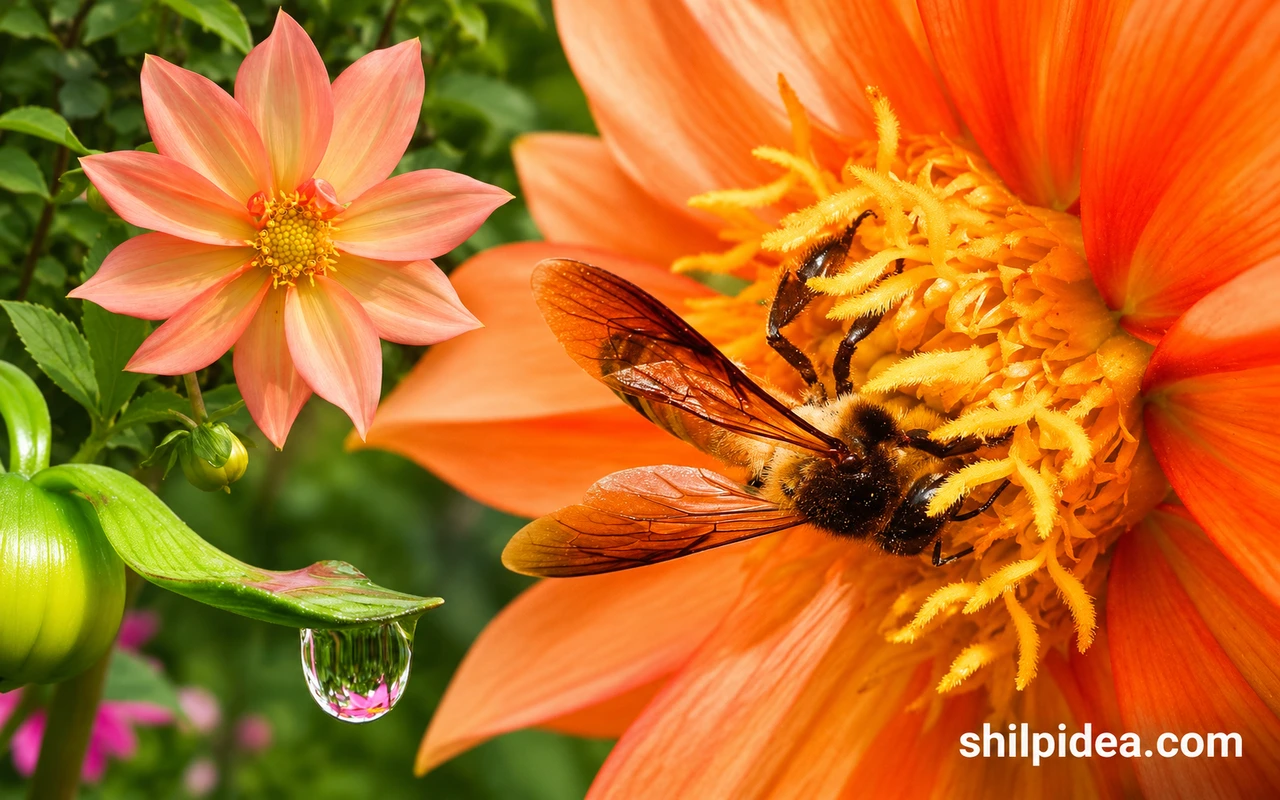
This original Shilpidea garden macro photography collection looks closely at flowers, insects, and details that can be easy to miss from the path. The 10 photographs are by Imran Khan.
Compare how the photographs use front views, low angles, and layers of green behind the subject. These bird and animal photos offer more ideas for framing moving subjects.
The notes below point out one detail in each original frame. Try looking for a similar shape or change of light in your own garden.
1. An Insect Against Orange Petals

The orange petals fill the frame, and the tiny dark insect is most visible where it meets the brighter center. That contrast makes it possible to see the wings and body without a separate backdrop. On your own garden walk, watch where an insect naturally lands and keep the surrounding plant still while you frame the shot.
2. Small Insects on a Curved Stem

The curved stem leads across the picture and gives the insects a clear edge to stand against. Notice the space below the curve. It makes the underside easy to see. A slight change in camera height can reveal a subject tucked beneath a plant, especially when a patch of light falls through the leaves behind it.
3. An Insect on a Pink Flower

Pink petals surround a yellow center closely enough that the insect remains part of the whole flower. The side angle leaves a little room behind its body and makes the flower center look raised. Try watching a single bloom for a few moments. You can plan the space around its center before an insect arrives.
4. A Bud Starting to Open

The green sections on this bud pull the eye around the first strips of pink. Focus on the seam where the colors meet if you want the small opening to stand out. Keep a little space around the bud so its shape is visible all the way around. Photographing it again later can show how the opening changes.
5. A Pink Flower With a Bright Center

The yellow middle gives this front view a clear point to land on. Look at how the longer pink petals reach into the green around the flower. Leave a narrow border if you want to show the spread of a bloom and its setting at the same time. Shifting left or right can simplify the busiest patch of leaves.
6. An Orange Flower Seen From the Side

The side view turns the flower into a bowl, with the petal tips catching the light. The stalk stays visible below the bloom and gives that shape a base. For a similar angle, move your camera toward the height of the petals. Pause where the stem and the flower can be seen without competing with the background.
7. Layered Orange Petals Up Close

This closer view emphasizes the way the petals overlap and point in different directions. The orange remains the strongest color, even with a little green visible around it. Focus on one of the front petal layers when you want texture. Moving slightly farther away can bring more layers into clear view without losing the shape.
8. A Peach Flower With Star-Like Petals

Several broad petals reach outward from a compact center, giving the flower a star-like shape. The warm peach tones are distinct from the darker greens behind them. Take a moment to compare the lengths of the petals before framing a similar flower. Leaving the longest tips inside the frame makes the shape easier to see.
9. The Underside of a Pale Yellow Flower

The underside shows green sepals gathering around the stem and pale petals spreading above them. In this angle, the supporting parts of the flower become part of the composition. Try looking up gently from the side without lifting the plant. Leave some lighter background near the petals if you want their thin edges to show.
10. A Water Droplet Holding a Reflection

One droplet hangs below the green edge, and the scene around it appears again as a tiny reflection. Notice how the dark patch behind the drop helps outline its round shape. Move slowly around a droplet and watch how its reflection changes. Waiting for the air to settle can keep the leaf and drop steadier.
Look Again From a Different Angle
Choose a flower that you can see from more than one side. Try a close front view, then look at the same flower from underneath or beside the stem. Moving the camera a little can change which colors sit behind the subject and what the frame reveals. Use these other photo collections to practice with different light and subjects.
- Try Photographing in Evening Sunlight
- Photograph Birds and Small Animals
- Explore Natural Light Portrait Photography
- See Evening Photos of India Gate
- Use Reflections in Creative Photos
What would make the garden macro photography by shilpidea ideas work in your garden or on your balcony? Tell us in the comments which setup suits your space and what you’d change for the light, room, or containers you have.






0 Comments