15 Sage Green and Cream Bedroom Ideas for a Cozy Retreat

A sage green and cream bedroom can feel fresh without losing the warmth that makes a sleeping space inviting. Muted green brings in color, while cream gives the eye somewhere quiet to rest. You do not need to replace everything at once. A quilt, a pair of curtains or one painted wall can establish the palette before you consider bigger changes. These fifteen decorating ideas draw on real designer projects, from quick textile updates to architectural details. Look for an approach that works with your existing furniture, natural light and budget, then adapt it to your own room.
1. Bring Sage Into a Cream Room With a Layered Quilt

You can introduce this palette without repainting a single wall. In Marian Parsons’ bedroom, a muted green quilt brings color to an otherwise light, neutral setting. The upholstered bed keeps the transition gentle, while patterned pillows stop the bedding from feeling too plain. Try a similar approach with the cream linens you already own: add one sage coverlet, then repeat green in a small cushion. Keep the larger furniture unchanged until you know you enjoy the combination.
2. Give a Guest Daybed an English-Country Feel

A daybed can carry this color combination just as effectively as a full upholstered bed. Amanda Weldon’s guest-room project uses soft green walls and layered pale textiles to create a countryside-inspired setting. Keep the pillow arrangement practical: guests should be able to move decorative cushions without searching for somewhere to put them. A cream base cover and one patterned lumbar cushion can establish the look. Choose washable fabrics when the room doubles as an everyday sitting space.
3. Frame Cream Bedding With Deep Green Curtains
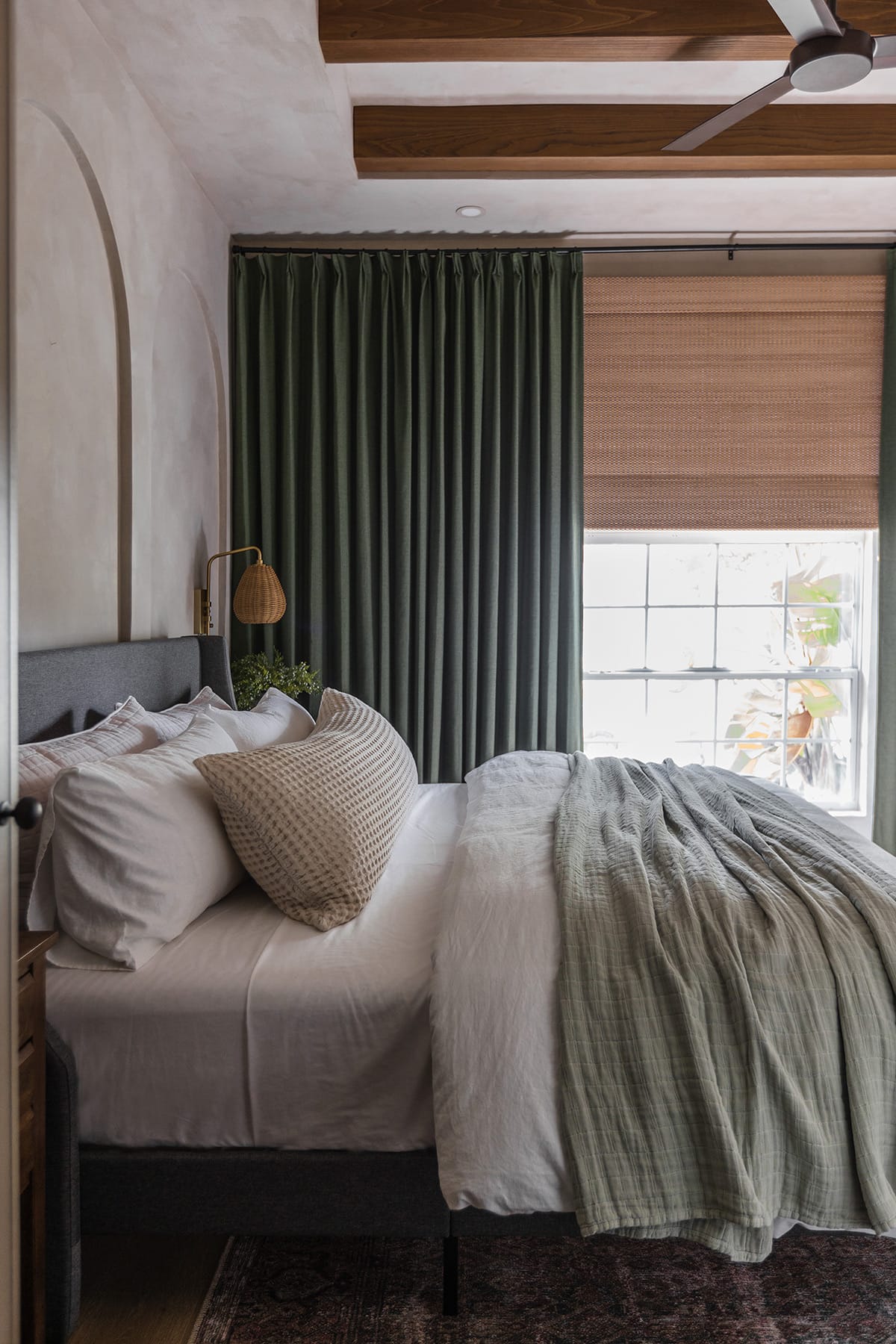
Cream does not have to mean a flat, bright-white room. Jenna Sue’s Mediterranean-inspired bedroom uses textured neutral walls and deeper green curtains, showing how an earthy green can frame a softer sage-and-cream scheme. For a smaller update, borrow the window treatment idea rather than the architectural renovation. Choose curtains with enough fabric to form relaxed folds, keep the duvet light, and add a muted sage throw. Check the fabric beside your wall color before ordering a full set.
4. Balance Sage Walls With Vintage Walnut Furniture

Rich wood gives pale green something warm to sit beside. Miranda Schroeder’s guest bedroom pairs sage walls with vintage walnut pieces and light linens, creating contrast without introducing a busy collection of colors. If you already have a dark dresser, try it against a sage sample before deciding it needs paint. A cream lampshade or pale bedspread can connect the heavier furniture to the rest of the room. Leave some tabletop space clear so the wood itself becomes part of the decoration.
5. Give One Wall Texture With Sage Paneling

A single textured wall can carry the green while the bedding keeps the room soft. Cate St Hill’s project combines tongue-and-groove paneling with pale wood and relaxed linen. The contrast comes from surfaces rather than lots of different colors. Take the idea in a simpler direction with one painted feature wall if paneling is outside your budget. For small displays, explore our wall shelf ideas. Keep bedside accessories restrained; when the wall already has texture, it does not need a crowded arrangement of decorative objects.
6. Add Vertical Warmth With a Wood-Slat Headboard

Vertical wood slats introduce a different rhythm from painted paneling. In this Stockholm bedroom, the custom headboard stretches upward, giving the bed a warm architectural backdrop within a green room. Cream linen keeps the wood grain from competing with a second strong pattern. For a simpler interpretation, choose a freestanding slatted headboard instead of covering the whole wall. Check its width against the bed and nightstands so the timber feels like one deliberate feature rather than an oversized addition.
7. Soften Green Walls With an Oatmeal Upholstered Bed

An upholstered bed creates a useful middle ground between sage walls and light bedding. In Monika Hibbs’ makeover, the oatmeal fabric adds warmth without the sharp contrast of a white bed frame. The walls use Sherwin-Williams Evergreen Fog, a green-gray shade identified in the original project. To adapt the look, compare fabric swatches with your chosen paint and include both cream and taupe in the bedding. One small patterned cushion is enough to make the arrangement feel considered.
8. Extend the Palette Into a Small Reading Corner

If the bed area already feels finished, carry the same colors into an unused corner. The reading space in Monika Hibbs’ bedroom project adds a chair, a small table and a floor lamp rather than another large storage piece. Repeat cream through the upholstery and bring green into a cushion or the wall behind it. Before adding a chair, check that drawers and doors can still open and that the route around the bed stays comfortable.
9. Keep a Light Sage Room Crisp With Black Accents

Soft colors can still have definition. Orlando Soria’s bedroom, featured by Clare, brings together light sage paint, pale wood and dark accents that give the scheme a clearer outline. Rather than adding black everywhere, repeat it in two small details, such as a lamp and a picture frame. Keep the bedding cream or warm white so those darker elements remain accents. This approach works especially well when you want the room to feel relaxed without becoming entirely tonal.
10. Make a Bedroom Work Corner Feel Part of the Palette

A desk does not have to introduce a completely different style into the bedroom. This light green Scandinavian room combines pale storage with a wooden work surface, keeping the functional corner visually connected to the sleeping area. Use a cream desk chair or a neutral task lamp to repeat the softer tones. Closed storage is useful for putting work materials away at the end of the day. Leave enough clear desktop for the space to function comfortably, not just photograph well.
11. Use a Floral Headboard to Connect Green and Cream

A fabric with both colors can make the whole palette easier to assemble. Alisa Bovino’s Bowood bedroom uses floral upholstery as the starting point, with pale green walls and detailed linens carrying the idea around the room. Her wall color is Benjamin Moore Antique Jade, which leans blue-green rather than being a universal sage match. Borrow the design principle: choose one floral you love, pull a quiet green from it, and let cream bedding provide breathing room.
12. Use Tonal Trim to Keep the Room Feeling Connected

Trim can quietly change the balance of the entire scheme. Alisa Bovino’s bedroom uses Antique Jade on the walls, doors and molding, with different finishes distinguishing the surfaces. This creates a gentler transition than outlining every edge in bright white. You can borrow the tonal approach while choosing a sage that suits your own space. Keep the bed cream to provide contrast, and test the wall and trim finishes together; the same color can read differently as the sheen changes.
13. Add a Small Warm Pattern for a Collected Look

A sage-and-cream bedroom does not need to exclude every other color. Louise Roe’s room pairs green walls with traditional furniture and small-scale patterned textiles, giving the space a collected character. A little rust, muted red or dusty rose can provide a similar warm accent in your own scheme. Keep that extra color to one textile at first, such as a pillow or throw. Repeating the main cream background helps the pattern feel connected rather than added at random. Explore indoor plant displays if your room has suitable light.
14. Try a Deeper Gray-Green With Light Bed Linen
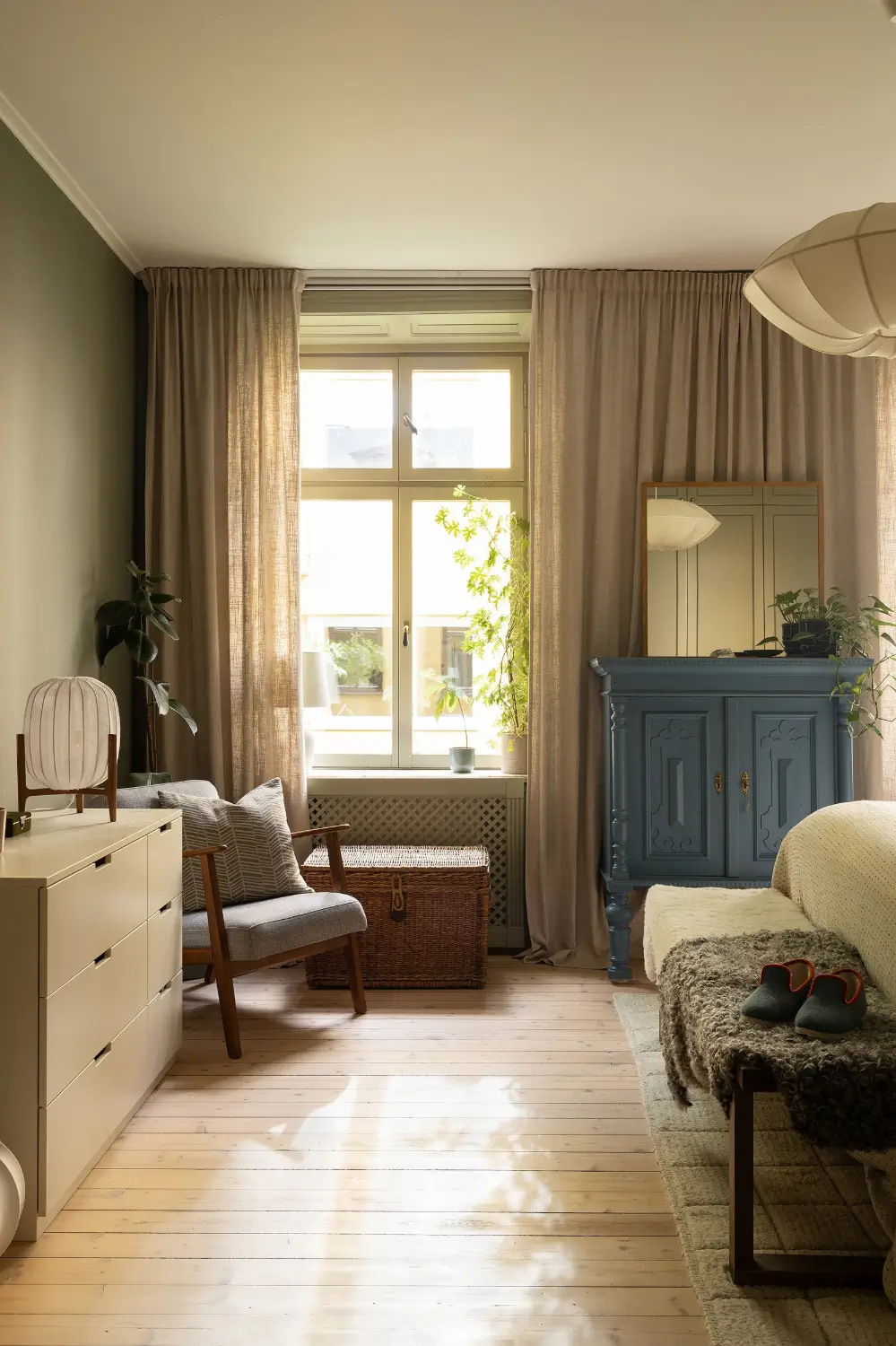
For a more enveloping room, move toward a deeper gray-green while keeping the bed visibly lighter. This Stockholm apartment, featured by The Nordroom, shows how pale bedding can provide relief against richer walls. The blue antique cabinet adds personality without turning the scheme into a matching furniture set. Borrow the contrast rather than trying to match an unnamed paint from a screen. Test a physical sample near your actual bedding and look at it under the lamps you use at night.
15. Let Sage Follow the Shape of a High Ceiling

A tall bedroom can feel disconnected when the ceiling seems separate from everything below it. Ashley Whiteside’s project carries green up through the architecture, with paler green-gray trim defining the edges. Light bedding gives the eye a quieter surface beneath the color. If you like the effect, compare wall and ceiling samples together before committing. This is a larger decorating decision than changing textiles, so start with the room’s proportions rather than assuming every ceiling needs the same treatment.
Finish Your Sage and Cream Bedroom With Thoughtful Details
Once your bedding, walls and curtains work together, a few smaller touches can help the room feel complete. A shelf beside the bed, a plant near the window or a decorative accent in warm wood can complement the sage and cream palette. Explore these ideas for the finishing touches that suit your space:
- 15 Creative Interior Design Ideas to Refresh Your Home
- 10 Wall Shelf and Plant Display Ideas for Home Decor
- 10 Indoor Plant Decoration Ideas for Your Home




















0 Comments