Olga Prinku: Flower Embroidery With 3,600+ Students
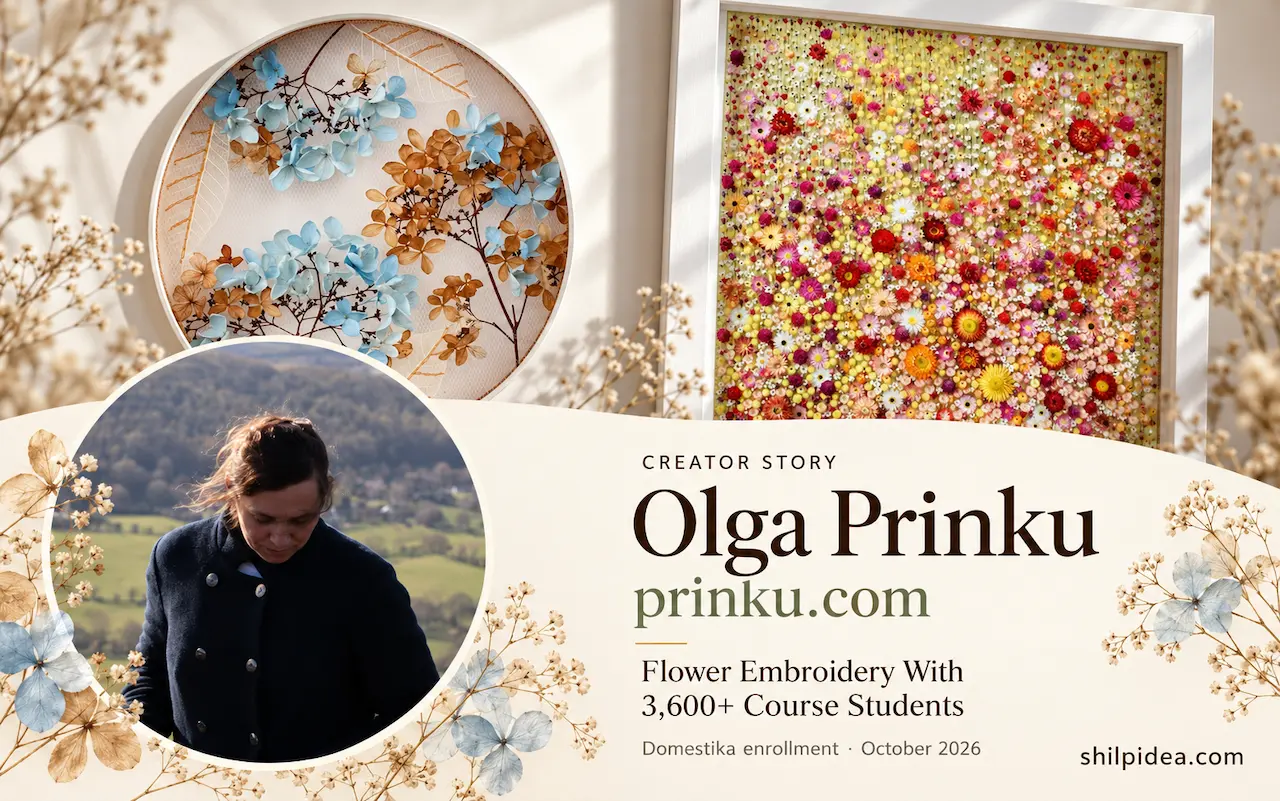
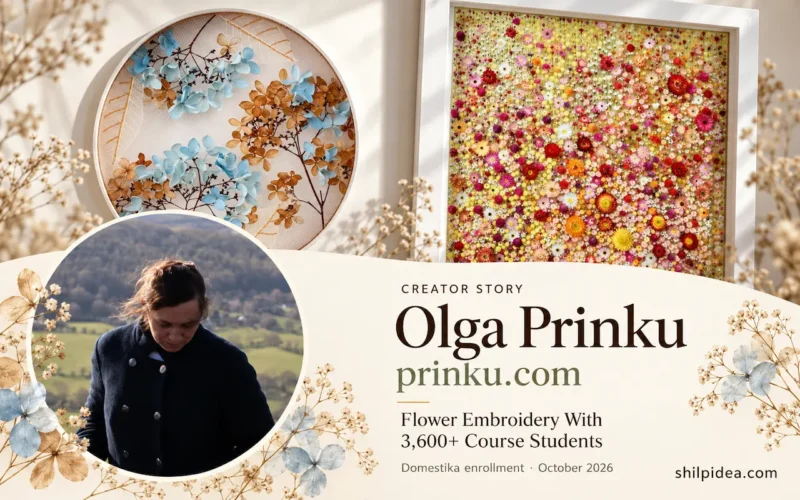
Olga Prinku turned dried flowers into an embroidery medium—and a course with more than 3,600 students on Domestika. Her creative practice now connects botanical artworks, a published book, online teaching, and small-group workshops.
Instead of using thread alone, she works with real plants on tulle fabric. Her journey shows how experimenting with familiar materials can lead to a distinctive specialty and several ways to share it.
Table of Contents
Connect with Olga Prinku
Website: Olga Prinku — Dried Flowers on Tulle Embroidery
About Olga: About Olga Prinku
Instagram: @olgaprinku
Online Courses: Olga Prinku on Domestika
A Fresh-Flower Experiment Changed Direction
Originally from Moldova and now based in North Yorkshire, Olga worked as a graphic designer before developing her botanical art practice.
In 2016, she began weaving fresh flower stems into tulle. The first hoop looked appealing when newly made, but its composition changed as the flowers dried.
That limitation became a useful discovery. By early 2017, she was sharing work made with dried flowers instead.
Her initial experiments grew from interests in knitting and wreath-making. Rather than abandoning those skills, she combined them with a different material and kept testing what would hold its shape.
Making Plants Part of the Fabric
Olga’s compositions use dried and preserved flowers, seed heads, grasses, berries, and other botanical materials. She says she has worked with more than 50 plant species.
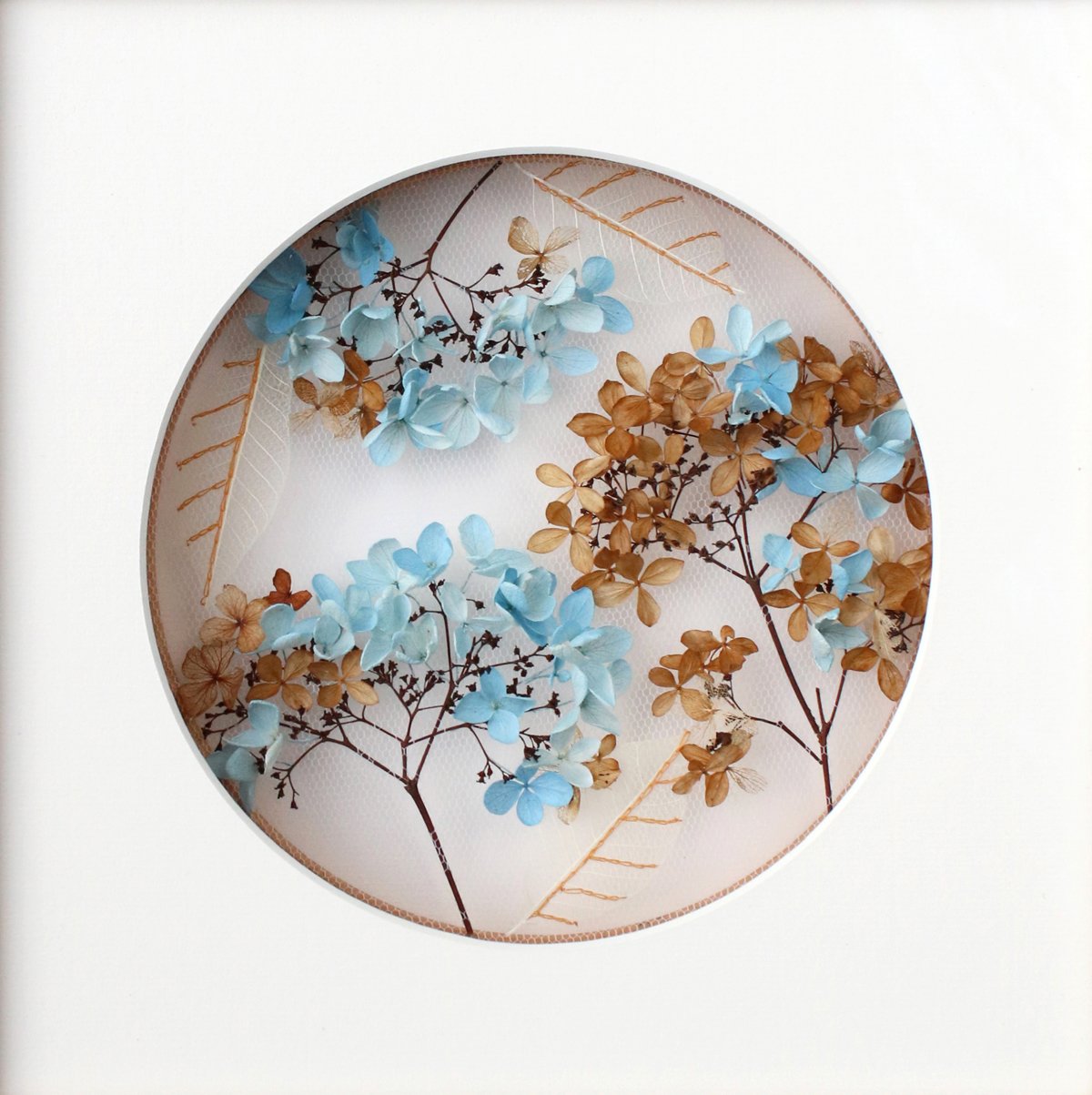
Her Flora Tapestry series explores circular arrangements, including a hydrangea composition. These works draw attention to the structure and texture of the plants themselves.
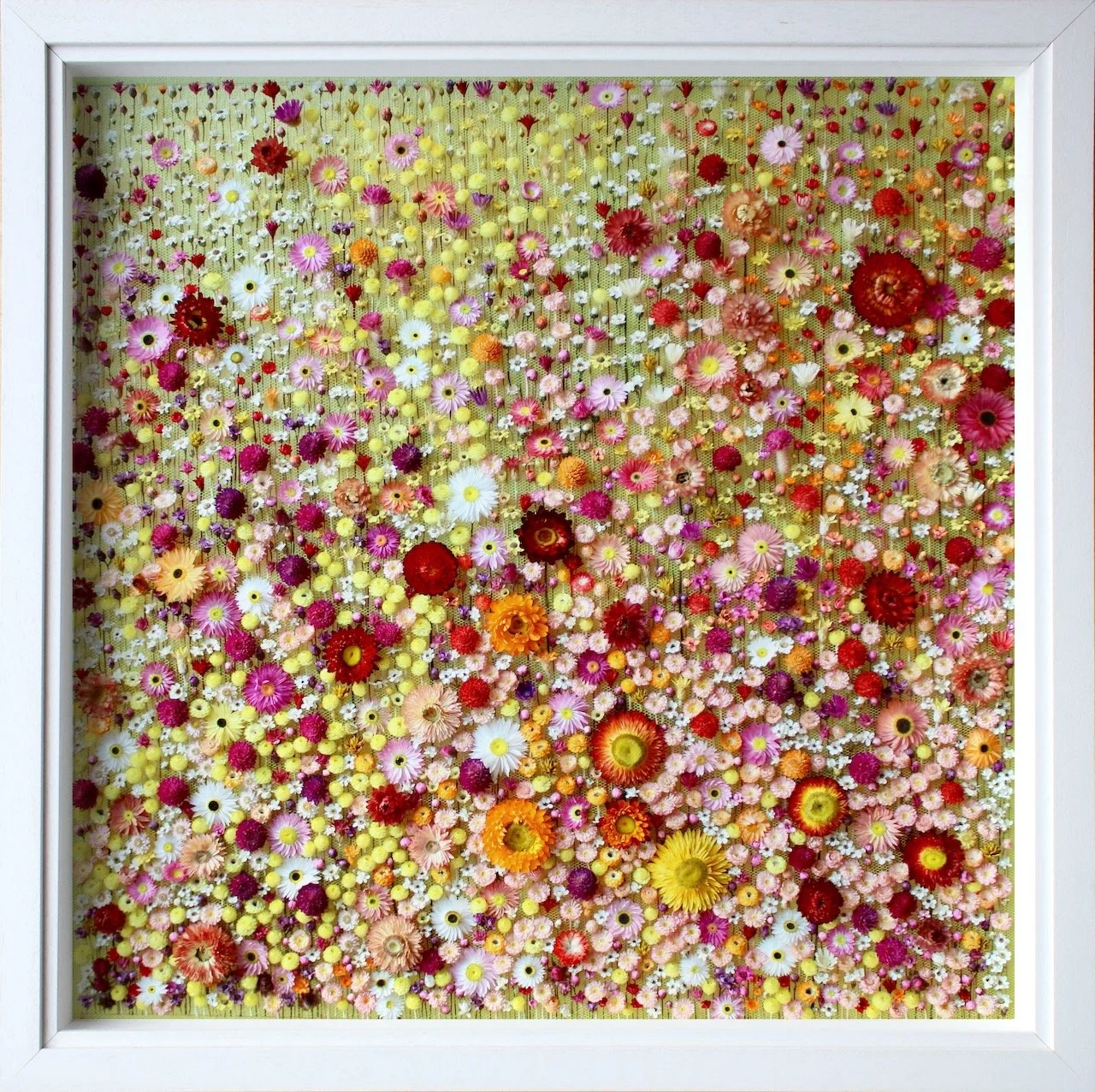
Her Woven Landscape series expands the approach into larger, densely worked pieces inspired by meadows. Pastoral 1, dated 2025, measures 73 centimeters square and uses around nine dried-flower species.
The change in scale shows how one technique can support different kinds of work without losing its recognizable identity.
Teaching a Technique to Thousands
Olga’s Domestika course, Tulle Embroidery with Natural Flowers and Plants, listed 3,680 students when checked on October 18, 2026.
The course includes 16 lessons covering materials, flower preparation, tulle, composition, and protecting the finished artwork. Learners work toward creating their own botanical embroidery piece.
This is a significant part of the business model: a recorded course lets people explore her process without attending an in-person workshop.
The student figure shows enrollment in that course, rather than the number of paying customers or Olga’s earnings. It still provides a concrete measure of interest in this specialized craft.
Books and Workshops Offer Different Entry Points
Dried Flower Embroidery: An Introduction to the Art of Flowers on Tulle was published by Quadrille in September 2021.
The 160-page book covers preparing materials, drying flowers, and developing botanical designs. It gives readers another format for learning alongside their own supplies.
For in-person teaching, Olga’s Homo Faber experience listing offers dried-flower embroidery workshops by appointment:
| Offering | Published detail |
|---|---|
| Workshop price | £150 per person |
| Group size | One to five participants |
| Location | Yarm, United Kingdom |
Details checked October 18, 2026; confirm current arrangements before booking.
Together, the book, course, and workshops serve different preferences: learning from print, following video demonstrations, or working directly with the artist.
Growing the Practice While Continuing to Learn
Olga also accepts inquiries about artistic and commercial commissions. Her website documents collaborations with brands including Anthropologie and Swarovski.
These opportunities extend the practice beyond selling lessons. A recognizable technique can also become the basis for commissioned artwork or a creative collaboration.
She continues to invest in her own skills. QEST named her a 2025 Clothworkers’ Company Scholar, supporting training in gilding, tambour beading, and embroidery.
That detail makes her story especially useful for developing creators: an established practice does not mean experimentation has finished. New training can open another direction for the same core idea.
Meet More Creators, Discover New Possibilities
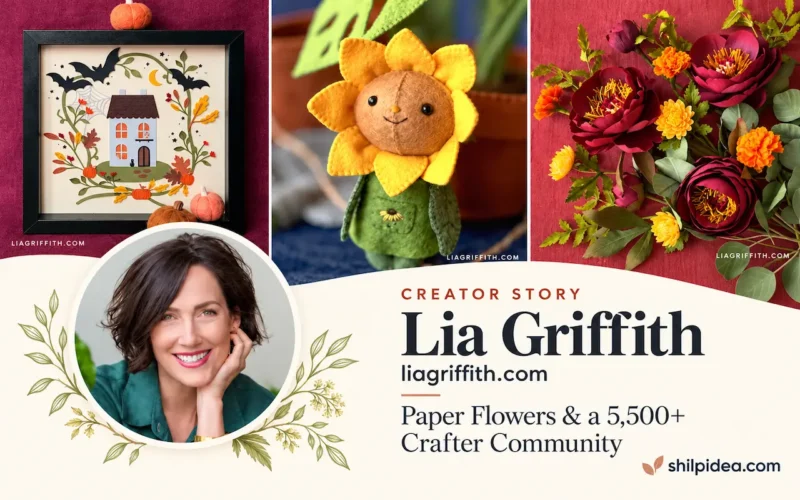
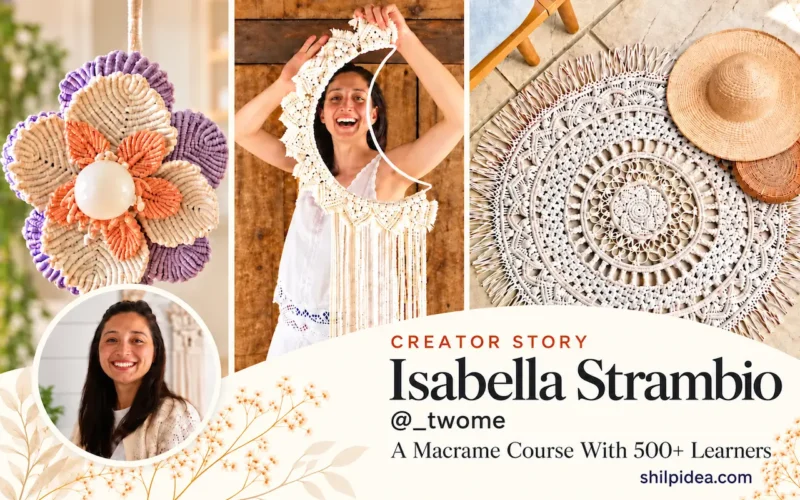
Explore Lia Griffith’s paper flower journey for another way of building education around botanical inspiration. Then discover Isabella Strambio’s macrame career, where a different material helped shape a new creative direction.






0 Comments