21 Eggshell White Wall Ideas with Warm Interior Accents
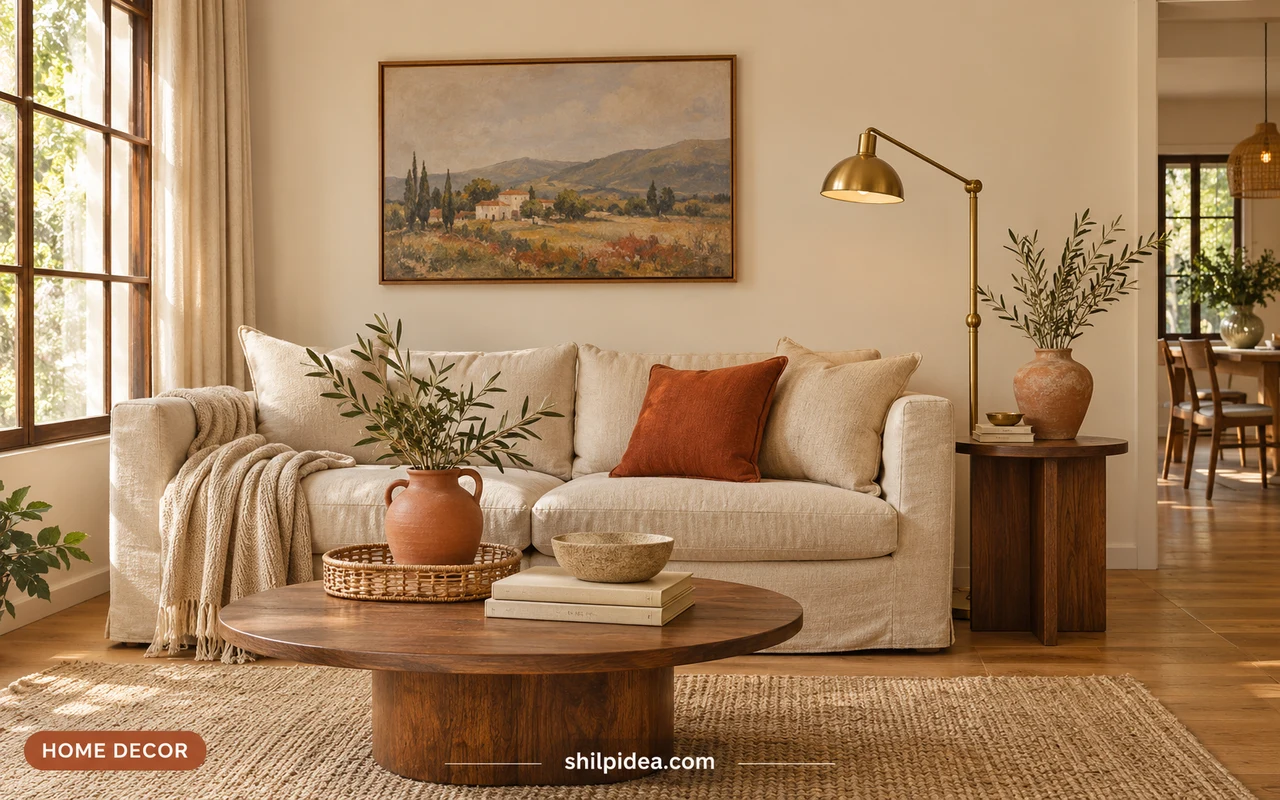
Eggshell white walls offer a soft backdrop for wood, brass and textured fabrics. These 21 details explore warm-white decorating; the photographs are inspiration, not a promise of one identical paint color in every room.
If you enjoy rustic wood decor, start with the timber you already have and build the lighter surfaces around it.
For a gentler bedroom palette, these sage cream bedrooms offer a complementary direction. Compare samples in your own daylight and evening lighting before choosing a finish.
1. Keep Original Wood Trim as a Warm Frame
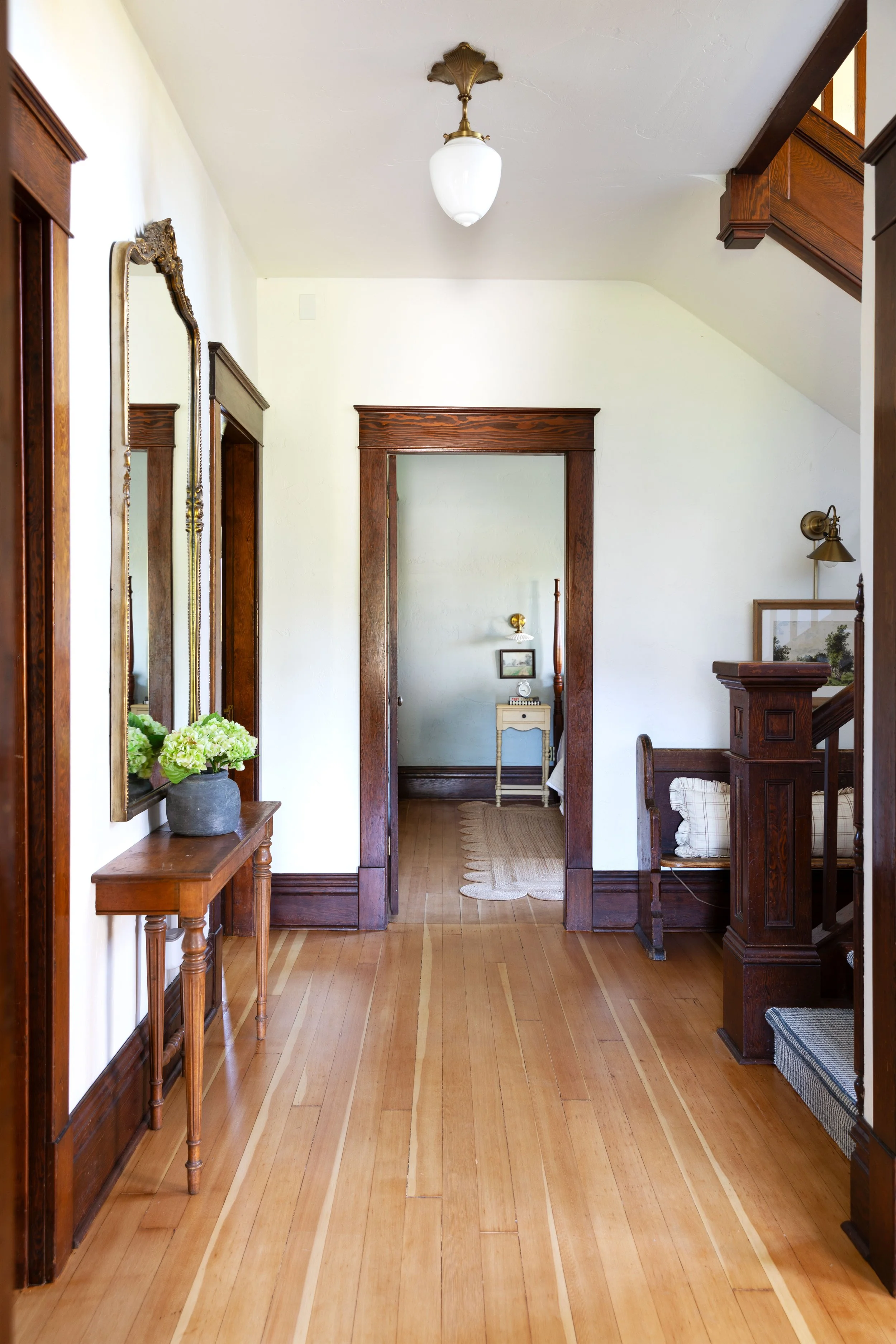
Deep wood door frames give pale walls a clear outline, so the room feels layered before any extra decoration is added. The useful lesson is to consider existing timber before choosing a white sample: its orange, red or brown tones will affect the combination. Here, eggshell white describes a color family, not a sheen. Paint manufacturers also use eggshell for a finish, which is a separate decision.
See the room tour: Keep Original Wood Trim as a Warm Frame by Cathy and Garrett / The Grit and Polish.
2. Use a Brass Ceiling Light to Warm a Pale Room
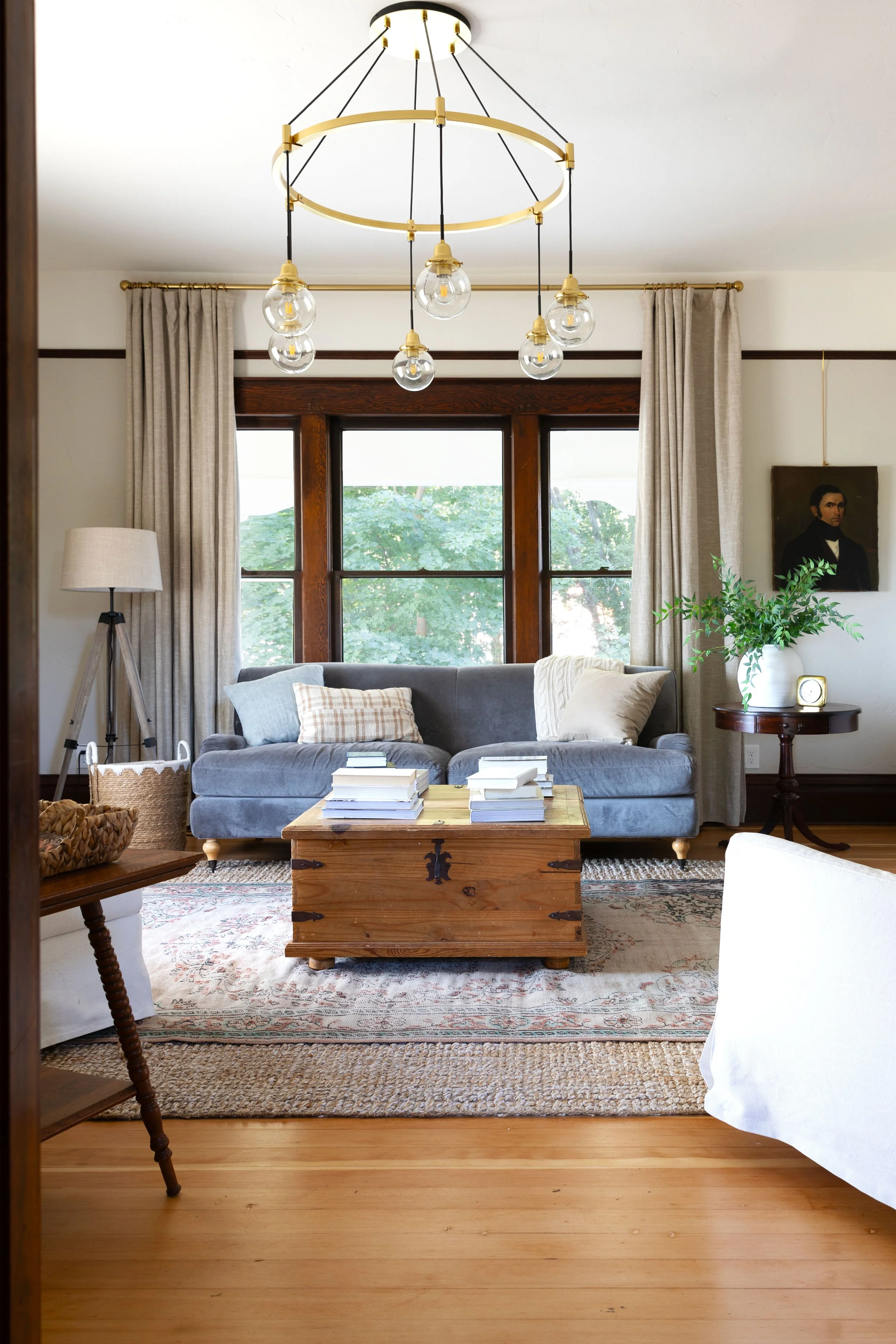
A generous brass-toned light draws the eye upward in this soft white living room. The metal adds a warmer note without requiring a large area of strong color, while blue upholstery keeps the palette balanced. Notice how the fitting sits within the room rather than competing with an elaborate wall treatment. Start with one substantial warm metal accent and let quieter details support it.
See the room tour: Use a Brass Ceiling Light to Warm a Pale Room by Cathy and Garrett / The Grit and Polish.
3. Pair Warm White Walls with Mushroom-Toned Cabinets
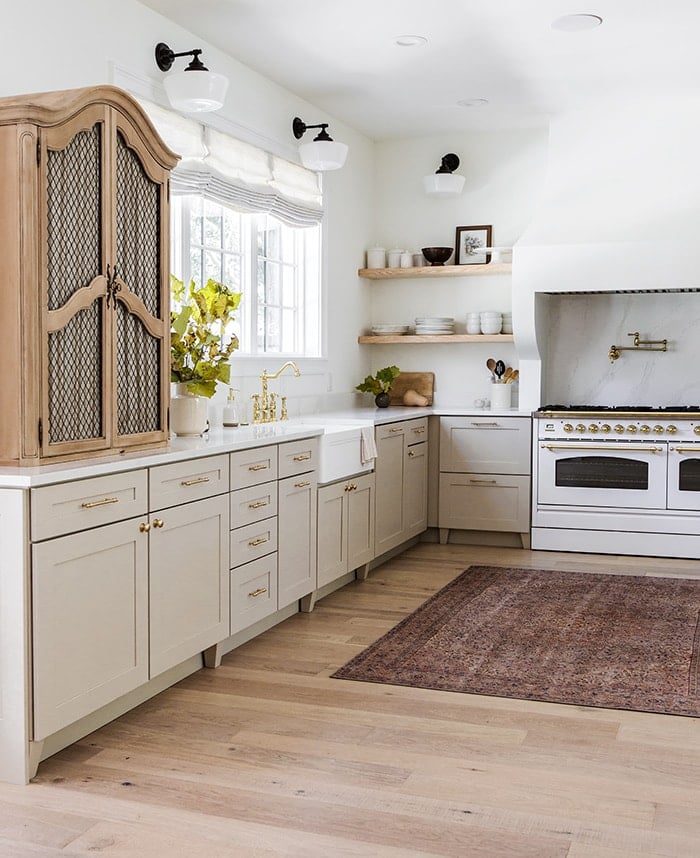
A pale wall and slightly deeper neutral cabinets create definition without a sharp black-and-white contrast. The timber pantry cabinet adds another material, making the kitchen feel collected rather than perfectly matched. Jenna Sue’s source identifies Alabaster for the walls; use the room as a starting point, then sample paint in your own light. These interior design ideas offer more ways to mix simple finishes.
See the room tour: Pair Warm White Walls with Mushroom-Toned Cabinets by Jenna Sue Design.
4. Add a Soft Stair Runner Against Dark Timber
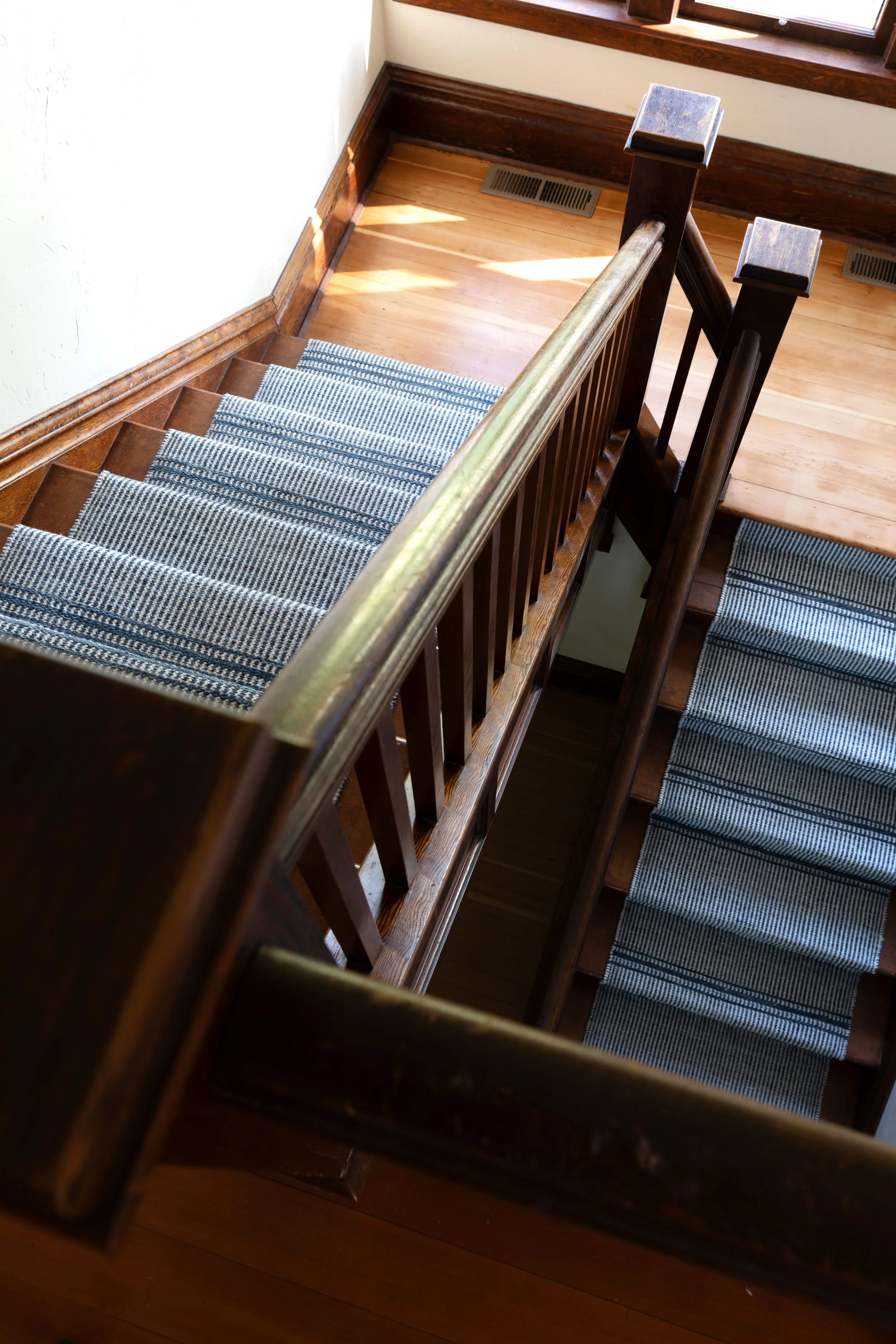
A textured runner softens the center of a wooden staircase and gives the surrounding pale walls a calm partner. It also offers a way to introduce a small pattern without covering a large wall. Choose a design that relates to the flooring and check the practical installation requirements with the supplier. A stair runner needs secure fitting; a loose decorative rug is not a substitute.
See the room tour: Add a Soft Stair Runner Against Dark Timber by Cathy and Garrett / The Grit and Polish.
5. Bring in Greenery Beside a Light Curtain
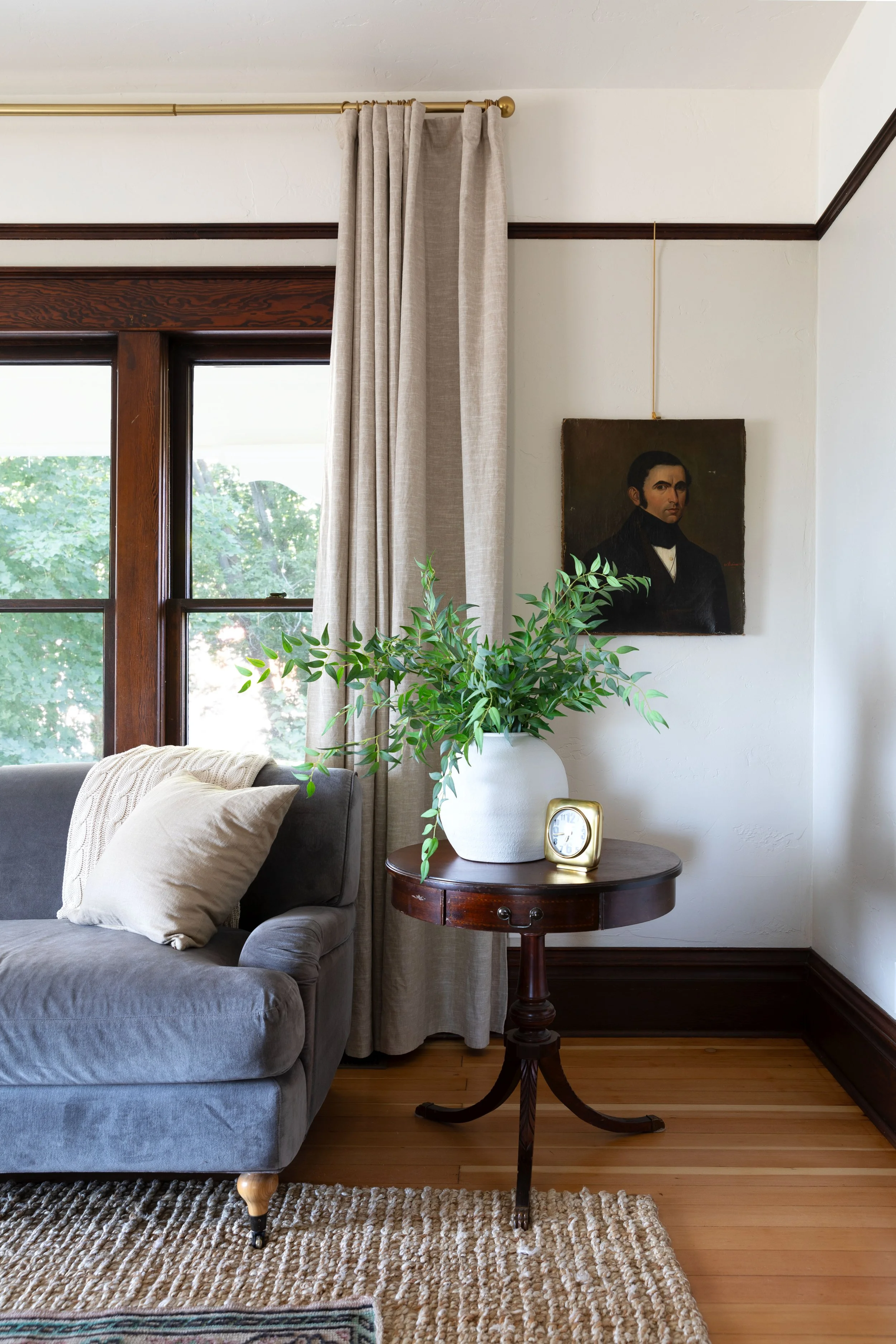
A leafy branch arrangement breaks up a pale wall with an organic shape, while a full-length curtain adds softness beside the darker window frame. The combination feels warm through texture rather than a heavy dose of beige. Leave enough clear space around the arrangement for the silhouette to show. For more placement ideas, these indoor plant displays explore greenery in different parts of the home.
See the room tour: Bring in Greenery Beside a Light Curtain by Cathy and Garrett / The Grit and Polish.
6. Hang Botanical Prints Above a Warm Wood Chest
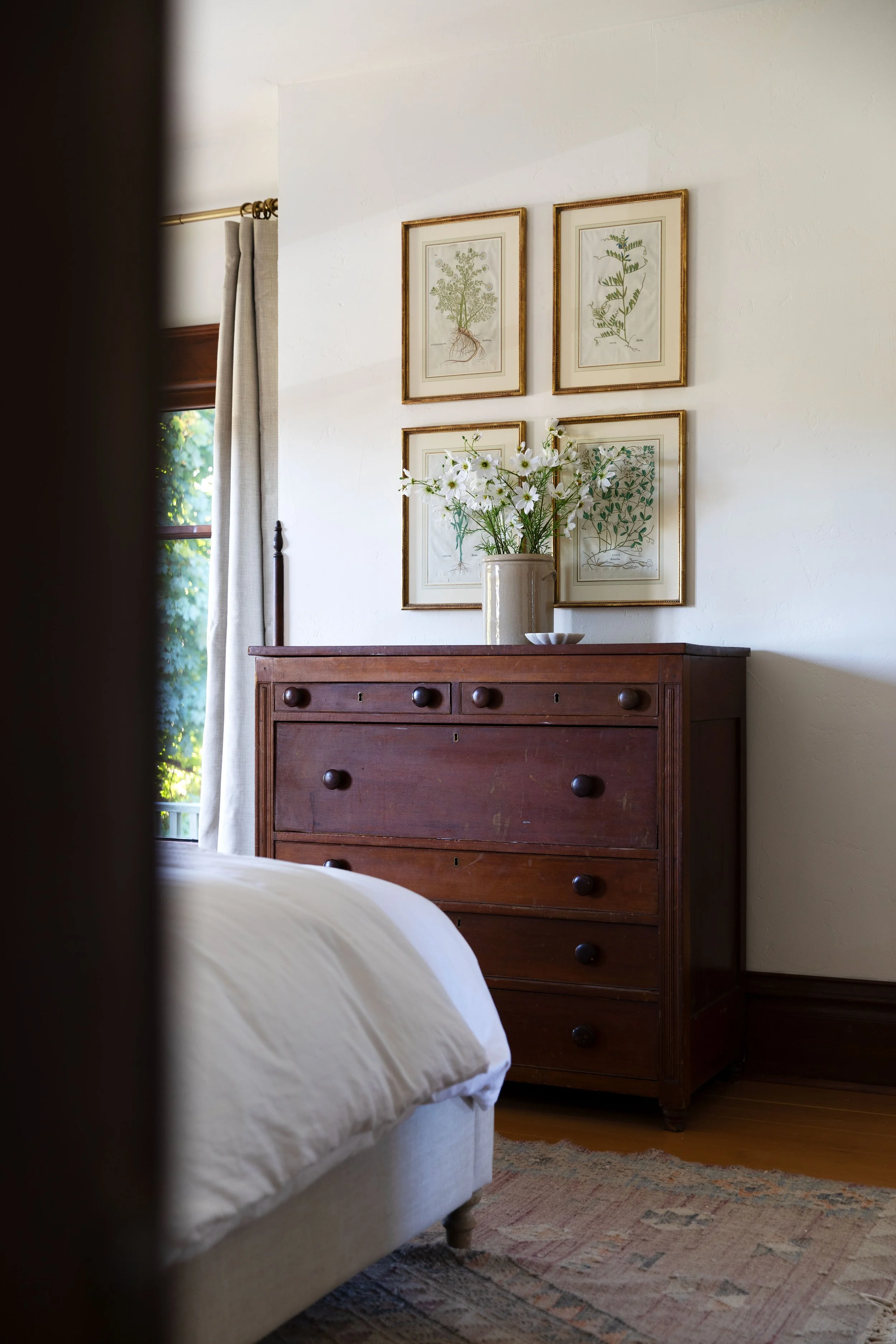
A small group of botanical pictures gives this bedroom wall a gentle focal point above a substantial wooden chest. The restrained frames and generous pale background stop the arrangement from feeling crowded. Choose images with colors that already appear elsewhere in the room, then test the layout with paper before making holes. The furniture below provides a useful boundary for the overall width of the display.
See the room tour: Hang Botanical Prints Above a Warm Wood Chest by Cathy and Garrett / The Grit and Polish.
7. Warm Open Shelves with Ceramics and Wood

A few bowls, boards and pottery pieces make open kitchen shelves feel inviting against a light wall. Their different surfaces do more work than a collection of perfectly matching objects would. Keep frequently used pieces easy to reach and allow gaps between taller shapes. The idea is a relaxed display that still functions, rather than filling every available inch with things that need constant rearranging.
See the room tour: Warm Open Shelves with Ceramics and Wood by Jenna Sue Design.
8. Give a Pale Dining Room Dark, Simple Seating
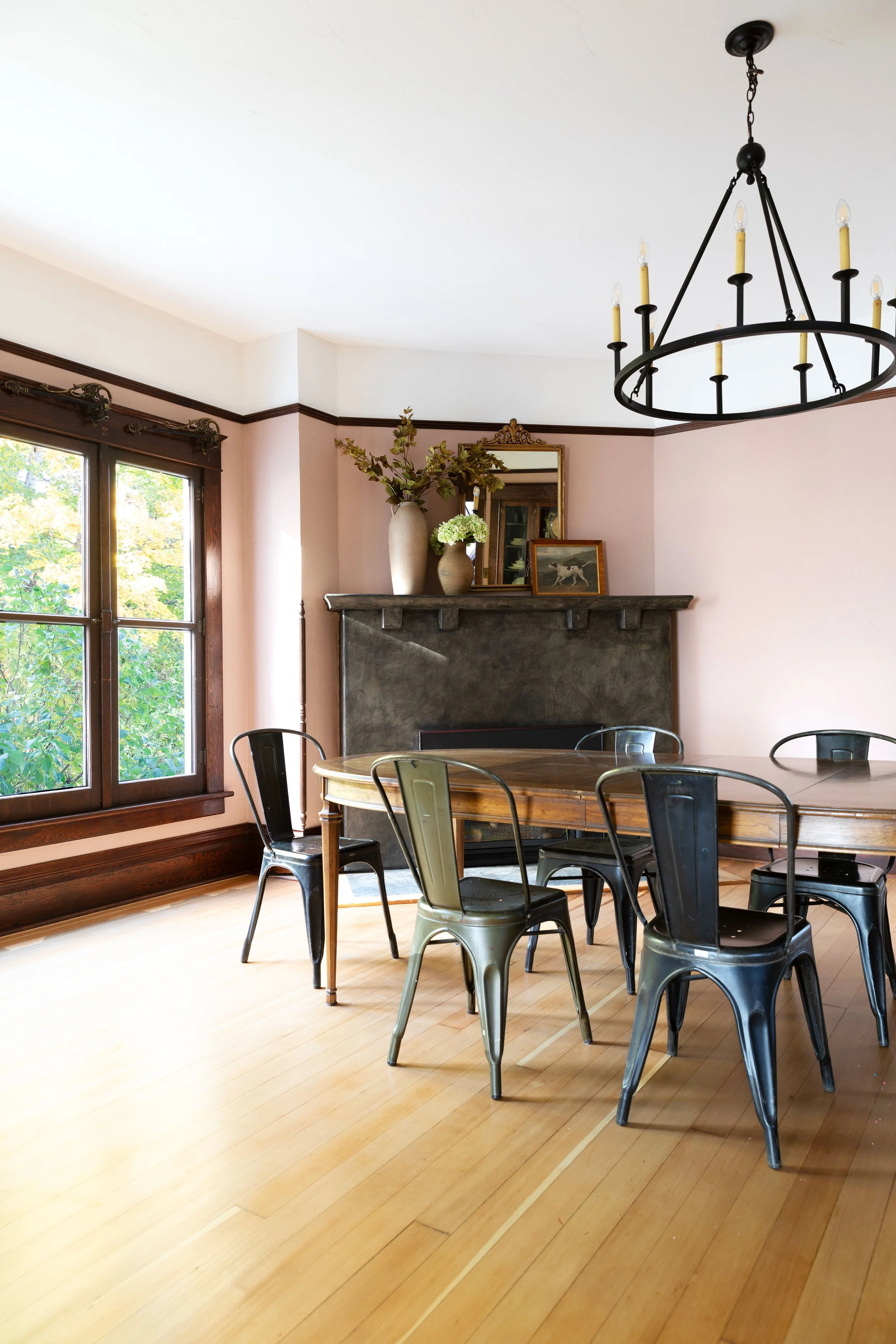
Dark chairs provide a clear outline around the dining table, helping a light room feel grounded. The warm floor and wooden furniture keep the contrast from becoming stark. This is a useful direction if you like pale walls but do not want an entirely cream-colored room. Let the table shape and practical seating needs guide the arrangement, then use one light fitting to bring the group together.
See the room tour: Give a Pale Dining Room Dark, Simple Seating by Cathy and Garrett / The Grit and Polish.
9. Balance Creamy Walls with Visible Ceiling Beams
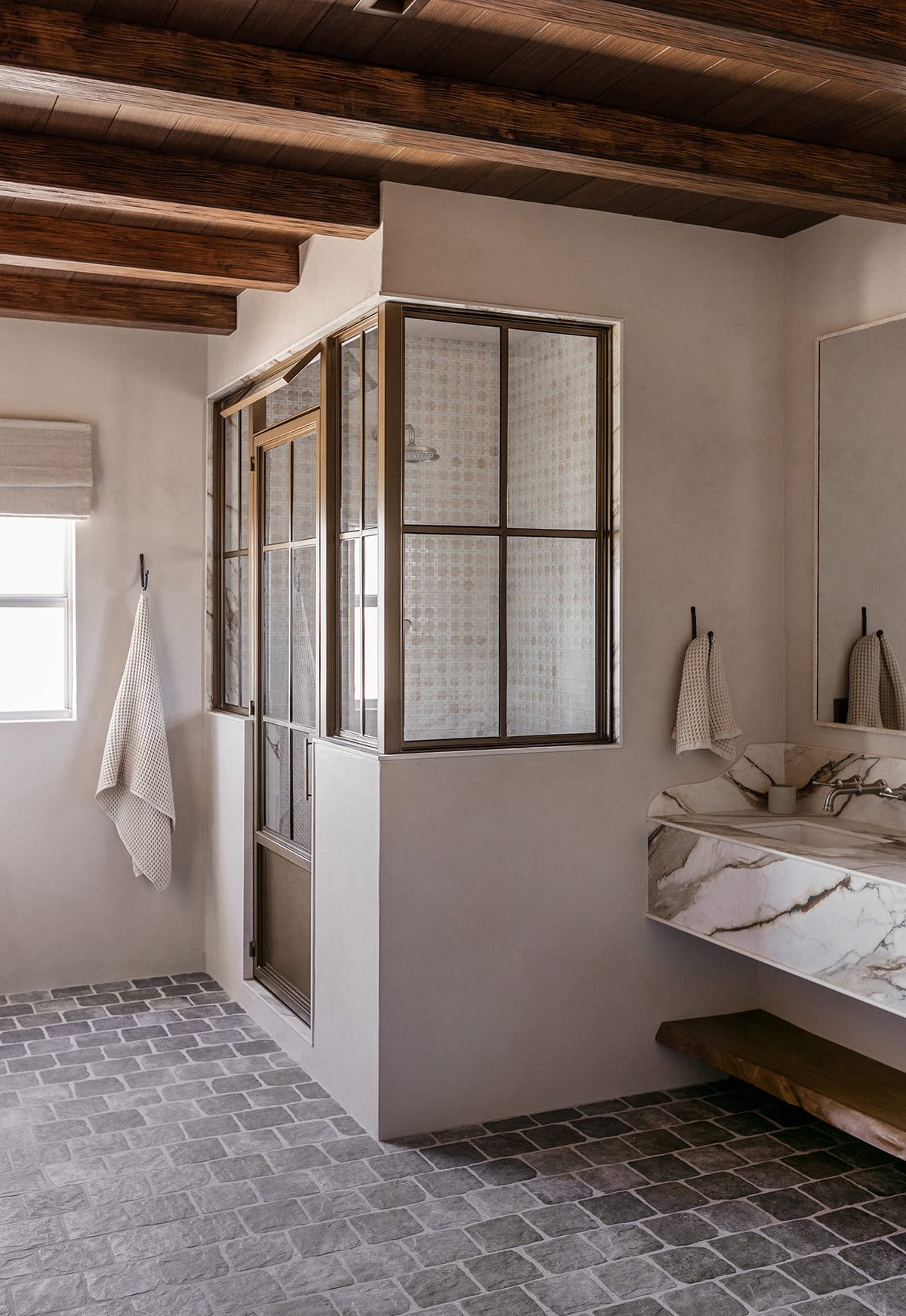
The dark overhead beams bring warmth and a sense of scale to this pale bathroom. Their repeated lines are strong enough that the surrounding walls can stay quiet. Jenna Sue’s source describes a wall treatment tinted Divine White; it is not evidence that every warm white will look the same. Consider the ceiling height and existing architecture before borrowing a beam-heavy look for a smaller room.
See the room tour: Balance Creamy Walls with Visible Ceiling Beams by Jenna Sue Design.
10. Lean Wooden Boards Against Pale Wall Paneling
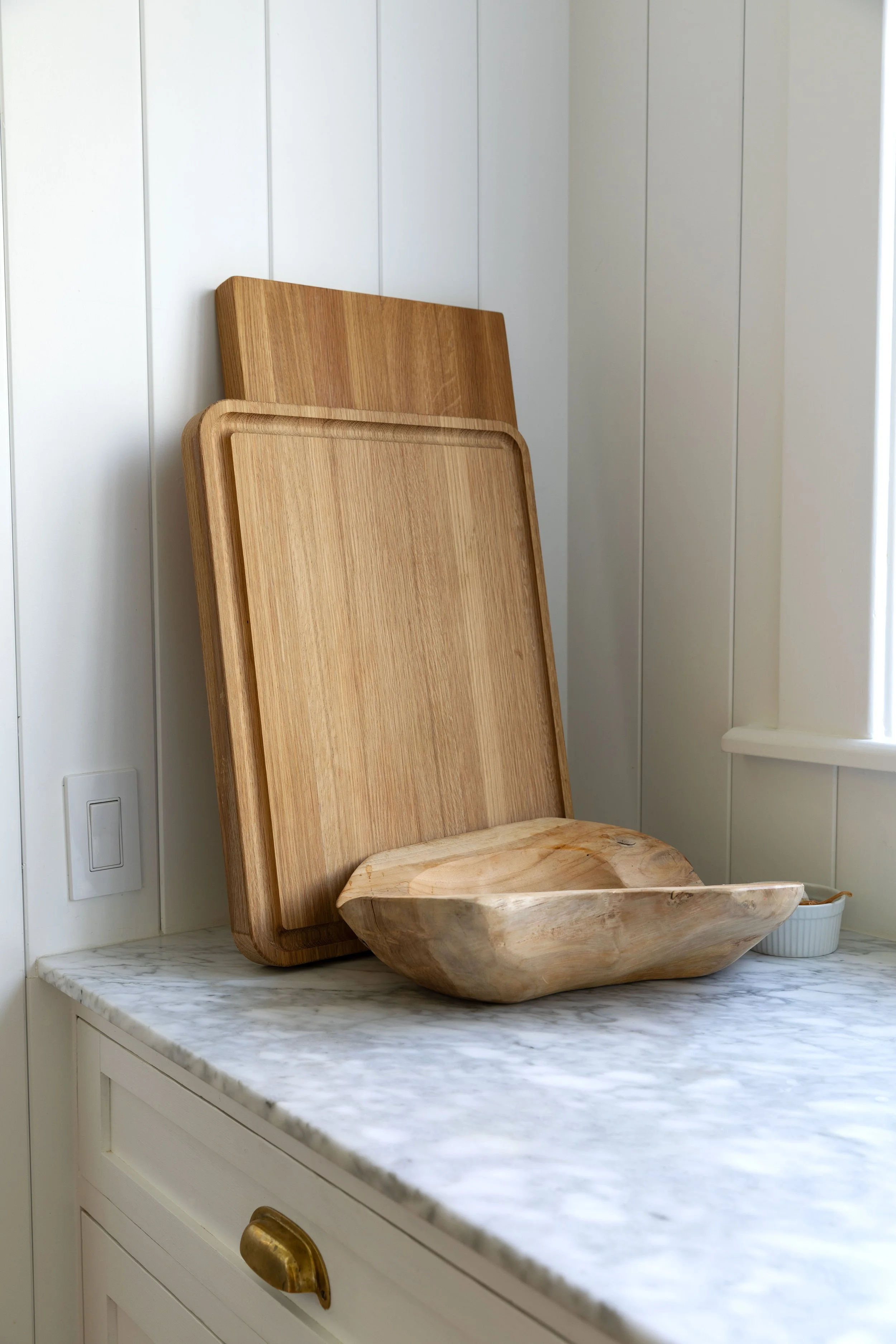
A small group of wooden boards creates a useful kitchen vignette without introducing another paint color. Their rounded and rectangular outlines contrast with the straight paneling behind them. Keep the arrangement practical: display boards where they can be reached and cleaned, and avoid crowding a working counter. This is an easy place to try warmer accents before committing to furniture or a whole-room change.
See the room tour: Lean Wooden Boards Against Pale Wall Paneling by Cathy and Garrett / The Grit and Polish.
11. Use Baskets to Soften a Tall Storage Wall
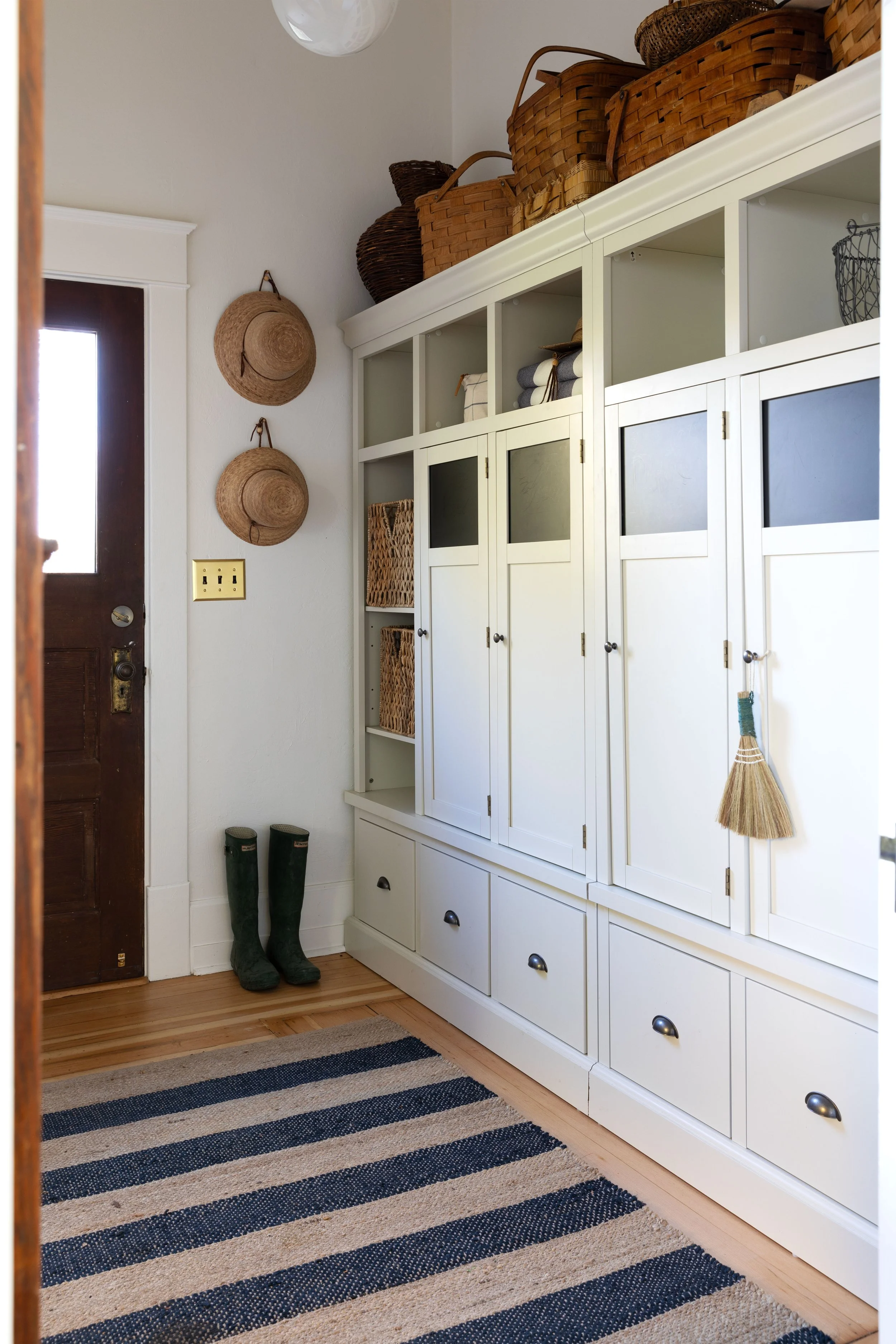
Woven baskets introduce warm texture above a bank of pale storage, helping the room feel less like a wall of cabinetry. The natural shapes contrast with the straight doors and shelves below. Choose lightweight items for high display areas and keep everyday storage safely within reach. These wooden shelf ideas offer a more open alternative when enclosed cabinets are not part of the space.
See the room tour: Use Baskets to Soften a Tall Storage Wall by Cathy and Garrett / The Grit and Polish.
12. Layer a Tufted Headboard with White Bedding
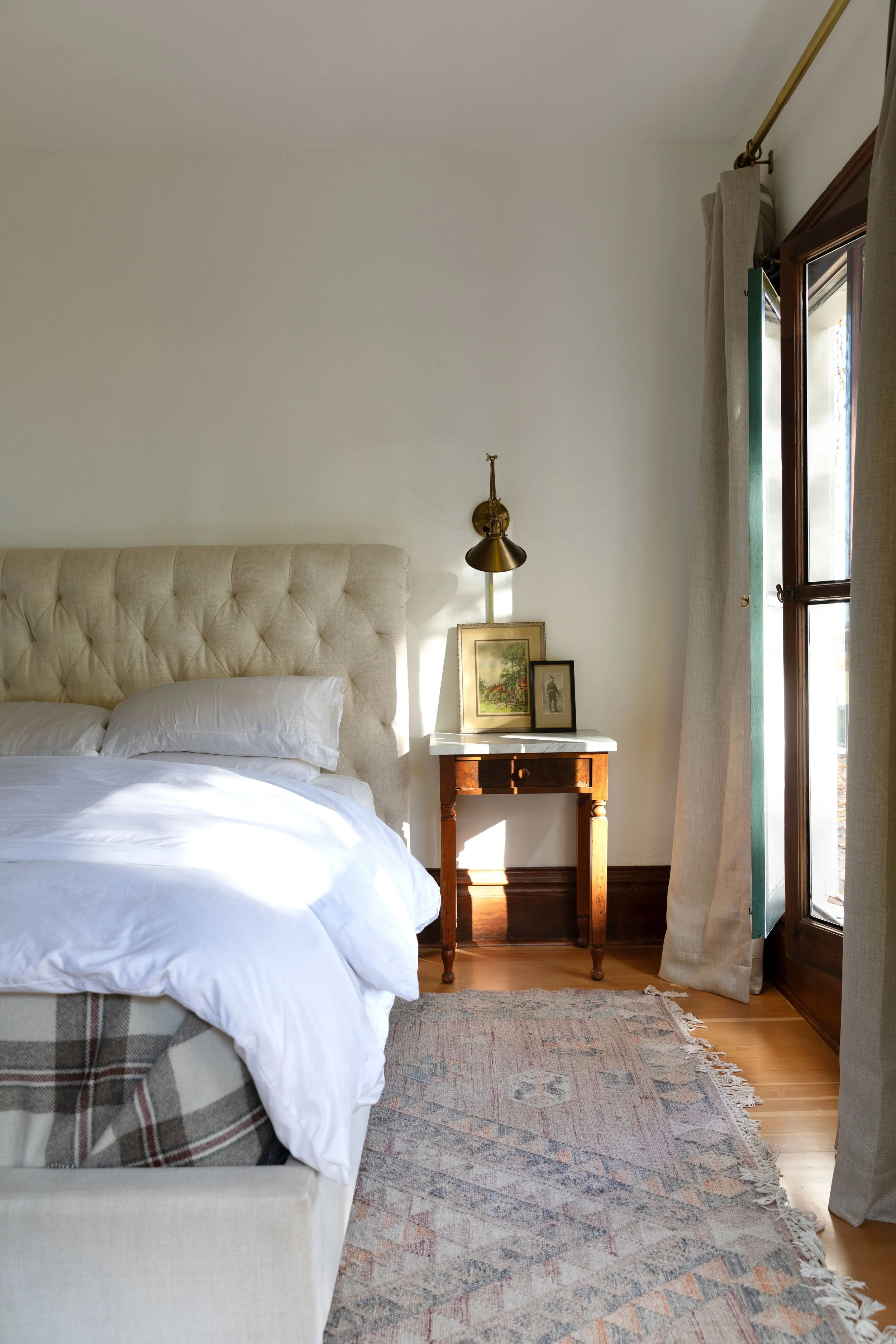
A creamy upholstered headboard gives the pale bedroom wall a soft outline, while white bedding prevents the whole scheme from becoming one flat tone. Warm timber at the side of the bed adds enough contrast to make the layers visible. Look at fabric samples beside your actual wall before ordering. These sage cream bedrooms show another gentle direction if you want to introduce a little color.
See the room tour: Layer a Tufted Headboard with White Bedding by Cathy and Garrett / The Grit and Polish.
13. Choose a Mirror with an Aged Decorative Frame
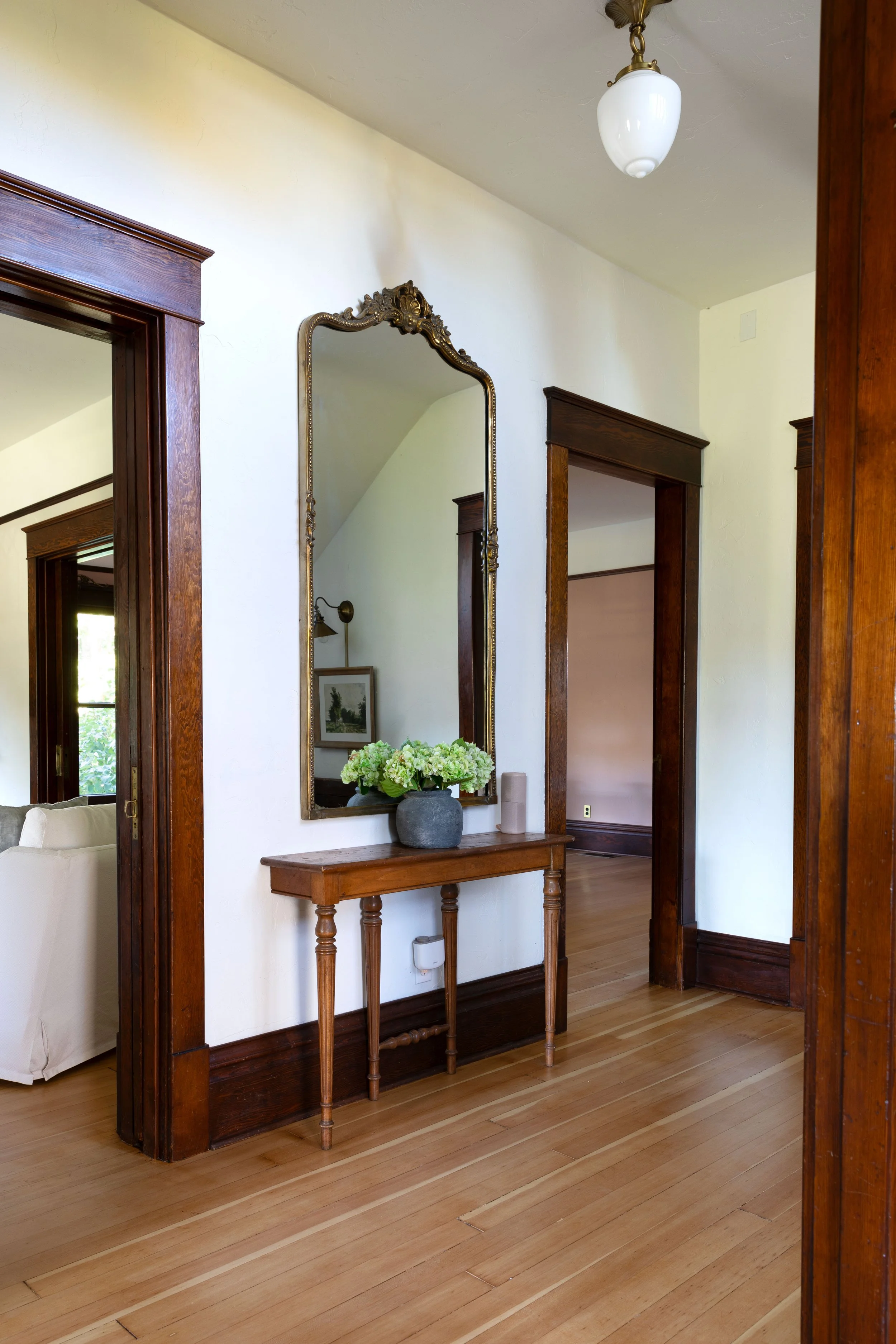
An ornate mirror gives a simple pale hallway a point of interest without filling the wall with several small objects. Its aged frame sits comfortably beside the dark door trim and narrow timber table. Scale matters more than the amount of decoration: choose a mirror that fits the wall and does not interrupt movement through the hall. Use appropriate fixings for its weight and the wall construction.
See the room tour: Choose a Mirror with an Aged Decorative Frame by Cathy and Garrett / The Grit and Polish.
14. Layer a Patterned Rug Over a Natural-Looking Base
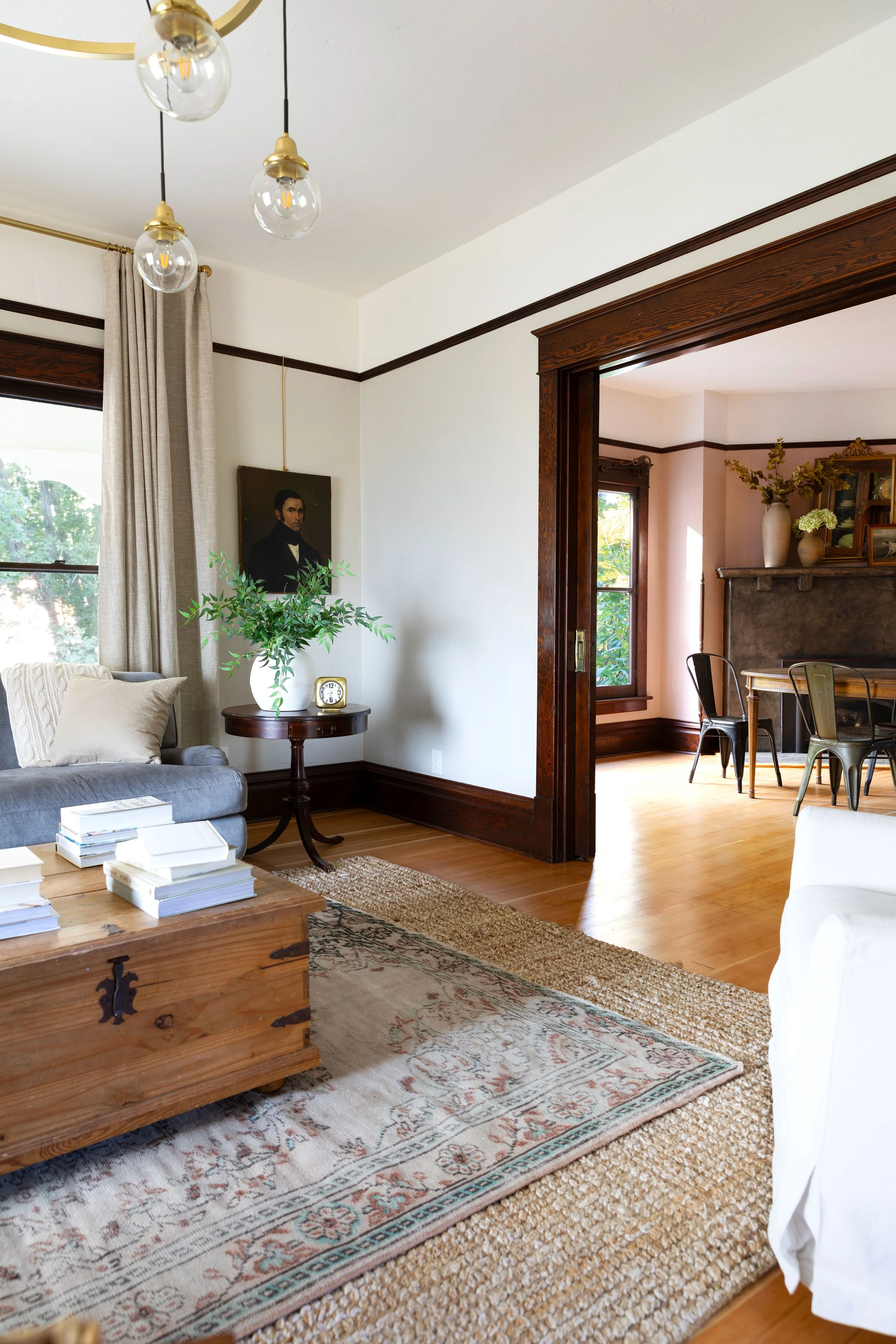
A quieter textured base and a more detailed rug create depth in a room with light walls. The layers introduce warmth at floor level while the wall remains a restful background. Choose a combination that lies flat and does not obstruct doorways or main walking routes. Check for movement and curled edges, especially when rugs overlap; the visual effect should not create an avoidable trip hazard.
See the room tour: Layer a Patterned Rug Over a Natural-Looking Base by Cathy and Garrett / The Grit and Polish.
15. Let a Curved Hood Blend into the Wall

A softly shaped hood becomes an architectural feature even when it shares the light wall color. The brass details and timber accents provide contrast, so the larger pale surfaces can remain simple. This is inspiration for a planned kitchen rather than a cosmetic DIY shortcut: ventilation, clearances and the hood’s actual construction need professional consideration. The curved silhouette is the design detail to carry into your own planning.
See the room tour: Let a Curved Hood Blend into the Wall by Jenna Sue Design.
16. Arrange Small Art Beside a Bright Window
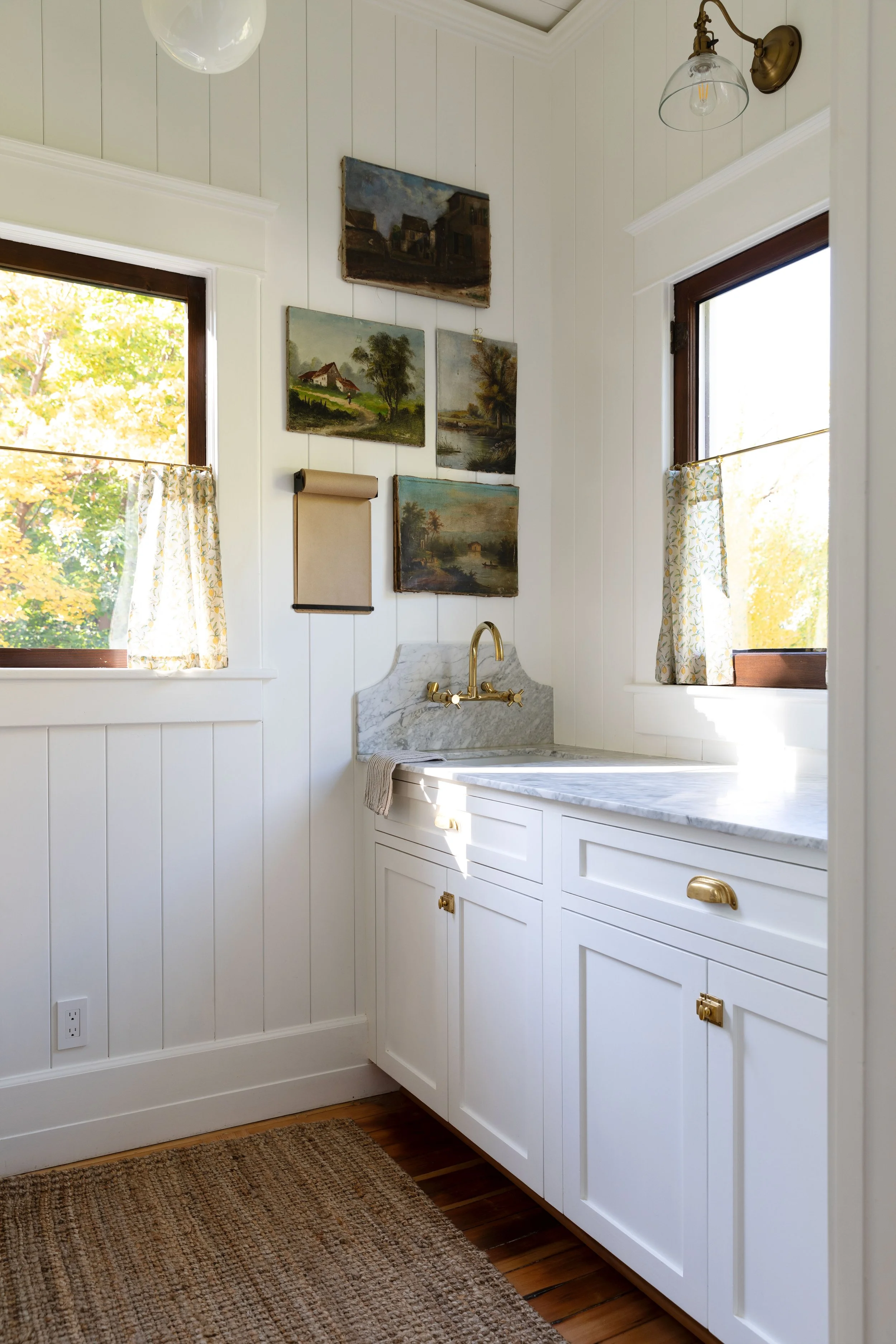
A group of framed pictures gives a narrow kitchen wall personality without blocking the daylight. The pale background connects the different frames, while the neighboring window gives the arrangement breathing room. Choose pieces that can tolerate the conditions of the room and keep them away from splashes and cooking heat. These wall display ideas suggest other ways to combine useful surfaces and decoration.
See the room tour: Arrange Small Art Beside a Bright Window by Cathy and Garrett / The Grit and Polish.
17. Use Brass Sconces to Frame a Bathroom Mirror
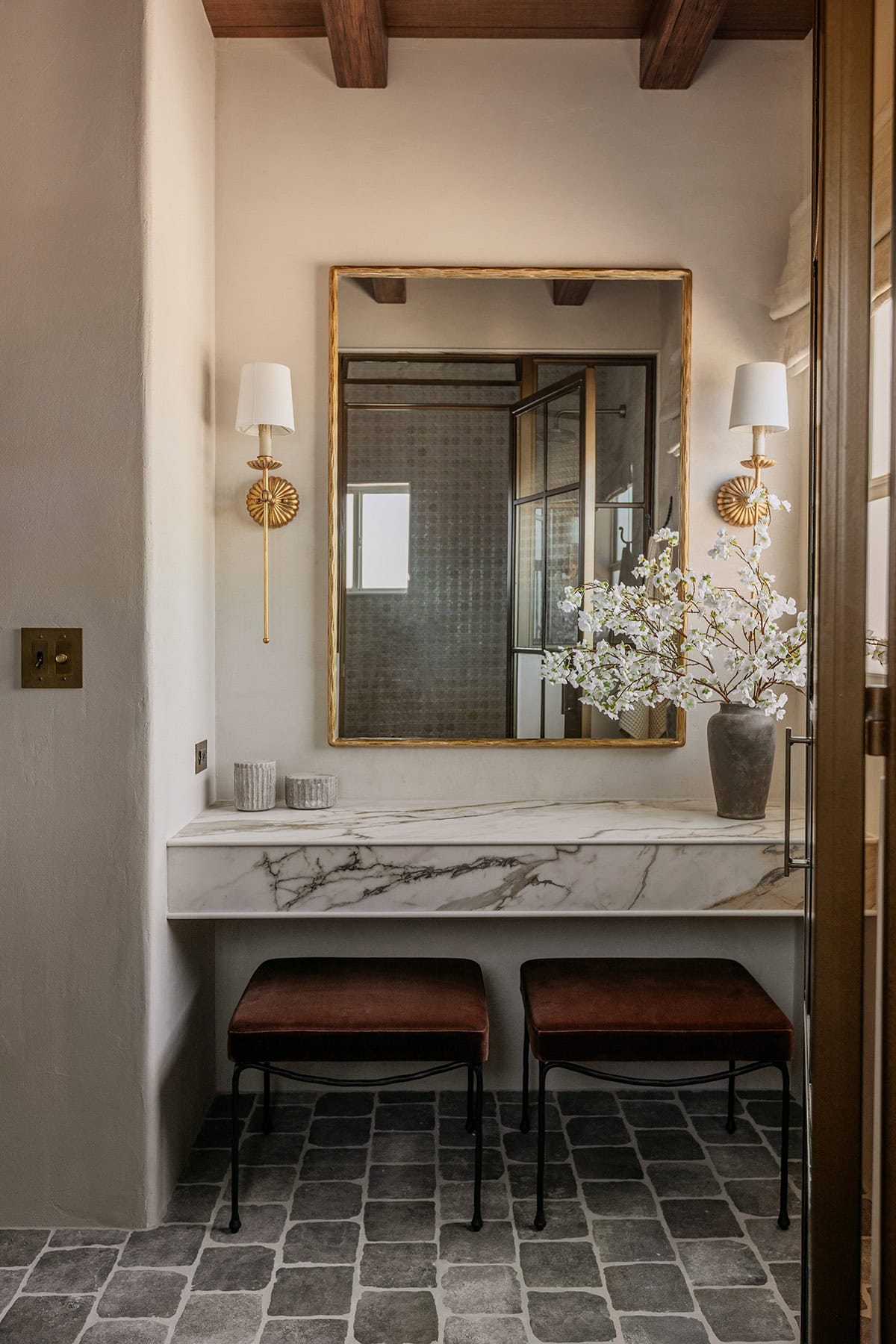
Two warm metal lights give the mirror a considered outline against a creamy wall. Their smaller scale allows the stone surface and wooden ceiling to remain the main materials in the room. This balance is useful when several finishes are already present: repeat one metal and avoid introducing a new one at every fitting. Select bathroom-rated lighting and follow the relevant installation requirements for its location.
See the room tour: Use Brass Sconces to Frame a Bathroom Mirror by Jenna Sue Design.
18. Keep a Timber Built-In as the Main Accent
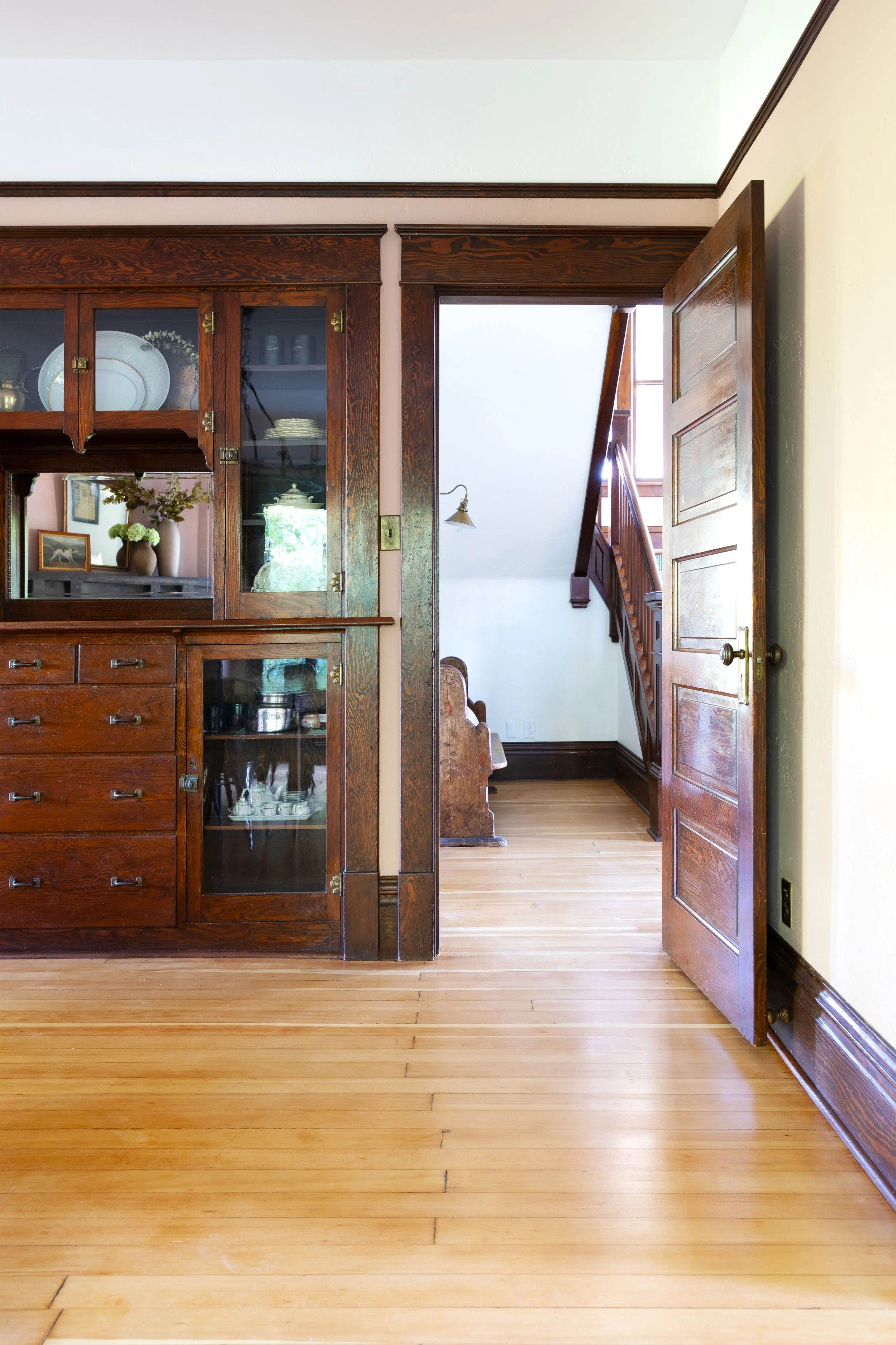
A substantial wooden cabinet adds warmth and history between two pale rooms. Rather than painting every surface the same white, the contrast allows the original joinery to become part of the design. If you already have a similar feature, clean and assess its condition before deciding how to finish it. Let the surrounding wall color support the timber rather than trying to make unrelated wood tones match exactly.
See the room tour: Keep a Timber Built-In as the Main Accent by Cathy and Garrett / The Grit and Polish.
19. Give a Children’s Room a Lively Picture Grid
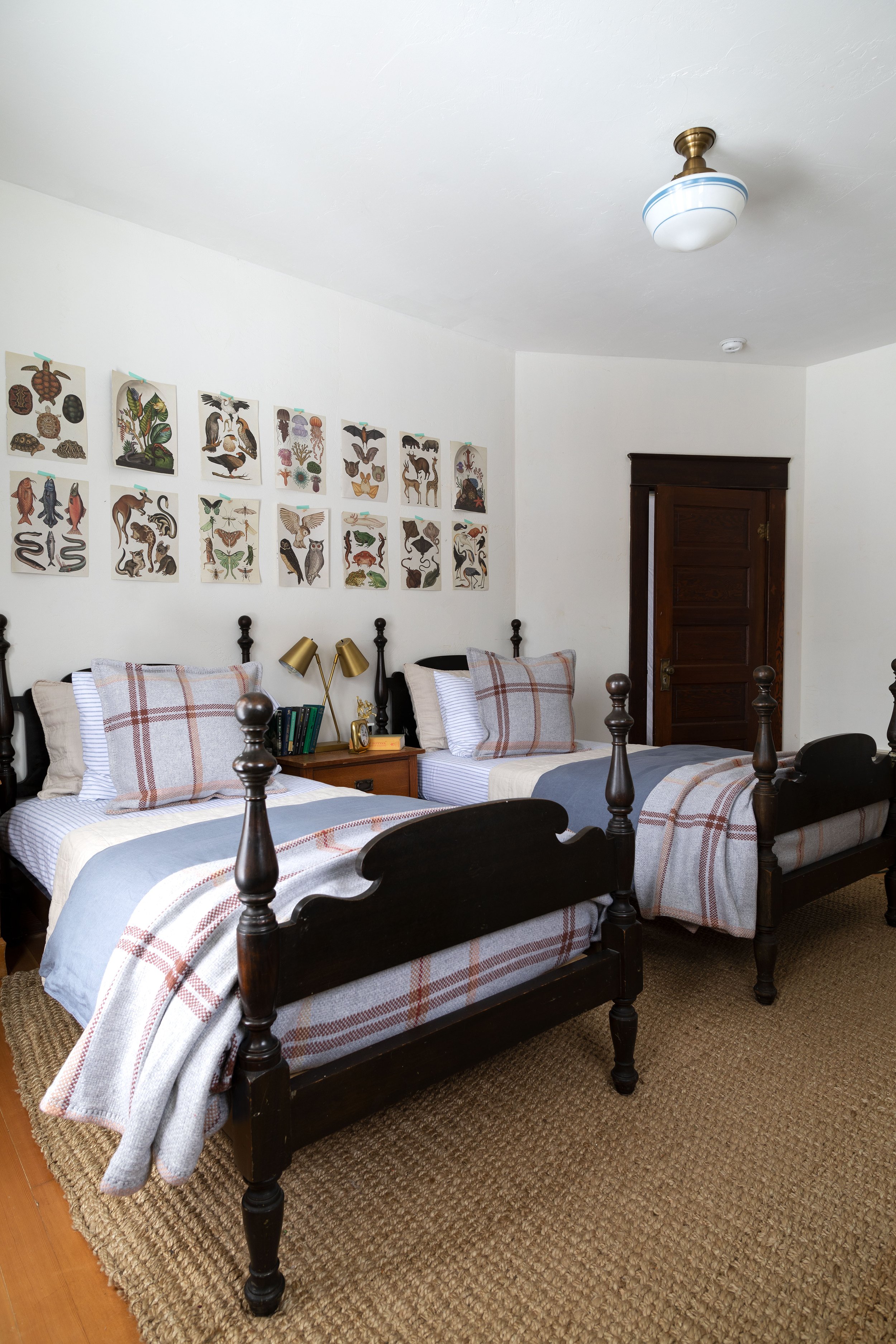
A grid of animal pictures brings personality to a light wall while keeping the overall arrangement orderly. The repeated frame sizes make the display feel connected even when the individual images differ. Leave room around the group so it does not dominate the beds below. Secure artwork appropriately and avoid heavy, fragile pieces over sleeping areas; a similar visual idea can be made with lighter alternatives.
See the room tour: Give a Children’s Room a Lively Picture Grid by Cathy and Garrett / The Grit and Polish.
20. Mix a Dark Pendant with a Warm Mirror Frame
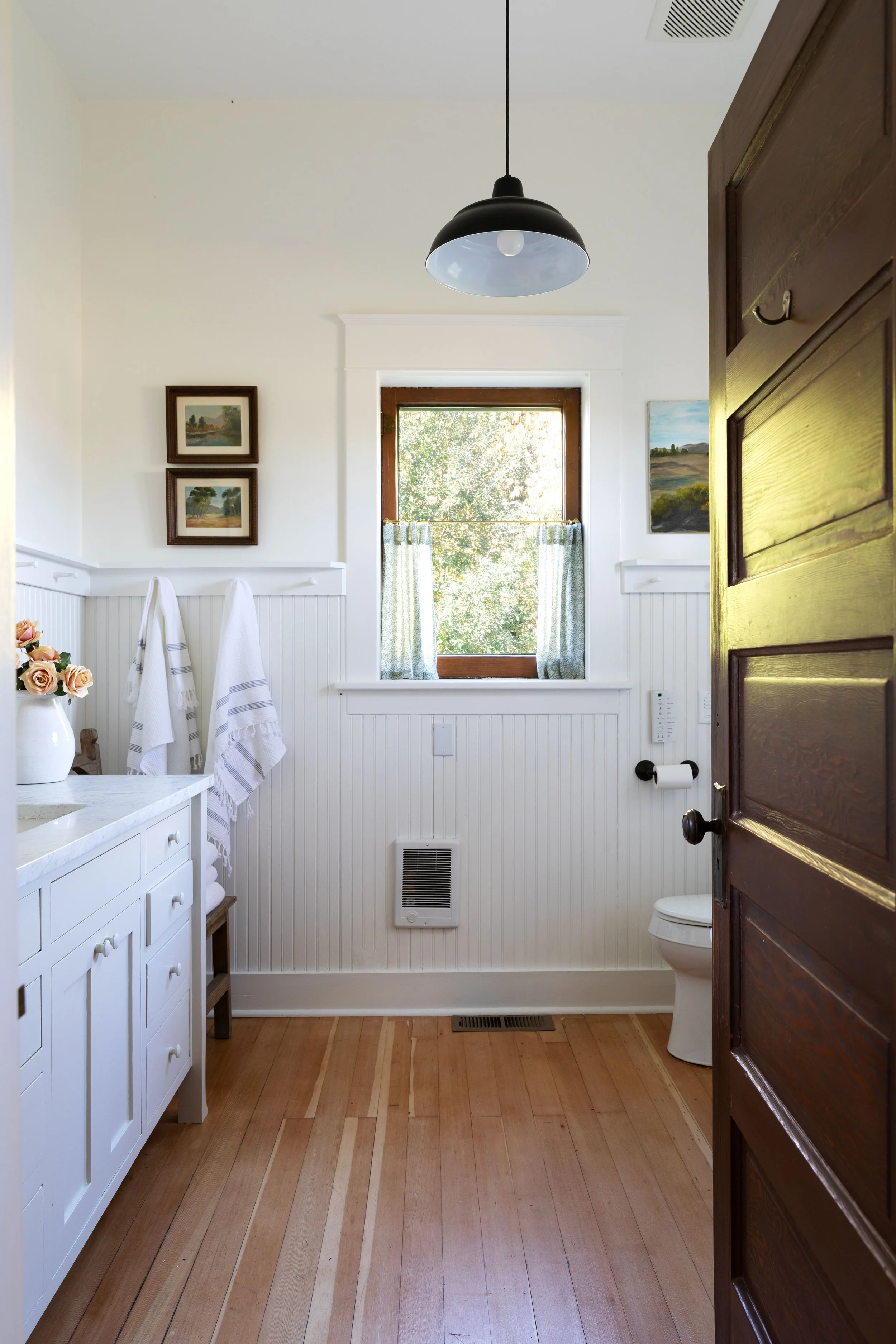
A dark overhead fitting gives this pale bathroom a graphic note, while the warmer mirror frame keeps the space from feeling purely monochrome. The combination works because the larger wall and cabinetry surfaces remain restrained. Try a small selection of finishes together before buying the full set. You do not need every metal to match, but each extra finish should have a clear relationship to the rest of the room.
See the room tour: Mix a Dark Pendant with a Warm Mirror Frame by Cathy and Garrett / The Grit and Polish.
21. Add Wooden Shelves Inside a Pale Linen Niche
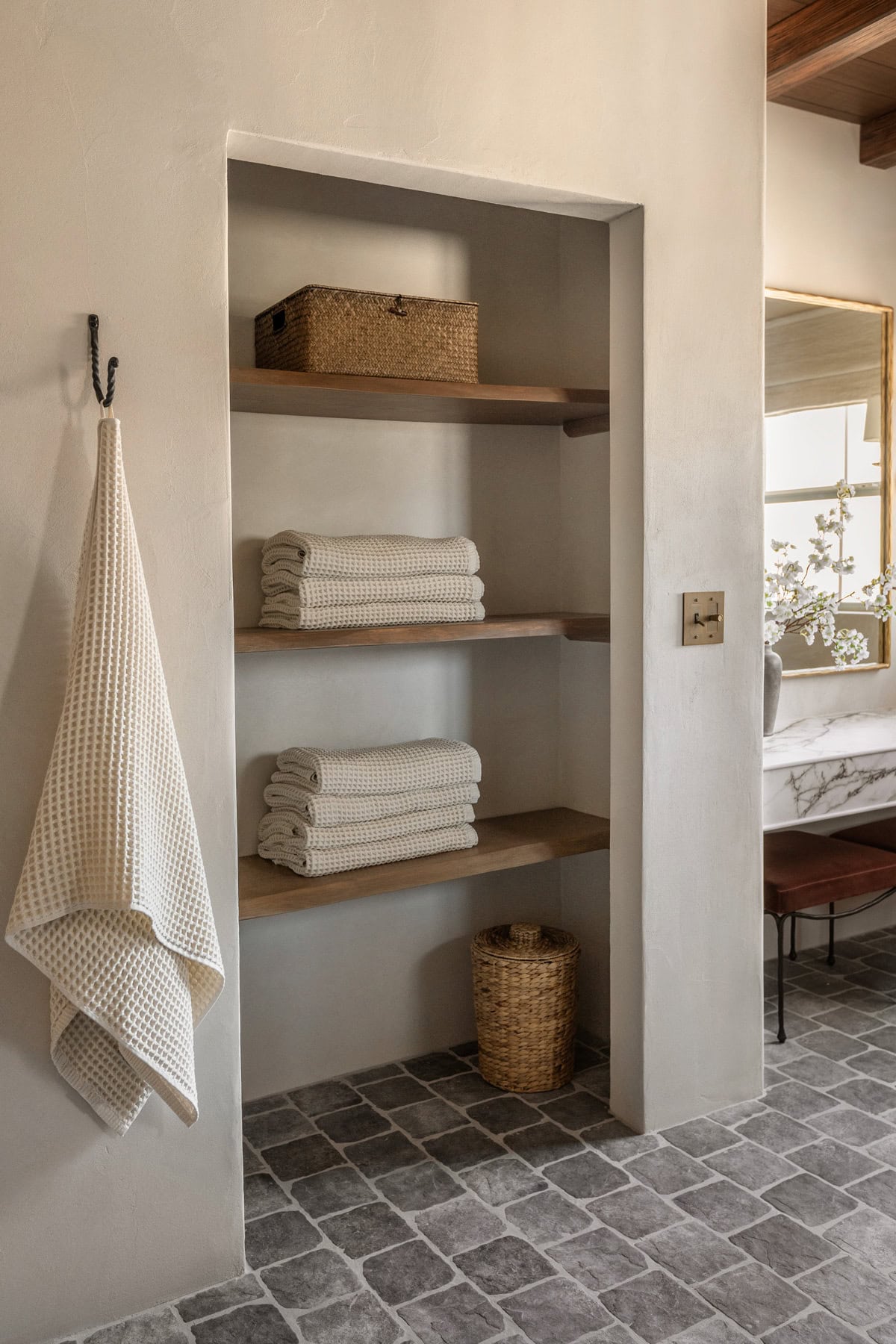
Warm wooden shelves turn a simple wall recess into a useful focal point for towels and baskets. The pale surround helps the opening read clearly, while the natural materials soften the more solid bathroom finishes nearby. Keep the contents limited enough that the shelves are easy to use. In a smaller home, one well-organized niche can add more character than several decorative objects spread across the room.
See the room tour: Add Wooden Shelves Inside a Pale Linen Niche by Jenna Sue Design.
Build Warmth Around the White You Choose
Choose one or two materials you already enjoy, then see how they sit beside a large paint sample in the room. A wooden table, a woven shade or a warm metal lamp can change the feeling without needing a complete makeover. These related collections offer more ways to work with soft colors, useful displays and personal details as your room comes together.
- Rustic Wood Decoration Ideas
- Sage Green and Cream Bedroom Ideas
- Wall Shelf and Plant Display Ideas
- Wooden Crate and Pallet Shelf Ideas
- Indoor Plant Decoration Ideas
- Creative Interior Design Ideas
Which combination feels most like your home—warm wood, soft fabrics or a little brass? Share your favorite idea in the comments, or tell us what you would add to make a pale room feel more inviting.



















0 Comments