18 Cozy Minimalist Living Room Ideas for Small Homes
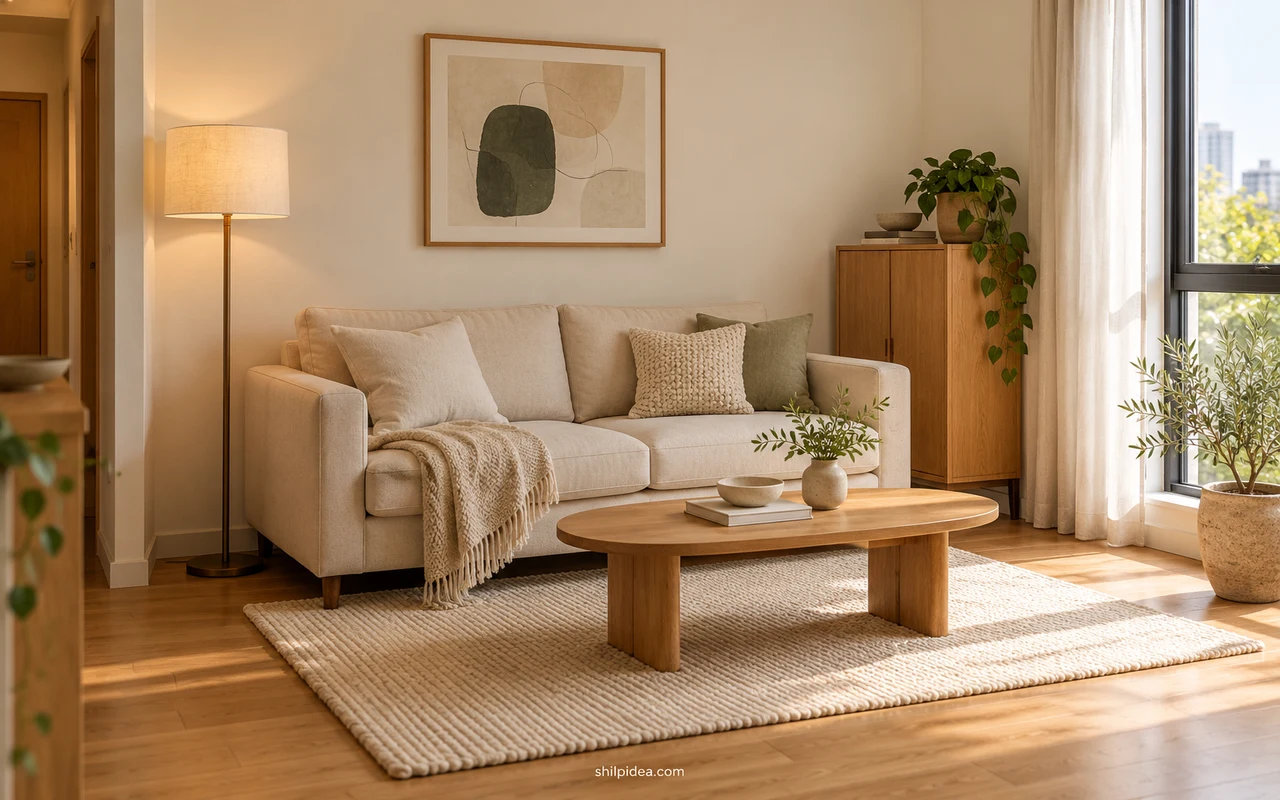
A small living room can feel calm without feeling bare. Comfortable seating, useful storage and a few warm textures often matter more than finding another decorative object. The aim is a room that is easy to move through and pleasant to spend time in.
Start with one useful change, such as a calmer shelf arrangement inspired by these wall shelf and plant display ideas.
These 18 details come from real room reveals and styled spaces. Borrow the elements that suit your own layout rather than trying to reproduce an entire room.
1. A Low Sofa That Leaves the Room Open

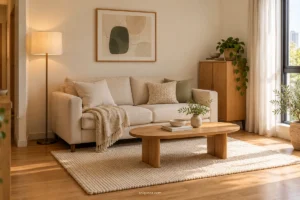
A low sofa can make the wall and window around it feel more generous. Here, a light upholstery color and simple outline keep the seating visually quiet. For a small room, check the actual seat depth as well as the overall width. A sofa that looks minimal still needs to leave enough space for your everyday route through the room.
See the original room: A Low Sofa That Leaves the Room Open by Almost Makes Perfect.
2. A Round Coffee Table in the Seating Area

A round table softens the arrangement and avoids sharp corners along a busy walking route. Keep the surface large enough for the way you use the room, but small enough that reaching the sofa does not become awkward. A restrained top allows the shape to stand out. One little vase or tray is often enough.
See the original room: A Round Coffee Table in the Seating Area by The Merrythought.
3. A Little Black Contrast in a Pale Room

A few dark outlines can give a pale room definition without filling it with pattern. The open table frame and simple accents here keep the contrast light. Repeat a dark tone in just a few places so it feels deliberate. Leave larger surfaces quiet if you want the room to keep its calm, airy character.
See the original room: A Little Black Contrast in a Pale Room by Homey Oh My.
4. Soft Curtains Around a Bright Window

Light curtains give a small room a softer edge while letting the window remain a focal point. Keep the fabric clear of radiators or heating vents and make sure it opens comfortably. A simple finish works well with neutral seating. The effect depends as much on how the curtains hang as on choosing an expensive fabric.
See the original room: Soft Curtains Around a Bright Window by A la Meredith.
5. A Slim Side Table Instead of Another Large Piece

A small side table can provide a useful landing spot without adding the bulk of a second cabinet. Choose its height in relation to the sofa arm and leave enough room for the base. Keep only what you reach for regularly on top. In a compact room, that little clear surface can make the seating feel much easier to use.
See the original room: A Slim Side Table Instead of Another Large Piece by Almost Makes Perfect.
6. A Short Picture Ledge Above the Sofa
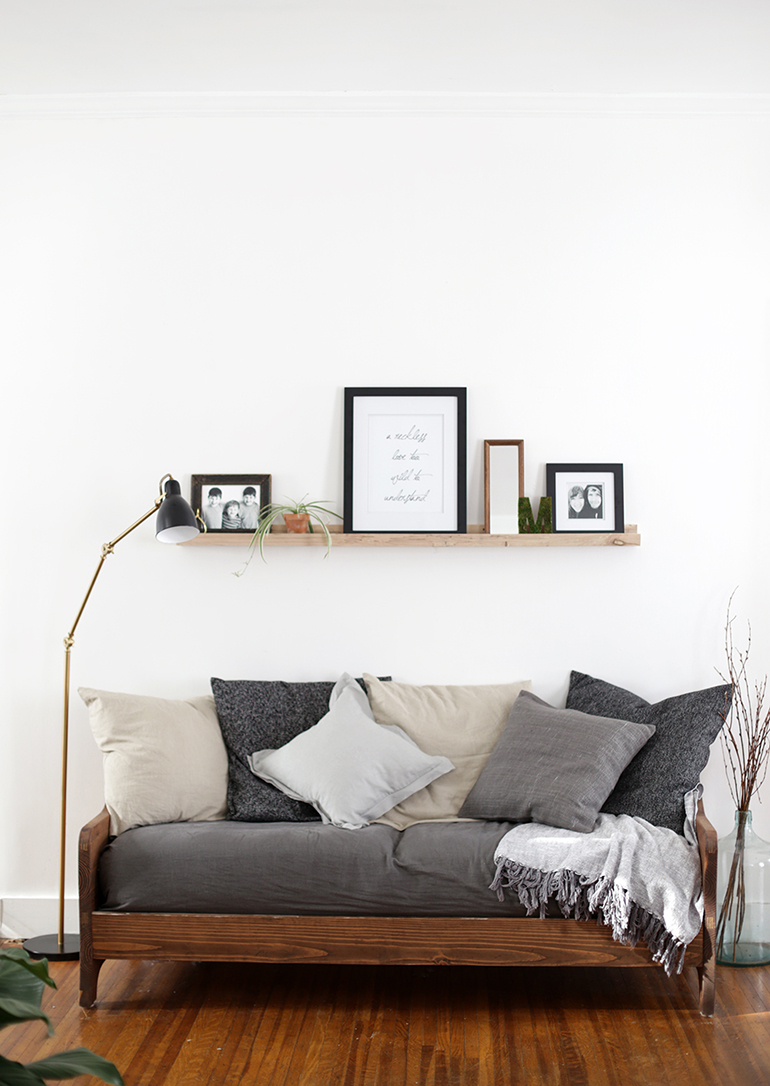
A narrow ledge creates a place for a few personal pictures without covering the whole wall. Keep the frames related in color or scale so the display feels collected. Secure the ledge and frames appropriately, especially above seating. Leave some breathing room between the objects rather than filling the shelf from end to end.
See the original room: A Short Picture Ledge Above the Sofa by The Merrythought.
7. A Quiet Palette with Different Soft Textures

A restrained color palette can still feel inviting when the fabrics have different textures. Smooth upholstery, a soft throw and a few cushions create interest without many competing colors. Choose materials that work for your household and cleaning routine. Keep the number of cushions practical so sitting down does not require moving a pile of decorations.
See the original room: A Quiet Palette with Different Soft Textures by IKEA.
8. Woven Wall Texture Above Useful Storage

Woven pieces bring warmth to a white wall without needing a strong new color. A small grouping can feel more intentional than many unrelated decorations spread across the room. Balance the display with useful storage below it. Keep the cabinet top fairly clear so the wall texture has space to stand out.
See the original room: Woven Wall Texture Above Useful Storage by The Merrythought.
9. A Rug That Connects the Seating

A rug can make separate chairs and a sofa feel like one comfortable zone. Choose the size in relation to the furniture rather than the empty floor alone. The room here uses a light foundation to connect different wood and upholstery tones. Keep the rug edges out of the main walking route and use a suitable underlay where needed.
See the original room: A Rug That Connects the Seating by Amanda Katherine.
10. Closed Storage with a Calm Top Surface

Closed doors let everyday belongings stay nearby without making every item part of the display. A low cabinet can also provide a quiet base for one larger picture or a small arrangement. Check that doors open fully in your layout. Leave some clear surface so the storage piece does not become another crowded shelf.
See the original room: Closed Storage with a Calm Top Surface by Almost Makes Perfect.
11. A Small Recess Used as a Simple Display

A narrow recess can hold a few useful or decorative objects without projecting far into the room. Keep the scale of the items suited to the opening rather than trying to fill every shelf. One repeated material can make the arrangement feel calmer. If storage is the priority, use plain containers to gather the smaller everyday pieces.
See the original room: A Small Recess Used as a Simple Display by Little Vintage Cottage.
12. A Light Media Unit with Open Space Around It

A simple media unit gives the television a clear base without surrounding it with a large wall of furniture. Keep wires gathered and choose storage for the equipment you actually use. A lighter finish can help the piece sit quietly against a pale wall. Leave room around the screen so nearby objects do not make the corner feel crowded.
See the original room: A Light Media Unit with Open Space Around It by A la Meredith.
13. An Armchair with a Visible Wooden Frame
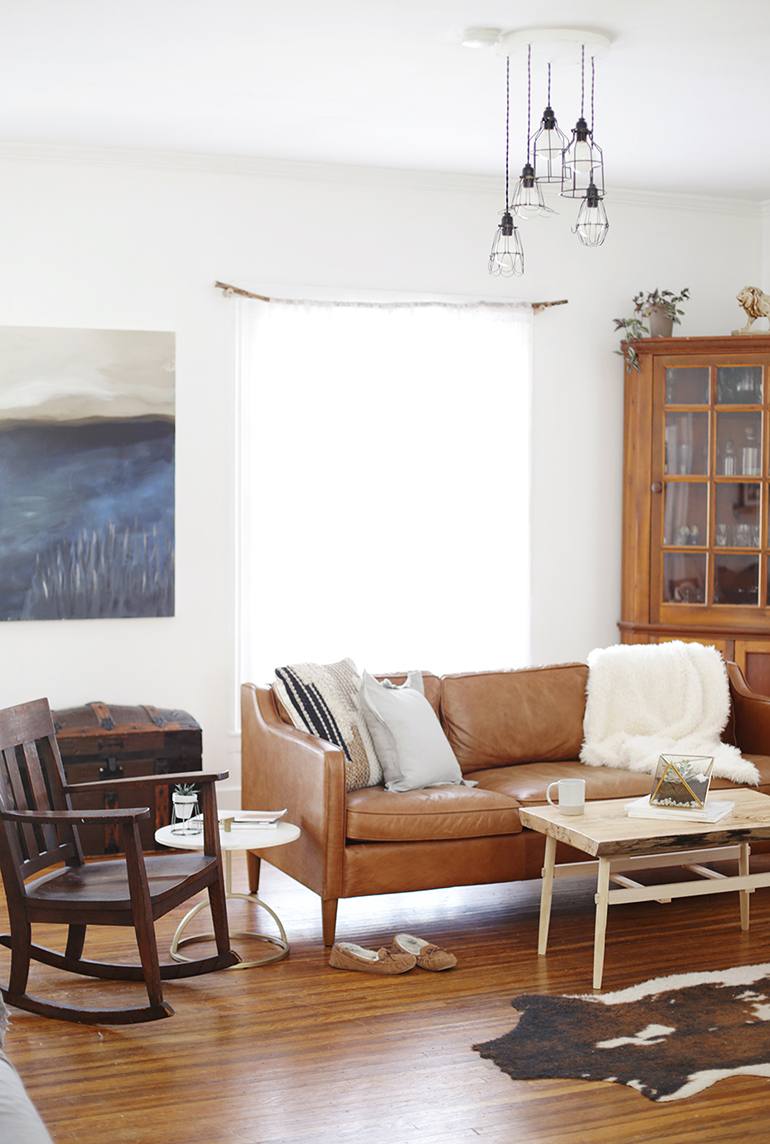
A chair with an open frame can feel lighter than a fully upholstered piece. It still needs to be comfortable enough for the way you use the room. Try the seat height and arm position rather than choosing only by appearance. A small cushion can add softness without hiding the structure that gives the chair its character.
See the original room: An Armchair with a Visible Wooden Frame by The Merrythought.
14. A Low Table That Keeps the Sightline Clear

A low table can make a seating arrangement feel open, especially where the room connects to another space. Choose one that is comfortable to reach from the sofa and suited to your daily use. Keep decorative objects low too. The benefit is a clear view across the room rather than another tall visual barrier.
See the original room: A Low Table That Keeps the Sightline Clear by IKEA.
15. Greenery Lifted onto a Small Shelf

A shelf can bring a plant into view without using another floor-level stand. Keep the plant’s real light and care needs in mind, and protect the shelf from water. A small grouping of related pots looks calmer than many different containers. Leave enough room around each plant so the leaves do not crowd the display. These indoor plant display ideas offer more ways to arrange greenery.
See the original room: Greenery Lifted onto a Small Shelf by The Merrythought.
16. A Tray That Gives Small Objects One Home

A tray can make a few useful objects feel like one arrangement rather than scattered clutter. Keep its size in proportion to the table and leave room for a drink or a book. Choose pieces you enjoy seeing or use regularly. The goal is an easy-to-clear surface, not a collection that makes the table difficult to use.
See the original room: A Tray That Gives Small Objects One Home by A la Meredith.
17. Tall Shelves That Use the Wall Carefully

Vertical storage can make better use of a room than several low pieces spread across the floor. Keep heavier items low and anchor furniture according to its instructions. Mix useful storage with a little open space so the shelves do not feel overloaded. A repeated neutral container can make the everyday contents easier on the eye.
See the original room: Tall Shelves That Use the Wall Carefully by IKEA.
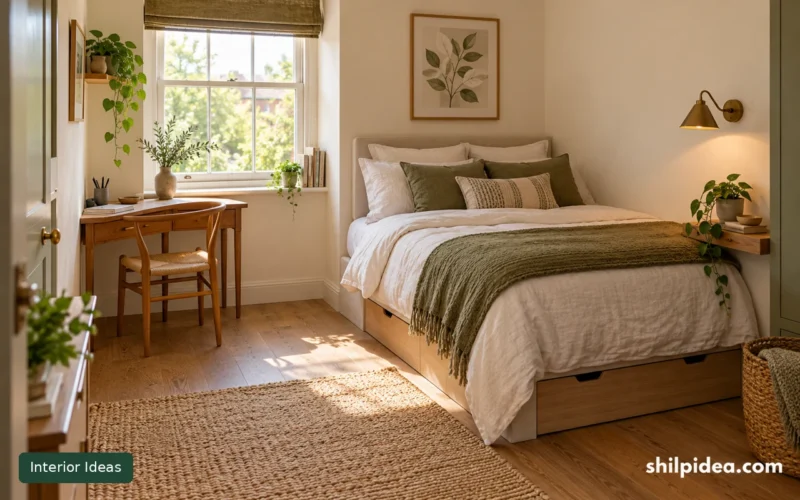
18. A Small Work Spot Behind the Seating
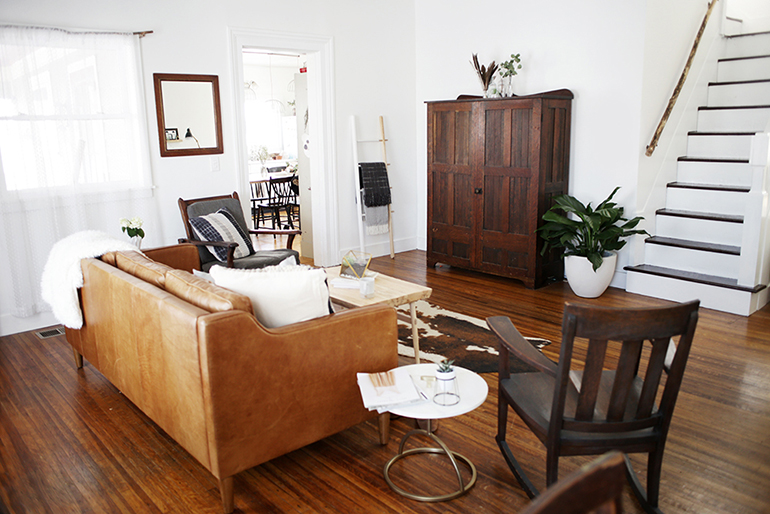
A compact desk can sometimes share a living room without taking over the main seating area. Keep the chair able to pull out and leave a clear route around both zones. A tidy top and a few related materials help it feel part of the room. Measure the working space before adding the desk so it stays genuinely usable.
See the original room: A Small Work Spot Behind the Seating by The Merrythought.
Choose the Details Your Room Will Actually Use
A small room works best when each addition earns its place. Once the seating and storage feel right, bring in a little greenery or a personal display to make the space feel like yours.
Which detail would make the biggest difference in your living room? Tell us your favorite in the comments—or share a small change that made your own space feel calmer and cozier. We’d love to hear what worked for you.


















0 Comments