18 Paper Leaf Place Card Ideas for a Handmade Thanksgiving Table
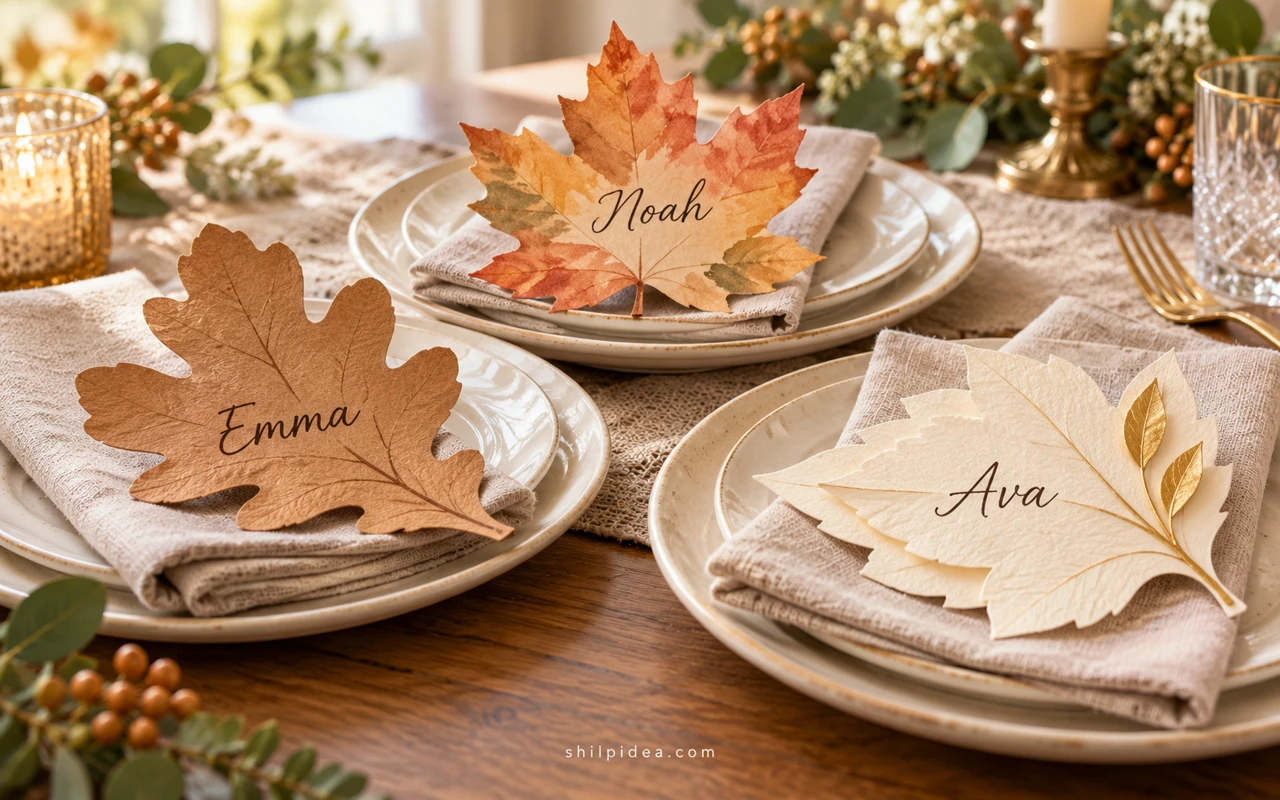
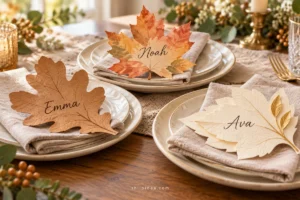
A handwritten name can make a Thanksgiving table feel welcoming before the food arrives. Paper leaves offer a small space for that personal detail, whether you prefer soft watercolor, rustic kraft paper or a crisp printable design.
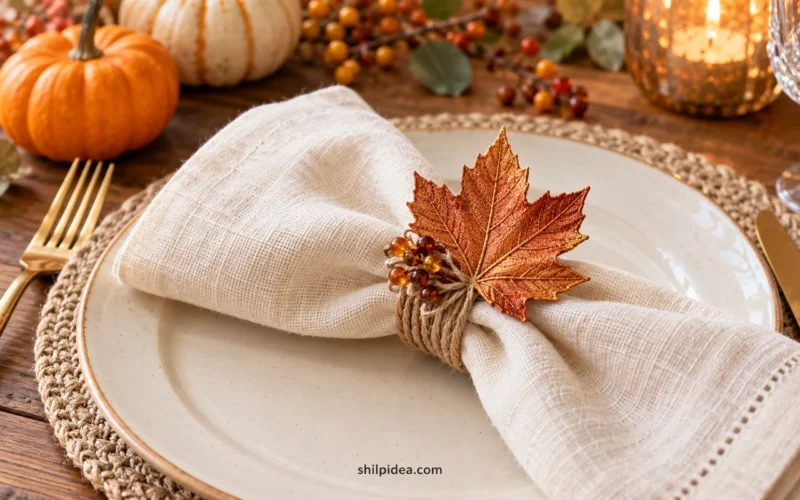
Pair them with fall leaf napkin rings for a coordinated setting, or let each leaf stand alone on a plain napkin.
These ideas include leaf shapes, botanical prints and ways to display paper name cards. Choose the approach that suits your guest list and the supplies you already have.
1. Rest a Watercolor Leaf on a Folded Napkin

A loose watercolor leaf makes a simple napkin feel like part of the decoration. Keep the guest’s name in a clear area rather than across the busiest wash of paint. This arrangement works especially well with plain cloth napkins: the fabric gives the leaf a quiet background, and the card can be lifted away before dinner.
Get the tutorial: Rest a Watercolor Leaf on a Folded Napkin by ARTBAR.
2. Give Paper Leaves Their Own Folded Holders

A standing holder keeps a small name visible above the plate. KiwiCo’s folded paper arrangement adds a sculptural element without needing a large centerpiece. Think about the viewing angle from the chair: the name should face the guest, not the middle of the table. Keep the base low enough that passing dishes remains easy.
Get the tutorial: Give Paper Leaves Their Own Folded Holders by KiwiCo.
3. Choose a Plantable Maple Leaf Keepsake
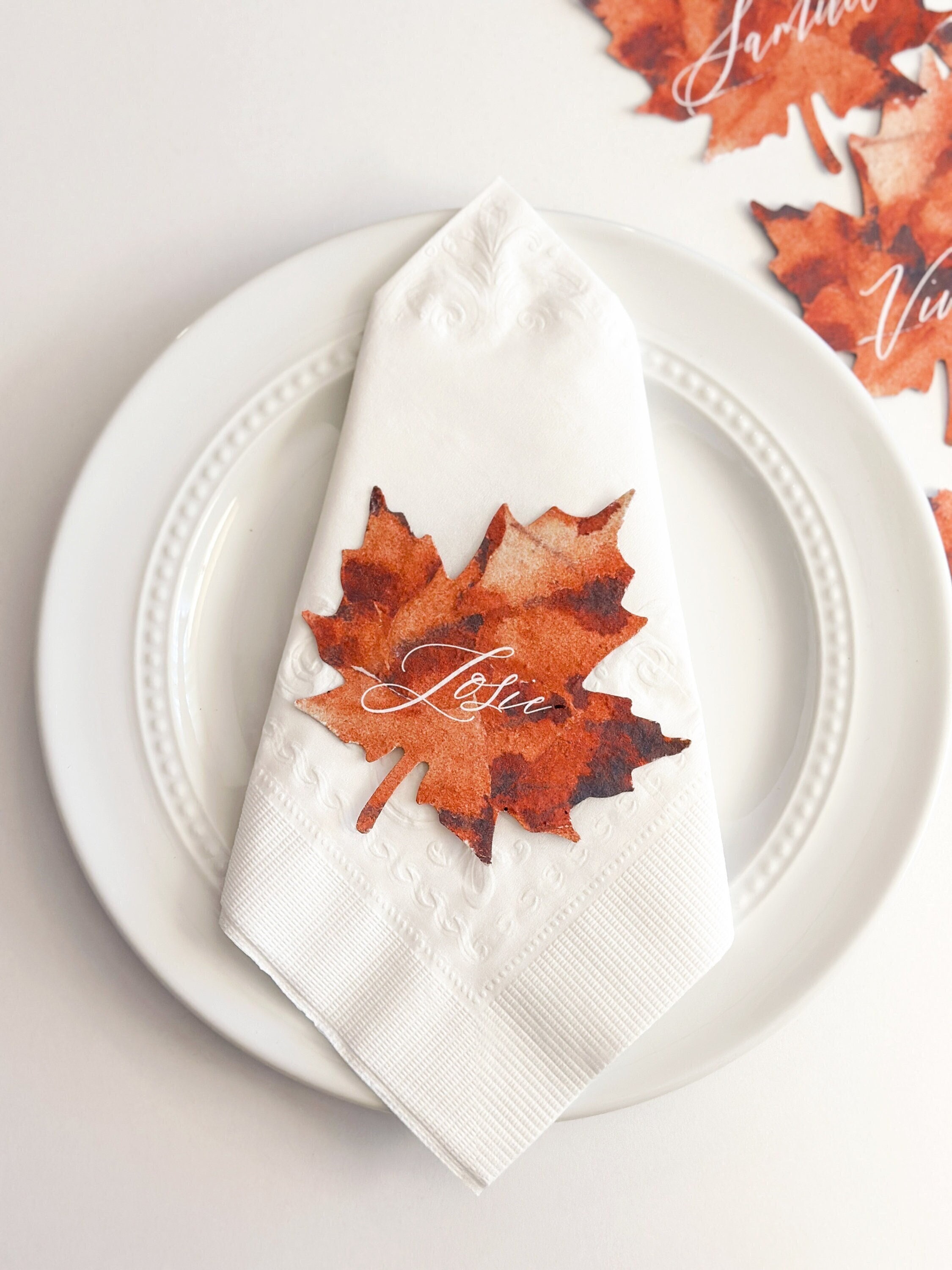
A maple-shaped seed-paper card can double as a favor when the maker supplies appropriate planting instructions. The layered plate setting in this example lets the leaf shape take center stage. Use a restrained name treatment so the papery texture remains visible. Check the listing details for paper composition and seed information rather than assuming every decorative leaf is plantable.
4. Start with a Stack of Die-Cut Maple Leaves
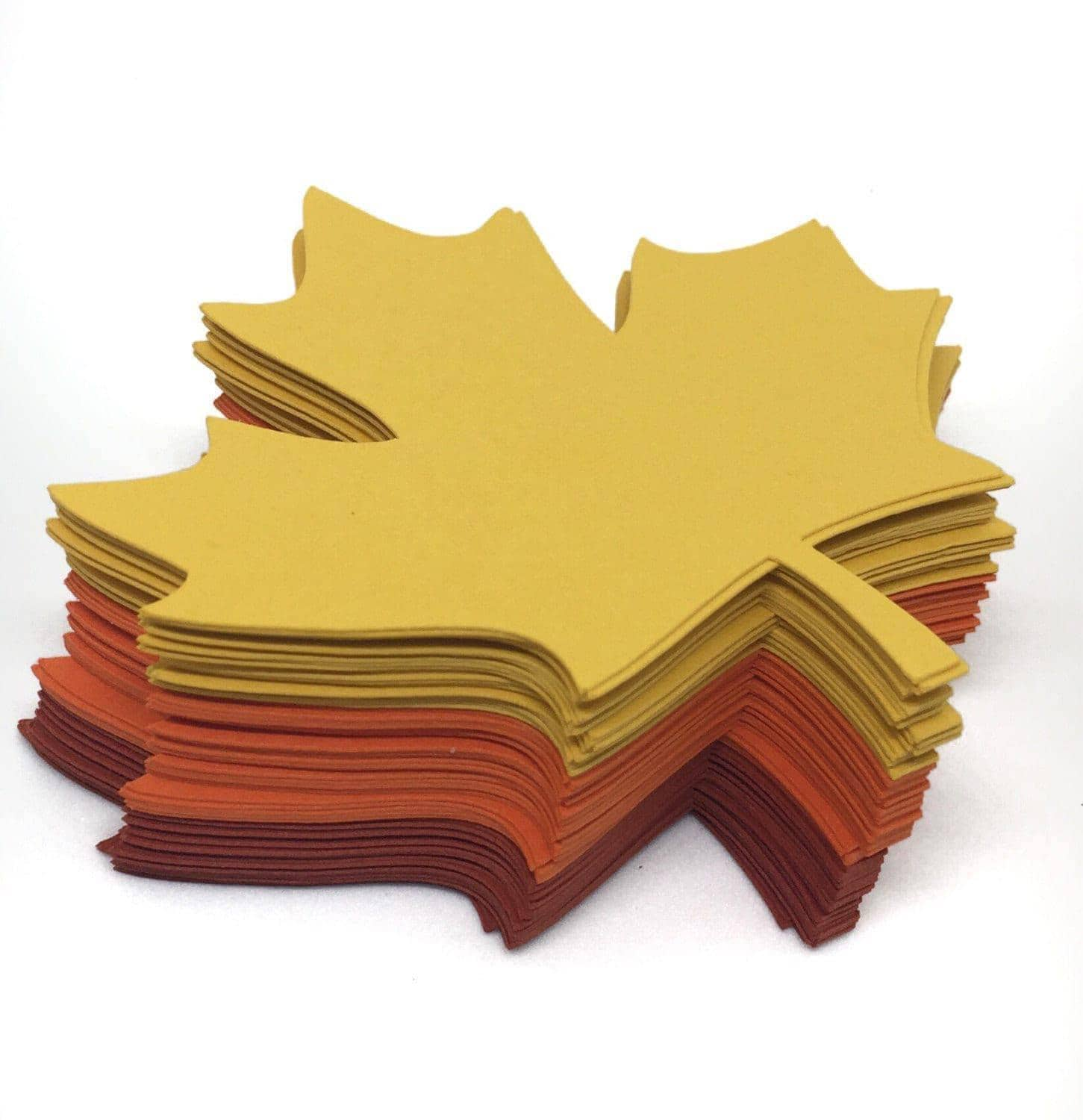
Precut paper leaves make sense when the guest list is long or you want matching shapes without tracing each one. A maple silhouette has enough space for a name across its center. Mix shapes only when they leave a comparable writing area. Before ordering, check the dimensions against your napkins; a tiny tag can disappear in a generous place setting.
5. Try a Rounded Birch Leaf Shape
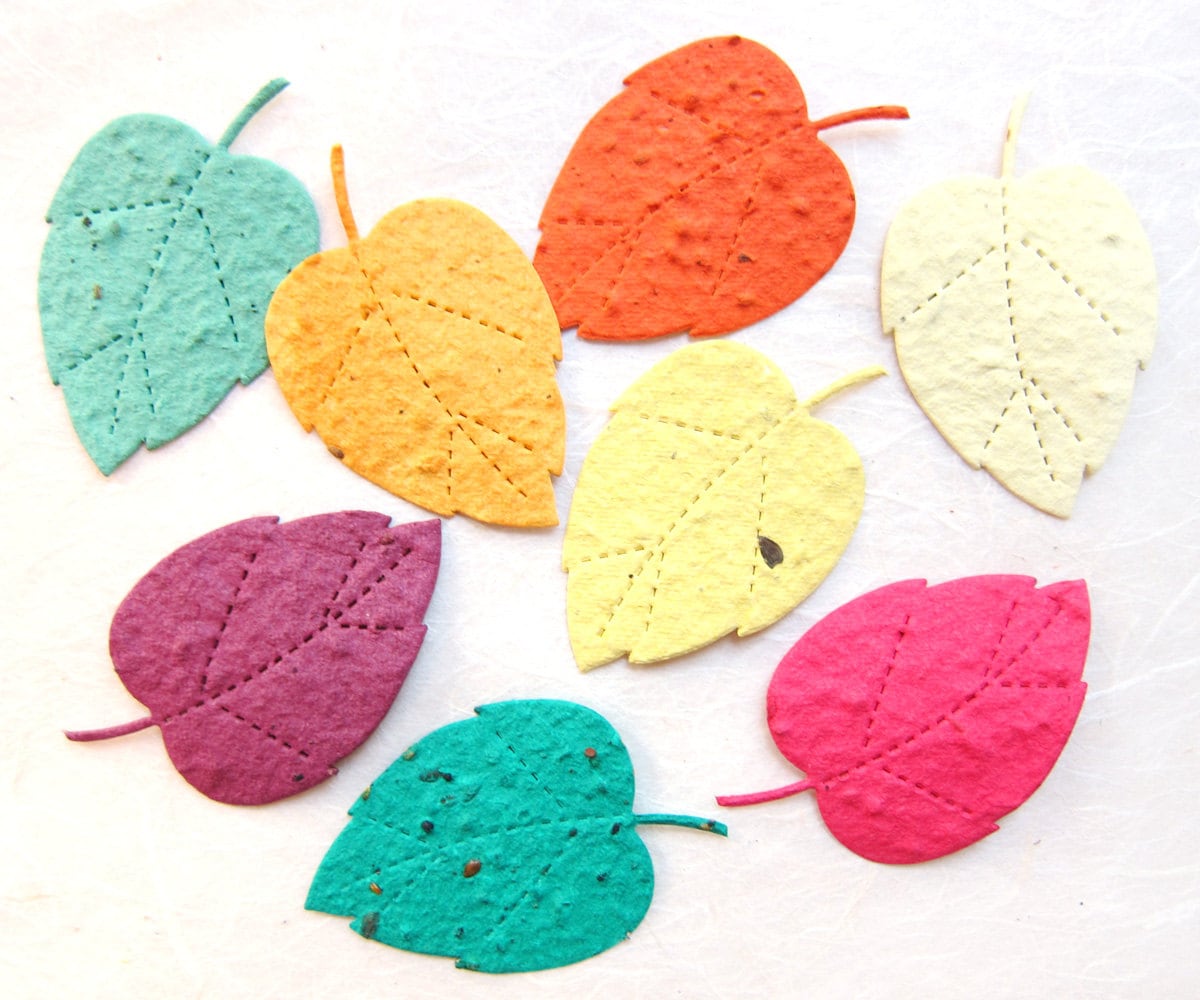
Rounded birch-like leaves offer a softer alternative to sharply pointed maple cutouts. The vein impressions in these paper leaves provide detail even before a name is added. Keep lettering away from the strongest texture, or attach a small plain paper strip. The shape suits relaxed tables with simple ceramics, woven placemats and warm wooden accents.
6. Let Textured Green Paper Lead the Palette

Textured green paper brings a garden feeling to a Thanksgiving setting without requiring fresh foliage at every seat. This leaf can be used as a name-card base or paired with a smaller writing panel if its surface is uneven. Repeat the green in one other table detail, then leave the rest neutral so the handmade paper remains noticeable.
7. Use Oak Leaves with Flowing Calligraphy
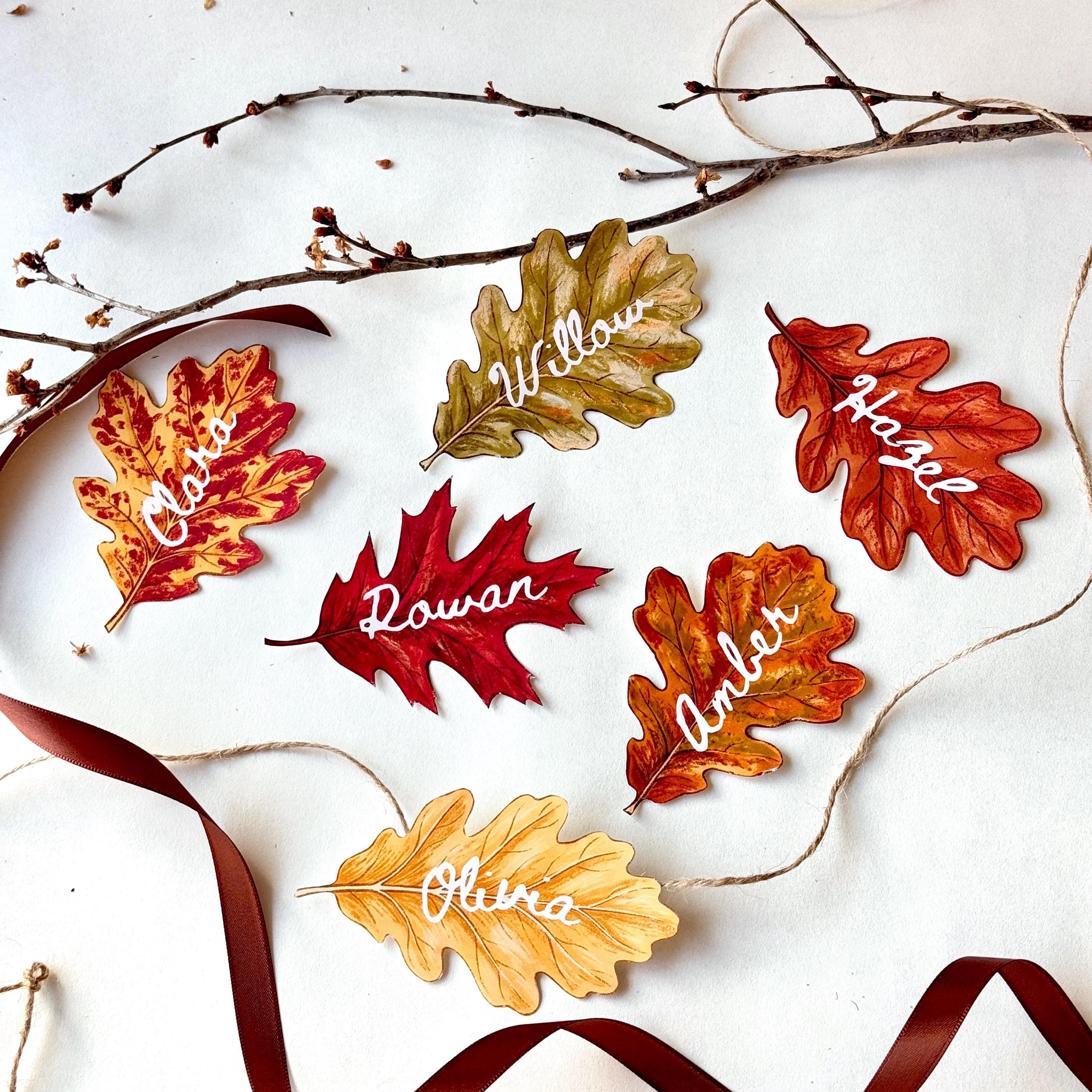
An oak silhouette has a long central area that lends itself to flowing names. This editable design combines autumn color with prominent script, making the lettering part of the decoration. Test your longest guest name before printing the entire set. If it needs shrinking too much, choose a simpler font or a slightly larger leaf instead.
8. Frame a Name with Printed Botanical Branches

A folded card with a leaf illustration is useful when you prefer a rectangular writing area. Here, delicate branches frame the name instead of competing with it. The botanical effect still belongs with a leaf-themed table, while the folded format offers reliable visibility. Use smooth cardstock suited to your printer and check one test sheet before making the full set.
Get the tutorial: Frame a Name with Printed Botanical Branches by Kate Riley / Centsational Style.
9. Tie a Botanical Paper Card with Twine

Twine turns a flat printed card into a small package-like detail. The bow and leaf illustration can do the decorative work, leaving plenty of room for a readable name. Tie loosely enough that guests can remove the card without disturbing the whole setting. This approach pairs naturally with pumpkin place card ideas and other small autumn accents.
Get the tutorial: Tie a Botanical Paper Card with Twine by Kate Riley / Centsational Style.
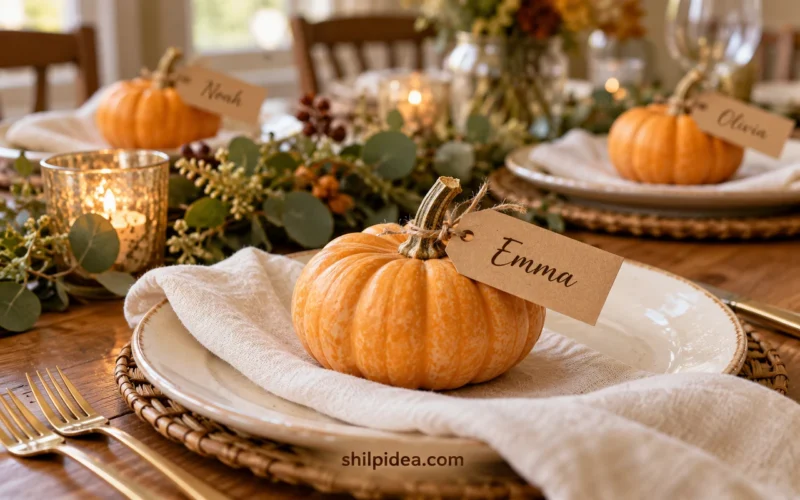
10. Attach a Paper Leaf to a Mini Pumpkin

A miniature pumpkin gives a paper leaf a practical place to rest. The white tag remains easy to read against a darker pumpkin, and the stem offers a natural tying point. Choose pumpkins that sit securely rather than rolling on the plate. Keep the leaf visible from the chair so guests can find their names without lifting the decoration.
Get the tutorial: Attach a Paper Leaf to a Mini Pumpkin by Ginnie / Hello Little Home.
11. Build a Setting Around Two Coordinating Leaf Tags

A place card and a second decorative leaf can work together when they have separate jobs. Use one for the guest’s name and the other for a short welcome or gratitude prompt. Avoid filling both with long text. The overlapping shapes create a small arrangement that still leaves the plate clear enough to use once the tags are moved aside.
Get the tutorial: Build a Setting Around Two Coordinating Leaf Tags by Ginnie / Hello Little Home.
12. Mix Leaf Silhouettes Instead of Matching Every Seat

Different leaf outlines can make a family table feel collected rather than rigidly coordinated. Keep the paper weight and lettering consistent so maple, oak and rounded leaves still belong together. This is a useful option when children help choose shapes. Give each person enough space to write a name before trimming around the painted area.
Get the tutorial: Mix Leaf Silhouettes Instead of Matching Every Seat by ARTBAR.
13. Begin with Painted Paper for a Personal Finish

Painting the paper first creates washes that continue naturally across the eventual leaf shape. The image shows that preparation stage, rather than a finished place card. Use it as a way to involve children before an adult handles detailed cutting. Once the paper is dry, choose the clearest patch for the name so the finished card stays readable.
Get the tutorial: Begin with Painted Paper for a Personal Finish by ARTBAR.
14. Carry One Leaf Motif Across a Long Family Table

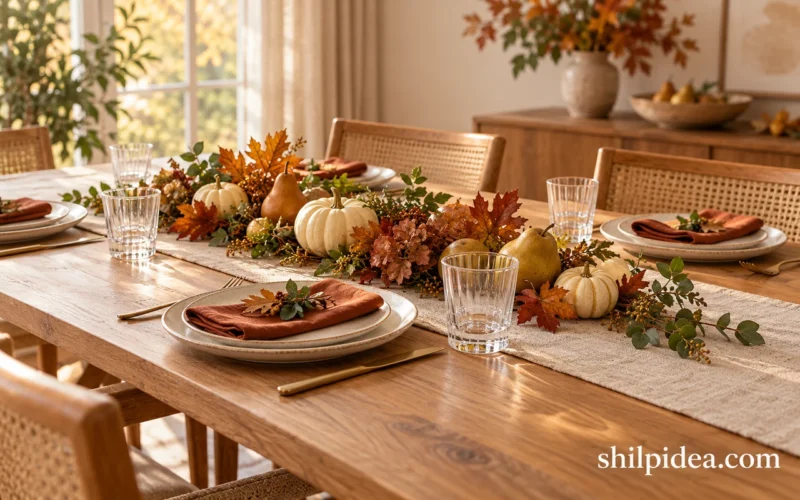
A repeated leaf detail can connect many place settings without making every card identical. Look at the full table arrangement here for proportion: individual cards remain small while the center decoration supplies height. Choose a manageable size for the leaves, then use that same scale throughout. This keeps a long Thanksgiving table feeling considered rather than crowded.
Get the tutorial: Carry One Leaf Motif Across a Long Family Table by ARTBAR.
15. Pair a Kraft Paper Name Card with an Autumn Leaf

Diane Henkler’s setting combines a paper name detail with a bold decorative leaf. This is a styling alternative to cutting the name card itself into a leaf shape. Keep the paper plain so it does not compete with the surrounding textures. A small tie brings the pieces together and helps the arrangement feel intentional on a patterned napkin.
Get the tutorial: Pair a Kraft Paper Name Card with an Autumn Leaf by Diane Henkler / In My Own Style.
16. Use Botanical Paper for Guests Who Prefer a Tent Card
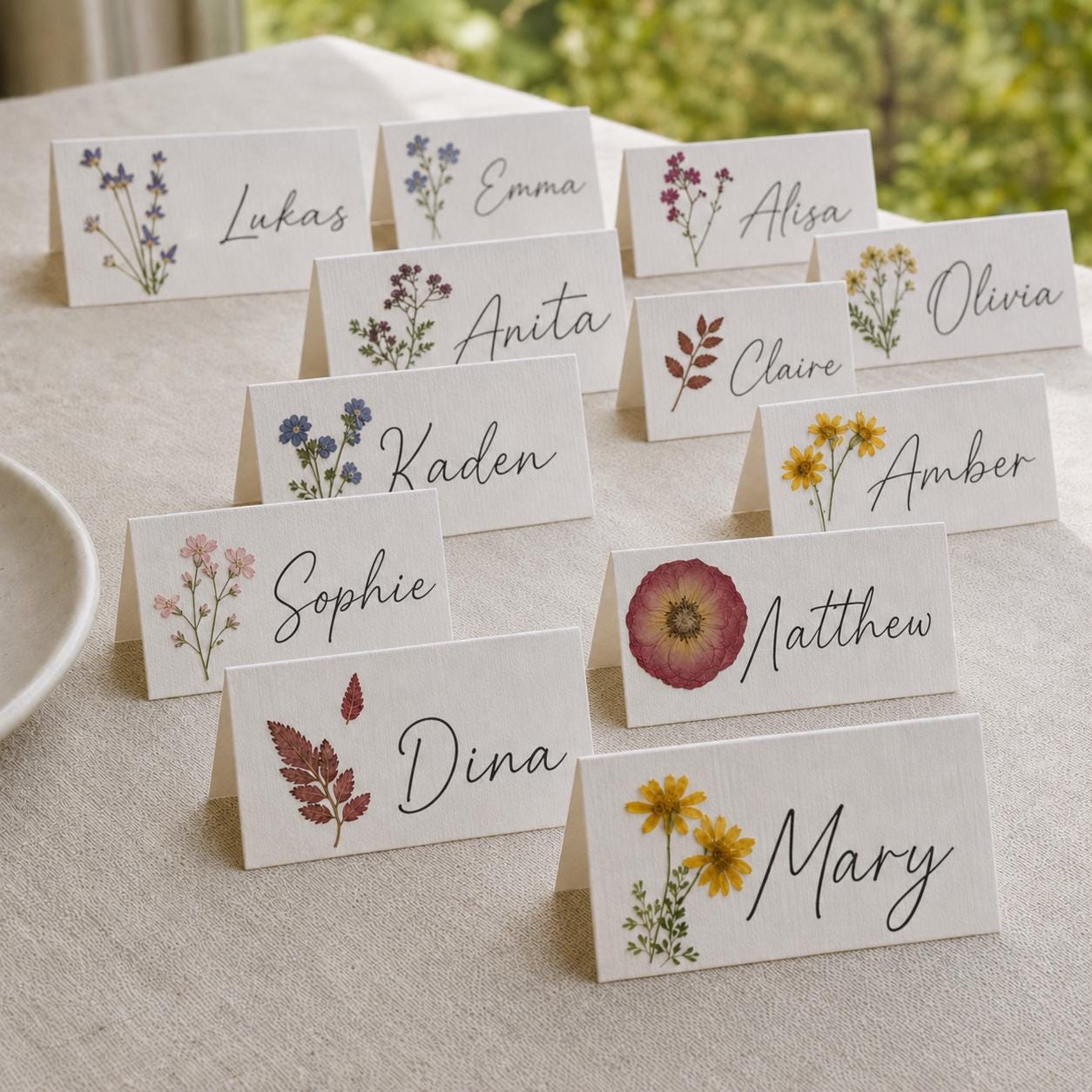
Pressed botanical details on a paper card offer another route into a leafy table theme. The rectangular format is useful for longer names, while the plant accents keep the setting connected to nature. Check the seller’s material description before assuming the decoration is printed. For a handmade adaptation, keep embellishments away from the fold and the main writing area.
17. Raise a Printed Leaf on a Slim Stem

A slim upright support turns a leaf into a small marker that guests can spot from across the table. Keep the height below conversation level and make sure the base is stable on your chosen surface. This approach can help when a napkin already occupies the plate. Make the name large enough to read without turning the leaf around.
Get the tutorial: Raise a Printed Leaf on a Slim Stem by Everyday Dishes.
18. Make the Leaves Part of a Shared Family Art Session

A collection of individually painted leaves can preserve each maker’s style while serving a practical purpose at dinner. Use a common name-writing color to bring the different washes together. The finished cards need not match perfectly; the shared leaf theme is enough. If you are making extra pieces, save them for a Thanksgiving gratitude garland nearby.
Get the tutorial: Make the Leaves Part of a Shared Family Art Session by ARTBAR.
Bring the Leaf Details Together at Each Place Setting
Once you have chosen your cards, repeat just one or two materials elsewhere on the table. A small pumpkin, a leafy napkin ring or a family gratitude display can connect the setting without covering every surface. These collections offer a few ways to carry that autumn detail through the room.
- Fall Leaf Napkin Ring Ideas for Thanksgiving Table Decor
- Pumpkin Place Card Ideas for a Thanksgiving Dinner Table
- Gratitude Garland Ideas for Thanksgiving Family Decor
Which leaf place card would you love to put on your Thanksgiving table? Tell us your favorite in the comments, or share how you would make it your own. If you have tried handmade place cards before, we would love to hear what worked for your gathering.










0 Comments