Small Mudroom Bench and Basket Ideas for Narrow Entryways
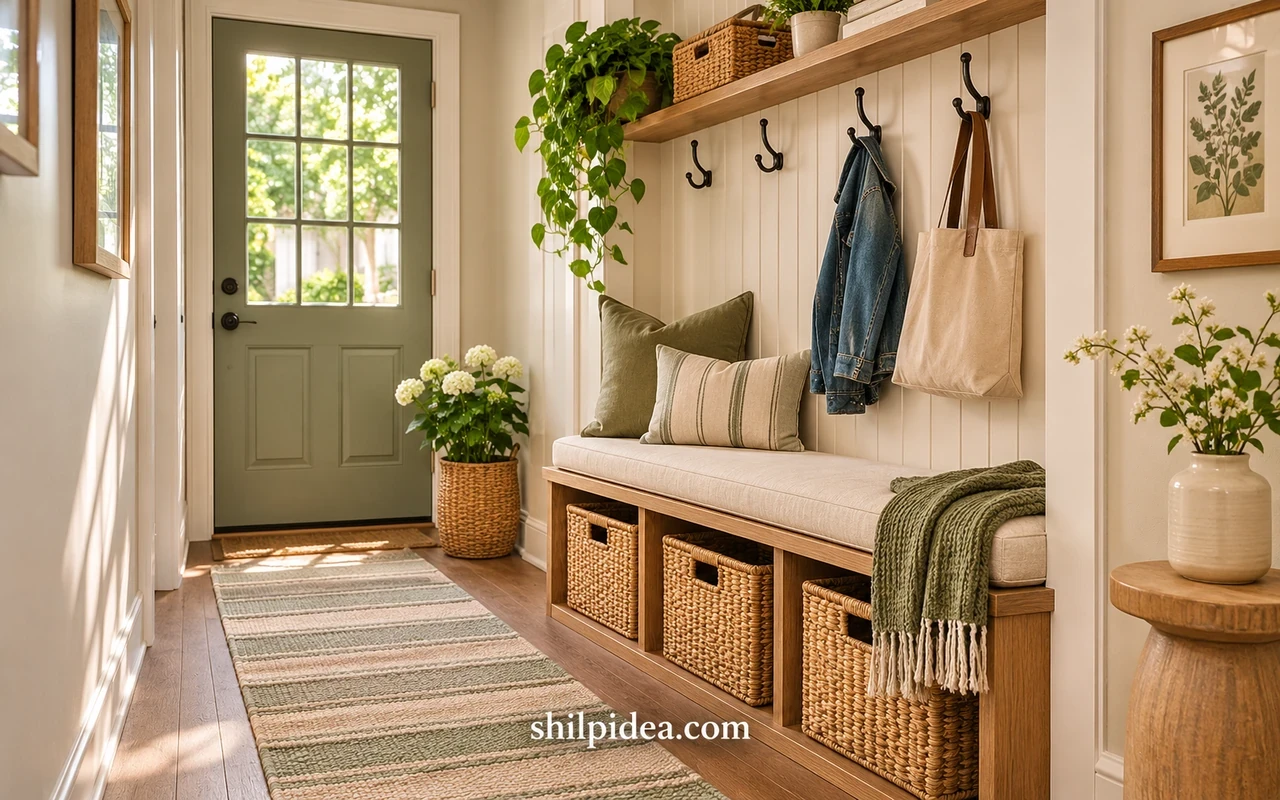
A narrow entryway can become a surprisingly useful mudroom when one well-chosen bench does double duty. The trick is to give shoes, bags, and everyday accessories places to land without blocking the route through the door.
A slim seat with baskets below provides easy storage while leaving valuable floor space open. For a broader starting point, browse these small corner solutions before choosing your bench layout.
These 18 small mudroom bench and basket ideas compare compact cubbies, enclosed drawers, wall hooks, and family-friendly systems. You can also explore winter storage ideas for boots and bulky coats.
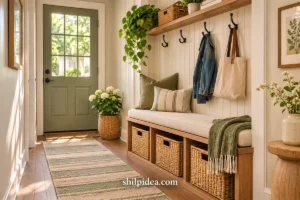
1. Slim Wood Bench with Three Underseat Baskets

A bench with three separate woven bins gives a narrow entry a simple daily rhythm. In this arrangement, the wood frame stays visually light while the baskets collect small shoes, scarves, and pet supplies. Leave the most frequently used footwear in the easiest-to-reach cubby, and put soft accessories in the other two. A wall-mounted hook rail moves coats above seat level so the passage remains usable even when everyone comes home at once.
2. Corner Bench with a Mix of Drawers and Open Cubbies

A compact corner can handle more than one kind of storage if the bench combines a closed drawer with an open shoe bay. The wooden seat in this layout creates a useful landing spot without filling the entire hallway. Use the drawer for things that disappear easily, such as gloves or a spare leash, while keeping daily shoes visible. Place hooks over the seating zone rather than behind the opening door; clearance matters more than squeezing in another hook.
3. Overhead Basket Cubbies Above a Cushioned Bench

When floor space is scarce, upper compartments make the wall work harder. This built-in pairs a comfortable seat with baskets below and another row of baskets above, creating separate zones for everyday and occasional items. Keep heavy bags and frequently used shoes lower down, where they are easier to reach. Upper baskets are better for lightweight seasonal extras. A pale finish and restrained cushions stop the tall cabinet wall from feeling too heavy in a narrow entrance.
4. Long Breezeway Bench with Low Wicker Storage

A long, shallow wooden seat makes sense along a breezeway or back-door passage, especially where several people need a place to change shoes. Multiple short cubbies below the seat keep baskets from spilling into the walkway. The shiplap and hook rail above create a defined mudroom zone without requiring a second piece of furniture. Measure the full door swing before fitting the bench, and leave enough free floor space for someone to sit while another person walks past.
5. Softly Cushioned Built-In with Small Basket Compartments

A compact built-in with a fitted cushion can feel like a welcoming nook instead of a utility station. The small baskets under this seat keep accessories concealed, while hooks and an upper ledge make the narrow wall productive. Choose baskets with handles and leave a little finger space above each one; storage that is hard to pull out rarely stays organized. In a busy family entry, consider washable cushion covers so the sitting area survives wet jackets and muddy hands.
6. Low Shoe Cubbies Beneath a Sage Seat Cushion

If your entry already has a window or wall hooks, a modest-height storage bench may be enough. This design splits the lower section into shoe bays and drawers, leaving the cushion free for sitting. A muted sage seat adds color without making the cabinetry look bulky. Reserve one open bay for shoes that need to air out, and use drawers for dry, small accessories. Keep a separate waterproof tray nearby when the family returns with wet or snowy boots.
7. Matching Wood Bench and Wall Shelf for a Finished Look
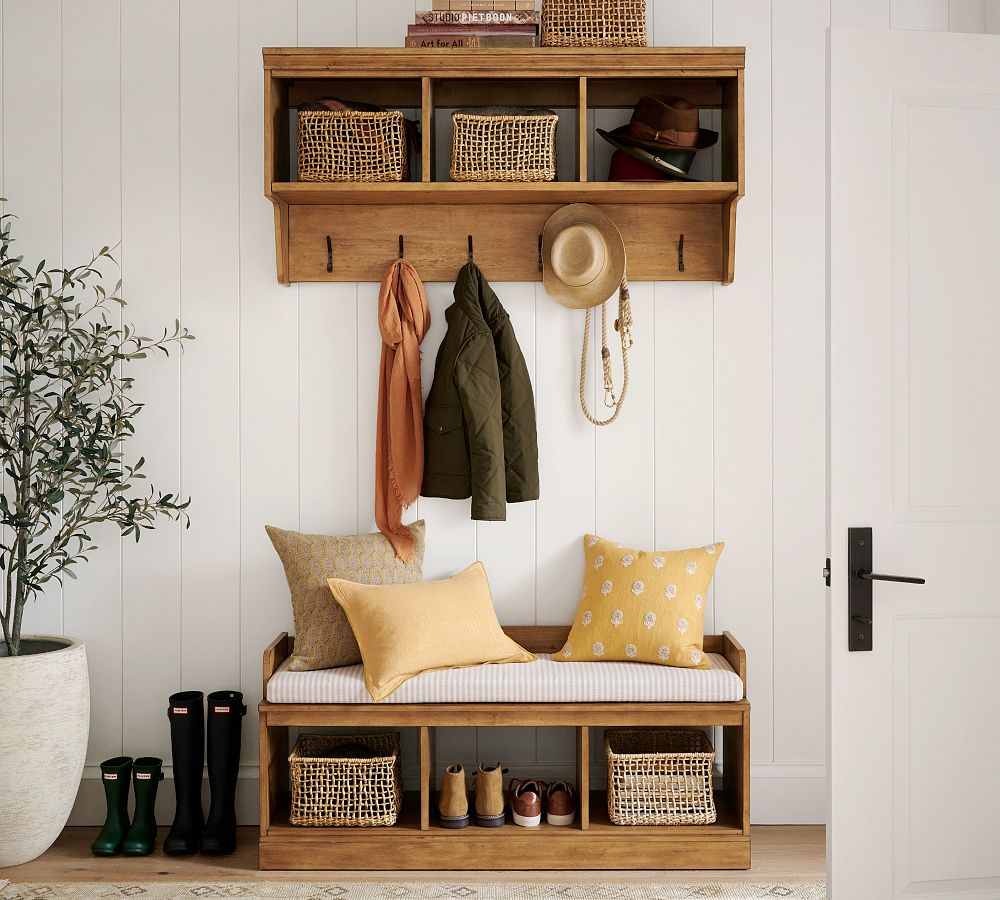
A coordinating bench and wall shelf can make an awkward bare wall look intentional. Here, a warm wood finish ties together the cushioned seat, shoe cubbies, woven baskets, and hooks above. The storage works best when each level has a clear job: shoes below, coats in the middle, and less-used items on top. In a tight entry, check the actual bench depth and door clearance before choosing a similar set; attractive furniture still needs room to function.
8. Simple Open Bench Beside a Window and Hook Rail

An open timber bench avoids the heavy appearance of built-in cabinets and can be easier to adapt when your needs change. In this arrangement, a single basket takes the loose items while shoes remain visible below the seat. The window brings light to the narrow wall and the overhead hooks take care of jackets. Consider winter entryway storage nearby if boots and coats create seasonal overflow. A small floor mat keeps the practical arrangement easy to clean.
Make This at Home: Budget Friendly Mudroom Bench Project
9. All-Oak Alcove Bench with Deep Basket Bays

A matching oak back panel, bench, and upper storage creates a built-in look within a relatively small alcove. The natural grain adds warmth, and the open baskets below make it clear where items belong. Rather than packing every shelf, leave one flexible space for a bag or a pair of boots that will not fit in a basket. If you are copying the look in a rental, a freestanding bench and separate secured hooks offer a more reversible alternative to full cabinetry.
10. Adapted Cube Shelf with a Removable Seat Pad

A cube shelf turned on its side can provide baskets and a small sitting spot without custom cabinetry. The dark cushion in this example gives the light frame a tidy, practical finish. Before using a shelf as a bench, verify that the manufacturer permits seated loads and that the unit is assembled and secured as required; not every bookcase is safe to sit on. Choose baskets that slide in smoothly, and keep heavy shoes in the lowest compartments.
11. White Shiplap with a Rich Wood-Topped Storage Run

A long built-in seat is especially useful when the entry serves several family members. The wooden top adds warmth against white vertical paneling, while shelves, drawers, and baskets keep different belongings from mixing. This style benefits from a deliberate layout: hooks above daily bags, one cubby per household member, and a drawer for mail or small accessories. If the wall is narrow, use fewer deep cabinets rather than shrinking the walking path with bulky units.
12. Hook Wall and Natural Wood Bench on Light Tile

A narrow bench with baskets under the seat is often enough when the wall itself handles outerwear. This bright entry uses pale tile, white paneling, and a simple hook row to create order without crowding the space. Place hooks high enough for coats to clear the seat, and position lower hooks only where children can reach them safely. Woven baskets suit dry mittens and hats; use a wipeable bin or floor tray for muddy footwear rather than soaking wicker.
13. Moody Blue Built-In with Drawers Under the Bench
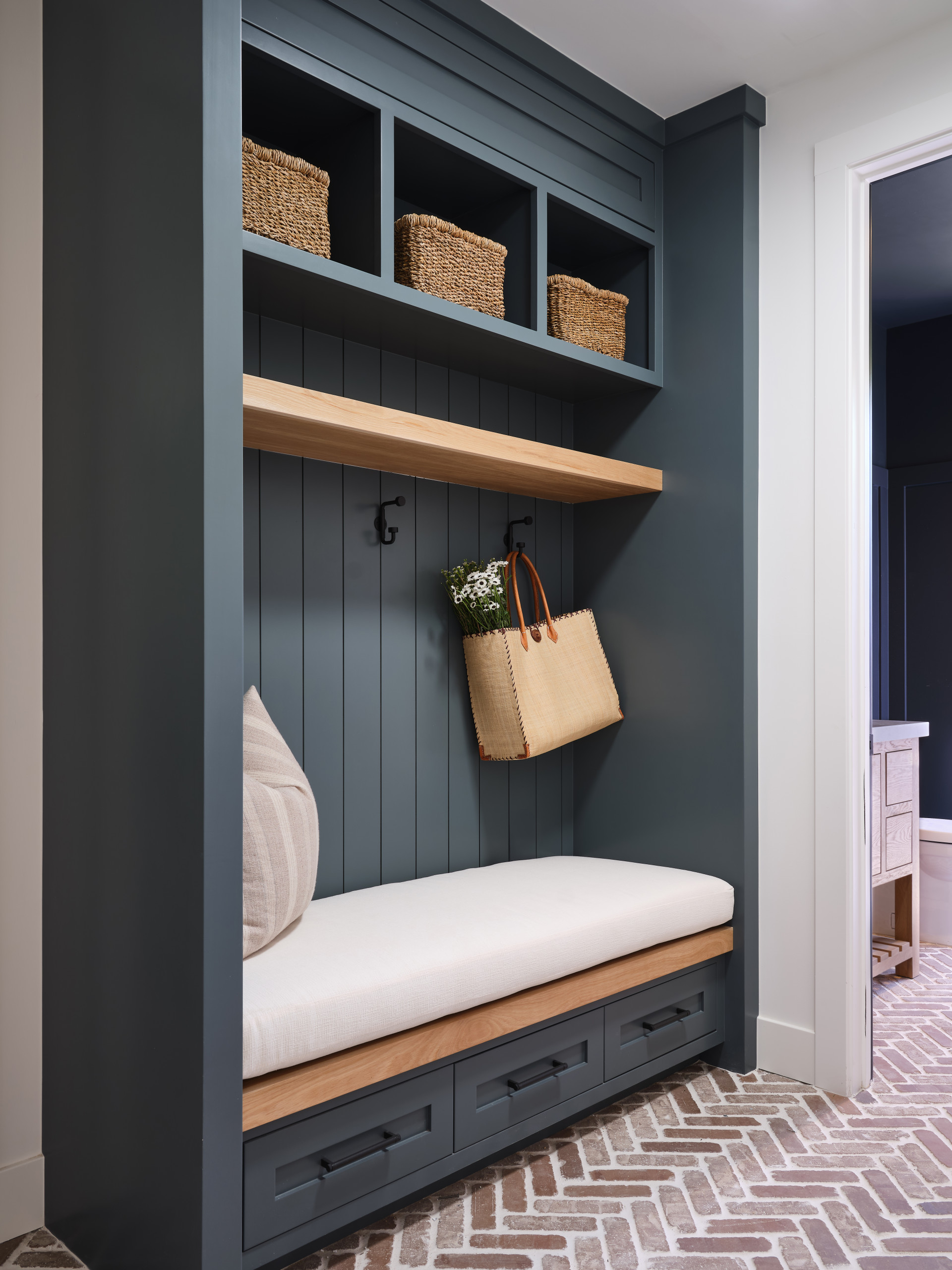
Deep blue cabinetry can be a surprisingly calm choice for a small mudroom when the seat and floating shelf use a lighter wood. The woven baskets in the upper cubbies contrast nicely with the painted walls, and closed drawers below hide small clutter. To keep a similar design from feeling narrow, preserve open space around the door and choose a cushion that does not project beyond the bench edge. A slim hallway mirror on the opposite wall can help reflect available light.
14. Forest-Green Lockers with Baskets and Brass Hooks
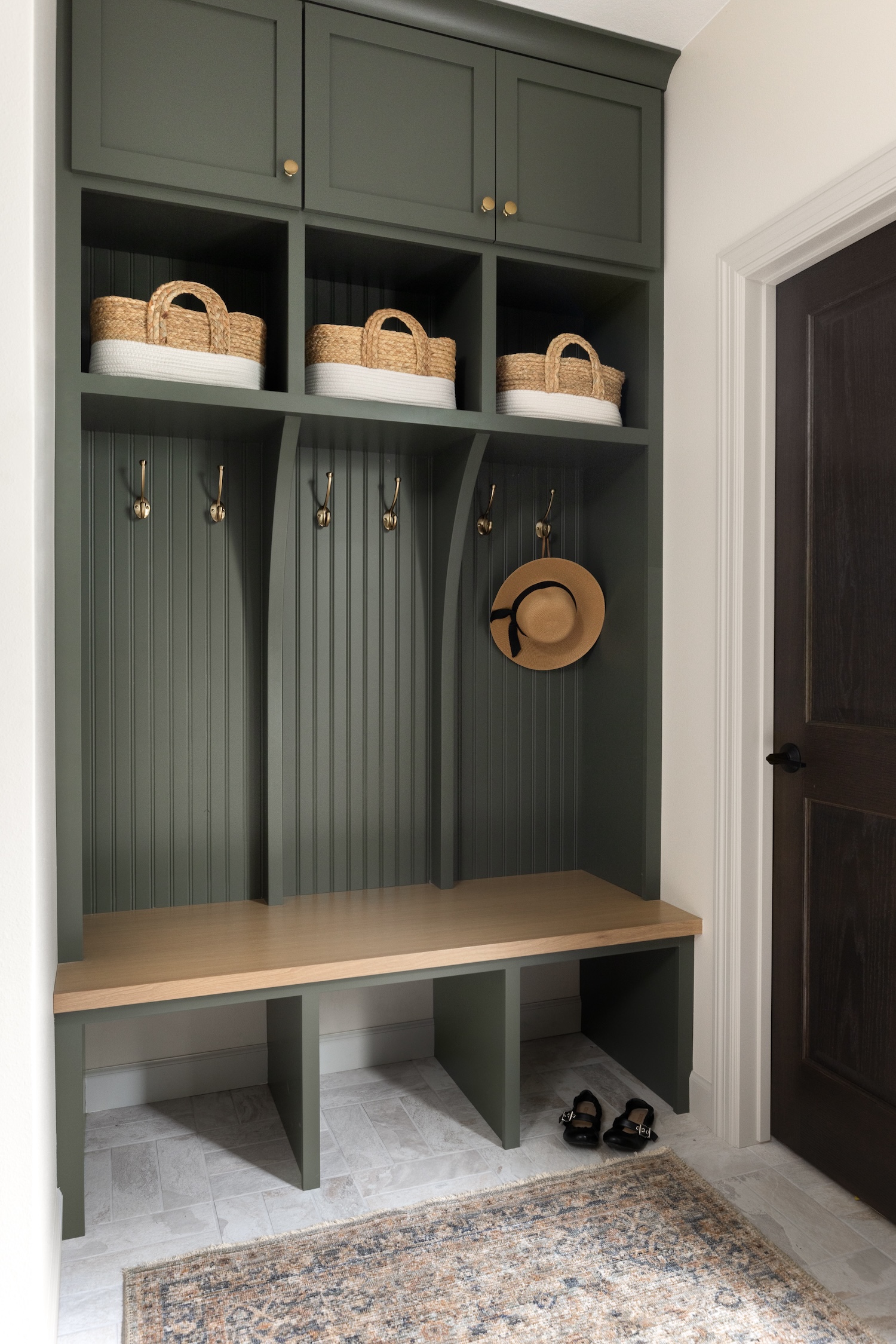
Deep green panels make an everyday storage wall look intentional rather than purely utilitarian. The upper cupboards can hold occasional items, middle cubbies display woven baskets, and hooks keep hats and coats near the door. This configuration is well suited to a compact alcove, but only if the doors and cabinets have adequate clearance. For a softer finish, repeat one warm natural material—like the woven baskets—instead of adding several competing wood tones and patterns.
15. Labeled Family Baskets Under a Striped Bench Cushion

One labeled basket per category can make a shared family entrance much easier to maintain. This bench combines a striped cushion with several underseat bins marked for everyday belongings. Labels are most effective when everyone understands the category, so keep them simple—shoes, gloves, bags, or pet supplies. Hang the main coat rack directly above the bench, and avoid decorating the sitting surface so heavily that no one has room to use it. For small homes, start with fewer baskets and expand only when needed.
16. White Cottage Bench with Matching Upper Basket Shelf

A soft white bench and a row of natural baskets keep the visual palette simple, even when the storage system spans most of the wall. Black hooks add contrast and keep coats at hand without demanding floor space. This arrangement can work nicely beside a kitchen or back door where clutter accumulates quickly. Before buying baskets, measure the interior opening rather than the exterior cabinet width. A narrow hand gap helps each container slide out easily during busy mornings.
17. Blush-Pink Niche with Brass Hooks and Woven Storage
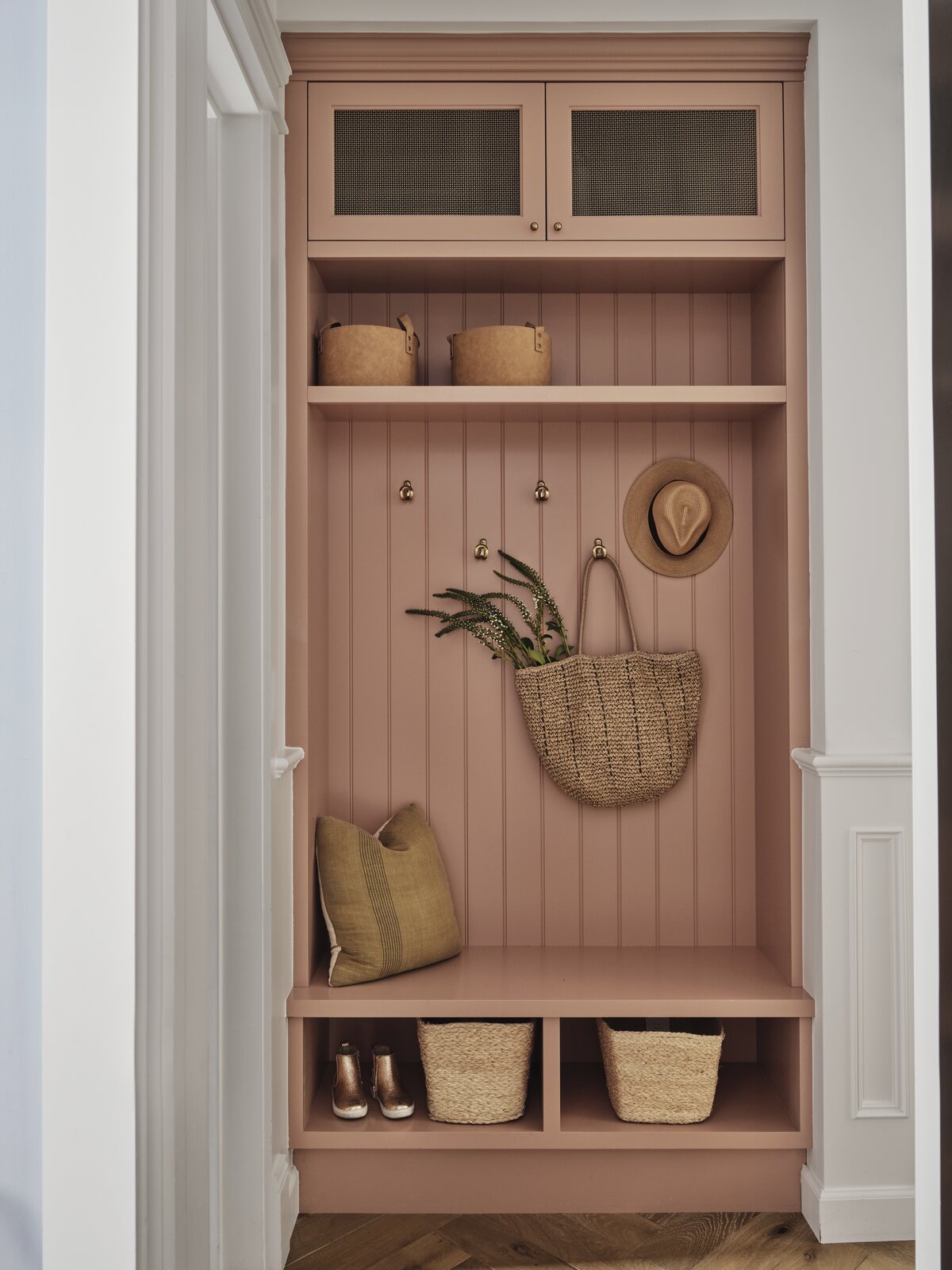
Storage does not have to disappear into white walls. A muted blush finish turns a small recessed mudroom bench into an inviting feature while the brass hooks and woven baskets still handle everyday clutter. The shallow seat works well for putting on shoes, and the upper cupboards hide less-frequently-used items. Keep the same color across the backing, cubbies, and seat supports for cohesion. In a darker entry, use pale baskets or a light cushion to keep the space from feeling enclosed.
18. Seat Nook with Natural Rattan-Front Storage

For an entry where doors line both sides, a simple fitted bench tucked into the remaining wall may be more realistic than a full locker system. This nook uses a slim cushion and rattan-front compartments to soften the view while hiding shoes. The warm seat color creates a small focal point without needing extra decor. If the entrance is especially tight, consider how the door opens and how much knee room someone needs before selecting the seat depth.
More Small-Space Entryway Projects to Explore
A useful entry does not need to be a custom-built room. Start with the amount of space your door actually gives you, choose a safe seat height, and decide which belongings deserve an easy-reach basket. If the bench solves the daily shoe pile, you can add wall storage, seasonal hooks, or a mirror later. These related Shilpidea reads offer a few natural next steps.
- Small Corner Entryway Storage Solutions
- Winter Storage for Shoes and Coats
- Large Mirrors for Narrow Hallways
- Small Space Craft Corner Organization
- Warm Minimalist Living Room Ideas
Which bench-and-basket layout would suit your entrance best? Share your plans or storage challenges in the comments—we would love to hear your ideas. If you have already organized a narrow entry, tell us what made the biggest everyday difference.











0 Comments