21 Buddha Statue Display Ideas for Quiet Home Corners
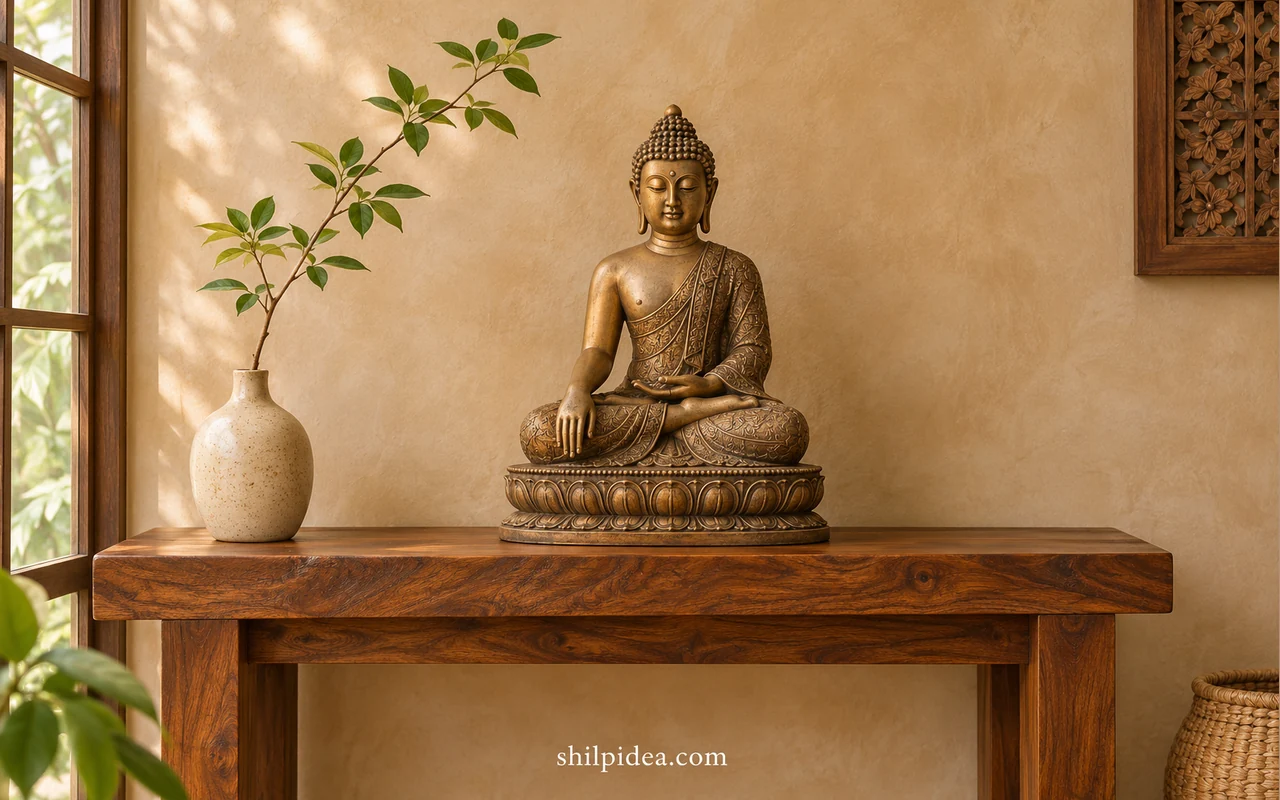
A Buddha statue can give a shelf, console, or small room corner a clear focus. Start with a stable surface and a view you enjoy from where you usually sit or walk. If the figure has religious significance for you or someone you live with, let that guide where and how it is displayed.
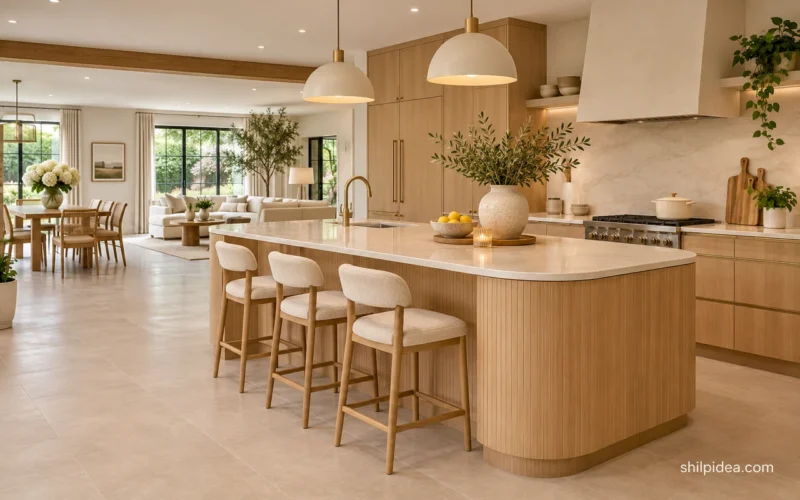
Browse these warm minimalist interiors for examples of how wood, stone, and cloth can soften the area around a display.
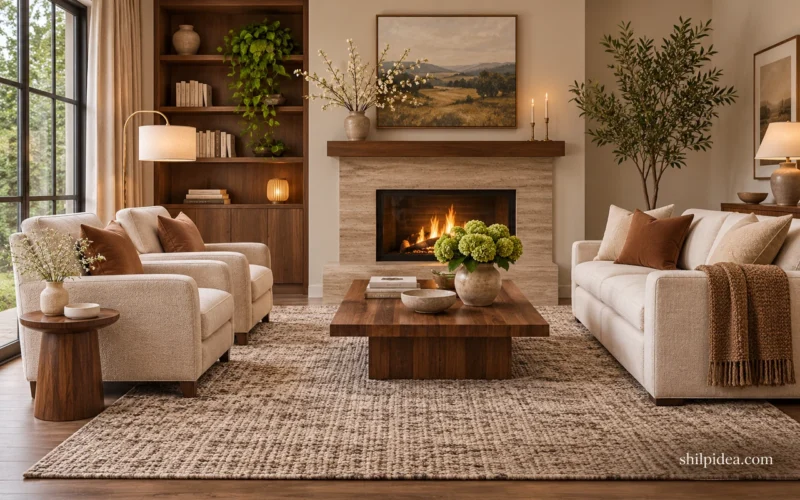
Use these living room ideas to plan the space around the statue, especially if it will share a wall with seating or lighting.
1. Set a Large Figure Beside a Bookcase

A tall statue can stand out next to shelving full of books and everyday objects. Leave some space between the figure and the first shelf so you can see its shape from across the room. Check that the base is steady and that the statue stays clear of the path to the books.
2. Raise a Seated Statue on a Low Wood Stand

A low wood stand gives a smaller figure a place of its own and lifts it above other items on the table. Choose a stand that extends beyond the statue’s base and can hold its weight. A little bare wood around the figure shows the grain and makes the footprint easy to see.
3. Hang a Relief Above a Narrow Console

A wall relief works where a deep console would get in the way. Line up the center of the relief with the part of the console you want to highlight. Check the weight and the wall material before choosing hardware. Keep any objects beneath it low enough to leave the bottom of the relief visible.
4. Set the Figure Inside a Lit Alcove

An alcove contains the display and keeps projecting pieces out of a busy passage. Try a warm light from the side so the face and hands are readable without glare. Set the statue on a firm ledge and leave space behind it for cleaning. Check what the fixture looks like from standing height.
5. Use the Center of a Round Display Shelf

A circular display shelf already has a strong outline, so a small figure can sit on one of the middle shelves. Leave the shelves immediately around it lightly filled so the circle and statue are both easy to see. Choose the shelf depth around the base of the figure before bringing it home. These cozy room ideas offer ways to work with the furniture nearby.
6. Group Plants Around a Low Display

Use plants of different heights to frame a figure from both sides. Pull the larger pots a little forward so the leaves create depth, then step back to make sure they leave the face visible. Keep saucers under plants that need frequent watering and allow enough room to lift each pot out.
7. Make a Small Plant Tray Display

A tray can collect a small Buddha figure and two plants in one spot. Pick a tray wide enough that the figure sits level and leaves a place for each pot. Taller foliage can stand behind the figure, with a low pot to one side. Move the pots off the tray for watering if it is unsealed. Use these indoor plant displays to find a pot or tray that suits the scale.
8. Place a White Statue Against a Pale Wall

A pale figure and a pale wall create a quiet display that depends on shadow and texture. Set the figure a little forward so light can reach one side. Look at it from your usual seat before placing anything else nearby. A matte base helps keep bright reflections from flattening the shape.
9. Pair an Earth-Tone Figure With One Flower Stem

A single stem or small bunch gives you something to change with the season. Choose a vase that sits lower than the figure, with enough space to lift it out easily. Put the vase to one side so the stem reads against the wall and the statue’s outline remains clear.
10. Set a Small Figure Against a Textile

A folded textile or fabric backdrop can give a compact display color and a softer edge. Hang or prop the fabric so it stays flat behind the statue and leaves a border around the figure. Use a shade that makes the outline easy to see. Leave room between textiles and any flame.
11. Use a Bust to Anchor an Open Room

A large bust reads clearly from more than one angle, which can help in an open room. Use a sturdy base and look at the arrangement from the adjacent spaces before settling on a position. Turn the bust a little if it faces directly into a passage. Leave clearance for walking around it.
12. Nest a Stone Figure Into an Outdoor Corner

If the figure is rated for outdoor use, let low plants and stones frame it beside a sheltered path. Use a level base that stays firm after rain. Place spreading plants far enough away that you can trim them as they grow. Keep the statue visible from the spot where you usually approach.
13. Use a Gold-Tone Relief on a Warm Wall

A gold-tone relief changes as the light moves across it. Try it against a warm wall with few competing details, and check for glare in the evening. A light aimed from one side can bring out the profile and raised edges. Leave an open border so the panel has a clear outline. See these personalized wall decor ideas if you want to carry the wall treatment into another room.
14. Give a Sunny Bench One Main Display

A window bench or low table can give a seated figure a backdrop of daylight. Leave part of the bench open to keep the display easy to see. Check for direct sun if the surface or statue has a finish that can fade. Add cushions below or beside the bench if the space is also used for sitting.
15. Use a Small Carving on a Shelf End

A compact carved figure can hold its own at the end of a shelf if the objects beside it are lower. Allow enough room to see the curve of the carving from the side. On an open shelf, put the figure far enough back that a passing sleeve cannot catch it.
16. Light a Tall Carved Panel From Above

A narrow panel gives a wall some height where floor space is limited. Put the light high enough to illuminate the carving from top to bottom. If the middle looks washed out, change the angle or move the light a little farther away. Leave the wall around the panel clear of smaller frames.
17. Bring the Display Into a Window Recess

A window recess can hold a low arrangement with a small statue and a plant. Check that the handle still turns and that any blind or curtain can move freely. Set the figure closer to one side to keep it out of the strongest glare. Choose a plant that suits the light there. These warm natural accents can help you choose a finish that works with the rest of the room.
18. Let Carved Wood Supply the Texture

A carved wood Buddha panel can work against a plain wall or beside another wood finish. Look for a difference in tone so the carving stands out. Give it space around the sides, especially where the grain is busy. Follow the maker’s guidance for humidity and sun if you display it near a window.
19. Show a Dark Figure Against a Plain Backdrop

A dark finish can make a statue look almost like a silhouette. Place a plain wall or board behind it and try light from the side to bring out the features. Keep nearby objects from overlapping the shoulders. If the figure has a very reflective surface, check it from your usual viewing angle.
20. Use a Painted Cabinet as the Base

A painted cabinet can give a small bronze or dark figure enough height to stand out. Leave some bare surface around the base so the cabinet and statue each have a clear shape. A leafy plant beside the cabinet can frame the display without taking up space on top.
21. Put a Buddha Head on a Dark Chest

A dark chest gives a Buddha head a solid base and makes a pale or mottled finish easier to see. Put shorter objects to one side and leave room behind the head to lift it safely. Use a base wide enough to support the sculpture without letting it overhang the chest.
Give the Display Room Around It
Look at the arrangement from the doorway and from your usual seat. Shift the lamp or plant a few inches if it competes with the figure, and check how the display looks once the sun goes down. The collections below can help with the surrounding finishes, seating, and light.
- Warm Natural Accents for Minimalist Rooms
- Modern Ideas for Welcoming Living Rooms
- Cozy Minimalist Living Room Ideas
- Personalized Wall Decor With Meaning
- Indoor Plant Displays for Home Corners
Where would you place a Buddha statue in your home, and what would you put beside it? Share the corner and materials you have in mind. If you already have a display, tell us how the spot looks at different times of day.









0 Comments