22 Minimalist Home Ideas with Warm Natural Accents
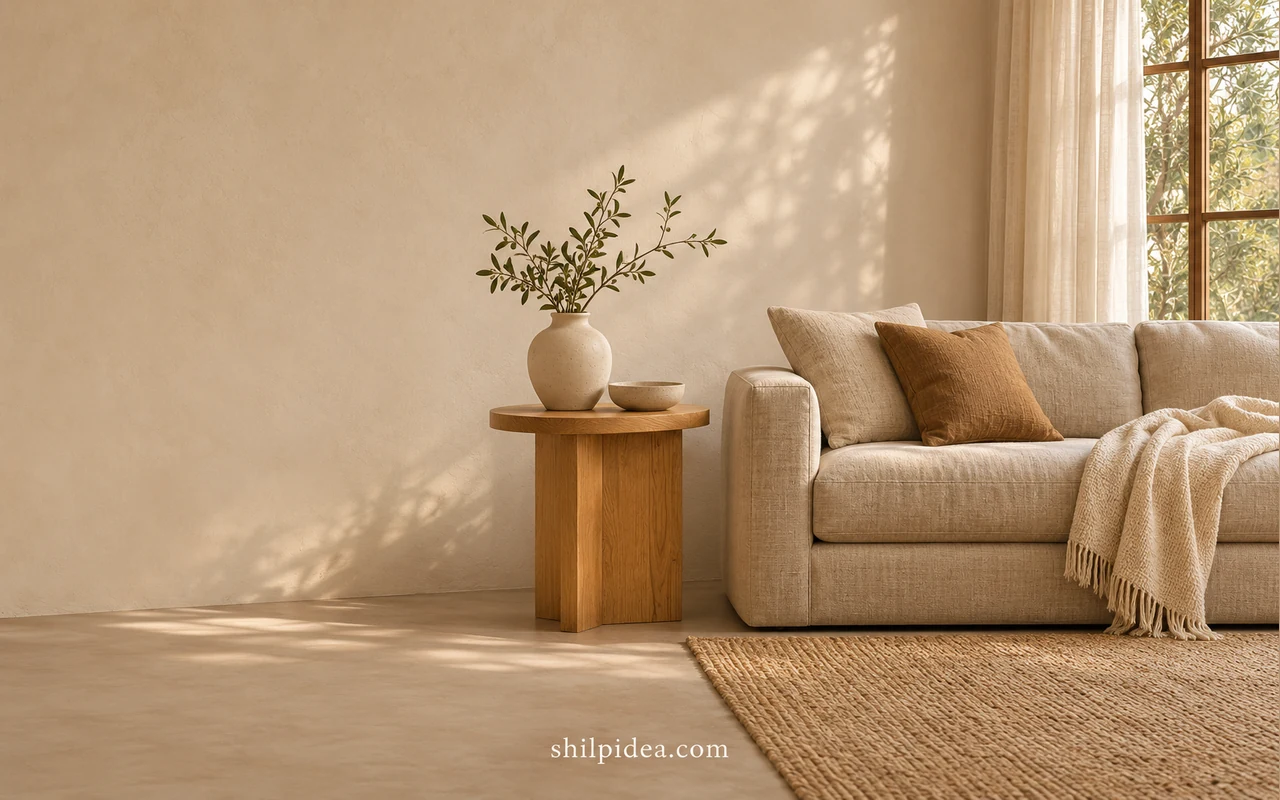
A warm minimalist home can feel calm and lived in at the same time. When you use fewer pieces, their materials, proportions and placement become easier to notice.
Start with these minimalist living rooms to decide where you want more space, more texture or a clearer focal point.
Then borrow from these creative interior ideas to bring a few warmer finishes into the rooms you use most.
1. Anchor the Living Room With an Oatmeal Sofa
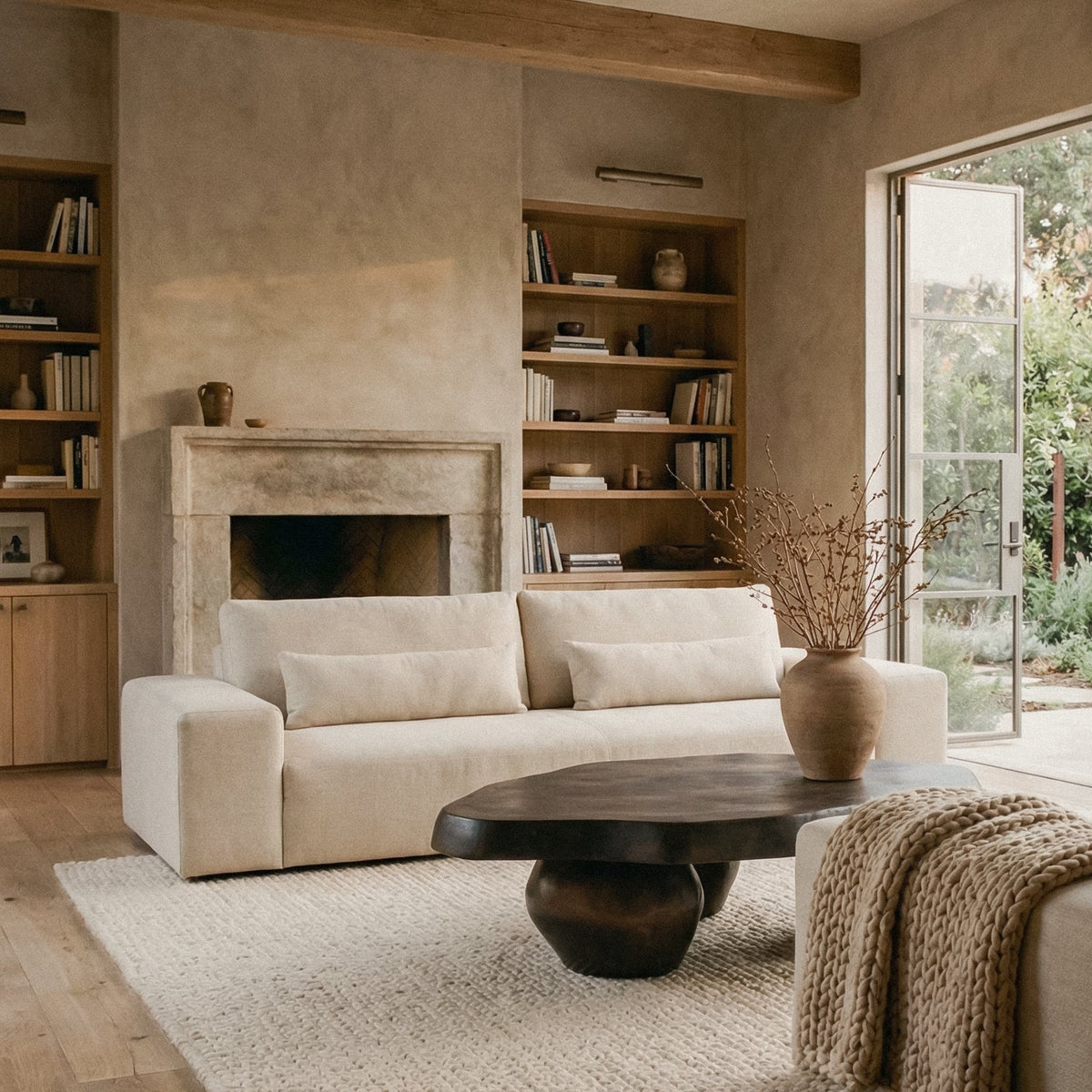
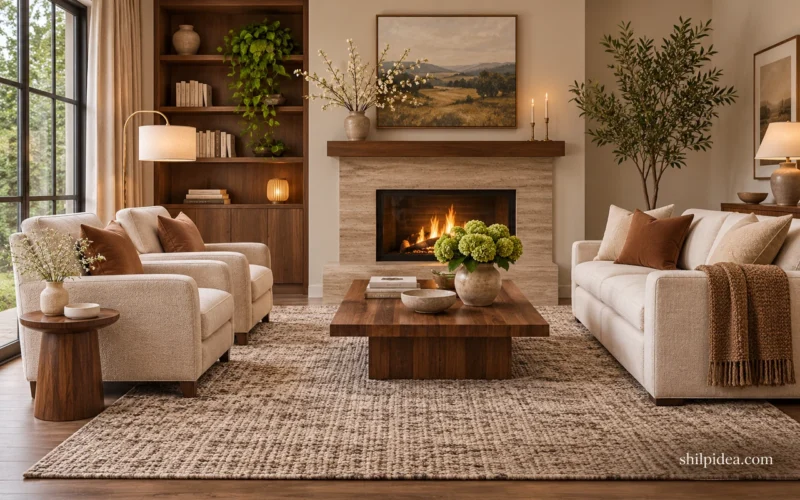
An oatmeal sofa can soften a room with plain walls and a mostly wood palette. Let the upholstery do the visual work and limit pillows to the ones you actually use. Compare a swatch with the floor at different times of day. A more textured linen can feel comfortable even when the rest of the furniture is spare.
2. Choose a Coffee Table With Visible Wood Grain

A wood coffee table gives a quieter living room a useful focal point. Pick a size that leaves a clear path around it and a height that is comfortable from the sofa. Leave enough bare surface for a drink or a book. One ceramic bowl or tray can gather small objects while keeping the grain in view. These living room layouts can help you position a table around different seating arrangements.
3. Give a Seating Area a Natural Fiber Rug

A woven rug gives a grouping of furniture a clear edge without adding a busy pattern. Choose a size that can catch the front legs of the main seats, and test how the weave feels under bare feet. Look for a flat edge where people walk through. A suitable rug pad can help it stay in place.
4. Let Limewash Bring Depth to a Plain Wall

A softly mottled wall can keep a neutral room from feeling flat. Try a sample on the actual wall before you commit, since shadows and daylight can shift the color. Give the finish room to read by limiting the number of objects in front of it. Choose a product suited to the surface and how you clean the room. Use these interior design ideas to choose a quieter supporting texture.
5. Filter Daylight Through Ivory Sheers

Light curtains soften a bright window and add a little movement to a room that otherwise has clean lines. Hang them so the stack can clear the window when you want the full view. Check the fabric against white trim before choosing a shade. Add a separate privacy layer where the room needs it after dark.
6. Use One Large Artwork Instead of Many Small Pieces

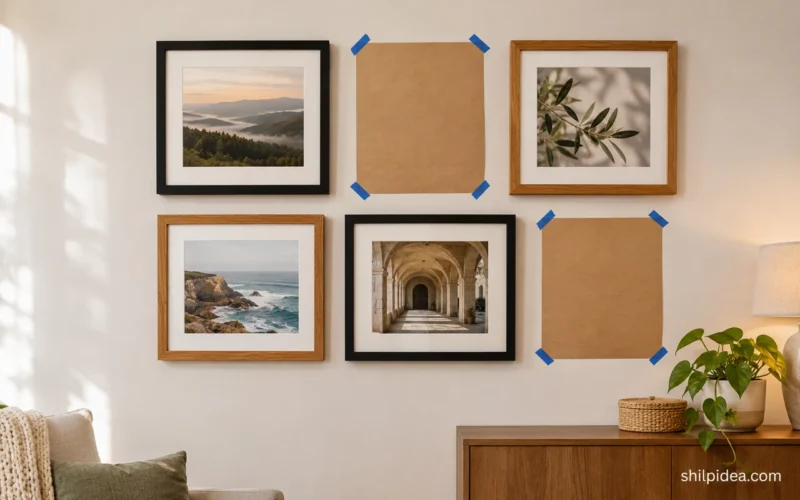
Choose a single artwork that has enough visual weight to hold the wall on its own. A muted piece with a simple frame can relate to natural furniture without matching it exactly. Check the wall from the room’s main entry before hanging it. Leave room around the piece so the edge of a cabinet or lamp does not cut into it.
7. Keep the Bed Low and the Bedding Simple

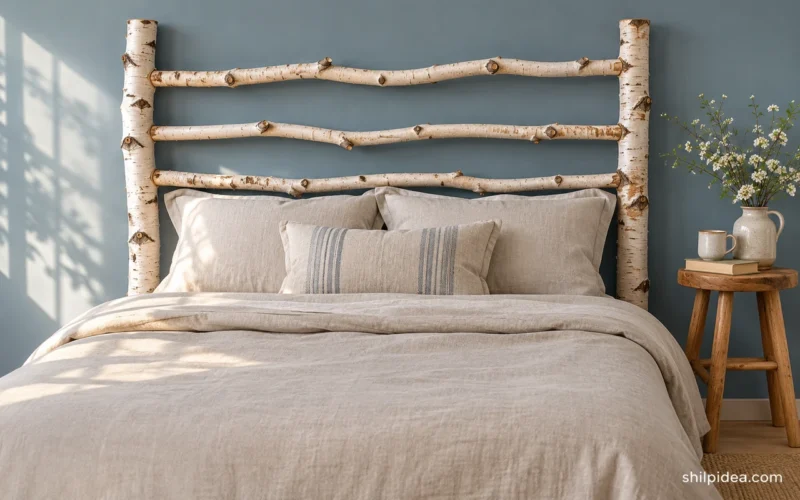
A low wooden platform keeps more of the wall visible and makes the bed frame feel like part of the architecture. Use washable bedding in closely related shades and add one layer for warmth at the foot. Check the mattress height before you commit to the frame. A low profile still needs to be comfortable to sit on. A sage and cream palette gives you another gentle color direction.
8. Light the Bedside Without Filling the Nightstand

A wall light can free up a small bedside surface for the things you reach for most. Choose a shade that softens glare and check the switch position while sitting up in bed. Wood or a warm metal detail can connect the fixture to the rest of the room. Leave enough space for the light to spread across a book.
9. Set Up a Woven Chair by the Window

A woven chair adds structure to a quiet corner without the bulk of deep upholstery. Use a seat cushion if you expect to read there for longer stretches. Keep a small table or ledge within reach. Check the morning and afternoon light before placing the chair so you can sit comfortably without facing glare. Look through these cozy minimalist rooms for other ways to arrange a reading corner.
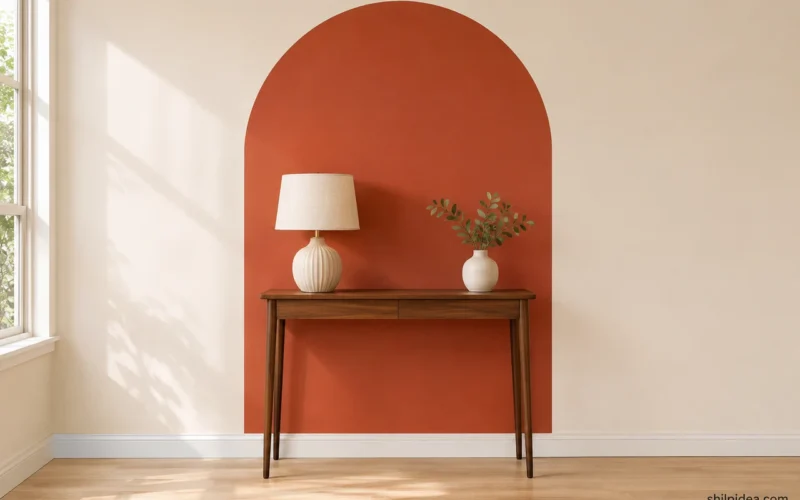
10. Bring in One Clay-Colored Accent

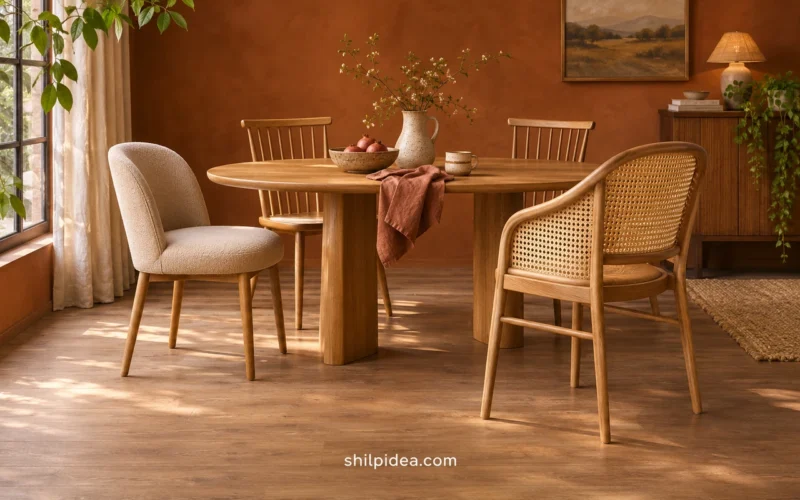
An earthy clay color can warm a space that is mostly cream and wood. Use the color on one object or finish that is visible from the doorway. Let a quieter tone sit directly beside it so the accent has room to stand out. Before buying more pieces, see how the color looks when the lights are on at night.
11. Use an Oak Bench at the Dining Table

A bench with a simple profile can tuck under a dining table when you need the walkway clear. Check how easily people can sit down without moving the whole bench. A matching wood tone gives the area a calm base. A single loose cushion can soften the seat without hiding the construction.
12. Hang a Softly Shaded Dining Pendant

A fabric or paper shade can spread light across the table and make a dining corner feel more settled. Choose a shade that suits the width of the table and check sightlines while seated. Use one fixture for a small surface or a measured pair for a longer table. Keep other decorative pieces low.
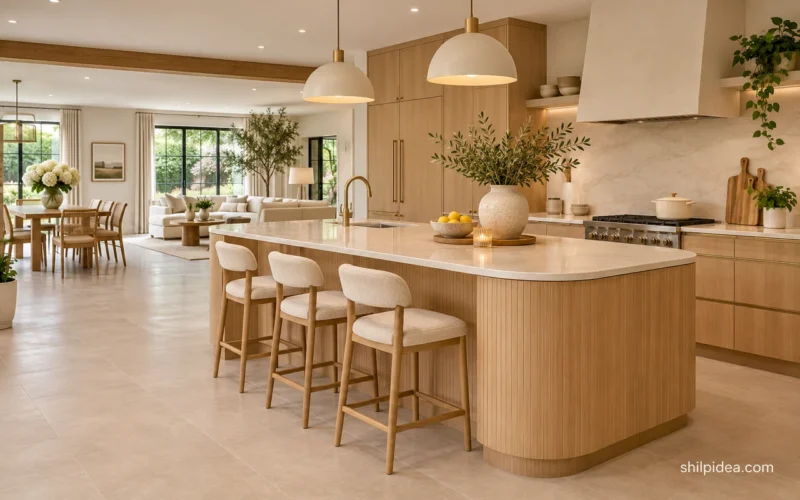
13. Let Oak Cabinetry Warm a Quiet Kitchen

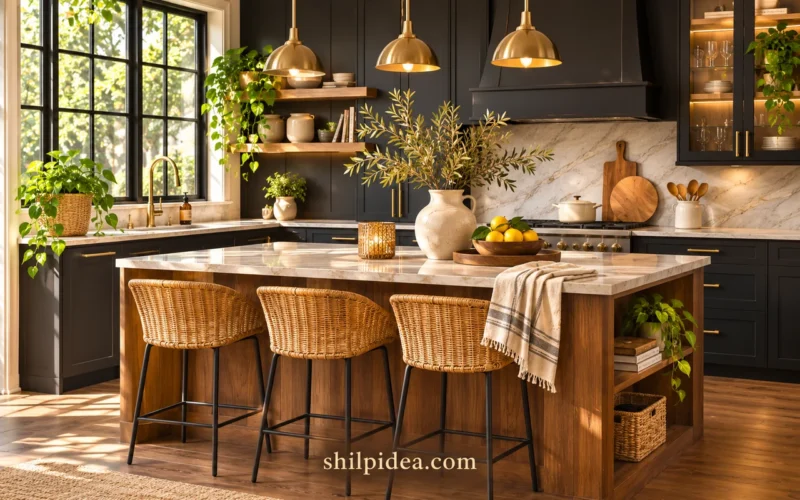
Oak fronts can give a kitchen enough variation to keep the counters and walls simple. Look at samples next to the floor before choosing a finish, since two similar woods can have different undertones. A backsplash with quiet texture gives the cabinetry room to stand out. Pick handles that feel comfortable during everyday use.
14. Leave Breathing Room on an Open Kitchen Shelf

An open shelf works best when it holds objects you use and can put away easily. Set everyday cups and bowls close to the place you use them, then leave an open stretch between groups. A wood shelf can bridge a pale wall and warmer cabinetry. Keep anything heavy or rarely used in a closed cabinet.
15. Treat Pantry Doors as Part of the Room

Choose pantry doors that relate to nearby cabinetry in their wood tone, proportions or hardware. Plan the opening around the way you carry groceries into the room. A pair of doors can frame a narrow opening while keeping a useful amount of the pantry within reach. Keep the most frequently used shelves easy to see when the doors open.
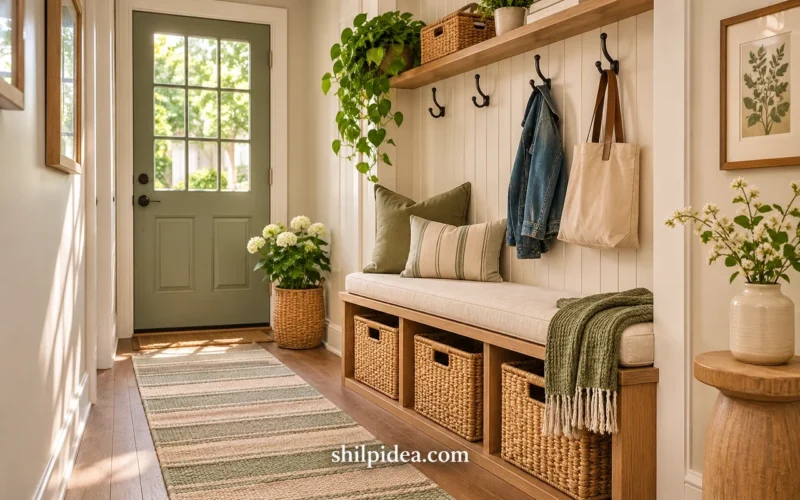
16. Make Room to Sit Down at the Entry

A slim wood bench makes an entry feel more useful without filling it with furniture. Check how far you can pull out a shoe basket while still leaving the door clear. Keep the bench seat mostly open. A cushion or woven mat can add warmth if the surrounding floor and walls are already quiet.
17. Use a Short Oak Peg Rail

A small rail gives keys, bags or an everyday jacket a predictable place to go. Fit it to the wall you use when you first walk in. Space out the pieces you hang so each peg remains easy to reach. One basket nearby can catch smaller items that would otherwise pile up on a surface.
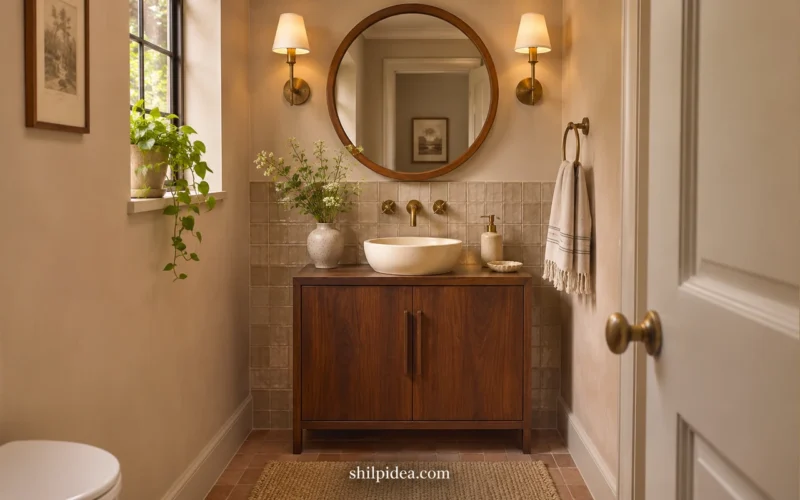
18. Let Travertine Add Soft Pattern to a Bathroom

Travertine or a travertine-look finish brings soft variation to a compact vanity wall. Choose a finish suited to the room and check its care requirements before committing. Keep the faucet and mirror simple if the stone has visible movement. A warm light can help the texture read without making the room look too yellow.
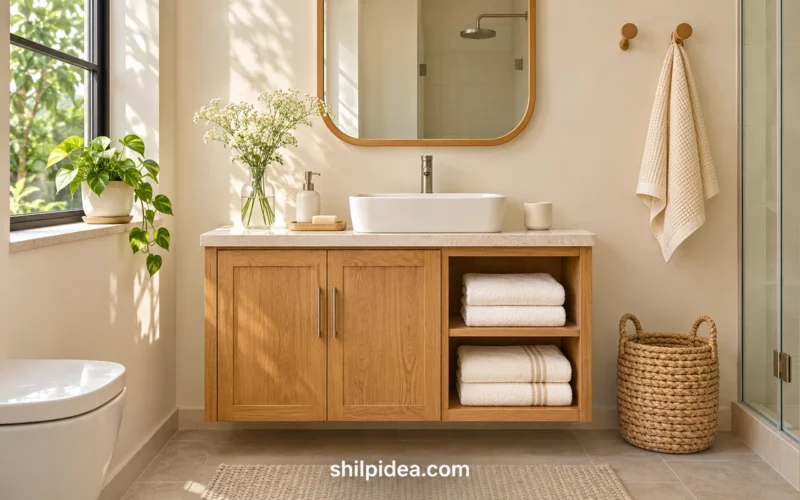
19. Choose a Wood Vanity With a Clear Profile

A wood vanity brings warmth to a room with hard surfaces. Choose a clear shape that works with the size of the wall, then use the grain or a simple drawer detail for interest. Keep a landing space beside the sink. A plain mirror makes the wall easier to read from the doorway. Our small counter ideas offer practical ways to keep the basin clear.
20. Set a Few Objects Into an Arched Niche

A recessed shelf is a way to display pottery without adding another freestanding unit. Give taller pieces enough space to be seen as shapes, and leave one shelf partly empty. Repeat a material instead of trying to match every object. If the recess is deep, check how the objects look in shadow before you settle on their placement.
21. Give a Potted Tree a Clear Silhouette

A tall potted tree can fill an empty corner with shape while keeping the furniture arrangement simple. Choose the plant based on the light the corner actually gets, or use a well-shaped faux option if you prefer. A plain planter keeps attention on the branches. Leave some space between the foliage and the curtains.
22. Set Off One Textured Chair With a Plain Wall

A textured chair gives a spare room something soft at eye level. Keep its outline clear by choosing a simple side table and leaving space behind the chair. Bouclé works well as a visible texture when the other fabrics are smoother. Check the fabric care and how the seat feels before choosing it for daily use.
Bring the Same Warmth Into Your Next Room
Pick one room to start with and look at what you touch, move or reach for every day. A better light, a clearer walkway or one warmer finish can make more difference than adding another set of accessories. These room ideas will help you decide which detail to carry into the next space.
- Cozy Minimalist Living Room Ideas
- Creative Details for a Welcoming Home
- Modern Living Rooms With Warmth
- Sage and Cream Bedroom Inspiration
- Small Bathroom Counter Styling Ideas
Which room would you simplify first, and which material would you keep for warmth? Share your choice in the comments. If you have already changed a room, tell us which detail made it feel more inviting.



















0 Comments