18 Hygge Living Room Ideas with Soft Textures and Gentle Lighting
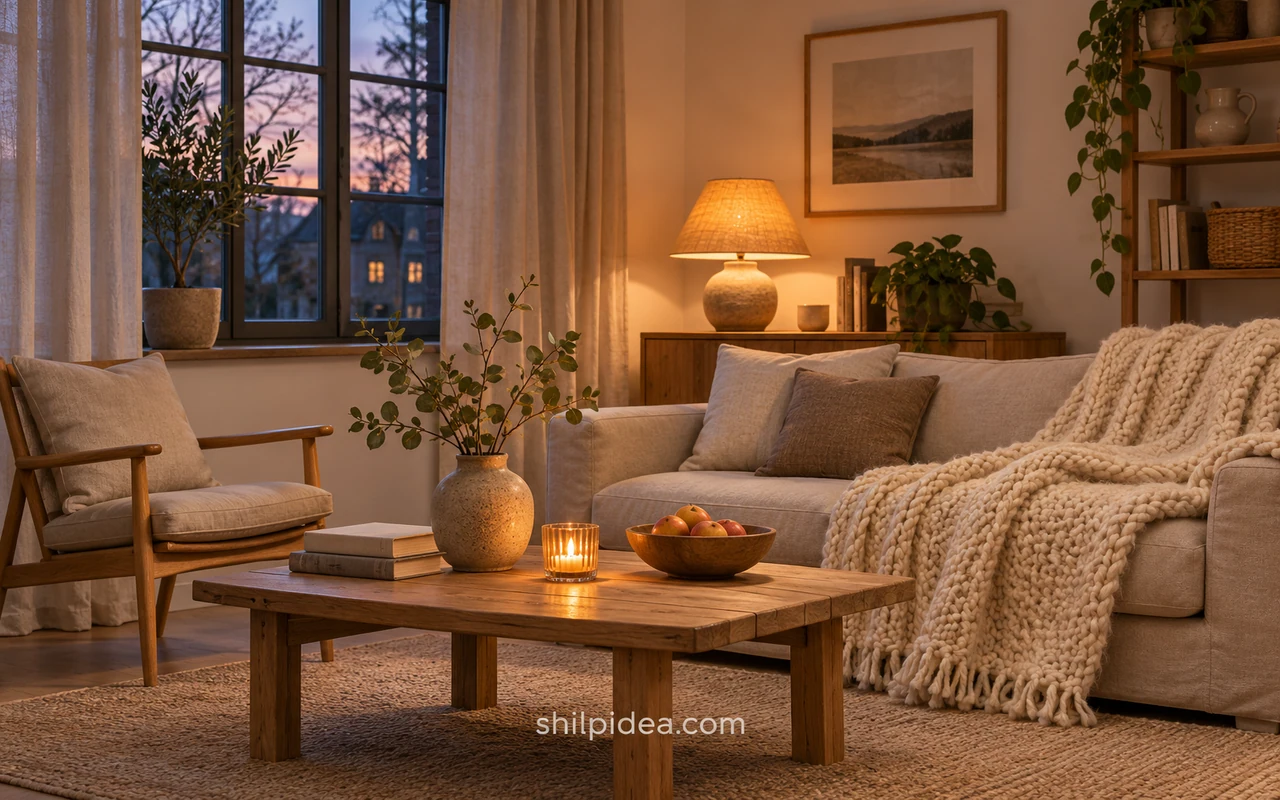
Hygge in a living room starts with how it feels to sit there at the end of the day. A good chair, a soft textile, and light you can control often make the biggest difference.
Work with the surfaces you already have. These warm natural accents can help you choose a texture to repeat.
Look at how the room works after dark. These welcoming living rooms offer more ways to arrange seats and lighting so people can settle in.
1. Pull an Armchair Into the Window Light

Set a comfortable chair near a window where there is room for a cup or a book. Angle it slightly toward the rest of the room so the seat still feels connected to the conversation. A soft throw gives the corner some texture. Add a lamp if you plan to use the chair after daylight fades. These cozy small rooms show how to fit another seat without crowding the room.
2. Layer Lamps at Different Heights

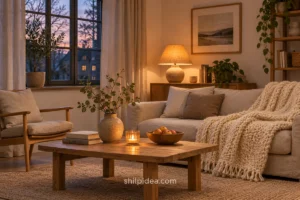
Try a low lamp by the sofa and a higher shade farther back so the room has more than one pool of light. Switch them on separately before deciding where they should go. Give the lamp beside the sofa enough reach for reading. Let the far corner stay a little darker so the room feels settled.
3. Aim an Adjustable Lamp at a Reading Chair

An adjustable lamp lets you put the light where you need it in a favorite chair. Position the base out of the walking path and tilt the shade toward the book rather than toward your eyes. Test the position sitting down. Keep a nearby surface free so you have a place to set the book aside.
4. Make an Evening Corner With One Local Lamp

A small lamp can make a dark sofa easier to use without bringing up the whole room. Set it where the light falls on a book or a side table. Use the cushions to carry a similar shade into the seat. Test the lamp from your usual position so the bulb is out of your direct view.
5. Light a Display Cabinet for Evening Depth

A lit cabinet can make the back of a living room feel warm after sunset. Give each shelf a few open spaces so the light shows around the objects. Use a gentle lamp by the sofa as well so the cabinet stays in the background. Keep reflective pieces apart if they make the cabinet look too bright.
6. Use a Dark Wall Behind a Warm Seat

A deep wall color can bring attention to the lit parts of a living room. Put a warm seat where its texture shows and leave enough wall around the artwork to see its outline. Check the paint in daylight and after dark. A softly shaded lamp helps the seat stand out without lighting the whole wall.
7. Let Long Curtains Soften the Window

Long curtains soften the wall even when they are open. Pick a fabric that folds naturally and make sure the panels clear radiators, floor lamps, and the route through the room. Try the curtains with your usual evening lighting. The fabric may look richer or heavier at night than it did in the store.
8. Use Leafy Plants to Filter the Window View

Put a tall plant where its leaves are visible against the daylight and leave enough room to walk past it. A low plant on another surface can make the large one feel settled. Pick plants for the light the window receives. Keep the space around the chair open so you can still sit down easily. Use these indoor plant displays to find a plant grouping that suits the light.
9. Use a Soft Checked Throw on a Pale Sofa

Put a checked throw over one arm of a plain sofa where you can reach it without standing up. Let the pattern show in a wide fold and repeat one of its colors in a nearby cushion. Leave some of the plain upholstery exposed. The contrast makes both the fabric weave and the sofa shape easier to see.
10. Add Warm and Cool Colors Through One Cushion

A checked or patchwork cushion can tie a warm wood finish to cooler upholstery. Let it be the largest pattern on that part of the seat, with plain covers next to it. Pick one color to repeat elsewhere in the room. A soft textile can change the palette without buying a new piece of furniture. These natural accent ideas can help you pick a second material.
11. Balance a Patterned Rug With a Plain Sofa

A strong rug can set the shape of the seating group without asking every piece of fabric to match. Pull a plain sofa partly onto the rug and repeat a small amount of one rug color in a cushion. Leave a visible edge around the group. The pattern feels calmer when it has space at the sides.
12. Put a Deep Textured Rug Under a Simple Table

A low plain table leaves the texture of a thick rug visible around it. Try a size that reaches the front of the seats, and check that the table legs sit steadily on the pile. The rug should leave an easy path to the sofa. Use a similar quiet color if the room already has several materials.
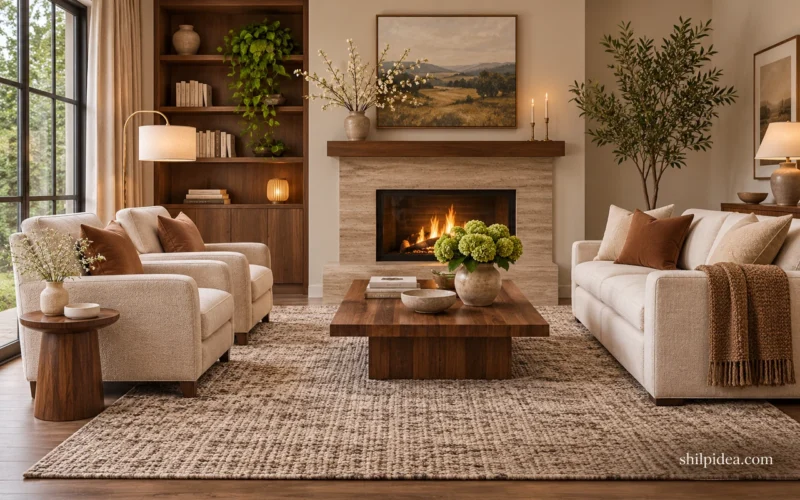
13. Put a Quiet Rug in Front of the Fireplace
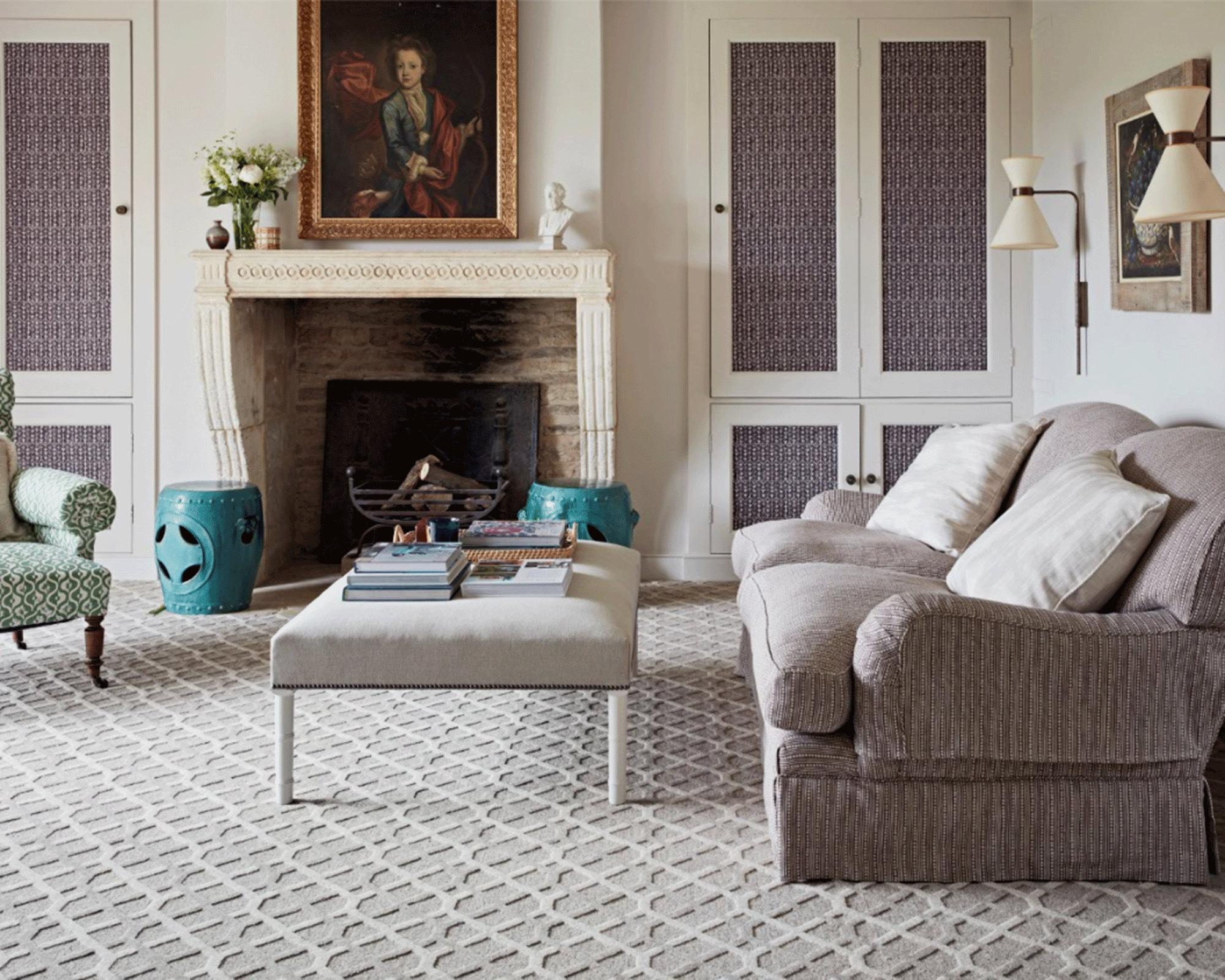
A soft rug can join the seating without competing with a fireplace. Pull it far enough under the front legs that it feels connected to the chairs and sofa. Choose the color in the room’s usual evening light. Leave suitable clearance from a working hearth and keep a clear route between the seats.
14. Use a Woven Stool as a Low Accent

A small woven stool adds texture near a sofa and can be moved when the room is busy. Choose a shape that is easy to pick up and give it a place out of the main walkway. Repeat the warm color in one cushion or frame. Keep the upholstery simple so the weave stays visible.
15. Let a Round Coffee Table Soften the Seating

A round table makes a room with several upholstered pieces feel easier to move through. Pick a surface big enough for a mug and a book and leave an open path to each seat. A basket or folded throw can supply texture nearby. Keep the tabletop clear enough to use without moving decorations first. Try these interior design ideas to plan what should sit beside it.
16. Bring the Seating Around One Warm Focal Point

Set the furniture so people can see the fireplace or focal wall without having to turn away from each other. Make sure each seat has a place for a drink or book. Keep the closest upholstery safely back from any source of heat. Let a few natural textures carry across the room in quieter spots.
17. Make Room for One Chair Under the Sloping Ceiling

A low chair can make useful space under a sloping ceiling. Check the headroom where you stand up and keep the lamp near the outer edge of the seat. A small side surface is enough if the spot is mainly for reading. Leave the neighboring wall quiet so the corner feels like part of the room.
18. Leave Breathing Room Around a Low Sofa

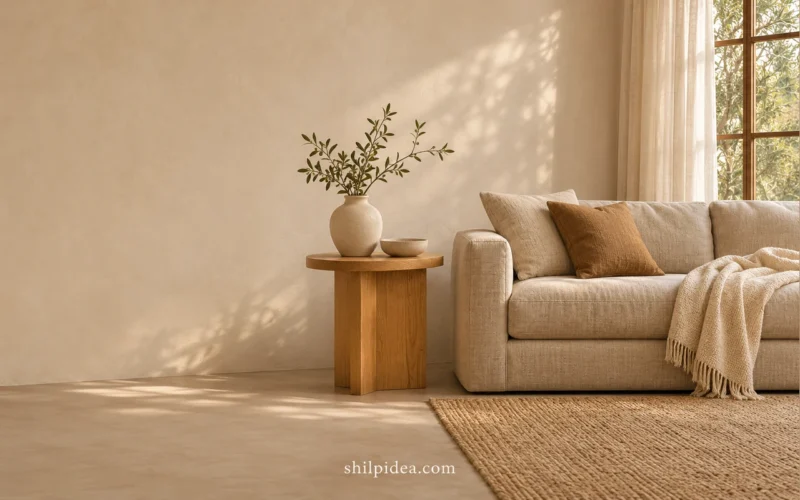
A quiet wall and a low sofa give a small room an open feeling. Place a few cushions where people actually sit, then give the shelves a similar amount of space between objects. A lamp near one end is enough for the corner. Use the rest of the wall for one simple piece of art.
Try the Room at the Time You Use It Most
Sit in your usual spot with the lamps you normally switch on. Notice whether you can read comfortably and reach a place to set a cup. A small change to the lamp or seating may make a bigger difference than another accessory.
- Warm Natural Accents for Minimalist Rooms
- Modern Ideas for Welcoming Living Rooms
- Cozy Minimalist Ideas for Small Rooms
- Indoor Plant Styling for Living Spaces
Which spot in your living room would you make cozier first? Share the light or texture you would change in the comments.


















0 Comments