21 Paper Sculpture Ideas with Creative Forms
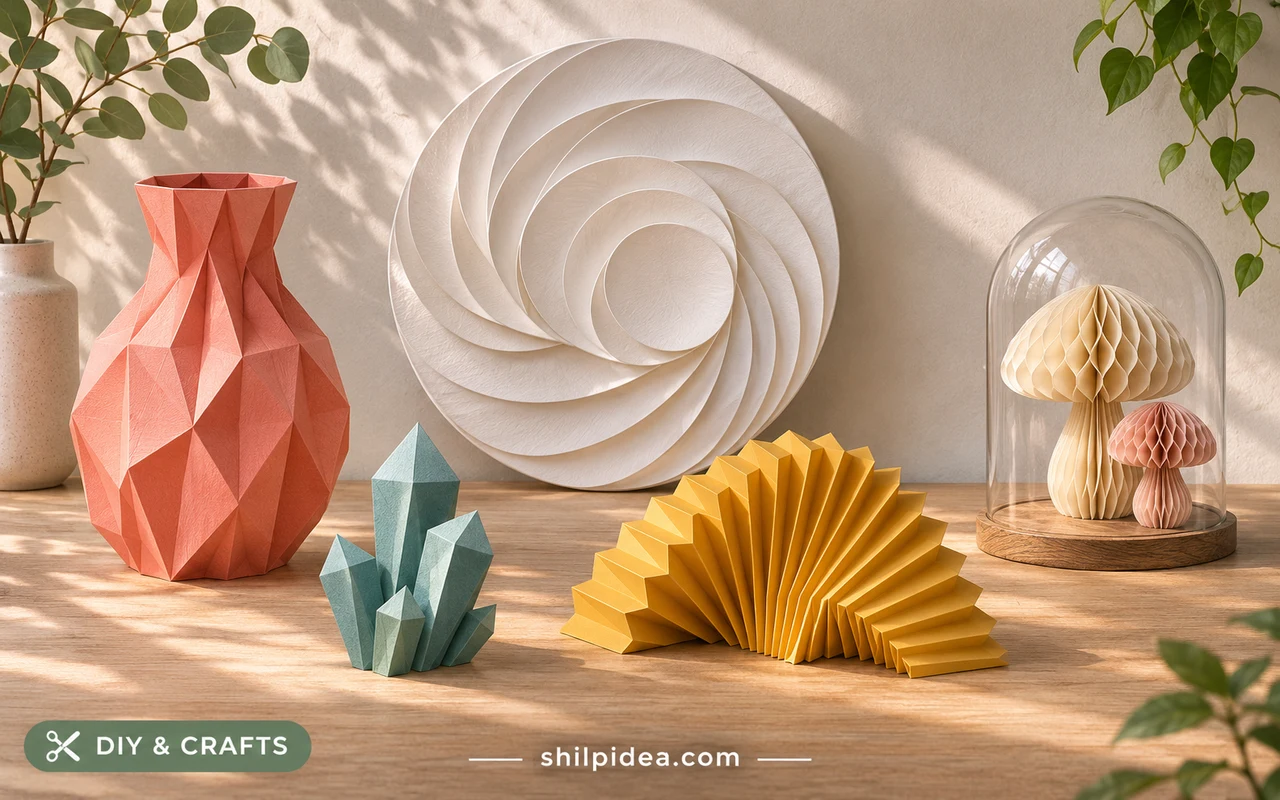
A flat sheet can become a faceted vessel, an open framework or a soft organic shape. These 21 paper sculpture ideas explore volume, shadow and structure through a wide range of handmade forms.
If you enjoy dimensional paper crafts, this collection offers more ways to build outward from the page. Some pieces suit a tabletop, while others are designed for a wall or suspended display.
For more delicate shapes, explore these paper butterfly designs. The links below lead to the original projects; some templates require a purchase or membership.
1. Faceted Vases with Folded Planes

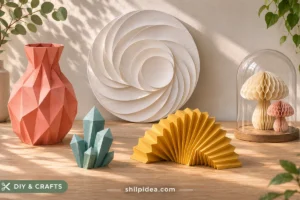
Angular folds give these paper vessels their sculptural presence before any flowers are added. A small group works because the heights and profiles vary while the restrained color palette connects them. Treat a paper vase as a decorative form for dry paper stems, rather than a container that can hold water. Display it on a shelf with room around the outline so the folded surfaces can catch different light.
See the original project: Faceted Vases with Folded Planes by Lia Griffith.
2. Hanging Geodes with Open Centers

These suspended forms combine crisp outer edges with a lighter contrasting interior. The open centers make the construction feel airy, and several pieces at different heights create movement without a large solid object. Adapt the idea as an adult-room decorative mobile or a hanging art study. Secure all suspension points and keep cords and small pieces beyond children’s reach; a photograph styled above a cot is not an installation safety recommendation.
See the original project: Hanging Geodes with Open Centers by Lia Griffith.
3. A Cluster of Pointed Paper Crystals

Tall prisms and shorter faceted pieces create a miniature mineral landscape. The folded edges provide the detail, so a limited palette can look more deliberate than a different color for every face. Arrange the cluster in an uneven group and leave one side slightly open. If you add light, use a cool battery-powered LED arrangement that does not press against the paper, and never put a flame inside.
See the original project: A Cluster of Pointed Paper Crystals by Lia Griffith.
4. A Geometric Animal Head in a Box Frame

A folded animal head can project forward from a flat backing, giving a small frame much more depth than a printed picture. Here, pointed ears and angular cheeks keep the subject recognizable with very few shapes. A contrasting background helps the pale planes stand out. For a softer animal direction, these paper bunny ideas offer useful comparisons without requiring every project to use the same folding method.
See the original project: A Geometric Animal Head in a Box Frame by Lia Griffith.
5. Faceted Lanterns with Translucent Windows

The interest in these lanterns comes from the combination of an angular frame and pale inset panels. By day, they read as geometric objects; gentle LED light can reveal another layer after dark. Keep the paper away from heat and use battery-powered lights only. Choose a few coordinated sizes for a table display, rather than crowding the surface with many identical pieces. The source page provides the actual pattern and assembly information.
See the original project: Faceted Lanterns with Translucent Windows by Lia Griffith.
6. Honeycomb Spaceships with a Rounded Core

A retro spaceship becomes a playful study in volume when repeated paper layers open into a rounded body. Slim fins and a pointed nose interrupt the soft central shape, making the silhouette lively from several angles. This is a strong example of a familiar object translated into paper rather than simply decorated with it. Display the finished sculpture where it can stand securely, or follow the original project’s advice if suspending it.
See the original project: Honeycomb Spaceships with a Rounded Core by Lia Griffith.
7. Paper Chains Arranged as a Graphic Wall Piece

A humble chain link becomes sculptural when many links are arranged to form blocks of color. The repetition gives the wall hanging texture, while the wider pattern keeps it from looking like a single party garland. Our paper wall hangings collection offers other approaches to scale. Plan the full silhouette before assembling a large piece, and check that its support can hold the finished weight without bending.
See the original project: Paper Chains Arranged as a Graphic Wall Piece by Brittany Jepsen / The House That Lars Built.
8. Dimensional Fruit Slices for a Suspended Display

Oversized fruit slices use folded or joined sections to move beyond a flat printed shape. A small group hung at different angles lets the colored faces turn toward the viewer and cast narrow shadows. Keep the palette tied to the room or event so the display feels cohesive. The creator’s printable project is the right place to check its construction; changing a slice’s scale may also change the thickness of paper needed to support it.
See the original project: Dimensional Fruit Slices for a Suspended Display by Brittany Jepsen / The House That Lars Built.
9. A Paper Medinilla with Drooping Flower Forms
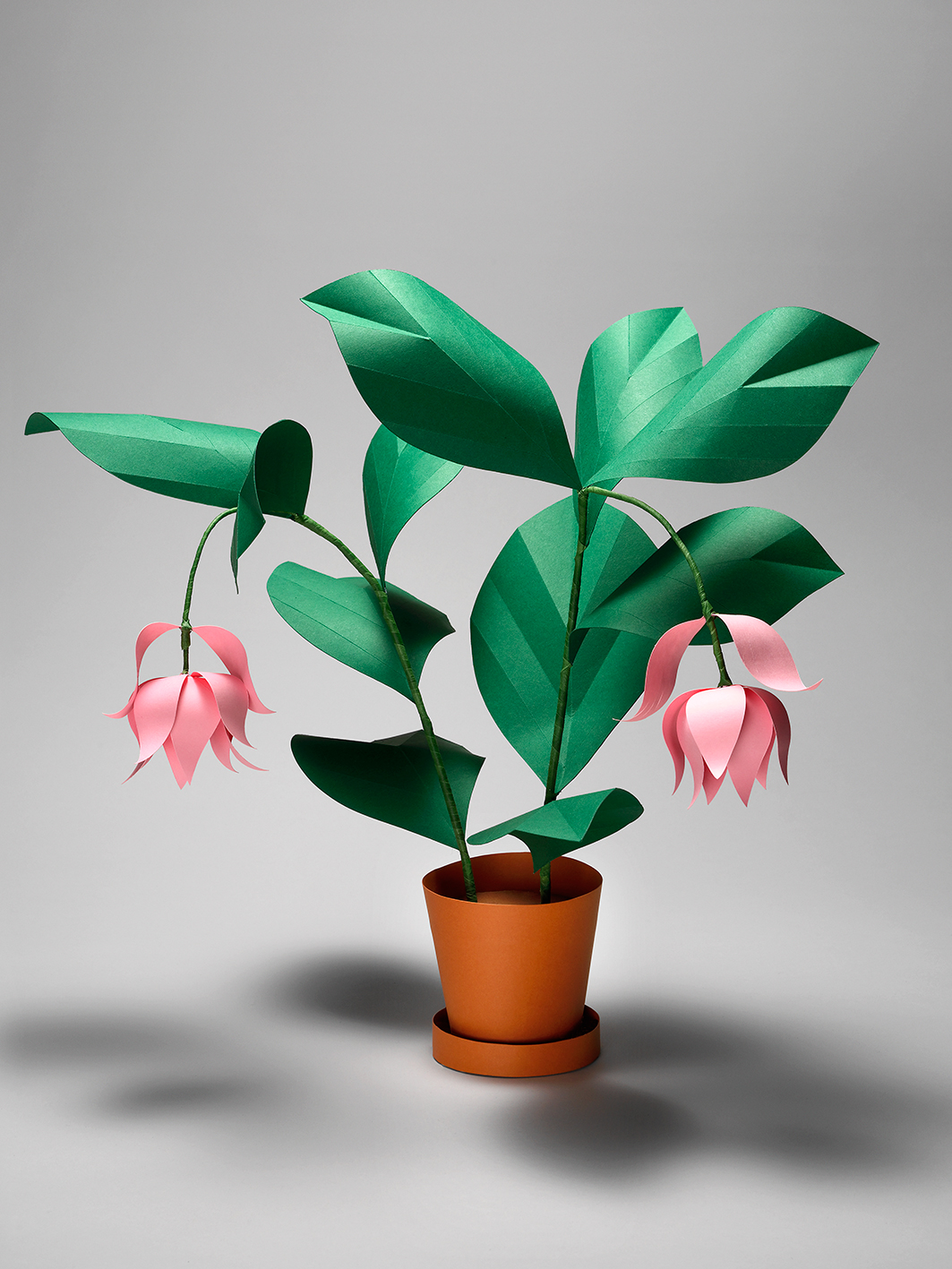
This botanical sculpture balances broad green leaves with delicate hanging pink flowers. The contrast is what makes the plant feel convincing: the leaves hold a clear shape while the bloom clusters appear lighter and more relaxed. Fideli Sundqvist’s design is featured in the linked book-inspired project. For another botanical direction, explore these paper flower designs. Keep the finished piece dry and display it where the finer flower parts will not be brushed repeatedly.
See the original project: A Paper Medinilla with Drooping Flower Forms by Fideli Sundqvist / featured by The House That Lars Built.
10. Radial Relief Built from Repeated Folds
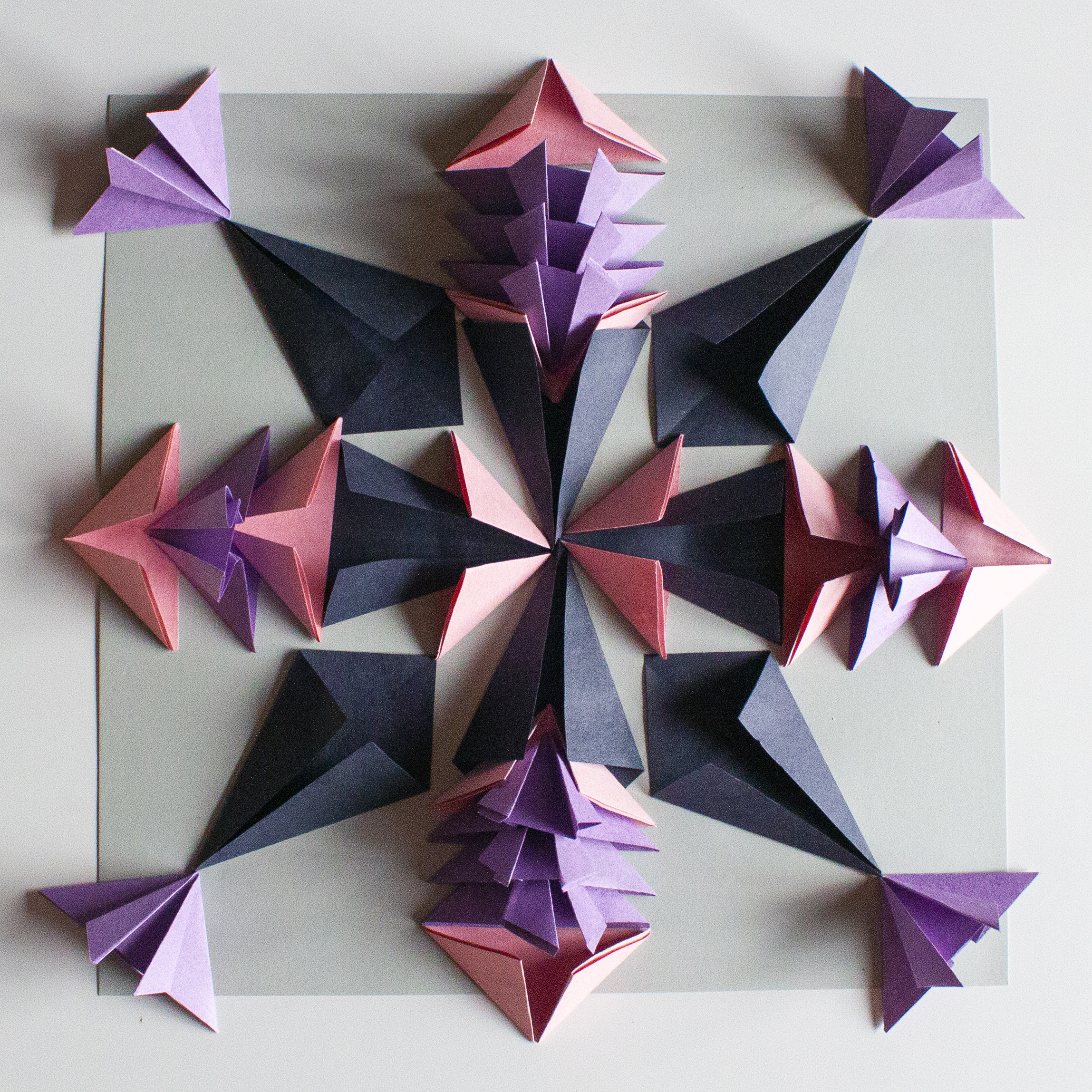
Repeated folded units can create a relief that changes as you move past it. Here, the arrangement radiates outward and mixes flat spaces with sharp raised surfaces. The backing is part of the design: leaving some of it visible prevents the center from becoming visually crowded. Start by placing the units without adhesive so you can judge the balance. A shadow-box frame can protect the raised parts without pressing them flat.
See the original project: Radial Relief Built from Repeated Folds by WheatonArts.
11. A Pop-Up Face Made from One White Sheet
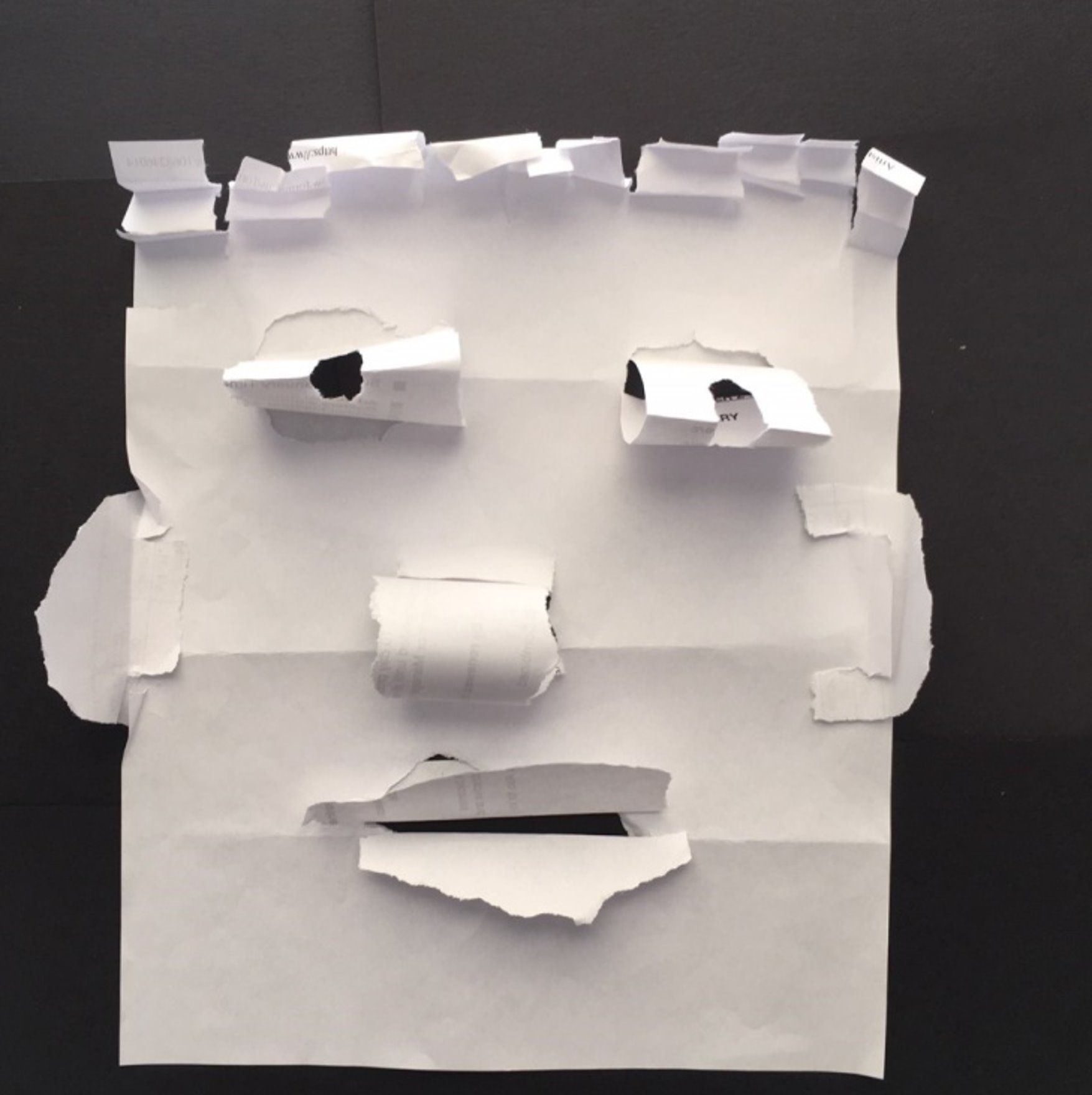
A monochrome face shows how little color is needed when folds and openings do the expressive work. Projecting features create shadows that distinguish the eyes, nose and mouth from the original sheet. This is an invitation to explore character rather than realistic portrait drawing. Keep the original lesson nearby for its folding and cutting sequence, and use a scrap test before making a cut that crosses an important fold.
See the original project: A Pop-Up Face Made from One White Sheet by Studio in a School.
12. A Layered Rainbow That Hangs in Space

Nested paper arcs make a rainbow feel light and dimensional without requiring a heavy structure. Small hanging details can extend the movement below the central shape. A spare wall or an uncluttered window area lets the outline read clearly. For another curved-paper technique, these quilling leaf designs show how shaped strips create texture. Keep decorative cords out of reach of young children and avoid placing the mobile where people will brush against it.
See the original project: A Layered Rainbow That Hangs in Space by Lia Griffith.
13. Honeycomb Mushrooms under a Glass Dome

The honeycomb caps give these mushrooms a wonderfully fine ribbed texture, while the slender stems keep the composition delicate. A dome makes the small group feel like a miniature exhibit and helps protect it from casual handling. Leave breathing room around the largest cap rather than filling every gap with moss. The source project includes its own methods and templates; the photo is inspiration for a sculptural arrangement, not evidence that every part can be improvised without support.
See the original project: Honeycomb Mushrooms under a Glass Dome by Lia Griffith.
14. A Layered Paper Garden inside a Cloche

Flat cutouts can become a tiny environment when several layers sit at different depths. Leaves, stems and small woodland details overlap, so the viewer discovers a new shape while looking around the dome. Use a quiet background and avoid hiding the foreground with too many tall pieces. This approach suits a protected shelf display. The source page is a premium project, so check access to its template before planning an exact version.
See the original project: A Layered Paper Garden inside a Cloche by Lia Griffith.
15. A Honeycomb Sun with Sharp Paper Rays

A rounded honeycomb center gives the sun its volume, while pointed rays keep its outline crisp. That contrast makes it readable even in a small hanging decoration. A series can work at different heights, but a single larger sun may be enough above a craft desk. For another celebration backdrop, look at these paper rosette backdrops. Keep the attachment discreet and avoid pulling the honeycomb wider than its construction allows.
See the original project: A Honeycomb Sun with Sharp Paper Rays by Lia Griffith.
16. Accordion Medallions with Cut-Out Edges

An accordion fold can open into a broad medallion with surprisingly little material. Cut details along the edges create patterned gaps, so the surrounding wall becomes part of the design. Mix a few diameters while keeping the fold spacing consistent within each piece. Metallic paper emphasizes the changes in angle, whereas matte paper gives a softer effect. Check the original project for the folding and joining method before enlarging the design.
See the original project: Accordion Medallions with Cut-Out Edges by Lia Griffith.
17. An Organic Tissue-Paper Form on a Dark Base
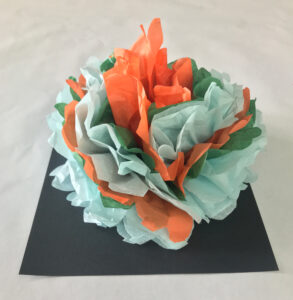
Soft tissue shapes can suggest petals, coral or an invented natural form without copying any one plant. A dark backing makes the thin edges easier to see, while layered colors create depth in the center. This kind of sculpture rewards gentle crumpling and shaping rather than perfectly measured folds. Protect the base from excess wet glue and let the structure dry undisturbed. The museum activity offers a starting point for exploring organic paper forms.
See the original project: An Organic Tissue-Paper Form on a Dark Base by Georgia Museum of Art.
18. Interlocking Cacti with a Repeated Rib Pattern

Slotted paper shapes can form a rounded cactus when several profiles meet around the same center. The repeated ribs provide volume while leaving open spaces between them. Small flowers are enough to break up the green without obscuring the structure. Keep the pots simple so the construction remains the focus. The linked project has its own paid-access template and assembly instructions; use it to judge the required cuts before choosing your paper weight.
See the original project: Interlocking Cacti with a Repeated Rib Pattern by Lia Griffith.
19. A Delicate Birdcage Built from Paper Strips

An open cage is an appealing way to explore empty space as part of a sculpture. Curving strips create the rounded top, and narrow cutouts keep the sides light enough to see through. Displaying two different heights makes their silhouettes easy to compare. This is decorative paper art, never housing for an animal. Use a stable base or a secure hanging loop according to the project instructions, and protect the fine strips during storage.
See the original project: A Delicate Birdcage Built from Paper Strips by Lia Griffith.
20. Rounded Paper Love Birds with Folded Wings

These birds turn simple curved surfaces into a compact sculptural body. The wing and tail details make the shape legible without covering it in printed texture. A pale or metallic sheet catches the light along the curves, which suits a mantel or a small seasonal display. Make room around the pair so their outlines do not merge. The creator’s video project is linked for the real assembly method and template access.
See the original project: Rounded Paper Love Birds with Folded Wings by Lia Griffith.
21. Papier-Mache Cacti with a Soft Textured Surface

Papier-mache offers a different sculptural language from sharp folded cardstock: the surface can be rounded, irregular and visibly handmade. These bright cacti use color and small flowers to make the forms playful. Letting the material dry fully is part of the project, rather than a finishing detail to rush. Keep the sculpture decorative and away from water. The linked design by Jessica of Bramble Workshop explains the underlying structure as well as the paper-based surface treatment.
See the original project: Papier-Mache Cacti with a Soft Textured Surface by Jessica / Bramble Workshop for Lia Griffith.
Find a Paper Form You Want to Explore
Choose the structure that interests you most: a crisp fold, an open framework, a layered scene or a rounded honeycomb form. These related collections offer more ways to shape paper and display the result at home.
- 3D Quilling Crafts for Home Accents
- Miniature 3D Quilling Dolls
- Paper Wall Hanging Ideas
- Paper Flower Designs for Decorations
- Paper Strip Basket Ideas
- Paper Bag Snowflakes for Christmas
Which paper sculpture caught your eye first? Tell us what you would like to make in the comments—or share a different paper form you have been experimenting with. We would love to hear about your ideas.





0 Comments