21 Decorative Plate Wall Ideas for Dining Rooms and Kitchens
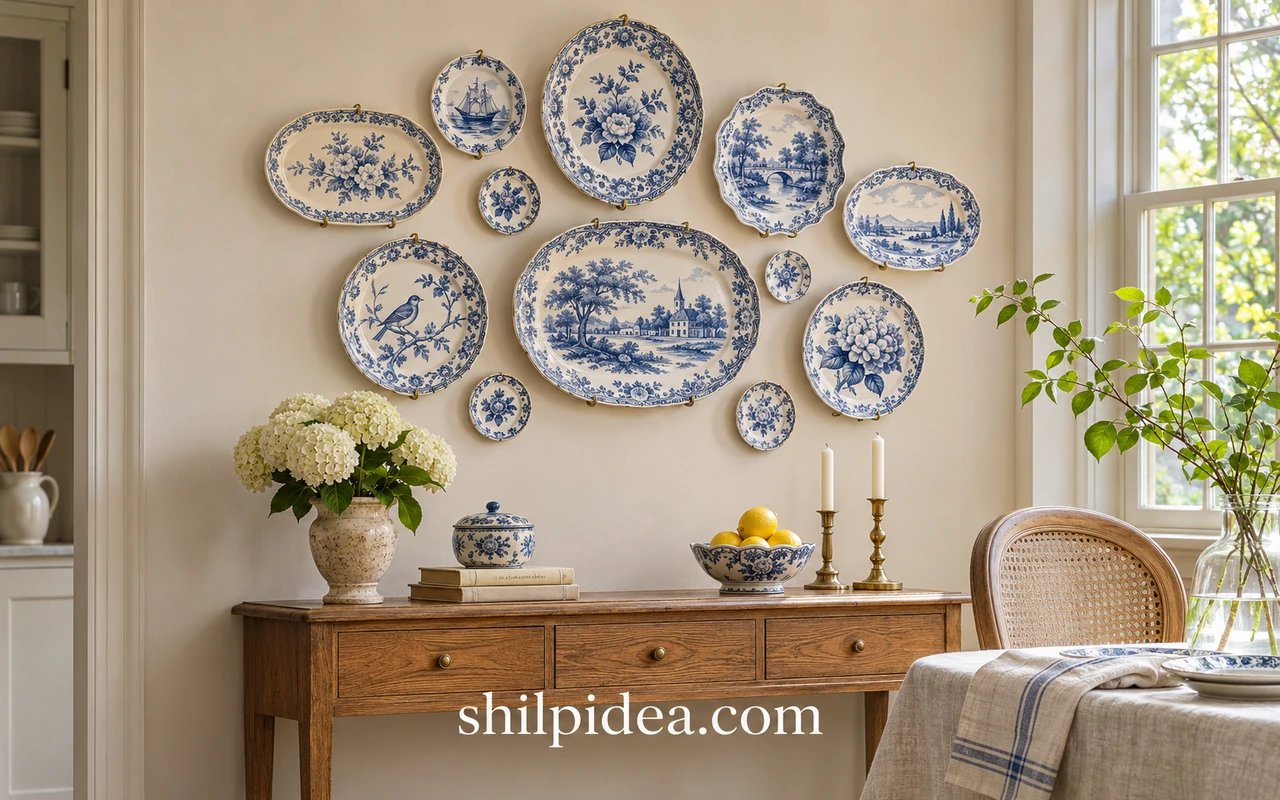
Decorative plates bring shape, pattern and personal history to a kitchen or dining-room wall. A small inherited set can look just as considered as a large collection when the layout suits the space around it.
Start with the plates you want to display, then compare grids, clusters and racks. These interior ideas can help connect the display with nearby furniture.
The examples below range from a single doorway accent to full-height storage. Pair your chosen layout with warm white walls or a contrasting background that makes your collection easy to see.
1. A Neat Grid for Matching Scenic Plates

A set of similarly sized plates naturally lends itself to rows and columns. Here, the pale scenes read almost like small framed prints against the kitchen wall. Lay out a grid with paper templates first, then check it from the doorway and dining table. Keep the gaps consistent enough to feel deliberate without forcing irregular vintage pieces into a mathematically perfect pattern.
See the original project: A Neat Grid for Matching Scenic Plates by Chris Loves Julia.
2. Blue-and-White Plates Around an Oval Platter
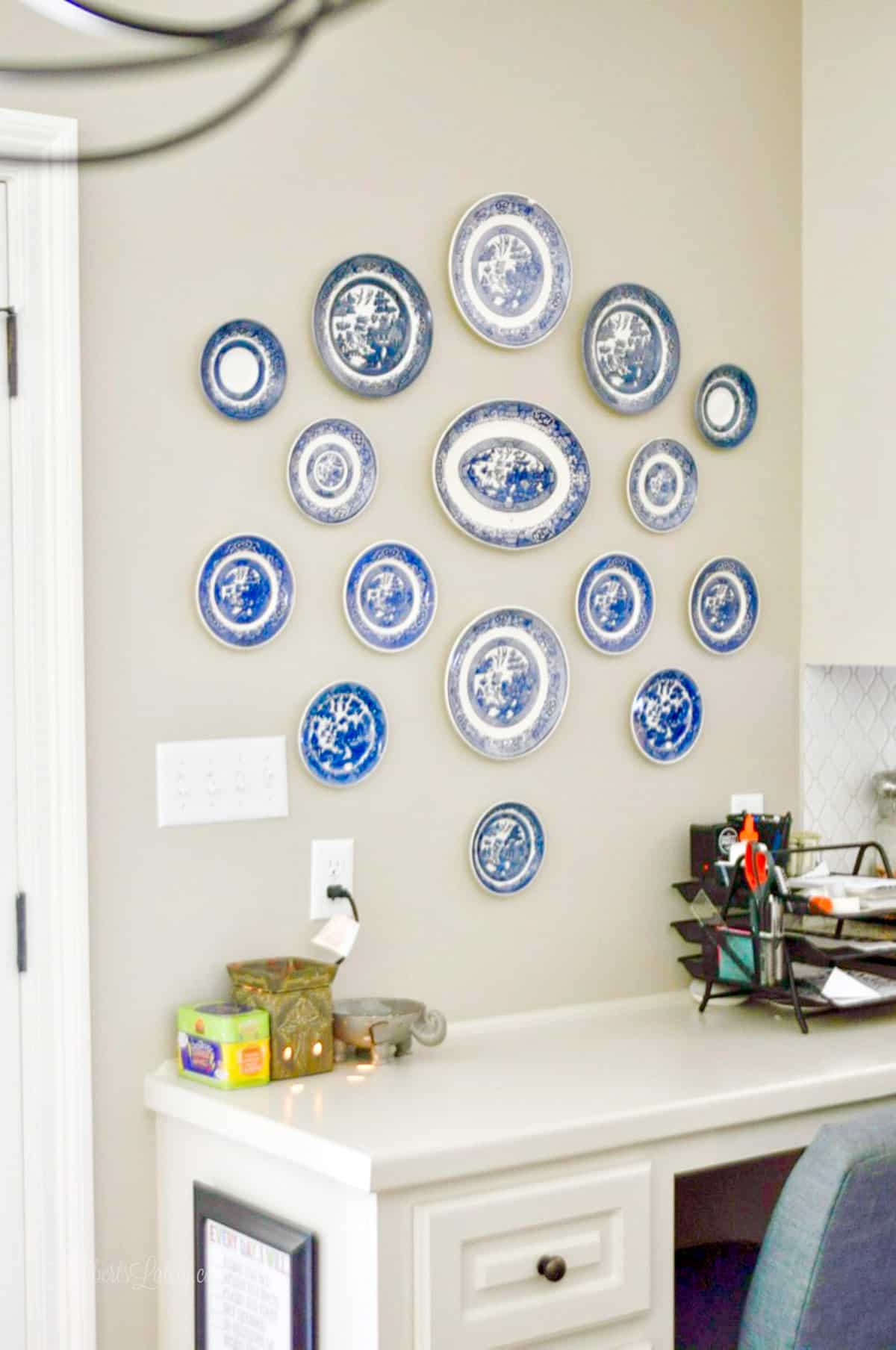
An oval platter gives a mixed plate collection a clear center. Smaller round plates spread outward while the shared blue-and-white palette keeps the arrangement connected. This works above a dining-room desk or sideboard where you want pattern without introducing many new colors. Begin with the central platter, then balance the overall shape rather than matching every plate on the left with an identical one on the right.
3. A Red Transferware Row Above the Windows

Plates can occupy the narrow band of wall above breakfast-nook windows, leaving the main walls clear. The red pattern connects with the checked curtains below, so the room reads as one composition. Check clearance around curtain hardware before planning the row. Keep plates clear of moving fabric and use correctly rated mounting hardware; high placement makes secure installation especially important.
4. An Animal-Portrait Collection Beside the Kitchen
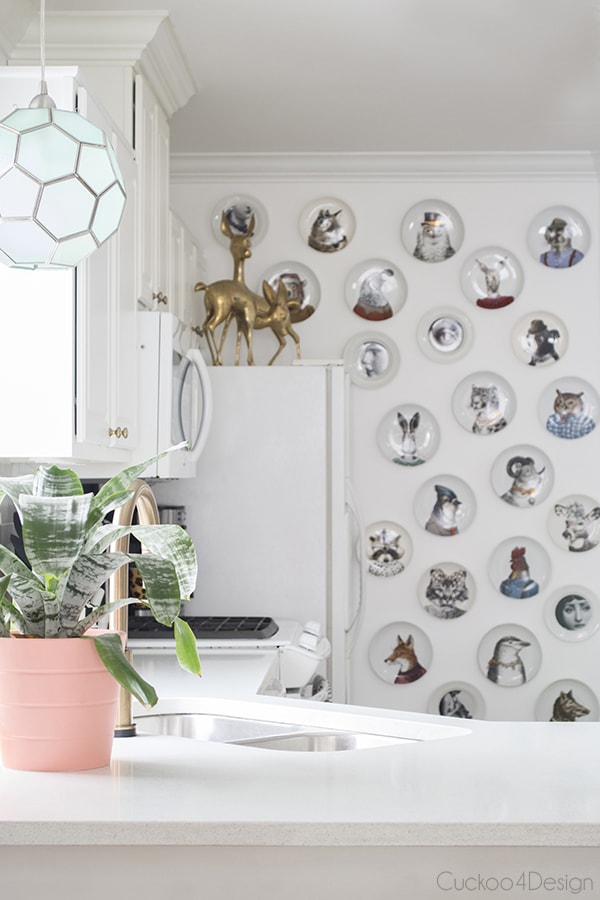
Animal portraits turn small plates into individual pieces of characterful art. The plain white background gives each face room to stand out, while the repeated round shape ties the collection together. Keep nearby counter accessories simple so the wall stays readable. A similar approach works with botanical or bird plates if those subjects suit your collection better than a mix of animals.
5. Plates Around a Textured Basket Centerpiece

Blue-and-white ceramics and a woven basket create contrast between smooth pattern and rough texture. The basket is the focal point, while the plates act as a loose surrounding frame. In a dining room, choose one central object and let the remaining pieces support it. Keep flowers and branches from pressing against the ceramics, and mount the basket independently rather than hanging it from a plate holder.
6. Two Plate Clusters Around a Mirror
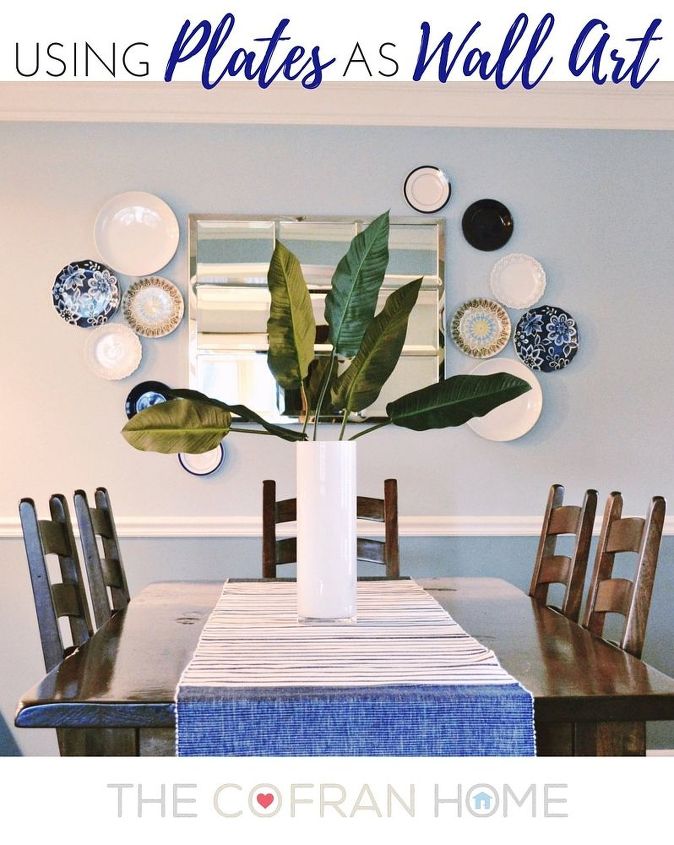
A mirror gives two loose groups of plates a shared center without requiring a completely symmetrical layout. Repeat a few dark and light pieces on both sides to keep the visual weight balanced. Before hanging, check what the mirror will reflect from the dining table. A calm view of the room helps the plate collection feel considered instead of doubling visible clutter.
7. White Plates with Mixed Edges and Shapes

An all-white collection relies on scalloped rims, embossed borders and changing silhouettes instead of color contrast. Round plates sit beside oval and rectangular serving pieces, creating a soft gallery above the console. This is a useful direction for warm white walls. Test the pieces in daylight first; subtle shadows often make textured white ceramics more visible than a darker background does.
8. Brown Transferware in a Small Oval Group

A small group of brown patterned plates can carry plenty of detail without filling a whole wall. This reference uses two plate sizes beneath an antler mount; the same compact grouping can be adapted above a dining-room chest. Keep the surrounding palette quiet and choose a collection with a shared border color. Check the full outline on paper before committing to individual hanging positions.
9. A Vintage Door as a Plate-Display Backdrop

A weathered door gives mismatched plates a defined vertical background, useful in a dining-room corner that cannot accommodate a large cabinet. The variety of shapes feels intentional because everything stays inside the door’s outline. Treat the door and the dishes as separate mounting tasks: the backing itself needs secure wall attachment. Avoid loose leaning doors in spaces where children or guests could knock them.
See the original project: A Vintage Door as a Plate-Display Backdrop by Finding Home Farms.
10. Raised White Ceramics Beside a Rustic Frame

Relief details and a small lid add depth to this pale plate grouping. The weathered frame nearby introduces texture without competing with the ceramics’ color. Use this idea when your collection contains pieces that look different from flat dinner plates. Choose appropriate holders for each shape, and resist hiding unusually deep rims behind neighboring plates just to make the arrangement look more uniform.
11. A Plate Wreath with an Open Center
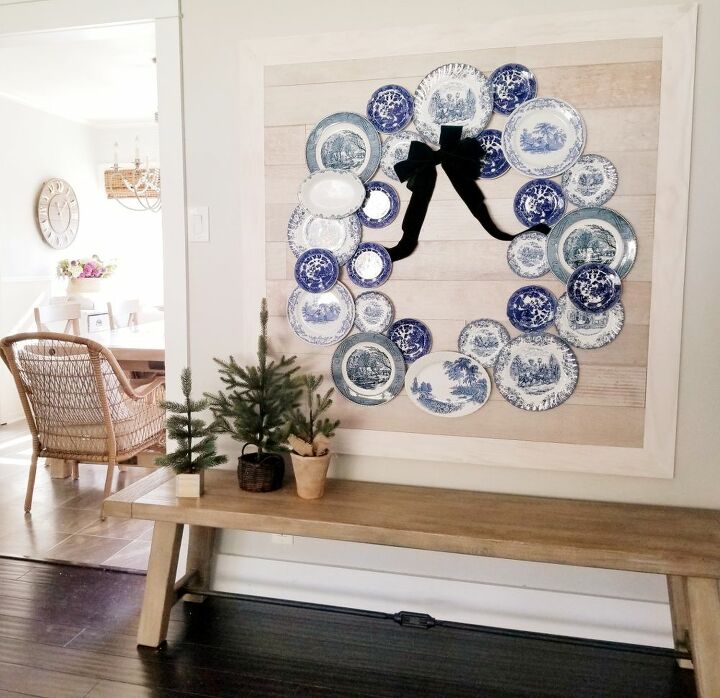
A circular arrangement turns a plate collection into one large decorative shape. The open center and dark bow help it read as a wreath rather than a random cluster. Use the source project as a construction reference, checking the support and total weight carefully. For a less seasonal version, omit the bow and let a consistent plate palette create the circular outline.
See the original project: A Plate Wreath with an Open Center by Jennifer | simpleprairielife on Hometalk.
12. A Floor-to-Ceiling Rack on a Narrow Wall

A shallow display rack makes use of a tall strip of wall between larger room features. Plates sit on individual ledges, turning an awkward sliver into a deliberate architectural detail. Measure your largest platter before choosing shelf spacing, and allow access for lifting pieces out. Add proper retaining rails or grooves and secure the loaded rack to suitable wall structure following the project’s installation guidance.
See the original project: A Floor-to-Ceiling Rack on a Narrow Wall by In My Own Style.
13. A Warm Wood Rack for Everyday Plates
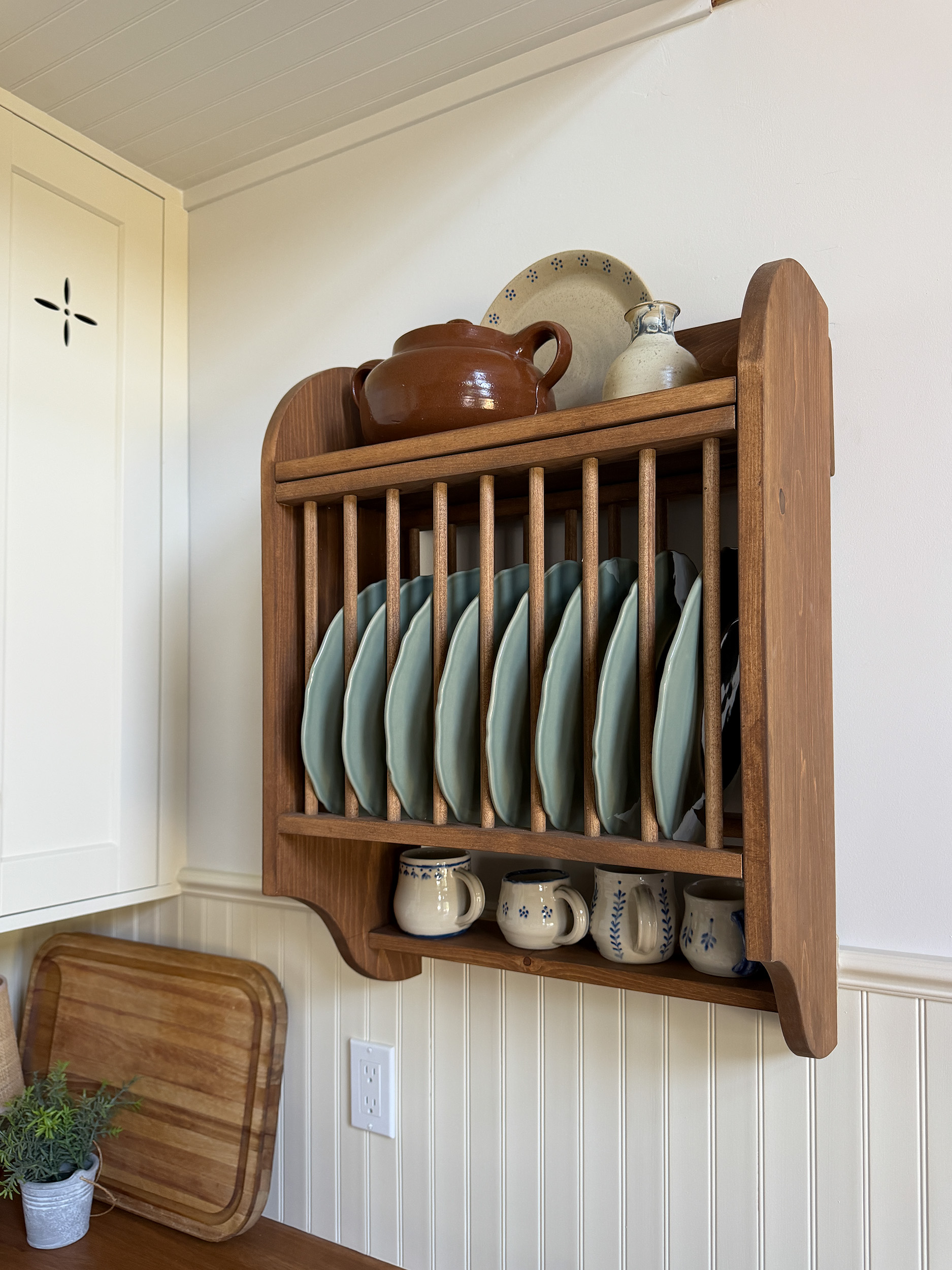
A wood plate rack gives everyday dishes a useful place in the kitchen while adding the warmth of furniture. The vertical dividers keep plates upright, and the top shelf creates a separate display zone. Choose a position away from splashes and heavy cooking grease. If you use the dishes regularly, keep the rack within comfortable reach rather than making daily meals depend on a step stool.
See the original project: A Warm Wood Rack for Everyday Plates by Erin Zubot Design.
14. A Cottage Rack with Plates, Bowls and Pots

An open cottage-style rack combines practical storage with display. Plates stand in slots, while larger bowls and cooking pots sit on shelves above and below. The useful lesson is to group by function: let each shelf hold a manageable category instead of stacking every available surface. Leave enough clearance to remove a plate without brushing against the shelf above or disturbing the neighboring pieces.
See the original project: A Cottage Rack with Plates, Bowls and Pots by A Traditional Life.
15. Long Ledges for Oversized White Platters

A series of long shallow ledges lets large serving pieces become part of the dining-room wall. Different heights and oval shapes create interest while the white palette keeps the display quiet. Use retaining details appropriate to the dish depth and mount the shelves for their fully loaded weight. Coordinate nearby wall shelves by repeating a finish rather than crowding the same wall with competing systems.
See the original project: Long Ledges for Oversized White Platters by The Creek Line House.
16. A Diagonal Sweep of Mixed Transferware

A sweeping outline suits a larger collection with several plate and platter sizes. Brown, cream and black patterns repeat throughout this arrangement, giving a busy group a consistent palette. Build the shape around a few larger pieces, then use saucers to soften the outside edges. Keep the furniture below fairly simple so the eye has somewhere to rest beneath the patterned wall.
17. A Pair of Platters Beside a Serving Cart
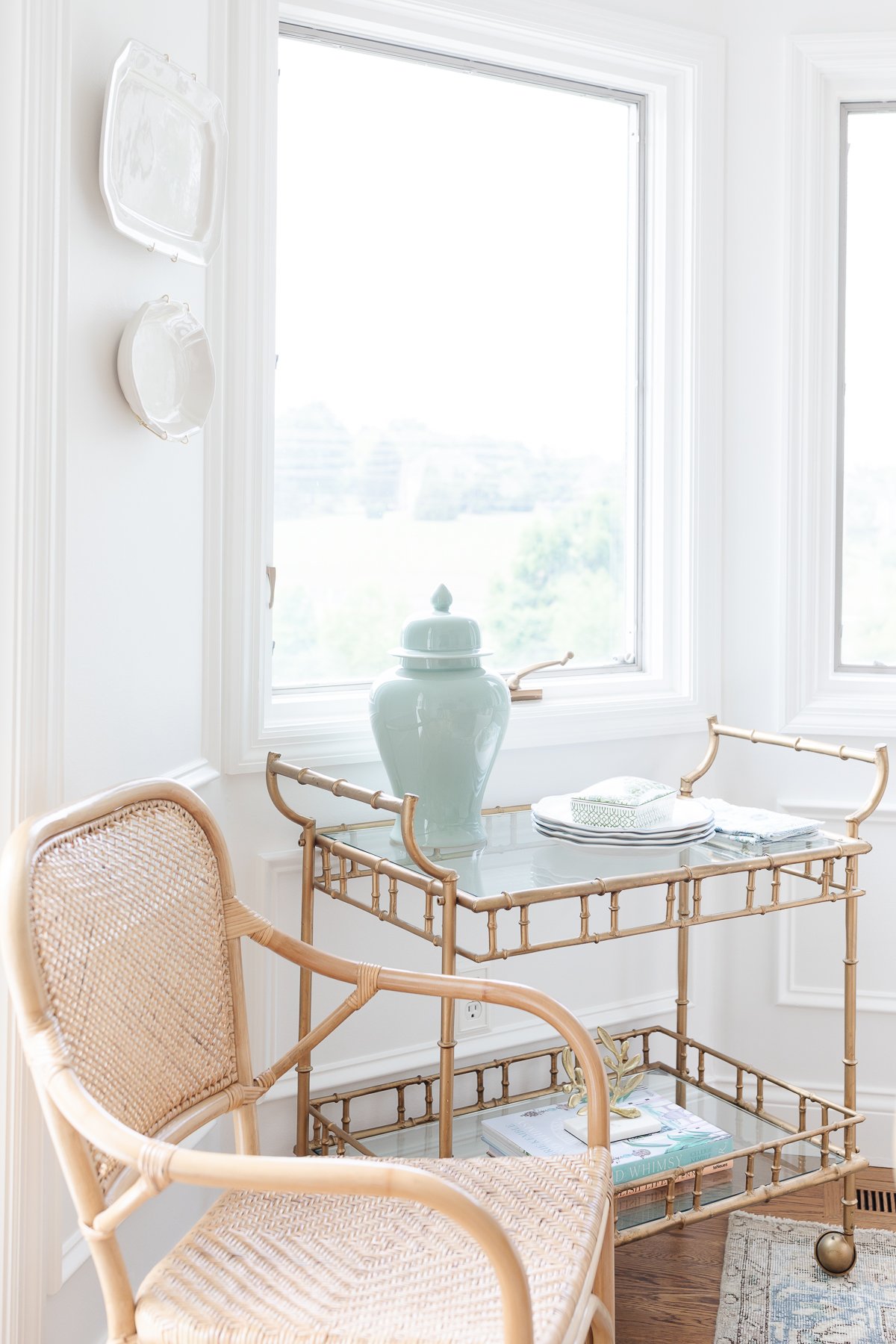
Two pale platters can be enough when the wall is narrow and the room already has decorative furniture. Here, their raised edges add a quiet layer beside a window and serving cart. Try a vertical pair near a dining-room drinks station, leaving plenty of open wall around them. The limited arrangement is useful when you have a couple of special pieces rather than a large coordinated set.
18. An Antique Collection Centered on the Dining Table

Mixed vintage dishes can become the main artwork behind a dining table. This arrangement combines pale colors, oval platters and smaller plates, with the chandelier and furniture giving the wall a clear context. Plan the group while standing at the room entrance as well as beside the table. Let the collection relate to the table’s width without forcing it to copy the table’s exact outline.
19. One Special Plate Above a Doorway
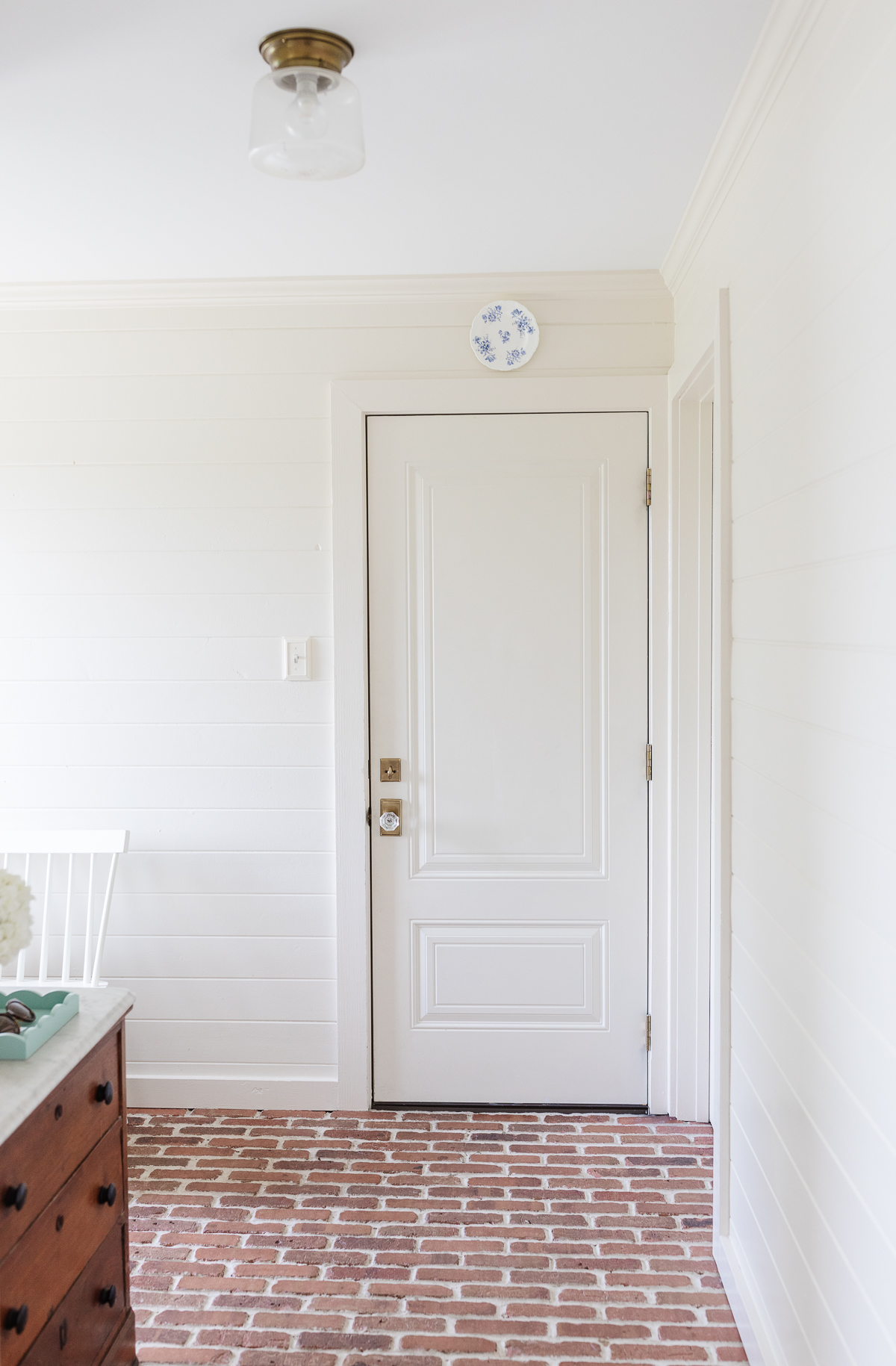
A single plate above a doorway can connect a kitchen with an adjoining space without creating another gallery wall. The small blue pattern becomes a punctuation mark against the pale trim. This reference is in a mudroom visible from the kitchen; borrow the placement only where the mounting and clearance are suitable. Keep the piece away from door movement and any spot likely to be struck.
20. A Small Plate Trio Inside an Old Frame

A substantial empty frame gathers three plates into one composition. Compare handmade frames if you want to repeat a reclaimed texture nearby. The frame’s weathered finish gives the display presence, while the small ceramic group stays simple. This can work above a compact dining sideboard or on a kitchen wall without much width. Keep a visible gap between each plate and the frame; every piece should have its own secure support rather than resting against the frame edge.
See the original project: A Small Plate Trio Inside an Old Frame by The Ponds Farmhouse.
21. Three White Plates in a Simple Column
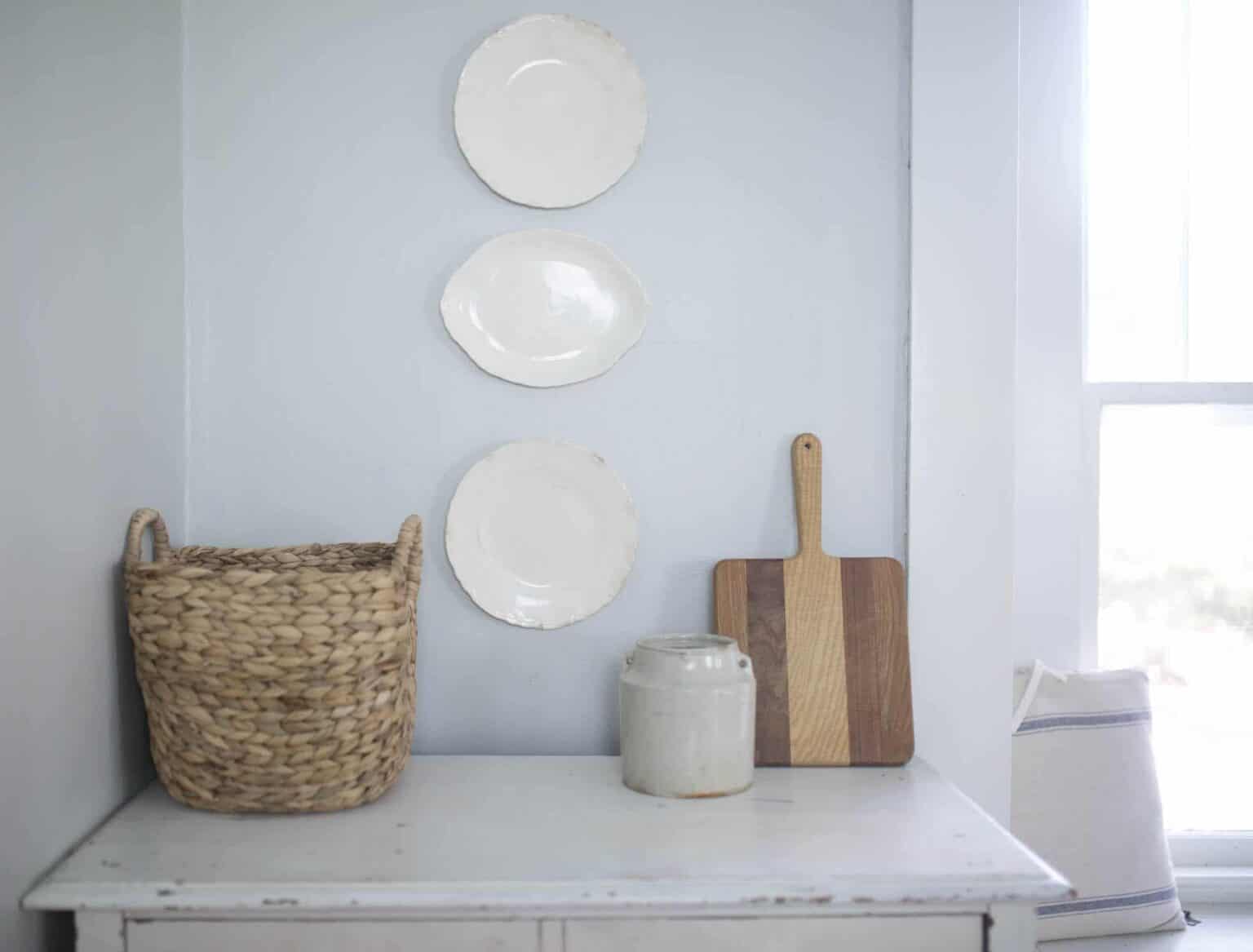
A vertical column brings height to the small wall above a chest without needing a broad arrangement. It can complement minimalist interiors without adding a busy gallery. The quiet white surfaces work with the pale blue wall and natural basket below. This is an easy layout to plan with paper circles before hanging. Repeat the overall spacing, then stop at three if additional pieces would crowd the window trim or the furniture beneath them.
Plan the Layout Before Choosing Hangers
Trace your dishes onto paper and test the whole arrangement before drilling. Select plate holders for each piece’s size, shape, weight and finish, then choose wall fixings suitable for the wall and total load. Follow the product instructions rather than copying improvised hooks or glue methods from a photograph.
For adhesive discs, follow the manufacturer’s fitting directions, including surface preparation, drying and adhesion checks. Do not assume one hanger works for every glaze or antique finish. Keep breakable dishes away from places where they can be knocked, and use a specialist installer for heavy or valuable pieces.
Connect Your Plate Wall with the Rest of the Room
After choosing a display, check the nearby furniture, wall color and other artwork together. One repeated finish or color can connect the pieces without making everything match. Leave open wall space around your plates, especially in a kitchen where shelves, cabinets and everyday supplies already create plenty of visual detail. These related ideas can help with the surrounding room.
- Creative Details for Welcoming Home Interiors
- Warm Accents for Eggshell White Walls
- Wall Shelves and Plant Display Ideas
- Indoor Plants for Thoughtful Home Displays
Which pieces would you bring out of the cupboard: patterned dinner plates, white platters or a few mismatched finds? Share your plate-wall plans in the comments. If you already display dishes, tell us which layout has worked best in your room.











0 Comments