20 Dining Chair Ideas for a Cozy Eating Area
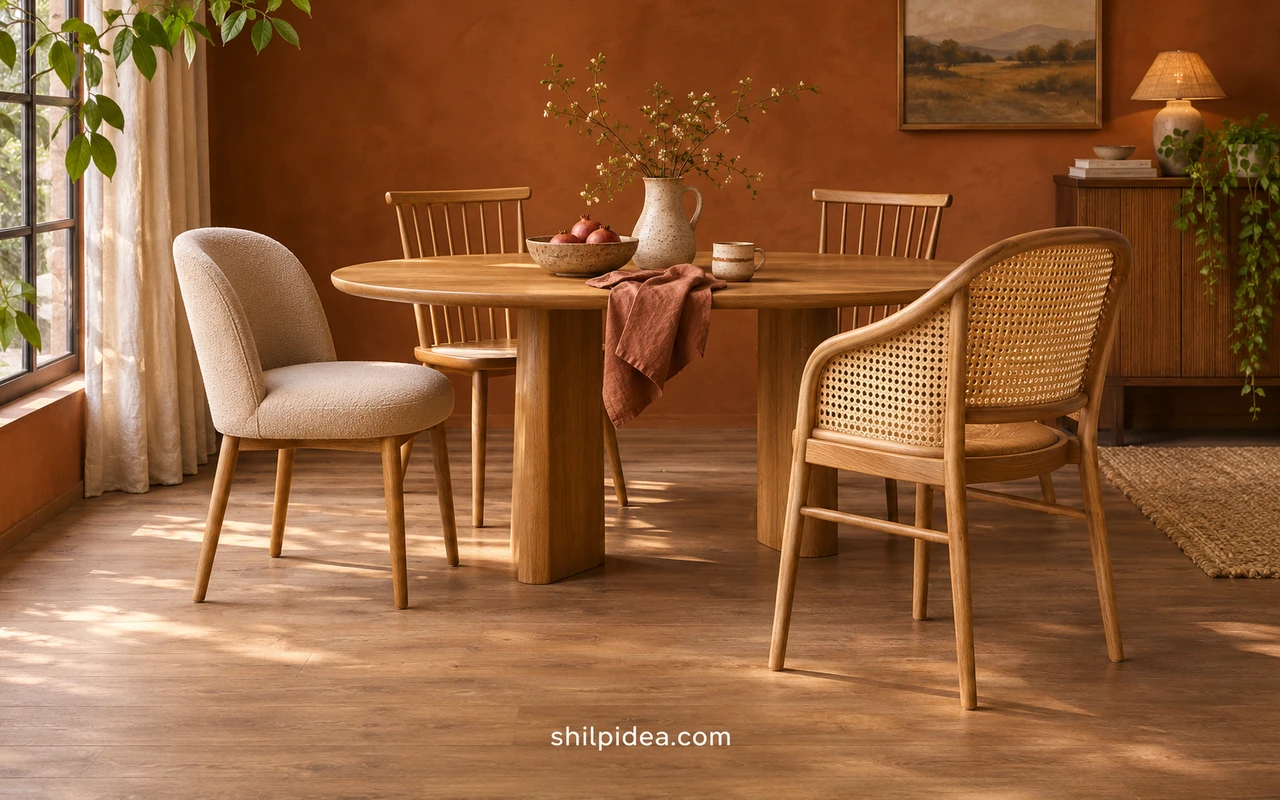
The right dining chair can change how an eating area feels before you add a single decoration. These 20 ideas use IKEA’s original room and chair photographs to explore different shapes, materials, and visual weights, from woven backs to generous upholstery.
If your table shares space with the cooking area, our kitchen design ideas can help you connect the finishes.
For a wider view of the room, browse our interior design ideas. Look for a chair silhouette that complements the space you already have.
1. Cushioned Slat-Back Chairs for a Light, Traditional Room
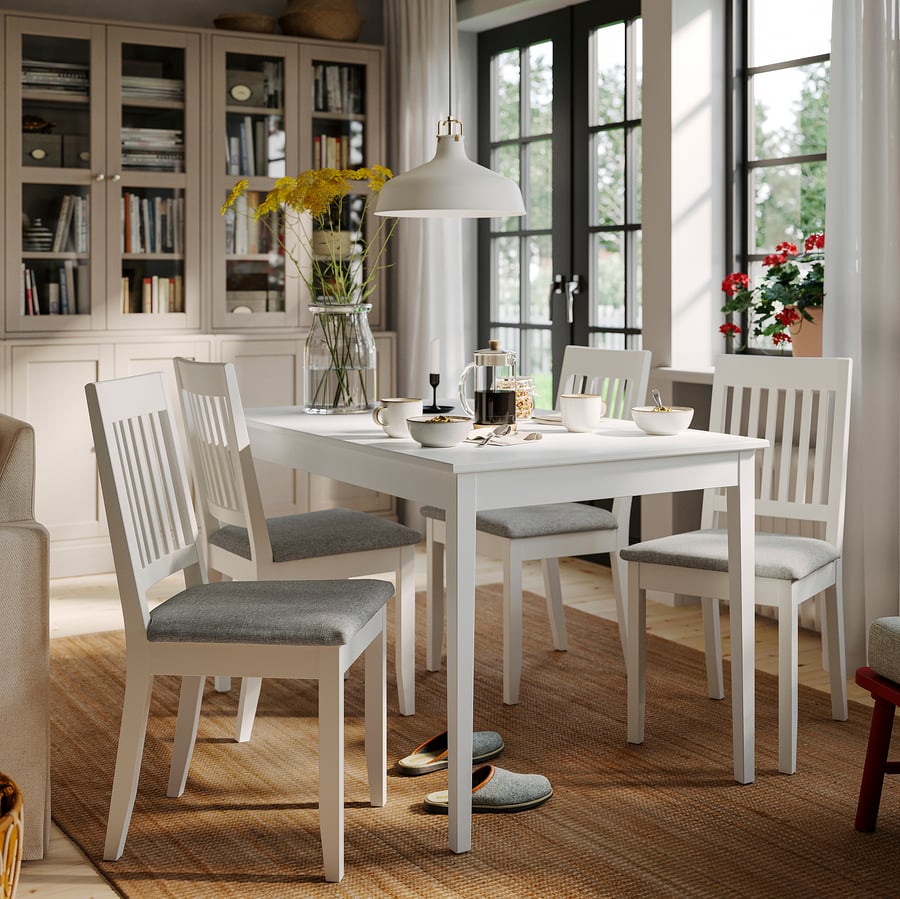
A painted slat-back chair with a padded seat balances familiar lines with a softer place at the table. In this NÄSINGE setting, white furniture and pale upholstery sit comfortably beside bookshelves and daylight. Try the combination when you want a dining corner to feel connected to the rest of a lived-in home rather than arranged only for special occasions.
2. Slim Black Chairs for a Compact Kitchen Table
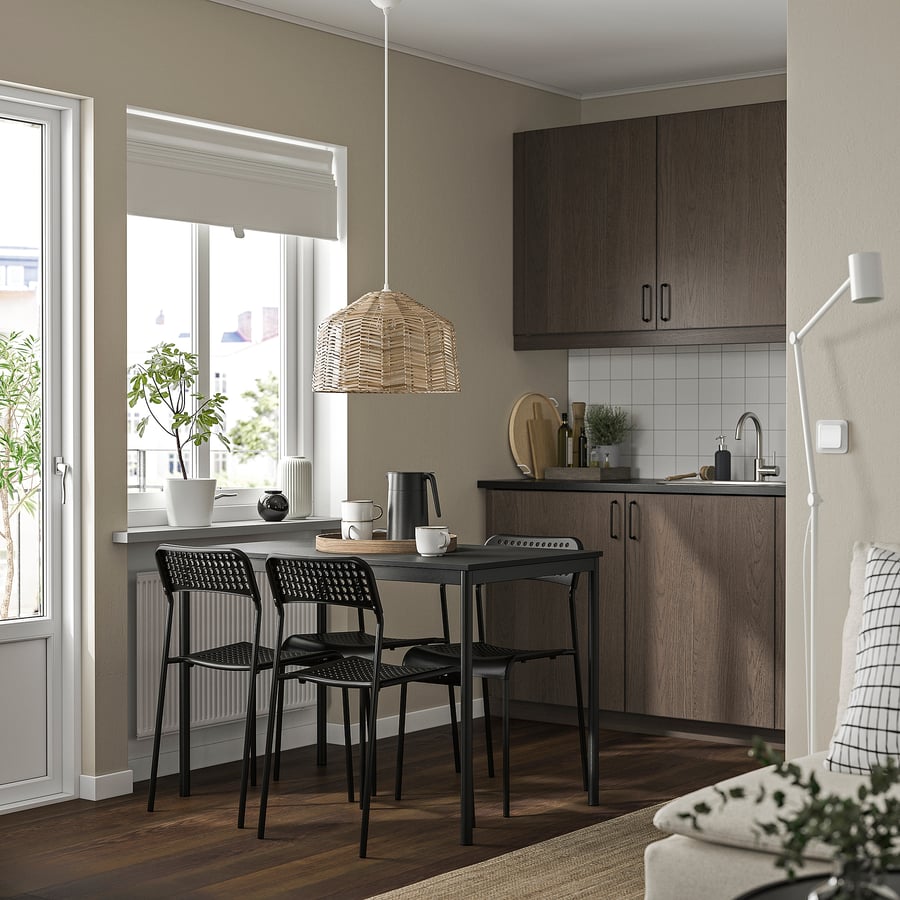
Small dining corners benefit from chair frames that do not obscure the whole table base. The SANDSBERG setting pairs slim black chairs with a compact table and warm overhead texture. Notice how the darker seats give the pale kitchen a clear focal point. A woven shade or nearby plant can keep this restrained arrangement from feeling too stark.
3. Simple Pine Chairs with an Everyday Kitchen Table
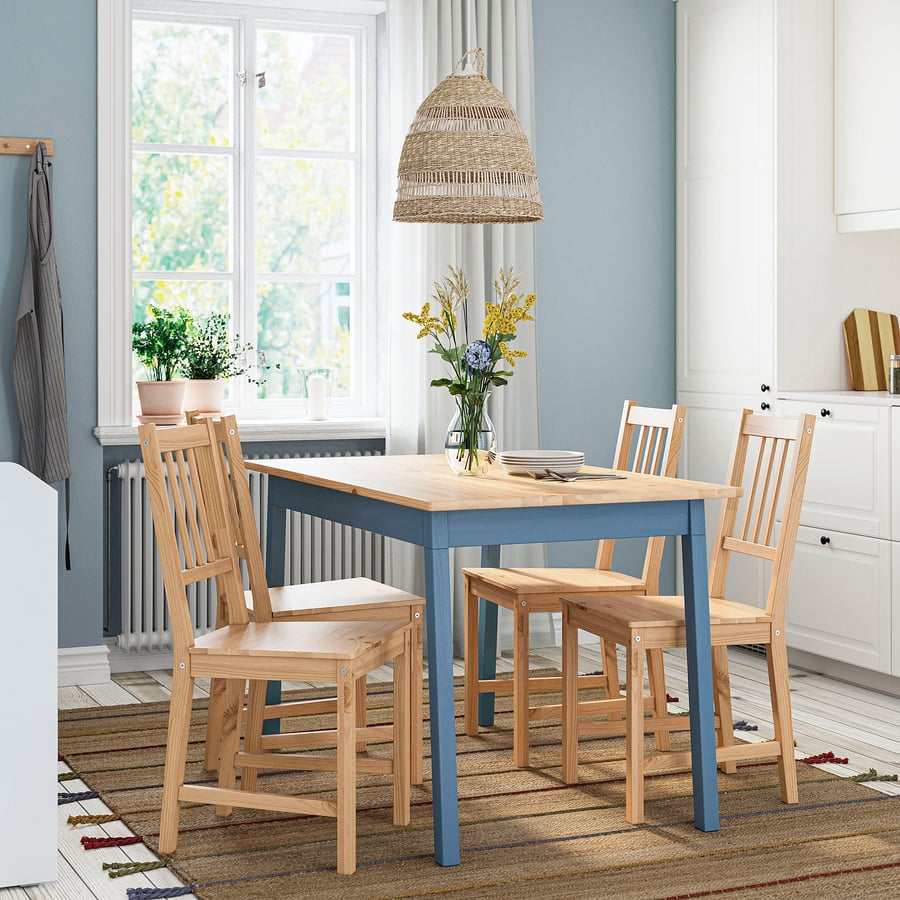
The PINNTORP example makes an inviting case for straightforward wooden chairs. Their narrow back slats repeat the lines of the table legs, while the visible grain supplies most of the decoration. This approach suits a kitchen where dishes, plants, and daily activity already add color. Keep the chair silhouette simple and let the surrounding room provide the personality.
4. Arched Spindle Backs Against Textured Walls
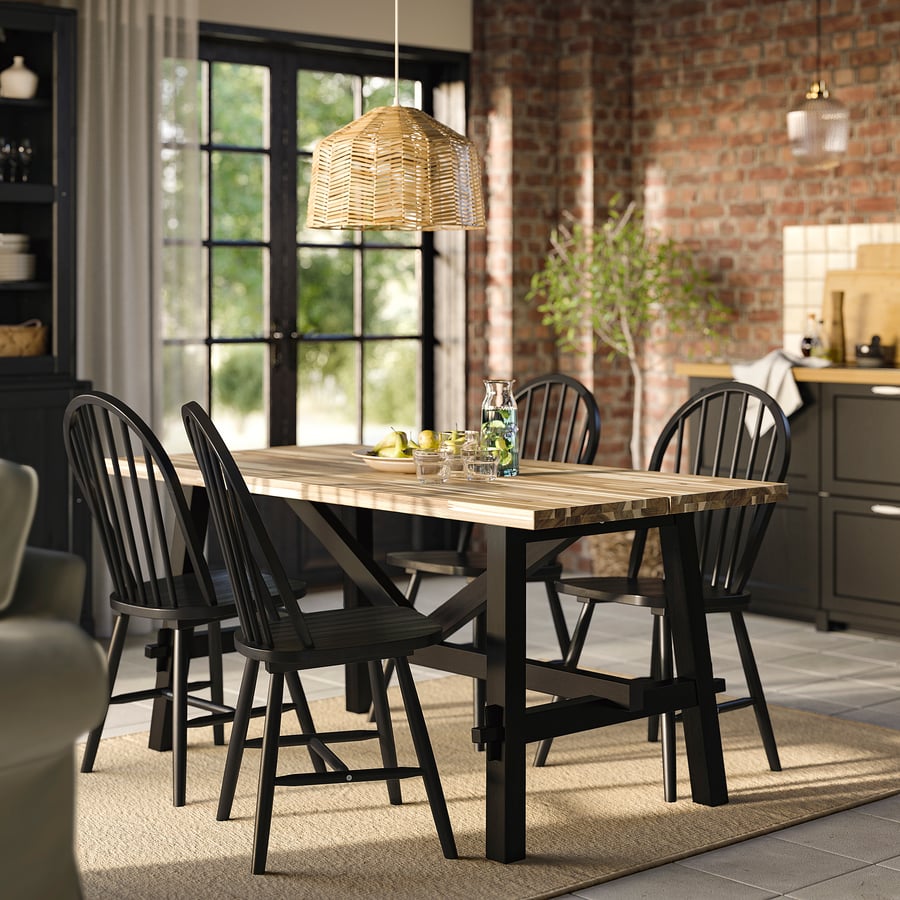
Arched SKOGSTA chairs create a recognizable outline even when the whole dining set is dark. Here, the openings between the spindles allow the background to remain visible, while brick, wood, and a woven pendant add warmth around them. Consider this relationship when choosing black chairs: surrounding texture can matter more than adding a bright seat cushion to every place. Our natural living-room textures offer more ideas for that surrounding palette.
5. Light Wood Chairs in a Colorful Dining Nook

Pale wood gives this LISABO dining nook a calm center beneath a strong green wall. The broad, gently curved backrests keep the furniture visually simple, so the striped rug and wall color can do the expressive work. If your eating area already has a bold backdrop, a quiet chair shape helps the room feel composed without requiring every finish to match.
6. Ladder Backs with a Soft Upholstered Seat
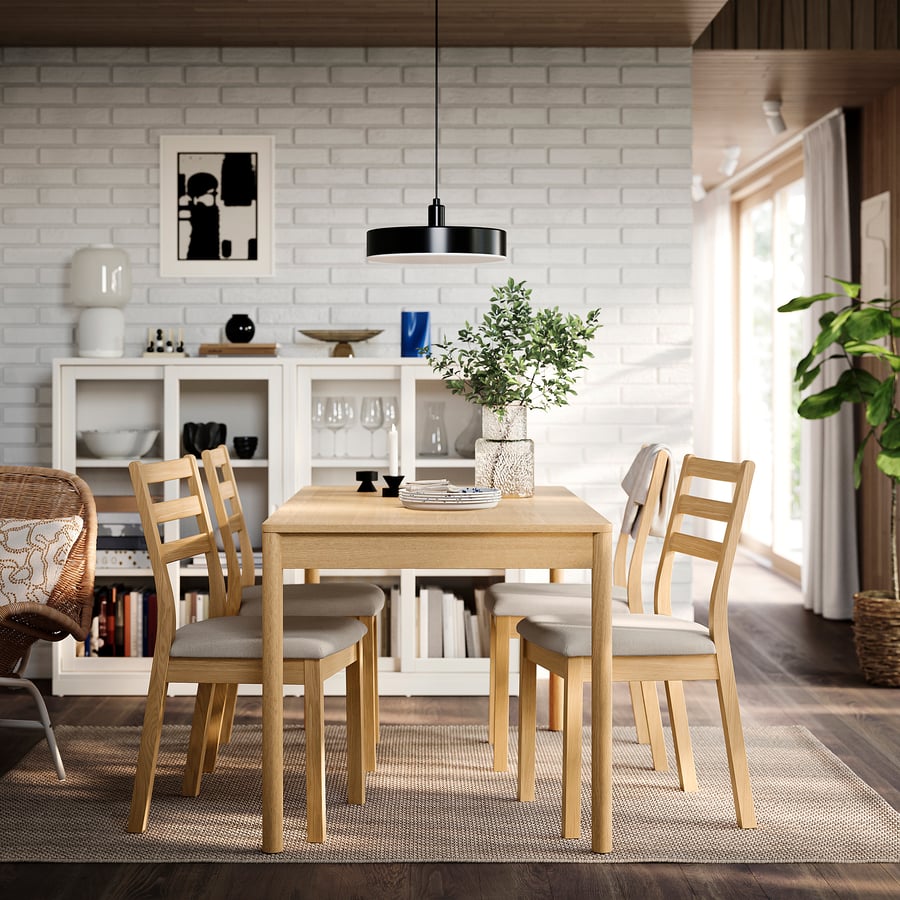
TONSTAD chairs combine horizontal back rails with a padded seat, creating a more substantial outline than a fine spindle chair. In this room, the light wood links the seating to the table and shelving. Use a ladder-back shape where you want a little structure around a large tabletop, then soften the setting with fabric, flowers, or a textured rug.
7. Rounded Upholstered Chairs Around a Long Table

Curved TOSSBERG chairs bring a more enveloping silhouette to a rectangular wooden table. Their dark, slim bases leave the floor visible beneath the larger upholstered seats. This pairing works visually because the table supplies long straight lines while the chairs add curves. Repeat a fabric tone from elsewhere in the room if you want the dining area to feel connected.
8. Cross-Back Chairs for a Relaxed Cottage Feeling
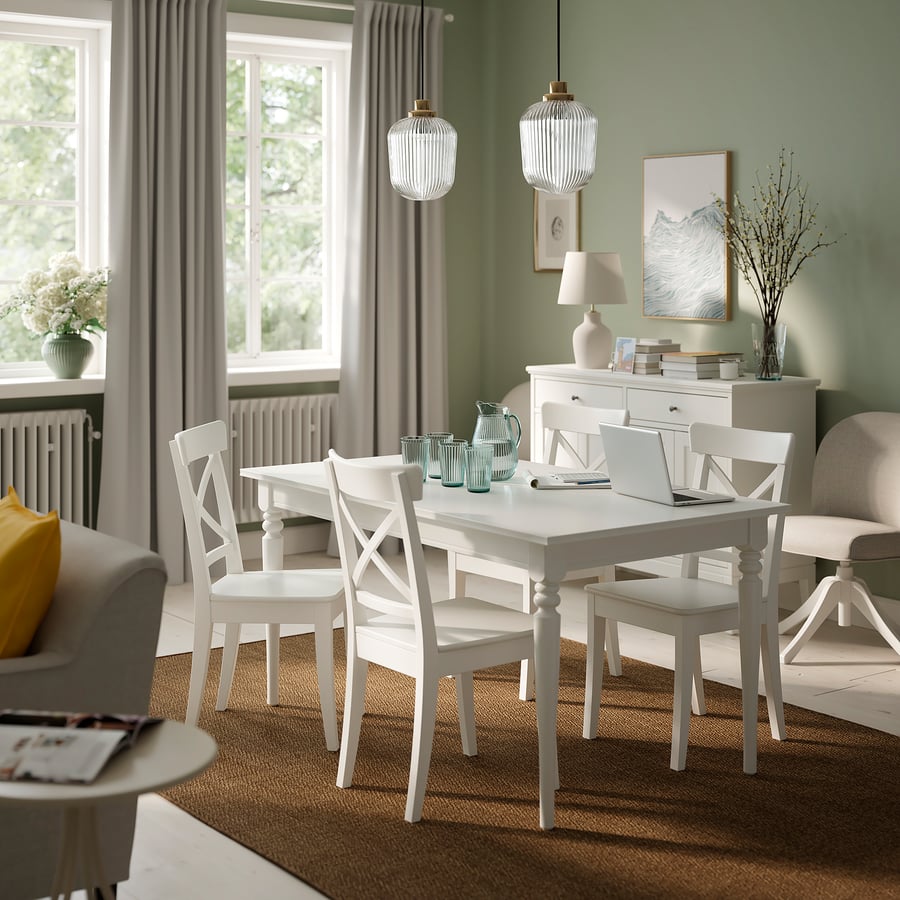
The crossed rails on ROSENTORP chairs add pattern without needing a printed fabric. In the pale dining room shown here, that small architectural detail brings definition to an otherwise quiet furniture group. Try cross backs beside simple curtains and a plain tabletop, where their shape can stand out. Keeping nearby accessories restrained lets the chairs contribute character without making the corner busy.
9. Compact Upholstered Chairs Beside a Round Table
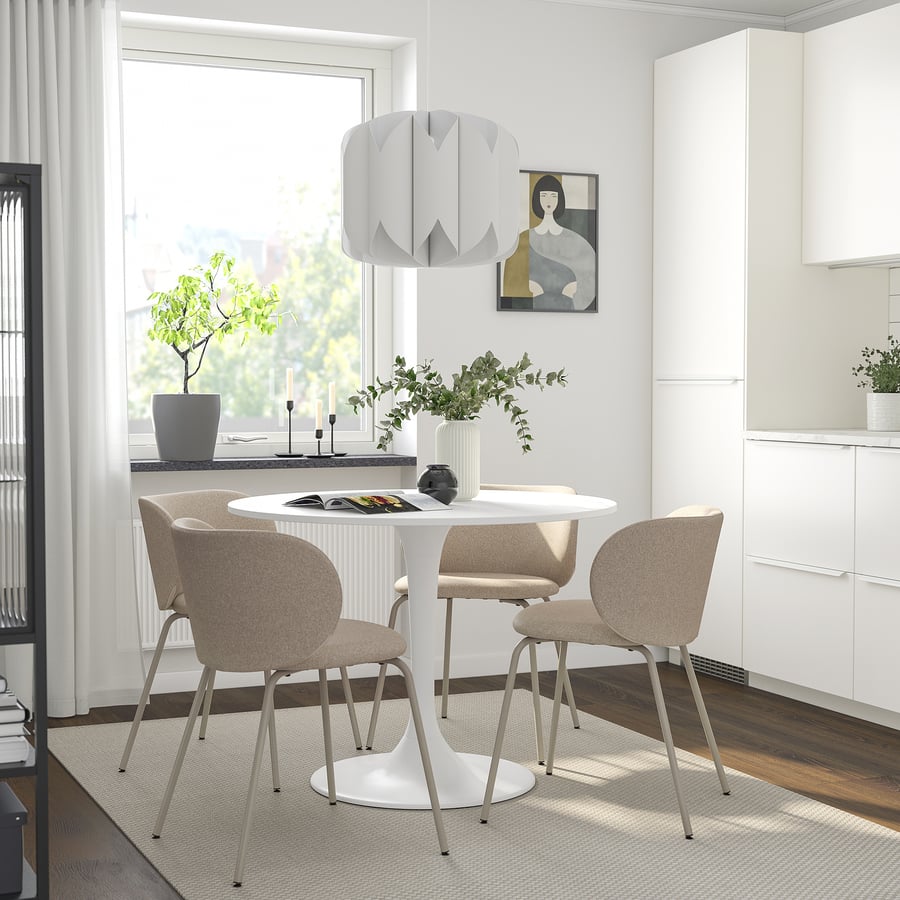
The KRYLBO setting uses rounded upholstered seats around a white circular table, creating a gentle outline from almost every angle. The slender legs keep the lower half of the arrangement relatively open. This is a useful visual direction for an eating area within a larger room, where you may see the backs of the chairs as often as the tabletop. See our cozy minimalist rooms for a similarly restrained approach.
10. Molded Shells Balanced by Warm Wooden Legs
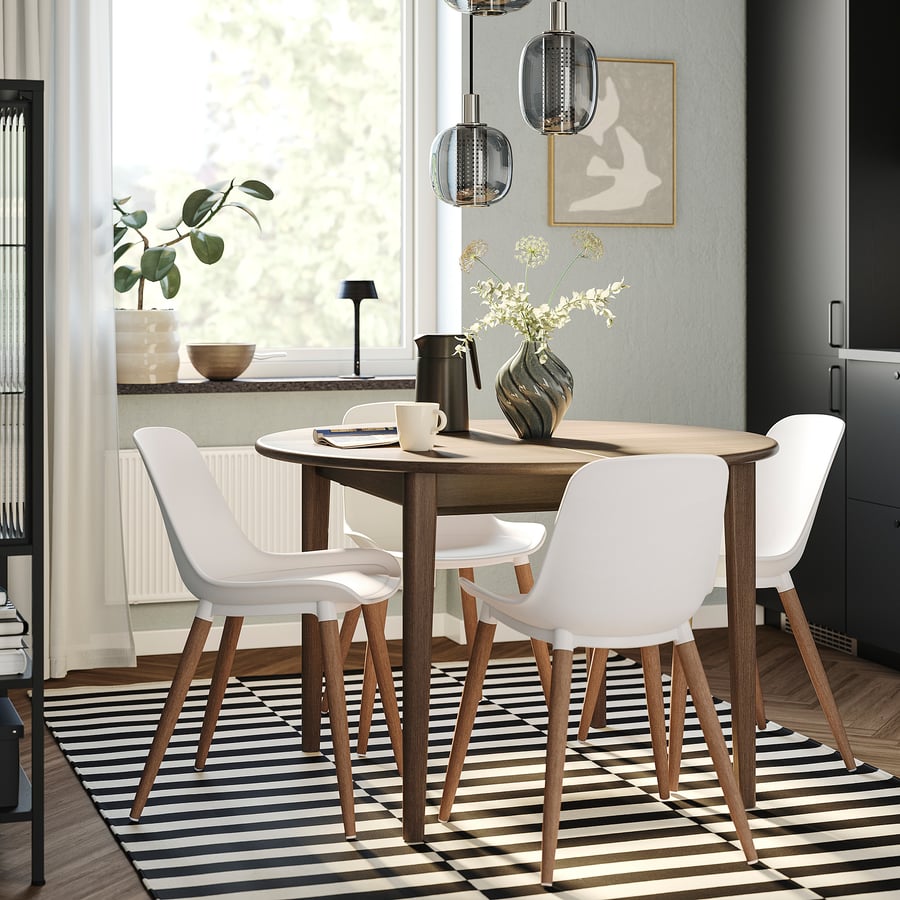
A pale molded seat and wooden legs give GRÖNSTA chairs a different balance from an entirely upholstered design. The shell reads as one clear shape, while the wood connects it to the table and floor. In this example, a striped rug adds movement underneath. Choose this sort of contrast when you want a dining area that feels clean-lined but still welcoming.
11. High Upholstered Backs for a More Dressed-Up Table
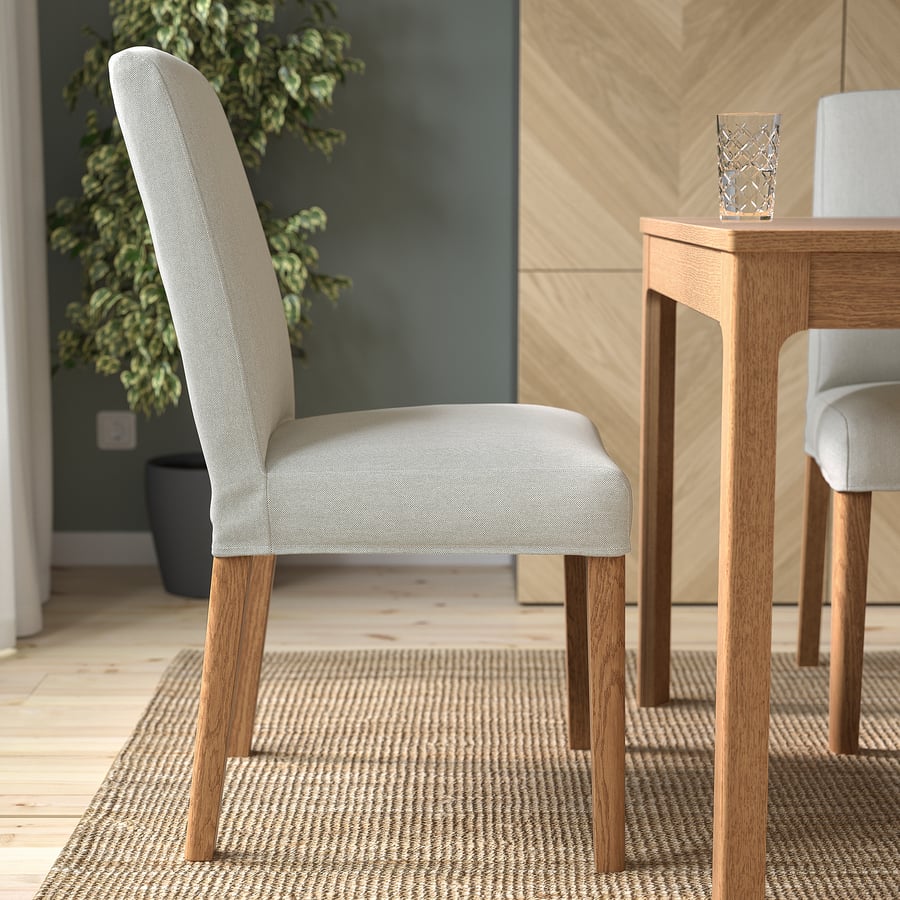
A taller upholstered chair can give even a simple table a more formal presence. This BERGMUND example shows the relationship clearly: a pale fabric back rises above the tabletop area, while wooden legs keep the lower section warm. Consider the view across the room before choosing a high back, since its larger outline will become part of the room’s overall composition.
12. A Wooden Backrest on a Fine Metal Frame
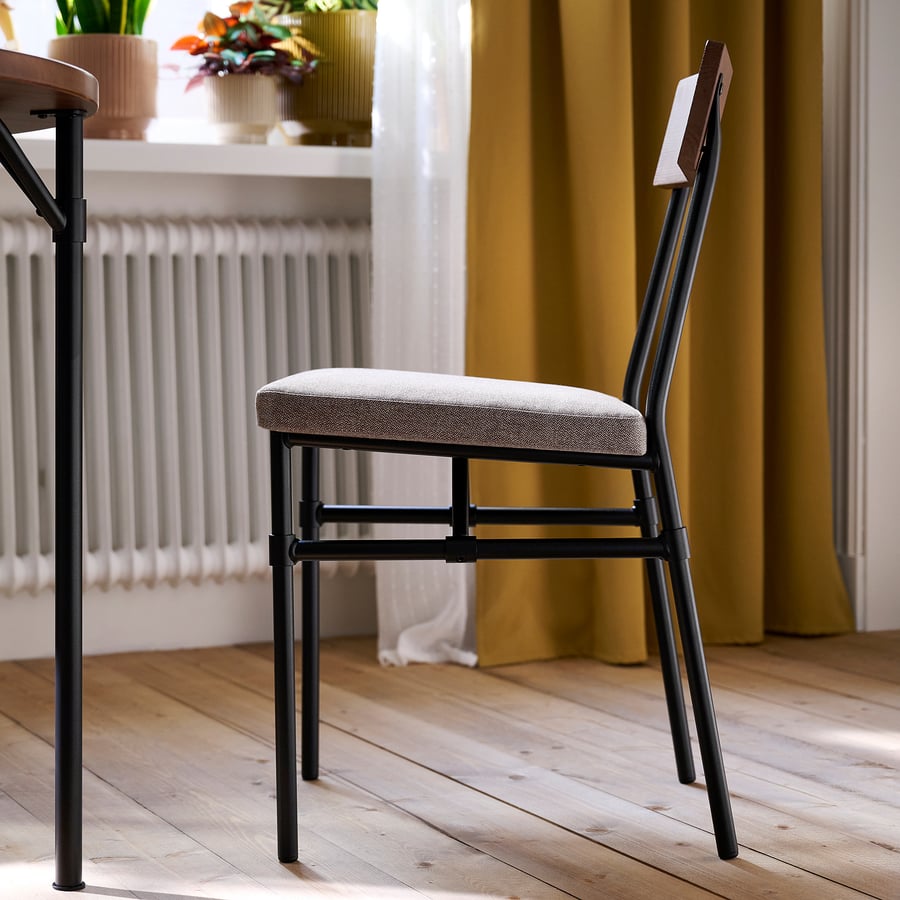
GRÖTÅN combines a visible wooden back with a padded seat and thin dark frame. The separate materials make the chair feel more layered than a single molded shape. Its slim outline also leaves space around the legs for the floor to show through. Repeat the wood tone in a tabletop or shelf to help the combination look intentional rather than disconnected.
13. Transparent Seating That Lets the Table Stand Out
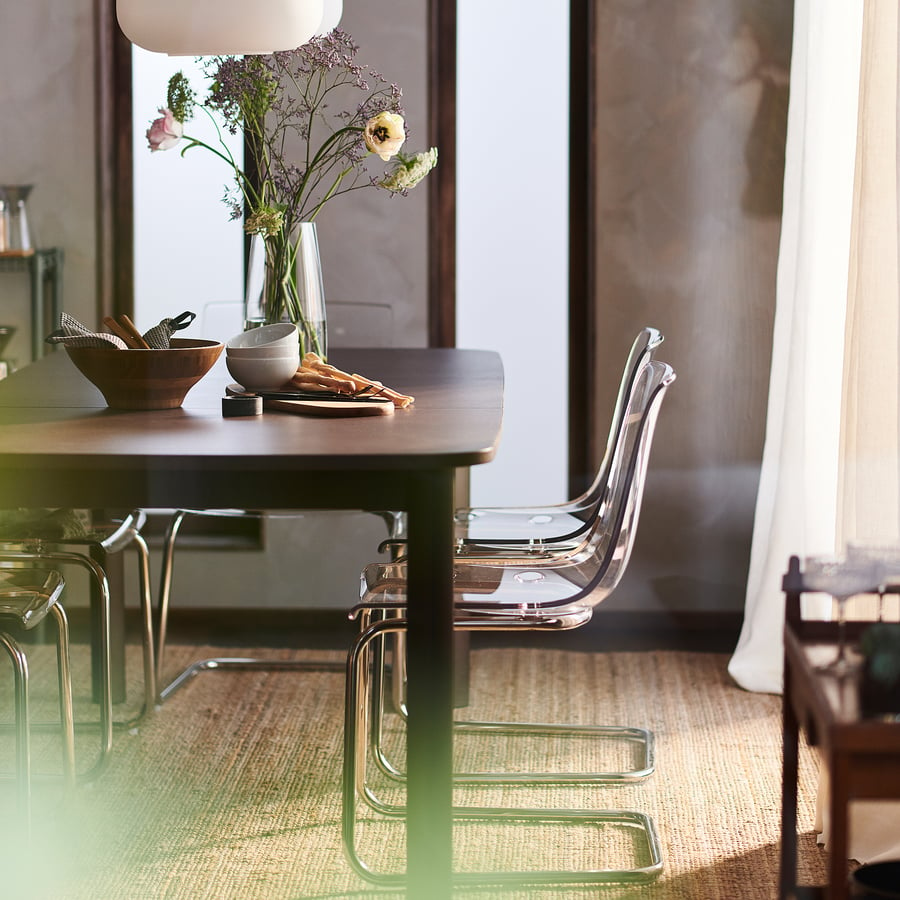
Clear TOBIAS chairs offer a different way to approach a visually crowded eating area. In this example, the transparent back allows the table and room colors to remain prominent, while the curved metal base adds a reflective line below. Bring warmth through the tabletop, curtains, or rug rather than expecting the chair itself to supply a soft, upholstered look.
14. Sculpted Shell Chairs in a Quiet Neutral Room
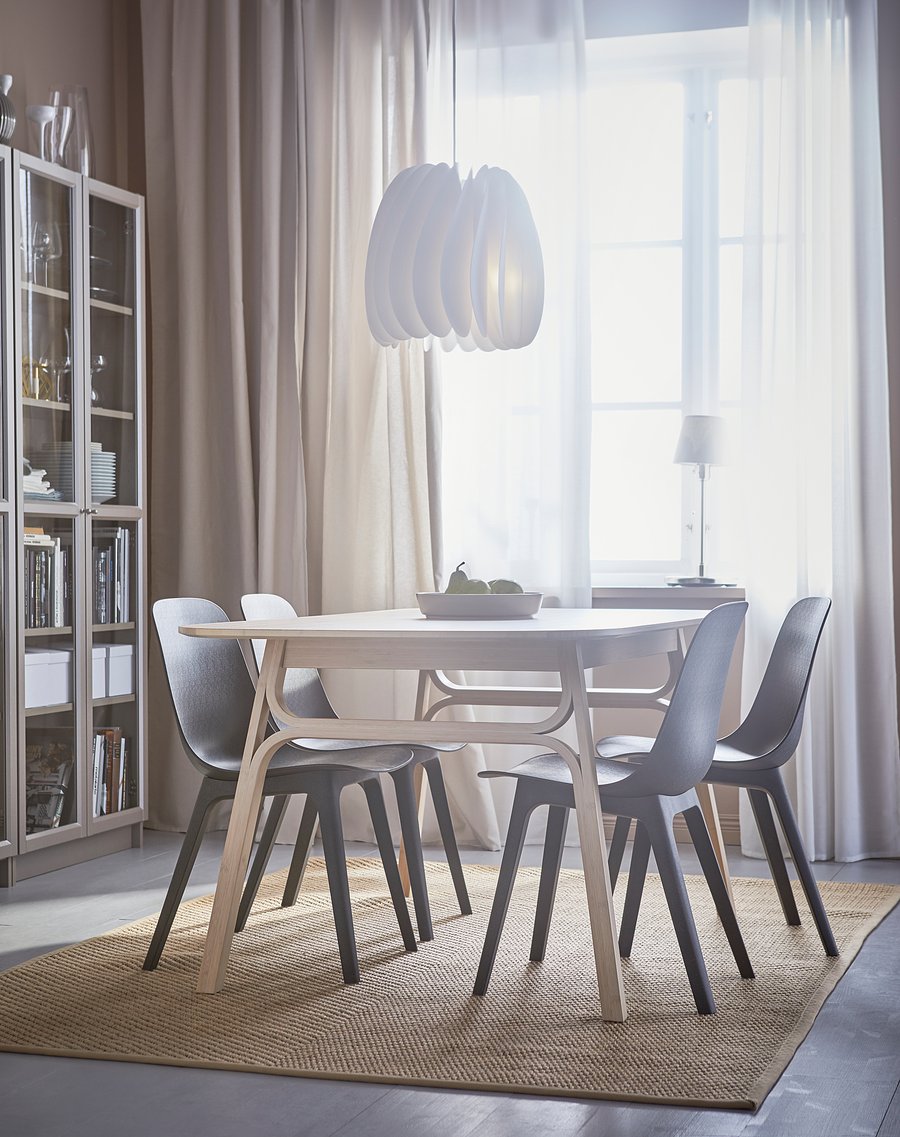
ODGER chairs have a more sculpted seat shape than a straight-backed wooden chair, with a compact outline that works well in this understated setting. The pale table and sheer curtain keep the surrounding room light. A shaped shell can be the main design detail when you prefer fewer accessories; let its profile remain visible instead of covering every surface with textiles.
15. Rounded Wood Details for a Gentle, Everyday Look
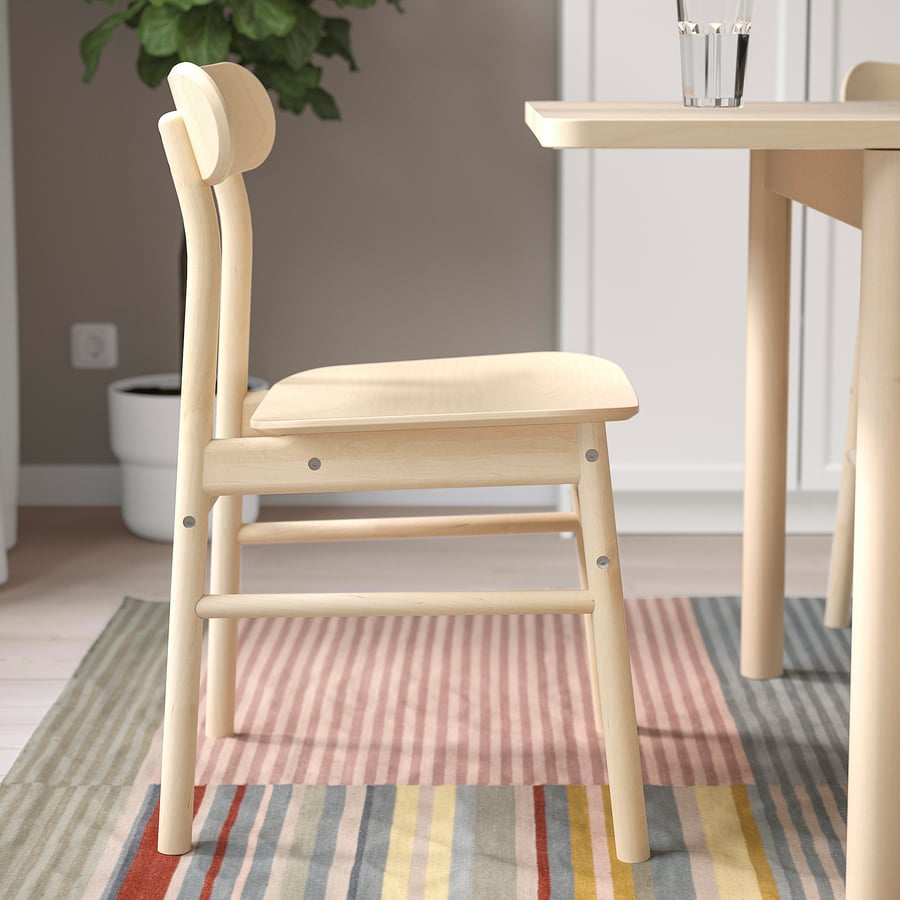
The RÖNNINGE example shows how rounded seat corners and a simple backrest can soften an all-wood chair. The pale finish works alongside a light table and a striped rug without competing with either. This is a useful reference if you like natural wood but want fewer sharp-looking lines around the eating area. Repeating curved forms in bowls or lighting can reinforce the effect. Explore modern rug ideas to build out the setting.
16. Woven Cane Backs with a Tailored Seat
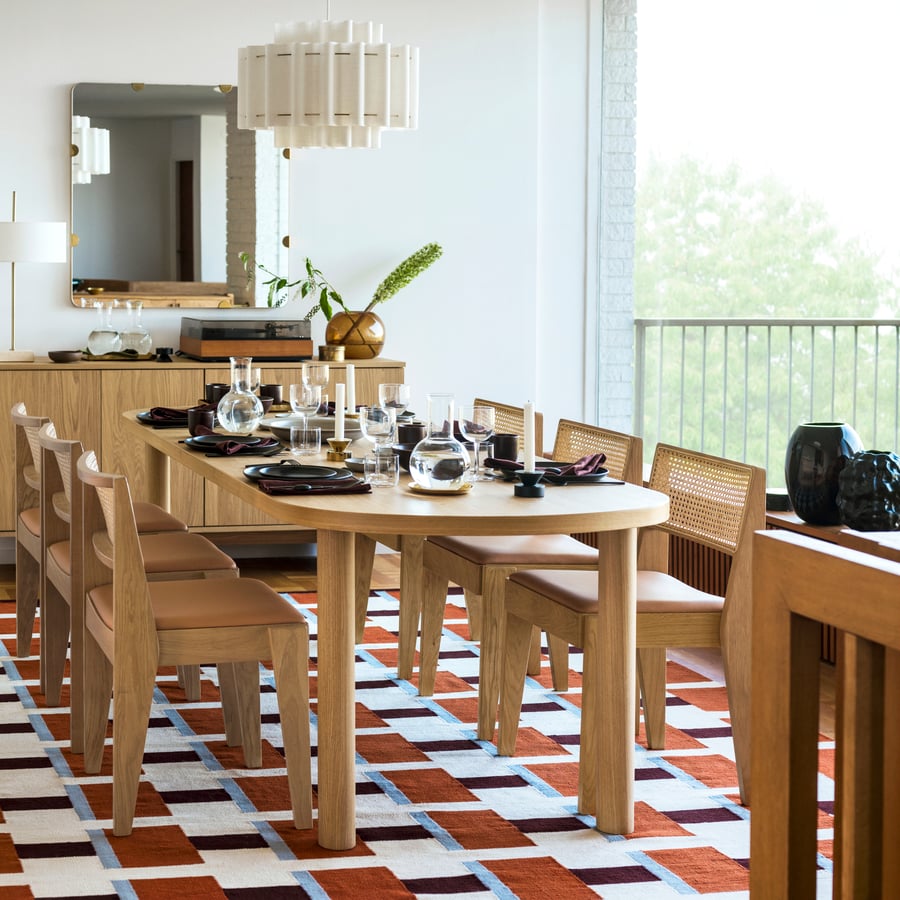
STOCKHOLM 2025 chairs add a woven backrest to a wooden dining setting, bringing fine texture into the space between tabletop and shoulder height. The open weave looks especially effective against a bright background. Keep the table arrangement low enough that the chair backs remain part of the view, then repeat one warm material elsewhere to connect the whole dining area.
17. Woven Seats and Backs for an Airy Natural Palette
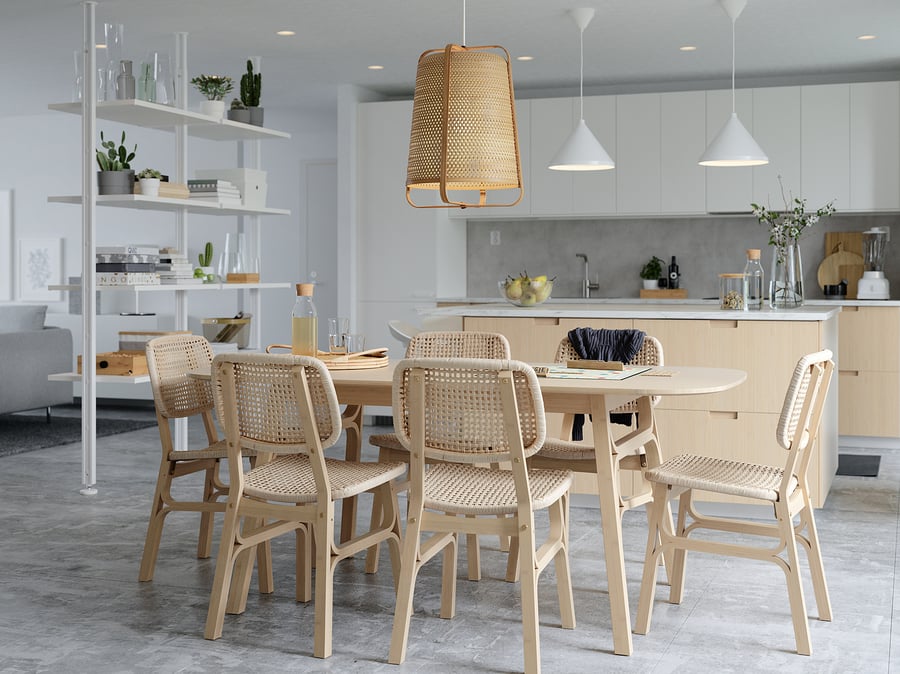
VOXLÖV chairs carry the woven texture across both the seat and back, making it a larger part of the room’s material palette. The light kitchen setting shows how that texture can stand beside smooth cabinetry without needing a patterned fabric. Pair it with simple ceramics or a plain runner, allowing the woven surfaces to provide the small-scale visual interest.
18. Upholstered Armchairs for a More Enclosed Place Setting
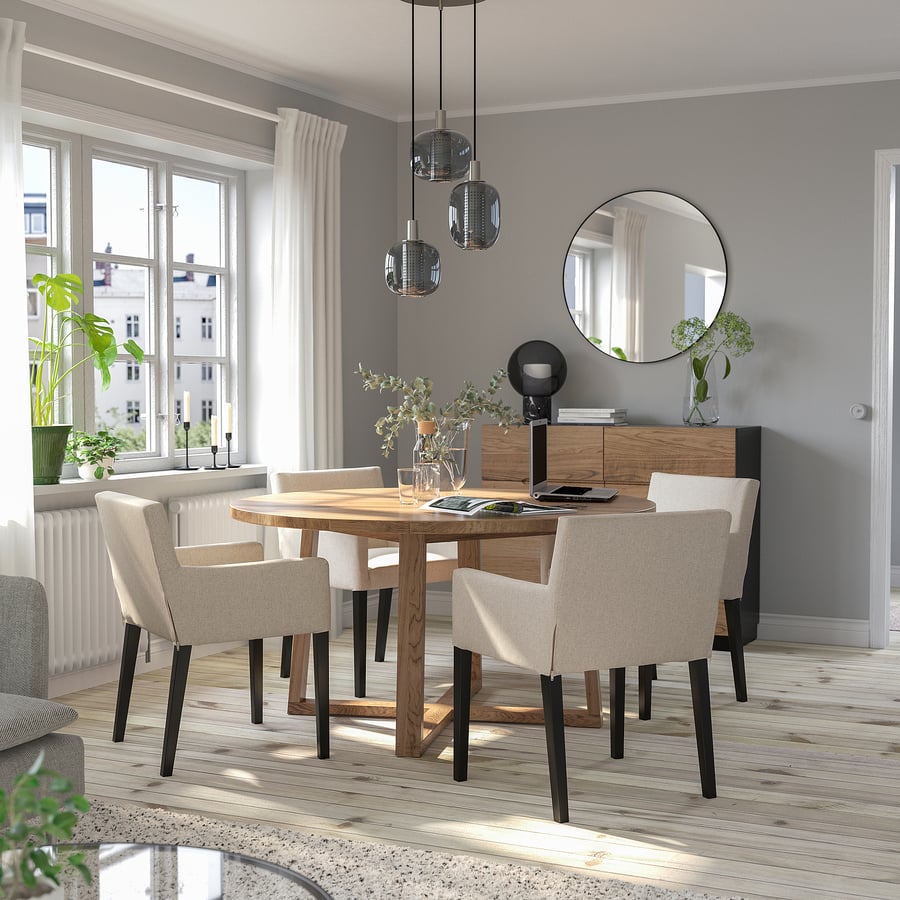
MÅRENÄS chairs introduce arms into the dining arrangement, giving each place a more defined outline. The light upholstery and darker legs connect comfortably with the wooden table shown here. Before choosing an armchair, check its published dimensions against your own tabletop and apron clearance. Visually, a simple fabric keeps the extra shape from competing with a busy rug or elaborate light fixture.
19. Cantilever Chairs with a Reflective Metal Base
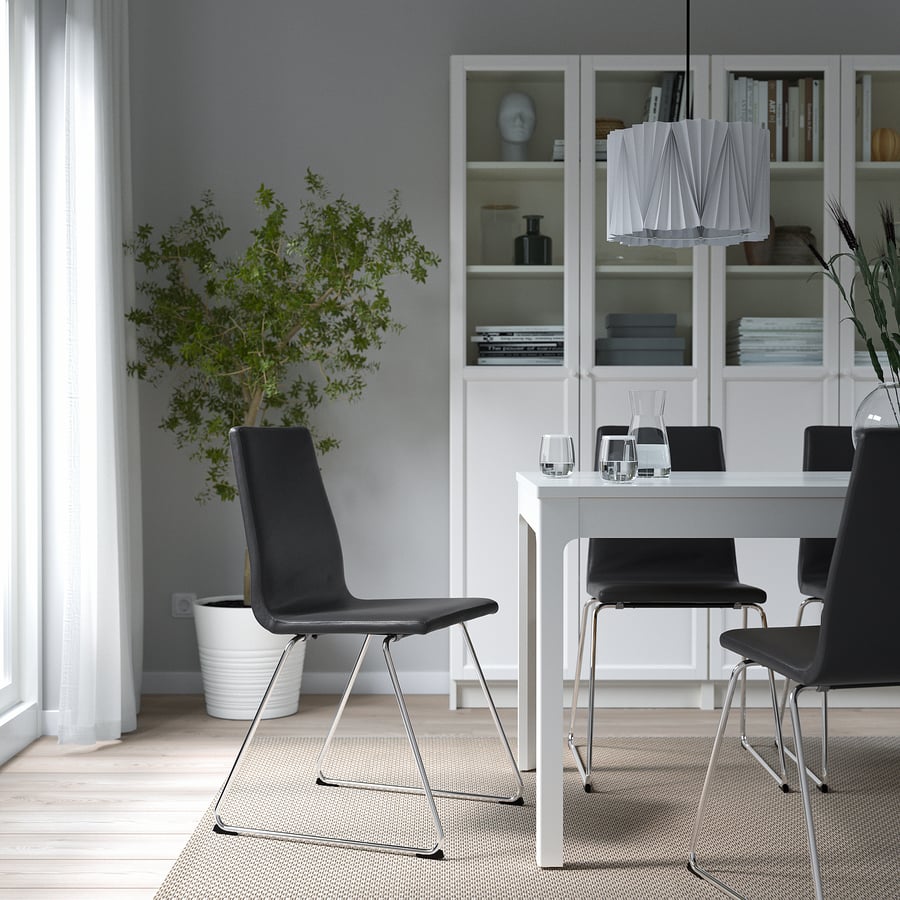
The LILLÅNÄS chair’s continuous metal base creates a strong graphic line beneath a padded black seat and back. Beside the white table in this example, the contrast feels crisp without requiring additional colors. Balance that sharper outline with a rug, curtains, or greenery nearby. The goal is to give the chair room to stand out while the rest of the setting stays inviting.
20. A Woven Seat Beneath a Sculptural Wooden Back
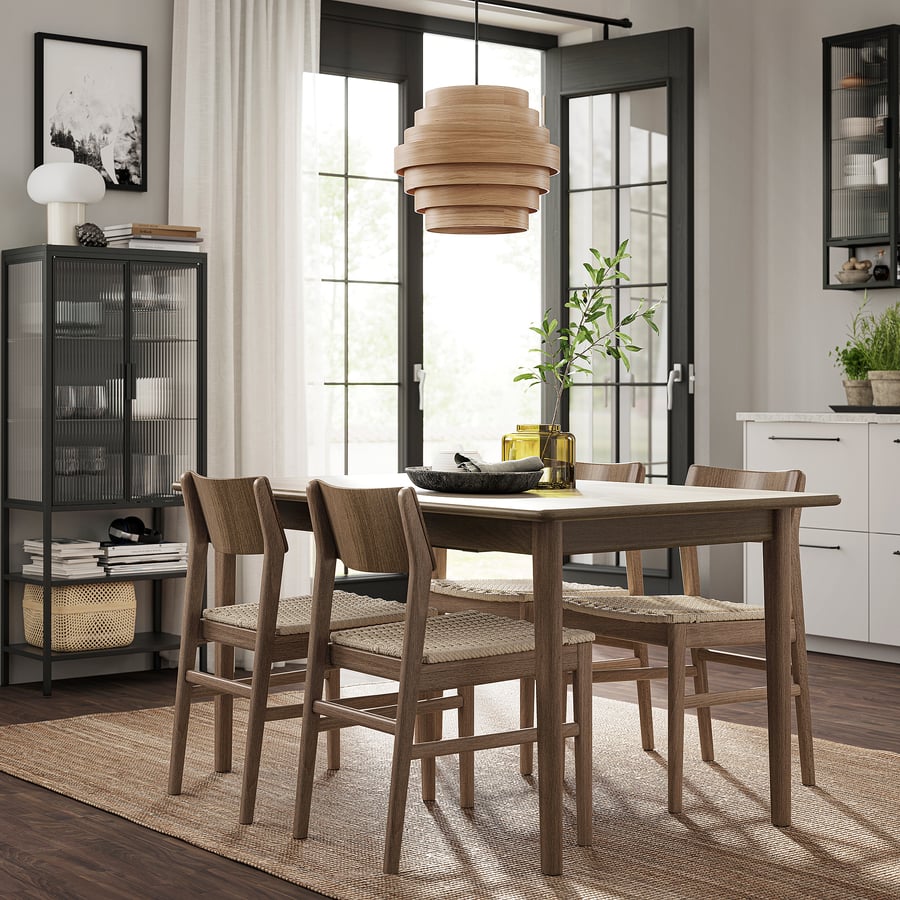
SKANSNÄS offers another way to use natural texture: concentrate the weave at seat level and let the wooden back provide the silhouette. The dining room shown here combines that detail with a broad table and an oversized pendant. If your room already has a statement light, repeated chair shapes can give it a steady visual foundation without introducing another competing focal point.
Find the Chair Shape Your Eating Area Needs
Begin with the view you see most often: across the table, from the kitchen, or through the doorway. Then decide whether the chairs should add texture, soften straight lines, or leave the room feeling more open. You can borrow a shape or material from these examples without recreating an entire room. One clear design choice is often enough to bring the corner together.
- Kitchen Colors That Connect Your Space
- Creative Interior Ideas for Your Home
- Modern Rugs That Add Room Character
- Cozy Minimalist Living Room Ideas
- Forest-Inspired Rooms with Natural Textures
- Small Balcony Ideas for Cozy Moments
Which chair style would make your eating area feel more inviting? Tell us whether you prefer woven texture, wood, or upholstery in the comments.
















0 Comments