18 Garden Planter Shelf Ideas for Small Spaces
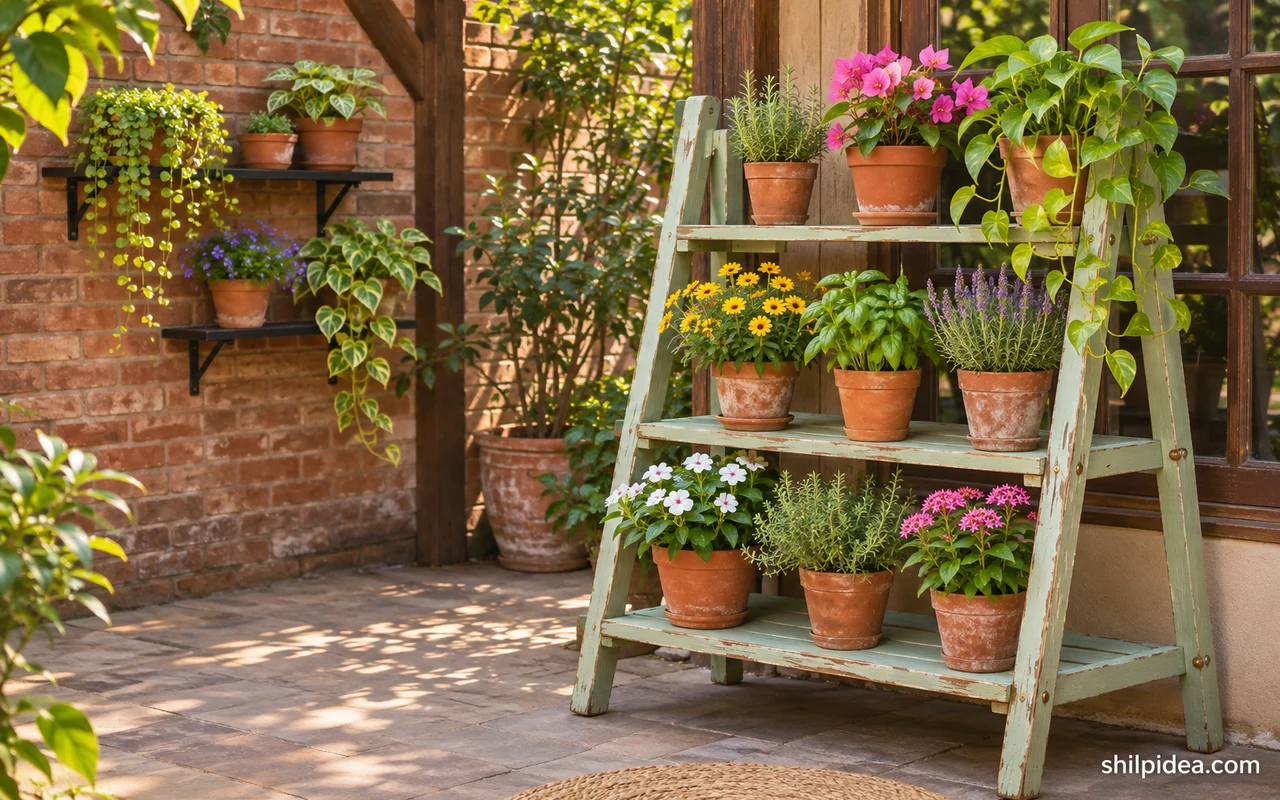
A garden planter shelf lets you put several pots in the space you’d normally give one. These 18 ideas show how a fence, a bright window, or one end of a porch can hold a collection you can still reach and water.
Look at how you move through the spot before choosing a shelf. A freestanding rack works well in a small patio layout if it leaves room to walk past with a watering can.
Decide what each tier will hold before you fill it. If you use self-watering bottle planters, measure with the reservoirs in place, and leave enough room to lift them out for refills.
1. Build a Slatted Stand for a Brick Wall
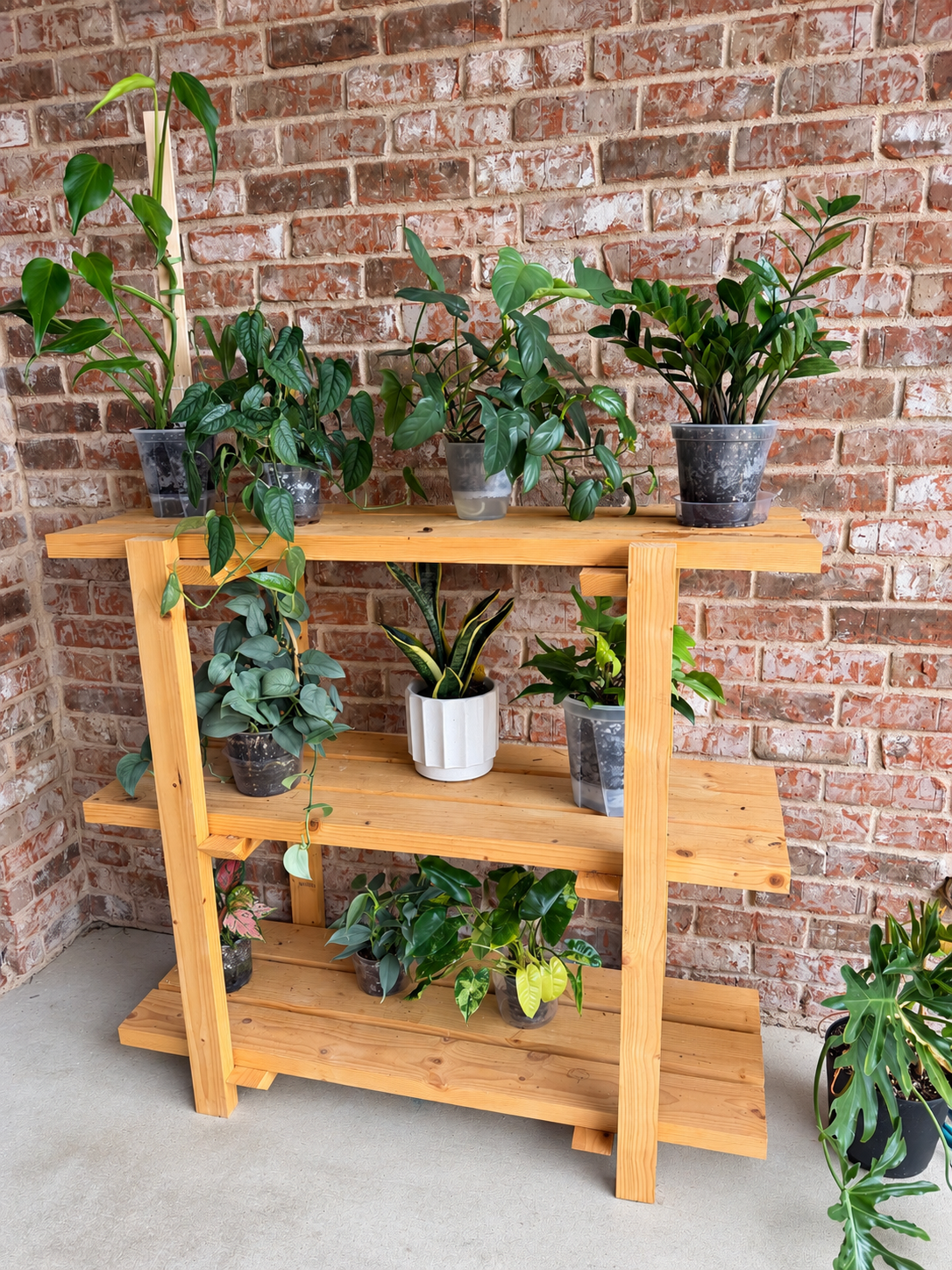
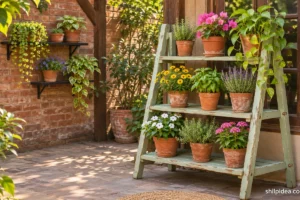
A slatted stand can turn a narrow strip beside a wall into a display that drains after watering. Arrange the heavier planters on the lower tiers, where they are easier to lift and less likely to tip the unit. Keep the top tier for smaller pots that have similar light and watering needs.
2. Attach Planter Shelves to a Trellis

A framed trellis gives shallow planting shelves a back and keeps the display contained. Use removable pots or liners so you can take one planting out without emptying a whole row. Check the spacing between tiers against the mature height of the plants before filling all the shelves.
3. Suspend a Small Shelf From Rope

A suspended shelf leaves a wall open below and works well for a few lightweight pots. Hang it somewhere sheltered from gusts and check that both sides are level before setting a plant on it. Use matching concrete planter designs on a floor stand nearby if you want a heavier display to balance the light hanging shelf.
4. Float Clear Shelves Across a Bright Window
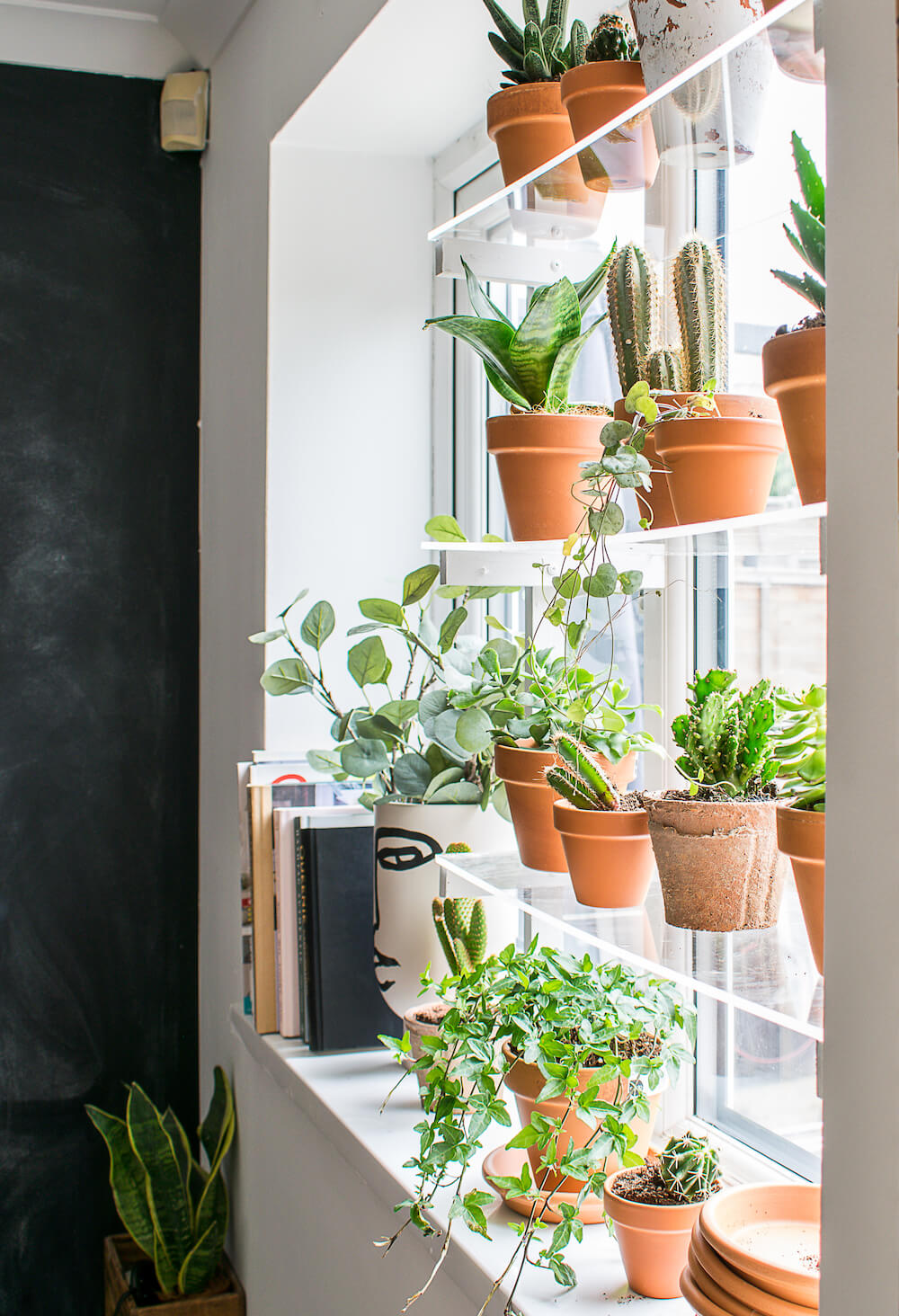
Clear shelving lets light reach plants on several levels. Set the pots far enough back to open the window or operate the latch, and leave enough space for air to pass around them. Start with cuttings or other small plants so the shelf stays easy to wipe clean.
5. Turn Pallet Slats Into Planting Pockets

A planter made from a pallet turns the gaps between its slats into shallow planting pockets. Use sound, untreated wood and choose compact plants suited to the available root space. The example shows how a planted panel can bring greenery to a blank wall while leaving clear floor space in front.
6. Set Cedar Shelves on Cinder Blocks
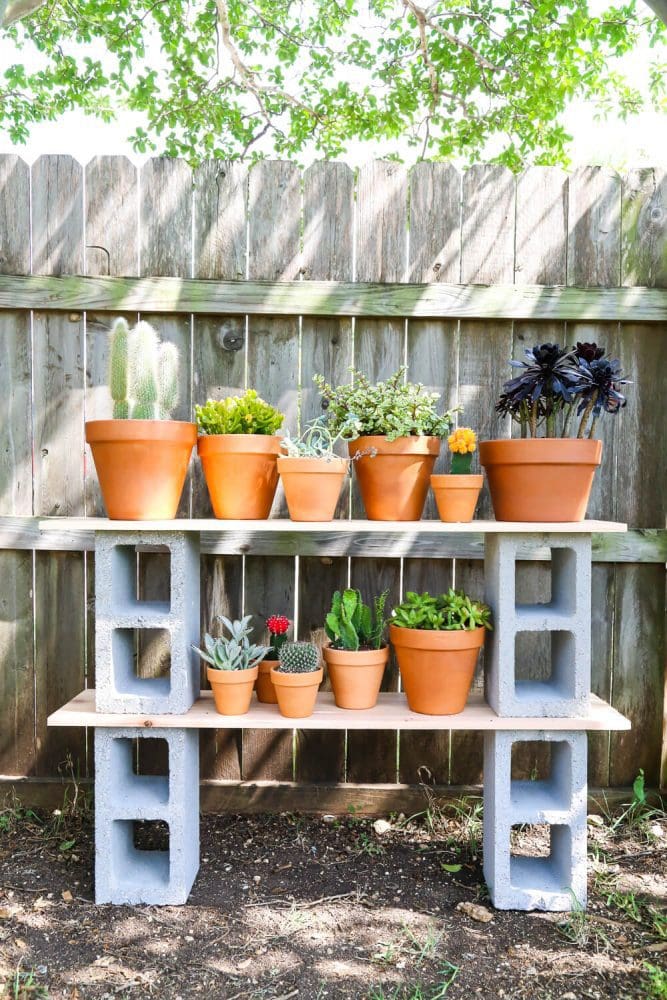
The open blocks are part of the look, framing two rows of small pots against the fence. A broad lower shelf is a good place for heavier containers, with shorter pots set where you can reach them. Amanda Hendrix's project shows how she joined the materials. Start on firm, level ground and keep the boards low enough for the planting arrangement to stay stable.
7. Hang Stacked Pot Boards by the Door

Rows of small pots fill a narrow area beside the door while leaving the seat below open. Keep the structure outside the door’s swing and give each plant room for its leaves. If one tier drips onto the next, take the pots off the rack and water them over a sink or tray.
8. Step Three Planter Boxes Down a Frame

Three staggered boxes make it possible to see and reach the plants in each row from the front. Put taller plants where they won’t shade the tiers behind them. The open sides of the frame also make it easier to reach fallen leaves and sweep the porch under the planter.
9. Tuck a Two-Level Planter Into a Corner

A corner unit turns an awkward spot into a small planting area without putting pots in the walking line. Set the lower box far enough forward to get light, and choose trailing plants for the edge where they can soften the timber. Check that you can reach the back for watering.
10. Suspend Dark Shelves Against Brick
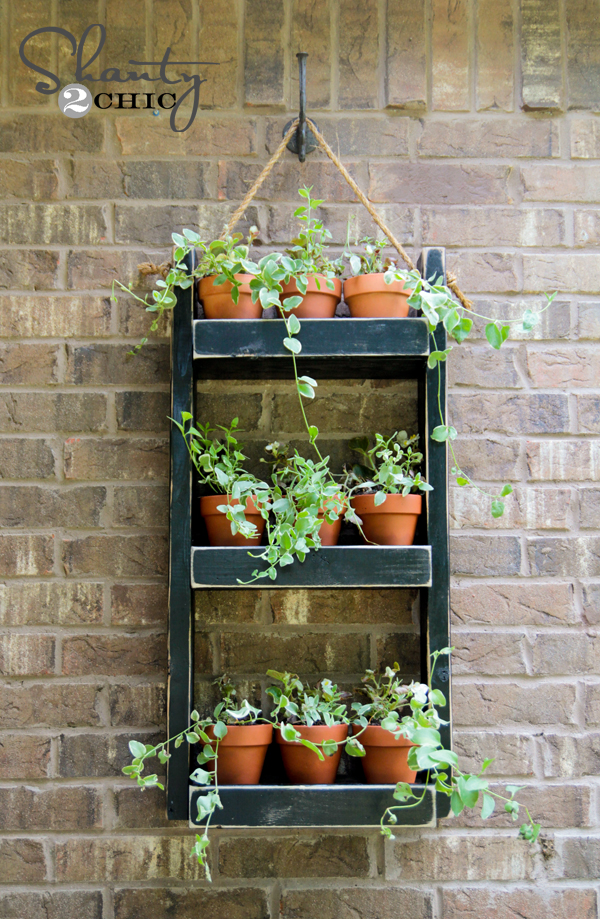
The dark boards in this hanging rack stand out against pale mortar, while the rope makes the whole arrangement feel lighter. Take one color from the existing brick or paving and repeat it in the pots. Let one or two plants spill over an edge, leaving the center of each shelf open enough to check the soil and lift out a pot.
11. Hang Hexagon Planters as a Wall Display
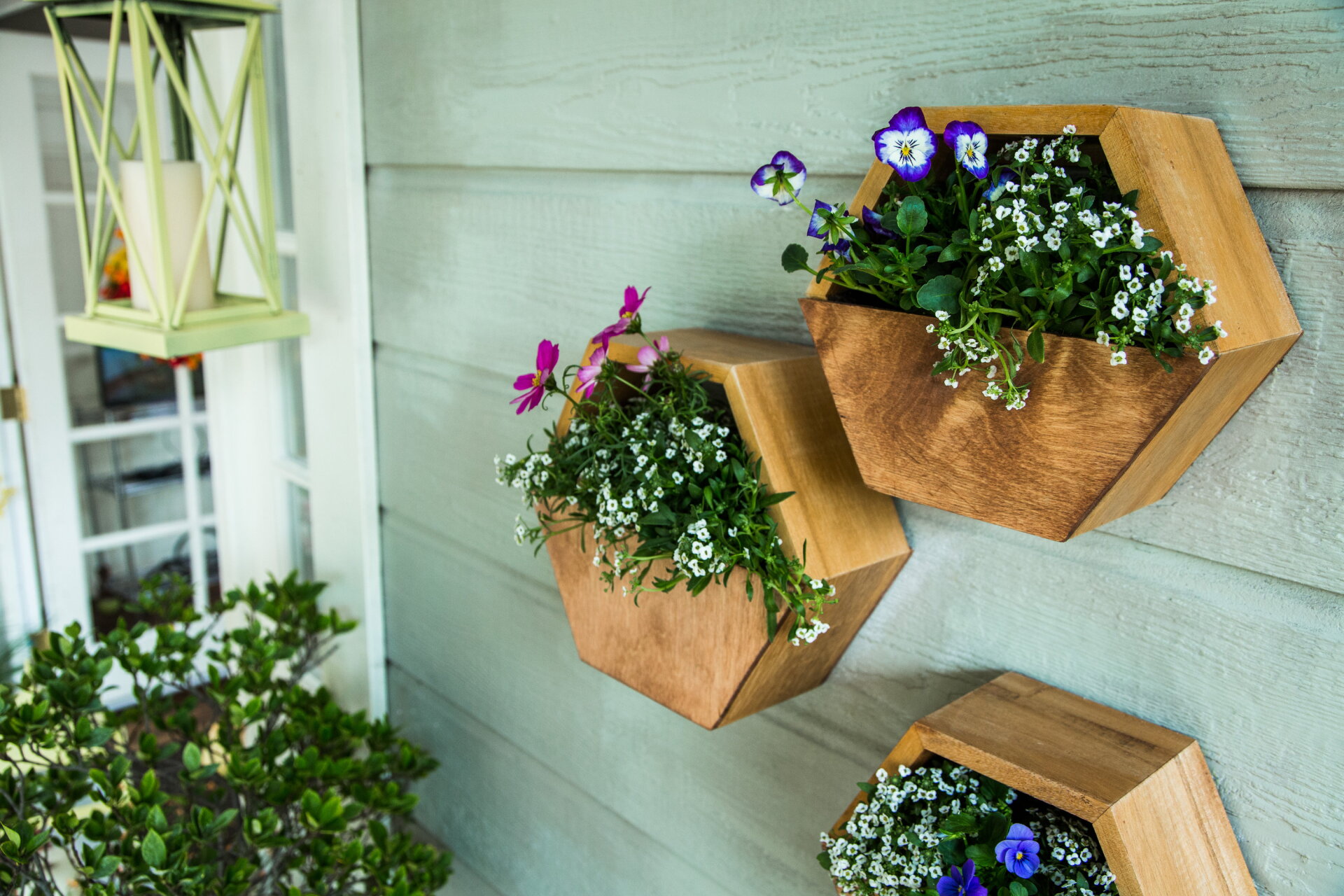
Separate geometric planter boxes let you stagger plants on a narrow wall instead of fitting one long shelf. Paper templates make it easier to judge the spacing before installing the brackets. Leave space for trailing stems and put the pots you water most often at a height you can reach easily. Browse more small-space gardening ideas if the wall shares space with storage or seating.
12. Give an Indoor Ladder Shelf Deep Trays
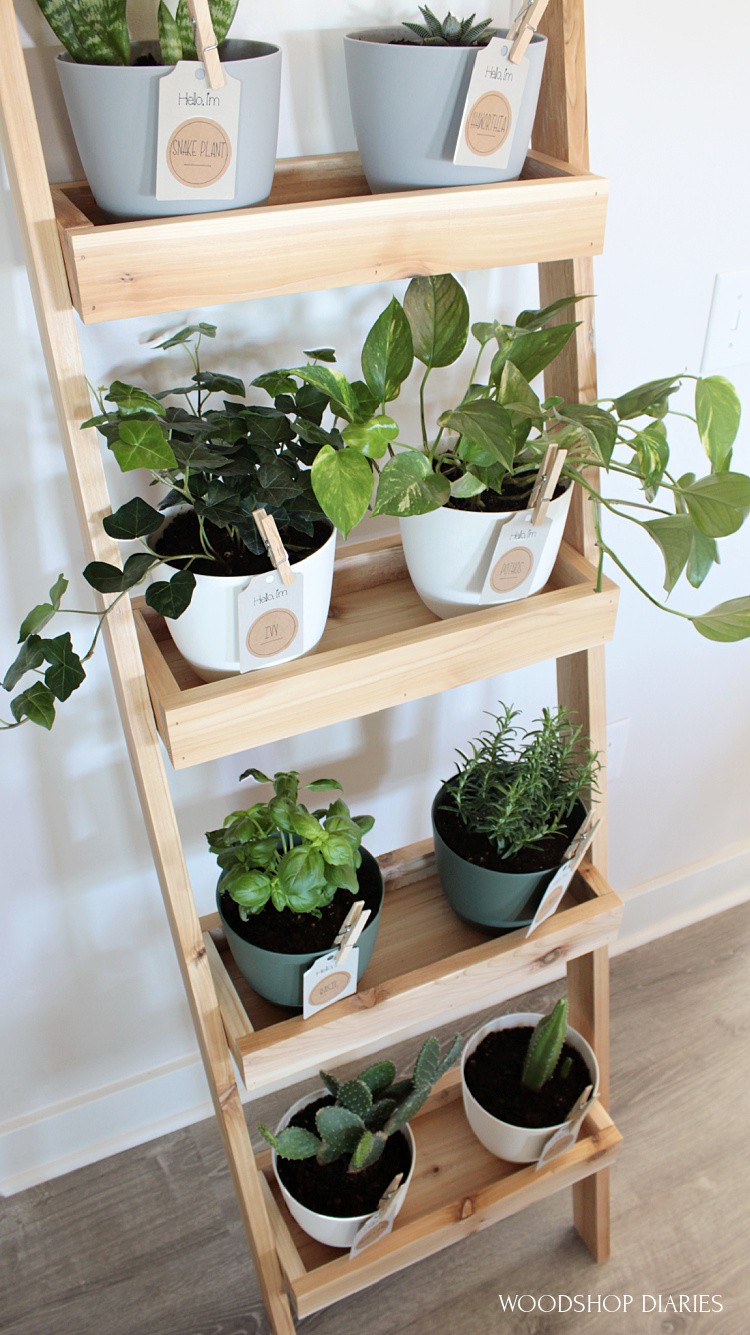
A timber ladder with shallow tray shelves gives individual pots a lip to sit behind. Use pots and saucers you can lift straight out of the tray, especially if you water them elsewhere. Group plants that like similar light so an entire tier can move closer to the window if needed.
13. Roll a Potting Bench Into Place
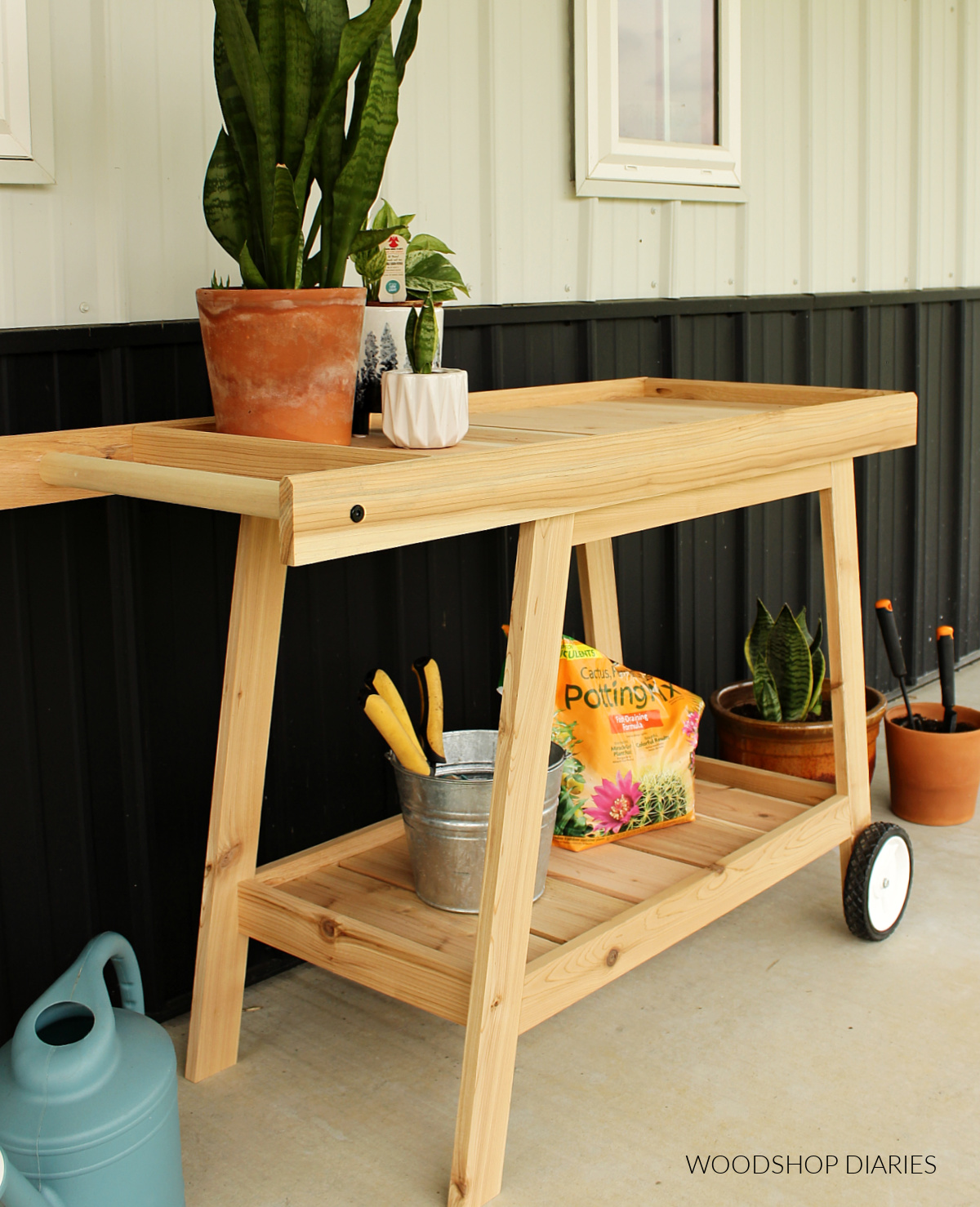
A potting bench with wheels lets the upper surface serve as a plant display until you need the space for repotting. Keep a few tools and spare pots below so the top clears quickly. Park it on a level surface where the wheels stay put while you work.
14. Slide Individual Pots Into a Leaning Rack
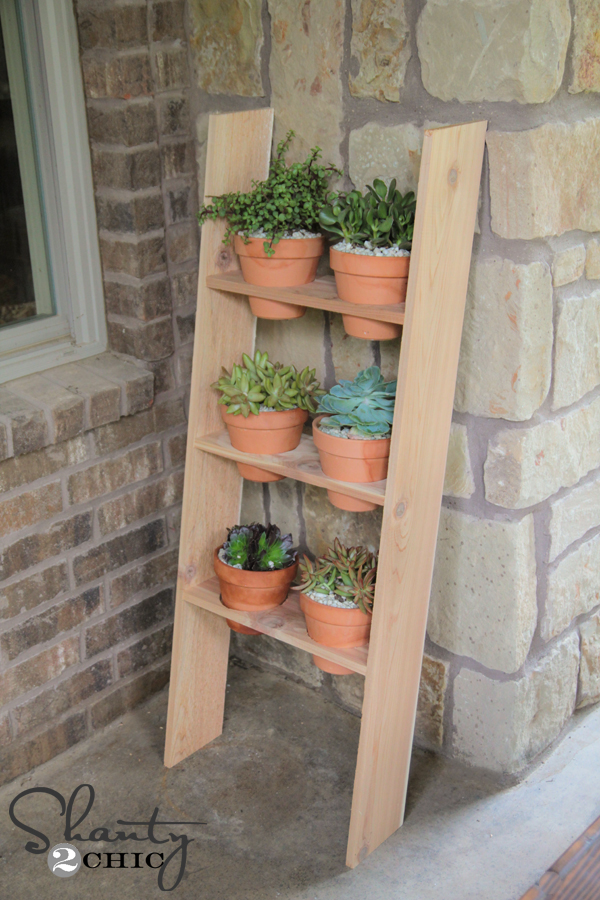
A leaning rack with holes for individual pots works well when you want each plant to lift out on its own. Measure the pots at their rims before building the holder, and secure the rack so it can’t slip. Use the lowest row for pots that need watering most often.
15. Reserve an Open Shelf for Propagation

An open rack makes it easy to see and rotate a collection of small starts. Use one tray for plants that are ready to pot up and another for recent cuttings. The open front makes both trays easy to move inside if the weather turns. A few self-watering bottle planters can keep thirsty starts out of the way on the lowest tier.
16. Rest Small Planters on Step-Ladder Rungs

A step ladder can hold a narrow run of small containers. Use a sound ladder on a level surface and secure each pot or tray so it can’t slide off a shallow rung. Keep the pots within arm’s reach and leave space at the foot of the ladder to crouch for watering.
17. Paint a Reclaimed-Timber Rack for a Brick Corner

A painted rack gives a tight garden corner a place for separate pots. Choose an exterior finish suited to the timber and let it cure before arranging the pots. A few removable saucers make spills easier to clean and let you swap seasonal plants without disturbing the rest of the shelf.
18. Line an Old Ladder With Small Terracotta Pots

An old ladder gives a collection of small pots a place to go when the porch feels crowded. Arrange the pots by size to suit the depth of each rung, leaving the widest for containers with the heaviest bases. If the ladder is decorative, secure it before placing plants on it. Grouping several of the same flower makes the vertical shape easier to see from across the garden.
Set Up Your Shelf Around the Plants You Use
Start with the pots you own and space them on the floor before you pick a shelf. Check how far the foliage reaches, where excess water will land, and whether you can lift out the deepest container. Put the shelf where the plants will get the light they need and where you can tend to them easily. These projects can help you plan the space around it.
Which spot would you use for a planter shelf, a sunny window, an empty fence, or a porch corner? Tell us what you’d put on the first tier and how you’d make the shelf fit your space.











0 Comments