How to Sew a Reversible Draft Stopper from Old Jeans
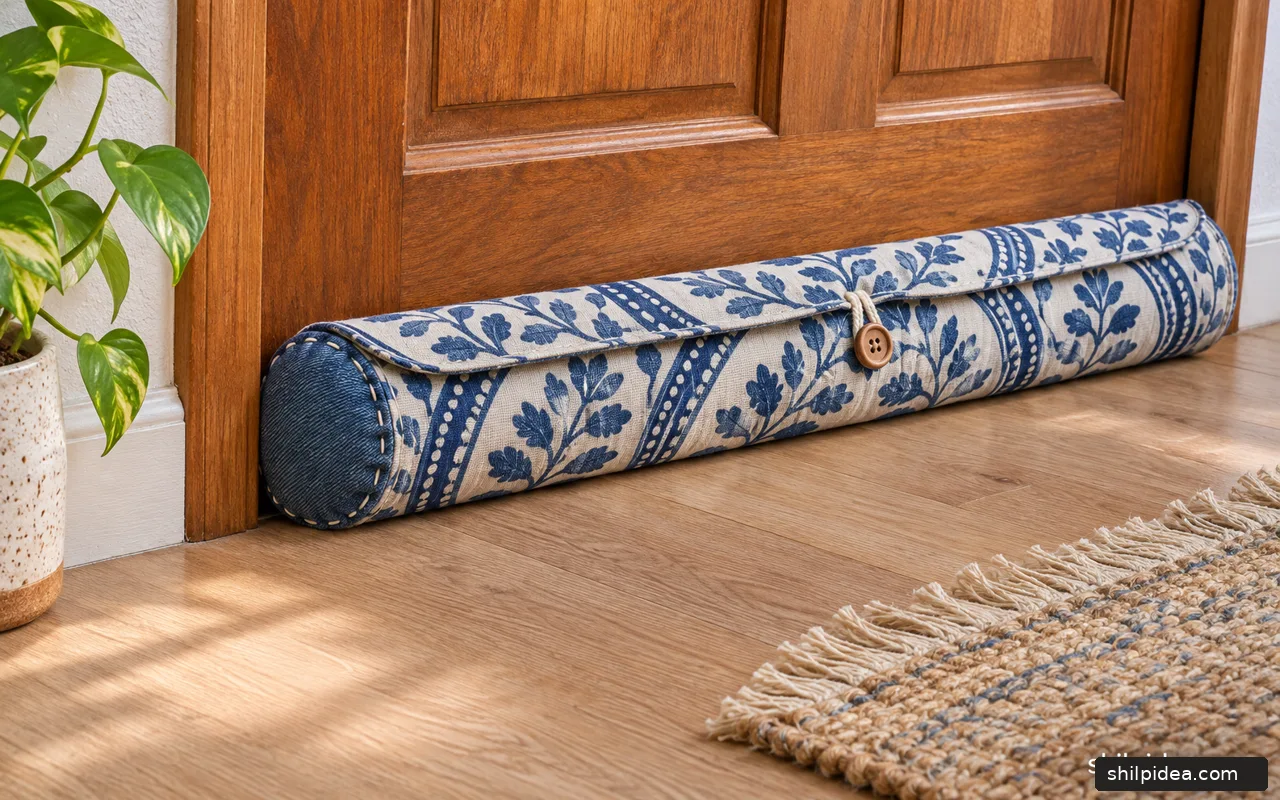
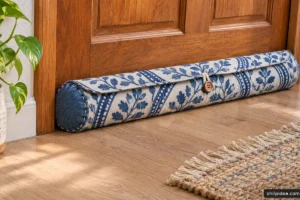
A fabric draft stopper can sit against the bottom of an interior door when you notice a small gap. Old jeans supply a sturdy outer fabric, and a removable two-sided cover makes it easier to clean.
Look for broad, flexible sections of denim left over from old jeans crafts. Use dry, clean fabric scraps for the filling.
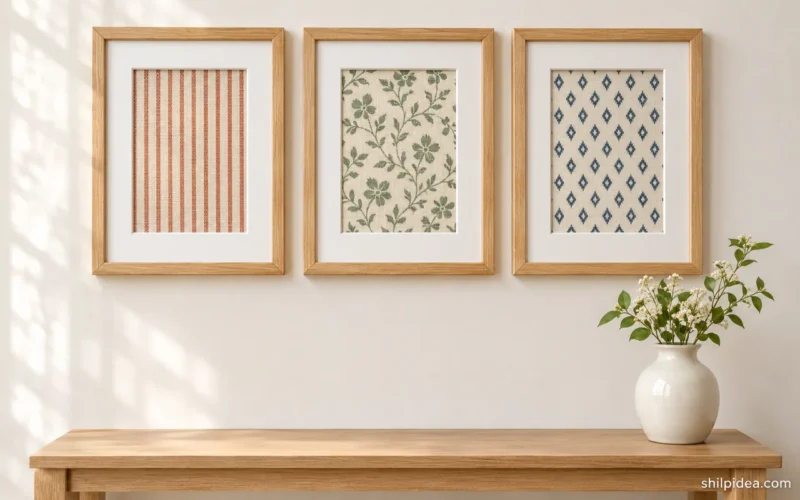
The roll has a sewn insert and a removable sleeve that can turn inside out. Leftover cover fabric can become framed fabric art if you want to use the same palette elsewhere.
Materials and Tools
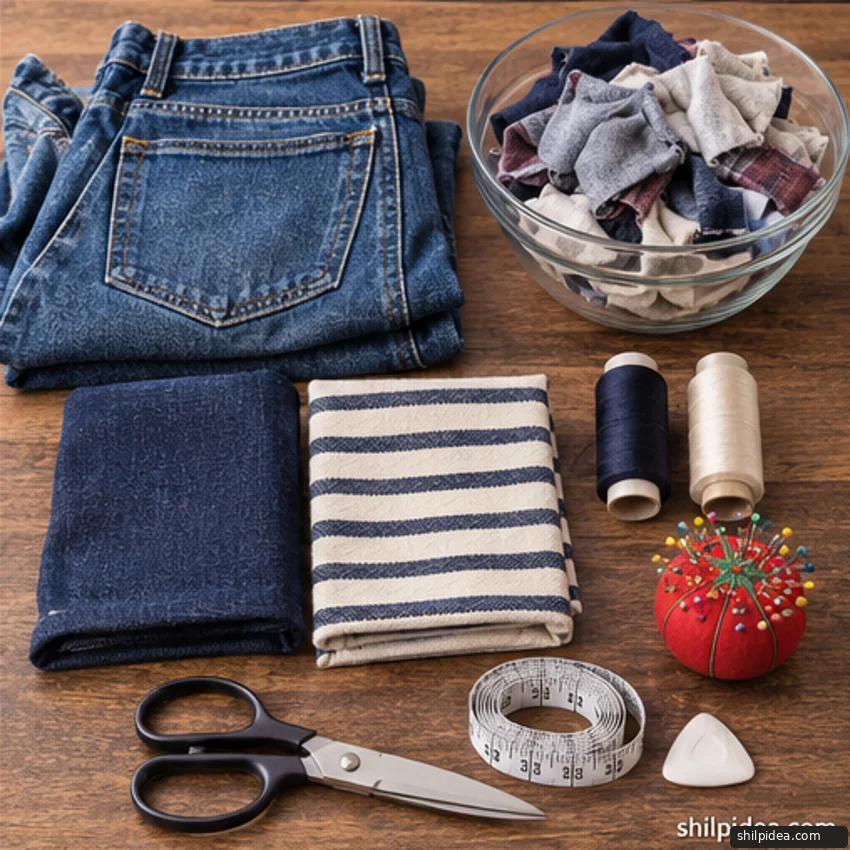
Lay out the fabric and tools before you start cutting.
- Recycled denim – Use sturdy areas without bulky original flat-felled seams.
- A second woven fabric – Pick a contrasting, washable cotton for the reverse.
- Clean dry fabric scraps – Cut into small pieces for the stuffing.
- Ruler and fabric marker – Measure the opening and mark the cut pieces.
- Strong matching thread and sewing machine – Test a needle meant for denim on scraps.
- Scissors, clips and hand-sewing needle – Use to cut, hold thick layers, and close the insert.
Precautions Before You Begin
Check these points before sewing or using the finished project.
- Use the roll only where it won’t obstruct a doorway, walking route, or a door that must close freely.
- Fix major gaps or damaged weatherstripping separately.
- Wash and dry the fabric and filling before sewing.
1. Measure the Door and Cut the Insert
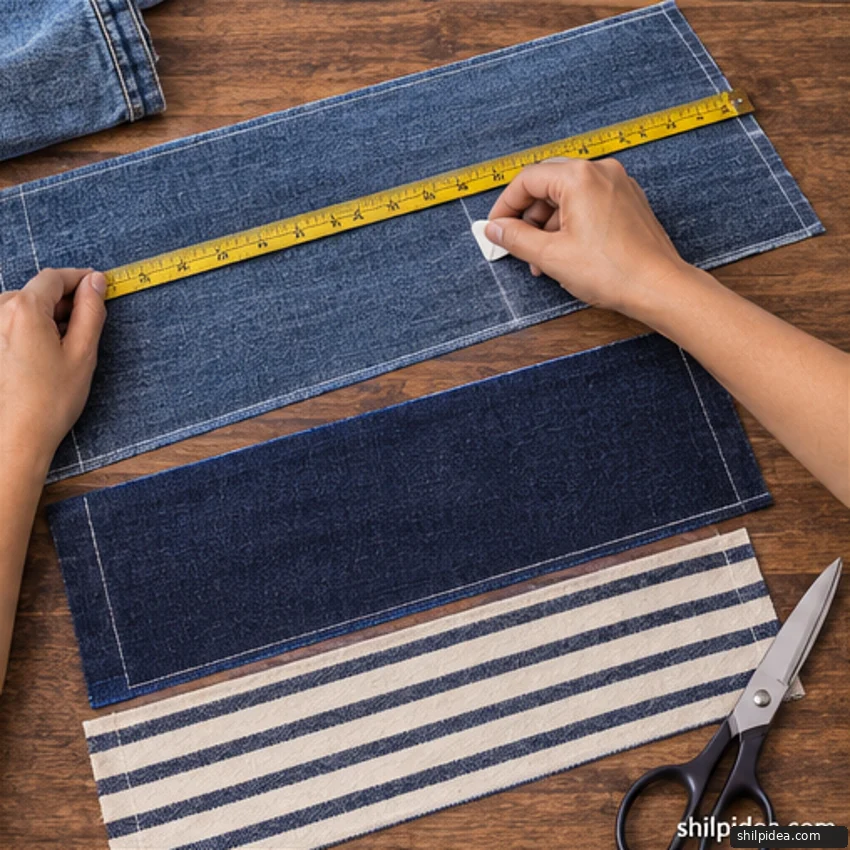
- Measure the – Measure the width at the base of the closed door. Cut a denim rectangle one inch longer than that width and about 10 inches wide for a roll that finishes close to 3 inches across.
2. Stitch the Insert into a Tube
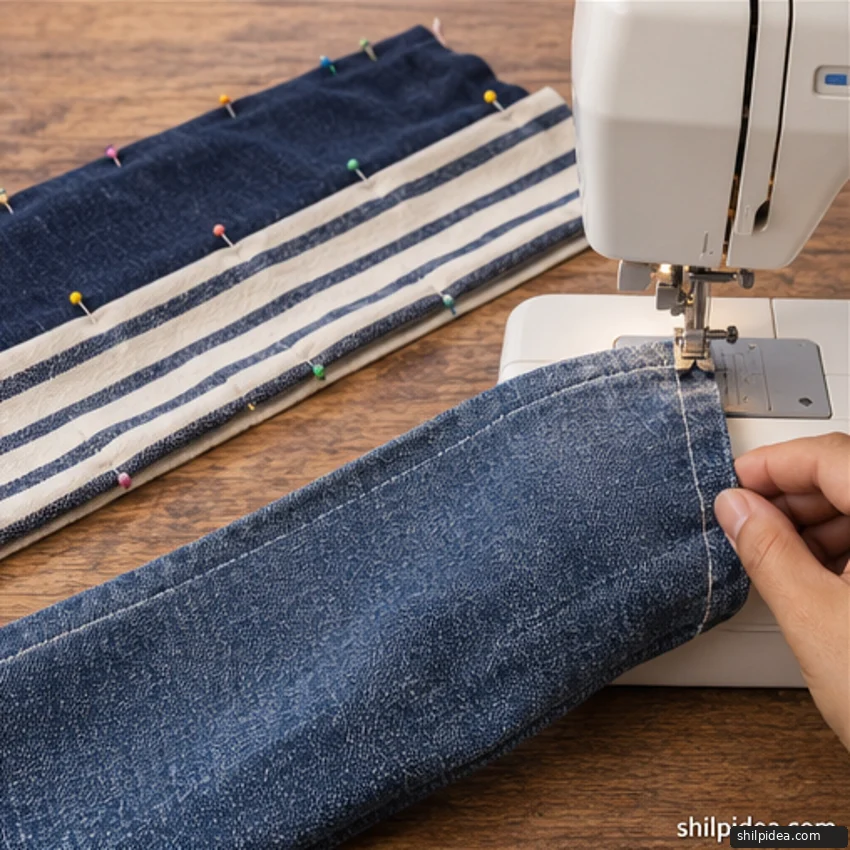
- Fold the – Fold the long edges right sides together and sew them with a ½-inch allowance. Sew one short end closed, reinforce the ends of the long seam, and turn the tube right side out.
3. Prepare the Reversible Envelope Sleeve
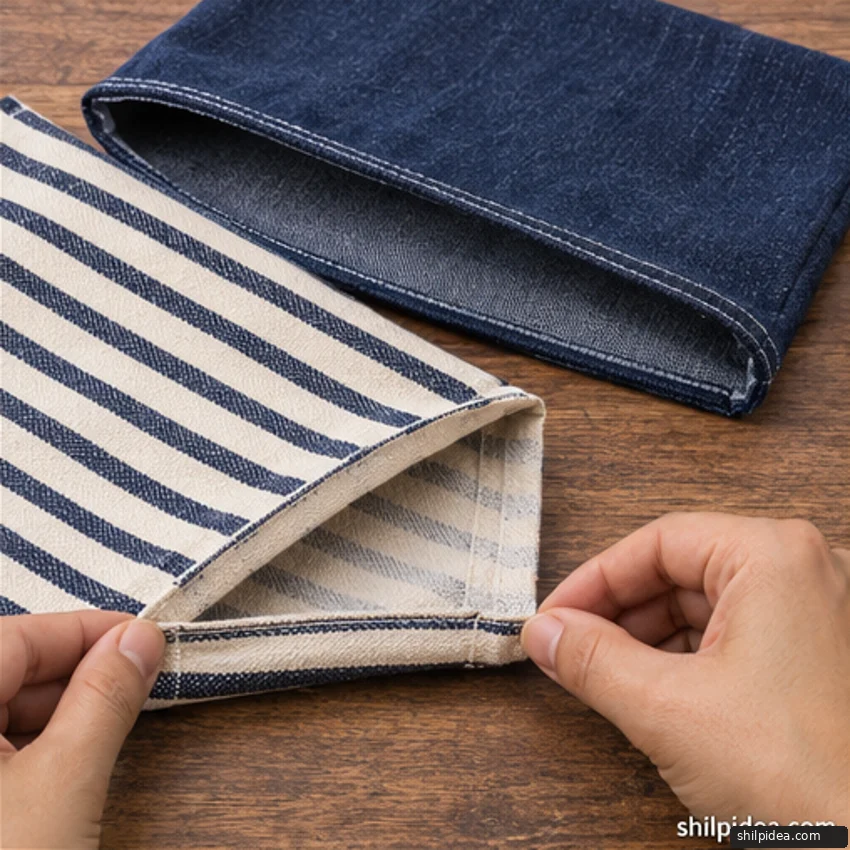
- For the – For the long sleeve body cut one denim and one cotton rectangle about 12 inches wide and 4 inches longer than the sewn insert. Add one short matching flap piece for each fabric, about 6 inches long and the same width.
- Hem the – Hem the free short edge of each flap. With each fabric separately, overlap its flap across the open end of its sleeve body, sew the long sides and the remaining end, and check the insert can slide through the overlap.
- Slip one – Slip one sleeve into the other with wrong sides together. Fold unfinished edges at the envelope opening inward and hand-stitch corresponding edges together without sewing the opening shut.
4. Fill and Close the Denim Insert
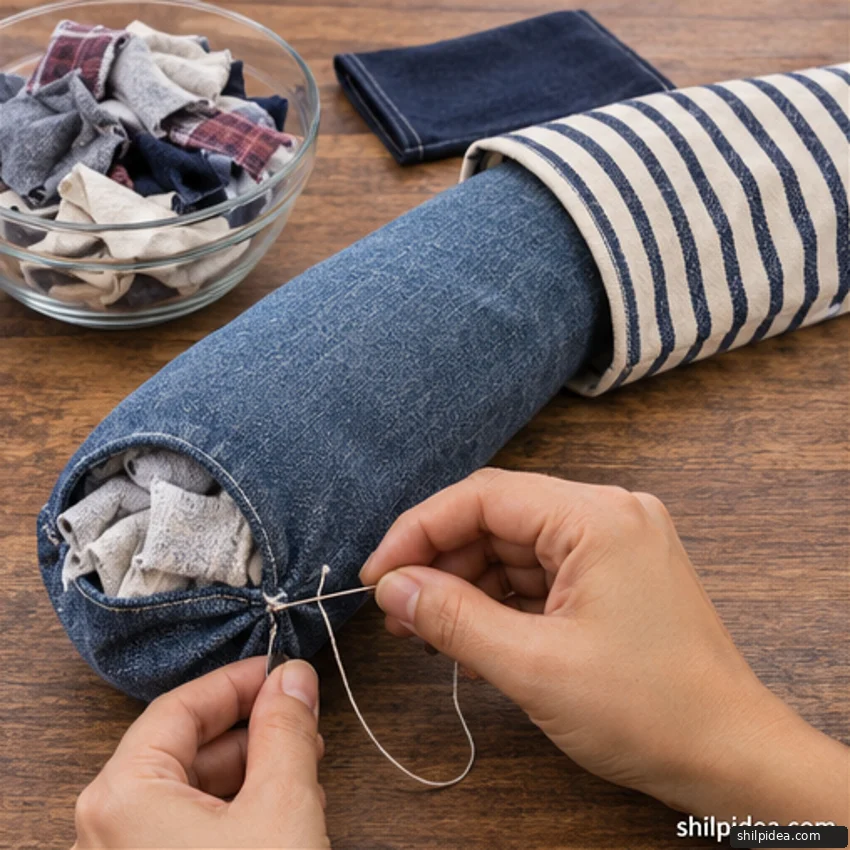
- Add fabric – Add fabric scraps a little at a time and distribute them evenly. Keep the insert flexible enough to follow the floor line. Turn the raw edges inward and close the filling gap with small firm hand stitches.
5. Fit the Sleeve and Place the Roll
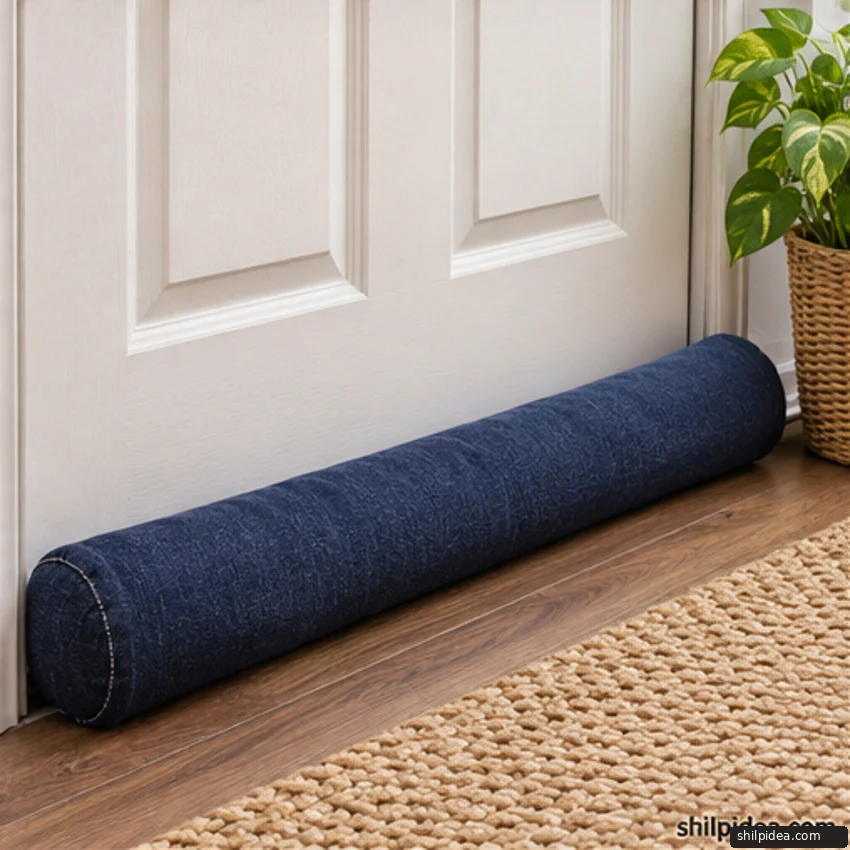
- Slide the – Slide the insert through the sleeve overlap and smooth the cover. Set the roll against the bottom of the closed door, away from the walking path. Lift it away before opening the door.
Adjust a Roll That Feels Too Loose
Roll the filled insert on a flat surface and move the stuffing gently toward any soft ends. If the sleeve bunches at the door, pull it smooth or reduce its length at the already closed end. Wash the removable cover according to both fabrics and let it dry completely before putting it back on.
Put More of the Denim to Work
Sort the remaining denim by thickness before starting another project. Uniform pieces are easier to sew into a cover, while small offcuts can add texture to a framed textile piece or supply trim for an existing bag. These projects give you ways to use what is left and keep the larger pieces available for repairs.
- Decorative Projects for Old Jeans
- Framed Wall Art from Fabric Samples
- Claire Armstrong’s Upcycled Craft Projects
- Reversible Fleece Hand-Warmer Pocket
- Hygge Living Rooms with Soft Lighting
Which fabric would you put on the reverse of a denim draft stopper? Tell us in the comments which room it’s for and what scraps you’d use. If you already made a roll, share where you adjusted its length.






















0 Comments