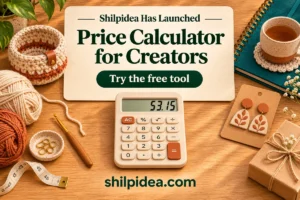
Shilpidea Has Launched Free Handmade Pricing Calculator
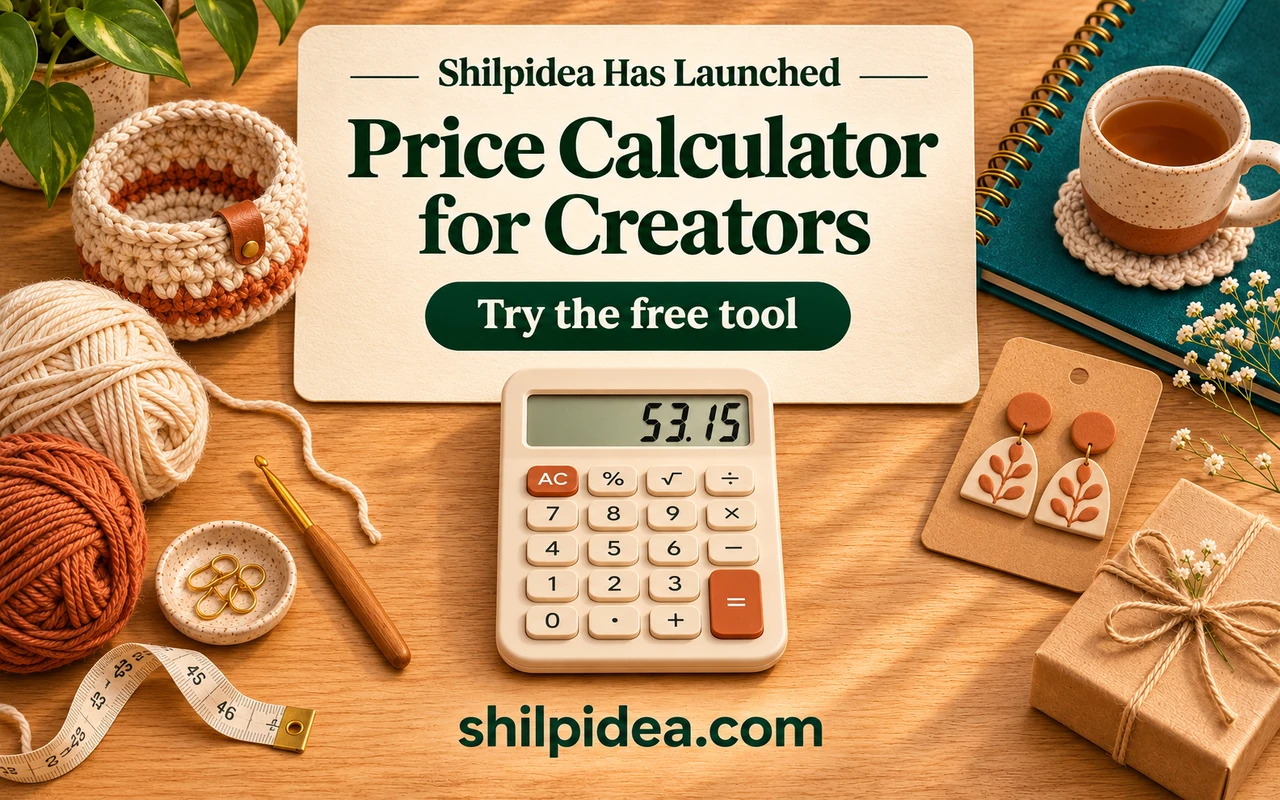
What should you charge for a handmade piece when the materials are only part of the work? The time spent making, finishing, and packing deserves a place in your price, too.
That is why we have launched Shilpidea’s free handmade pricing calculator. It works out what the buyer would pay with tax, what you would keep after selling fees, and how much profit is left after paying for materials and your time.
You will find it under Creator → Price Calculator in our menu. It joins our Creator hub, where we share creative journeys, products to make, and ideas for developing a handmade business.
A clearer starting point for your handmade prices
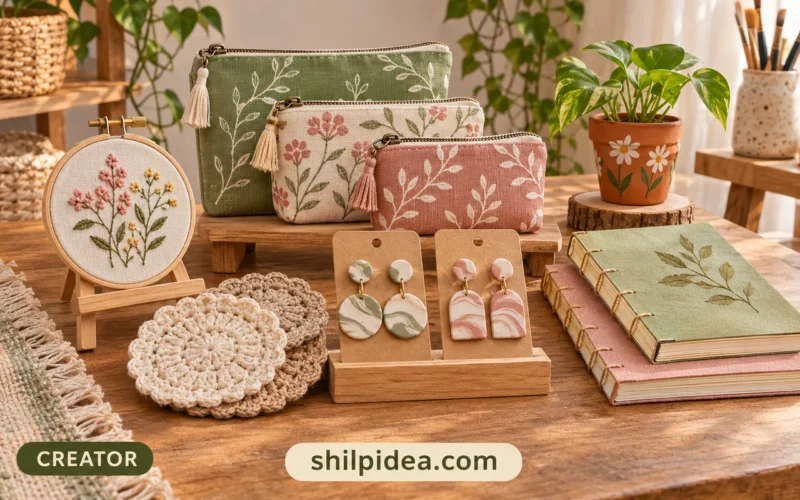
A crochet basket, a pair of clay earrings, and a handmade gift may use different materials, but they all take time and care. Pricing only the supplies can leave your work out of the calculation.
Our new calculator helps you see the bigger picture. Enter your figures to see the estimated buyer total, seller payout, profit per item, and break-even selling price. The break-even figure is the before-tax price you need to cover your costs and fees. You can price one item or work from the costs and making time for a whole batch.
Your labor pay and business profit are separate. Paying yourself for the hours you spend making something is already included before the calculator works out your target profit margin.
How to use the Price Calculator
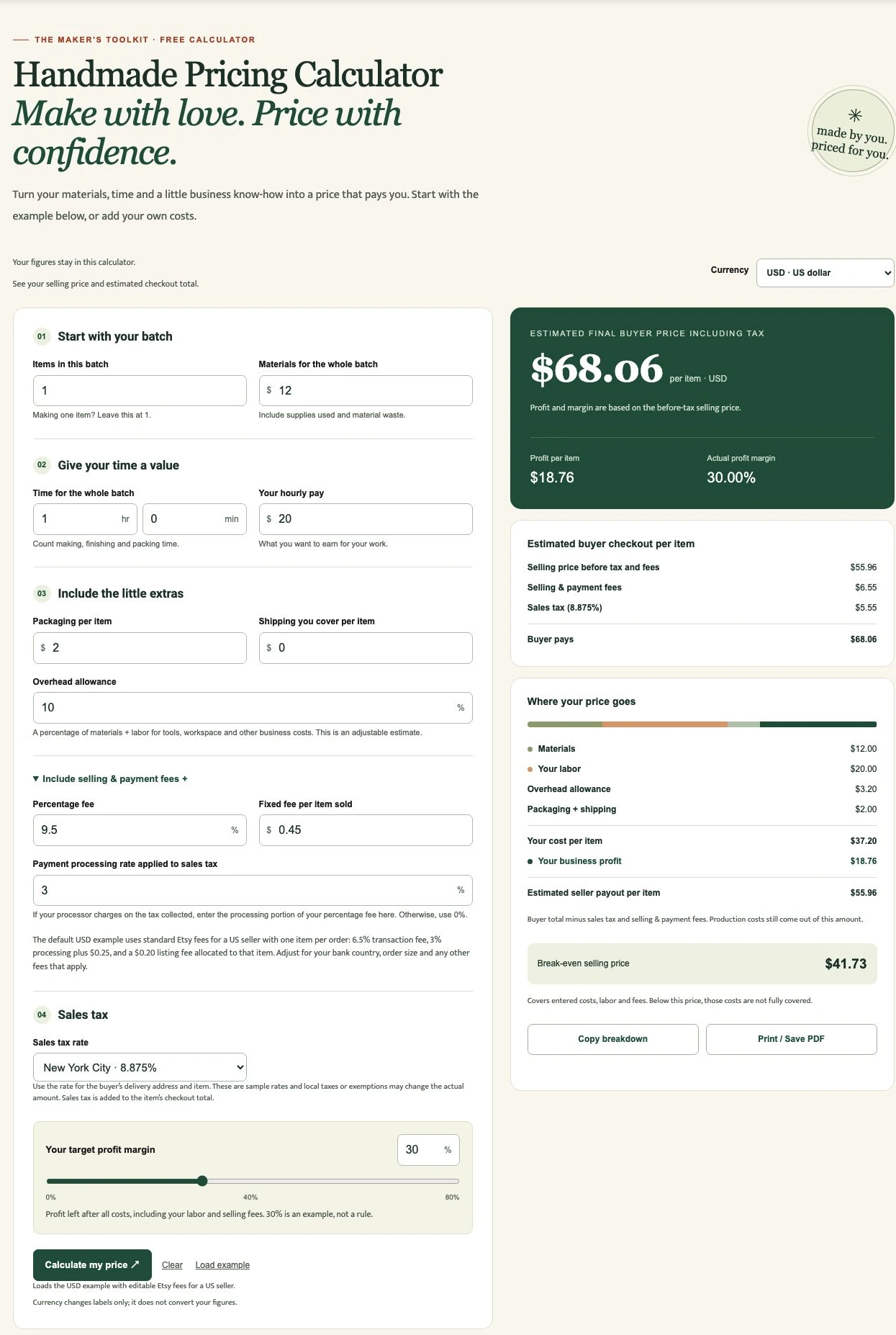
- Start with your batch. Enter the number of items and the materials used for the whole batch. Leave the quantity at one when pricing a single piece.
- Give your time a value. Add the batch’s making time in hours and minutes, then enter the hourly pay you want to include.
- Add the extras. Include packaging and any shipping you cover per item. The overhead allowance is a percentage of materials plus labor for costs such as tools and workspace.
- Enter your selling fees. The starting example uses an editable US Etsy fee preset. Replace the percentage and fixed fees with your own figures. If your processor also charges a percentage on sales tax, enter that processing rate in its separate field. Etsy’s processing fee guide explains how rates vary by the location of your bank account.
- Choose a sales tax rate. Select a preset or enter the applicable rate manually. The calculator starts at 0% and uses the rate you select to estimate checkout.
- Choose your target margin. Review the tax-inclusive buyer total in the green box, then check the payout and break-even price in the breakdown below.
If you are still deciding what to make, our crafts to sell collection can help you choose a product to test with your own figures.
A simple example: from costs to a selling price
Here’s what the calculator shows for one item with the US Etsy example fees, no shipping charge, a 30% target margin, and the New York City sales tax preset of 8.875%. The material, labor, overhead, and packaging inputs add up to $37.20.
| Cost | Amount |
|---|---|
| Materials | $12.00 |
| Labor: one hour at $20 | $20.00 |
| Overhead: 10% of materials plus labor | $3.20 |
| Packaging | $2.00 |
| Total cost | $37.20 |
The example uses a 9.5% combined selling and payment fee and a $0.45 fixed fee per item. It also applies the 3% payment processing rate to the sales tax amount.
| Checkout breakdown | Amount |
|---|---|
| Selling price before tax and fees | $55.96 |
| Selling and payment fees | $6.55 |
| Sales tax (8.875%) | $5.55 |
| Buyer pays | $68.06 |
The before-tax selling price is $62.51, including the fees. Subtract the fees and sales tax from the buyer total and your estimated payout is $55.96. After the $37.20 cost, which includes $20 for your labor, your estimated business profit is $18.76.
At the same fee and tax settings, $41.73 before tax is the break-even selling price. The calculator bases the profit margin on the before-tax selling price. The FAQ explains how that differs from a markup, which is measured against cost.
Keep your breakdown and revisit your numbers
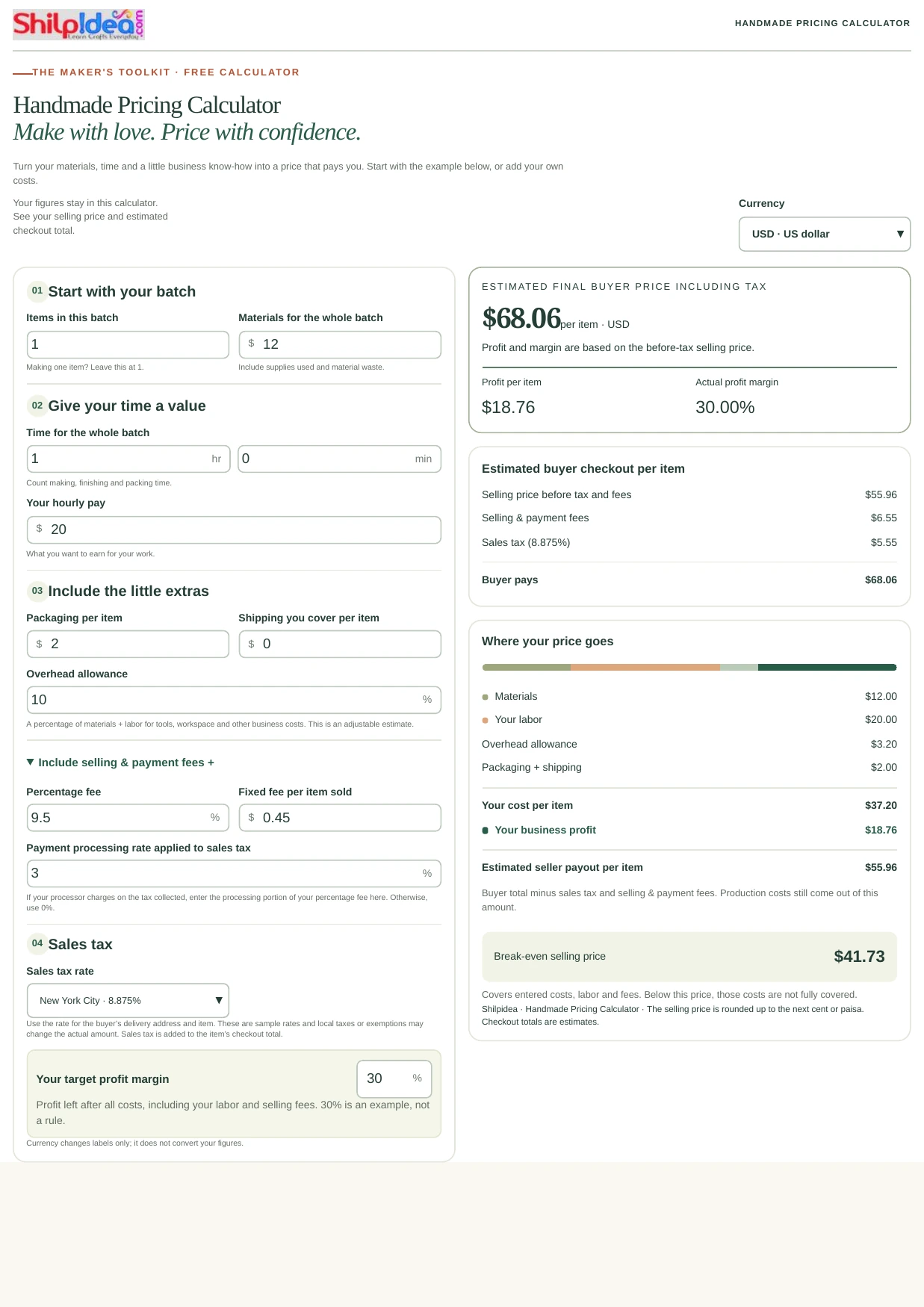
Use Copy breakdown to keep the results in your notes, or choose Print / Save PDF for a copy with Shilpidea branding. The saved breakdown includes the tax, buyer total, and seller payout. Recalculate whenever your costs, fees, or tax rate change.
The currency selector changes currency labels; it does not convert amounts. The tax preset is an estimate. Use the applicable rate for the buyer’s delivery address and item. Compare the suggested price with what customers pay for similar products.
Try the calculator with one product you already make. Seeing the costs together can help you decide what to adjust next.
Explore the three Creator categories
The new tool sits alongside three parts of Shilpidea that support different stages of a creative journey.
Creator Stories: learn from creative journeys
Visit Creator Stories to meet the people behind distinctive crafts and creative brands. We explore their beginnings, signature work, milestones, and lessons from building a creative career. These stories offer perspective on how a personal interest can develop over time, without suggesting that everyone follows the same path.
Crafts to Sell: explore what you could make
Our Crafts to Sell category focuses on handmade product ideas for gifts, home decor, and creative collections. Start with something that suits your skills and that you enjoy making repeatedly. Then use the calculator to consider the materials, time, and packaging your own version would need.
Etsy Ideas: develop your product presentation
Browse Etsy Ideas for product themes, collection inspiration, and examples of how handmade shops present their work. Our Etsy candle shops feature, for example, looks at product themes, personalization, listing photos, and gift packaging. Use the examples to develop your own approach.
More ideas for your creative business
Pricing is one part of developing a handmade product. Choosing something you enjoy making, improving its finish, and presenting it clearly also deserve attention. Explore these articles for product inspiration, shop examples, and a creator’s journey. Pick one idea that fits your skills, make a small sample, and return to the calculator with your own materials and timing notes.
- Crafts to Make and Sell
- Handmade Business Ideas to Explore
- Handmade Candle Shops on Etsy
- Etsy Wall Art Shop Inspiration
- Sena Runa’s Paper Quilling Journey
Which handmade product will you price first? Tell us in the comments, and share any feedback or features you would find useful in the calculator next.

















0 Comments