21 Minimalist Patio Ideas with a Calm Layout
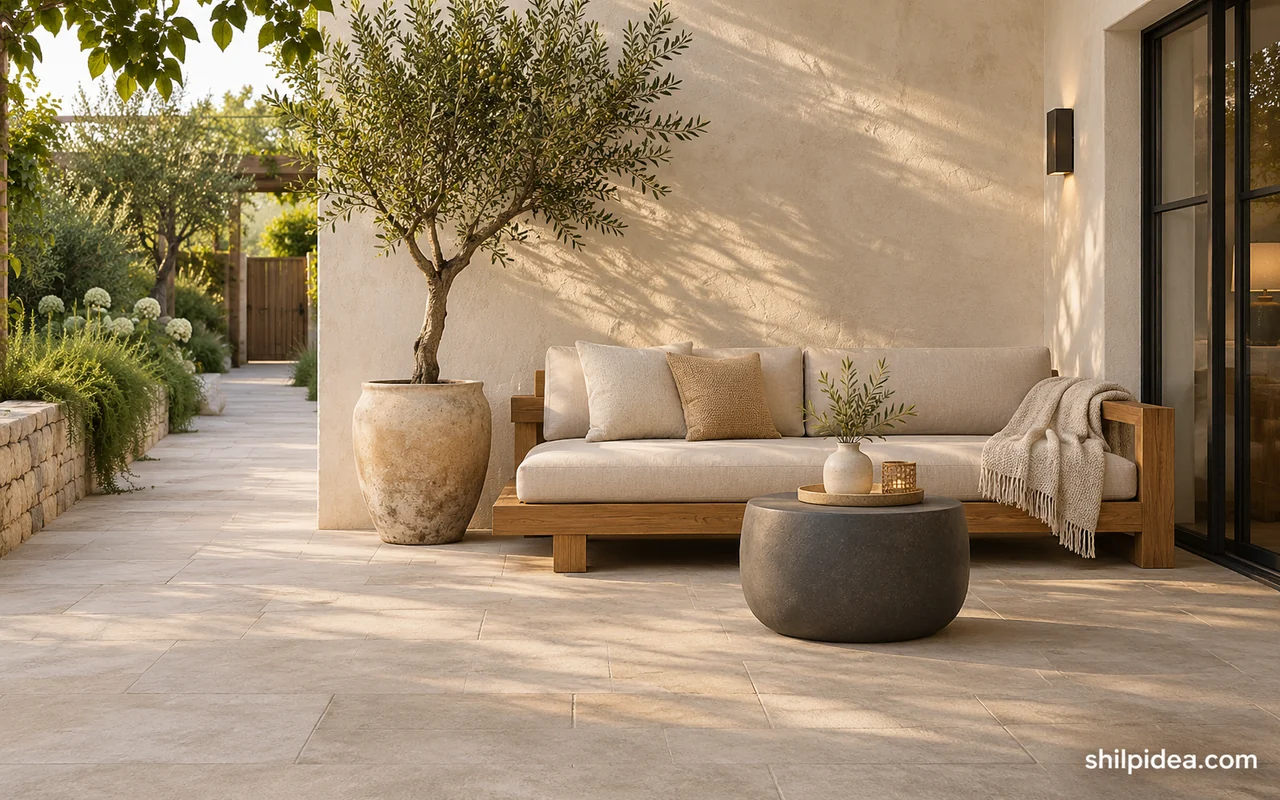
When every chair and planter competes for space, even a sunny patio can feel crowded. These minimalist patio ideas start with the layout so there’s room to walk, sit, and enjoy being outside.
A simple bench, a few well-placed plants, or natural stone accents can define the space without filling it.
Start with your everyday route, then choose seating, shade, and planting. If floor space is scarce, balcony living walls show how to use the edges.
1. Set Up a Two-Seat Coffee Spot
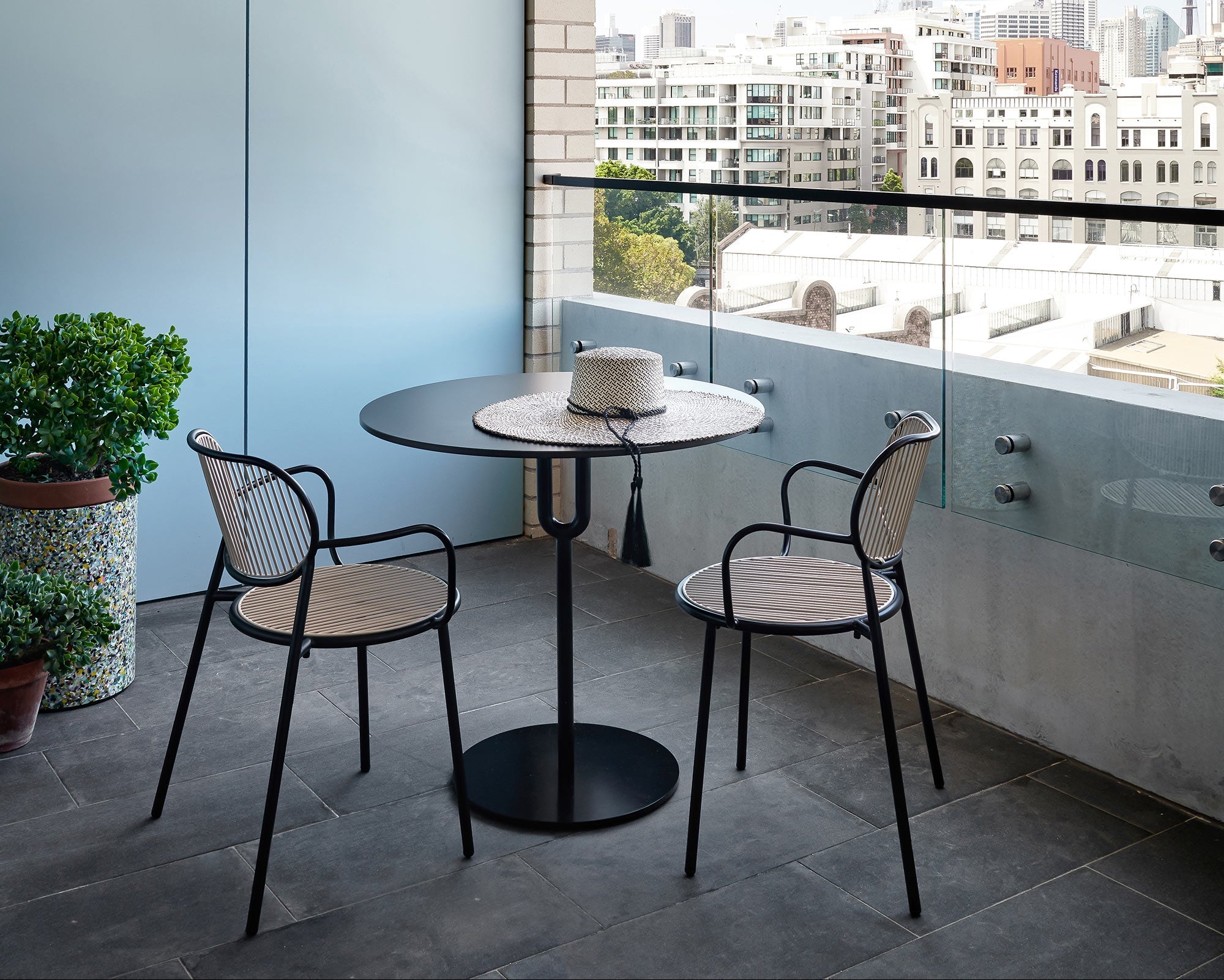
On a patio just wide enough for two chairs, use a pedestal bistro table. A single base gives your feet more room, and the curved top makes it easier to step around. Set the chairs at a slight angle so each person has a clear path out. Take measurements with the chairs pulled out, since that’s when this setup takes up the most space.
2. Keep One Side Open for Walking
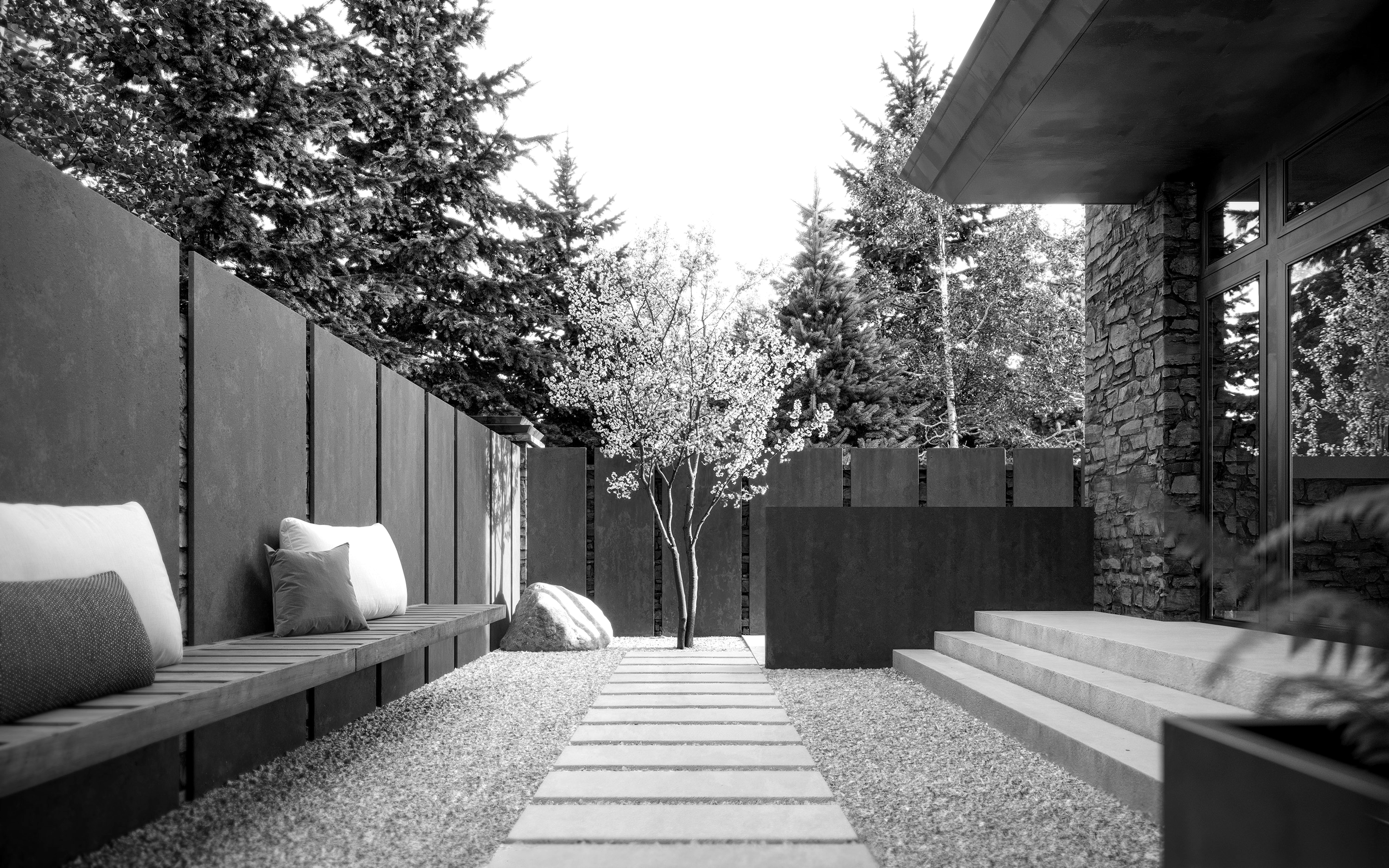
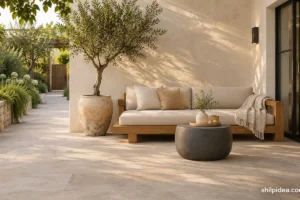
Push a deep bench or outdoor sofa to one long side and reserve the other for a continuous route. The paving can reinforce the path if its joints point toward the steps or gate. Before you commit, walk the route carrying a laundry basket or serving tray. That quick test shows where an armrest or planter might pinch the way through.
3. Span Two Planters with a Bench

A seat between two substantial planters puts the planting and the seating into one straight line. For a similar effect with pieces you already own, flank a freestanding outdoor bench with matching pots and keep the seat a little forward so leaves don’t brush your shoulders. If you want a built-in version, have the bench supported independently of decorative containers.
4. Turn a Tight Corner into an L-Shaped Seat
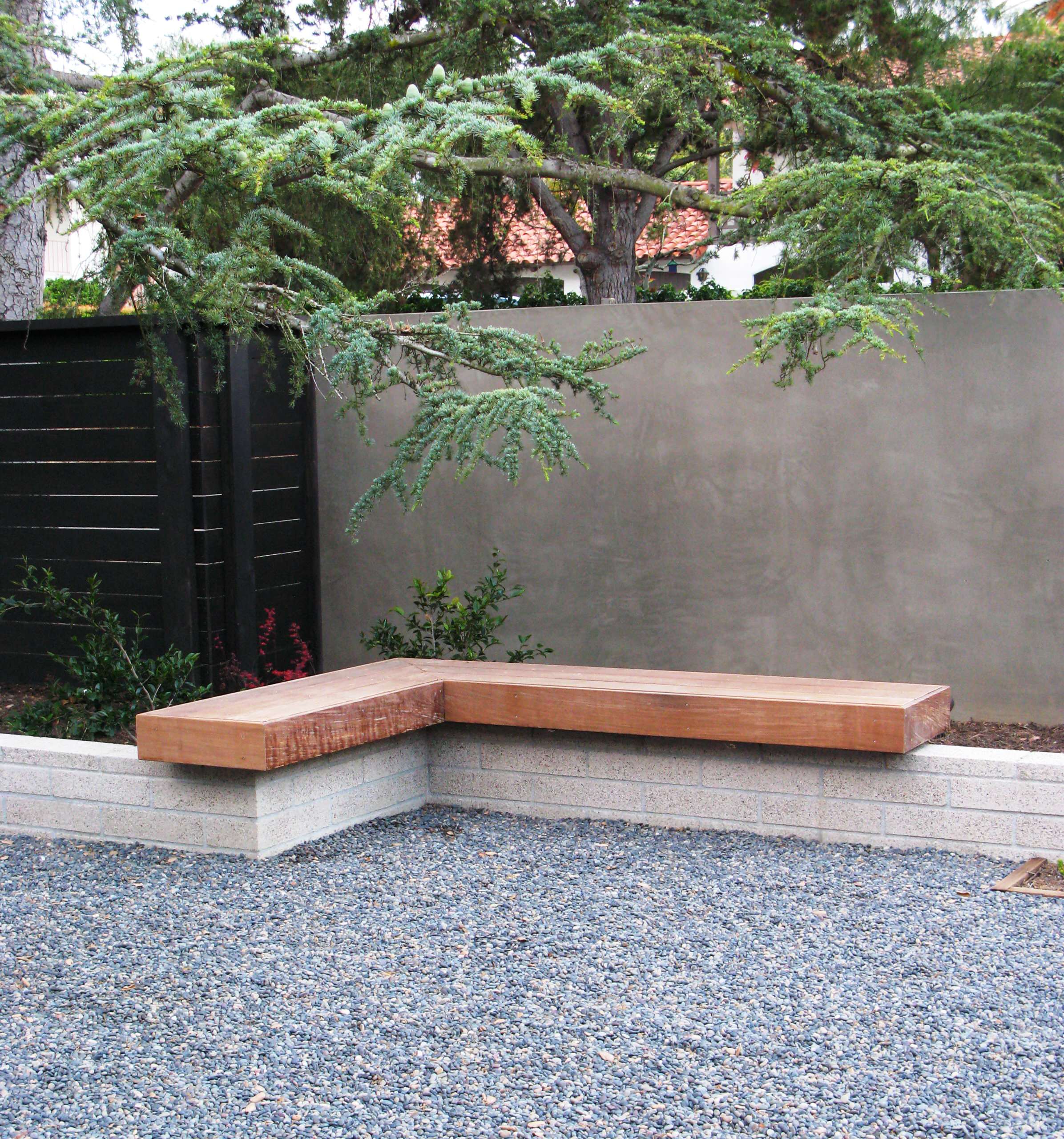
An L-shaped bench makes an awkward corner useful and leaves the center free. Keep one leg shorter if you need space for a door or a plant at the far end. Try the proposed arrangement with two existing chairs first. If the corner feels cramped when both chairs are occupied, a single straight bench will probably be easier to use.
5. Curve the Seat Around a Round Table
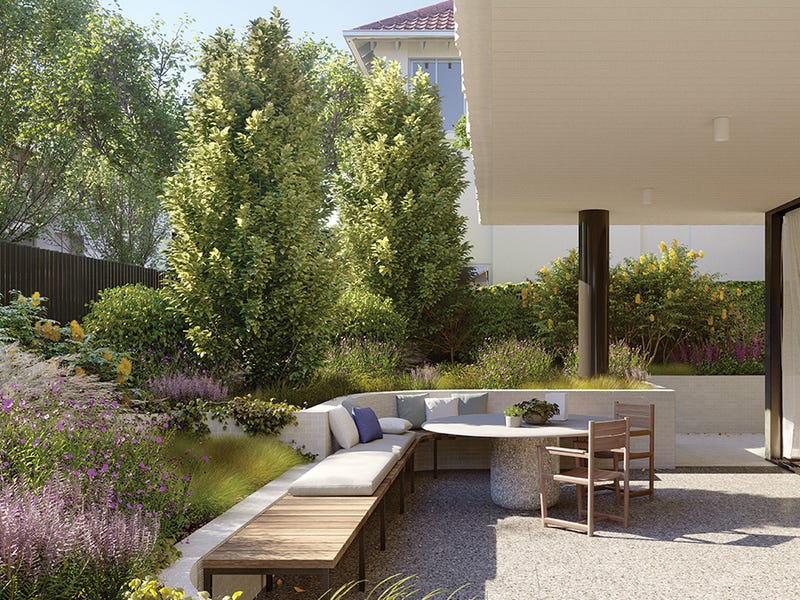
A curved bench gathers people around a table without making the patio feel like a row of seats against a fence. Start with the table position and mark the bench arc from that center. Leave an obvious opening at one end, so guests can reach the inner seats without asking everyone to stand. A plain seat cushion keeps the arc visible.
6. Float a Bench Against a Solid Wall

A wall-mounted bench leaves the paving visible underneath, which can make a narrow space feel wider. It also gives you a place to sit without filling the floor with chair legs. For an existing wall, have a qualified installer check whether the structure can support the load. A slim freestanding seat on recessed legs can give a similar visual effect.
7. Build the Layout Around One Tree
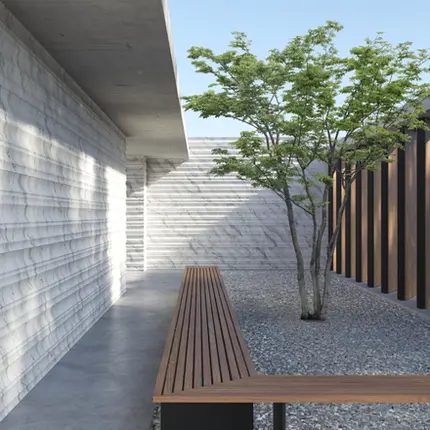
Use one small tree as the focal point and set the bench where its branches can be seen from the house. In a container patio, pick a tree suited to your climate and the actual hours of direct sun. Keep the pot out of the door swing and allow for the mature canopy before you choose the exact spot.
8. Define the Terrace with Steel Planters
A short run of rectangular steel planters can mark where a terrace ends and the lawn begins. Keep their tops aligned for a quieter outline, then repeat one kind of foliage for continuity. If you use weathering steel, check how runoff will reach the paving. Put it where early rust staining won’t be an issue or choose a powder-coated alternative.
9. Edge a Small Courtyard with a Raised Bed
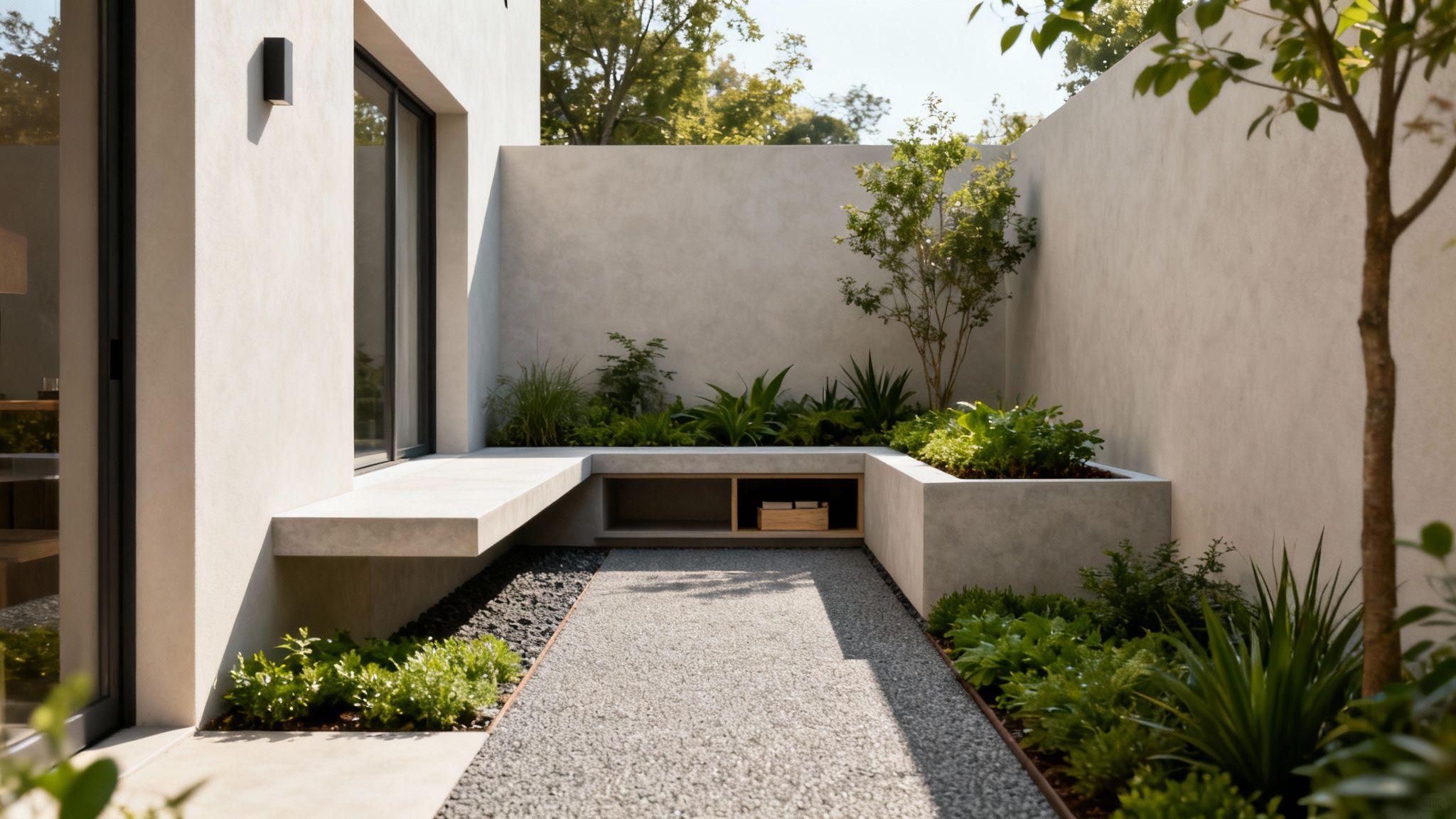
A raised bed along the boundary gives plants room while keeping the usable patio floor together. Pick foliage with different textures within the same color range and set taller plants behind lower ones. Leave a place to reach the bed from the path for trimming and watering. In a shallow courtyard, building along one wall may give you all the planting you need.
10. Screen the Dining Table at Seated Height
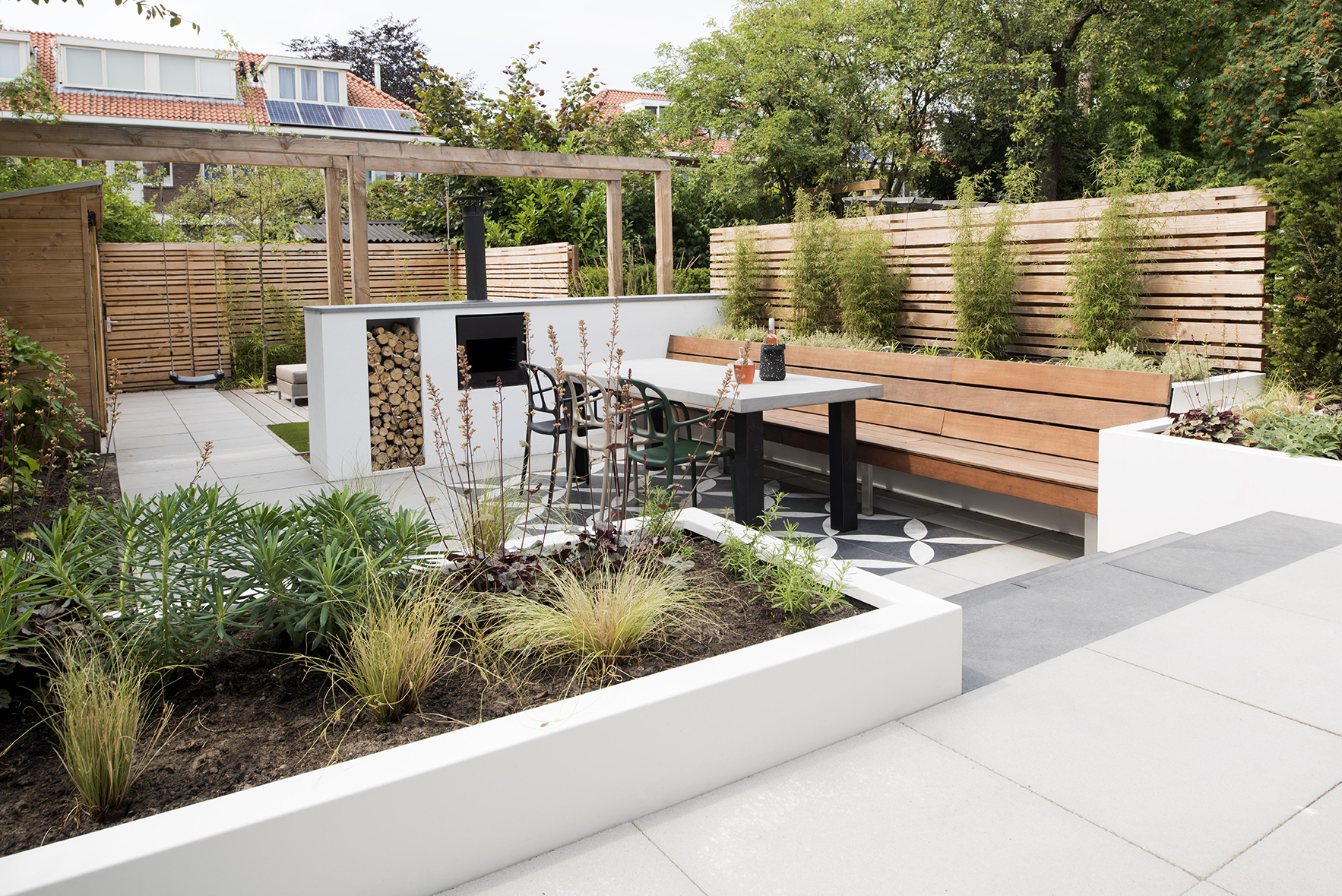
Place a timber screen behind the side of the table that faces the closest neighbor. Check the view from an actual dining chair before choosing its height. A little space between slats keeps daylight coming through, and planting can soften the view above the fence. Keep the end of the table open so people can get in and out easily.
11. Light Up Two Planters After Dark
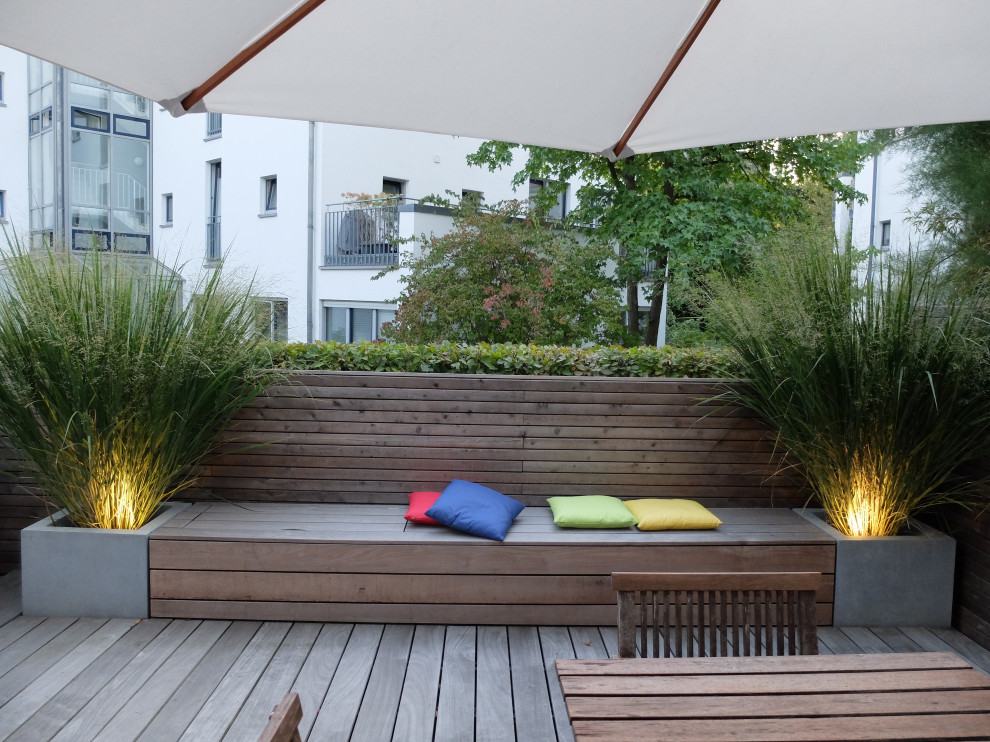
Two low lights at the ends of a bench can give the seating area definition after dusk. Aim them toward the foliage and check from your seat for glare. Choose fixtures rated for the outdoor location, or start with a cordless outdoor lantern where you can move it around. This works especially well when the bench itself has a plain, uninterrupted back.
12. Use a Slatted Pergola for Filtered Shade
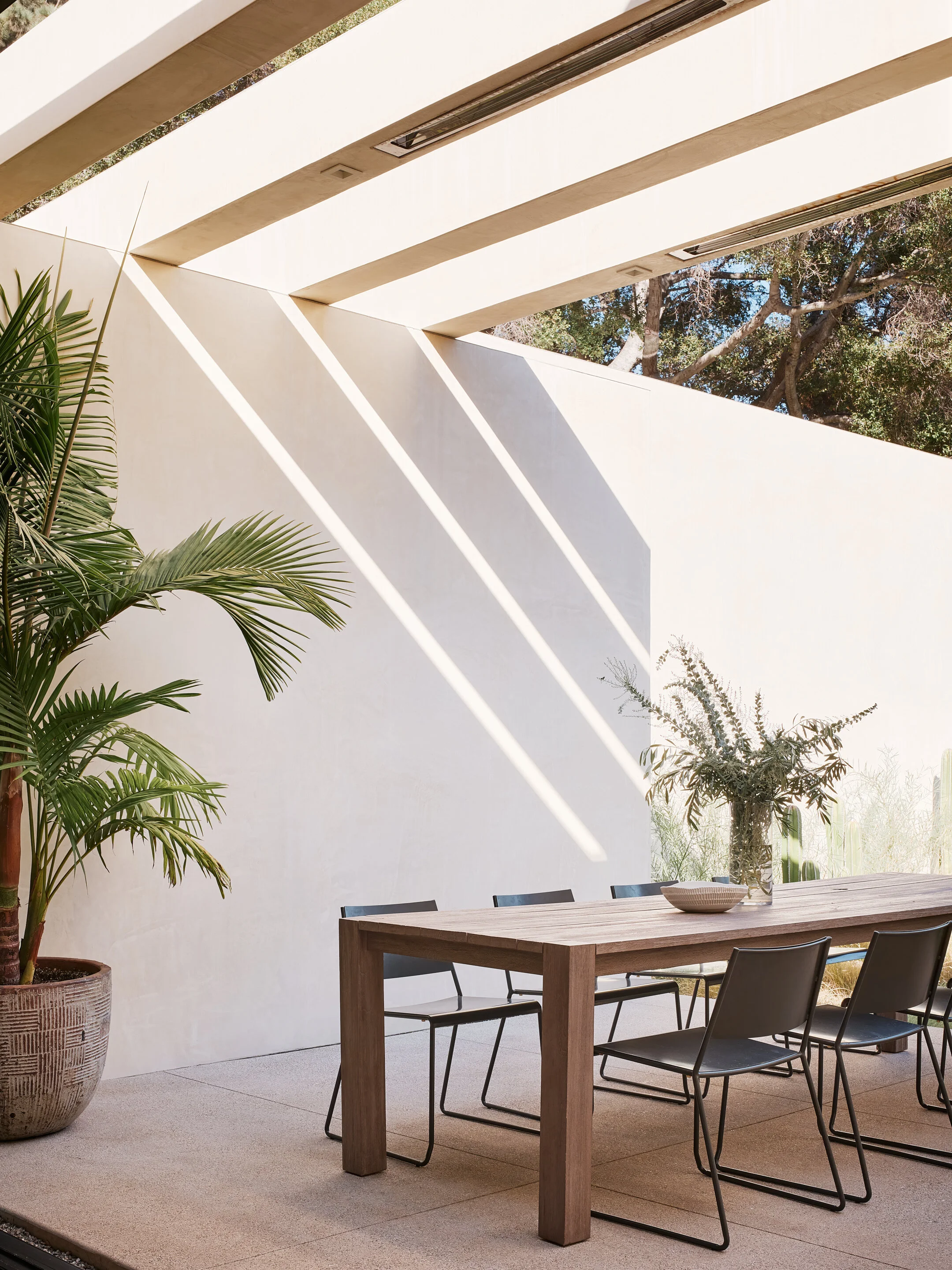
A slatted pergola gives a patio ceiling and filters direct sun while keeping the dining area open to the sky. Watch where the strongest sun hits around the hours you eat outdoors. If afternoon sun arrives from the side, a screen on that edge can be more effective than simply adding more slats above the table.
13. Shade the Seating with a Single Umbrella
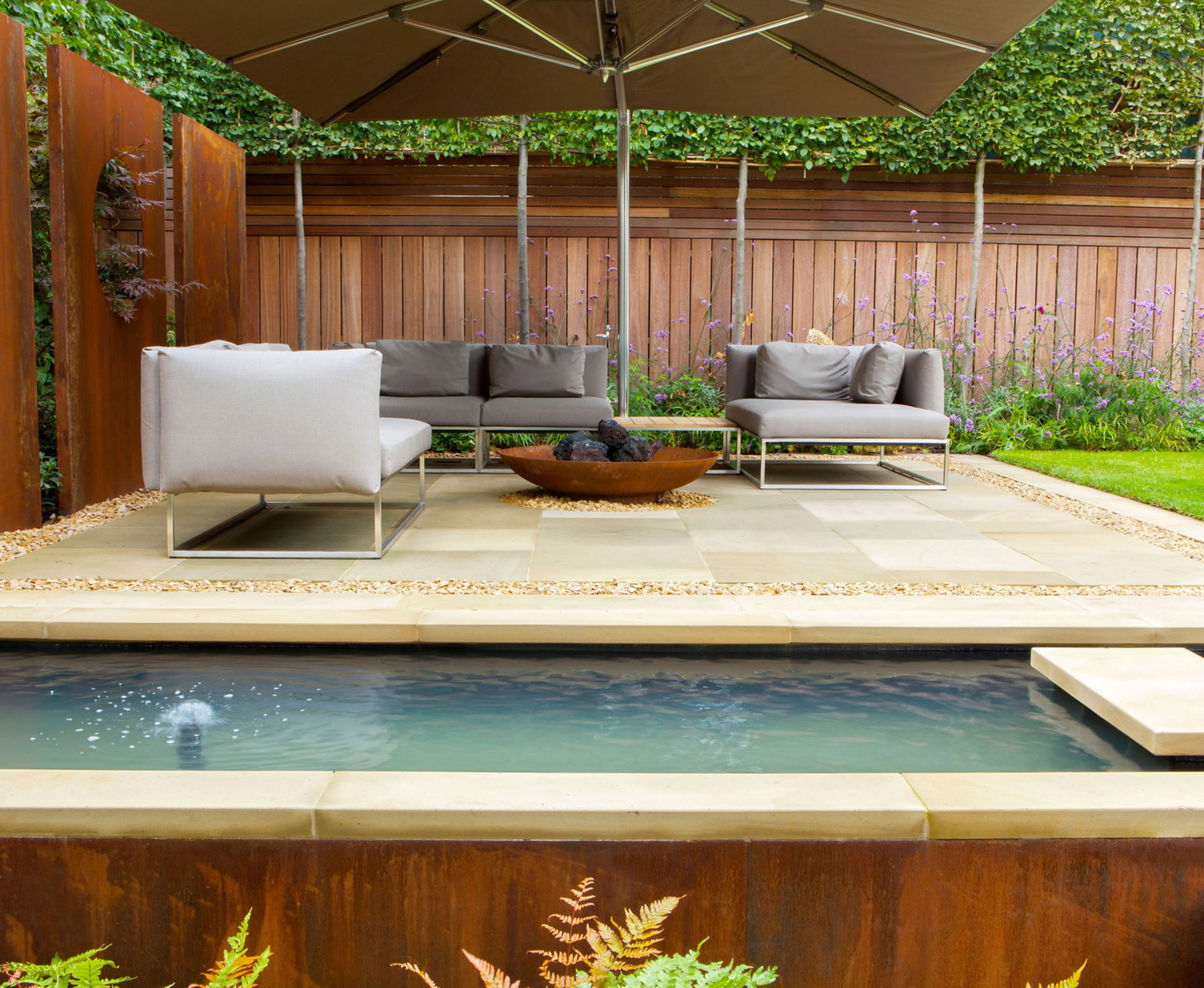
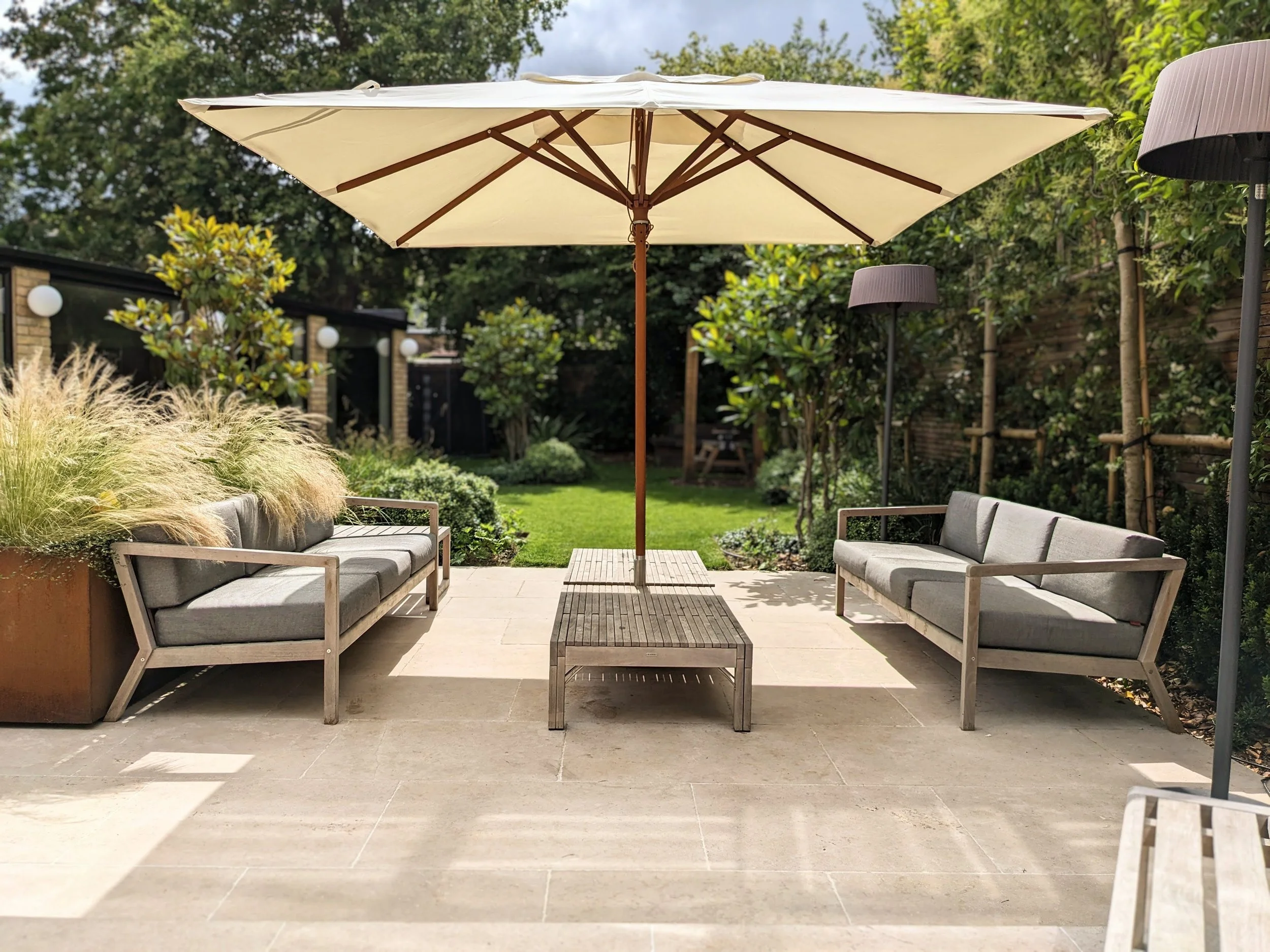
A broad umbrella makes sense when you want shade in summer and an open view in cooler months. Pick the seating position first, then see where the canopy shadow falls at the times you use the patio. Leave space for the base outside the main walking route and follow the manufacturer’s guidance on securing and closing it in windy conditions.
14. Tuck a Backless Bench Under the Table

A backless bench can slide under a dining table and give the patio back some floor space after a meal. Use the bench on the side facing a wall or planter, with chairs on the side where guests can move freely. Measure between the table legs before buying a bench, and check for a low apron or crossbar that might stop it from tucking in.
15. Anchor a Dining Set with an Outdoor Rug
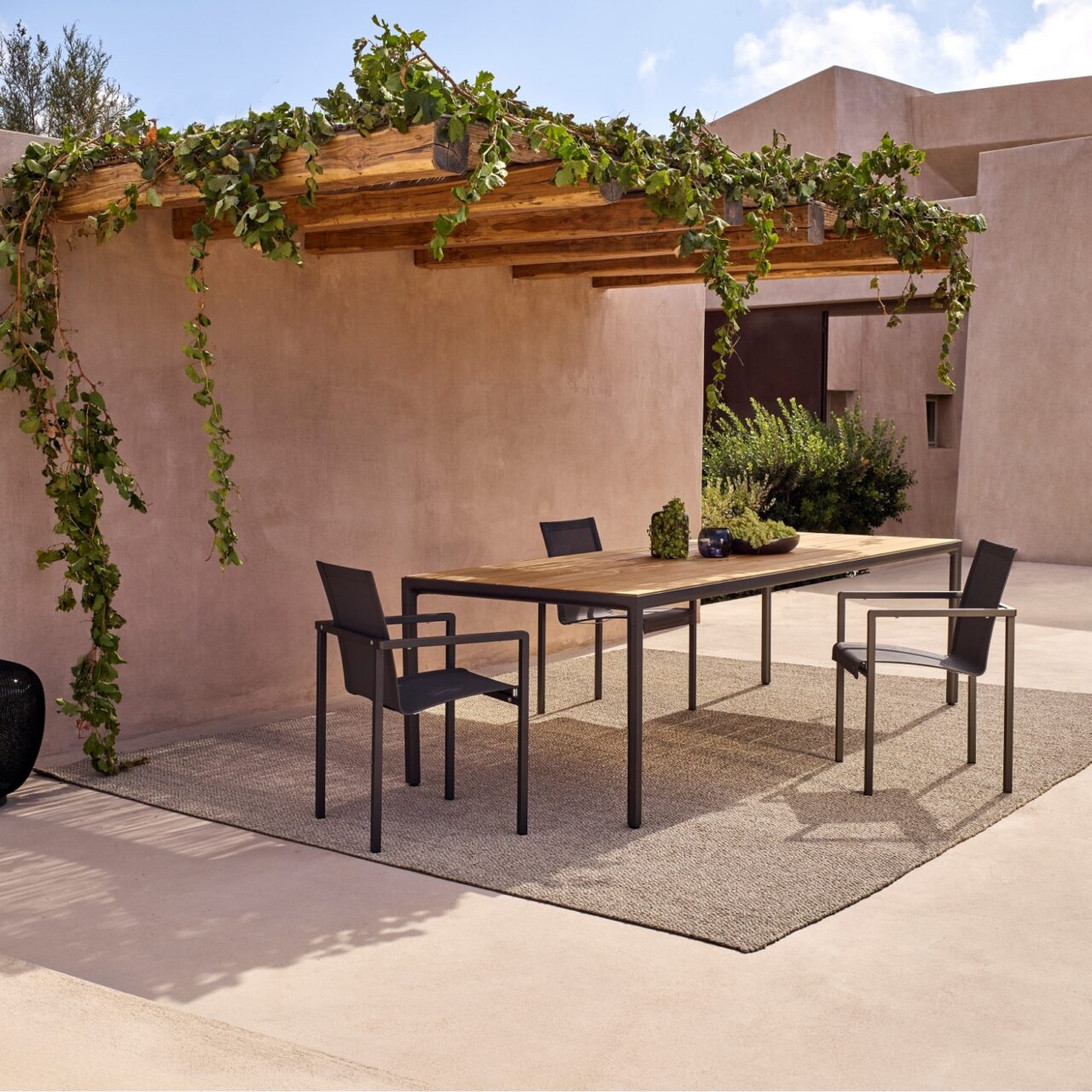
On a patio with one continuous surface, a plain outdoor rug can outline the dining zone without a permanent change. Measure the rectangle with chairs pulled out for someone to stand. That tells you whether the rug can hold the chair legs comfortably. In an exposed spot, choose a product suited to your conditions and follow its drying and care instructions.
16. Carry a Paver Grid into the Lawn
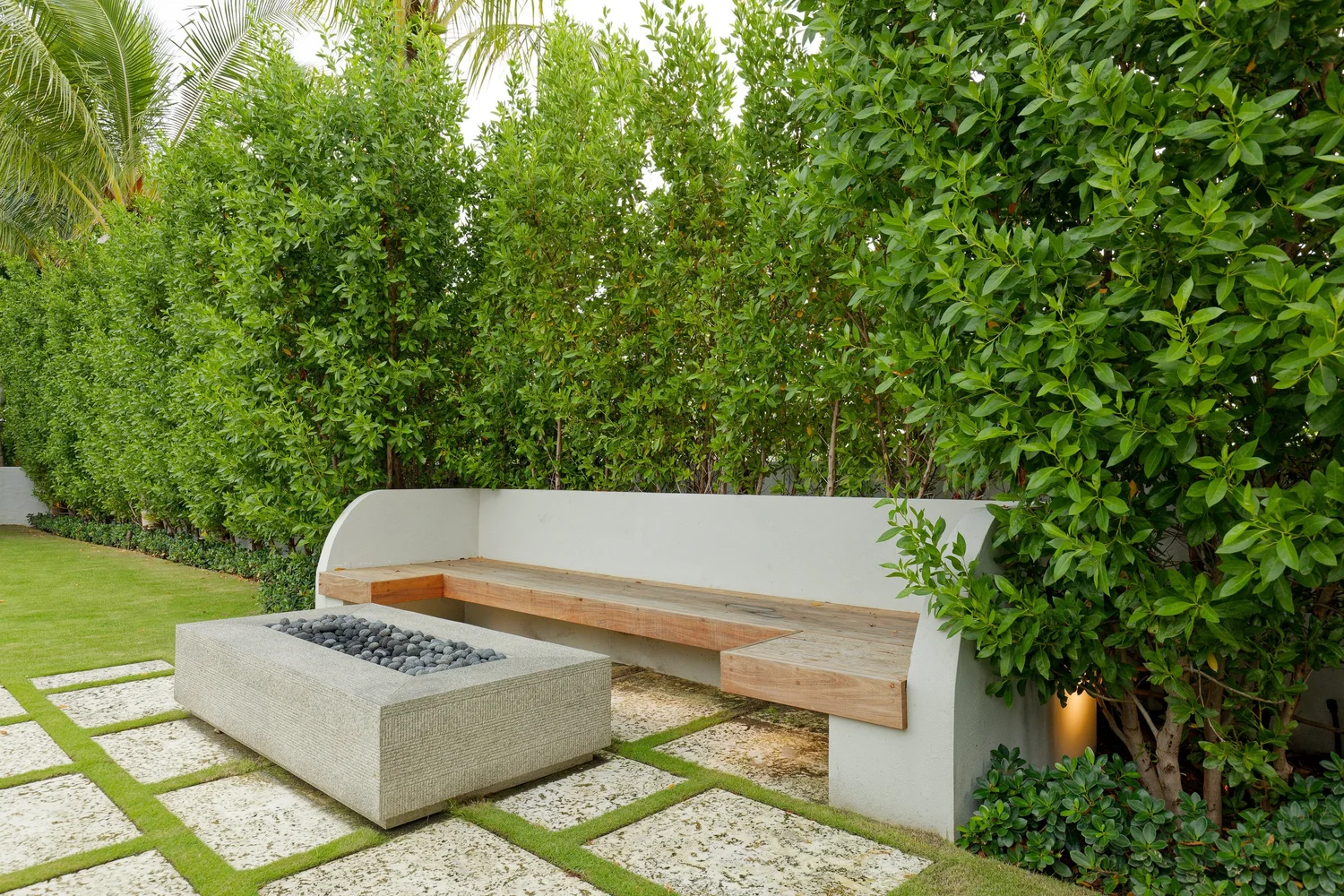
A grid of stepping pavers can connect a paved sitting area to the lawn without introducing a second color or material. For a route you use every day, keep the gaps comfortable to step across and the top surfaces even. If the patio must work for rolling chairs or a mobility device, reserve a continuous firm surface for that route.
17. Lay Stepping Pads Through a Gravel Terrace

A short run of large stepping pads through gravel gives people a clear way to cross a patio. Draw the line from the entry to where people actually sit, then arrange the rest of the surface around it. If the coffee table or chairs will move frequently, put them on a firm paved pad and keep the gravel in the surrounding area.
18. Match the Floor Grid to the Windows

Where tall windows face a small patio, their frames can help establish a layout. Align one or two paving joints with the door opening or a strong mullion so the outdoor floor feels connected to the house. Mark the edges before you start. Shift the layout if your first alignment leaves a thin awkward sliver of tile along a visible border.
19. Give the Walkway One Focal Point
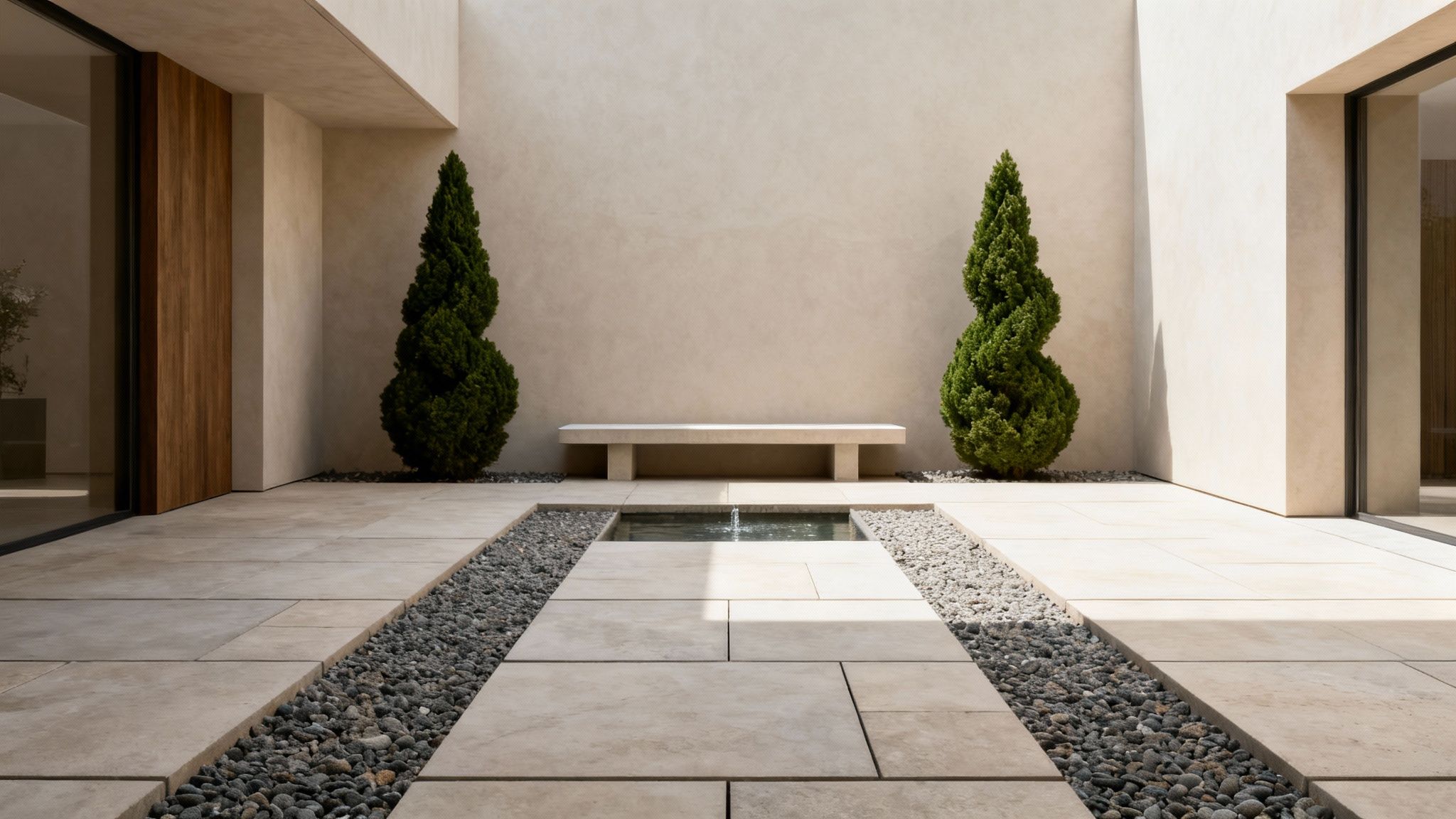
A small basin at the end of a walkway gives the view somewhere to settle. Position it where you can enjoy it from inside, too. If you choose a fountain, leave access for cleaning and check how you will supply power before fixing the paving. A sculptural planter can fill the same visual role in a spot without a practical power source.
20. Connect the Door and Garden with One Route

Plan the route from the door or patio steps to the gate before deciding where furniture goes. When the everyday route is direct, you can put a bench or small table to one side and keep the center clear. A single material used in repeated slabs lets the path register from indoors, even when the planting fills out around it.
21. Repeat One Pale Finish Across the Dining Zone
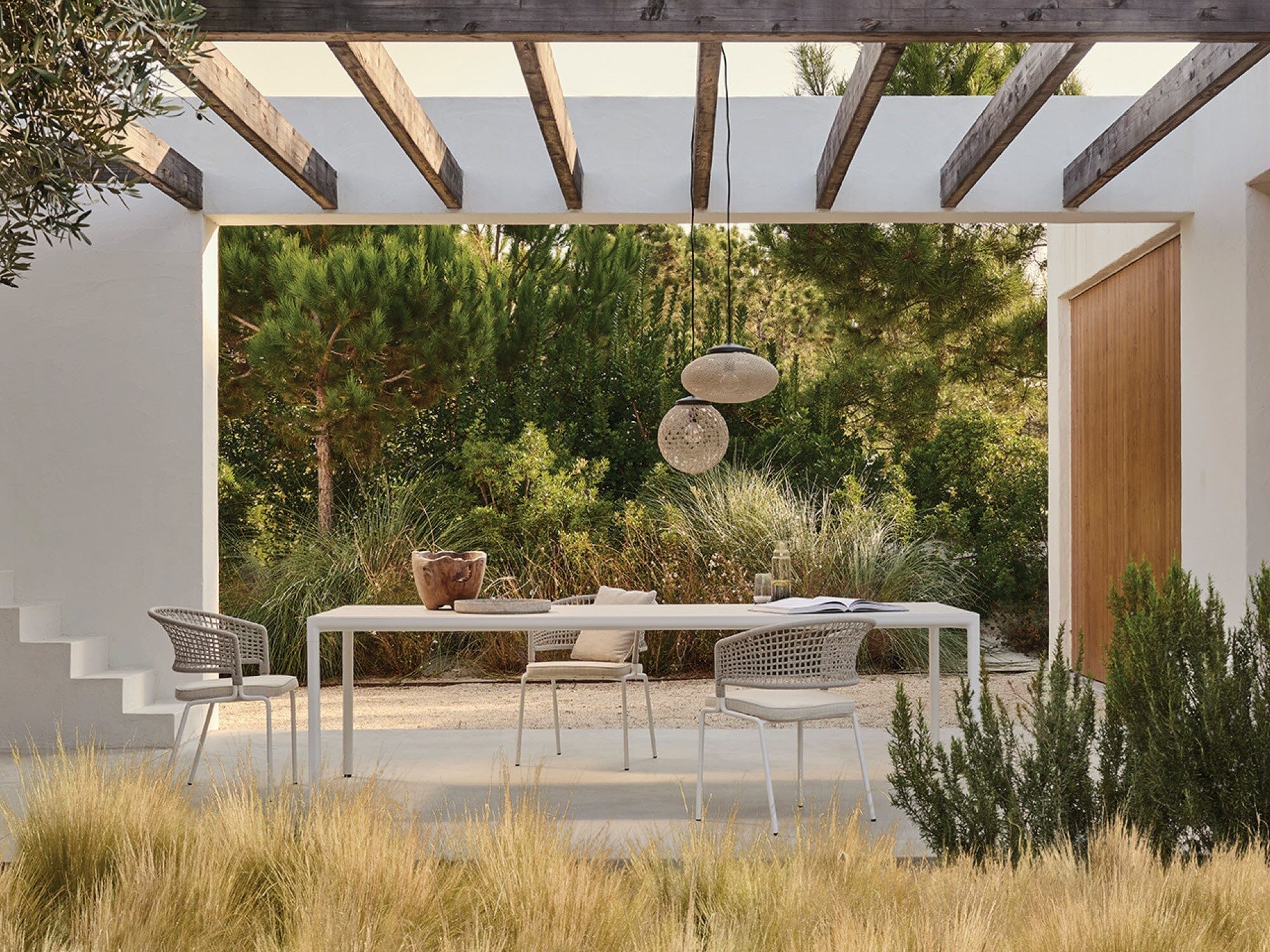
A pale table and similarly toned woven seating keep an outdoor dining group visually compact. Repeat that tone in one useful piece, such as a tray or table lantern, and let the natural wood overhead add contrast. Take a fabric or finish sample outside first. A shade that looks creamy indoors can feel much brighter on paving in direct sun.
More Outdoor Projects to Try
Once you’ve settled on a patio layout, pick a small project that makes the space easier to use. A hanging planter adds green without taking up a seat, and a simple concrete planter can bring some weight to an empty corner. If you still have an open spot at the end of the path, try a water feature or a single upcycled piece.
- Hanging planters for small spaces
- Simple garden water fountain ideas
- Concrete planters with decorative accents
- Cinder block furniture for outdoors
- Creative projects for upcycled planters
What would make your patio easier to use this week: a clearer path, more shade, or a better spot to sit? Share what you’re working with in the comments.









0 Comments