18 Climbing Philodendron Display Ideas for Indoor Greenery
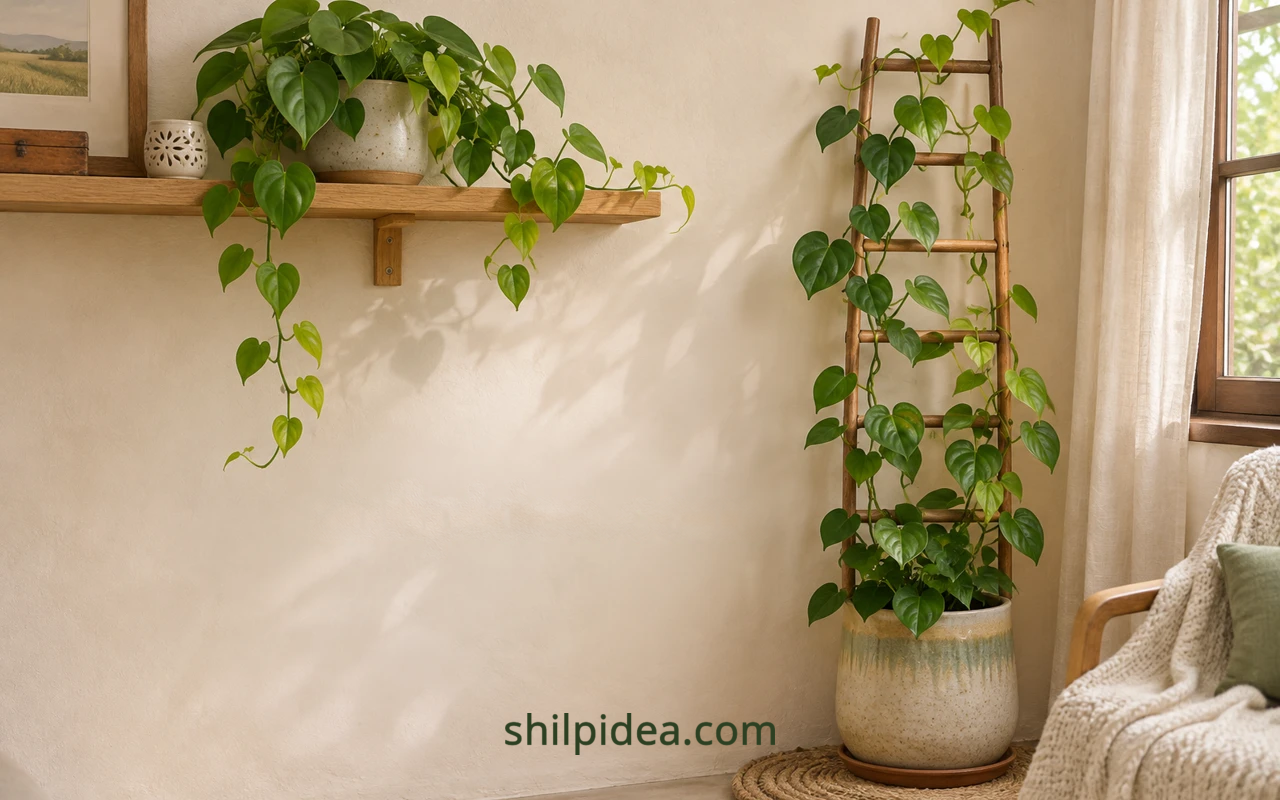
A climbing philodendron can take several forms indoors: a leafy column, a small framed vine, or a soft cascade from a shelf. The right support changes the shape without needing a whole room makeover.
Start by comparing these indoor plant displays with the light and floor space available in your home.
These 18 real examples cover climbing and trailing arrangements. For an overhead option, these hanging planter ideas help you think through access and container size.
1. Let Heartleaf Vines Trail from a Shelf

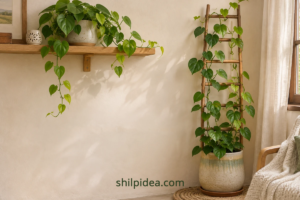
A shelf gives a trailing philodendron room to spread without adding another piece of furniture. Greg’s photo shows heart-shaped leaves falling around a small terracotta pot, with clear space below the shelf. Place the pot where you can lift it down for watering, and use a watertight saucer. These wall shelf displays offer more ways to plan the surrounding arrangement.
2. Train Velvet Leaves on a Wooden Lattice
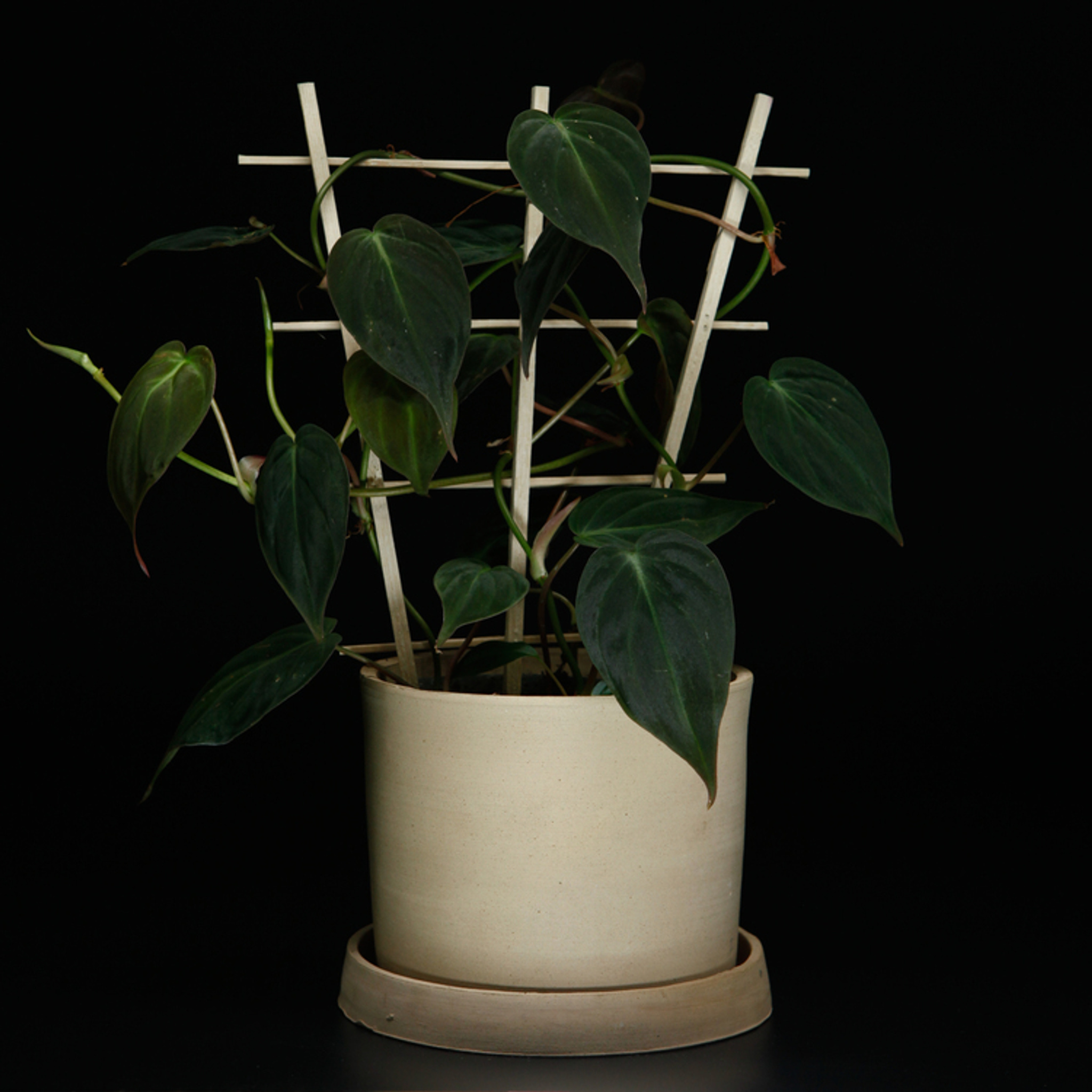
A light wooden lattice makes the direction of growth part of the display. This Micans from Klorofyllverket spreads its velvet leaves across a small grid rather than forming one dense column. Put the support in place while the plant is manageable, then attach stems with loose, soft ties. Leave new leaf growth free, and check the ties periodically as the stems become thicker.
3. Shape a Young Vine on a Narrow Arch
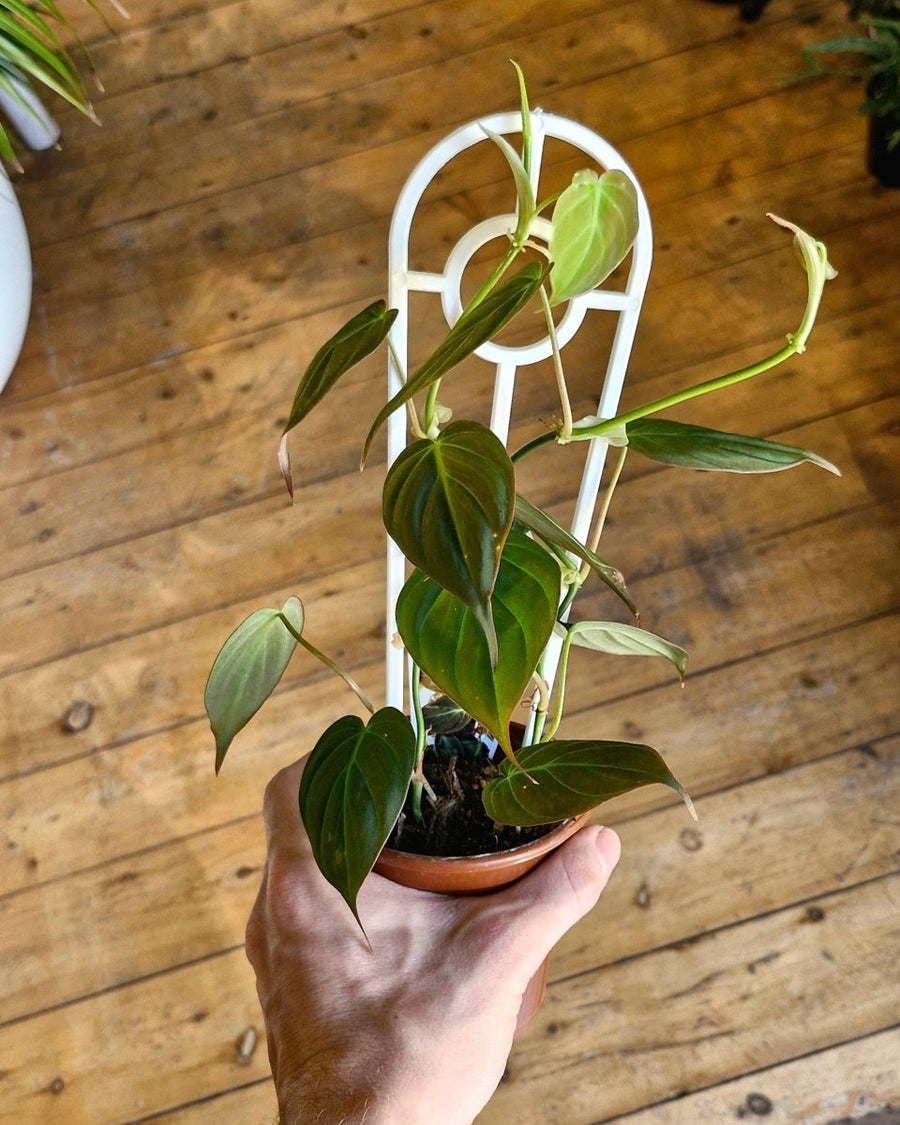
A narrow arch suits a young vine that has not yet filled a large support. Plant Daddy’s Micans uses a pale frame that stays visible between the leaves, keeping the arrangement airy. Guide flexible stems gradually instead of forcing older growth around a tight curve. Choose a pot deep enough to hold the frame securely without pushing its legs through the drainage holes.
4. Show Large Velvet Leaves on an Upright Support

Large, elongated velvet leaves need more breathing room than a little heartleaf vine. DingPlants shows Melanochrysum trained upright, with foliage extending beyond the pot on either side of a central support. Leave each leaf room to open without rubbing a wall, and select a stable outer container that will not become top-heavy as the plant grows. Start with a location that meets this plant’s light and humidity needs.
5. Suspend a Full Heartleaf Basket

A full hanging basket lets the foliage form a rounded canopy before the longer stems drop. PlantVers Garden’s heartleaf plant shows how generous growth can soften the edge of a simple container. Choose a hanging point rated for the total watered weight, not just the empty pot. Plan a comfortable watering routine before installation; a basket that is difficult to reach is difficult to maintain.
6. Create a Tall Wooden Trellis Screen

A taller wooden grid can turn a climbing Brasil into a leafy vertical accent. Eureka Farms uses several horizontal rungs, allowing the yellow-green leaves to spread across a wider surface than a single pole. Keep the base stable and leave access behind the frame for checking stems. For a nearby grouping of smaller pots, these garden planter shelves provide useful layout inspiration.
7. Soften a Corner with Trailing Micans
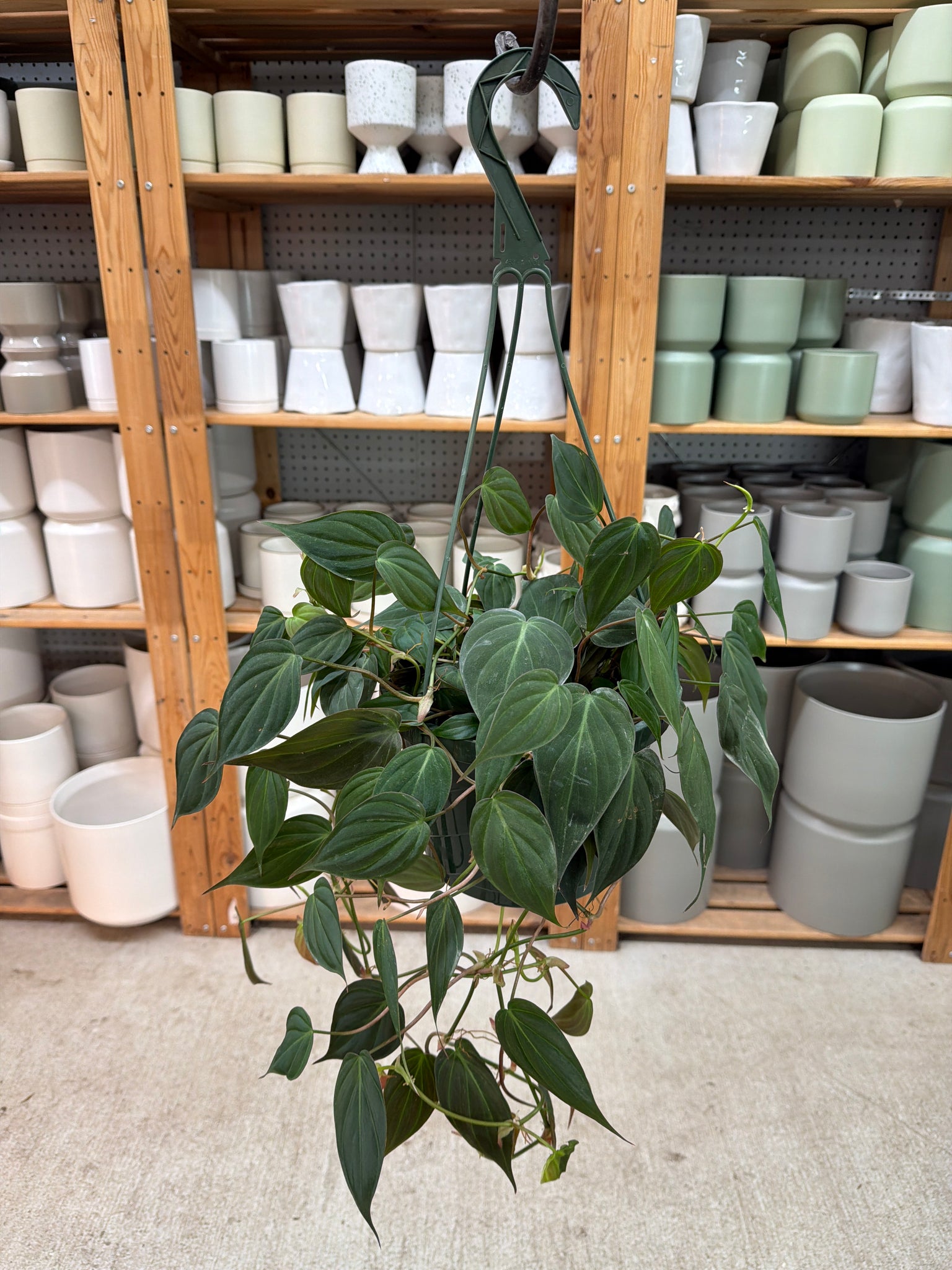
A hanging Micans brings a softer outline and darker leaf tones to a plant corner. Kent East Hill Nursery’s example has long stems falling below a compact basket, making the silhouette easy to appreciate. Hang it where the vines will not catch on a door or chair. If growth reaches a busy walkway, reposition the basket or prune selectively rather than wrapping stems tightly around the hanger.
8. Mount a Heartleaf Plant on Cork
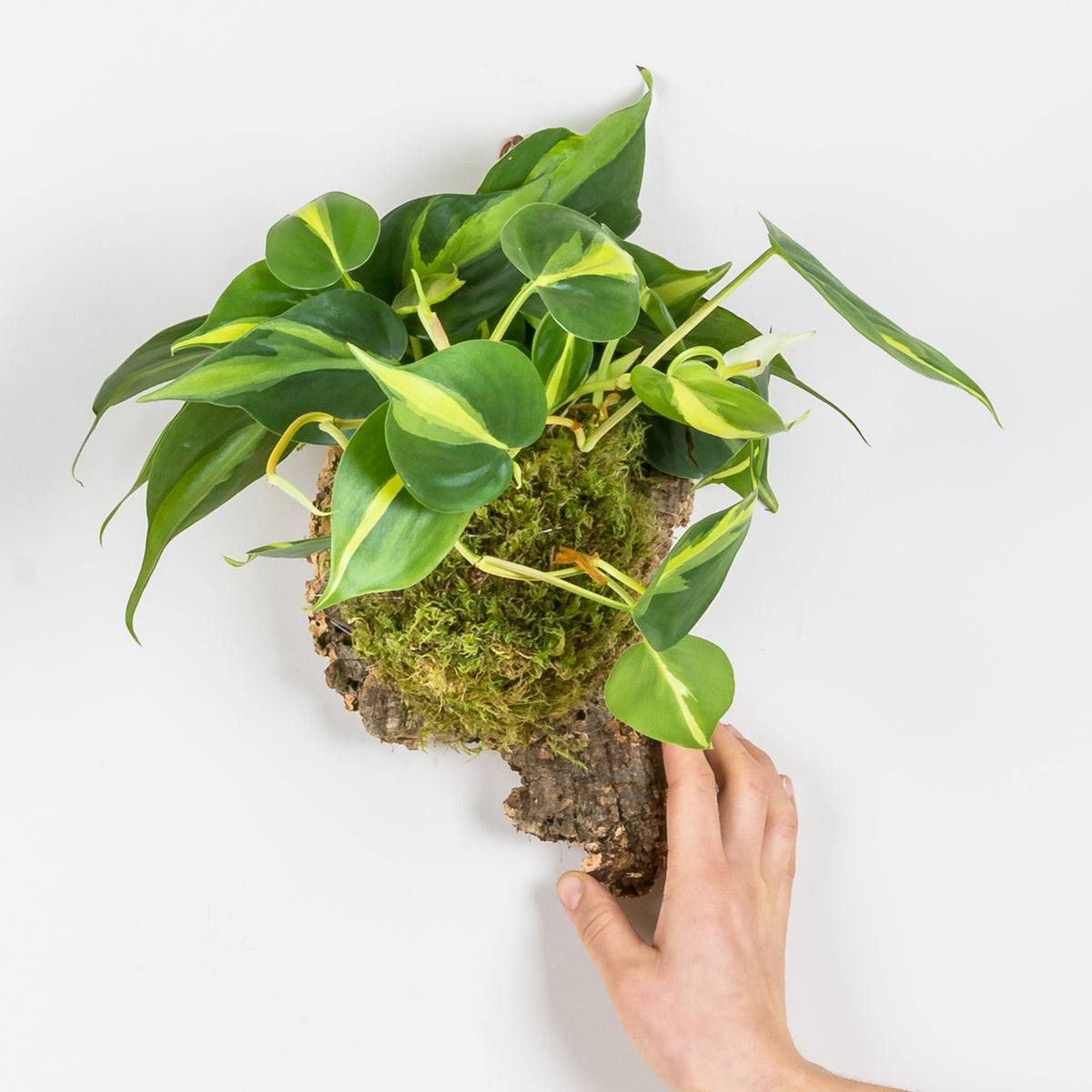
Cork turns the root area into part of a small living wall piece. Pistils Nursery mounts a Brasil above a compact moss-covered base, with the foliage extending past the edges. This format needs a different watering routine from a pot, so follow the maker’s care instructions. Take the mount down for watering and let it drain fully before returning it to a moisture-protected wall.
9. Curve a Vine Around a Fine Metal Hoop
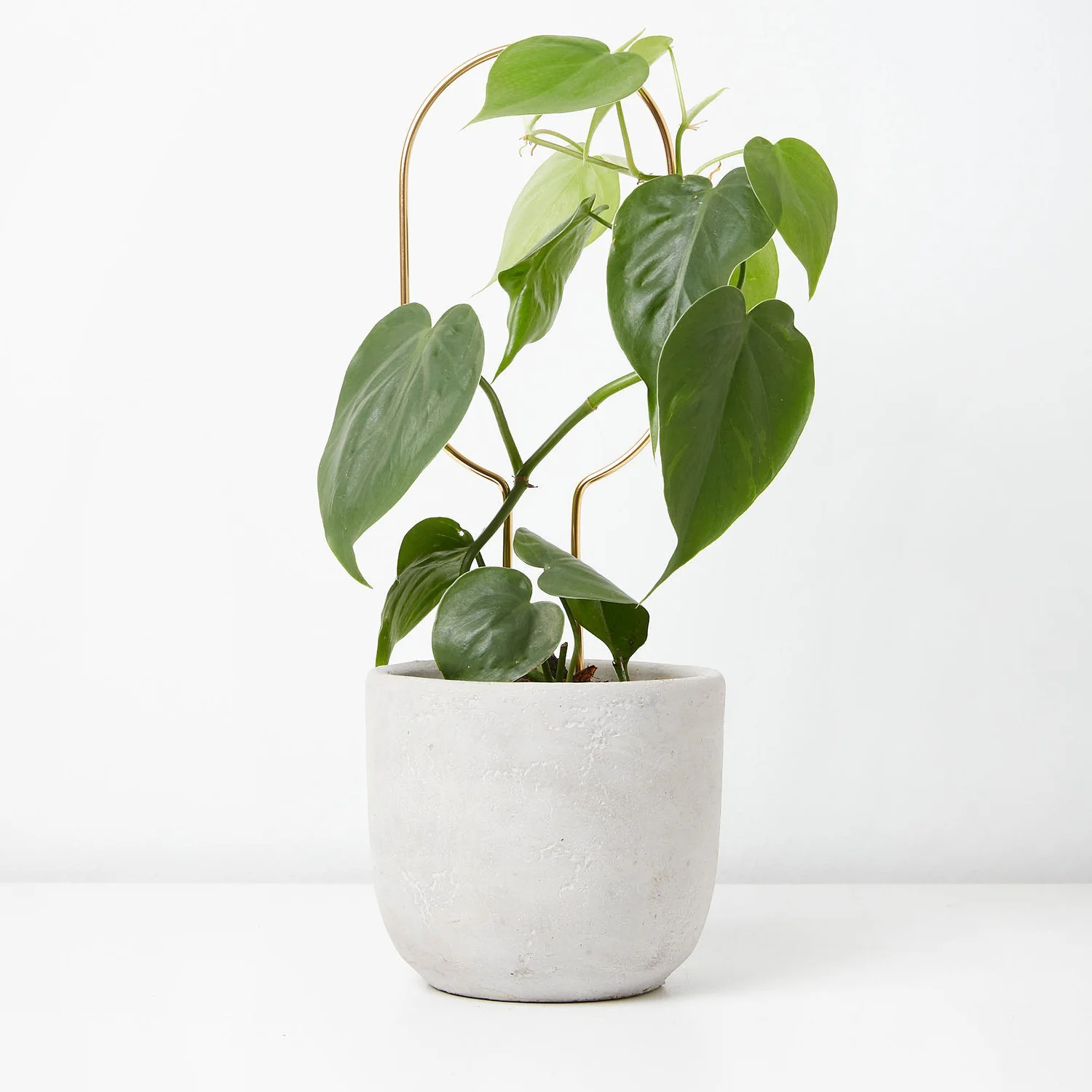
A fine metal hoop gives a climbing stem a clear outline without hiding the plant behind a heavy frame. Little Green Obsession shows the support inside a pale pot, where green leaves stand out against the thin gold-colored curve. Work with an existing bend in the vine and attach it loosely. Leave the frame partly visible so the arrangement reads as a shape rather than a tangled bundle.
10. Display a Mounted Plant on a Wood Slab
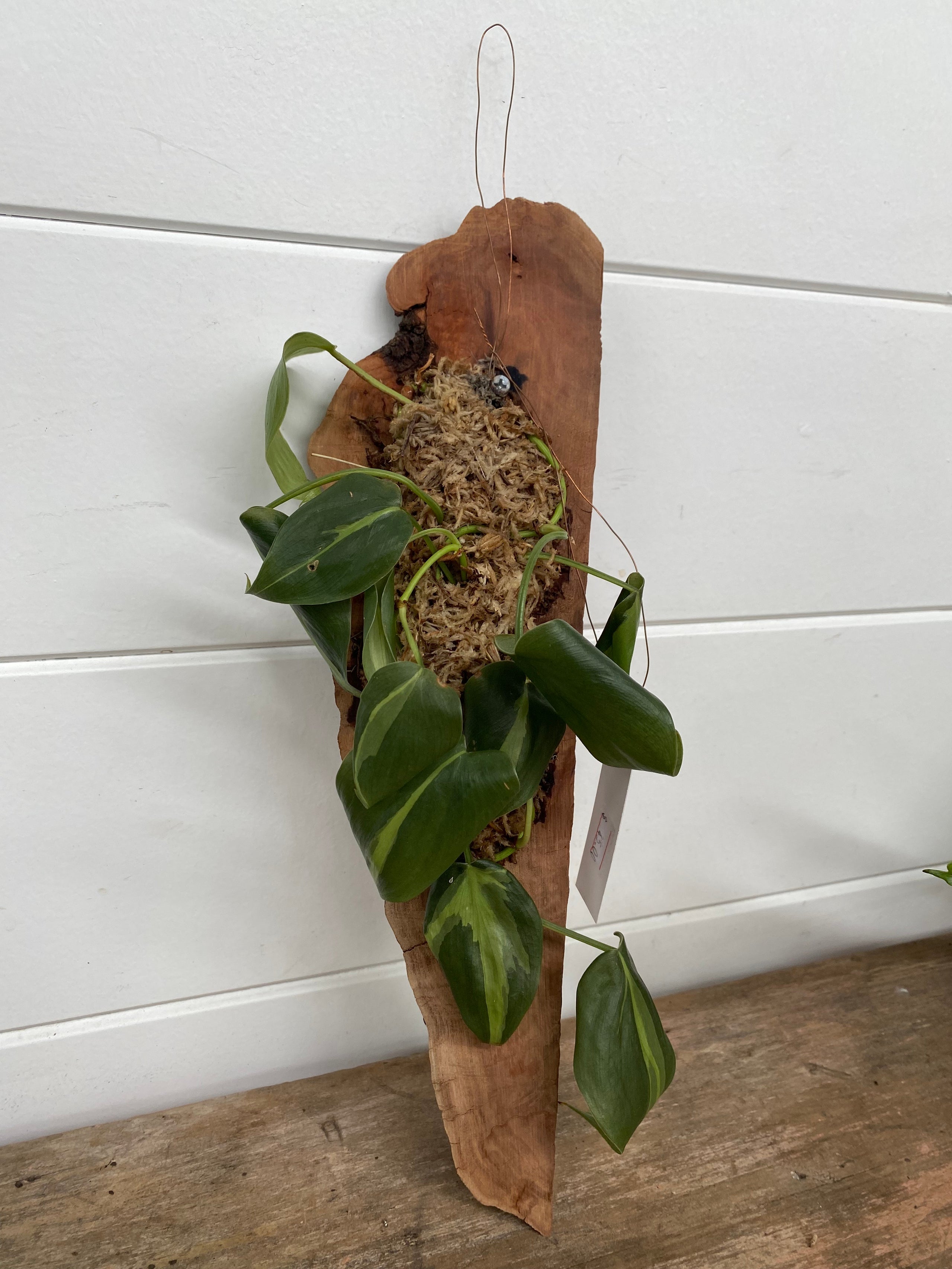
A longer piece of wood creates a different mounted silhouette from a compact cork base. The Borrowed Nursery’s Brasil trails along a vertical slab, leaving the grain and irregular outline visible. Treat the board as a removable plant mount, with suitable wall hardware and protection behind it. These moss ball planter ideas explore another way to display roots without a conventional pot.
11. Outline Micans with a Round Frame

A round frame can turn a few Micans stems into a small tabletop focal point. Plants in a Box uses a white circle against a plain background, making the dark leaves easy to distinguish. Space the stems around the curve instead of packing them into one side. Allow room for fresh growth, and keep the container’s drainage arrangement practical even when the decorative pot is part of the composition.
12. Suspend a Brasil Kokedama

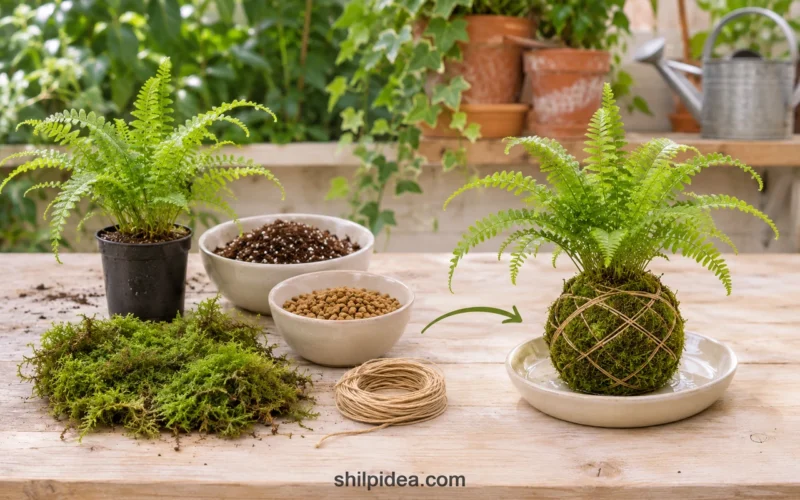
A suspended kokedama replaces the visible pot with a moss-wrapped root ball. VivaTerra’s Brasil hangs from simple cord, with vines beginning to fall around the rounded base. The display works best where it can be taken down easily for care. Keep drips away from furniture, and check the plant’s moisture rather than following a fixed calendar that ignores room temperature and seasonal light.
13. Use Bamboo Stakes for a Climbing Specimen

Several upright bamboo stakes can support a branching climber with larger leaves. Lubera’s Squamiferum shows the broader shape this creates compared with a narrow heartleaf column. Use a stable container and leave enough space for the plant’s eventual spread. The greenhouse photograph is a support reference, not a suggestion to crowd a large specimen into a dark indoor corner or against everyday furniture.
14. Support Oak-Shaped Leaves on a Bamboo Arch
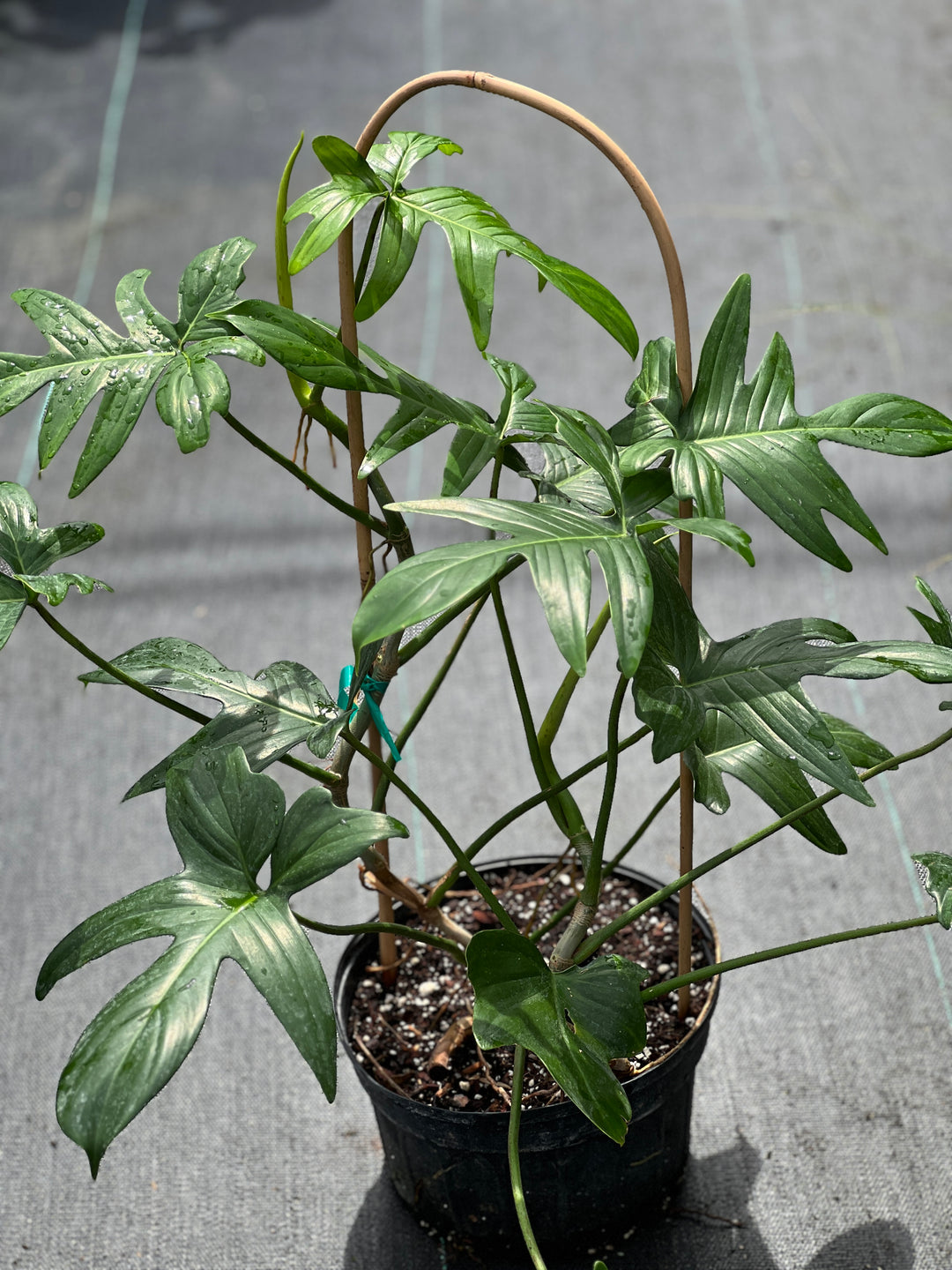
A bamboo arch offers a gentle curve for a climber with lobed leaves. Fairchild Tropical Botanic Garden’s Pedatum sits inside the loop, allowing the foliage to project beyond the support. Position the arch before the root ball becomes difficult to work around, then guide stems without trapping leaf stalks. A simple nursery pot can sit inside a heavier outer pot, provided excess water can be emptied easily.
15. Train Micans Along a Coir-Covered Trellis
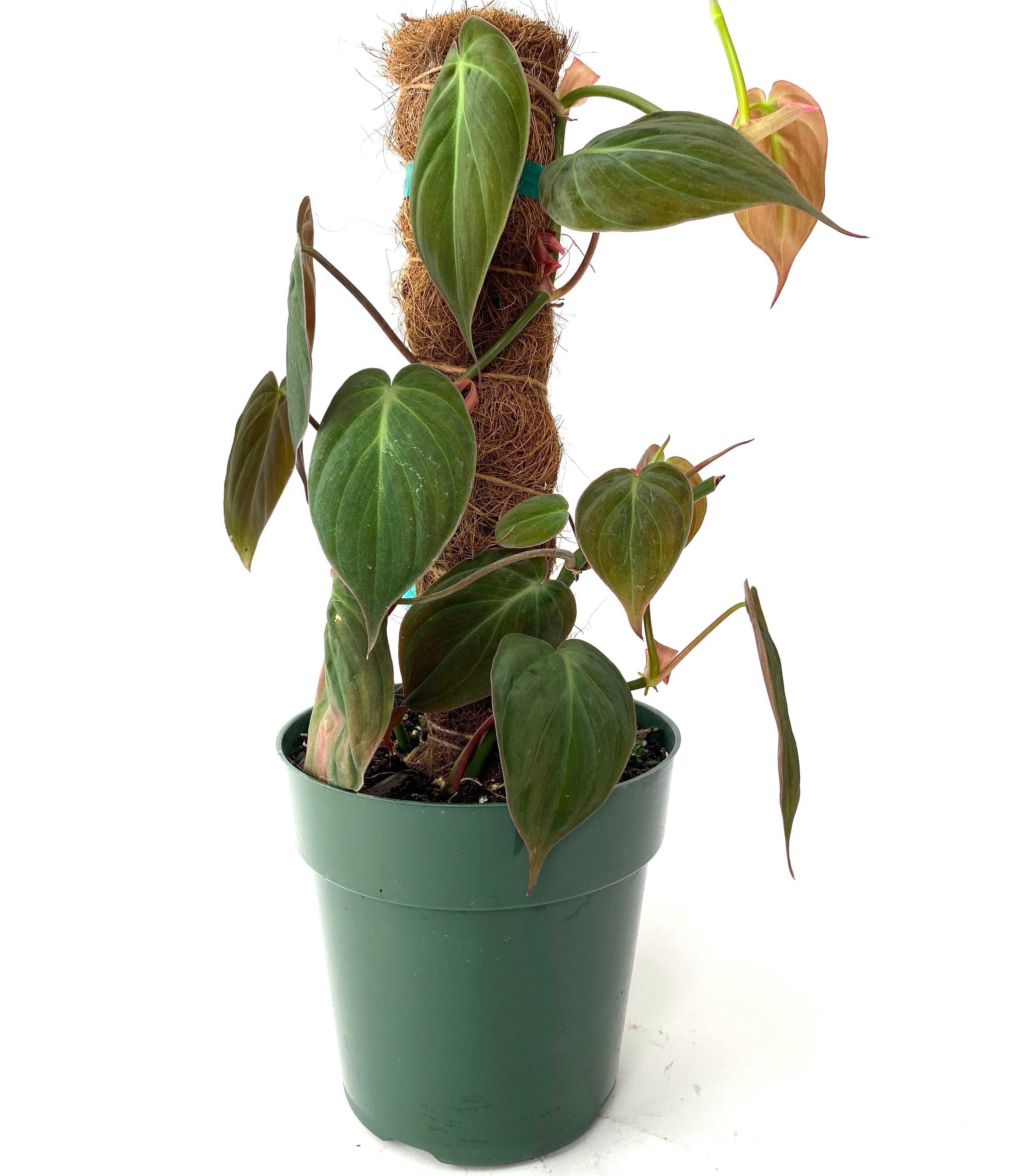
A coir-covered trellis gives Micans a textured vertical surface rather than a smooth hoop. Eureka Farms shows the stems tied loosely along the narrow upright support, with leaves facing outward. Keep the support firmly anchored, and distinguish watering the potting mix from any moisture management needed by the support itself. These concrete planter ideas offer container shapes to compare for visual balance.
16. Hang a Compact Pot in Knotted Cord

Knotted cord can lift a small philodendron above a shelf while keeping the container simple. Lucy Grows’ photograph shows the pot held close inside a macrame hanger, with heart-shaped leaves spilling forward. Check that the cords support the pot evenly and do not press against delicate stems. Remove the plant for watering if needed, and leave enough clearance for leaves to grow around the hanger.
17. Give a Young Vine a Wooden Ladder Frame

A compact wooden ladder frame gives a young heartleaf plant several directions to explore. Plantsome’s example combines trailing stems with upward growth, so the support remains part of the composition. Guide only the stems you want to raise and let a few softer shoots fall naturally. A modest frame is easier to move and maintain than a very tall structure, especially when the plant still lives on a small surface.
18. Place a Tall Climber Beside a Desk
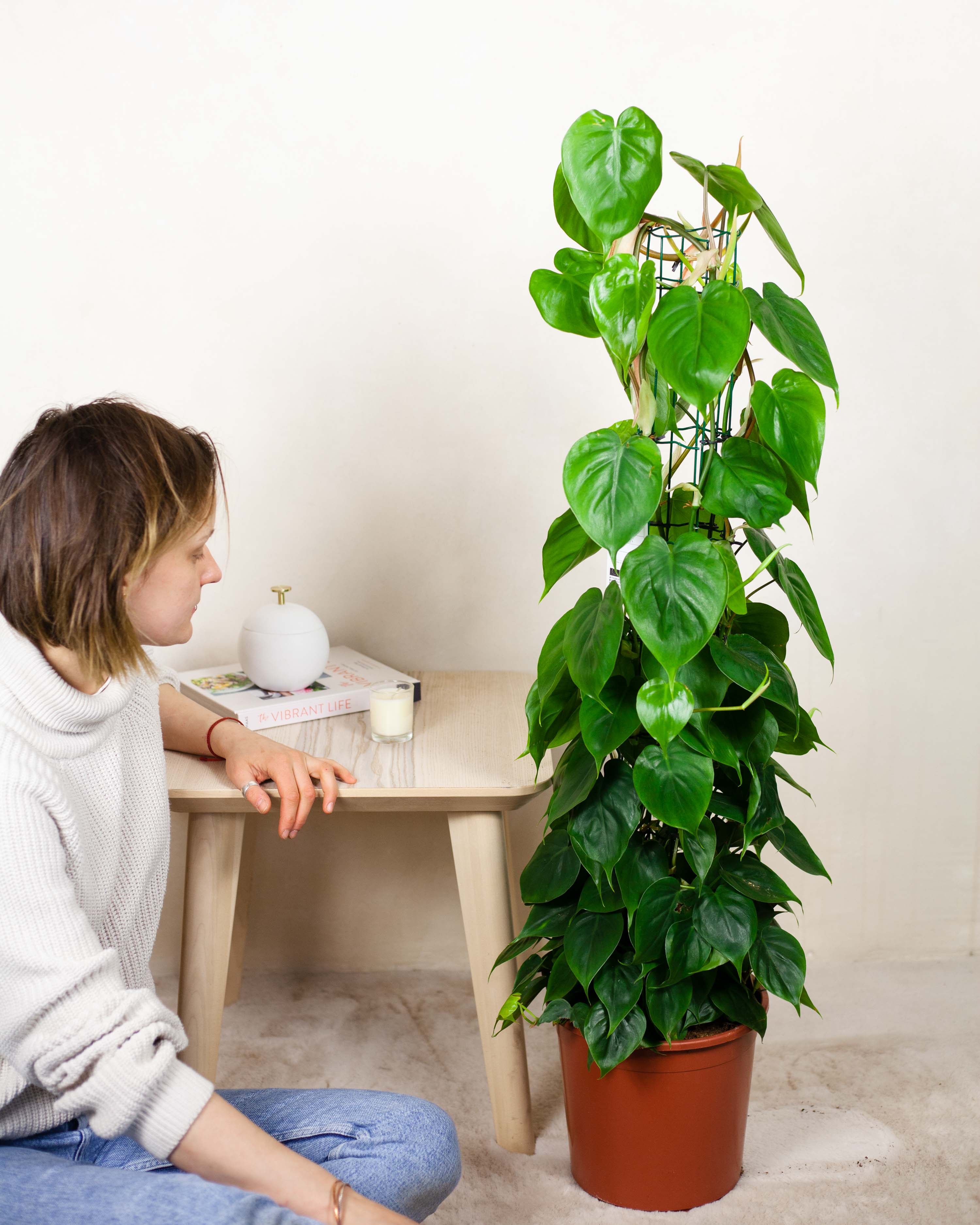
A tall supported heartleaf plant can stand beside a desk instead of taking up valuable work surface. Plants For Humans positions the leafy column close to the working area, with the pot remaining on the floor. Keep cables, chair wheels and access routes clear, and confirm the spot receives suitable indirect light. Leave enough distance to lift the pot or reach its saucer without moving your entire desk setup.
Keep the Display Easy to Care For
Choose the position for suitable indirect light before deciding where the pot looks best. The RHS philodendron growing guide recommends letting compost dry slightly between waterings. Keep drainage accessible, check ties as stems grow, and protect surfaces from moisture. Philodendrons can irritate skin and are harmful if eaten, so keep plants and fallen leaves away from children and pets.
Plan a Plant Corner That Fits Your Home
Choose one support or hanging arrangement that suits the plant you already own, then plan the rest of the corner around access, light and drainage. A small frame can be enough for a young vine, while a mature climber needs a stable base and more space. These related displays offer container and placement ideas to compare before making your final choice.
- Indoor Plant Displays for Home Corners
- Hanging Planter Ideas for Small Spaces
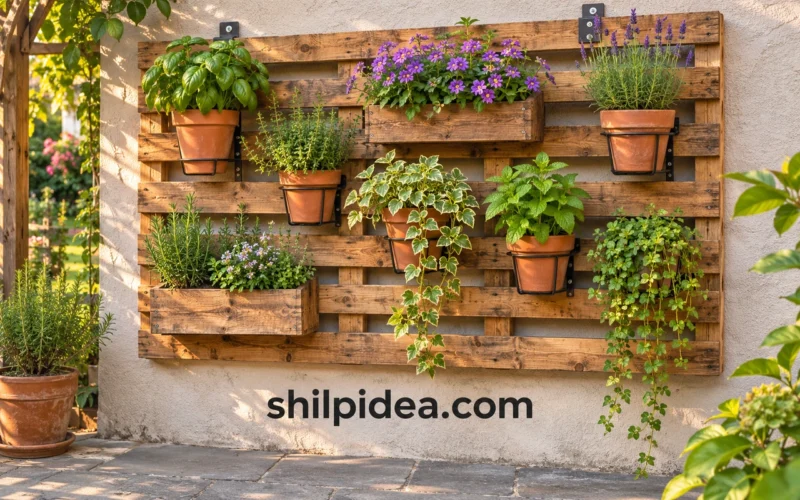
- Wall Shelf and Plant Display Ideas
- Wall Planter Displays for Green Corners
- Moss Ball Planters and Kokedama Ideas
- Garden Planter Shelves for Compact Displays
Which shape would suit your philodendron best: a trailing basket, a small hoop, or a tall climbing frame? Share the plant you grow and the space you are working with in the comments.













0 Comments