18 Concrete Lamp Designs for Tables and Pendants
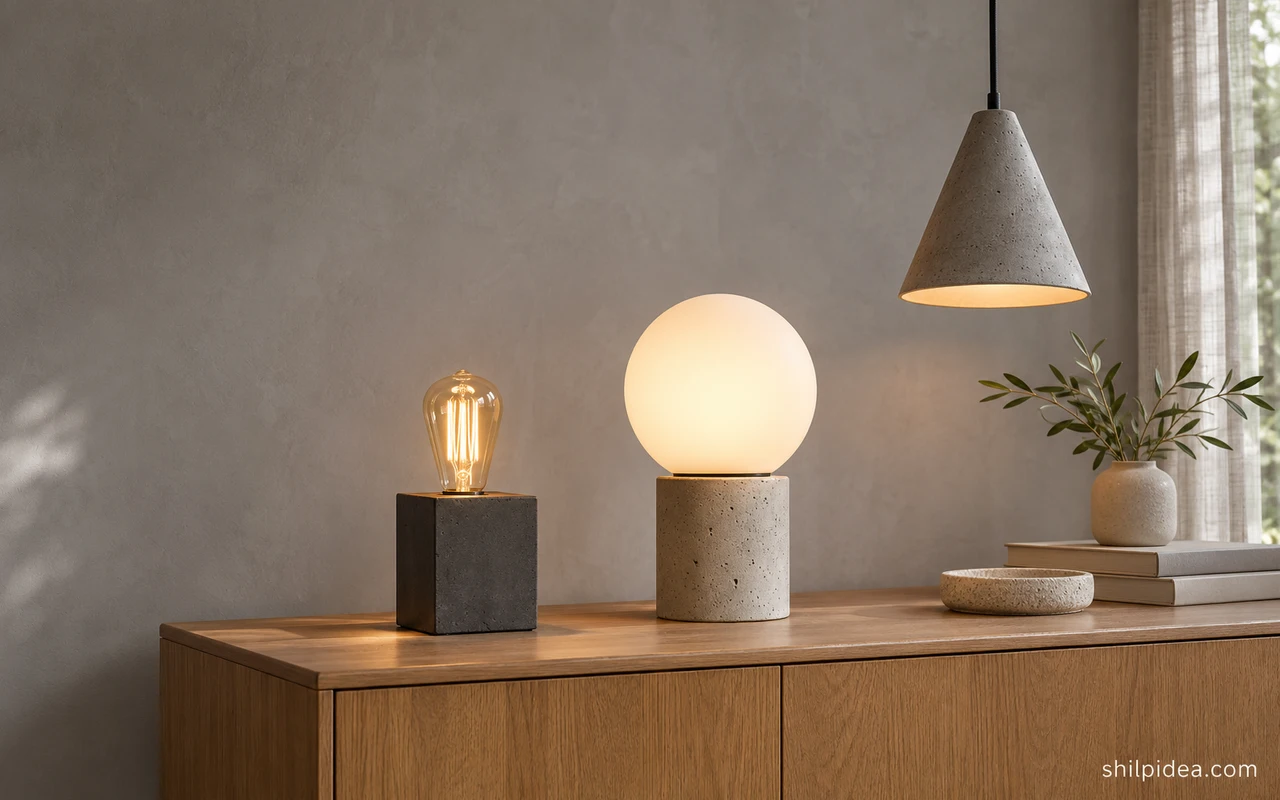
Concrete lamps can look quiet or dramatic depending on where the light comes from. A solid base below a glass globe feels soft, while a dense shade with a narrow opening draws the eye to a smaller area.
Think about the surface the lamp will light. If the warmer grain in these wooden lamp designs appeals to you, a concrete lamp near a wood surface can play up both materials.
Decide whether you need light for reading or just a glow beside a seat. These concrete lighting designs show how much the profile changes between table and pendant fixtures.
1. An Exposed Bulb on a Cast Block

A plain concrete block gives a round bulb a clear silhouette. The small footprint suits a narrow shelf where a wide shade might overhang the edge. Exposed bulbs remain visible from several angles, so consider glare at sitting height before you choose a position. For a similar look at home, choose a complete fixture that keeps the electrical fittings protected.
2. An Opal Globe on a Short Cylinder
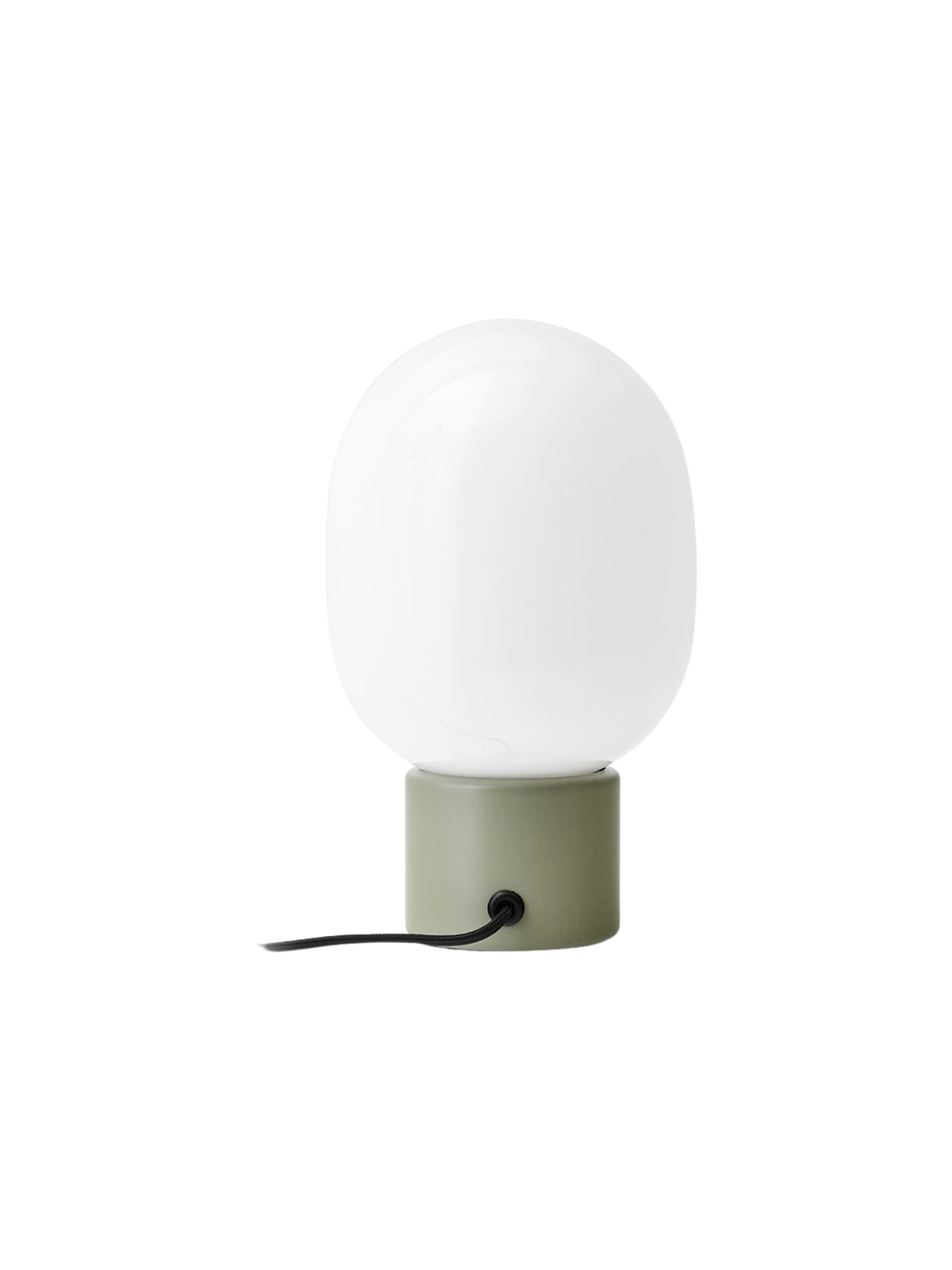
The softly rounded shade balances the weight of the concrete base. Use a globe lamp on a bedside table where you want light to spread gently rather than aim at one object. The warm-toned switch in the example adds a small point of contrast. Allow enough room beside the fixture to reach the switch without moving books or a glass of water.
3. A Round Table Lamp With a Cutaway

The cutaway lets you see into the lamp and makes the full cylinder look lighter. Turn the opening toward the wall if you want the fixture to read mostly as a shape from across the room. Point it toward the seating area for a more noticeable accent. It’s a useful option next to furniture with simple lines and broad, uninterrupted surfaces.
4. A Wide Tapered Pendant Over a Table
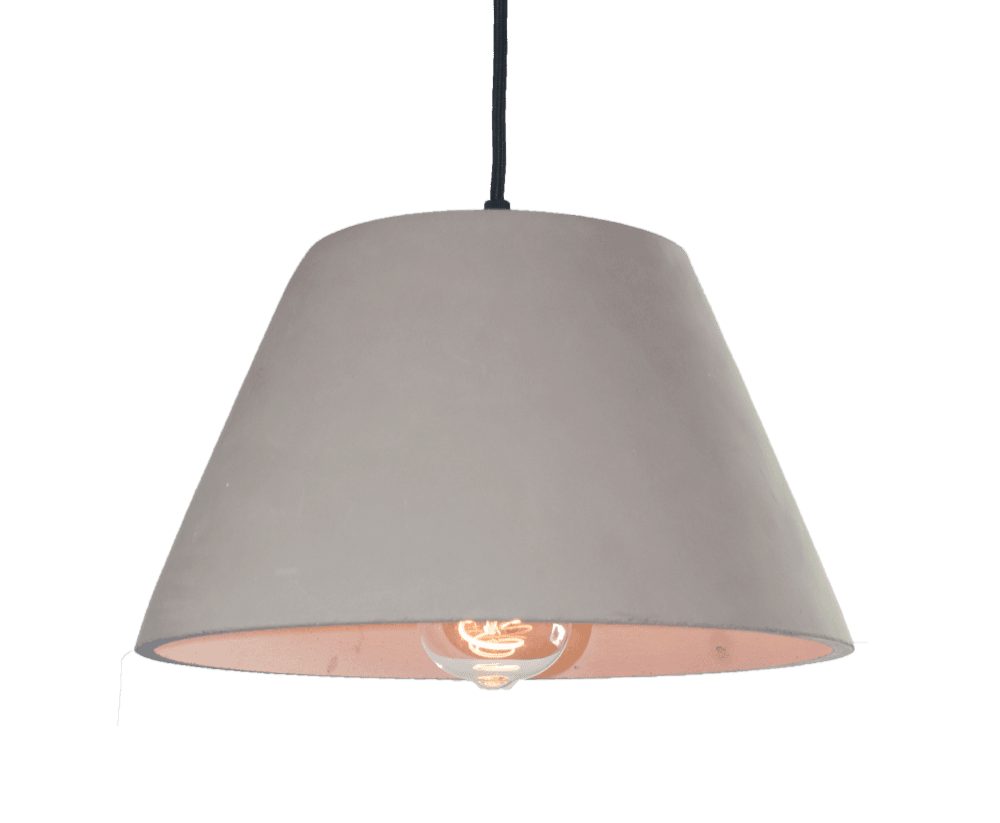
The broad lower edge puts a strong outline over an otherwise simple table. Compare the diameter of the shade to the table’s width rather than judging it from a product photo, where scale can be hard to read. Wider shades make the most sense where there is room around them. In a row, leave enough distance for each pendant to read individually.
5. A Tilted Concrete Spotlight

The tilted lamp rests on its side and aims the lit surface upward. That makes it useful low in the room, where a straight-sided lamp shade can be hard to see. Try a similar design on a low shelf facing a wall or an object you want to highlight. Leave space near the front so the light has somewhere to go.
6. A Mesh-Like Pendant With a Textured Surface

A concrete pendant can still feel light when its shade is formed into a fine repeating pattern. The texture matters from close up, while the familiar dome shape keeps it readable from a distance. Put it where the side of the shade is visible. A quieter background lets the surface work as the main decorative detail.
7. A Concrete Shade With a Contrasting Lower Edge
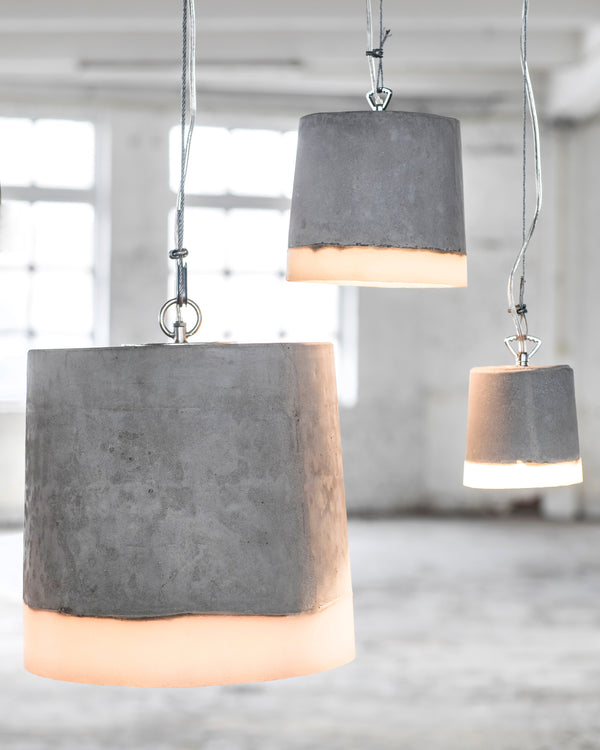
The lower edge breaks up the solid gray cast shade. Light shows through the warm band when the pendant is on, so the border reads as a detail from across the room. Hang a fixture in this style where the edge is visible at seated height. A plain wall or a smooth tabletop gives the concrete texture room to stand out.
8. A Low Concrete Lamp With a Rectangular Shade
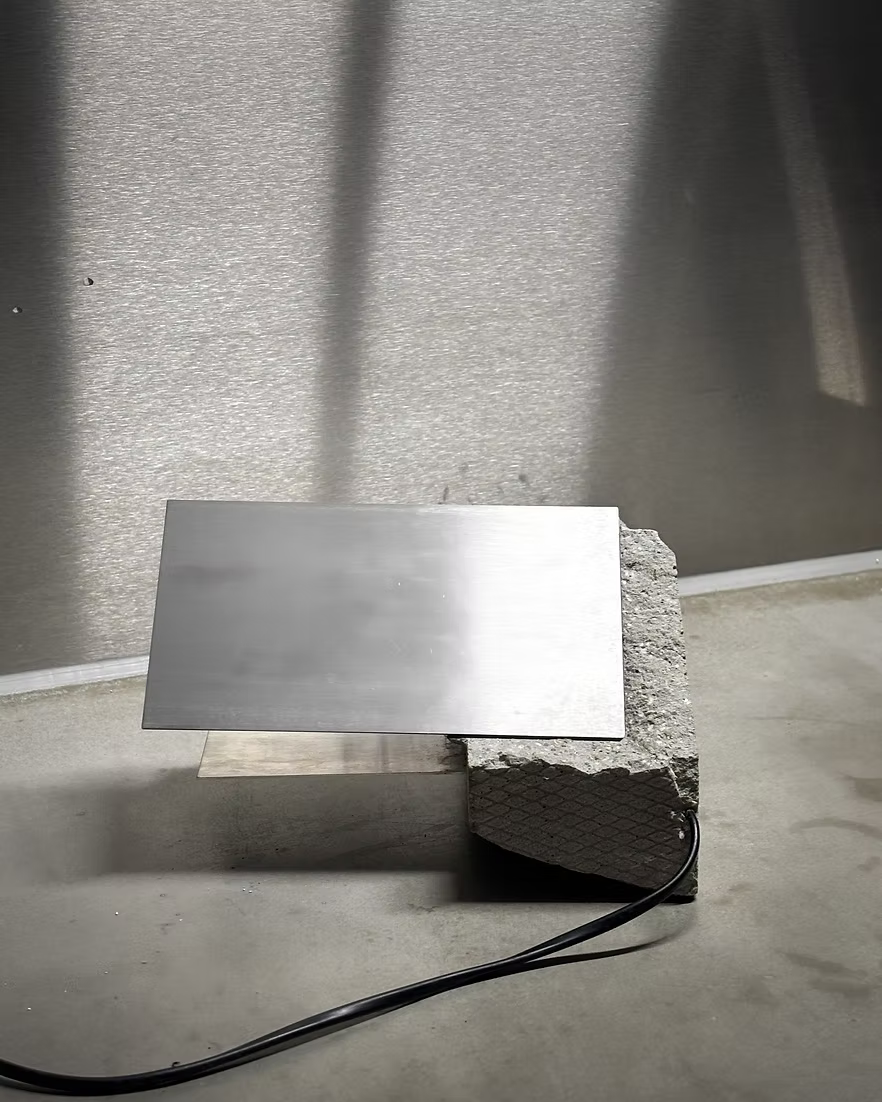
This low fixture makes the horizontal shape the focus. Placed against a pale wall, the dark base and lit upper section appear as separate bands. Try this approach on a wide sideboard or low shelf where the profile can sit below art or a mirror. A few concrete candle holders nearby can repeat the finish at a smaller scale.
9. A Disc Shade on a Tall Concrete Column
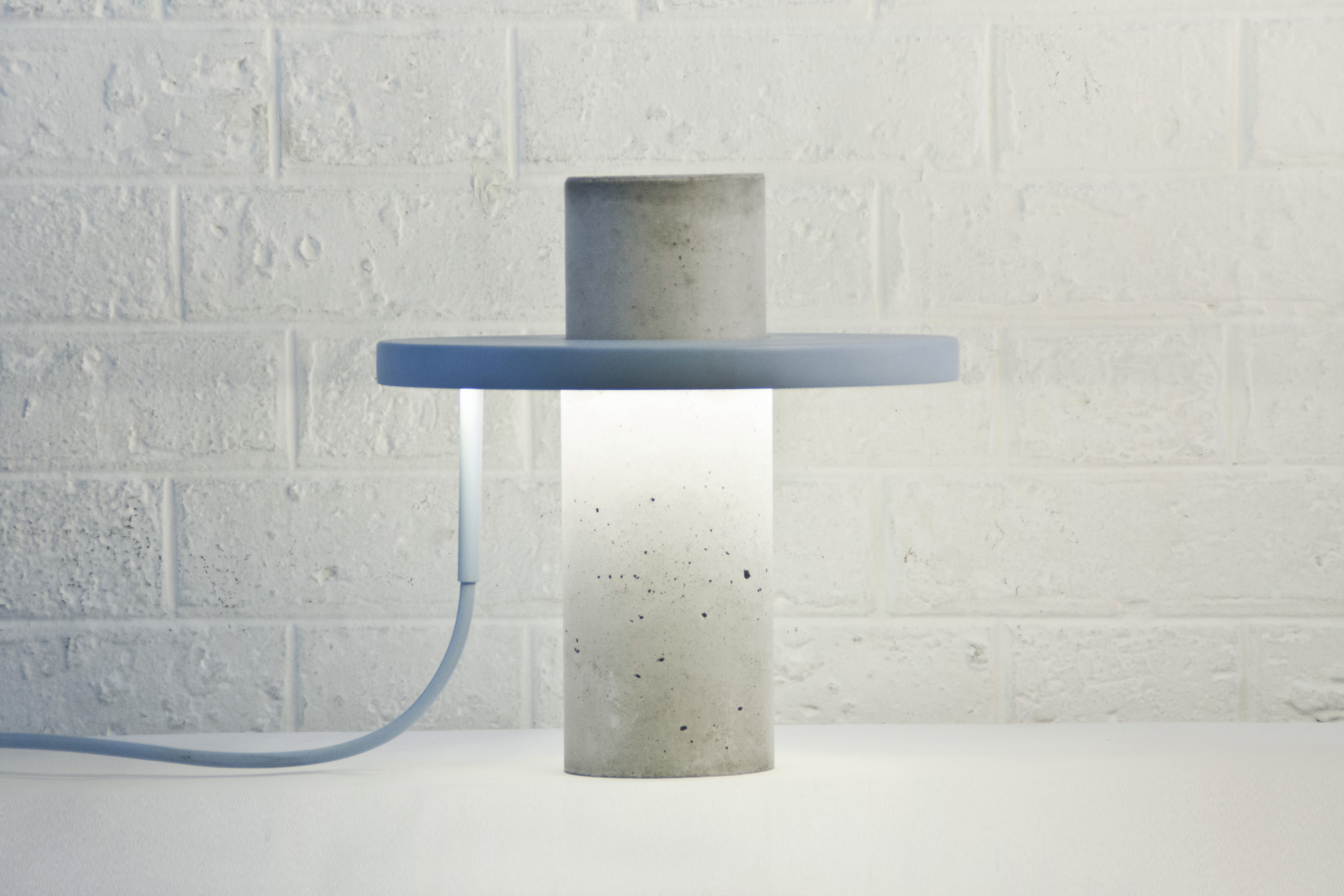
The disc interrupts the upright column without closing in the whole light. Its color also makes the construction easy to read. Put a lamp with a wide disc toward the center of a table or on a shelf deep enough to support it visually. Check whether anything tall nearby blocks the outline of the shade from the places you use most.
10. A Low, Broad Cone Pendant
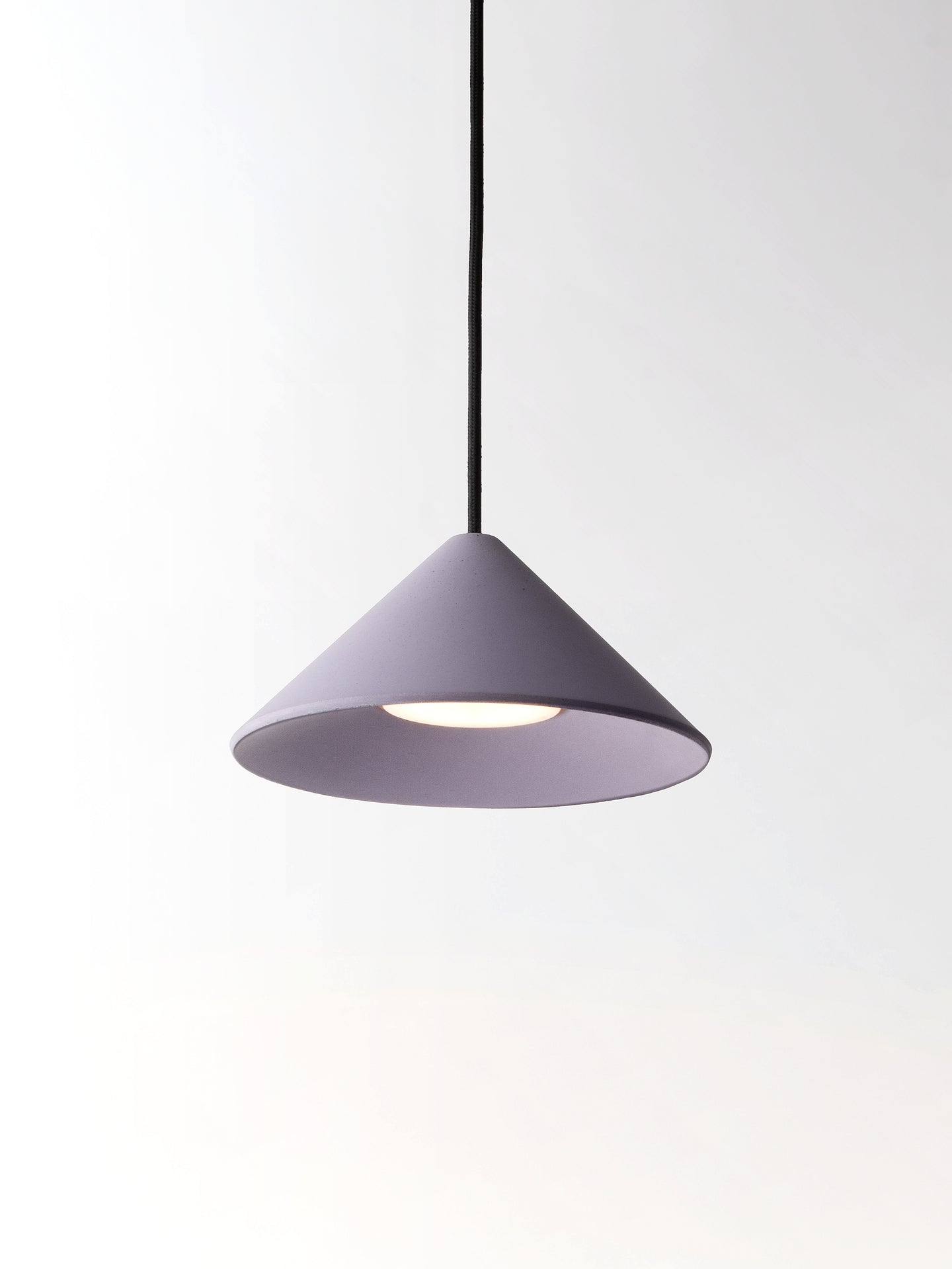
A low cone keeps more of the space below the ceiling visible than a much deeper shade. The look works above tables where you want the light to feel deliberate without making the fixture dominate the room. A soft wall color adds contrast to a darker cone. Compare its shade depth with the width and height of the table underneath.
11. A Cordless Concrete Accent for a Table
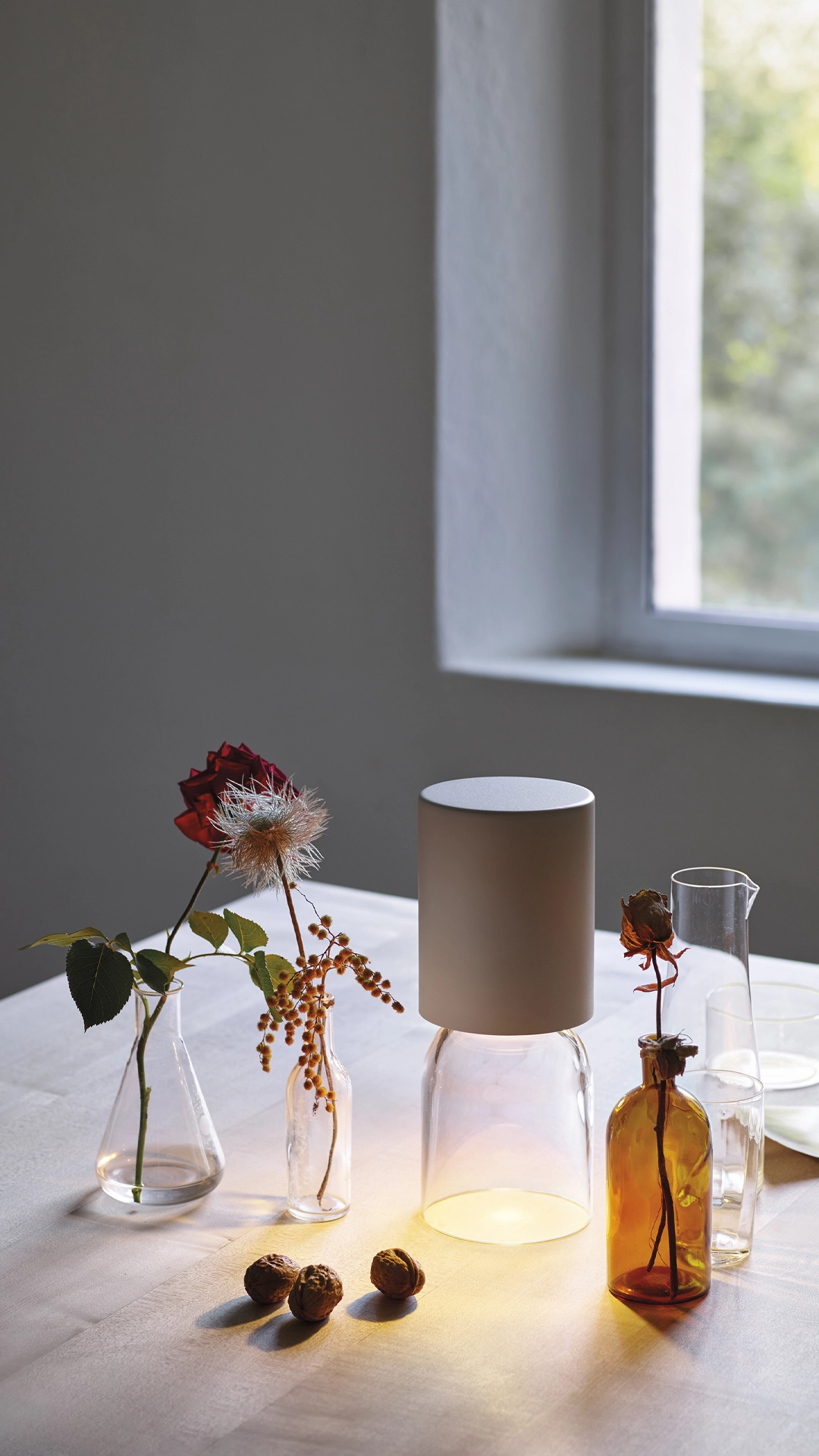
A compact portable lamp leaves the table free of a trailing cord. That makes this form well suited to occasional seating, where the same table might move for guests or rearranging. Choose the correct model for the location and consult its instructions for outdoor use. In daylight, the simple weight and color of the body still give the display some structure.
12. A Curved Concrete Reading Light

The smooth cast form acts as both a base and a partial hood. Set this kind of light where you can see the curve in profile. The tucked-away light source gives a different effect from a prominent globe. It can fit on a broad shelf alongside furniture like the low, horizontal lines found in these pallet lighting ideas.
13. An Adjustable Disc Light on a Compact Base

The tilting disc changes the silhouette and gives you some choice in where the light lands. A compact stand leaves room for papers or a tray, while the wider head keeps its visual presence. Look at the controls and adjustment range before choosing this style if you plan to use it as a work light as well as an accent.
14. A Slender Arm Balanced by a Cast Block

A long, slim arm and a compact concrete block give this lamp a clear outline. The exposed bulb makes the angle of the arm easy to see from the side. Place this kind of light where the arm can reach across a surface without projecting into a walkway. Consider an open shelf or a desk with room for the cord.
15. A Narrow Concrete Pendant With a Round Bulb
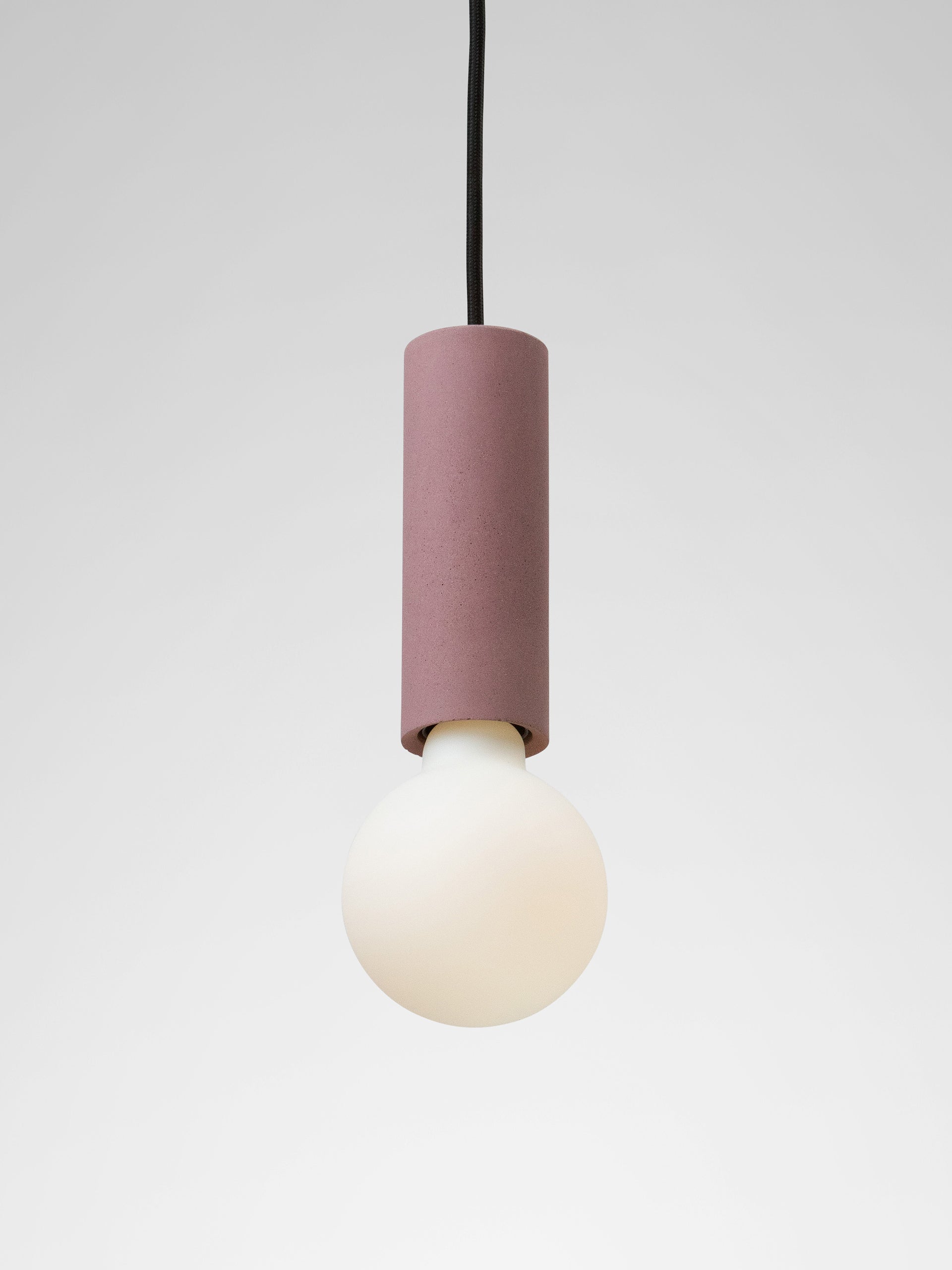
This pendant keeps the shade very slim and lets the round bulb provide the wider outline. Try a fixture in this proportion beside a mirror or in a pair near a narrow counter, provided the locations suit the fittings. Look at the glare at eye level. The small profile is easier to appreciate when it hangs against an uncluttered wall.
16. A Stacked Cylindrical Lamp With a Light Band

Stacked forms make a compact lamp look more sculptural while retaining a clear outline. A bright band between the pieces can suggest a gap even when the upper and lower sections sit close together. Use this style on a plain surface where the detail is visible from several sides. A neutral backdrop captures the effect without competing with the surrounding lines.
17. A Flared Concrete Pendant With a Thin Rim

The flare opens out toward the work surface, while the thin edge makes the shade look lighter than its material suggests. See how it sits from across the room as well as from underneath before choosing the height. A matching pair can frame a long island. For a different effect, combine the shade with one of these wood lighting ideas elsewhere in the room.
18. A Linear Concrete Pendant With a Metal Edge

A long rectangular pendant follows the main line of a dining table rather than gathering attention in the center. The metal edge gives the concrete a clear border, especially against a pale ceiling. Pair this shape with a long table or counter and keep tall objects beneath it to a minimum. Check the fixture against the table length before choosing its position.
More Ways to Style a Room With Lighting
Look at the room at the time of day you usually switch on the light. A lamp that looks great in daylight can send glare across a table or leave the corner you use darkest. Think about the view from your chair, then use these related ideas to find materials and forms that suit the rest of the room.
- Explore Sculptural Wooden Lamp Designs
- Try More Wooden Lighting Ideas
- Explore Lighting With Pallet Wood
- Compare Concrete Lighting Shapes
- Style Concrete Candle Holders
Would you use a concrete lamp for reading, over a table, or as a sculptural accent? Share your choice in the comments and tell us which finish you’d use alongside it.




















0 Comments