19 Indoor Olive Tree Styling Ideas for Living Room Corners
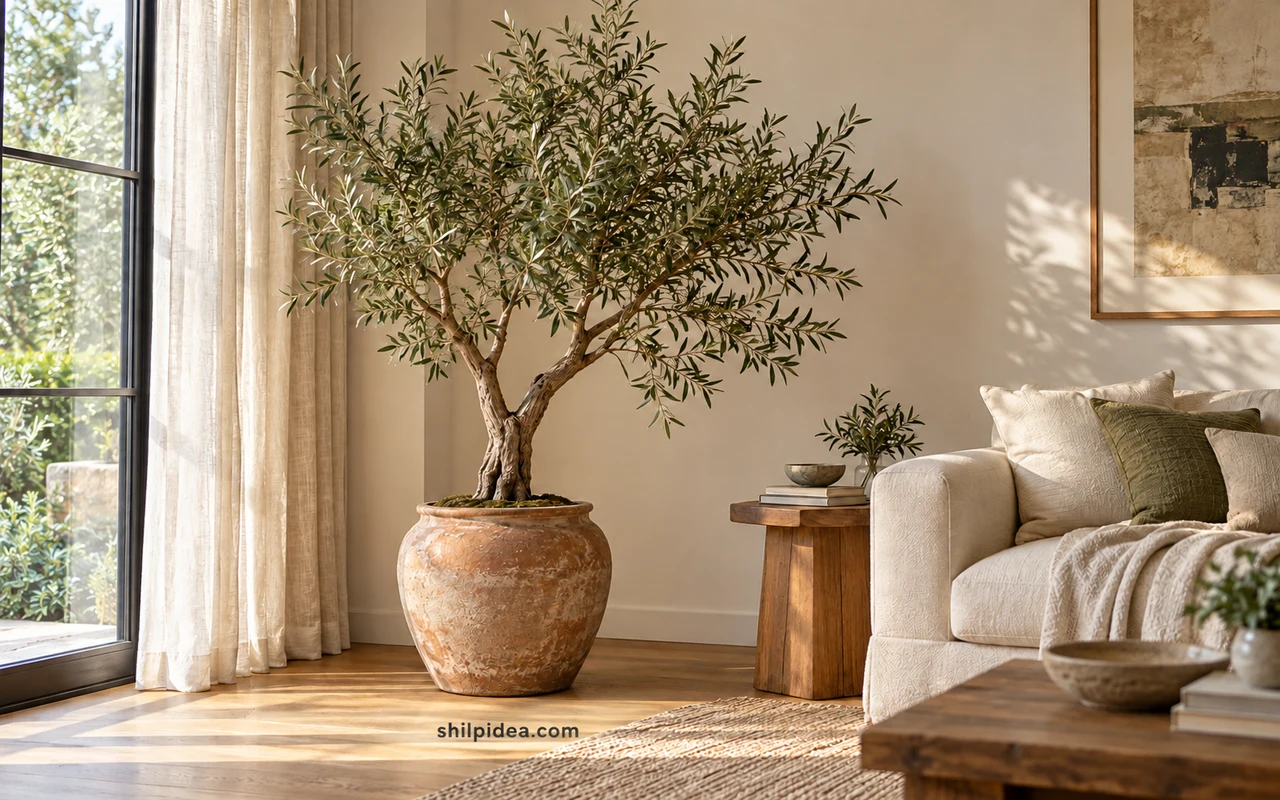
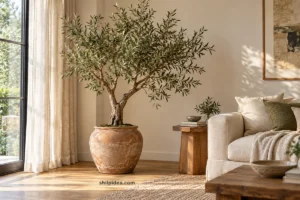
An olive-tree shape can give a living-room corner height without the solid bulk of another cabinet. The planter, branch outline and space around the leaves determine whether it feels like part of the room or an object squeezed into a gap.
Choose a placement that works with your indoor plant displays and everyday walking routes.
These 19 styling ideas use faux trees and one paper interpretation. Live olives need full sun and good drainage; follow the RHS growing guidance rather than copying a decorative photo’s placement.
1. A Woven Basket Beside Low Storage
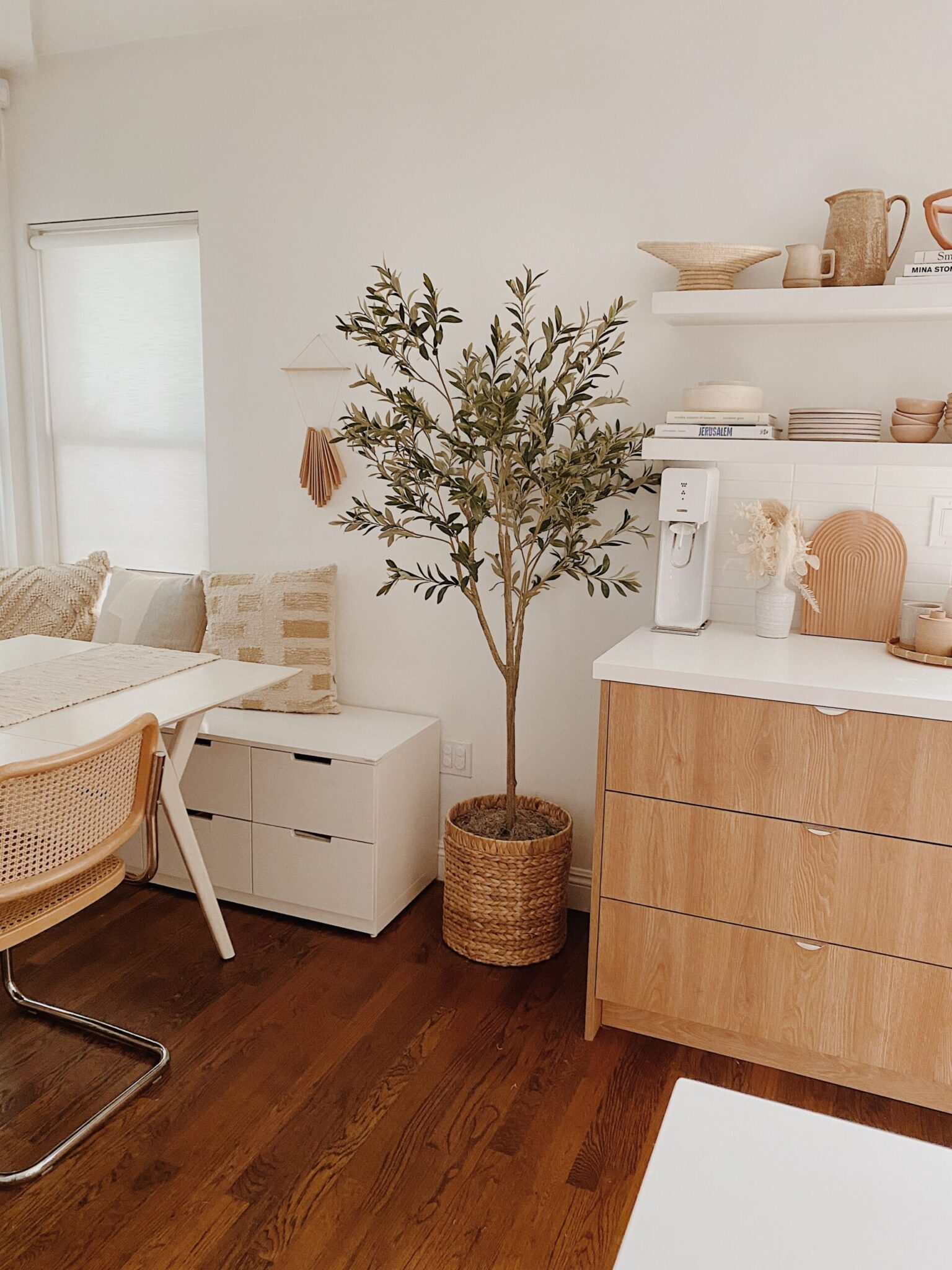
A woven basket gives a faux olive tree a warmer base than a plain nursery pot. Beside a low cabinet, the canopy adds a different height without needing another large piece of furniture. Choose a basket that holds the inner pot securely. Leave enough space around it for cabinet doors and the route into the seating area.
See the original project: A Woven Basket Beside Low Storage by Almost Makes Perfect.
2. A Pale Concrete-Style Pot Beside the Sofa

A substantial pale planter helps an airy faux tree feel grounded. The contrast between the solid base and narrow leaves keeps the arrangement balanced. Beside a sofa, check that the branches will not brush people’s heads or cover a side table. A little clear floor around the pot makes the placement feel more deliberate.
See the original project: A Pale Concrete-Style Pot Beside the Sofa by The Brain and the Brawn.
3. A Slim Tree Behind an Accent Chair
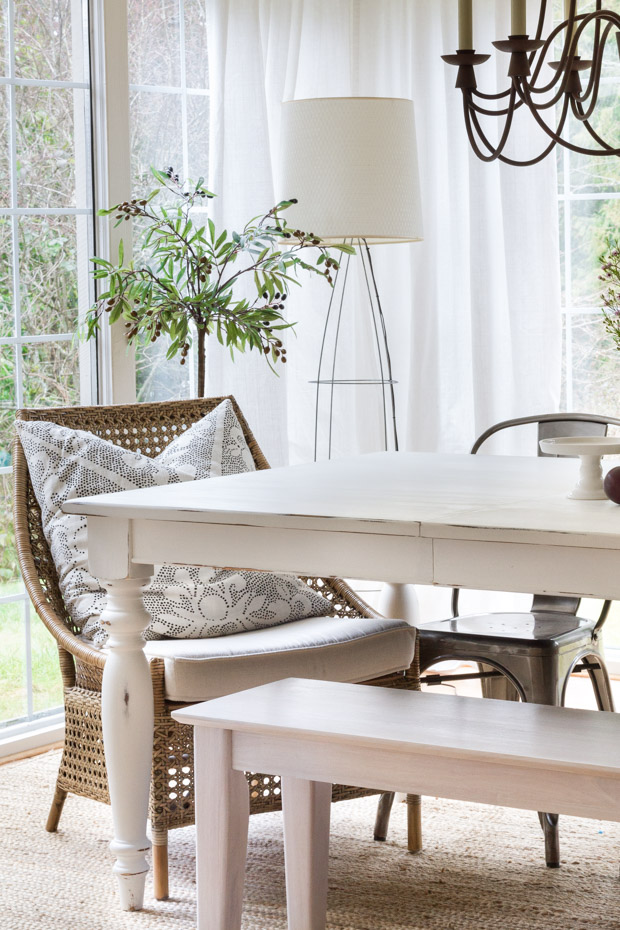
A slender faux tree can add height behind a chair without making the whole seating corner feel crowded. Keep the canopy clear of the person using the chair and leave room to move it. A neutral pot lets the leaves soften the background. This approach works best when the tree feels like one part of the seating arrangement.
See the original project: A Slim Tree Behind an Accent Chair by Zevy Joy.
4. An Airy Accent Near a Pale Mantel
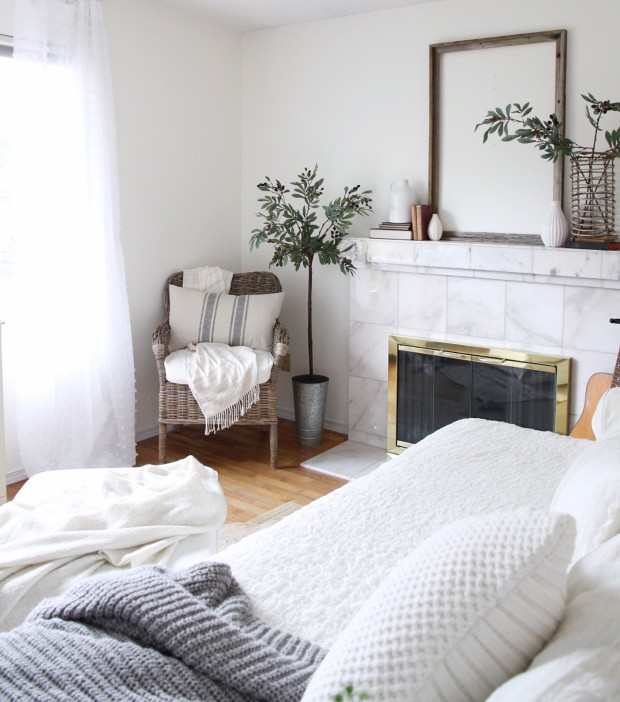
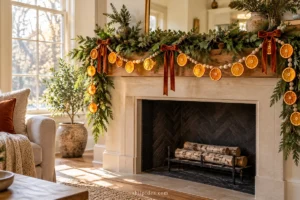
A light branch structure softens the straight lines of a fireplace surround and nearby furniture. Keep a decorative faux tree well away from an active fire or hot surfaces. Let the foliage stand clear of the mantel objects rather than combining everything into one dense display. The open spaces between the leaves help the corner remain calm.
See the original project: An Airy Accent Near a Pale Mantel by Annie / Zevy Joy, via Craftberry Bush.
5. An Ivory Pot with a Gently Textured Surface
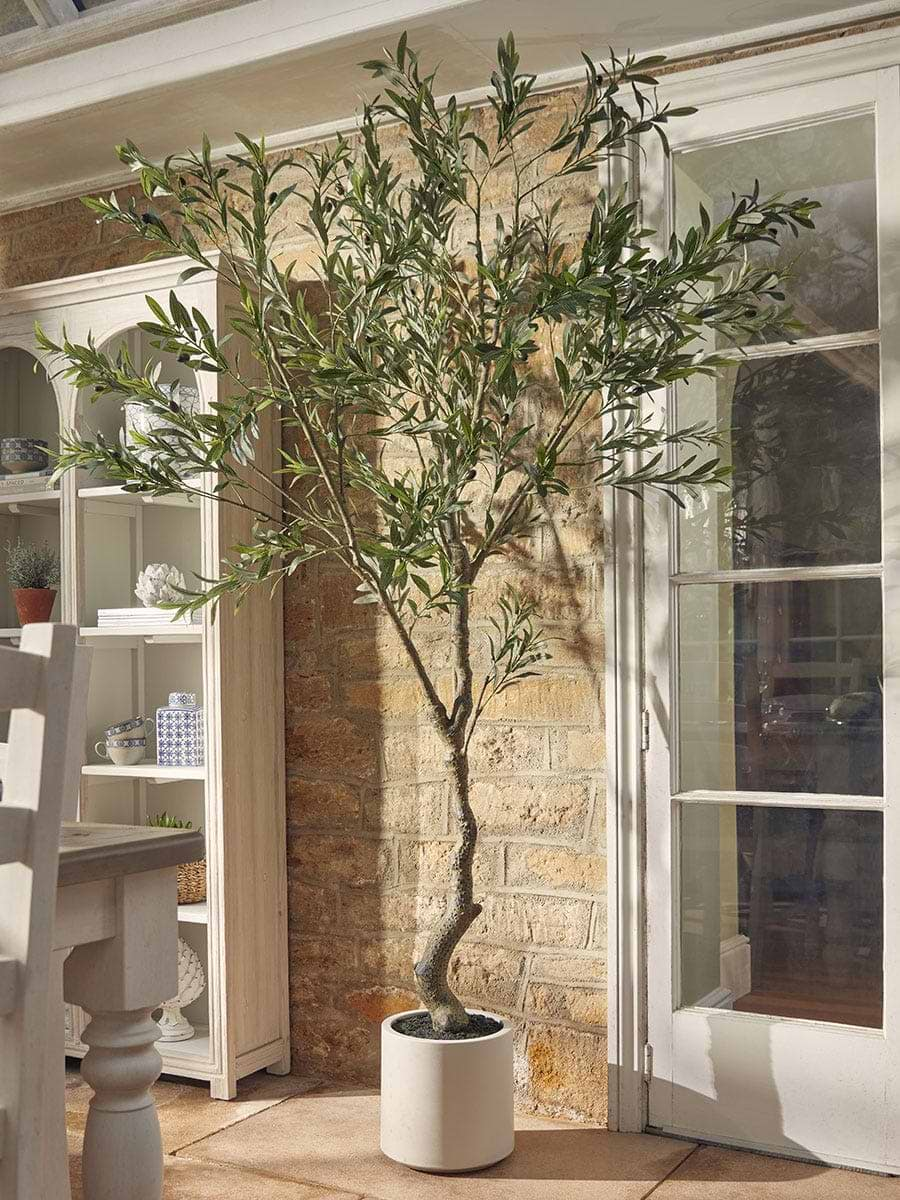
A light textured planter gives the tree a little more character without introducing a strong new color. It can connect comfortably with cream upholstery or linen curtains. Keep the pot’s width in proportion to the canopy so the tree does not look top-heavy. For a faux display, make sure the inner base sits steadily inside the decorative container.
See the original styling: An Ivory Pot with a Gently Textured Surface by Cox and Cox.
6. A Basket at the End of a Console
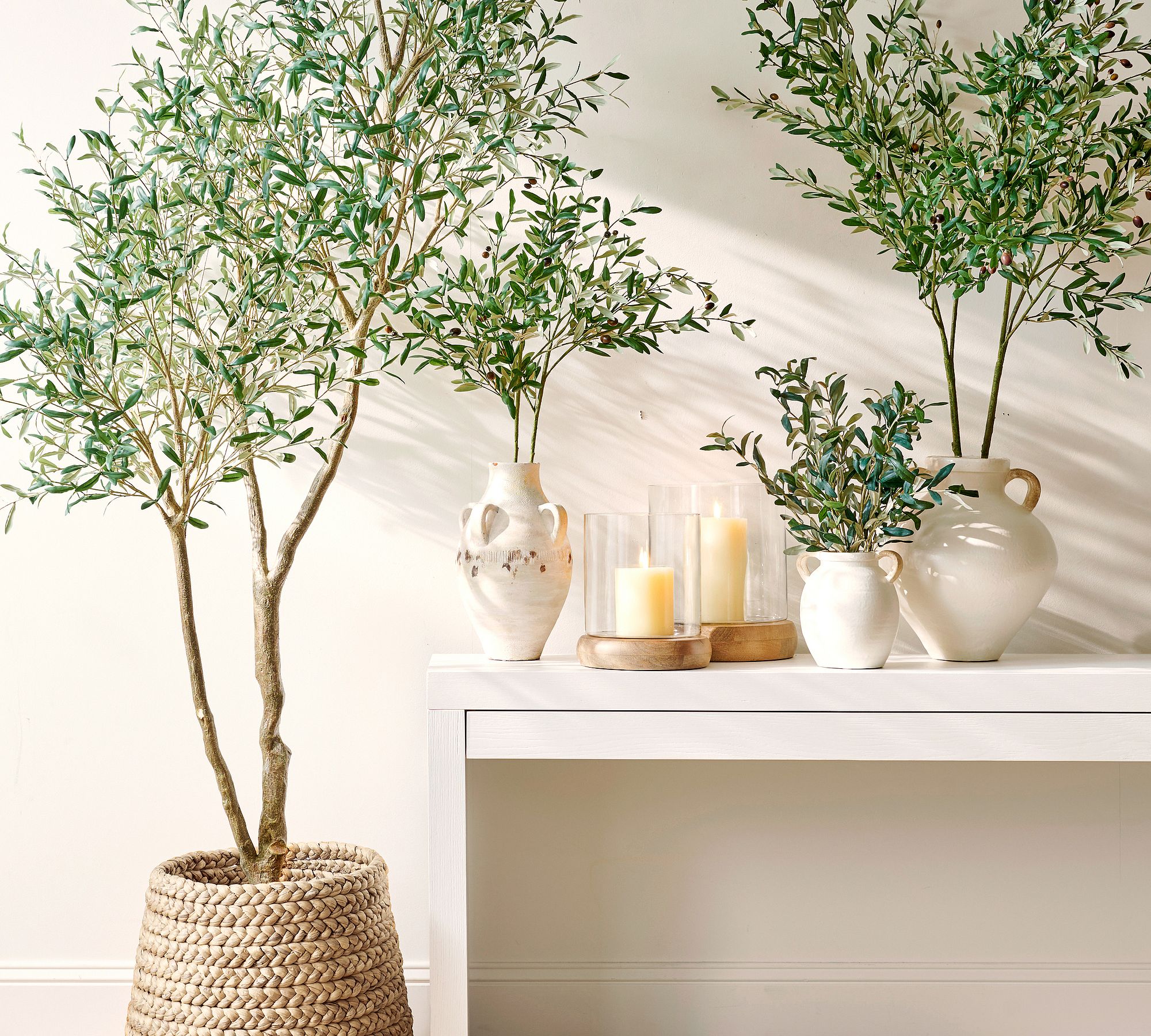
A basket brings a softer texture to a corner dominated by straight furniture edges. Place the faux tree at one end of a console rather than centering it among many small objects. Leave the cabinet practical to use. A clear wall behind the canopy helps the narrow leaves show up without needing extra decoration.
See the original styling: A Basket at the End of a Console by Pottery Barn.
7. A Rounded Canopy Beside a Dark Chair
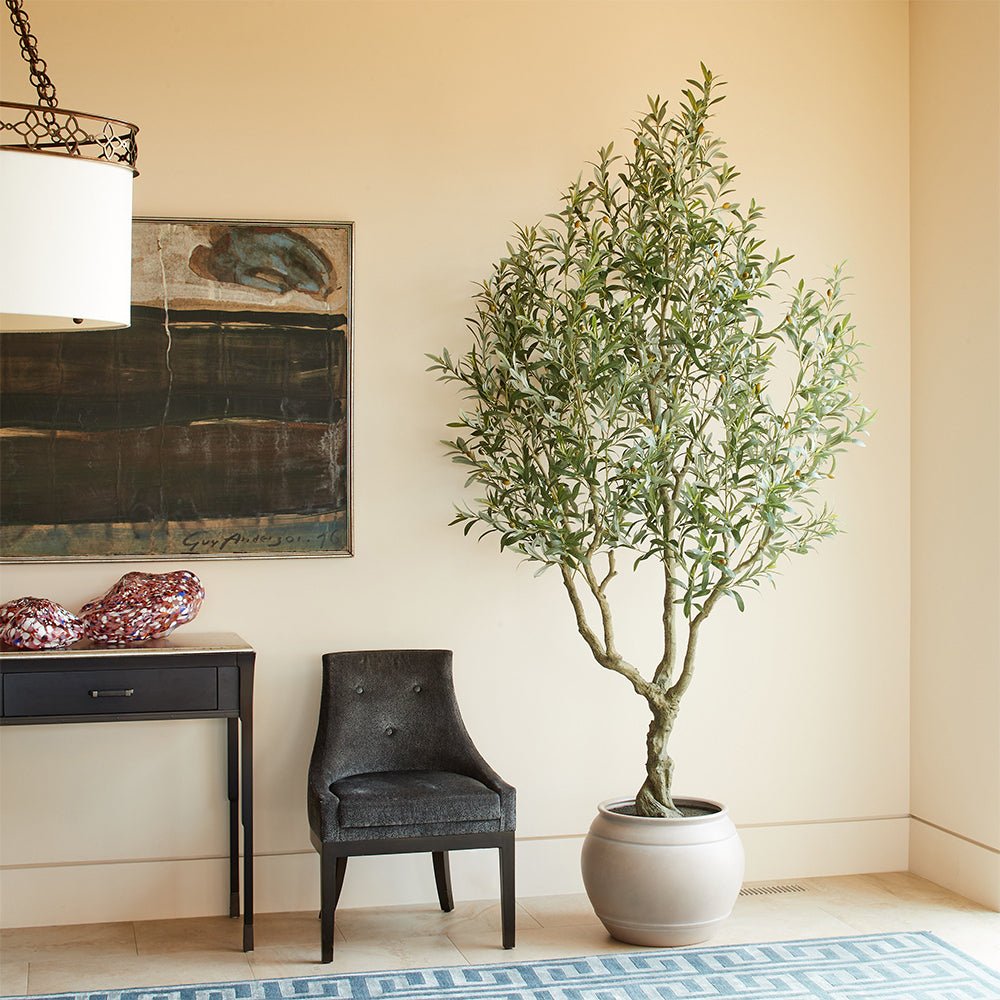
A fuller, rounded faux tree can balance the visual weight of a dark chair or artwork. Keep the lower trunk visible so the form still feels airy instead of becoming a green block. Check the canopy width as carefully as the overall height. A broad tree can need more room beside seating than its small pot suggests.
See the original styling: A Rounded Canopy Beside a Dark Chair by CG Hunter.
8. Olive Leaves Against Deep Blue Curtains

A darker curtain gives pale olive-colored leaves a clear background. The contrast can make a modest tree feel more noticeable without adding more objects to the corner. Keep the pot simple and leave the curtain able to open fully. The arrangement should sit beside the window treatment rather than trapping fabric behind the branches.
See the original project: Olive Leaves Against Deep Blue Curtains by Untapped Potential Designs.
9. A Quieter Look with Fewer Visible Olives
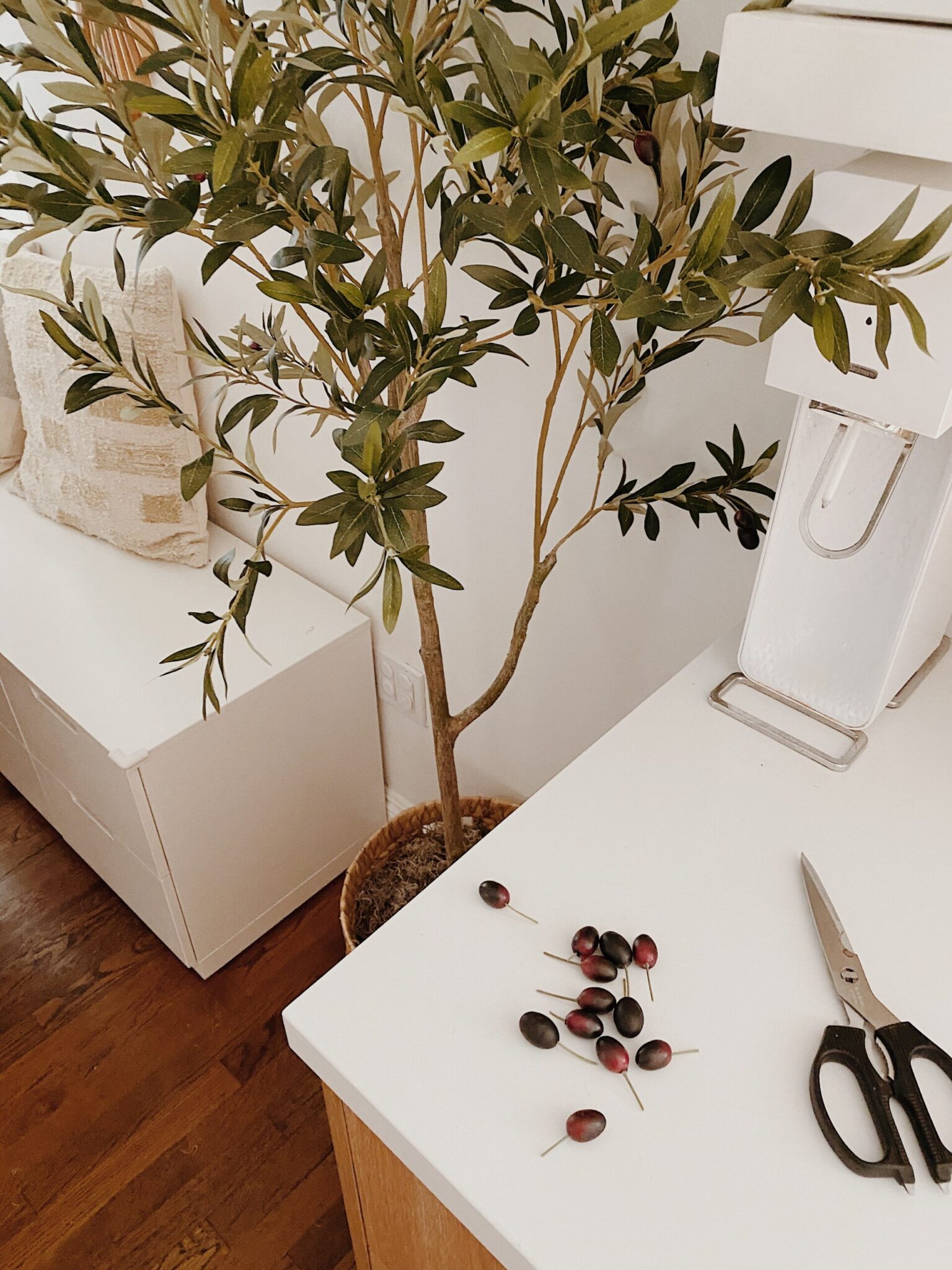
Small fruit details can change how a faux olive tree reads at close range. This creator adjusts the tree’s appearance rather than accepting every decorative piece as it arrives. For a restrained room, keep the emphasis on the leaf shape and branching. Follow the maker’s advice carefully if you alter a faux tree, and avoid damaging its stems.
Get the tutorial: A Quieter Look with Fewer Visible Olives by Almost Makes Perfect.
10. Open Branches Instead of a Perfect Sphere

A little variation in branch direction can make an artificial canopy feel less rigid. Leave gaps where the wall shows through rather than spreading every stem into the same outline. Shape only the flexible parts the product allows you to adjust. Step back between changes so you can see the overall silhouette from the room’s entrance.
See the original project: Open Branches Instead of a Perfect Sphere by The Brain and the Brawn.
11. A Simple Metal Bucket for a Rustic Base
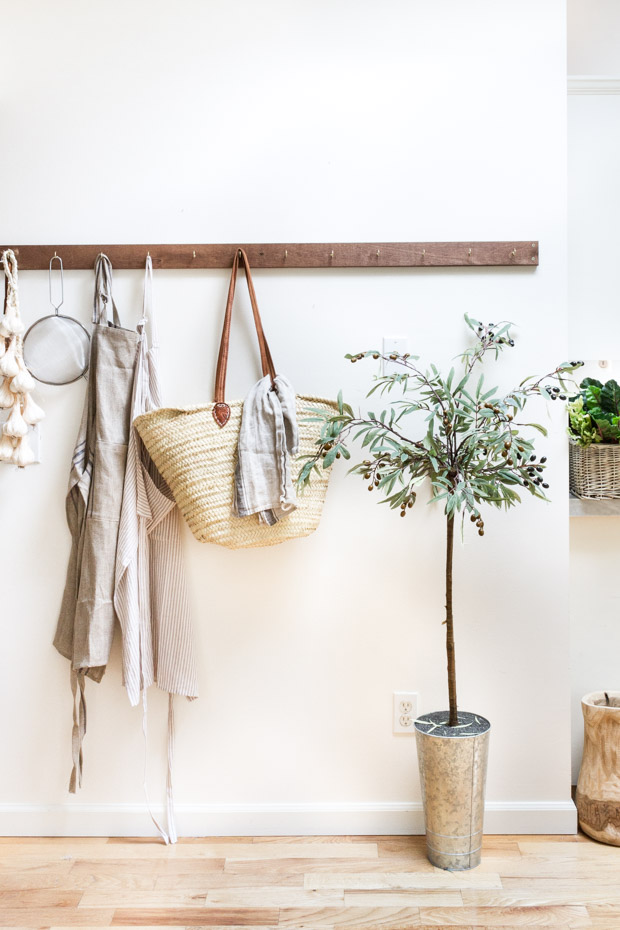
A metal container gives a faux tree a modest farmhouse character. It works especially well when the room already includes woven materials or pale wood. Make sure the inner pot sits level and does not wobble. Keep the rest of the corner fairly simple so the contrast between leaves and metal feels intentional rather than busy.
See the original project: A Simple Metal Bucket for a Rustic Base by Zevy Joy.
12. A Paper Olive Tree as a Handmade Interpretation

A paper tree offers a deliberately handmade version of the olive silhouette. The interest comes from the individual leaves and the time spent making them rather than pretending it is a living plant. This can suit a dry, quiet display corner or a smaller cabinet arrangement. Keep paper foliage away from moisture, heat and direct handling.
Get the tutorial: A Paper Olive Tree as a Handmade Interpretation by Handmade by Sara Kim.
13. A Small Faux Tree on a Side Cabinet
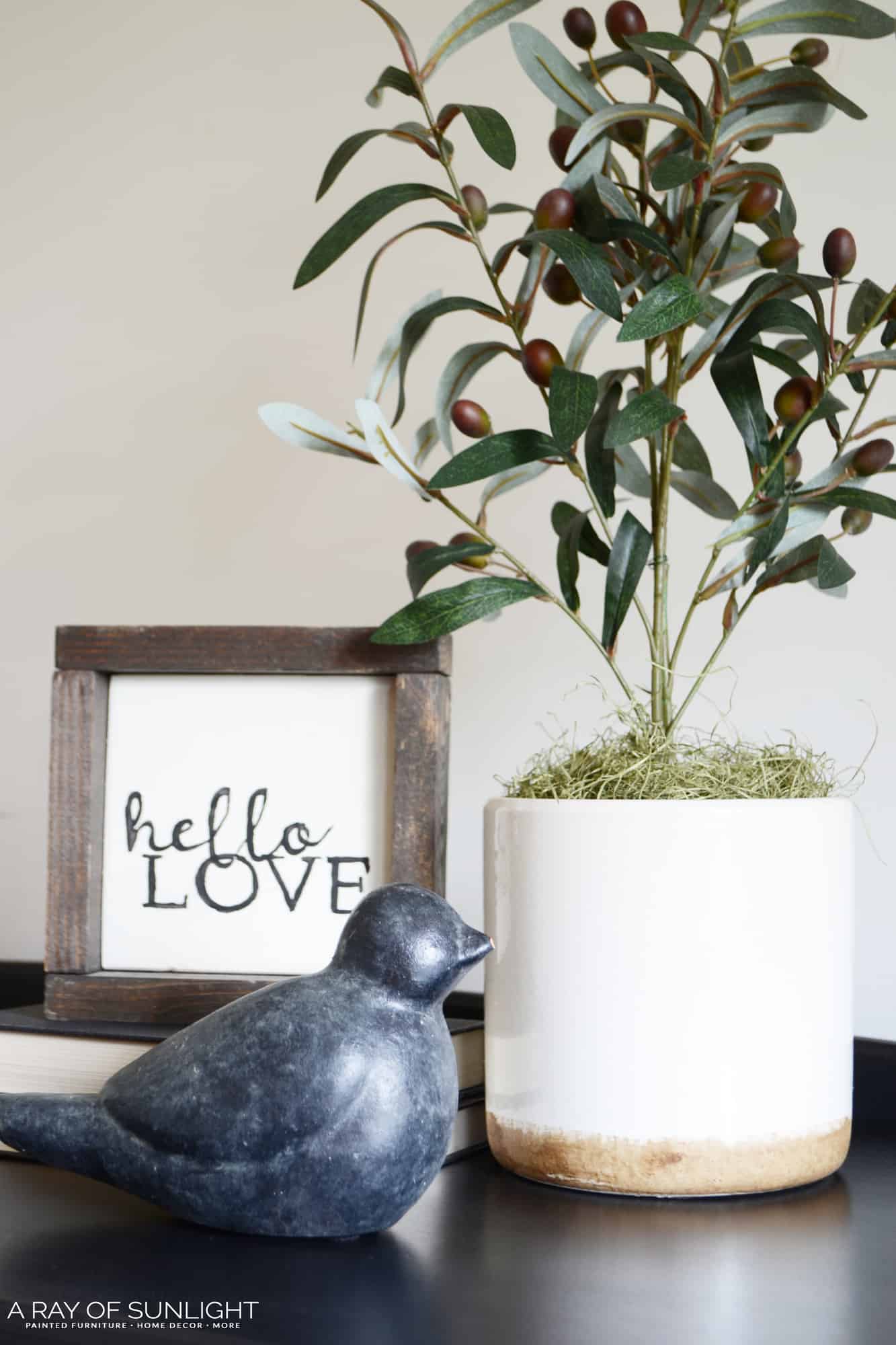
A tabletop-scale olive accent can bring the same vertical shape to a room that has no space for a floor pot. Keep the container small enough that the cabinet still has a useful surface. A plain pot helps the foliage stand out. Choose a stable position away from the edge and avoid blocking a picture or lamp. A nearby small shelf display can repeat the same calm materials.
Get the tutorial: A Small Faux Tree on a Side Cabinet by A Ray of Sunlight.
14. Woven Texture Alongside a Soft Chair
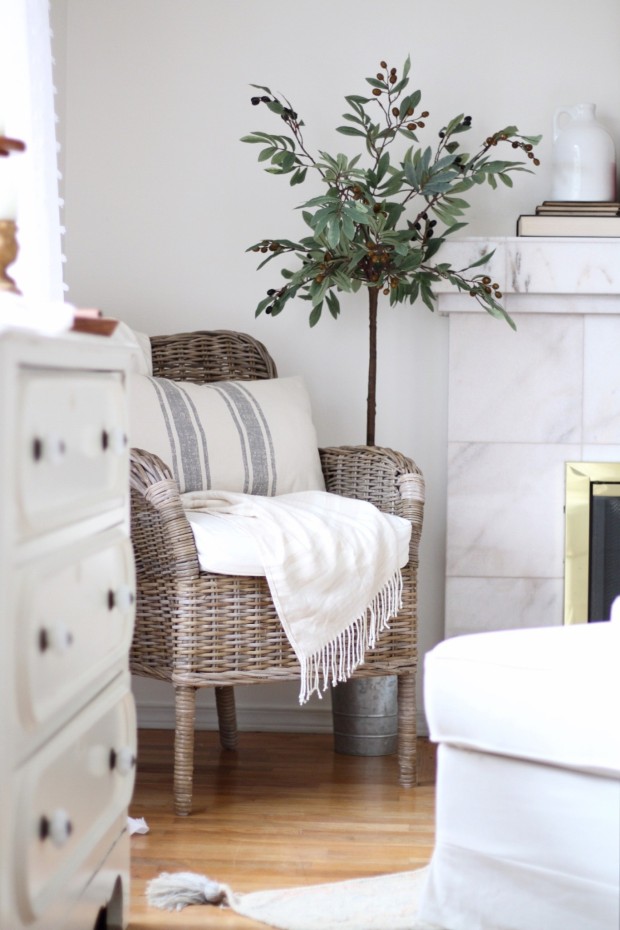
A woven planter and a soft chair share a relaxed texture without needing to match exactly. The faux tree adds height while the chair keeps the corner useful. Leave space between the seat and foliage so the leaves are not pushed aside every time someone sits down. A restrained throw can connect the warm materials.
See the original project: Woven Texture Alongside a Soft Chair by Annie / Zevy Joy, via Craftberry Bush.
15. Two Slim Trees Framing a Wide Opening
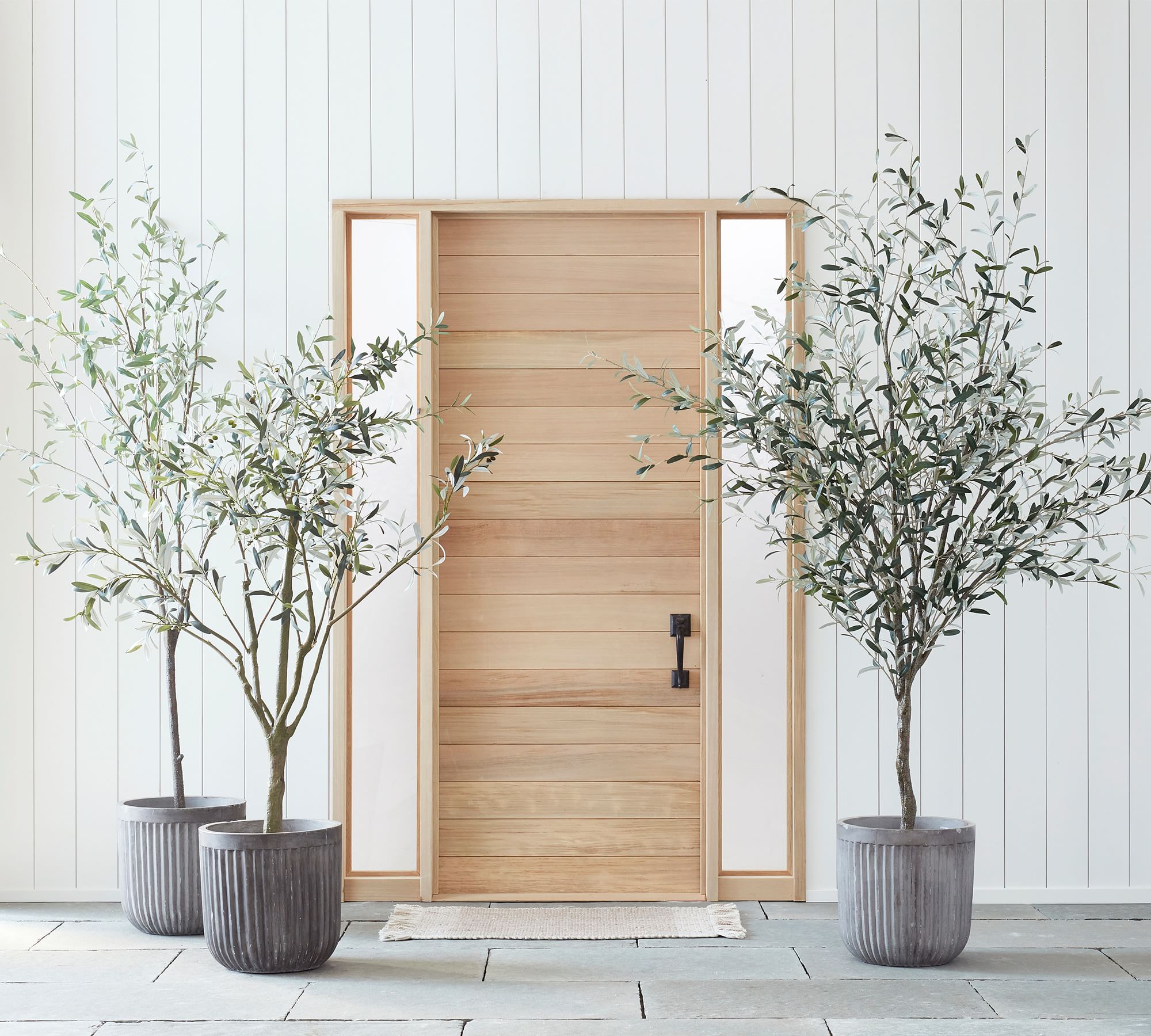
A pair of faux trees can give a wide opening or broad window a balanced frame. This needs more room than a single corner accent, so use it only where circulation stays comfortable. Matching containers create the connection; the branch shapes do not need to be perfectly identical. Keep surrounding objects quiet so the paired forms remain clear.
See the original styling: Two Slim Trees Framing a Wide Opening by Pottery Barn.
16. A Finished Pot Surface That Hides the Inner Base

The top of a faux planter matters when it can be seen from the sofa. A neat decorative cover can hide supports and give the base a more finished look. Keep loose material out of reach of pets and small children, and do not pack it against a living tree’s trunk. This detail is for an artificial display.
Get the tutorial: A Finished Pot Surface That Hides the Inner Base by Crazy Life with Littles.
17. A Basket Near the Hearth for Natural Texture

A woven base can soften a corner with hard fireplace and wall surfaces. Keep the faux tree outside any heat zone and leave the fireplace practical to use. A simple pot color lets the texture be the detail. Avoid adding another large basket beside it unless the room has enough space for both to feel useful.
See the original project: A Basket Near the Hearth for Natural Texture by The Brain and the Brawn.
18. A Tree That Connects Two Different Furniture Heights

A canopy placed between lower and taller pieces can make their height change feel less abrupt. The open branches bridge the wall space without creating another solid storage block. Keep the tree’s base clear of drawers and chair legs. A few related materials in the planter and furniture help the arrangement feel like part of the same room.
See the original project: A Tree That Connects Two Different Furniture Heights by Almost Makes Perfect.
19. A Few Fruit Details Within the Foliage

Visible olives can give a faux tree a recognizable character, especially when the leaves alone read as generic greenery. Keep the fruit details sparse enough that the branches still look light. View the tree from the distance people normally see it rather than judging only a close-up. A quiet planter allows those small details to remain the accent.
See the original project: A Few Fruit Details Within the Foliage by Untapped Potential Designs.
Make the Corner Work with the Rest of the Room
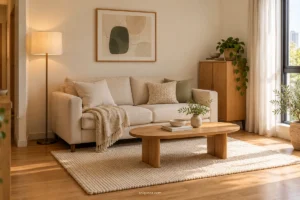
Once the tree and planter feel right, keep nearby objects useful and restrained. A small lamp, a comfortable chair or a simple shelf can help the corner feel connected.
- Indoor plant decoration ideas
- Wall shelf and plant display ideas
- Creative interior details for your home
Which planter or corner arrangement would you choose for your home? Share your favorite in the comments, or tell us how you’ve styled a faux tree of your own. We’d love to hear the little detail that made it feel right in your room.

















0 Comments