19 Flowering Windowsill Plant Display Ideas
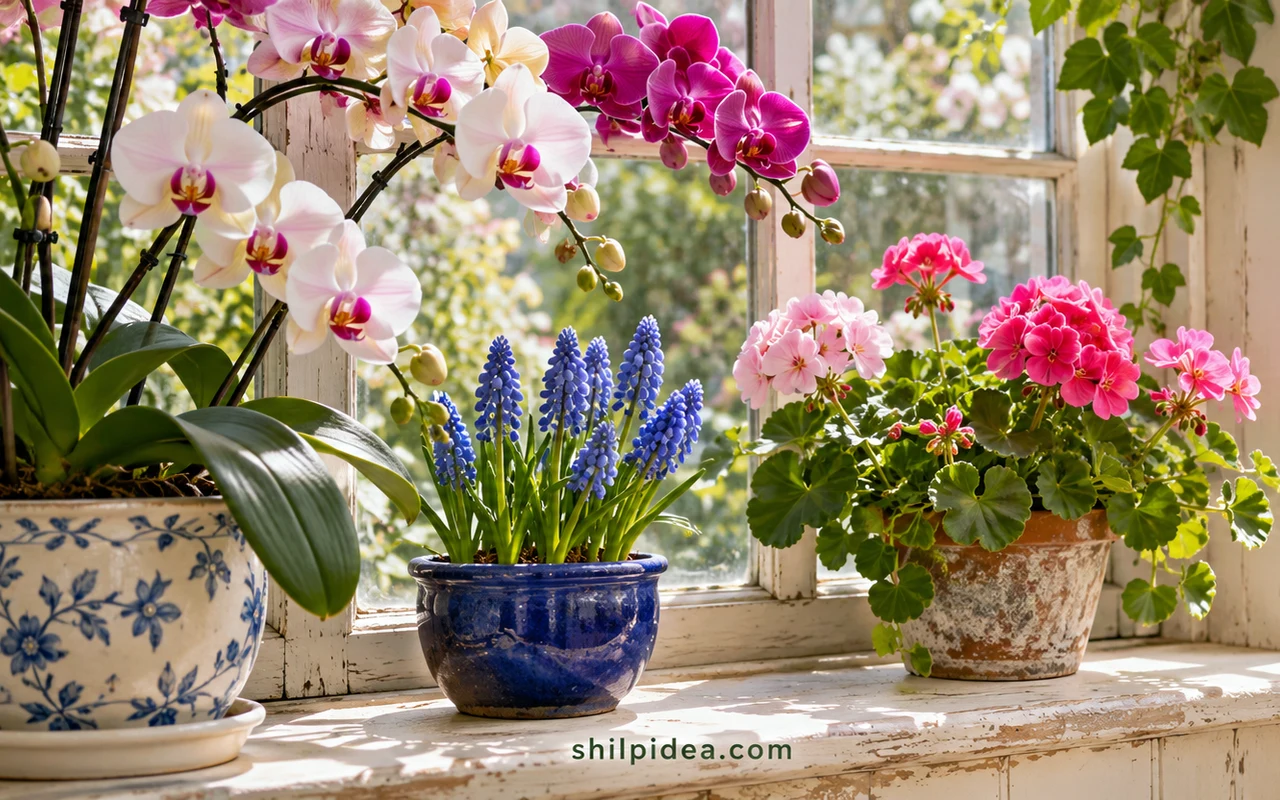
The best seat in the room might belong to a flowering plant. A sunny window can show off the curve of an orchid or the tiny bells on a spring bulb, if you leave room around them.
Start with the light your plant needs and a pot you can lift out to water. Even mini succulent displays benefit from that bit of practical planning.
These arrangements work with the sill you already have. For a present, the same principles help you choose meaningful houseplant gifts that will fit the recipient’s window.
1. Match a bulb pot to its flowers

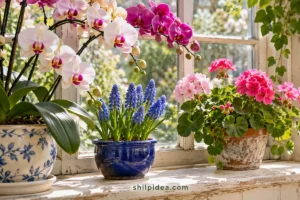
White grape hyacinths show how closely packed bells can read as one patch of color. Repeat that white in the pot if you want the flowers and container to blend. Give the cluster a little empty space on either side so the tiny bells show. A spring bulb sold in bloom is a seasonal guest on the sill. Slip its draining nursery pot into the decorative one and empty it after watering.
2. Pair tiny flowers with a bold leaf shape
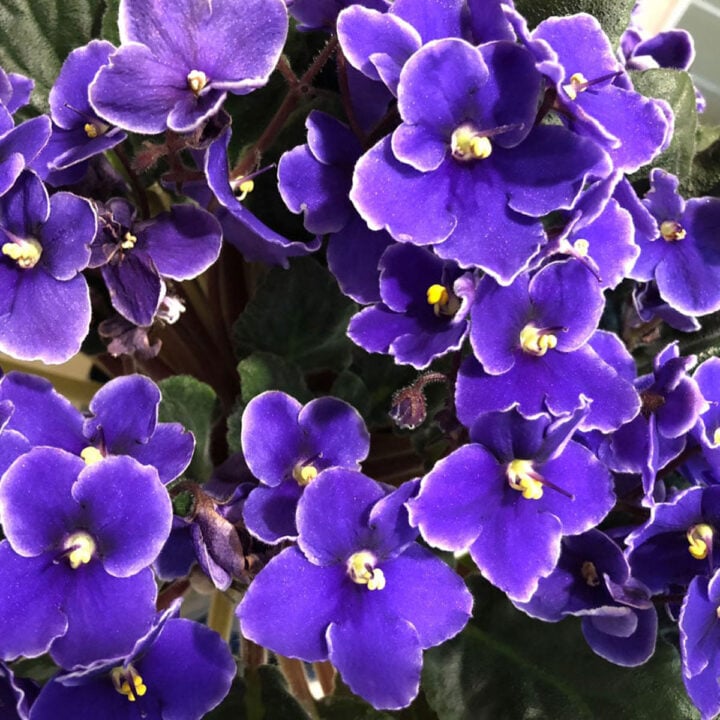
An African violet carries clusters of purple flowers over rounded leaves. Set a separate aloe beside it to add a pointed shape. The pointed leaves give the eye a line to follow, then the little blooms break it into dots. Keep the pots separate so each plant gets water when it needs it. From the front, check that an aloe leaf does not point straight across the flowers.
3. Bring a small flowering succulent up to eye level
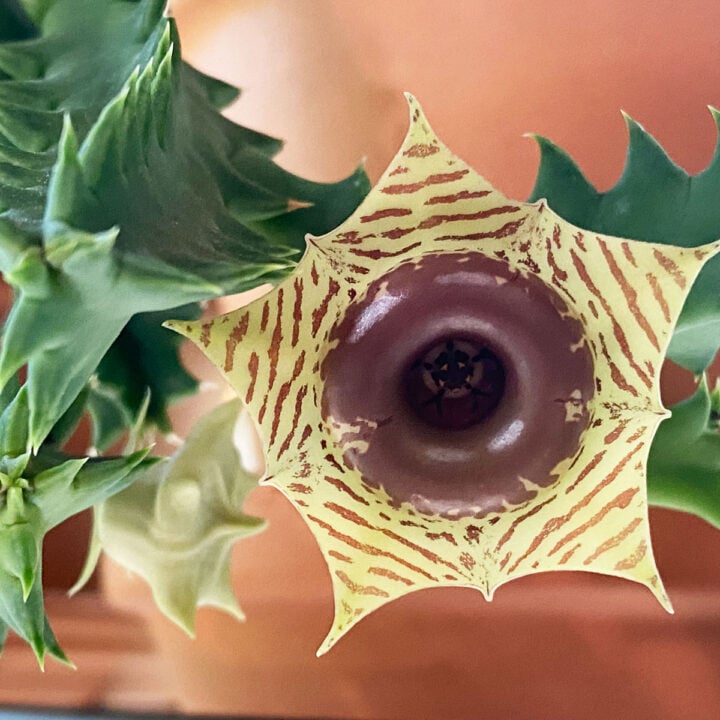
A star-shaped Huernia flower sits close to its angular stems, where it is easy to miss from across a room. Choose a window you pass standing up so you can see the small flowers without leaning over furniture. Set the pots on a rigid tray with a lip, leaving space between the stems. Check the plant label for light needs and use tongs or folded cardboard when moving a prickly pot. A few painted rock markers can distinguish similar little pots.
4. Let a sheer curtain frame one arching stem
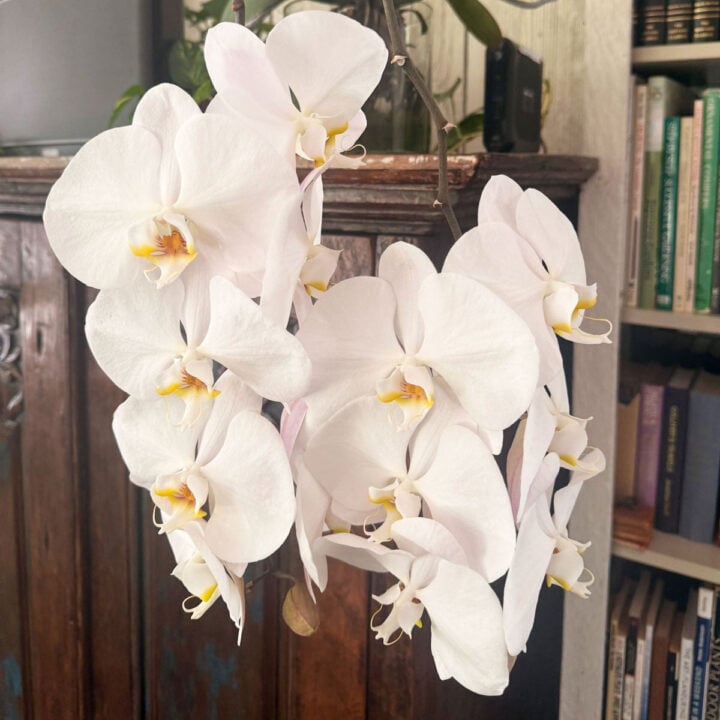
An orchid spike curves into the soft space made by a curtain. Pull the fabric to one side, leaving enough clearance that opening it never drags across the blossoms. Choose a bright spot appropriate for your orchid and check how the sun moves through the day. A curtain that softens morning light may behave differently on a west-facing window.
5. Use foliage to give a flowering pot a backdrop
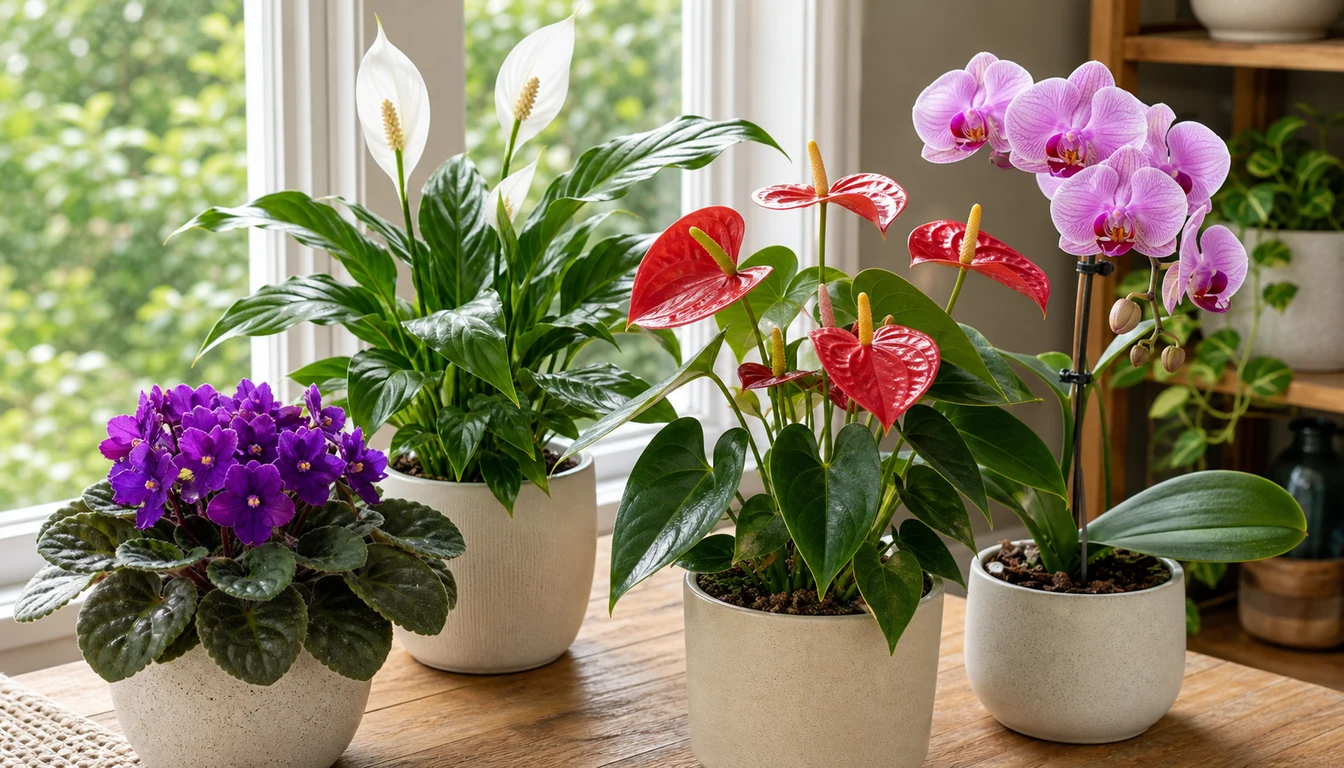
Let one red-flowering pot stand just ahead of a leafier neighbor. Viewed from the room, the green makes a quieter background than the bright scene outside. A slight stagger is usually enough. Keep the leaves from overlapping heavily so you can turn either pot, inspect the soil, or take it to the sink without moving the group.
6. Slip a nursery pot into a vintage metal vessel

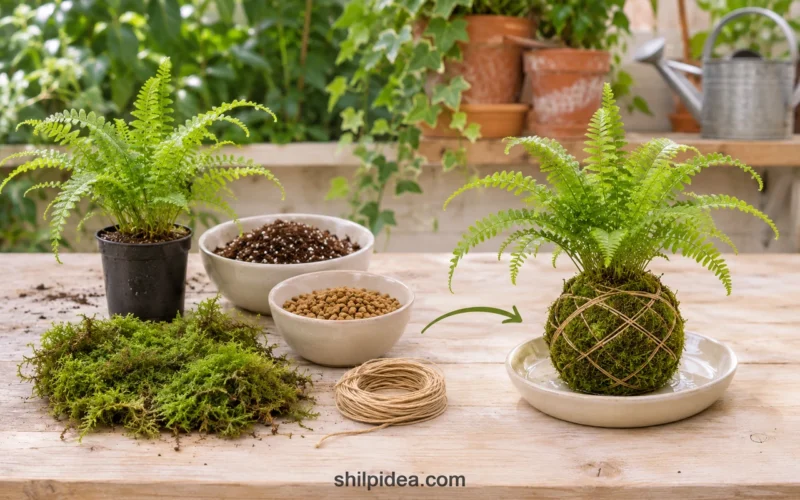
A shallow metal bowl gives a moss garden a different silhouette from a conventional flowerpot. For a flowering version, slip a small nursery pot inside a slightly deeper vessel. Look for an opening wide enough to lift the inner pot without tugging on the stems. Water it separately and let it finish dripping before you put it back. A waterproof coaster underneath protects a painted sill from rust marks and condensation. Look at repurposed dish displays for more ideas for outer containers.
7. Set one small object beside the flowers

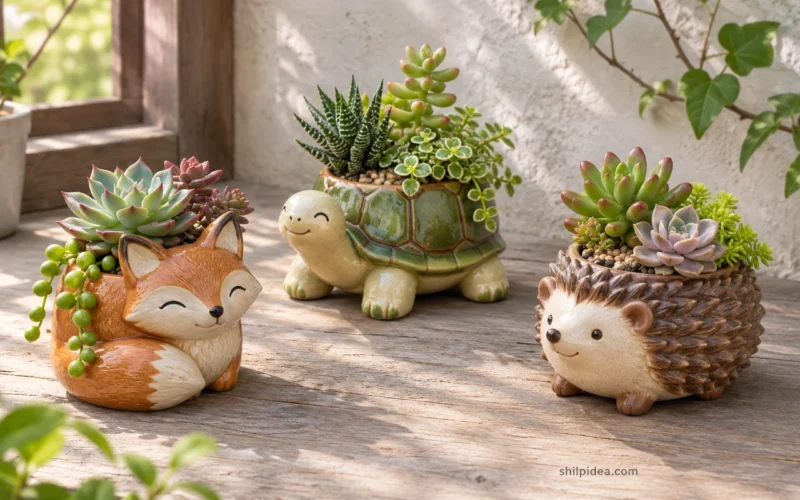
A favorite mug gives a windowsill of orchids a personal detail. For a second small accent, set a ceramic animal beside a pot. Keep the ornament lower than the main flowers so the two outlines stay clear. Stand in the room and shift the figure an inch at a time. If the finish catches too much glare, a matte ceramic animal gives a gentler accent.
8. Repeat geraniums along a long window
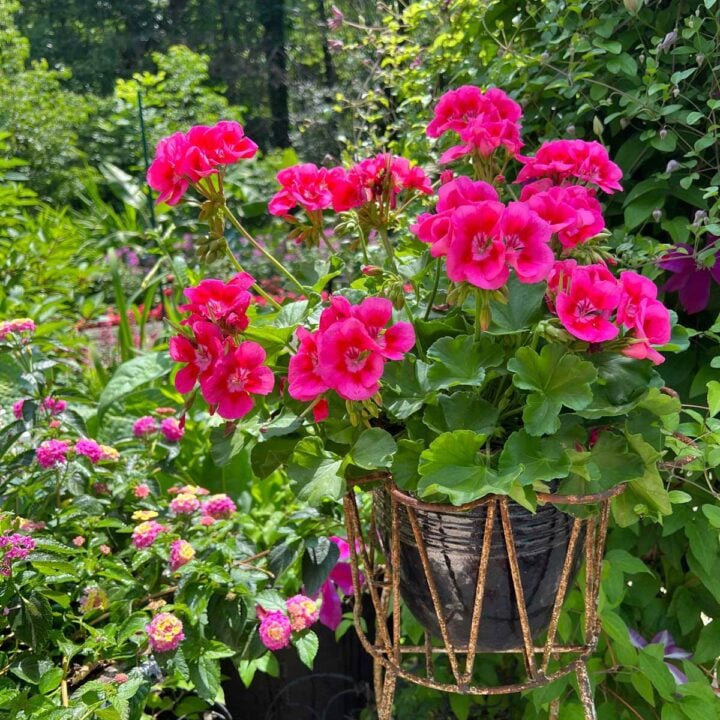
A line of flowering geraniums can carry the eye along a broad sill. Start with two pots and leave a conspicuous gap between them before deciding whether there is room for a third. Choose a sufficiently sunny position for the variety. Keep the saucers separate so one freshly watered pot does not leave its neighbor standing in a puddle.
9. Leave a clear opening between the curtains
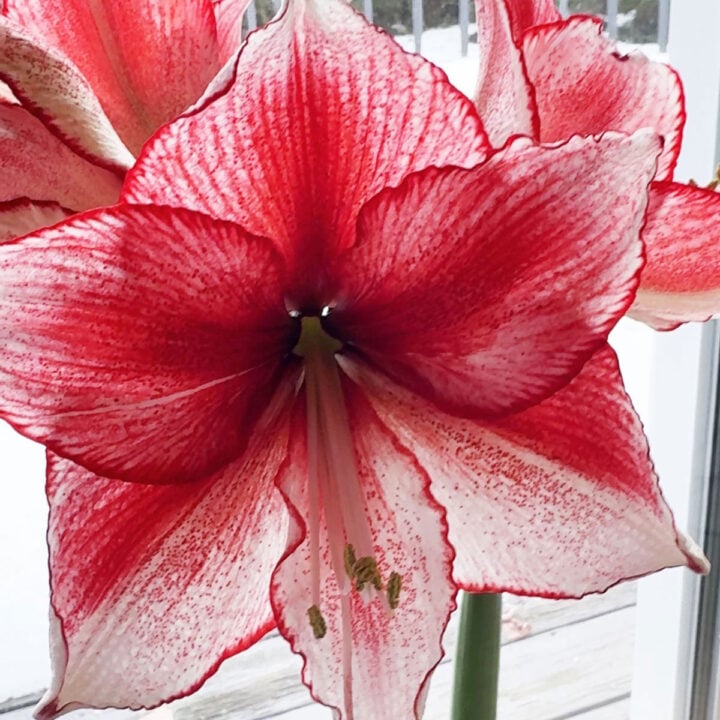
Frame the plants with the curtains you already have. Draw the curtains as you normally would, then mark where the loose fabric lands before choosing pot positions. Shorter flowering plants suit the center if you want to keep the view. Set saucers entirely inside the sill edge so a passing hand cannot catch them.
10. Mix one cut stem arrangement with living pots
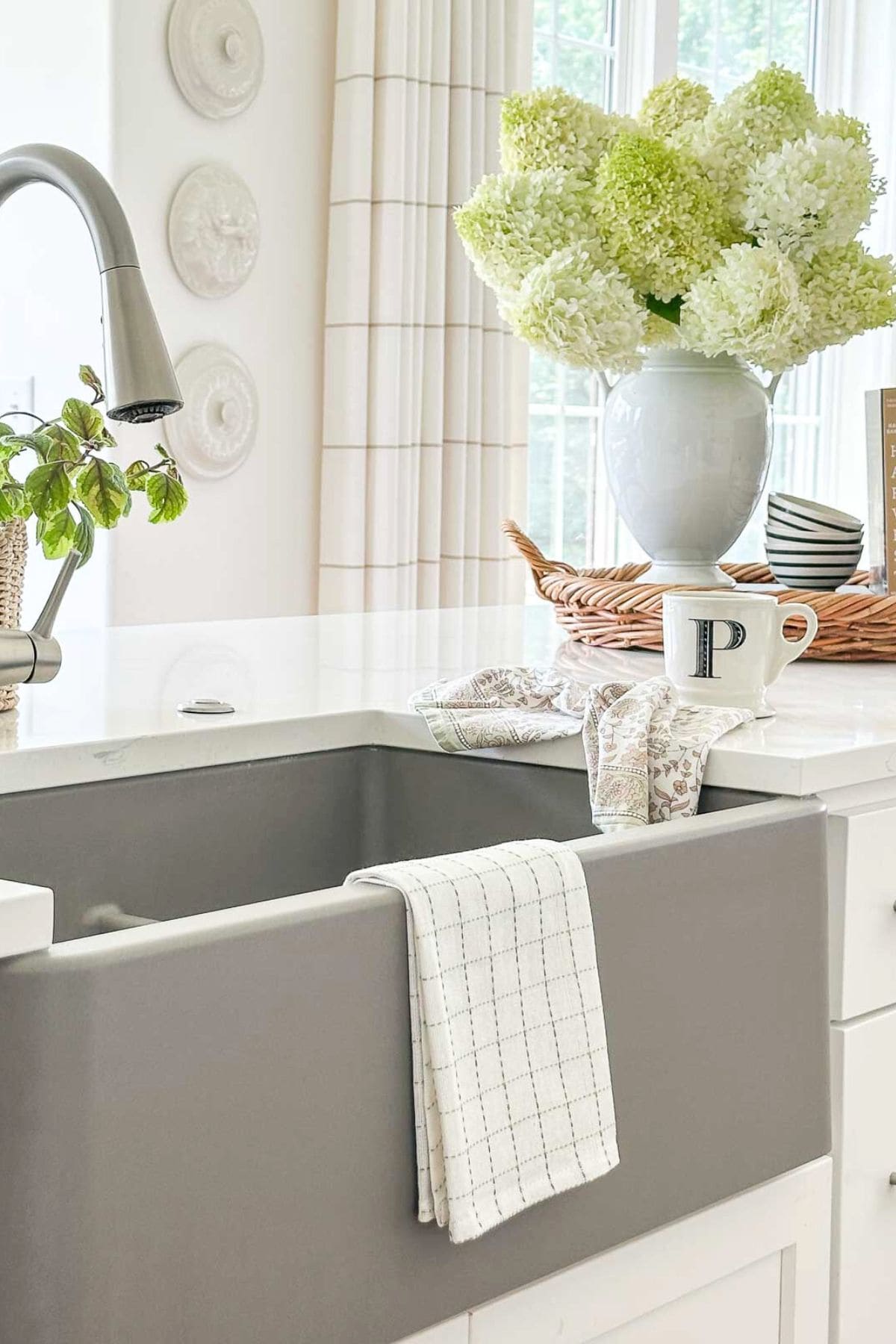
A slender vase of cut flowers can fill the gap while a favorite plant rests between blooms. Keep the vase visibly separate from the pots so you can change its water without lifting the garden. One tall stem is often enough. Remove spent cut flowers promptly, especially when they stand above a low-growing plant.
11. Choose a patterned pot for a single orchid

A decorative pot can carry the display beneath an arching orchid. Choose a pattern with a little color in common with the flowers and leave the surrounding sill simple. Look at the plant from a seated position before settling on the container. A rim that appears modest from above can conceal the lowest leaves from across the room.
12. Give a low succulent group a flowering focal point
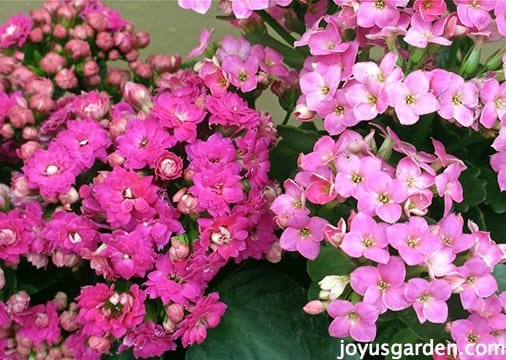
Tuck a brighter flowering pot among low rosettes to make a small collection easier to read. Leave a finger-width of space around each rim and keep the pots individually accessible. A shared view does not require a shared watering schedule. When the flowers fade, slide that one pot out and leave the rest of the display in place.
13. Use brick outside the window as a backdrop

Look past the flower when you decide where to put it. Brick seen through a window gives an orchid a textured background, but a dark mortar line can appear to cut across the petals. Move the pot sideways and compare the view from your favorite chair. A small shift can make the flower spray much easier to see.
14. Share a workroom sill with a standing calendar
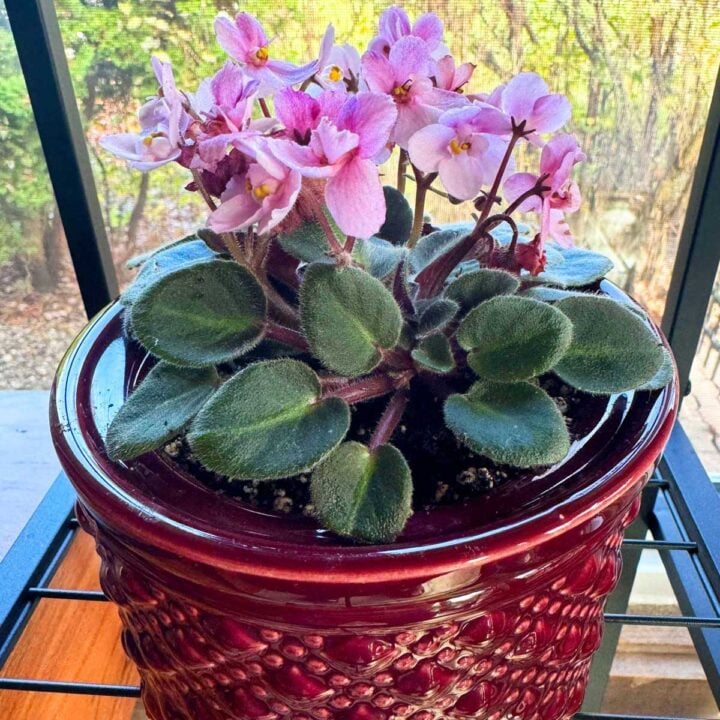
Leave a strip of sill for a calendar or another item you use every day. Choose a low flowering pot for the neighboring spot so you can still read the date. Face the calendar toward the chair and the pot toward its suitable light. Put a waterproof saucer under the plant to keep paper corners clear of damp soil.
15. Mix a handmade flower into the window display

Paper hyacinths can fill a visual gap without adding another pot to water. Keep the paper stems in a separate, dry container beside the living plants. Pick a shape that differs from the leaves around it so the handmade detail reads clearly. This is particularly handy at the end of a sill that gets too little light for blooms. A small polymer clay accent works in a similarly dry spot.
16. Use the spaces between blind slats

Horizontal blinds make a strong pattern behind delicate flower spikes. Open the slats to the position you use during the day, then arrange the pots while viewing them from the room. Leave enough space for the blinds to move freely. If the flower disappears against a bright stripe, raise the pot slightly on a stable, broad coaster.
17. Warm up a cluster with a woven outer basket
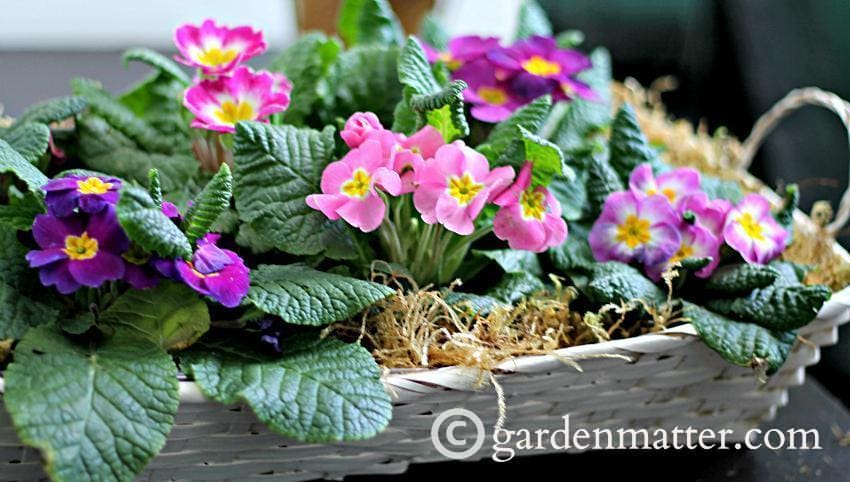
One woven basket softens a row of hard pots and saucers. Choose a removable liner and water the plant at the sink, letting it drain before returning it. A basket wider than the inner pot gives your fingers room to lift it out. Set other pots beside the basket so they remain visible above its rim.
18. Keep a city view open around white blooms

At a window with a distant view, a single slender flowering plant can be enough. Set the pot toward one side, then sit down and check the skyline from that angle. Keep a clear stretch of sill rather than filling it with accessories. A shallow saucer in the pot color helps the base recede against the window frame.
19. Balance a low flowering pot with a tall accent
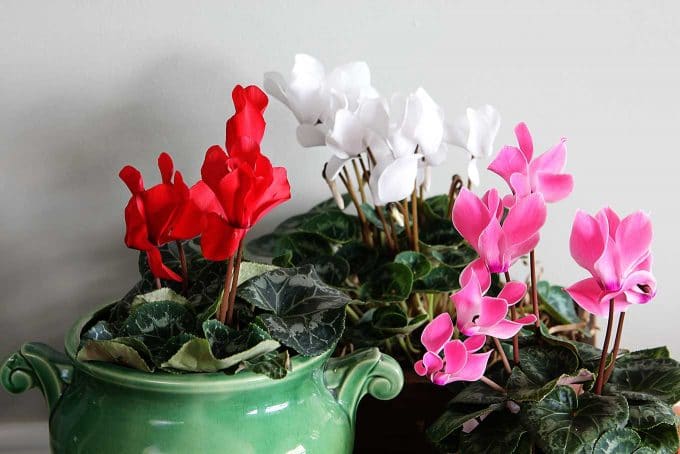
Two different heights can give a short sill some rhythm. The potcarries the color while a slim candlestick beside it draws the eye upward. Try unlit tapers or battery candles near leaves and curtains. Set the taller object toward the fixed side of the window, clear of handles and the path of an opening sash.
Give the flowers the view they need
Check your window at two different times of day before you commit to a row of pots. Note where direct sun falls, where cold glass touches the leaves, and which part of the sill you reach to open the window. Then choose one plant that suits that spot and arrange the rest around its needs.
- Climbing Philodendron Displays for Indoor Greenery
- Window Box Planting Ideas for Color
- Garden Planter Shelves for Small Spaces
- Christmas Rose Arrangements for Holiday Displays
What blooms most reliably on your windowsill, and which direction does that window face? Share your experience in the comments, especially if a particular pot, curtain, or small change of position helped your plant thrive.













0 Comments