How to Make a Cork-Lined Bedside Drawer Charging Station
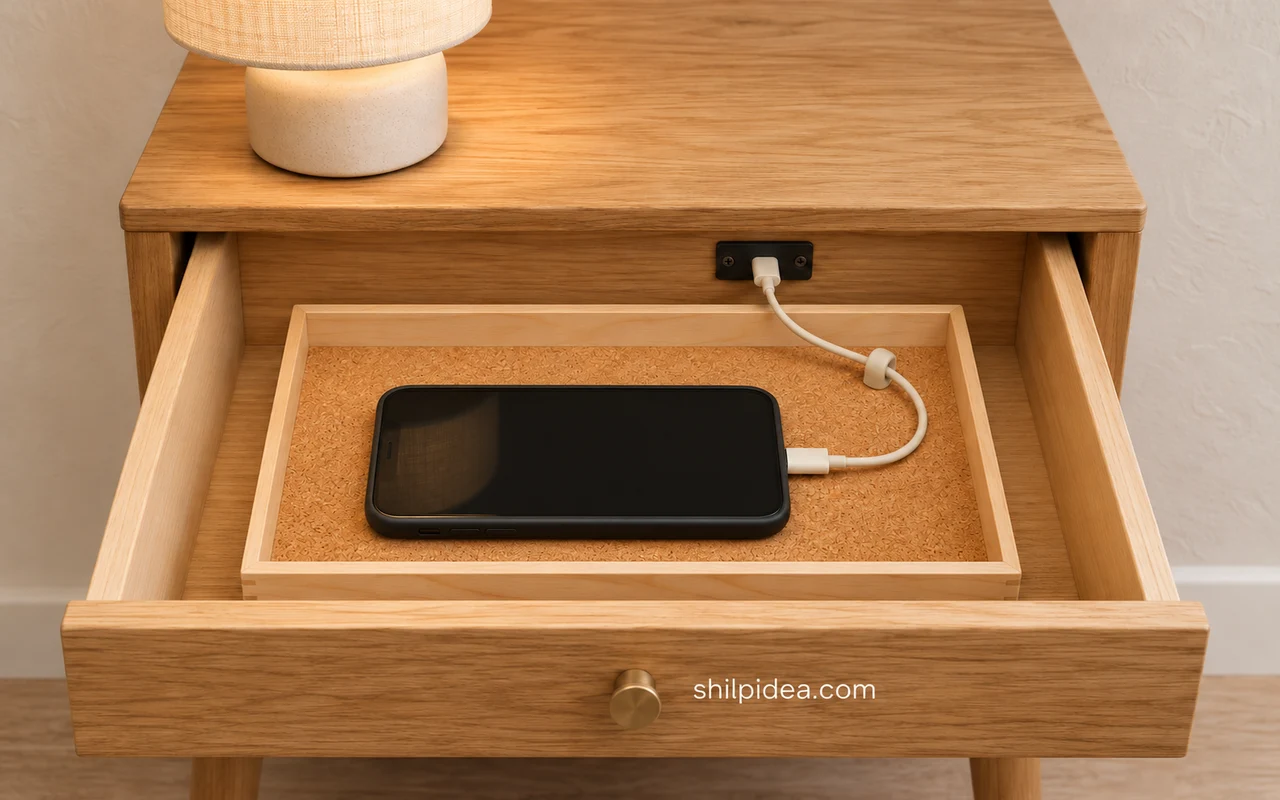
If your charging cable slips behind the nightstand every time you unplug your phone, give the loose end a parking spot. A shallow tray keeps the connector within reach and lifts out when you need the drawer for something else.
This bedside drawer charging station pairs a wood tray with a removable cork liner. Like these small container organizers, it fits the item you actually keep.
Leave the tabletop clear to show off a lamp or handmade headboard. Where the phone charges depends on whether your drawer already has its own port.
Materials and Tools
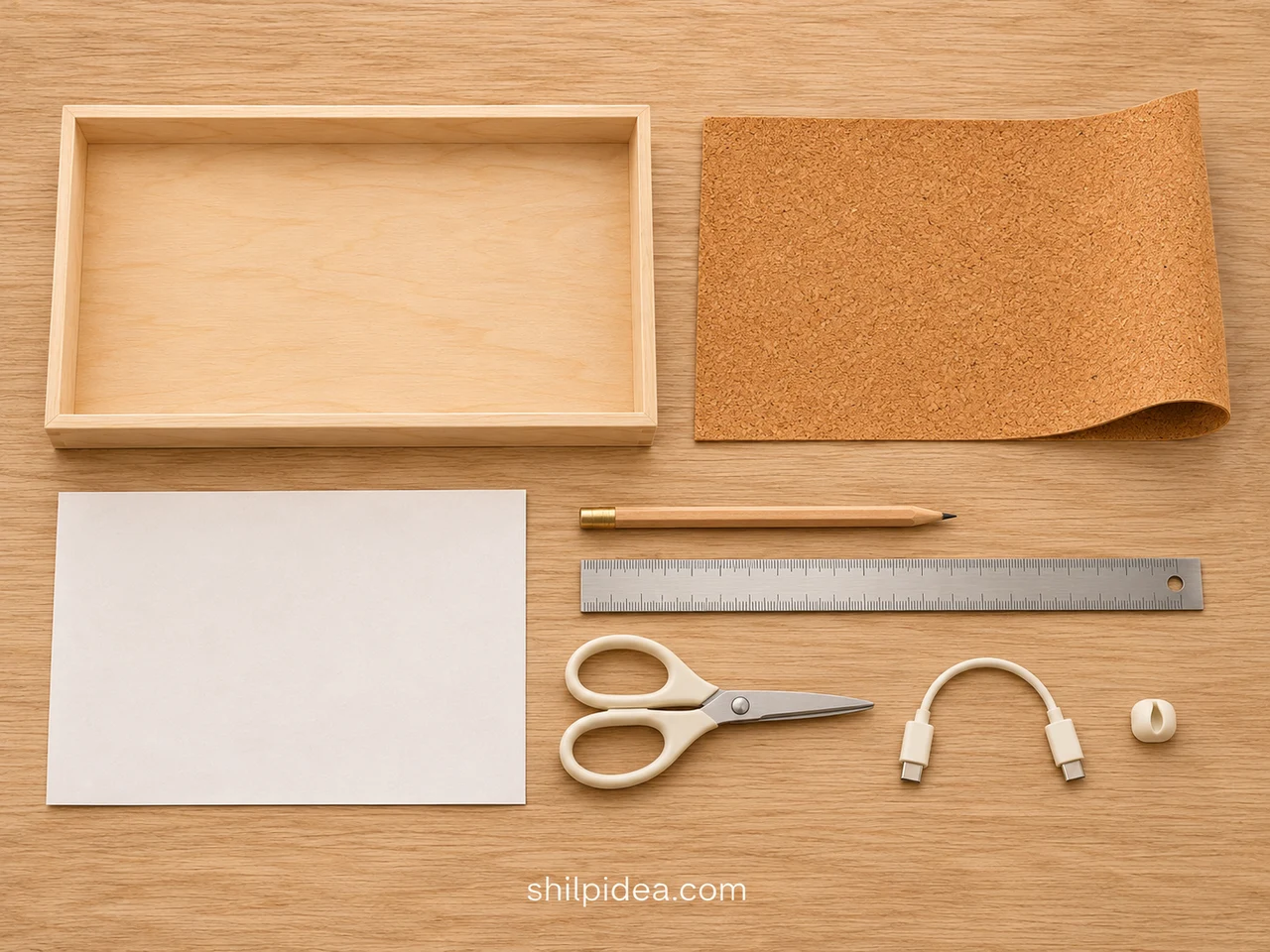
Choose the tray with your phone in its everyday case so you can check how much room the plug needs.
- Shallow wood tray – One lightweight tray that lifts out of the drawer easily and has a flat interior floor.
- Thin cork sheet – One flat, unbacked sheet about 0.08 inch (2.00 mm) thick, slightly larger than the tray floor.
- Paper, ruler, and pencil – Use plain paper to fit the inside corners before cutting the cork.
- Scissors – Choose a pair that cuts the cork cleanly; try a small offcut first.
- Cable and keeper – Use an undamaged, device-compatible USB cable and a freestanding cable keeper sized to its diameter.
- Charging source – Use an existing port approved for use inside the drawer, or your usual compatible charger on the tabletop.
Precautions Before You Begin
Decide where the phone will charge before laying out the tray.
- Use in-drawer power only if your furniture or charging-system manufacturer supports it. Do not route a mains cord through a drawer gap or put a loose power strip in the drawer.
- Keep the phone uncovered and well ventilated. For this layout, leave the drawer open while charging and unplug before closing it. Keep bedding, paper, and liquids away.
- Fit the tray and test drawer travel with the cable disconnected. Never force a drawer past resistance.
1. Check the Tray Against the Drawer
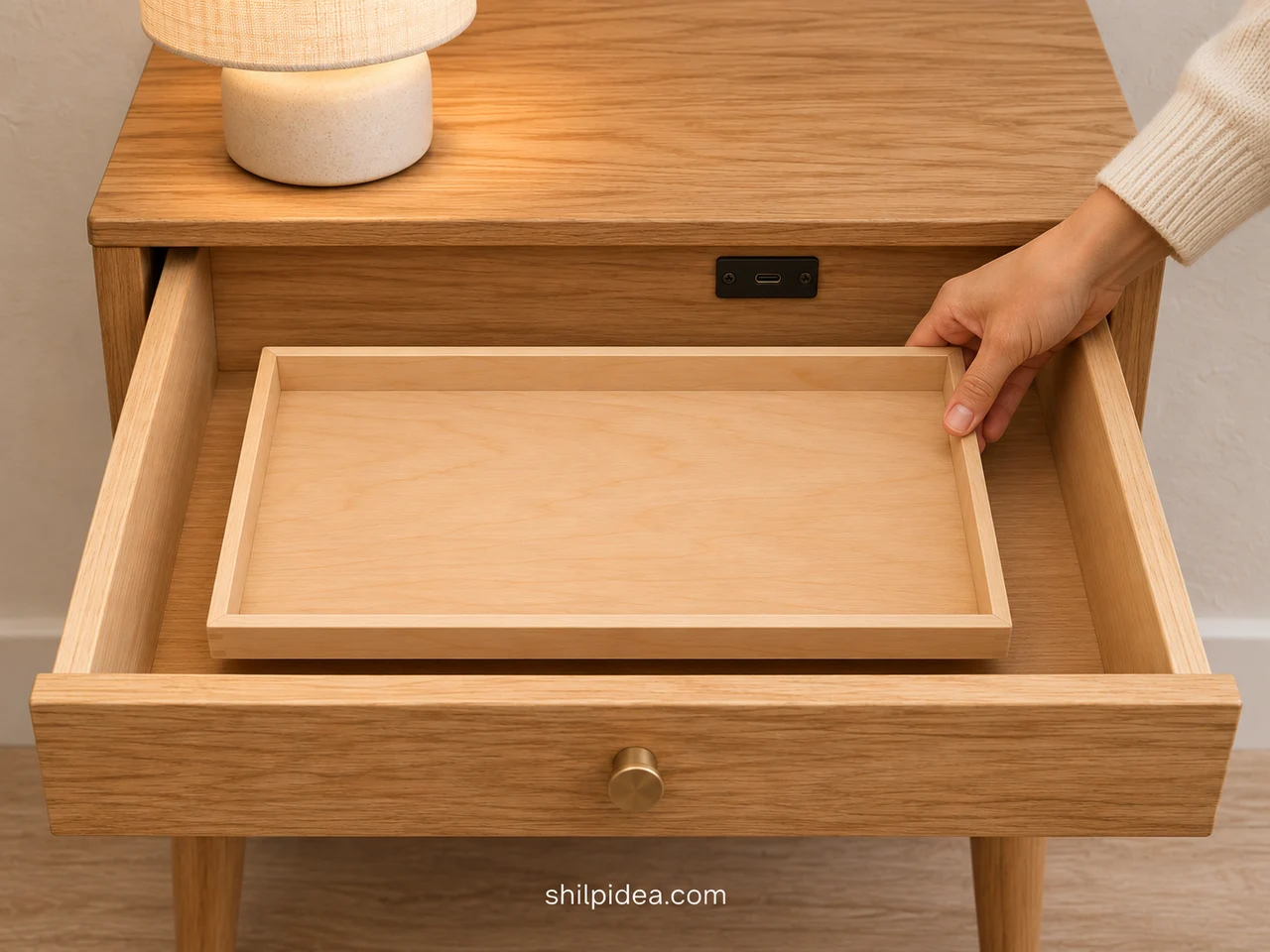
- Measure the usable space. Measure the floor side to side and front to back. Check the narrowest opening too: a tray that fits the bottom can still catch on the frame when you lift it.
- Dry-fit the empty tray. Lower it into the open drawer with the long side facing you. Reach under one edge to lift it. Leave the rear port accessible with enough room to grip the plug above the rim.
2. Make a Paper Pattern for the Liner

- Measure inside the tray. Measure the flat floor between the inner walls, not across the outside rim. Draw those dimensions on paper and cut out the rectangle.
- Test the corners. Set the paper inside. If it bows, trim the edge that is pushing against the wall. Round off tight corners a little at a time until the paper lies flat and lifts out without folding.
3. Cut and Fit the Cork

- Trace the fitted paper. Lay the paper on the cork and mark its outline. The pictured pattern is 9.50 inches wide × 5.50 inches deep. Use your own paper dimensions if your tray differs.
- Follow the outline. Cut just inside the pencil line with short, even snips. Lay the cork in the tray, pencil side down. If an edge rises, trim that edge only. Leave the liner loose so you can replace it.
4. Find the Cable’s Resting Position
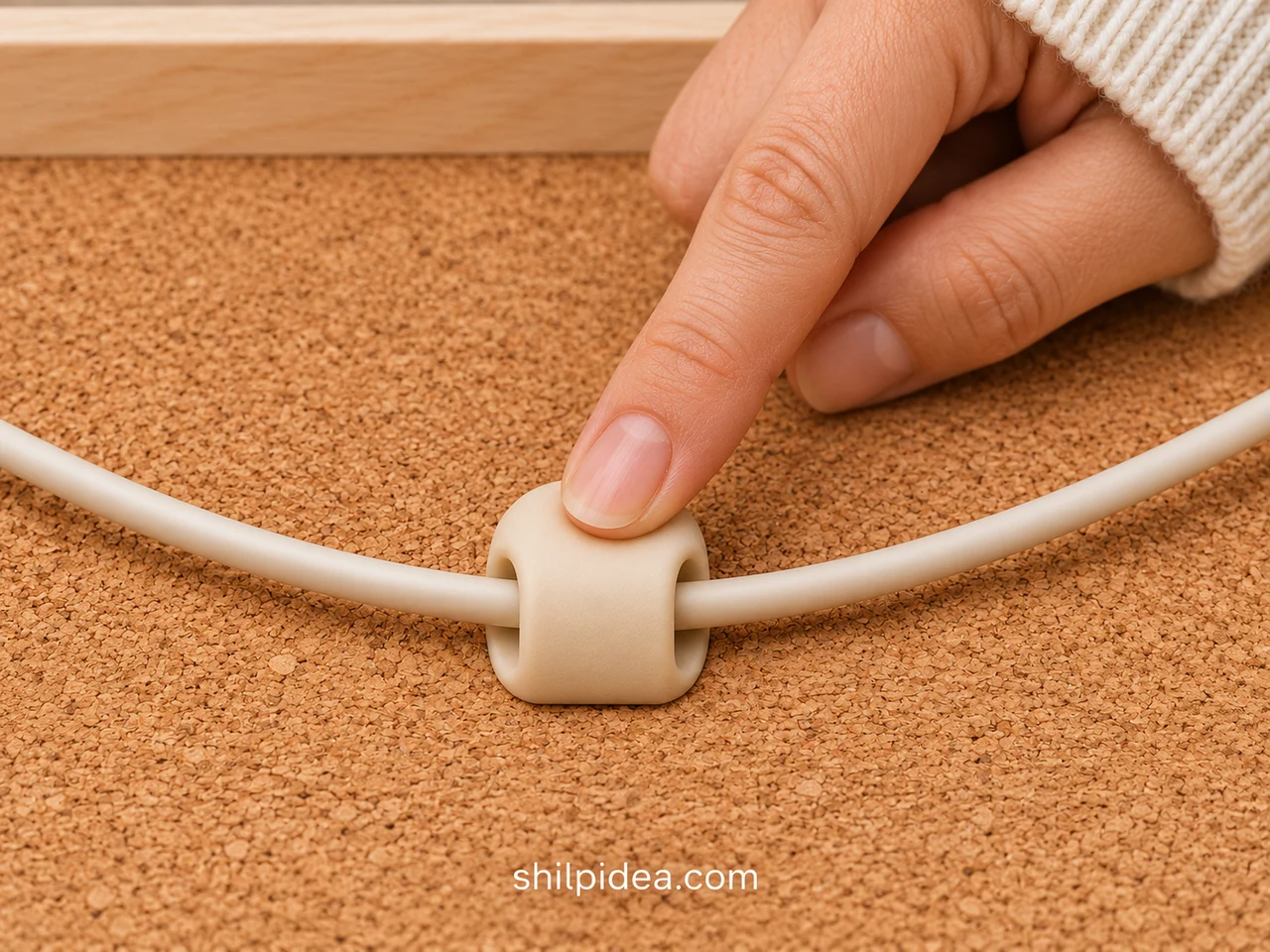
- Place the phone first. Lay it screen up on the cork, charging end to the right. Reverse the layout for a left-hand port. Leave space to hold the plug by its housing.
- Park the cable. Set the keeper near the back corner on the connector side. Press the cable into its slot. Leave a relaxed curve beside the phone so the connector can reach without pulling sideways.
5. Test Drawer Travel and Choose Where to Charge
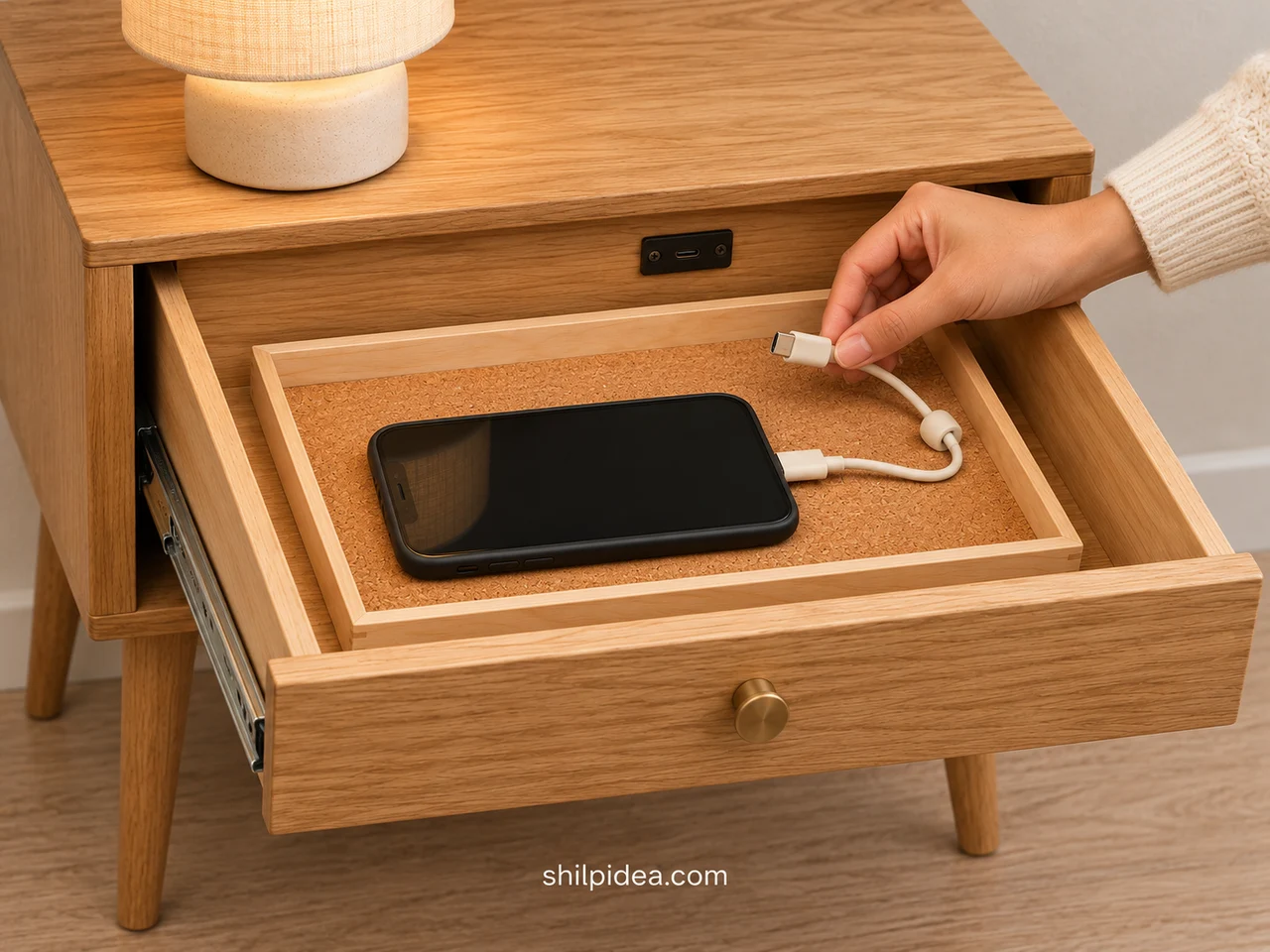
- Do a disconnected test. Unplug the cable from both the port and the phone. Rest both ends in the tray, ease the drawer inward, then reopen it. Stop if the keeper touches the frame or a cable rises above the rim.
- With a built-in charging port: Open the drawer fully. Connect the cable to the approved port and then to the phone. Check the charging indicator. When finished, disconnect before closing the drawer.
- Without an in-drawer port: Lift the tray onto the nightstand and charge there using your normal tabletop charger. Disconnect the cable before returning the tray to the drawer. No cord should cross the drawer front.
If the Liner Curls or the Plug Pulls Sideways
A corner keeps lifting: Take the cork out and lay it on the table. If it lies flat there, the tray is squeezing it. Use the paper pattern to find the tight corner and take off a thin sliver rather than trimming every edge.
The plug won’t sit straight: Move the keeper closer to the connector side or feed a little more cable through it. If there is still no room for a gentle curve, try turning the phone or choosing a wider tray.
Check your device maker’s guidance, such as Apple’s charging precautions, for suitable charging conditions. A purpose-built in-drawer charging system also has its own installation and operating instructions.
More Small-Space Organization Projects
Save the paper pattern so you can replace the cork without measuring again. The same approach works for scissors in a small craft corner: start with what needs a home, then fit the container around it. For a larger landing spot for keys and everyday essentials, explore these entryway storage ideas.
- Make Fabric-Covered Storage Containers
- Explore Handmade Bedroom Headboards
- Organize Towels and Bathroom Essentials
- Plan Winter Entryway Storage
- Set Up a Compact Craft Corner
Which devices would you charge in your bedside drawer, and where would the cords enter? Share your layout in the comments. If you’ve lined a drawer with cork before, tell us how you made it easy to remove.









































0 Comments