18 Old Dish Upcycling Ideas for Decorative Displays
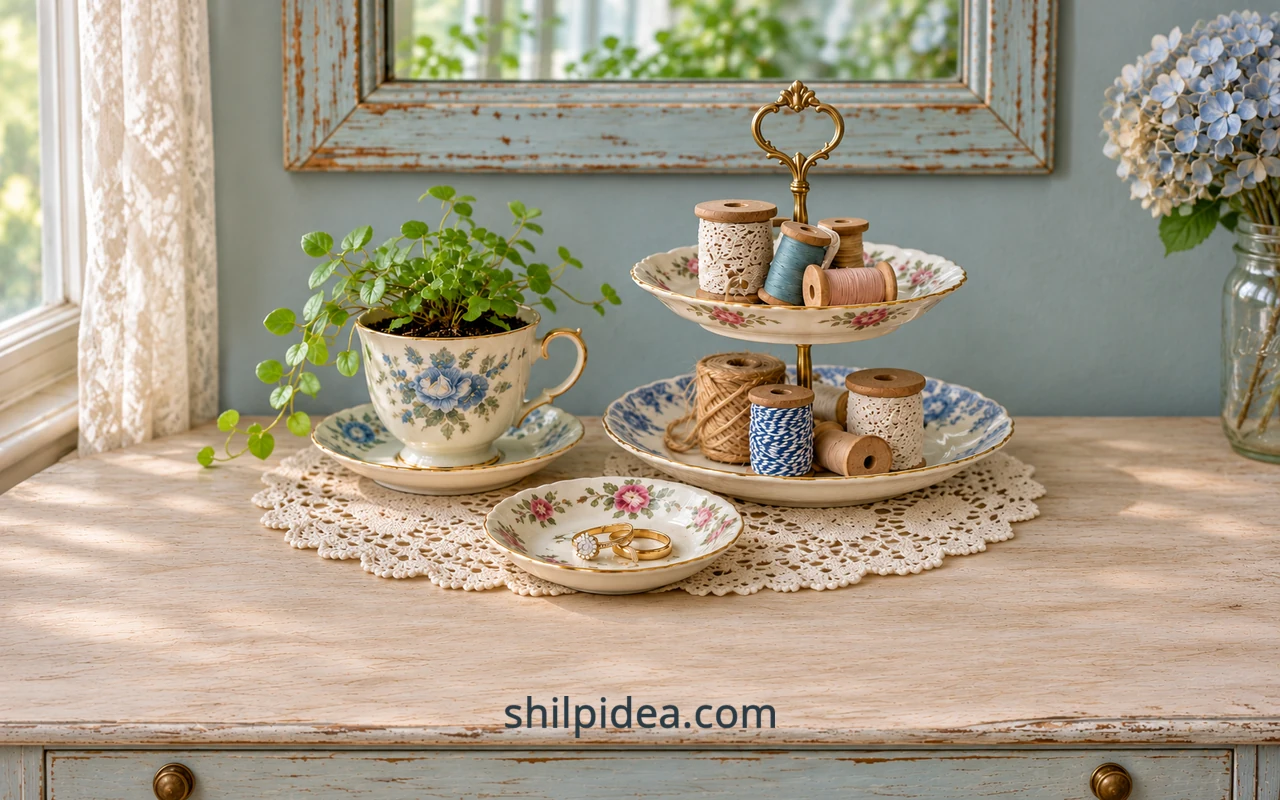
A lonely saucer or a teacup without its match can still earn a spot on the shelf. Look at the shape and pattern before deciding what the piece could hold or how it could be displayed.
Start with a simple arrangement. These decorative plate walls show how individual patterns can work together.
The 18 ideas below range from reversible displays to projects involving hardware. For a broader refresh, see these secondhand styling ideas.
1. Arrange Small Plates as a Wreath
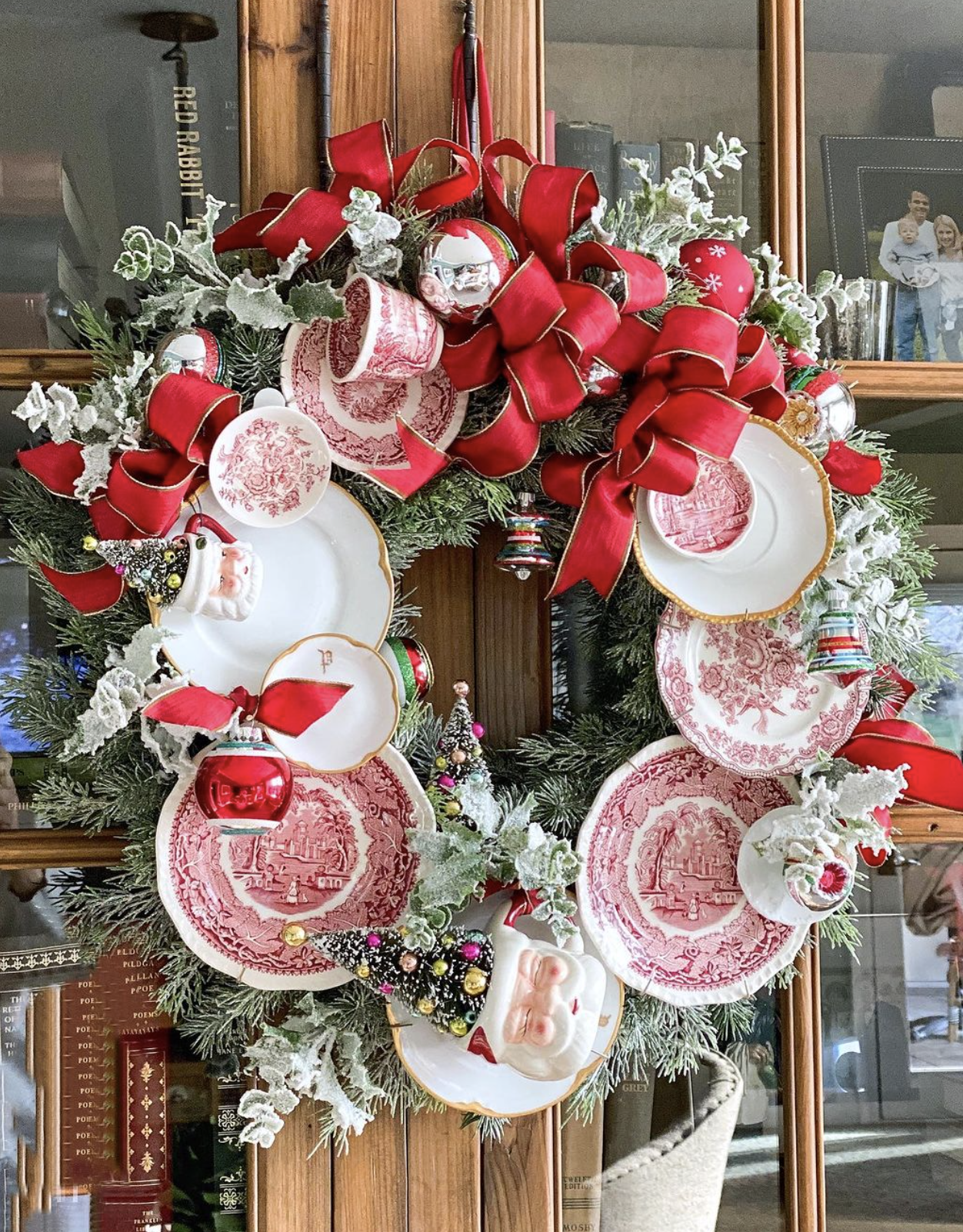
A circle of small plates makes their edges part of the design. Kelly Elko repeats red and white pieces around a wreath base, leaving their patterns visible. Set the plates out flat to check spacing and total weight before assembly. Use a support and fasteners rated for the finished piece, and reserve sentimental china for a reversible display.
2. Stack Mismatched Plates into a Display Stand
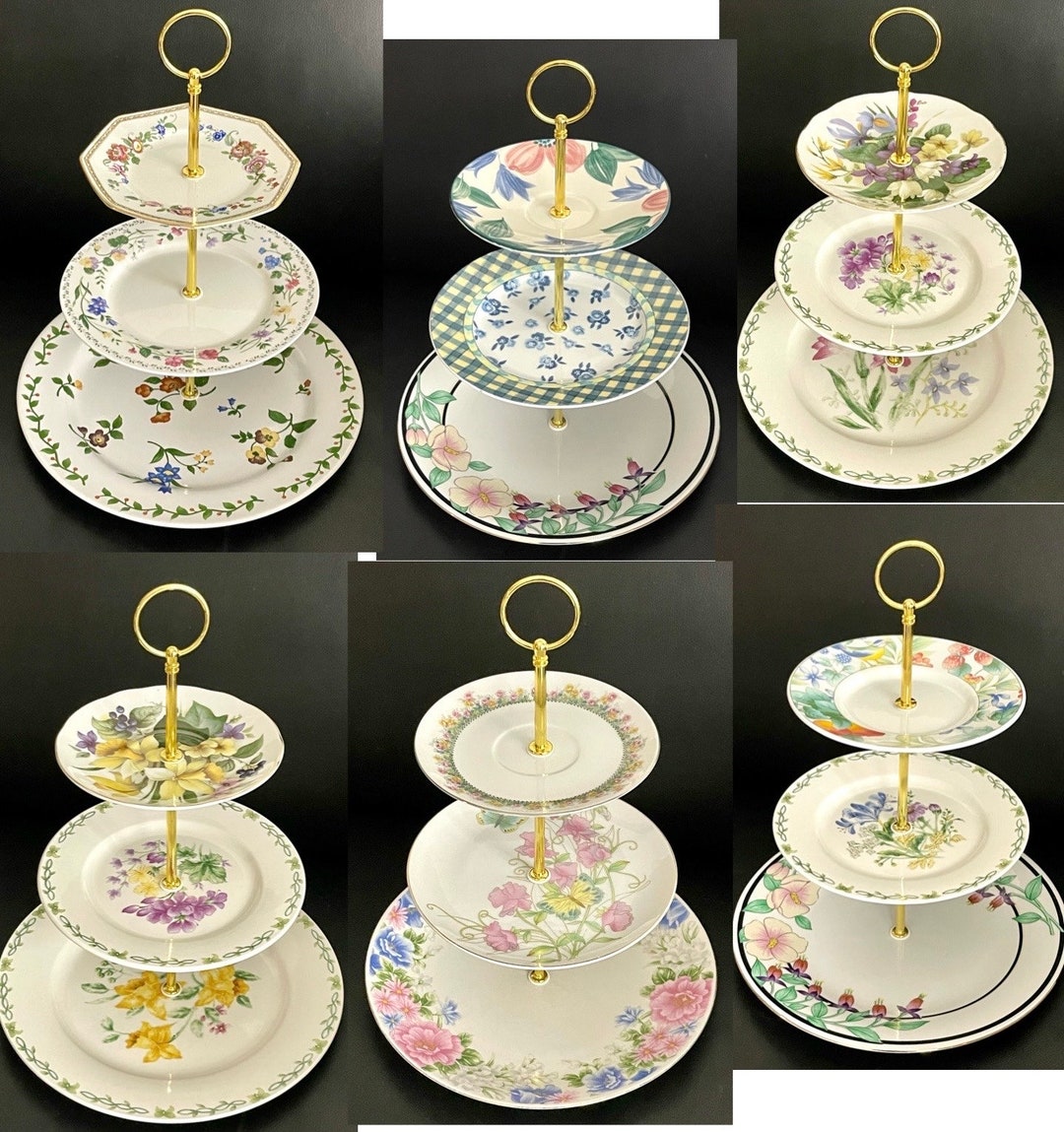
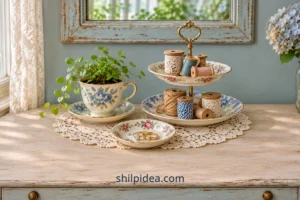
Plates in graduated sizes become a compact stand for light objects. This maker’s arrangement shows how dishes with related colors can still have different patterns. Use the largest plate at the bottom and check that the assembled stand sits flat. For a dresser, use it for ribbon spools or small accessories, keeping heavier objects on the lowest tier.
3. Turn a Teapot into a Flower Vessel

A teapot makes a low flower vessel with its own handle and spout. Short stems keep the arrangement balanced and let the pot’s pattern show. Check the pot for leaks before setting it out, or slip a watertight liner inside. This reused tin centerpiece offers a similar approach if you prefer dried stems.
4. Place a Ring Cone on a Butter Pat

A little butter pat is just wide enough for a cone and a few rings. The Brooklyn Teacup leaves the printed edge exposed, so the original dish still reads clearly. Try a freestanding cone if you want to preserve the surface. Put the finished holder away from the edge of a vanity, where it is less likely to be knocked over.
5. Fit a Fabric Pincushion into a Cup
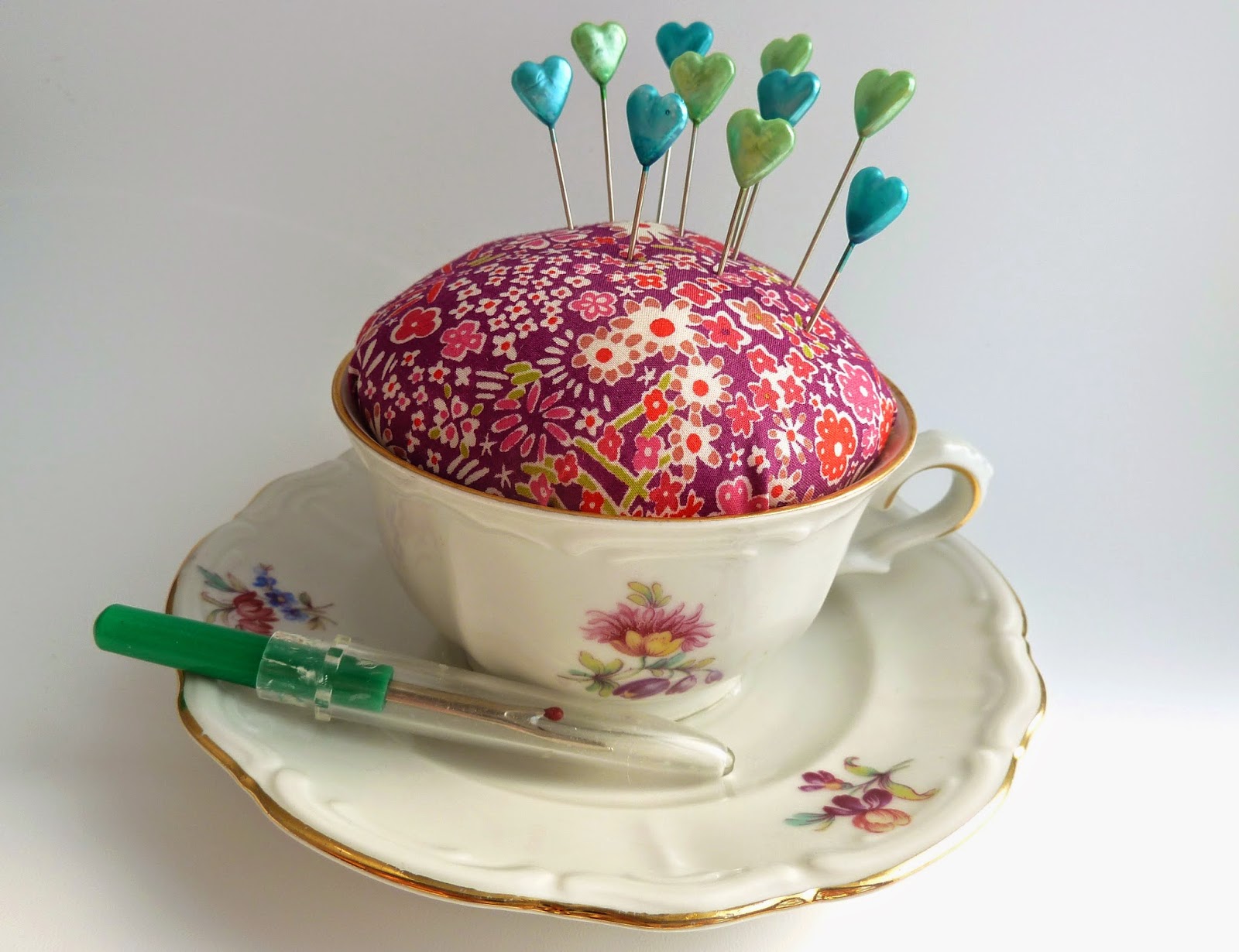
A small stuffed fabric dome can turn a cup into a pincushion for a sewing table. Nordic Craft pairs the fabric pattern with the shape of the cup. Make a snug insert so it stays seated when a pin is pulled out. Use an intact vessel that sits level, and store the pincushion where children and pets cannot reach it.
6. Nest a Small Succulent Inside a Teacup

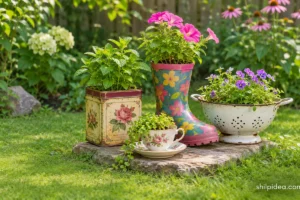
An orphan cup and saucer can frame a petite succulent on a bright shelf. Slip a small draining nursery pot inside the cup when it fits. Lift it out to water and let it drain before putting it back. Compare these small planter ideas for other container shapes to group around it.
7. Hang a Cup and Saucer as a Garden Feeder
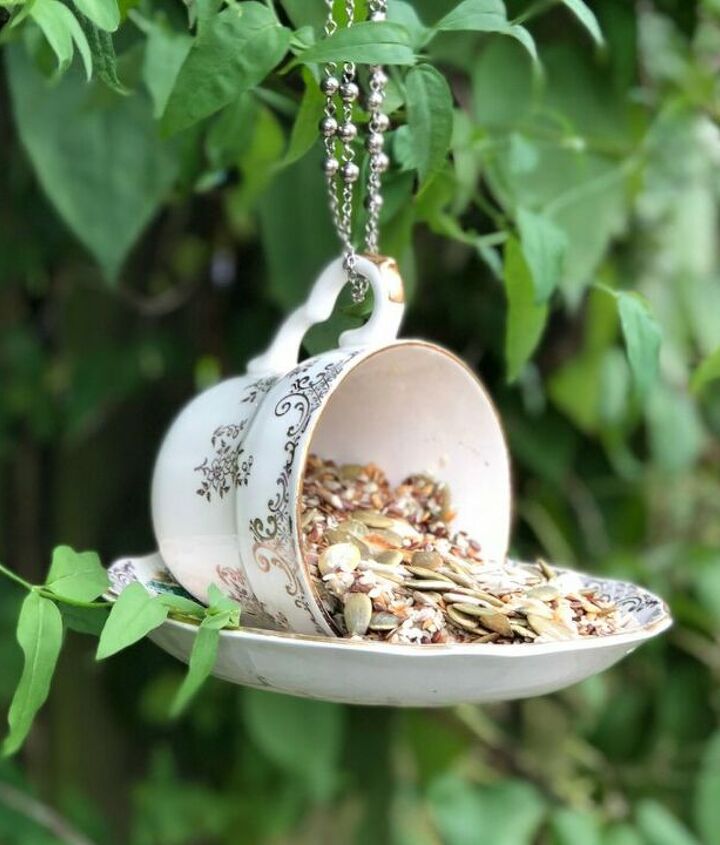
A cup and saucer can become a small hanging garden accent. The Hometalk project turns the dish into a perch and the cup into a seed container. Choose intact pieces and a hanger suitable for outdoors. Place it where you can easily take it down for cleaning, and replace it if weather causes cracks or loose connections.
8. Make a Floral Plate the Face of a Clock
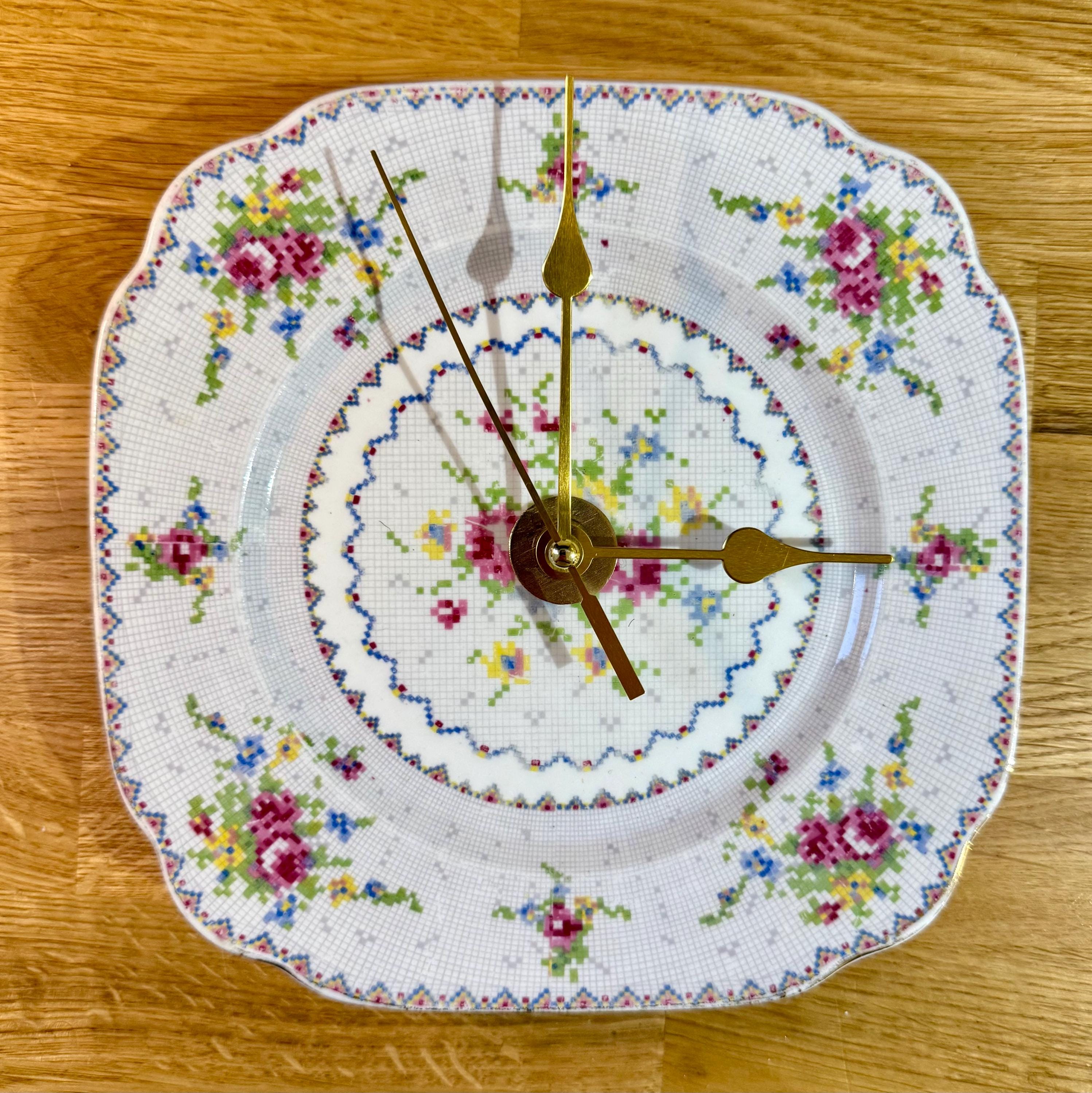
A floral plate can become a clock face with its border still visible. Before altering the dish, lay the hands over the center to check contrast. If the pattern makes it hard to read, choose larger hands or four simple markers. Practice on an unwanted piece if drilling is involved, or choose a maker’s finished clock for a dish you want to keep intact.
9. Save a Favorite Pattern in a Mosaic Plaque
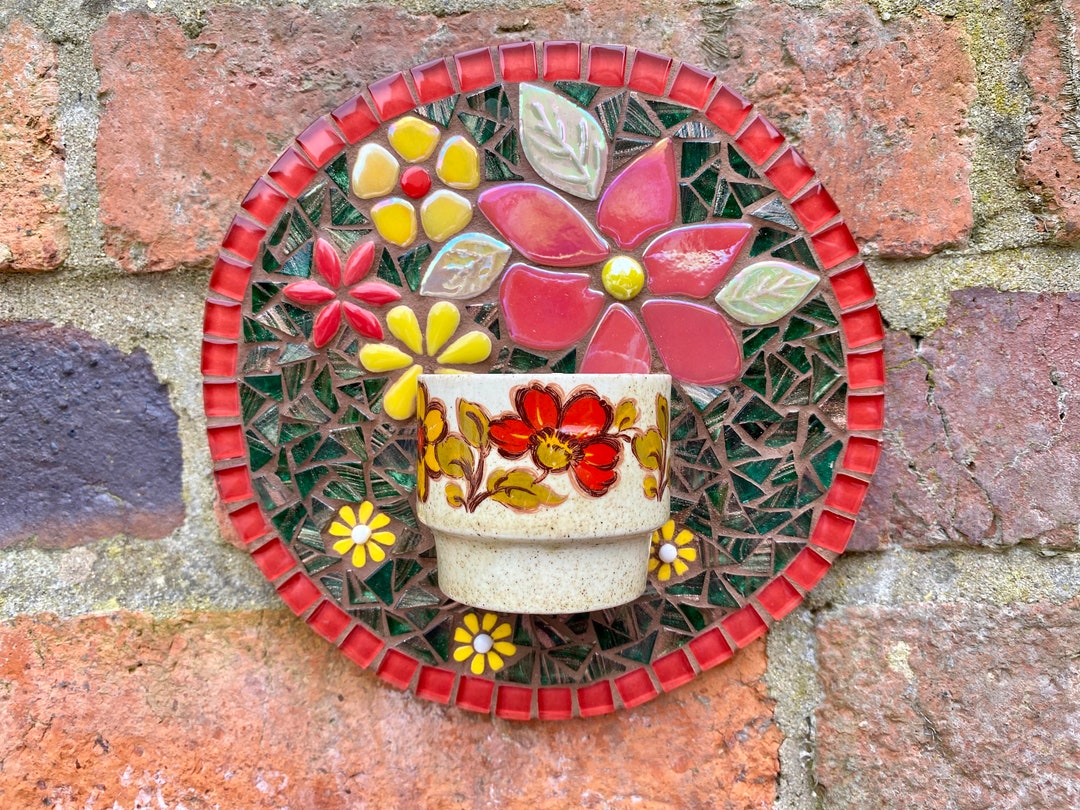
A mosaic plaque can preserve a pattern even after a dish breaks. Group a few recognizable floral or border fragments and surround them with quieter colors. Work with prepared smooth pieces on a sound base, using materials made for the display location. Check that no sharp edges protrude before placing the finished work where someone might brush against it.
10. Make Decorative Magnets from China Fragments

The Brooklyn Teacup turns a few blue and white fragments into small accents for a metal surface. Pick pieces whose shape and print still make sense on their own. Use finished, smooth edges and keep small magnets out of reach of children. Repeat one shade across the group so the pieces feel related even when the dishes came from different sets.
11. Add Broken China to a Wall Planter

A wall planter puts patterned china and a small plant in the same vertical display. Claire Armstrong uses fragments to make a textured background. Plan how the pot will drain before attaching it to the wall, then include the weight of wet soil when choosing hardware. Use the wall planter displays collection to compare other placements.
12. Raise a Single Dish on a Pedestal

A pedestal brings one decorative plate forward without requiring a full stack. Use it for lightweight dry objects, such as folded cloths or a little group of ornaments. Match the base width to the top so the plate does not wobble when you reach for something. Set it away from the counter edge and keep adhesive-joined pieces for display.
13. Set a Battery Light in a Cup and Saucer

A cup and saucer can add warmth to a shelf with a small light. Borrow the shape of Lauren Rose Home’s candle display and use a battery tea light in old china of unknown heat tolerance. Set it low enough that you can still see the cup’s edge. A plain saucer can frame a patterned cup without adding another busy print.
14. Group Little Dishes in Hanging Baskets

Small dishes can be gathered in round wall holders so the collection reads as a compact group. The Bunnings Workshop display keeps cups and saucers visible at different heights. Use a holder designed to retain each piece and check the total weight against the wall fixings. For individual hanging arrangements, compare these dining room plate walls.
15. Use China Fragments on a Tabletop
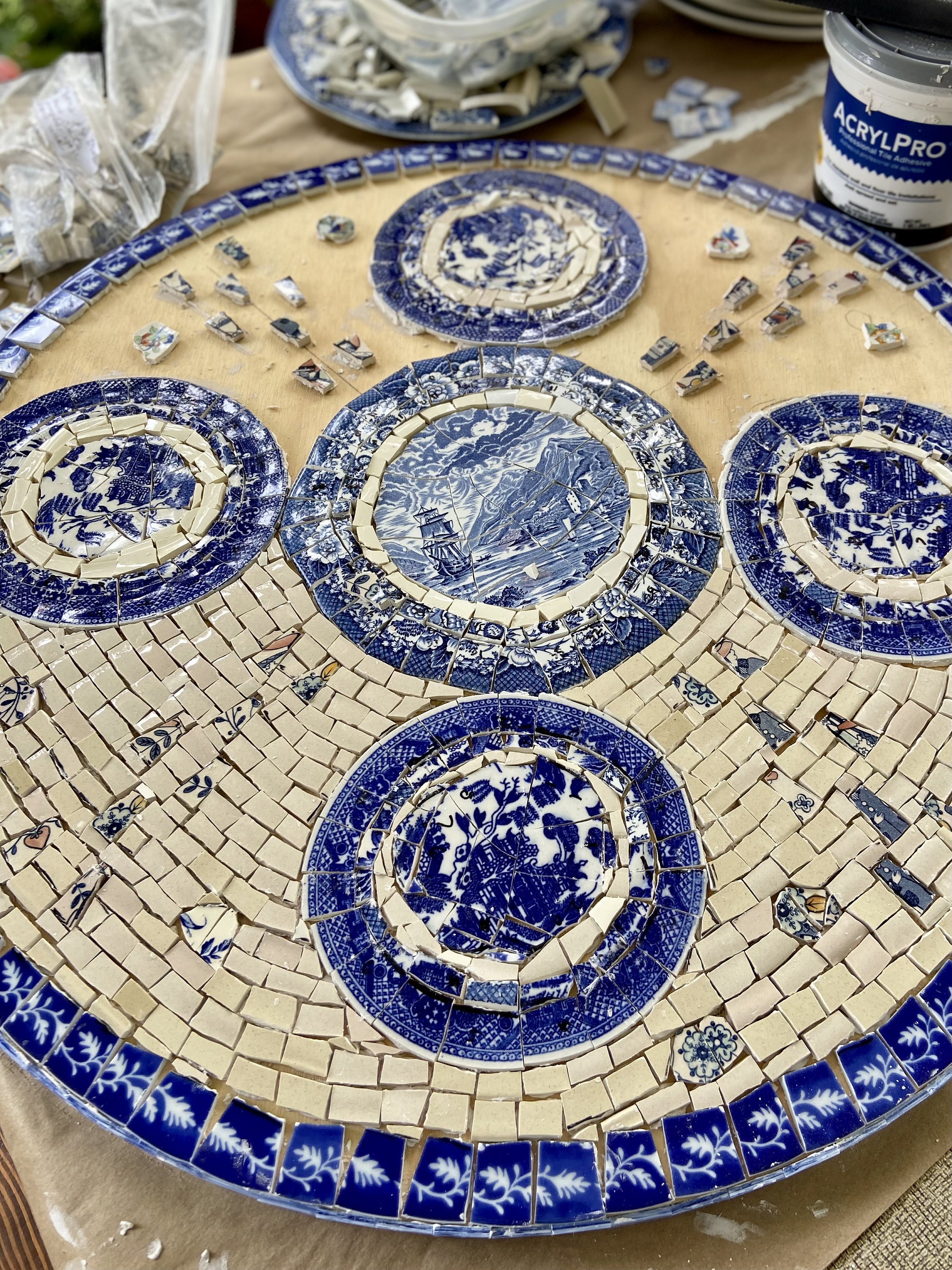
A mosaic tabletop gives small pieces enough surface to form a broader pattern. Make a dry arrangement before committing to it, spacing fragments so the design reads from across the room. Choose a sound table and keep its finished surface smooth. The secondhand furniture styling collection has more ways to work with an existing piece.
16. Pair a Bowl and Plate for Jewelry
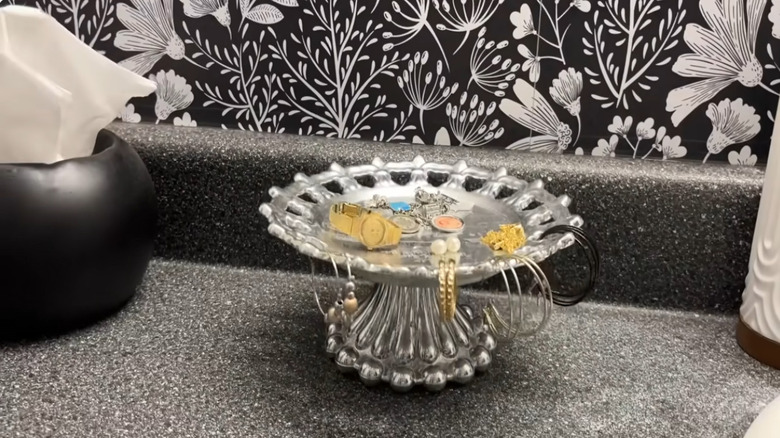
A shallow bowl over a plate separates small jewelry from longer pieces. The upper plate can hold rings or studs and let a few pieces sit around the rim. Try the pieces without adhesive first so you can see whether the top is easy to lift and the plate is wide enough. A small felt pad can help protect the dresser.
17. Build a Little Scene in a Gravy Boat
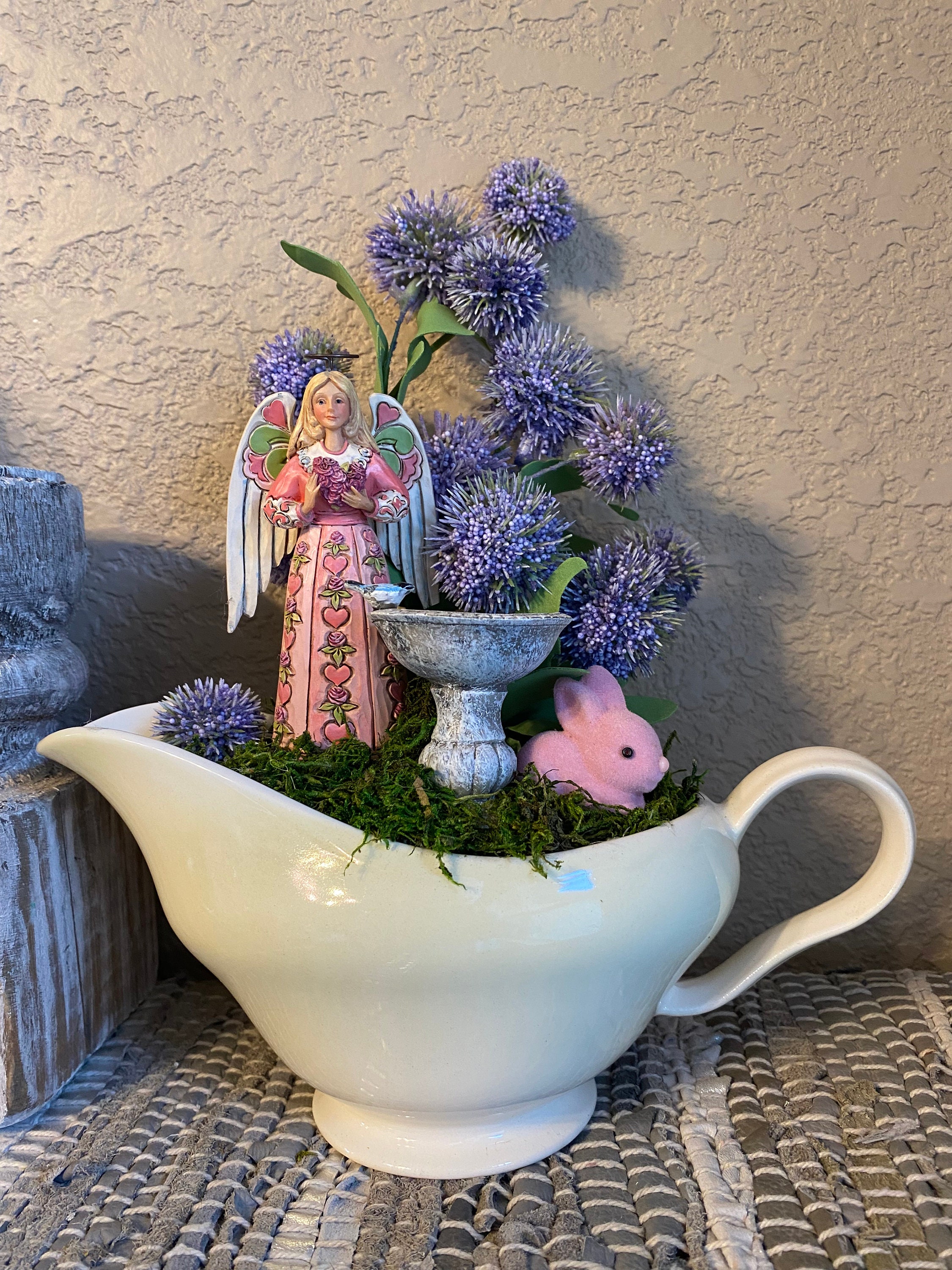
The open shape of a gravy boat makes a useful base for a miniature arrangement. Choose one small figure and a few short decorative stems, leaving the handle visible. Use a removable insert to change the scene later without marking the piece. Set the finished display where the spout and loose details are protected from passing elbows.
18. Arrange Favorite Pieces on Open Shelves

A shallow shelf lets you see the patterns on plates and the shapes of cups together. Set out a few pieces at different heights and leave gaps so each one has room. Use stable stands sized to the plates and avoid stacking wobbly dishes. Repeat one color between shelves to connect the collection without forcing every piece to match.
Check the Condition Before You Start
Choose intact china for hanging or freestanding pieces. Put cracked or chipped pieces aside for a mosaic project, and use only smooth finished surfaces where they will be touched. Keep painted, drilled and glued china for display when its suitability for food use is unknown.
Give One Favorite Dish a Useful New Role
Start with a piece you like looking at and choose a spot where you will see it often. A saucer can simply catch jewelry, while a teapot can hold a few short stems. Put the display together temporarily first to check its balance and scale. These related projects offer other ways to work with the materials you already own.
- Decorative Plate Walls for Dining Rooms
- Secondhand Furniture Styling for Home
- Dried Flowers in a Reused Tin
- Concrete Planters with Glass Details
- Wall Planter Displays for Home
Which dish would you rescue first, and where would you display it? Share its pattern and the project you would try in the comments.








0 Comments