18 Rustic Wood Wall Ideas for a Warm, Textured Home
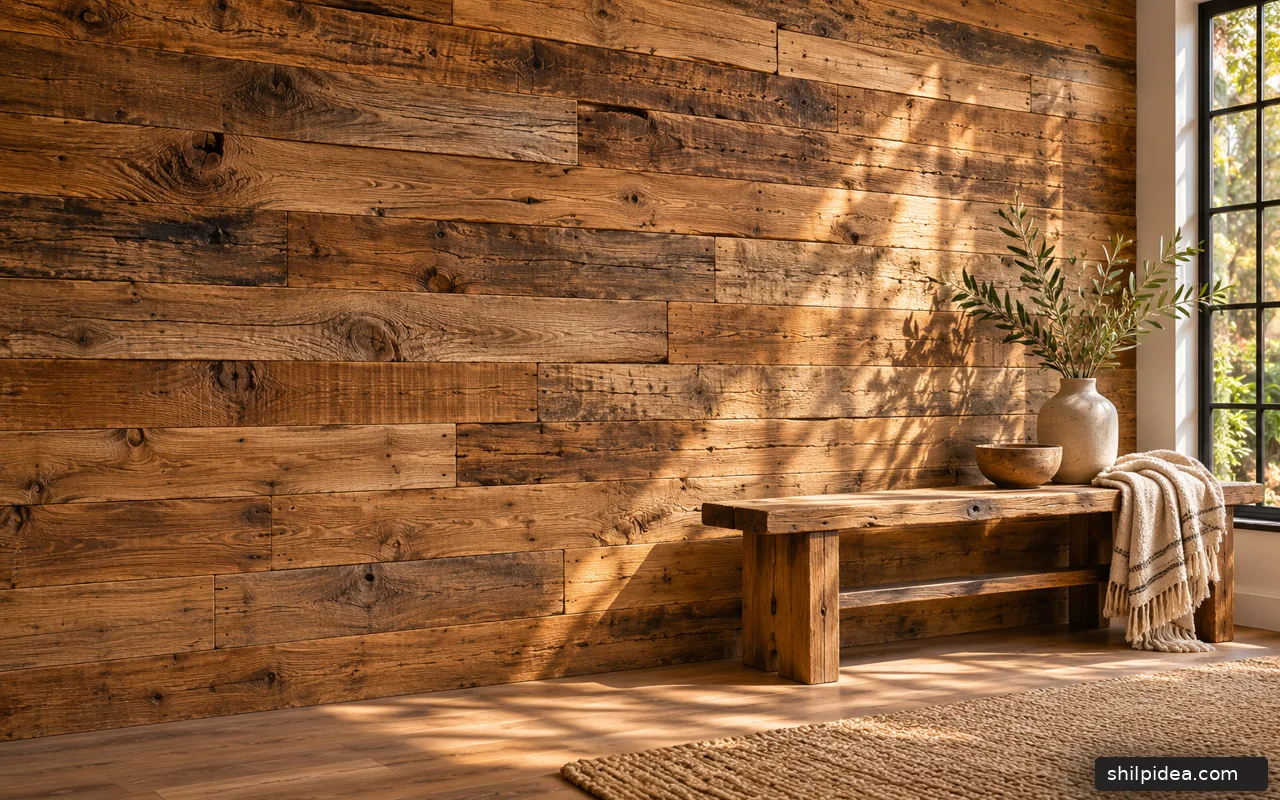
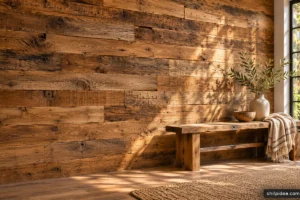
A rustic wood wall can change how a room feels without covering every surface. Decide first whether you want to frame a single view, warm up a neutral space, or carry wood around a corner.
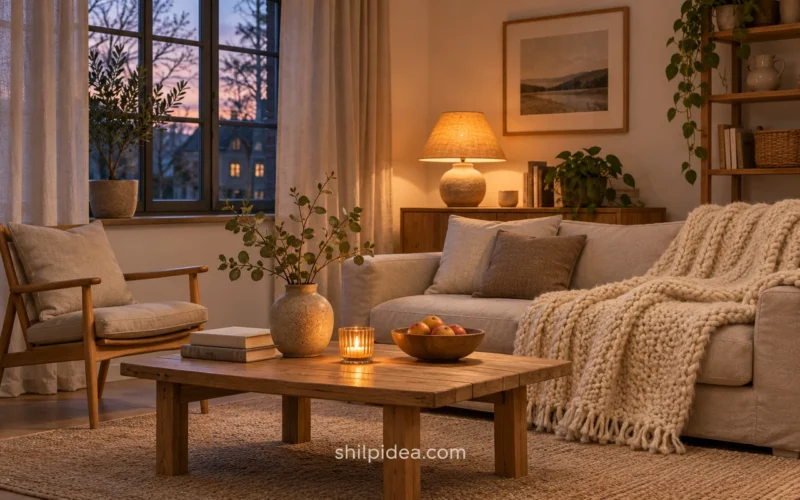
Look at the boards under the same light you use for hygge living rooms. Grain and color variation can become more pronounced after dark.
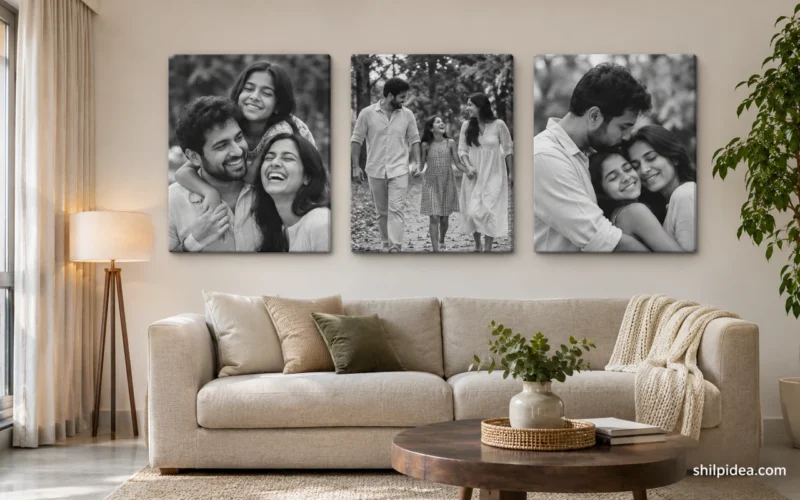
These examples work around beds, fireplaces, and stairs. If you also want to hang family photo displays, test the frame colors against the actual wood.
1. Warm up a wall behind a sofa

Medium honey tones bring out the grain behind a sofa and keep the room from feeling uniform. Choose a few similarly shaded boards before mixing in stronger color changes. Set the furniture roughly in place first so you can see which portion of the wall will still be visible after the planks go up.
2. Let dark barn wood anchor a deep seating area

Put broad dark boards behind the lightest piece of upholstery so the seating keeps a clear outline. Leave enough plain painted surface around the feature to show where it begins and ends. Put samples behind the sofa under your evening lamps before choosing, because deep grays and browns can look similar under warm light.
3. Use light planks behind a row of framed photos
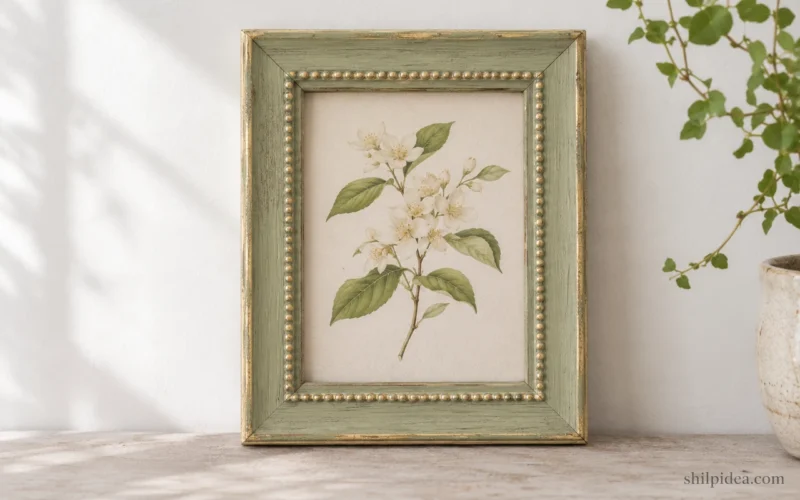
Weathered white and gray boards can act as a background when they have less contrast than the frames. Lay out the photos at the intended height on a temporary backing first. Choose hangers that suit the wall behind the boards, especially when the frame is heavy or has glass over the picture.
4. Tie a timber wall to a fireplace beam
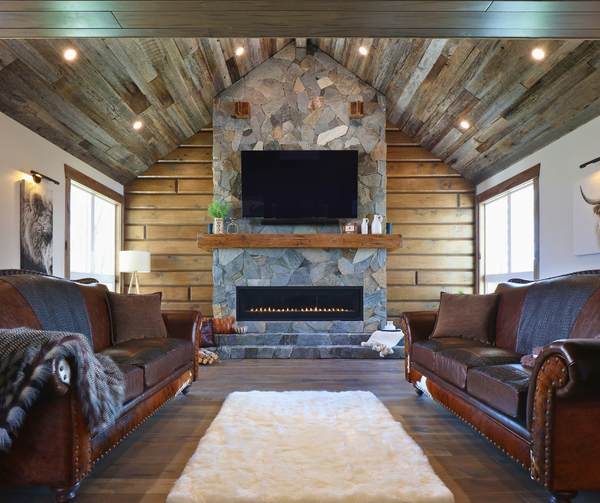
Use the mantel or beam to pick up a color already visible in the surrounding boards. Keep the wood installation outside the clearances required by the fireplace and get advice on the correct assembly for your appliance. A sample board held at the intended edge can show how well the tones match before buying the full wall.
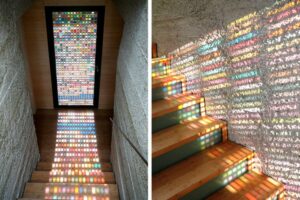
5. Carry a plank wall beside the staircase
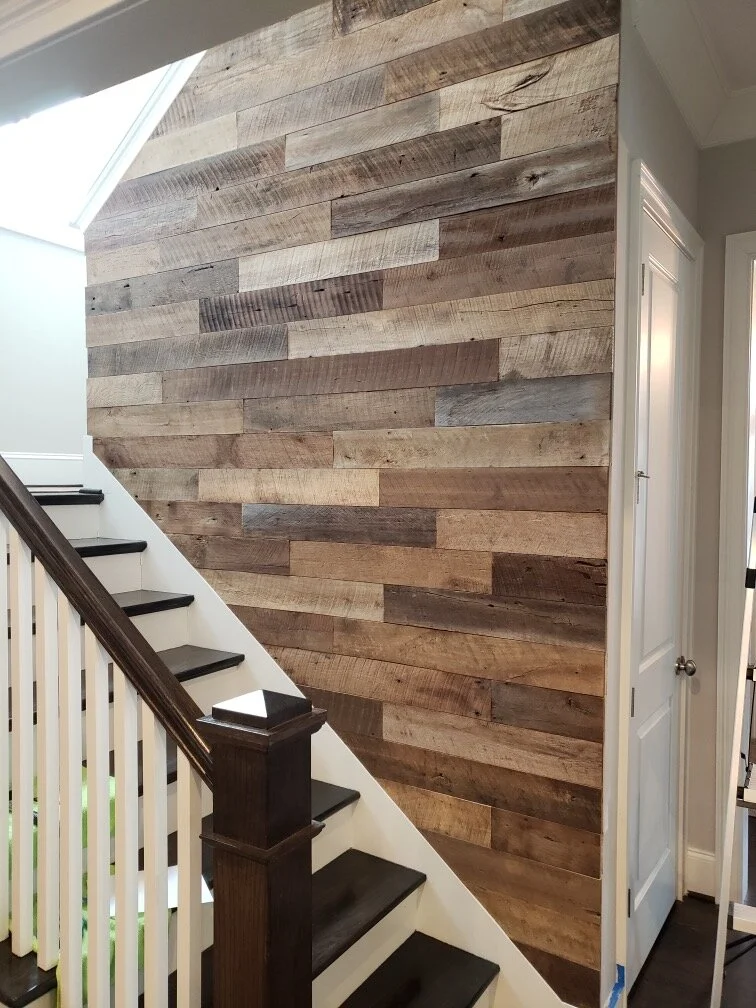
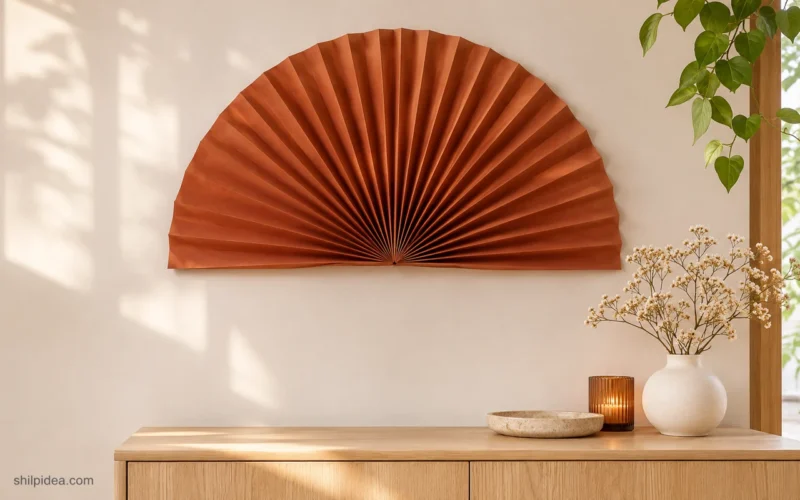
A staggered wood wall can follow the slope of a stair without covering the stair trim. Choose the spot where the last row should finish before buying material so the width near the landing makes sense. Preserve usable handrails and walking clearances, and keep sharp edges out of places that hands can reach. See these framed fabric art for another way to use a similar material or color.
6. Use neighboring shades in wide horizontal courses

Mix a few warm planks with quieter brown boards so the wall has a sense of depth. Keep highly varied pieces apart when laying out the rows rather than stacking them in one patch. Compare the layout from below and at eye level, where some grain looks stronger and smaller end joints become easier to see.
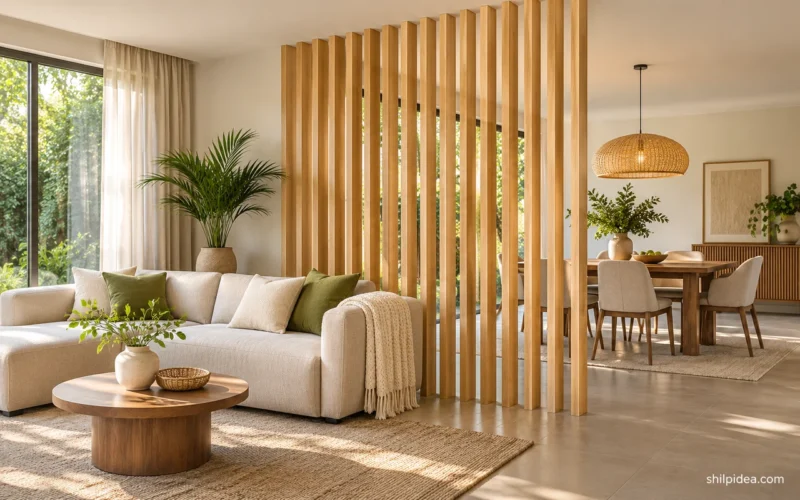
7. Run wood vertically near a tall window
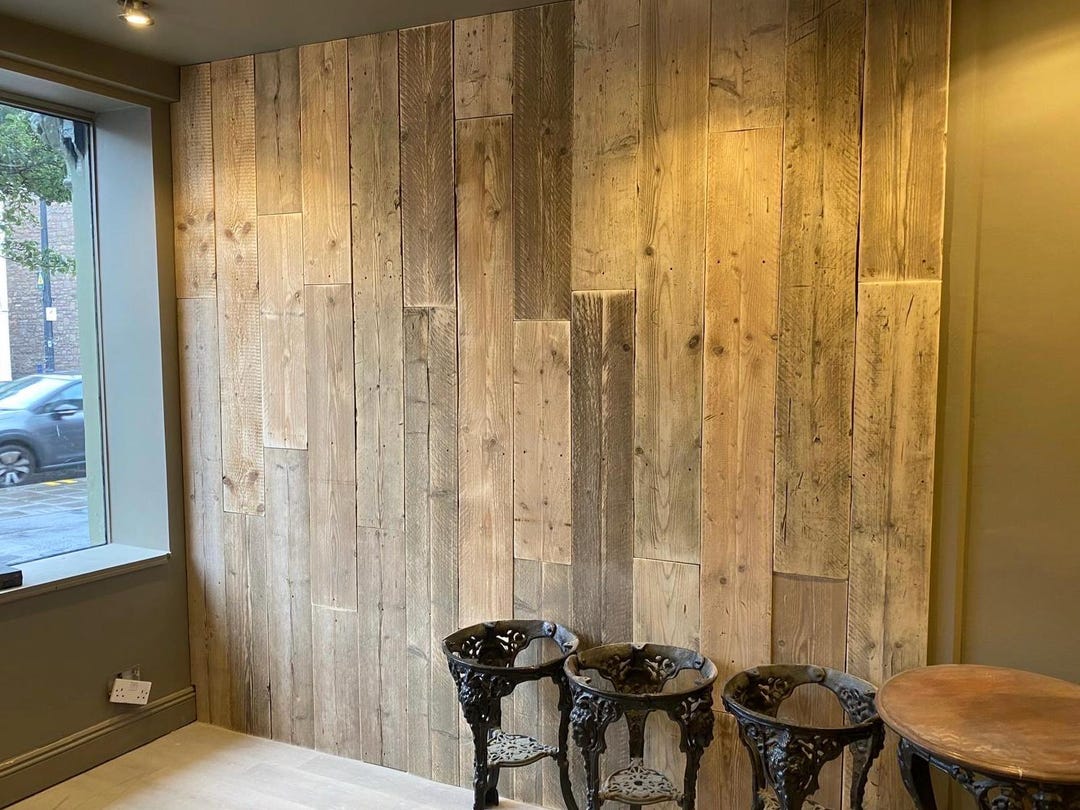
Vertical boards draw attention to the height of a room without needing a wall of uniform color. Leave the window trim visible so the grain reads as a separate surface. Compare the warmest and darkest boards in the daylight at the window before deciding which ones to put at the edge.
8. Wrap boards around a short return wall
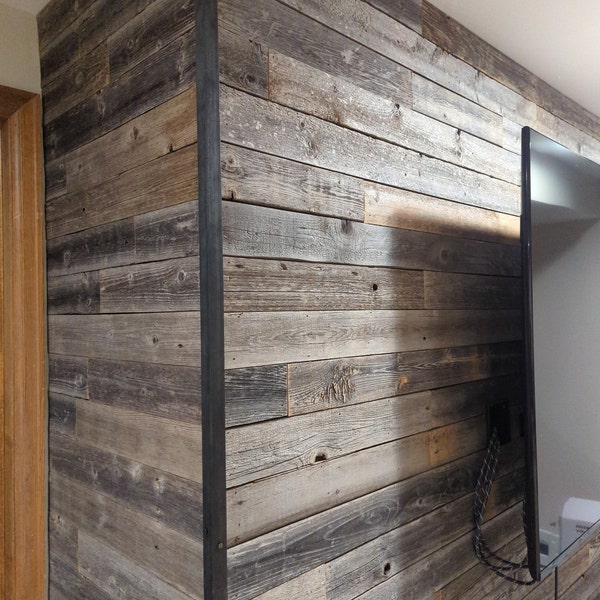
A plank finish around a shallow corner can make it look like it belongs to the rest of the feature wall. Test the edge where the two wood faces meet and pick a finish that won’t snag a sleeve. One uninterrupted row across the corner keeps the eye from getting caught at the join.
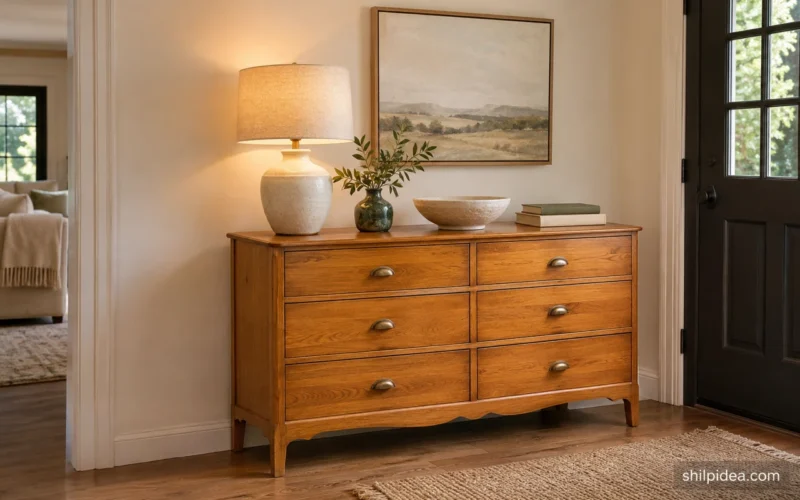
9. Use gray planks beside vintage furniture
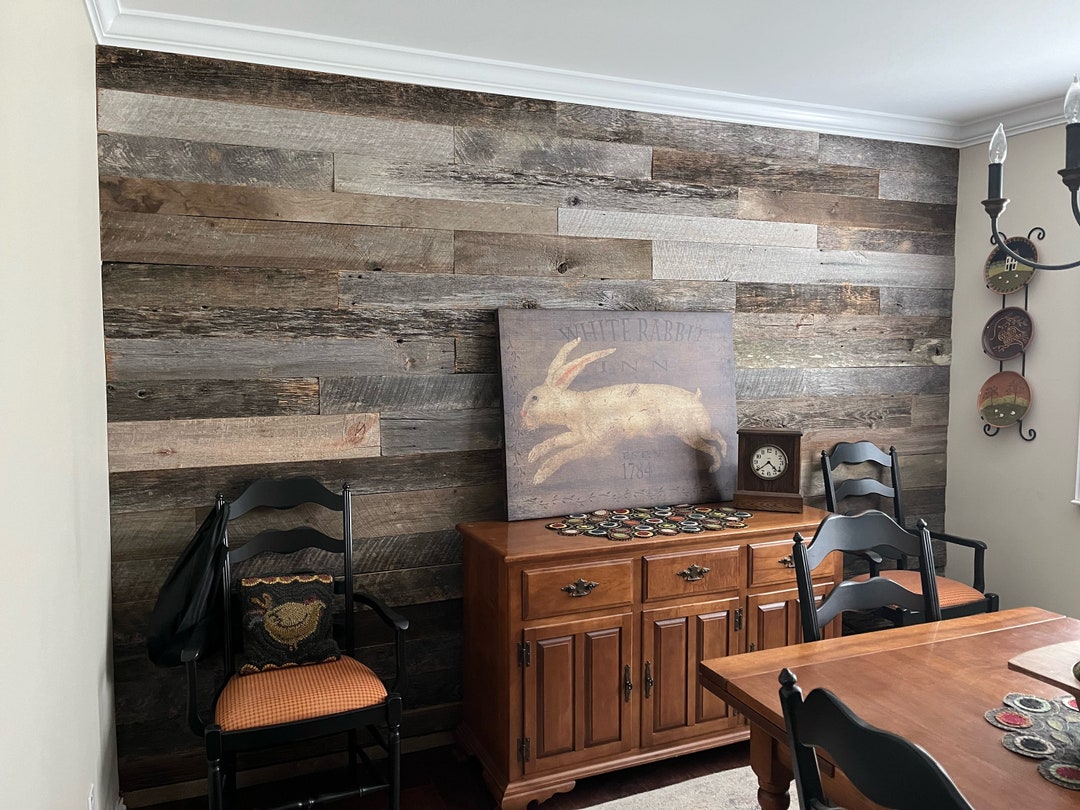
Gray boards let warm pieces of furniture show their color without making the background bright. Try a mid-tone board nearest the top of the cabinet so decor placed there has a legible edge. Put some of the strongest grain higher up or to one side if you plan to hang artwork above the cabinet.
10. Give a light bedroom one weathered headboard wall
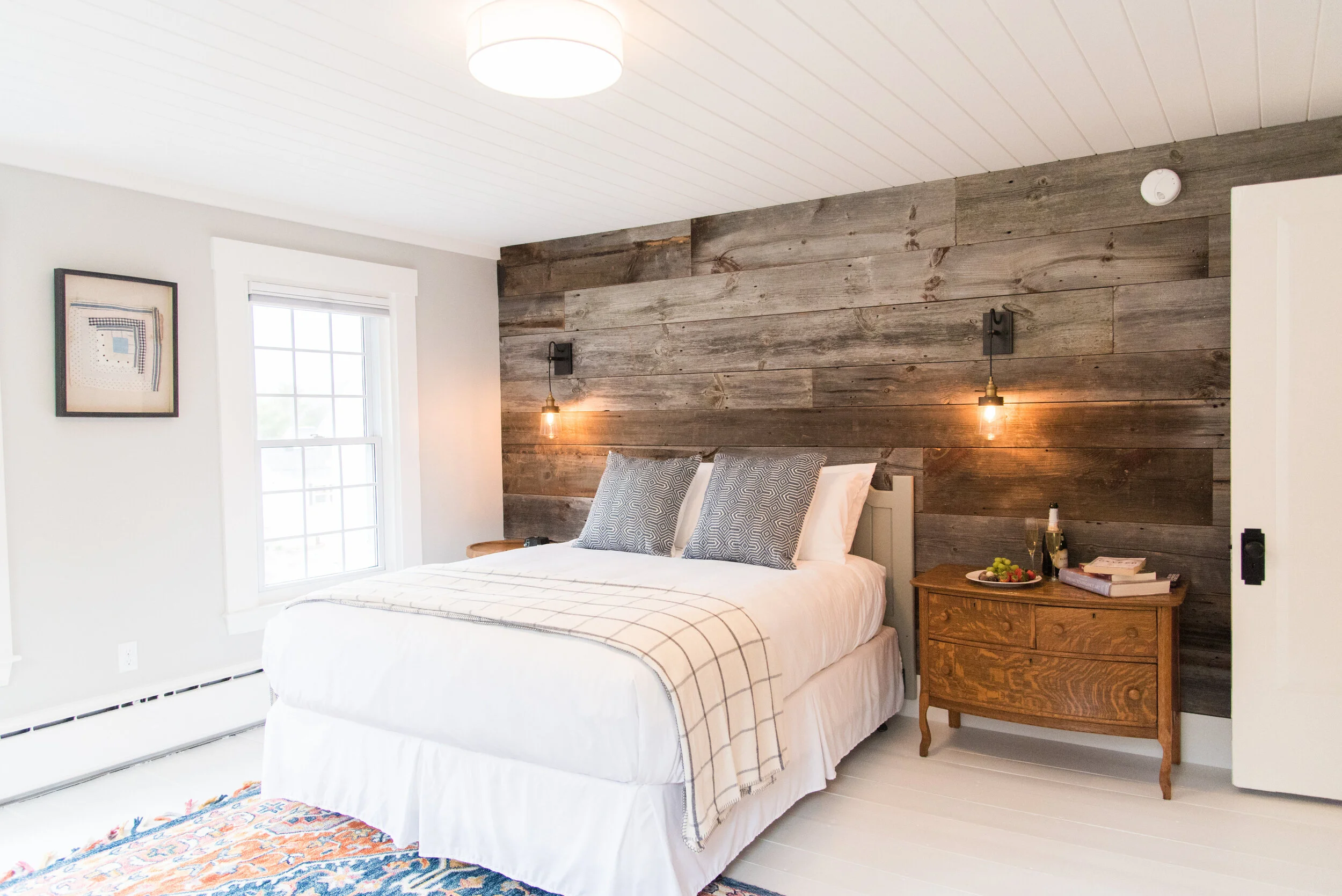
Limit the strongest rustic texture to the wall behind the bed and keep large fabrics quiet. A visible run of boards beyond each side of the bed makes the accent look intentional from the doorway. Check how any wall lights will sit before the boards are installed so their fit can be planned.
11. Set a leather sofa against warm wood

The background and the leather can share a warm undertone while still looking distinct if one is clearly lighter. Try several boards in place before choosing, and leave a little lighter paint or linen around the sofa. Use simple accessories on the floor so the grain remains easy to see above the cushions.
12. Pick a mix of grain and quiet trim

A wood wall with several grain tones looks calmer when the adjacent trim is a consistent solid color. Keep the largest variation away from visually busy windows and bookshelves. Once the wall is drafted on paper, consider where large furniture will sit and shift a few of the best boards into open view.
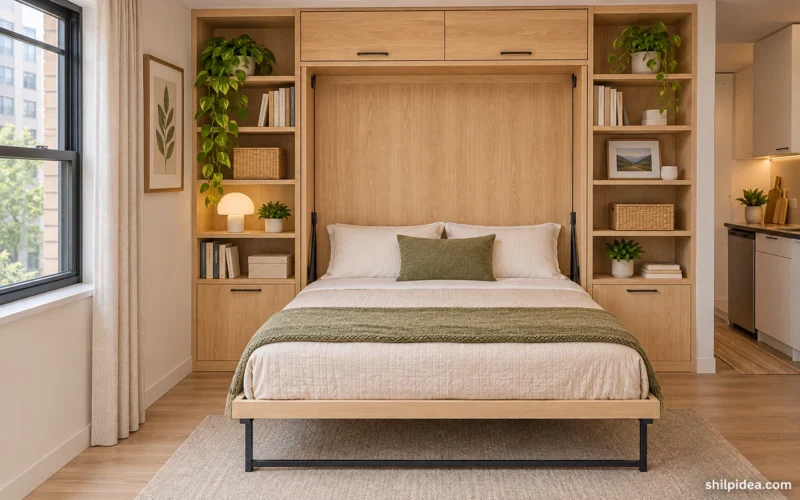
13. Use tall planks to make a bed wall feel higher
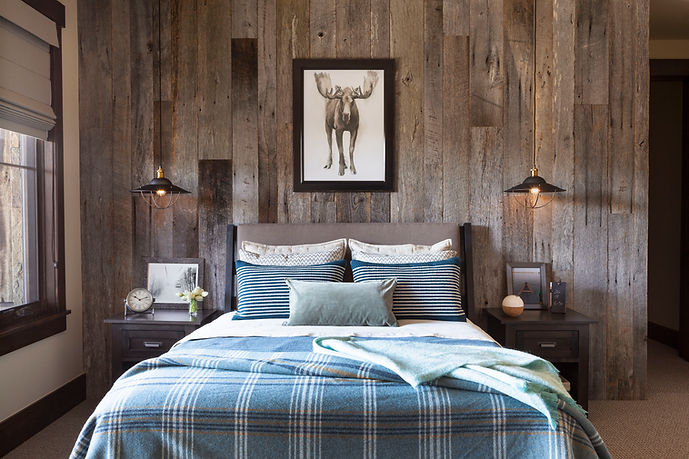
Vertical wood behind the bed gives a low headboard a clear backdrop. Work with a small lighting sample before choosing dark stain, since close boards can become difficult to distinguish in dim light. Use a pale bedcover to show where the furniture ends and leave room at the sides for lamps or nightstands. See these hygge room details for another way to use a similar material or color.
14. Use a narrow edge of darker wood

A dark band can define a short accent wall where it meets painted drywall. Lay out the contrasting pieces before cutting so the darkest board is still visible once furniture returns. The narrow break helps mark where the wall treatment ends, especially if the room already has wood flooring with a different tone.
15. Lay the boards on a diagonal near the bed

A diagonal pattern creates a strong direction at the head of a bed, so start by marking the point the boards will meet. Keep walls or curtains nearby relatively plain. Before fastening any planks, make a small mock-up with scrap boards to see how the direction will look from the doorway.
16. Mix broad boards around a dark fireplace face
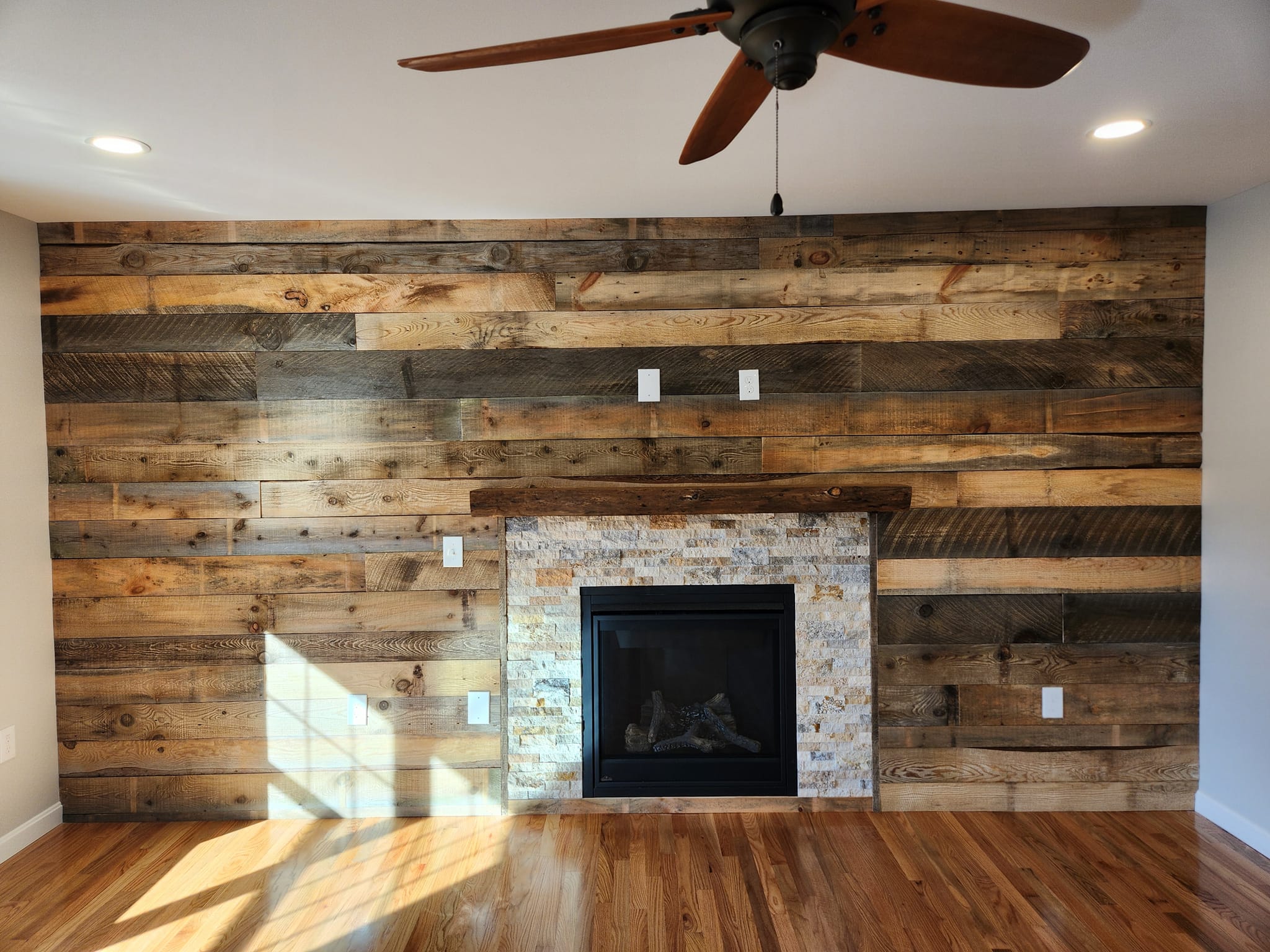
A quiet surround lets a dark fireplace sit in a wood wall without needing decorative trim over every board. Choose grain that shows clearly when the fire is off, and plan required noncombustible sections and clearances with the manufacturer or an installer. Repeat a little of the dark finish in a nearby frame or hardware.
17. Contrast a soft bed with weathered boards

Wear and color variation in a plank wall feel more pronounced behind smooth bedding. Choose one fabric that picks up a lighter shade from the board mix. Check that the side of the bed still gets usable light, especially if the gray boards are dark and only one window serves the room.
18. Give a media wall a low-contrast wood background

A medium gray-brown mix can soften the contrast behind a dark television without bringing in an especially busy pattern. Place the most prominent knots away from the screen edges and choose a spot for cords and a mount before installing any boards. Check the wall fasteners and access from the side. A low cabinet in a related wood tone can link the screen and the floor.
Carry One Wood Tone into the Rest of the Room
Put a spare board beside the furniture, wall art, and textiles you already own. Pick one neighboring finish that helps the grain show up, such as a plain fabric or a quieter wood tone. The projects below can help you repeat a material around the room without installing more boards or covering the part of the wall you most want to see.
- Hygge Living Rooms with Soft Lighting
- Staircase Photo Walls for Family Memories
- Kitchen Wall Decor Beyond the Backsplash
- Framed Wall Art from Fabric Samples
- Scandinavian Christmas Decor with Natural Texture
Which wall would you give a wood finish, and what’s already sitting in front of it? Tell us in the comments what you would leave visible and which board color or direction you would try first.






















0 Comments