18 Thanksgiving Floral Arrangements For A Table That Feels Like Fall
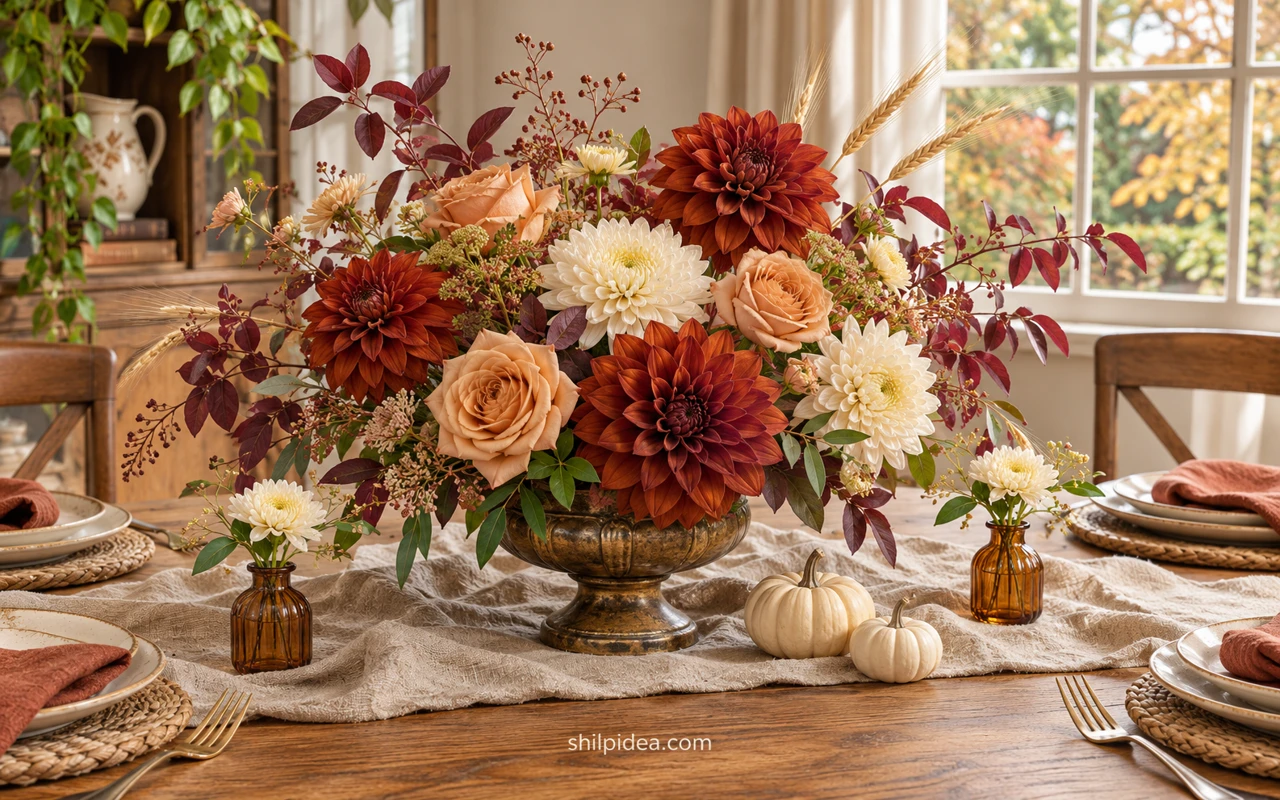
Thanksgiving floral arrangements can start with the container you already own. A simple vase, a small bowl or a harvest-inspired vessel gives the flowers a clear place on the table.
Think about the space left after plates and serving dishes are in position. These natural table details can help connect the arrangement with the rest of the setting.
The ideas below include fresh, dried and reusable options, with original project sources and practical display notes. Add a personal place setting with these pumpkin place cards once the center is settled.
1. Let Airy Stems Rise From a Simple Glass Vase

A simple clear vase lets the stems become part of the arrangement. The mixed heights here keep the flowers loose rather than forming a tight dome. Choose a few fuller blooms for the center and lighter stems around them, using the original project for its setup. Check the overall height from a seated position before placing it between guests.
2. Add Feathers to an Old Tureen

A patterned tureen brings its own detail to the table, so the flowers do not need to fill every gap. Long decorative feathers give this arrangement another line above the rounded blooms. Keep the materials clear of food and use a watertight inner vessel when the outer piece needs protection. Let the tureen’s colors guide a restrained selection of table linens.
3. Fill Patterned Handled Cups With Rounded Blooms

Handled cups make a small flower arrangement feel considered without a large vessel. Rounded blooms sit close to the rim here, allowing the printed surfaces to remain visible. Try a pair with related patterns rather than requiring a full matching set. Check that each cup stands securely and leaves enough room around the place settings before filling it with water.
4. Give a Few Long Stems a Shallow Bowl

A shallow bowl gives a few long stems a deliberately spare setting. The open space between them is part of the design, so there is no need to fill every opening with flowers. Follow the original arrangement’s support method rather than assuming the stems will balance alone. Place the bowl where the taller lines will not interrupt diners’ view.
5. Let a Terracotta Compote Support a Wide Shape

A pedestal compote gives a spreading arrangement a clear base. The warm terracotta here works with flowers and textured stems without needing another strong pattern on the vessel. Choose the width around the available table space and test the footprint before adding the final stems. Leave room for serving dishes instead of letting the arrangement occupy the whole center.
6. Turn a Small Fresh Pumpkin Into a Vase
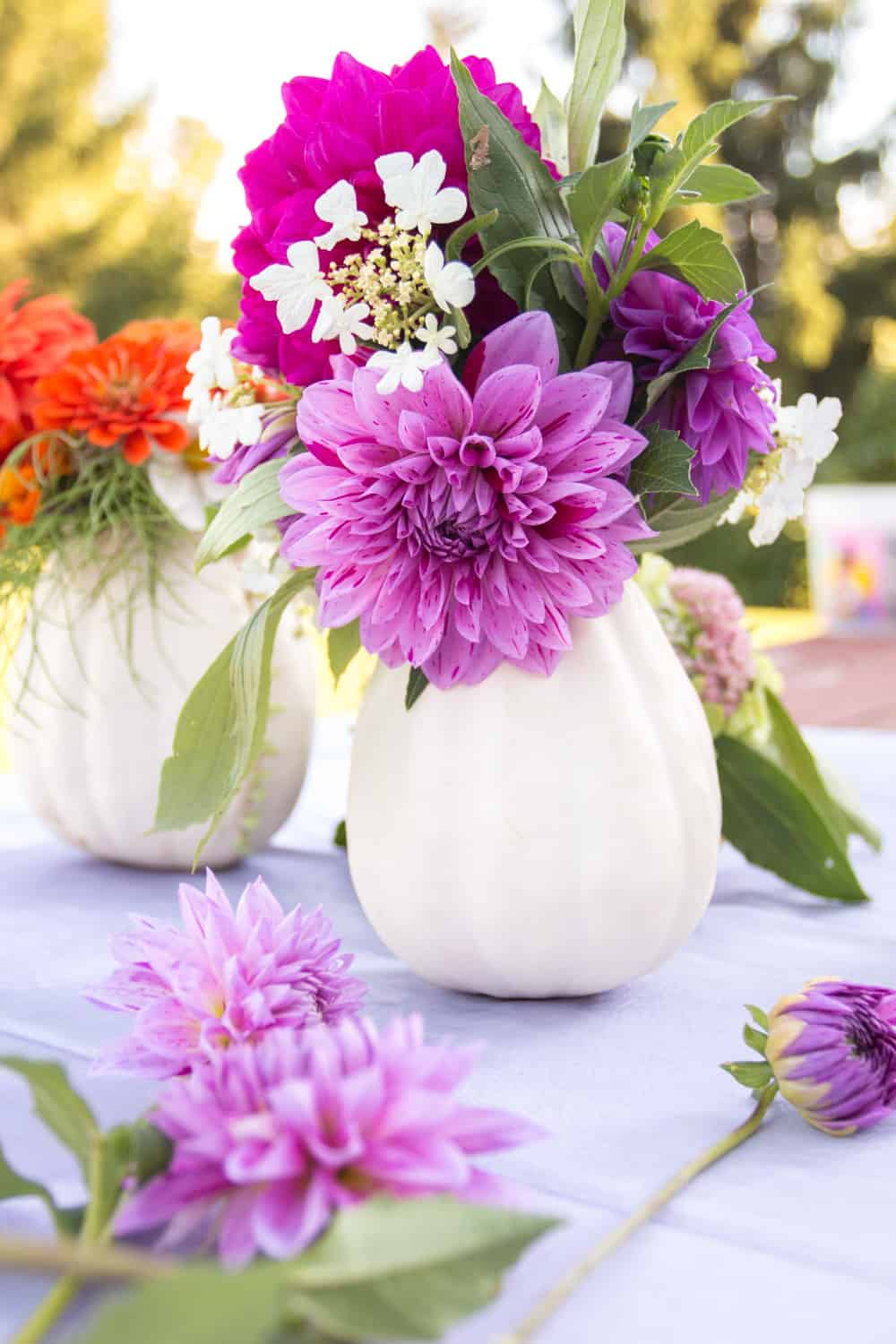
A small fresh pumpkin can hold a compact flower display with a clear harvest character. The original project shows how to prepare the vessel, which matters more than copying a particular color combination. Keep the flower group in proportion to the pumpkin and protect the table underneath. Check the pumpkin’s condition before displaying it and remove the arrangement if it begins to soften.
7. Group Mini Gourd Vases at Different Heights

Small gourds create a group of individual arrangements rather than one large centerpiece. Varying their height gives the display shape while a shared flower palette keeps it connected. Follow the original project for preparing and supporting the vessels. Test that each one sits steadily, and leave clear gaps between the group and the dishes that will be passed around.
8. Choose a Reusable Pumpkin-Shaped Vessel

A reusable pumpkin-shaped container offers the seasonal outline without preparing a fresh pumpkin. This example uses faux flowers, making it a different option when you want to arrange the display in advance. Keep the stems varied in length so the group does not look too uniform. Store the finished piece where the branches will not be crushed between seasons.
9. Nestle Low Flowers Beside Whole Pumpkins
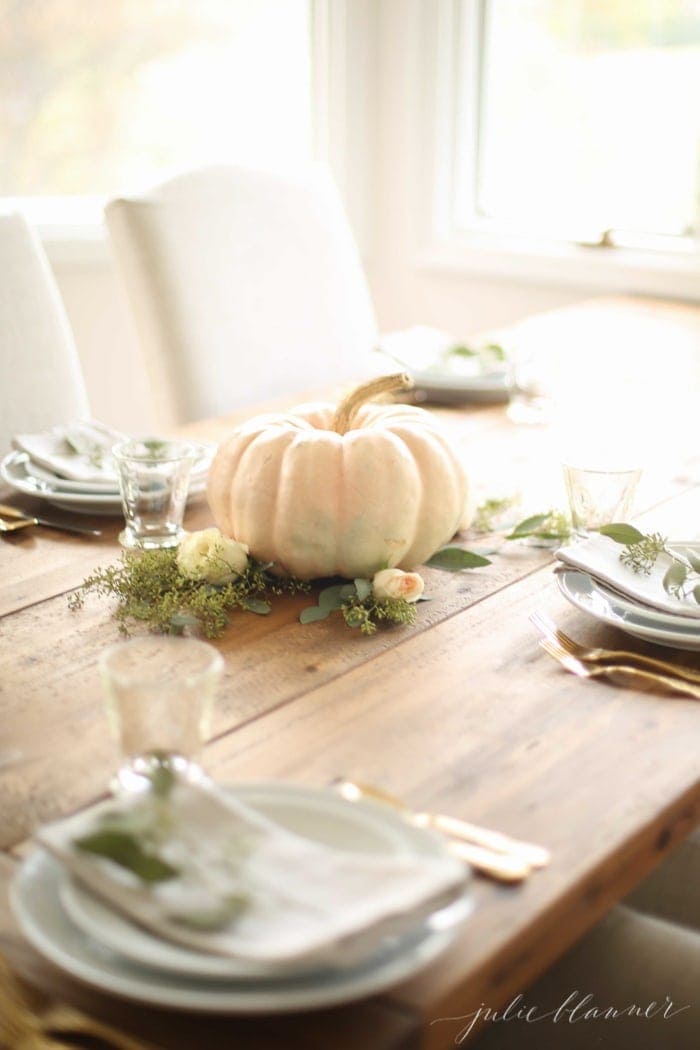
Whole pumpkins can sit alongside the flowers instead of becoming their containers. The low arrangement here keeps the surface open and brings the seasonal shape into a softer palette. Plan the positions of the pumpkins first, then leave room for the flower vessels and meal. Keep any water contained so the runner and table stay dry during the gathering.
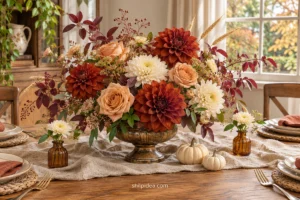
10. Make a Low, Moody Floral Runner
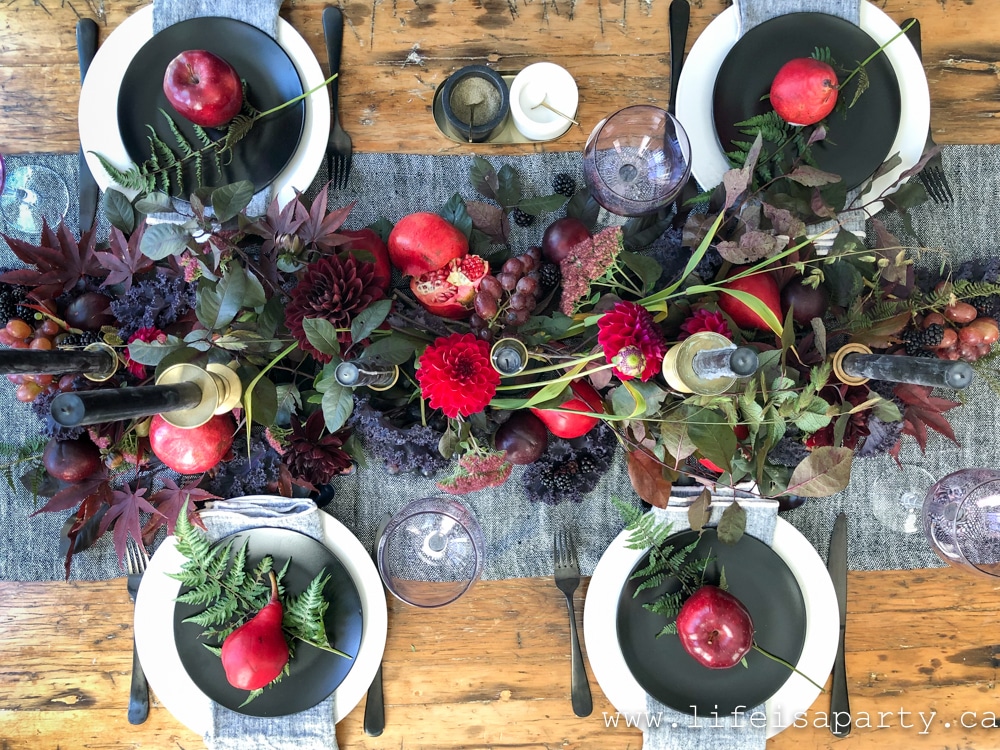
A low runner spreads the color along the table rather than building one tall focal point. Deep flowers and foliage create the moody effect here, with room left for plates on either side. Use suitable small water vessels for the fresh stems and keep decorative fruit separate from anything you intend to serve. Check that the arrangement stays clear of glasses and sleeves.
11. Arrange Identified Branches in a Loose Line

Branches introduce a looser shape than a compact bouquet. The arrangement can connect several place settings while keeping the center relatively low. Use positively identified material that is suitable for the setting, and ask a florist for an alternative if you are unsure about a plant. Keep branches away from food, children and pets rather than copying unfamiliar berries from a photograph.
12. Mix Tall Grasses With Autumn Stems

A tall mix of grasses and decorative stems gives a sideboard or end table a seasonal focal point. The different textures create the interest, so the clear vase can stay simple. Keep the arrangement away from places where guests will brush past it. If adding candlelight nearby, choose LED candles beside dried materials and move the taller display off the dining table.
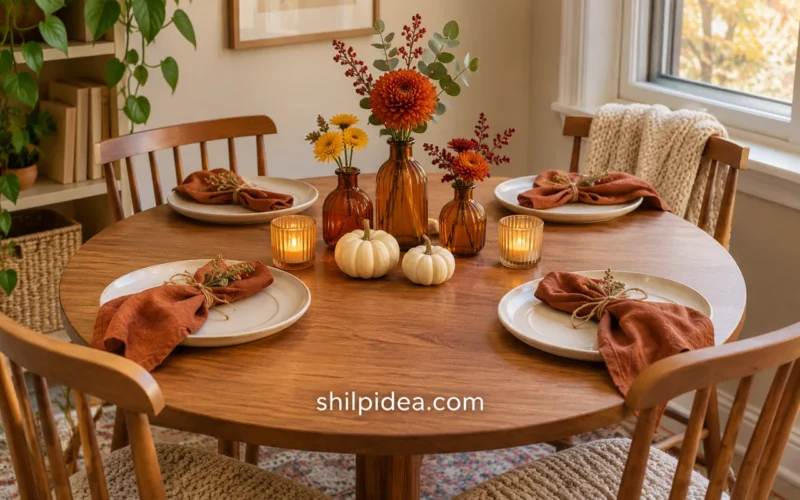
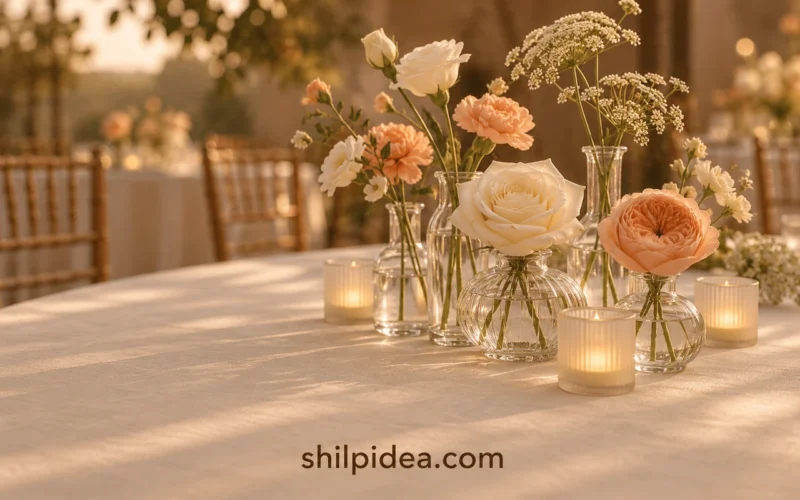
13. Repeat a Few Small Bud Vases
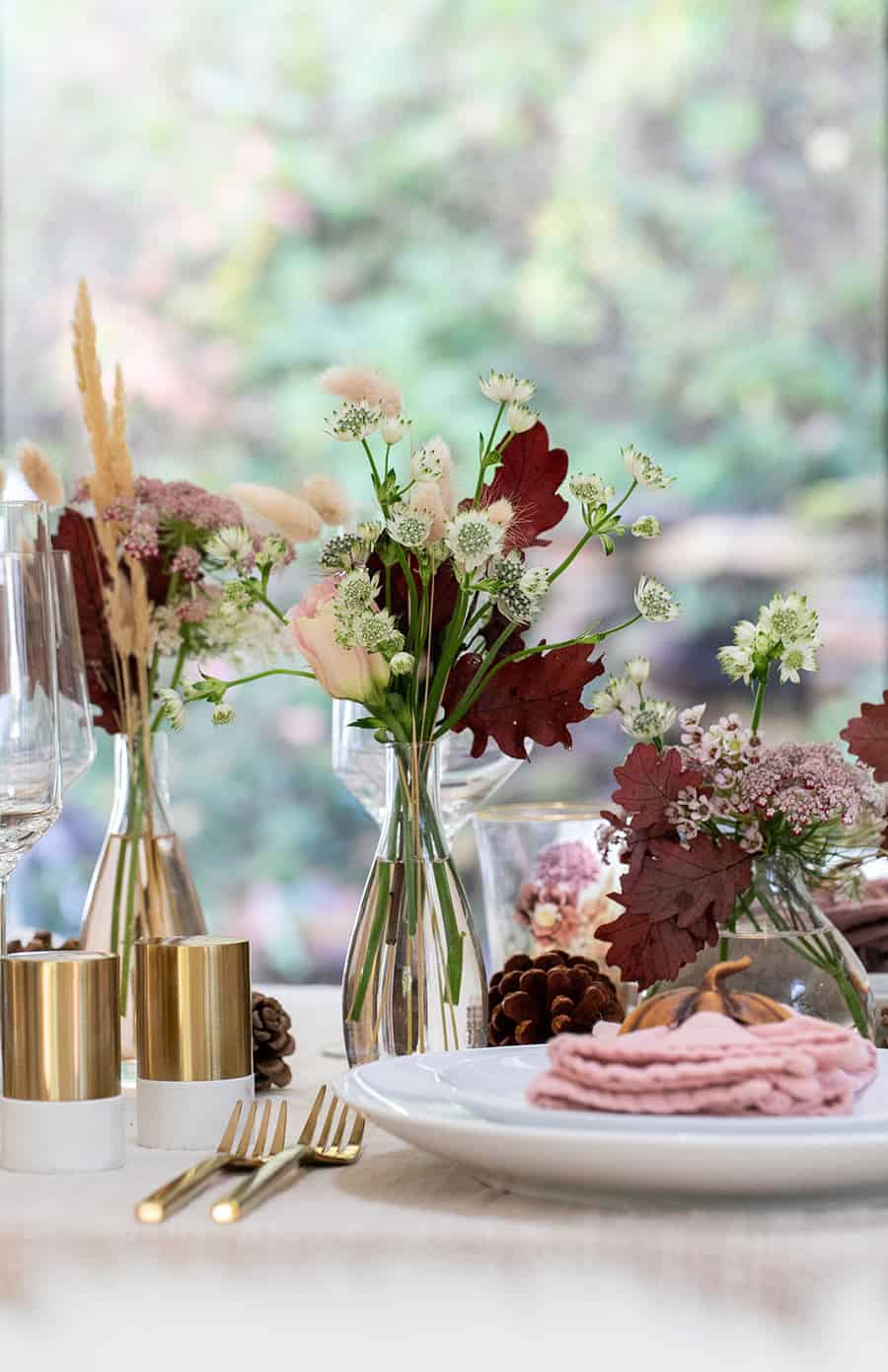
Small bud vases let a few stems reach farther along the table. Use related vessels and repeat a couple of flower types so the group feels connected. Try the positions after the place settings are laid out, leaving space for the meal. The individual vases are easy to move when a serving dish needs more room at the center.
14. Build a Flower-and-Fruit Cornucopia

A cornucopia gives flowers a directional shape, with the arrangement appearing to flow from one end. Keep the fullest blooms near the opening and let smaller pieces extend along the table, following the original project for its support. Treat the fruit and vegetables in the display as decoration and keep them separate from food you plan to serve.
15. Hide Separate Flower Jars in One Container

Several small jars inside one outer container make it easier to divide a flower arrangement into manageable groups. The original project uses this method in a burnished copper vessel. Check that the jars stay steady and that you can reach them to top up the water. This mason jar centerpiece offers another small-container project to explore.
16. Wrap a Vase With Decorative Harvest Corn

A band of decorative harvest corn gives a plain vase a strongly seasonal surface. The flowers can stay gathered above it while the vessel adds much of the texture. Follow the original project for the wrapping and stem support, then check that the finished vase is stable. Keep the decorative materials dry and separate from anything intended for eating.
17. Stretch Flowers Through a Rustic Harvest Box

A long box suits a table where a single round arrangement would leave the ends feeling empty. Flowers, small pumpkins and decorative vegetables create the harvest mix here. Use the original project to plan the inner containers, and protect the wood from water. Check the arrangement’s width against the table before filling it, leaving comfortable space around every place setting.
18. Use Mini Turkey Tureens as Individual Arrangements

A miniature tureen gives a small flower group a distinct Thanksgiving setting. Its shape provides the seasonal detail, so a compact mix of blooms is enough above the rim. Keep the lid safely aside and protect a decorative vessel with an appropriate inner container. Try a pair along the table or place one on a sideboard where the outline is easy to see.
Keep Fresh Flowers Ready for the Table
Use a clean container, remove foliage that would sit below the water and keep the water fresh. The University of Illinois Extension’s cut-flower care advice also recommends keeping arrangements away from heat and full sun and following floral-food directions. Check the arrangement from seated eye level before guests arrive. Keep decorative plant material separate from food and use identified, suitable stems.
Choose the Arrangement Around Your Table
Set out the plates and serving dishes before deciding on the arrangement’s final size. Choose a container that leaves comfortable room for the meal, then keep the color palette connected to a few details you already own. A small group of stems can be enough. Move a taller display to a sideboard if it interrupts the conversation across the table.
- Make a Thankful Tree for Thanksgiving
- Thanksgiving Gratitude Garland Ideas
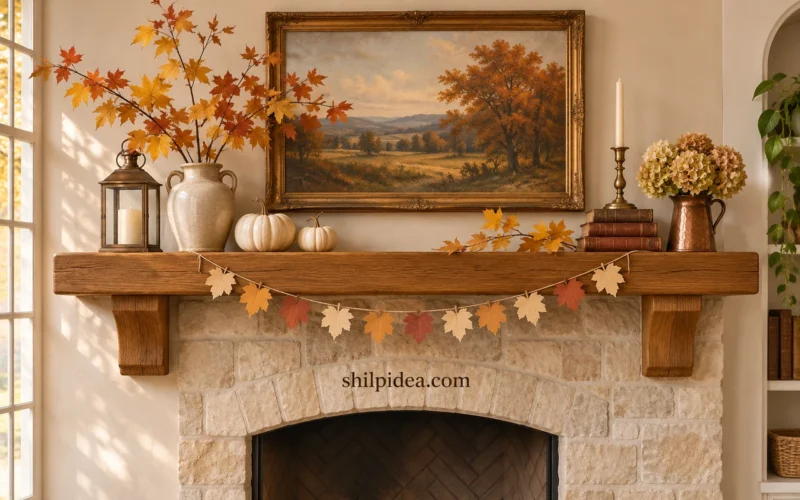
- Thanksgiving Mantel Ideas With Natural Accents
Which container would you choose for your Thanksgiving flowers: a bowl, bud vases, or a harvest-inspired vessel? Share your favorite in the comments and tell us what height works at your table when everyone sits down.






0 Comments