27 Relaxing Bedroom Styling Ideas with Soft Layers

Relaxing bedroom styling starts with layers you enjoy using, not just a perfectly dressed bed. Bedding, window fabric, upholstery and a few smaller details can make the room feel more considered.
Choose the pieces around your routine and the room you have. These narrow room ideas help keep the layout comfortable as you add texture.
The choices below use real room photographs to show different materials, proportions and arrangements. For a more enclosed outline around the bed, explore these soft canopy ideas before choosing your next layer.
1. Give the Bed a Soft Wingback Outline

A wingback headboard gives the bed a defined outline while keeping a soft surface behind the pillows. The pale upholstery here relates to the bedding without matching every texture. Compare the headboard’s height with your pillow stack before choosing one. Leave enough of its shape visible so the fabric and outline remain part of the room’s composition.
2. Use Velvet as a Larger Texture
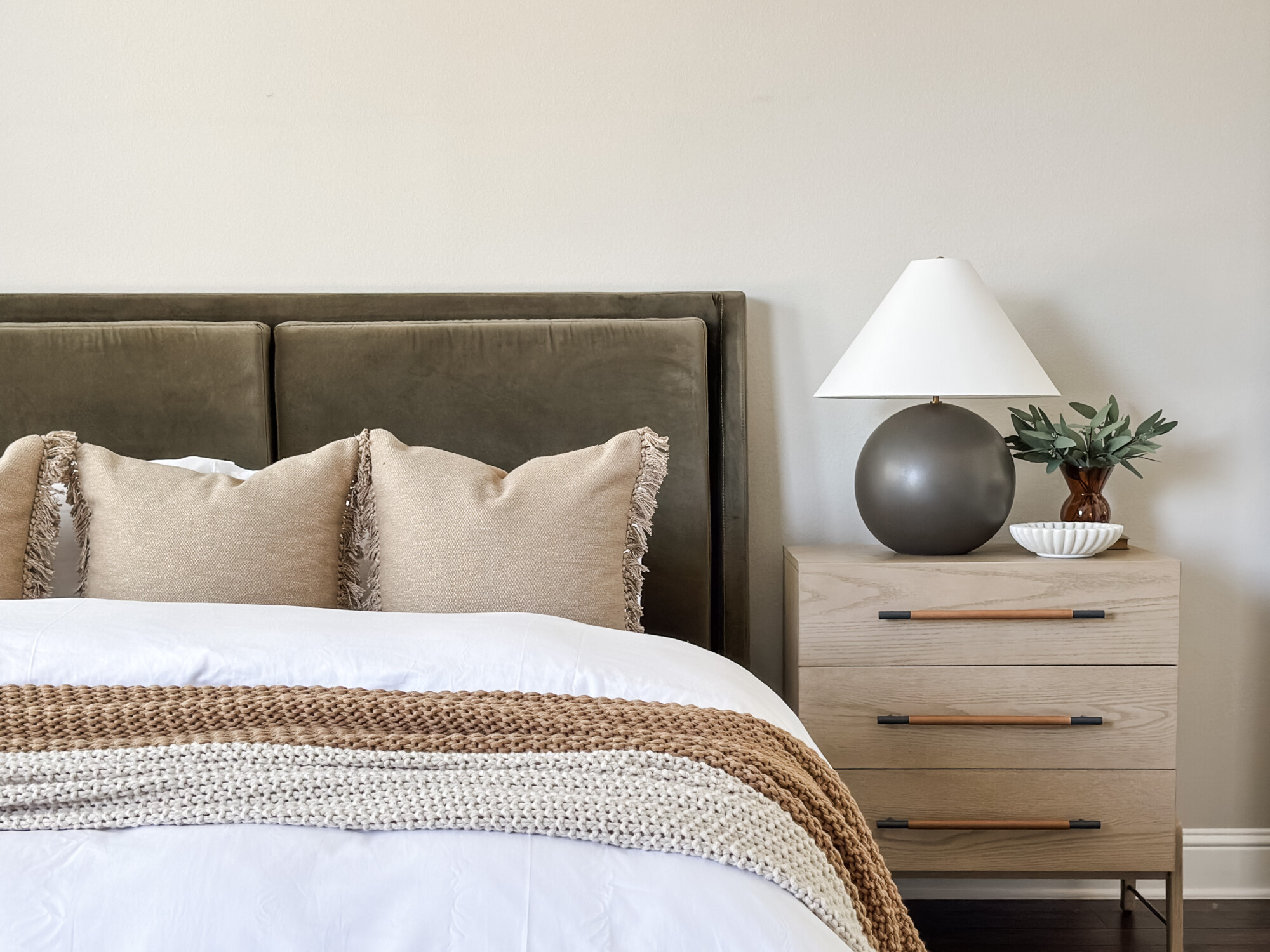
Velvet changes the way light moves across a large upholstered surface. This headboard brings depth beside simple pale bedding, so the smaller pieces do not need many patterns. Check a fabric sample in both daylight and lamplight before committing. Choose the material around its care needs as well as its appearance, especially on a piece you touch regularly.
3. Choose a Shaped, Patterned Headboard
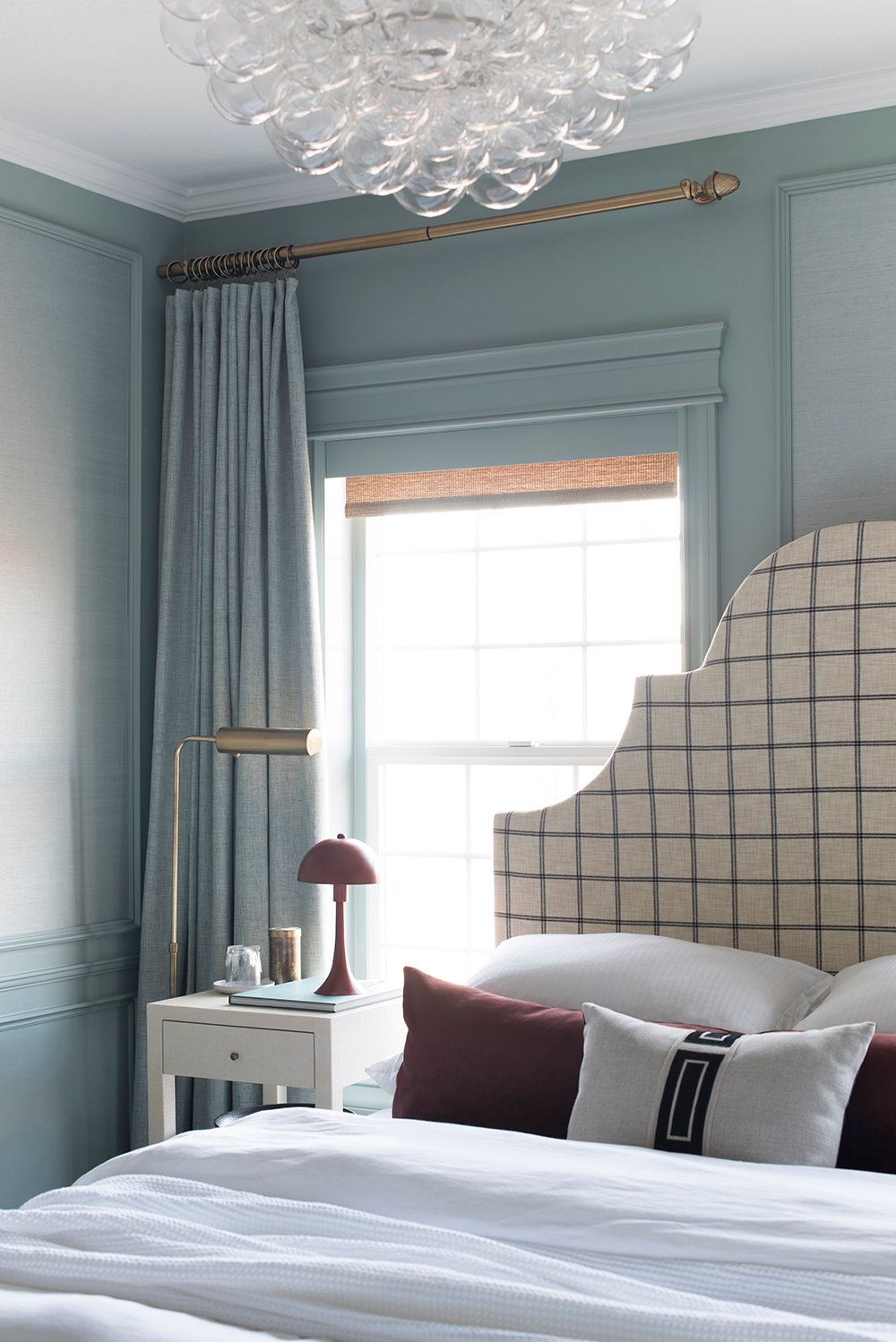
A shaped headboard can carry the main pattern while the bed itself stays simply dressed. The fine check here reads differently up close and from across the room. Keep the adjacent fabrics quieter so its outline remains clear. Compare the pattern’s scale with your pillow arrangement, and leave some of the upholstery visible above and beside the bedding.
4. Continue Upholstery Around the Bed Base
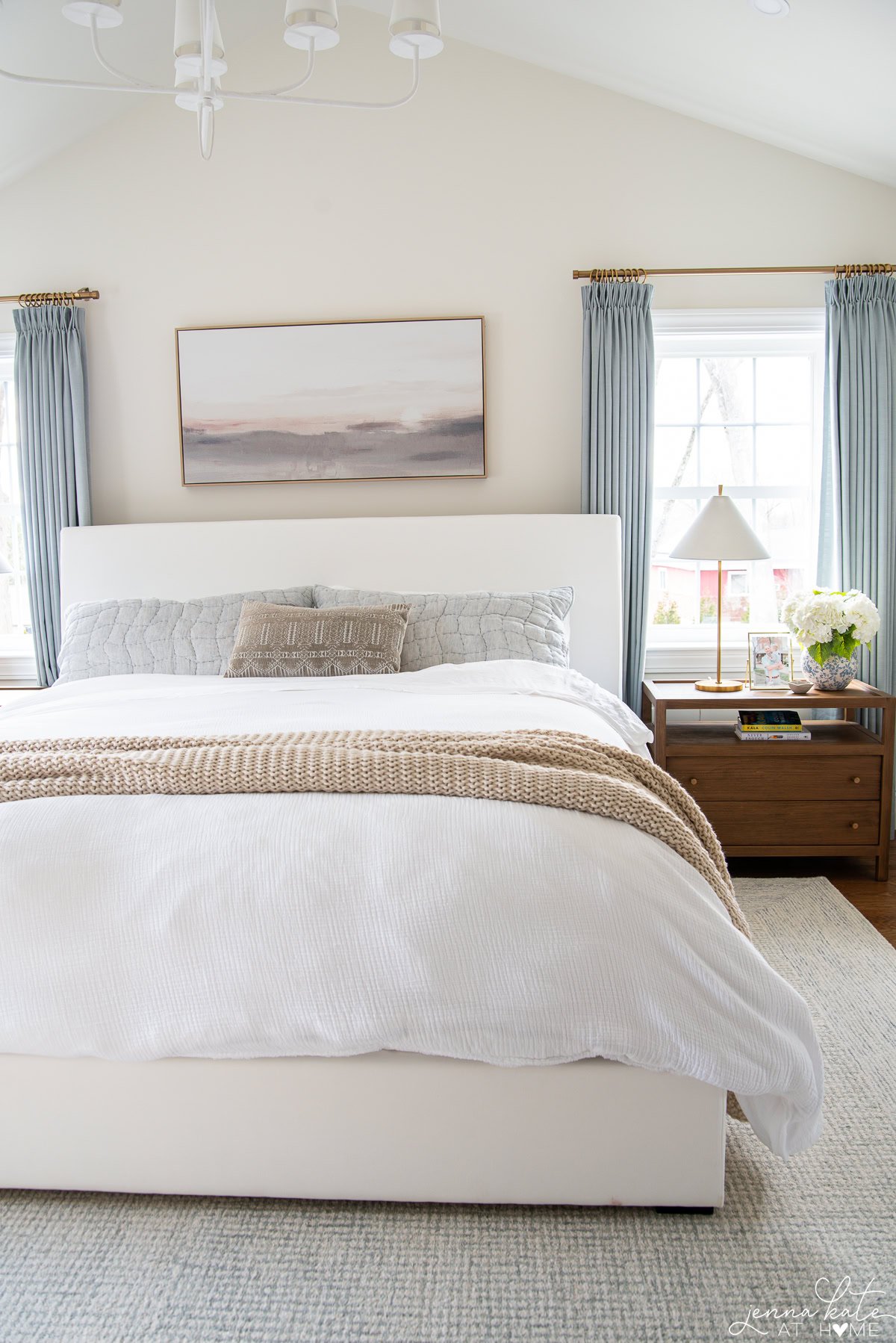
An upholstered base continues the bed’s soft outline below the mattress. In this room, that pale surface makes a calm foundation for different bedding textures. Consider the whole frame’s dimensions rather than only the mattress size. Check the fabric’s cleaning requirements and leave enough access around the base so the finished arrangement remains practical to maintain.
5. Keep the Everyday Bedding Light Enough for You

A styled bedroom does not need a heavy stack of blankets on the bed. This room keeps the main cover relatively simple and uses smaller accents for detail. Choose the duvet or quilt weight around your own comfort, then add a removable layer if needed. Keep the daily arrangement easy to straighten so it works beyond a photograph.
6. Show the Texture of a Folded Coverlet

A folded coverlet gives the bed another surface without covering the whole duvet. The loose fold here makes the different fabrics easy to see. Try folding the layer once or twice and stand back to compare the proportions. Keep any tray as temporary styling, removing it before use so the bed remains comfortable and uncomplicated.
7. Let One Patterned Quilt Carry the Detail
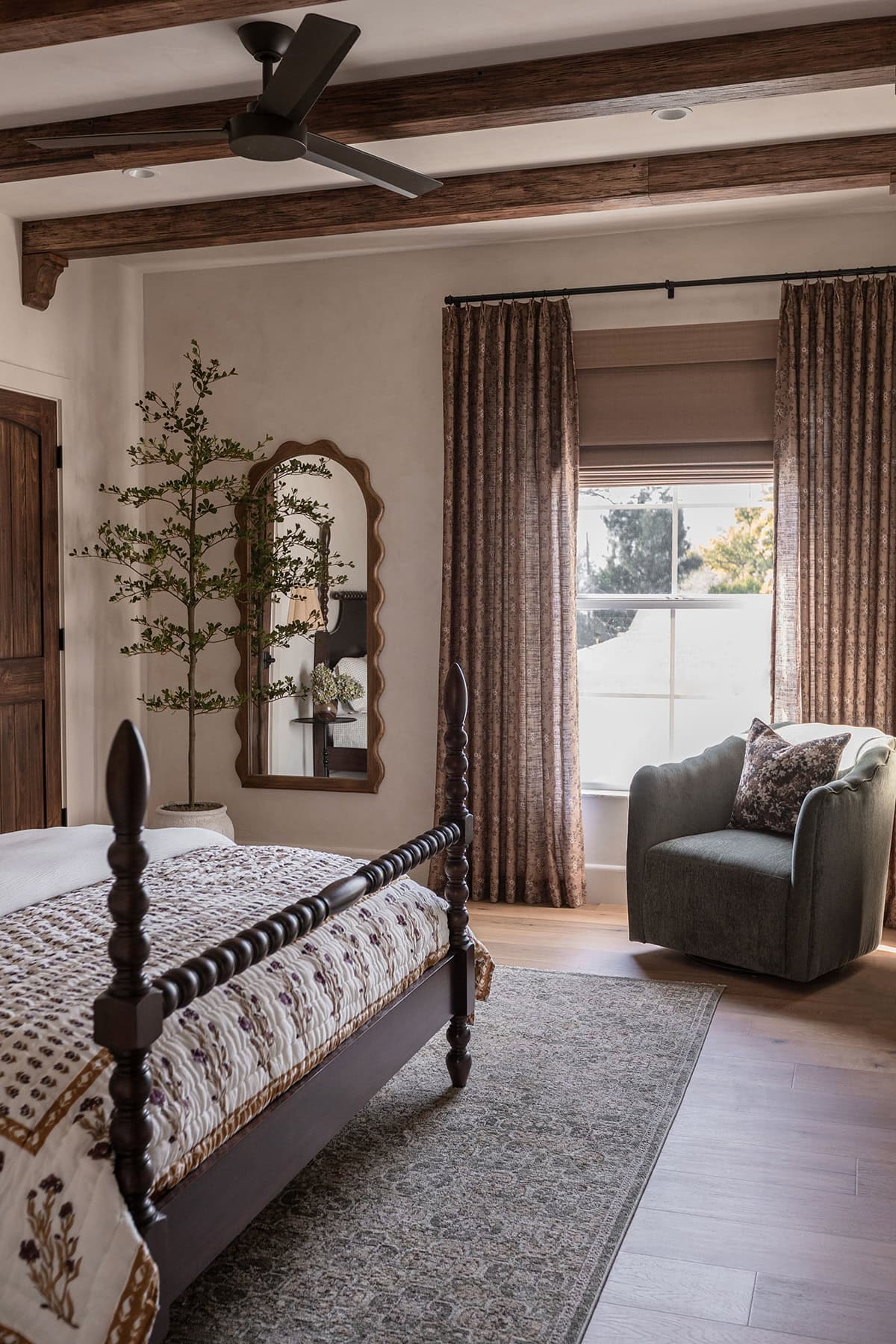
A patterned quilt can provide enough detail for the entire bed. Plain pillows and a restrained surrounding palette let the textile remain the focal point. Choose a print you enjoy seeing across a broad surface rather than only in a small swatch. Check the quilt’s size against the actual bed so its border or pattern falls where you want it.
8. Fold a Throw Into a Long, Quiet Band
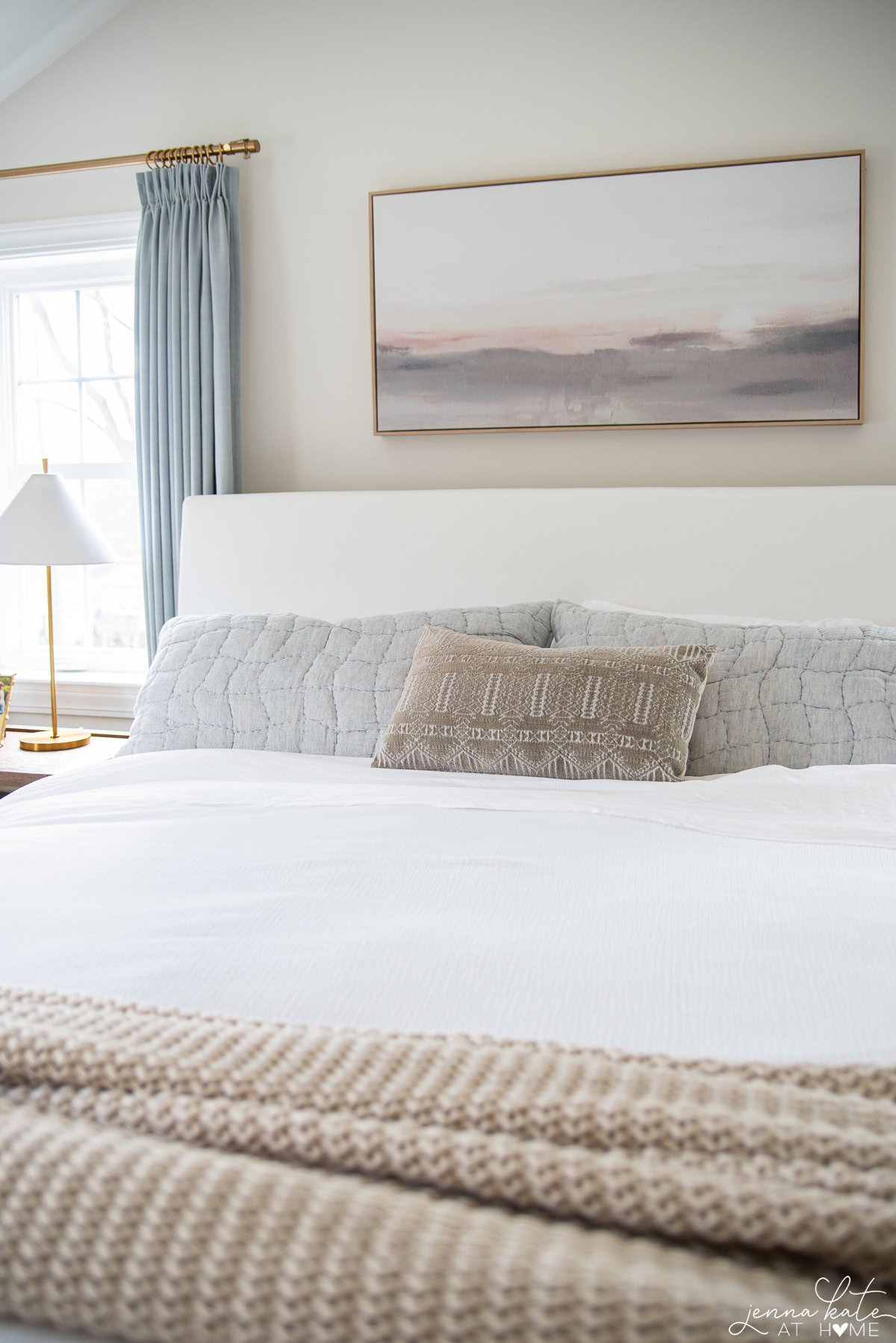
A long fold across the lower bed makes a throw look intentional and easy to remove. The narrow band here adds texture without hiding most of the duvet. Adjust its depth to the scale of your bed rather than copying an exact proportion. Choose a fabric that drapes comfortably and does not need constant arranging to look settled.
9. Mix Smooth Fabric With a Higher-Pile Accent

A small amount of higher-pile texture can make otherwise plain pillows more interesting. Keep the neighboring fabrics smooth enough that the contrast remains visible. Test the combination with the pillows you already use, then remove any piece that makes the bed difficult to manage. Check care instructions before choosing a delicate decorative texture for a frequently handled cushion.
10. Vary Pattern Scale Within a Pillow Group

Patterns feel more distinct when they do not all repeat at the same scale. This pillow group pairs quieter detail with a stronger motif, keeping the main bedding plain. Choose one shared tone to connect the fabrics, then compare them from the doorway. Stop when the arrangement feels complete rather than filling every available space across the headboard.
11. Limit the Number of Accent Pillows

A small, clearly arranged pillow group is easier to return to the bed each morning. The simple row here gives the headboard room to show rather than hiding it completely. Choose a number that fits your routine and a place to put the cushions at night. The arrangement should support the way you use the room as well as its appearance.
12. Try One Long Bolster for a Different Proportion
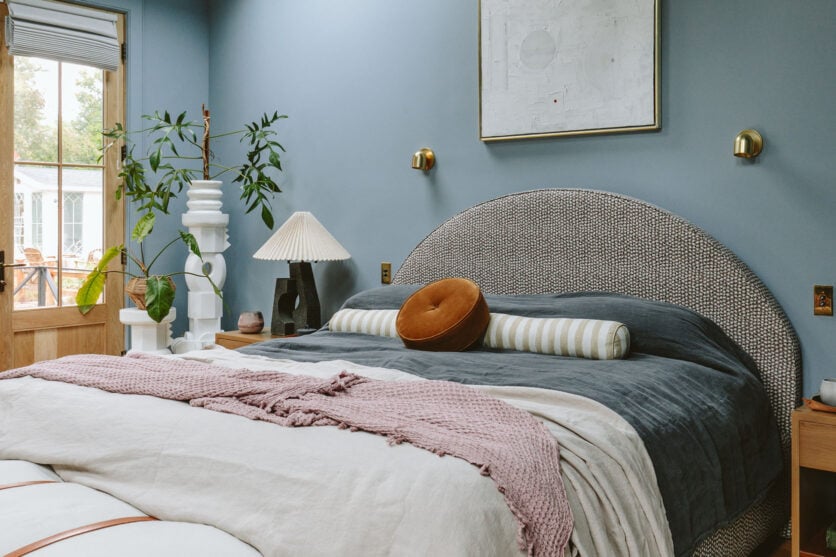
A long bolster introduces a horizontal line across the bed. It can provide a different proportion from several square cushions without needing a large pile of accessories. Compare its length with the width of the bed and keep the other pillows quieter. Choose a removable cover when practical, and make sure you have an easy place to set it aside.
13. Let Full-Length Curtains Define the Window Wall

Full-length curtains give the window wall a softer outline even when the fabric is open. This room keeps their color close to the wall so the effect comes mostly from the folds. Measure the actual drop and consider how the curtains move beside the furniture. Choose the lining and fabric weight around the light control and privacy you need.
14. Combine a Roman Shade With Side Drapes
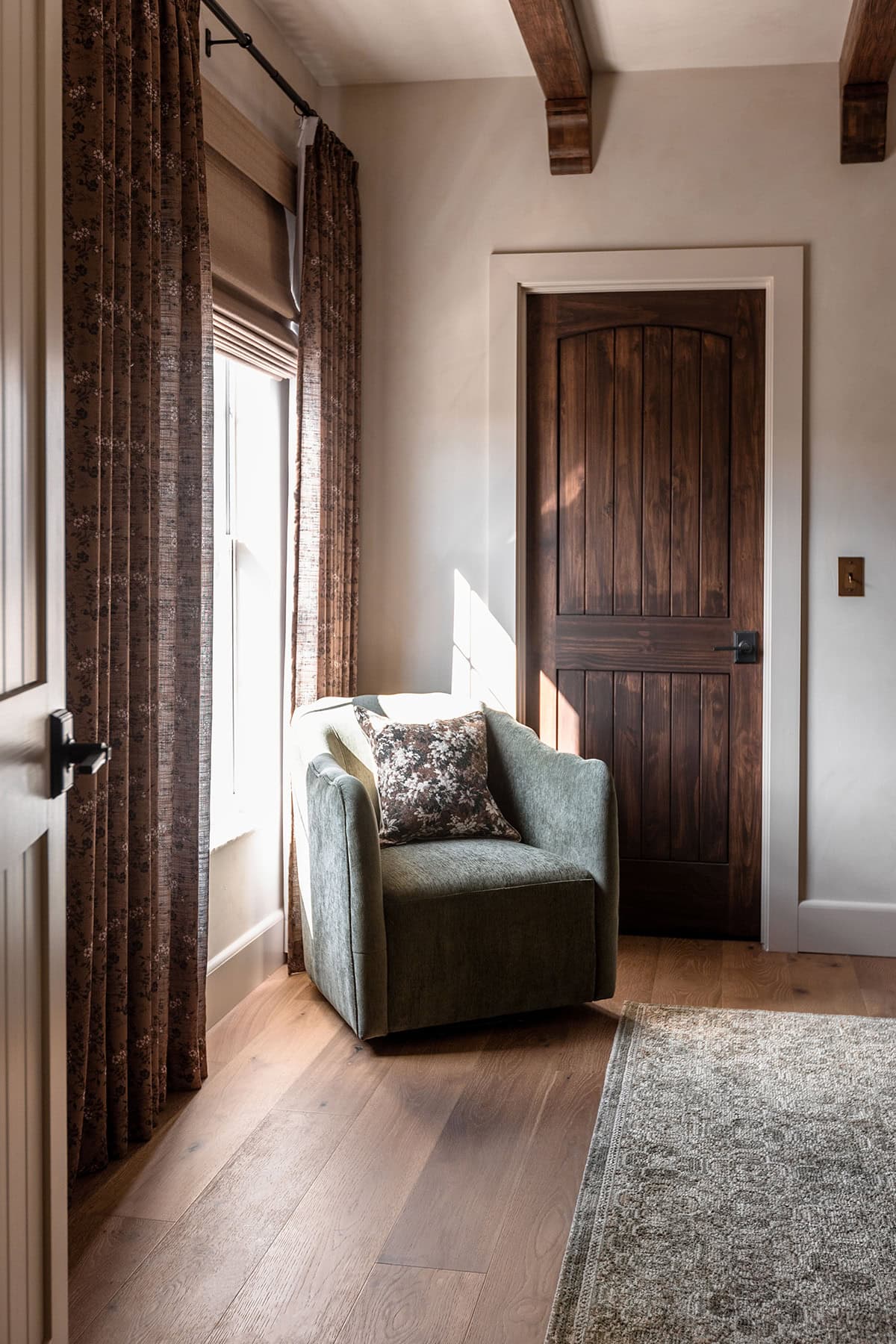
A Roman shade can handle the window opening while side drapes add another layer around it. The two treatments here create depth without requiring the same fabric on both. Check how the shade operates and where the drapes stack before planning the arrangement. Keep the nearby chair and furniture clear of the fabric so the window remains easy to use.
15. Keep Curtain Fabric Clear of the Bedside Surface
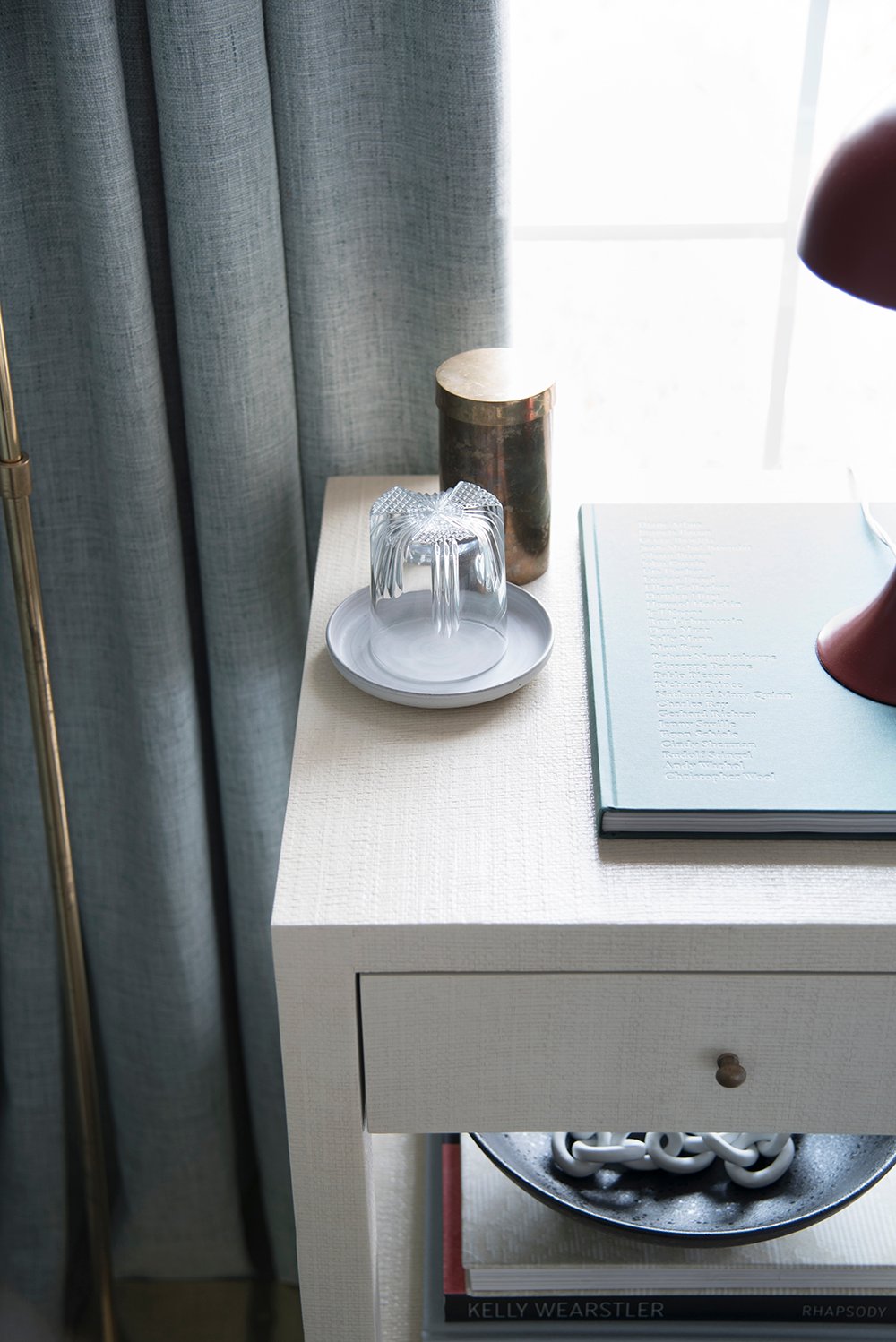
A bedside table needs usable space even when curtains hang close by. This detail shows how fabric and a compact surface can share a corner without the tabletop becoming crowded. Check the curtain’s movement and keep anything that could catch it out of the way. Leave room for the ordinary items you reach for when getting into bed.
16. Use a Graphic Rug to Anchor Pale Layers

A rug can give pale bedding a clearer place within the room. The graphic lines here create structure underneath the softer textures above. Compare the pattern with your other large textiles before adding smaller prints. Measure the usable floor area around the bed and choose a size that works with the furniture, the door swing and the walking route.
17. Reflect Daylight Without Adding Another Textile

A mirror adds another visual layer while keeping the material palette simple. Here, it reflects light and the softer parts of the room rather than introducing a new fabric. Try the view from the bed and doorway before fixing its position. Choose a secure mounting method appropriate to the mirror and wall, and avoid placing it where it disrupts the route.
18. Use an Arched Mirror Beside Straight Furniture
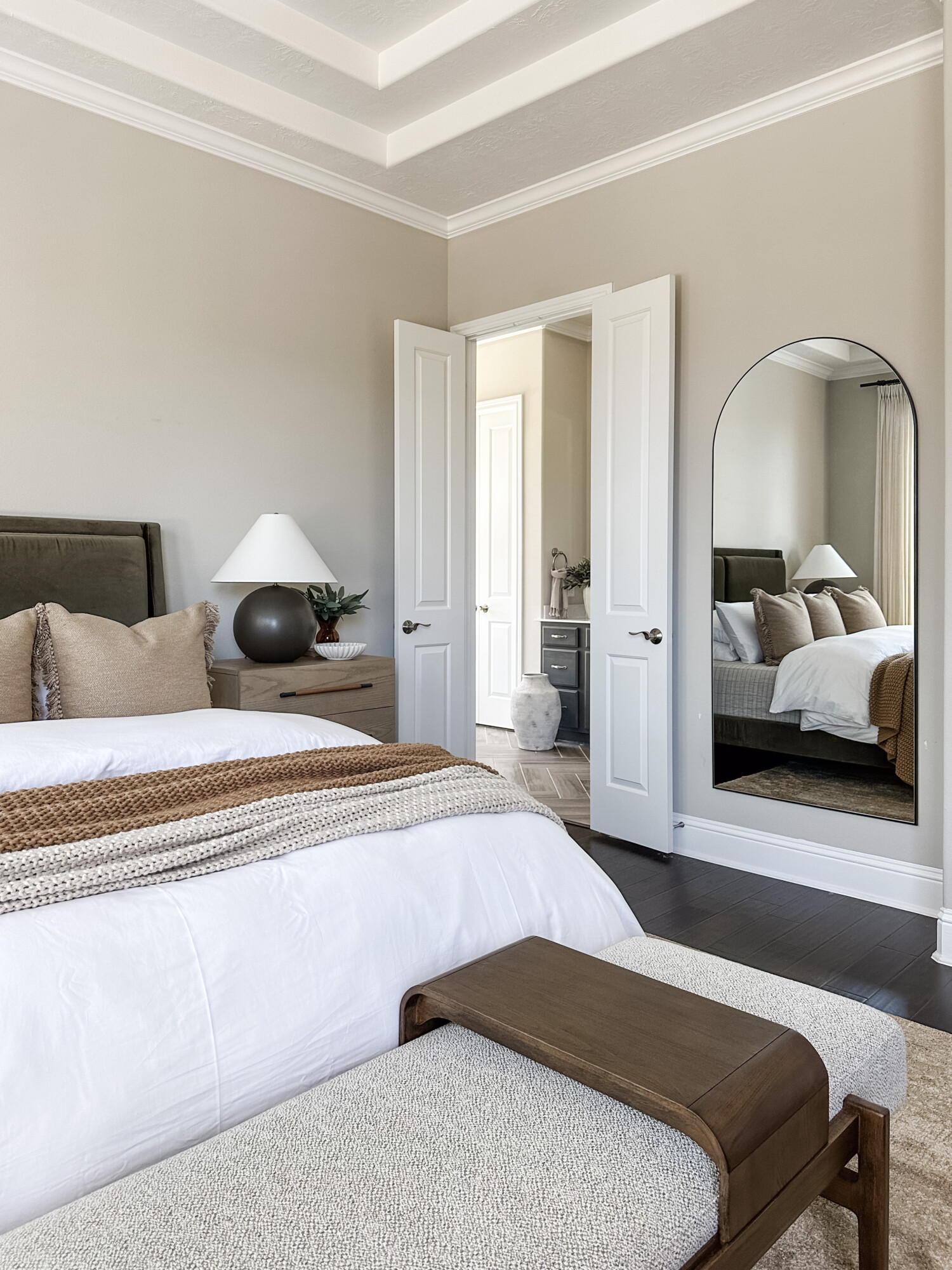
An arched mirror offers a softer outline beside straight drawers and a rectangular bed. Its shape adds variety without another patterned surface. Check the reflected view as carefully as the frame itself before choosing a location. Keep the floor in front usable and follow the appropriate fixing instructions, especially with a tall piece that could otherwise be unstable.
19. Add a Tufted Bench at the Foot

A tufted bench brings an upholstered surface to the foot of the bed. It can also provide a temporary place for a folded throw or an extra pillow. Measure the remaining route beyond the bench before adding one. Choose a depth that fits the room, and keep its everyday use clear so it does not become an awkward storage pile.
20. Frame a Pale Bench With Darker Wood
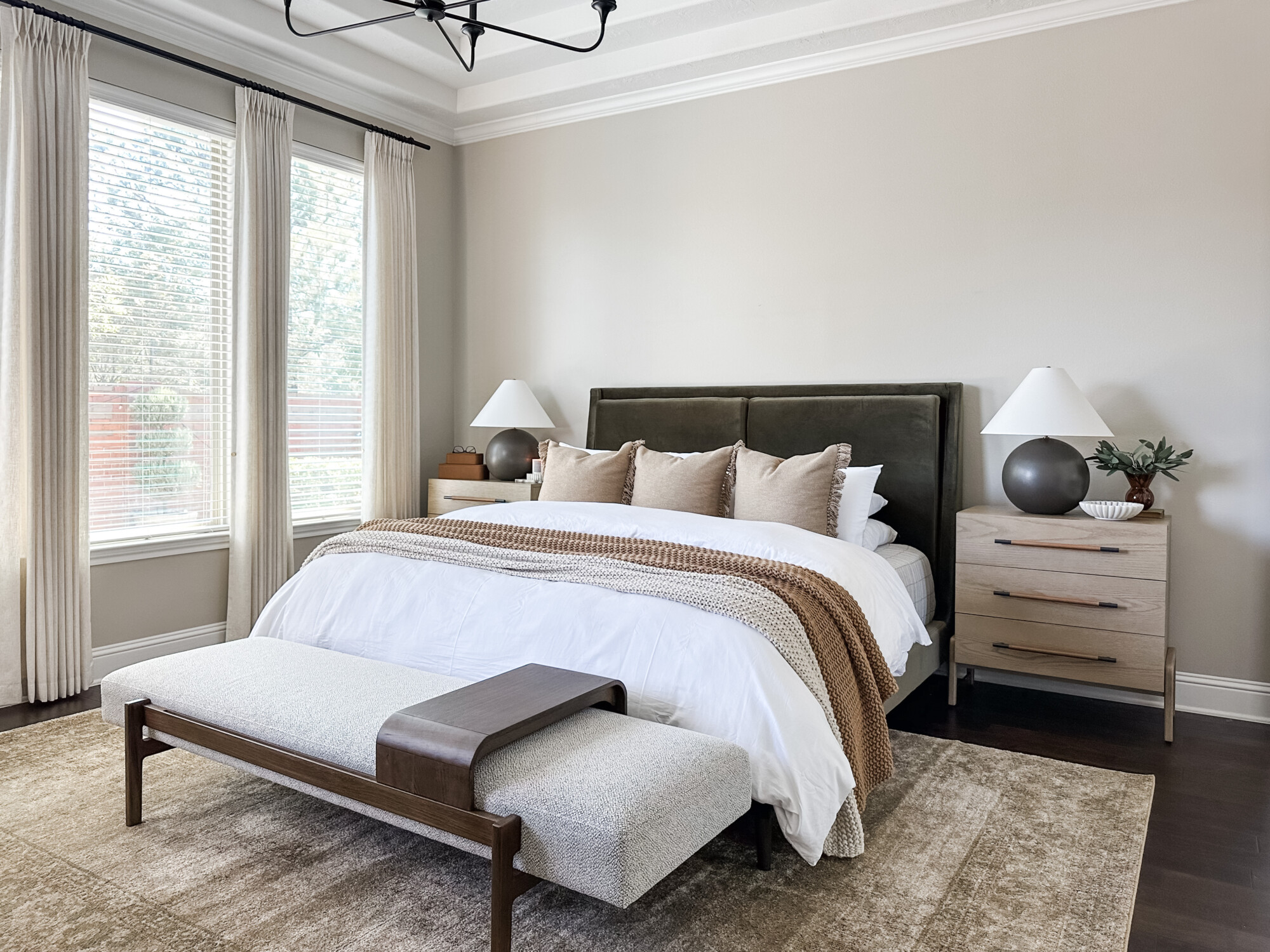
A darker frame gives a pale bench a visible outline against light bedding. That contrast lets the upholstery stay simple while the shape remains clear. Compare the bench with the bed’s height and width before deciding on the size. Keep enough floor visible around it so the arrangement feels comfortable rather than like another barrier across the room.
21. Try a Movable Bench Near the Window
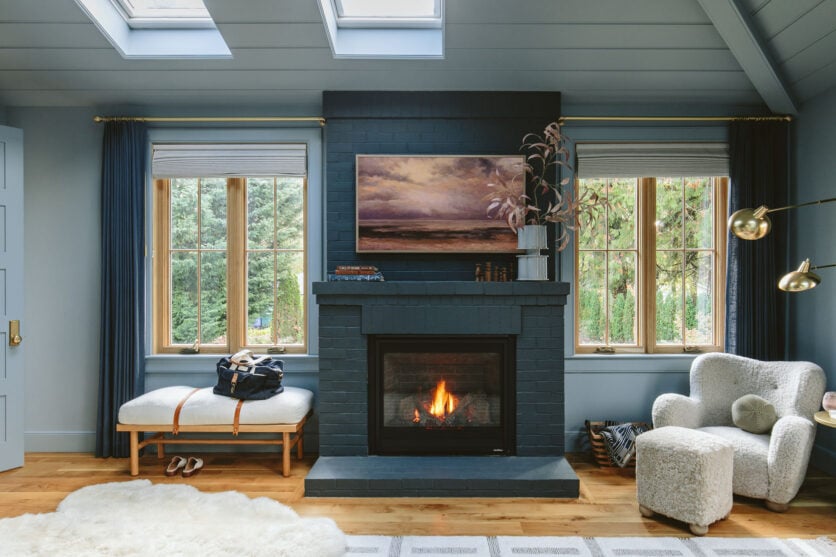
A movable bench gives you a way to test a soft seating layer before settling on a permanent arrangement. In this photograph, the small bench sits near the window and keeps the main view open. Try the position in everyday use, checking curtains, doors and walking space. Move it again if another location works better for the room.
22. Choose a Rounded Chair for a Small Pause

A rounded chair can soften a corner without needing many decorative pieces around it. The window provides a natural setting for a short reading break, while a small nearby surface keeps the arrangement useful. Measure the chair’s full footprint before choosing it. Leave space to sit and stand comfortably instead of fitting it tightly between the bed and curtains.
23. Pair a Chair With a Separate Ottoman
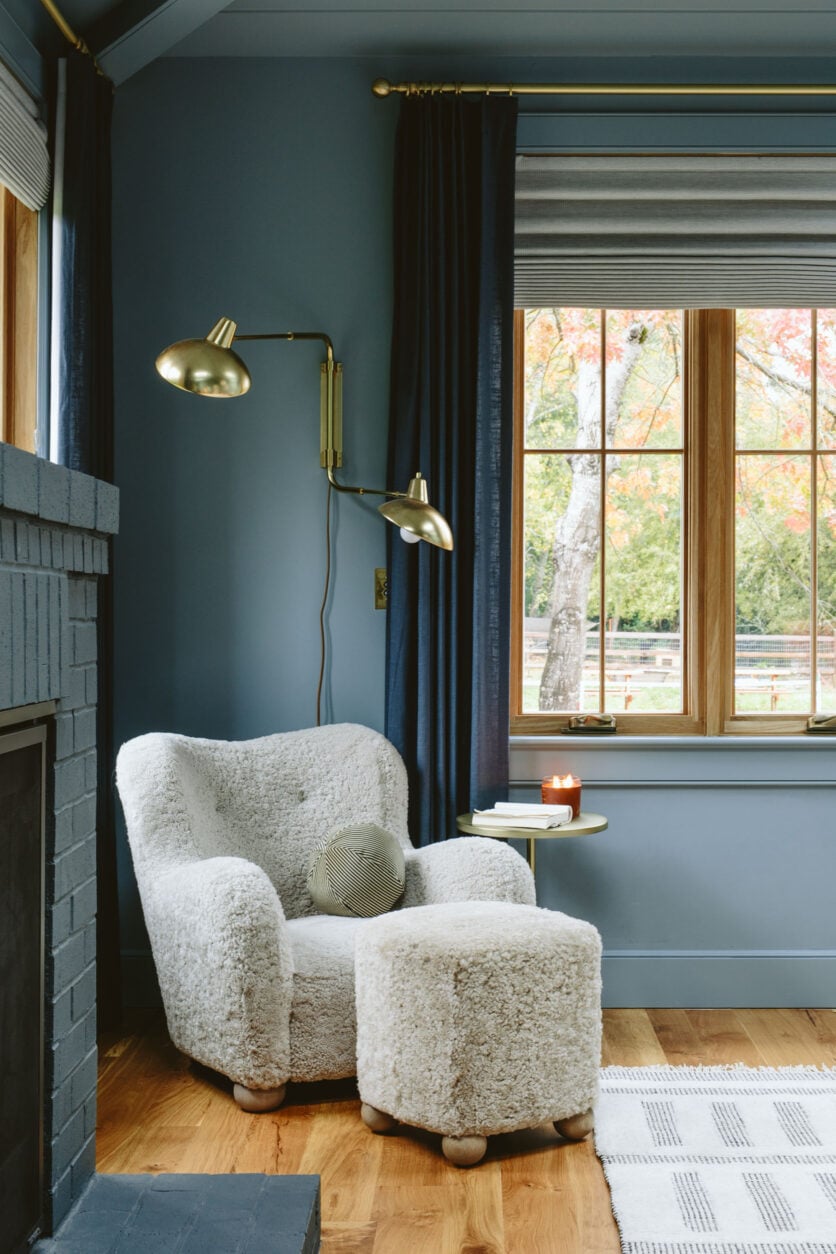
A separate ottoman lets a reading chair work in more than one position. Use it when you want to put your feet up, then move it aside when you need more floor space. Check both pieces together rather than measuring the chair alone. Keep their textures related so the pair feels connected without adding another strong pattern.
24. Use a Compact Upholstered Stool in a Dressing Corner
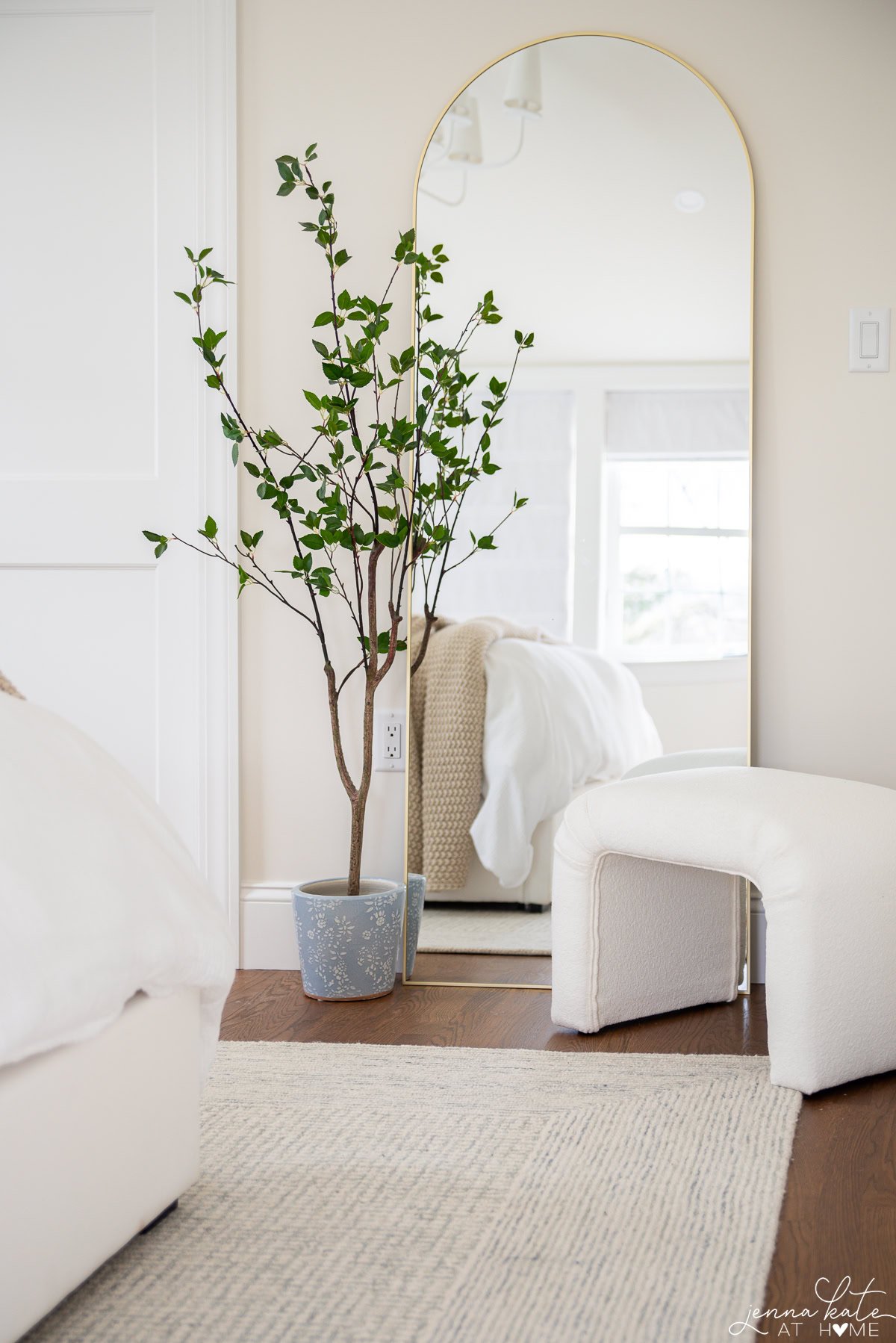
A compact upholstered stool gives a dressing corner a useful soft surface. It takes less visual space than a full armchair while still offering a place to sit briefly. Choose the height for the way you intend to use it, and check its stability. Keep it clear of the main route rather than placing it wherever a gap happens to remain.
25. Make a Familiar Chair Part of the Bedroom

A chair you already find comfortable can be a better starting point than buying a new decorative piece. This room makes a familiar recliner feel connected through pale upholstery and a simple side table. Arrange the space around how the chair moves, including its extended position. Add only the small items you will actually use while sitting there.
26. Soften the Bedside Detail With a Pleated Shade
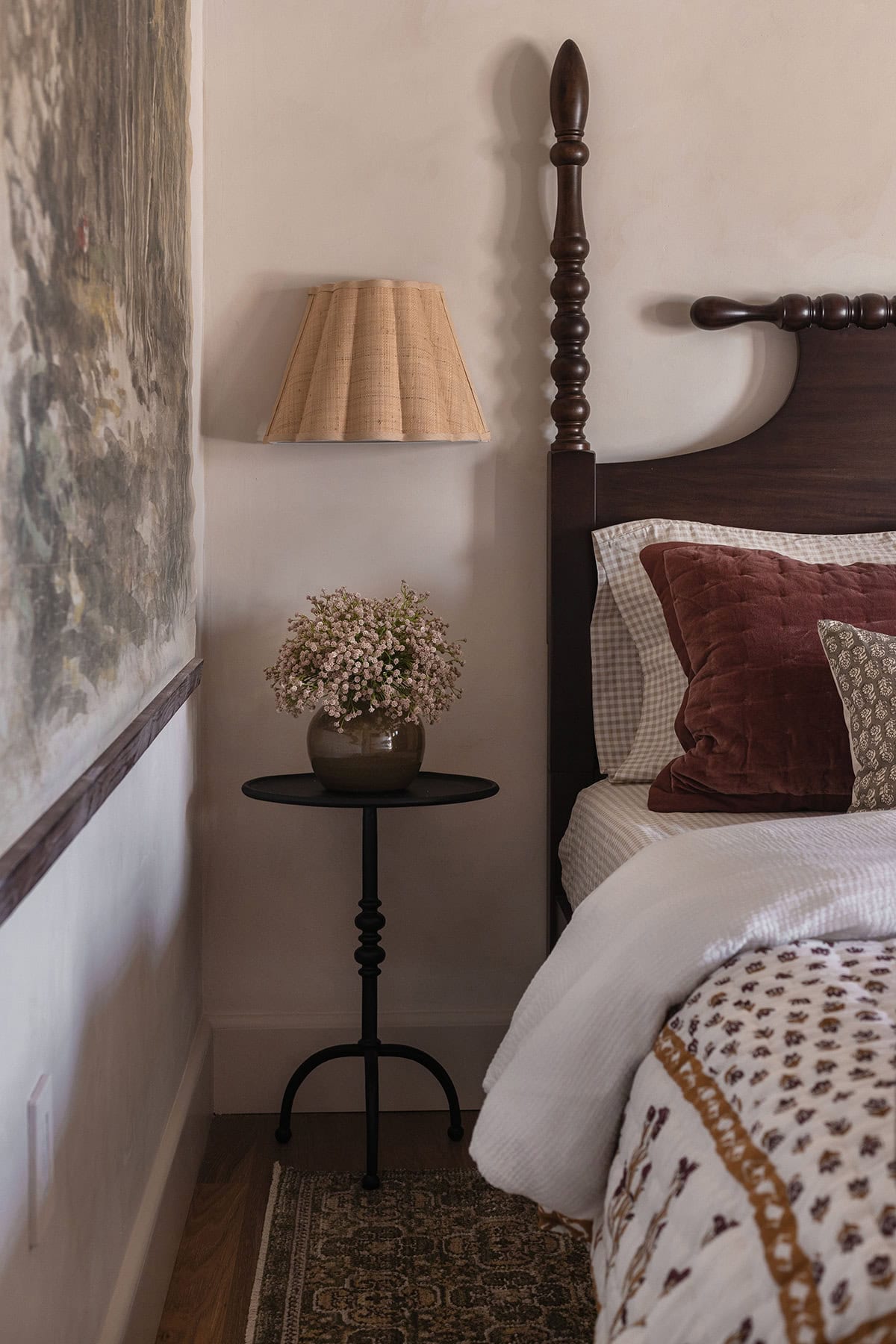
A pleated lampshade brings a small fabric texture to the bedside without adding another pillow or blanket. Its repeated folds sit comfortably beside the bedding and the wood frame in this room. Compare the shade with the lamp base and nearby patterns before choosing one. Follow the lamp and shade specifications, keeping the bedside surface useful for everyday essentials. A small piece of framed fabric art can carry the same textile story onto a nearby wall.
27. Finish One Piece With a Small Trim Detail
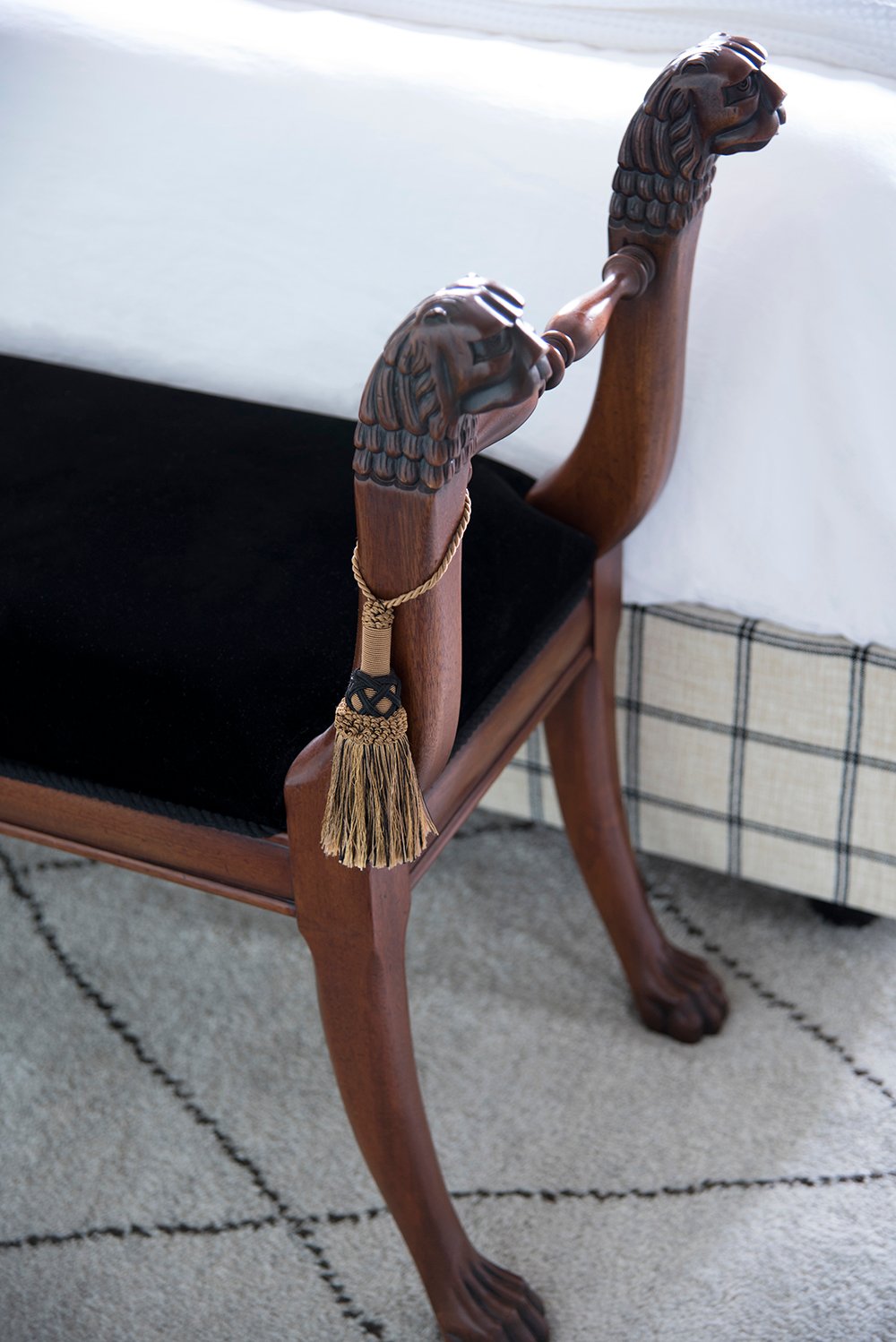
A single trim detail adds a close-up layer that does not need to dominate the room. The decorative tassel on this bench sits beside the texture of the seat and the carved frame. Use a detail like this sparingly and keep it clear of everyday movement. Check that the trim is secure and easy enough to maintain.
Choose Layers You Can Keep Comfortable
A layered bed does not need every blanket on it every night. Choose the warmth and fabric weight that suit you, and keep spare pieces somewhere easy to reach. Check care labels before combining materials, especially on upholstery and textured throws. Build the arrangement one layer at a time so you can see which pieces add comfort and which only add work.
Start With the Layer You Notice Most
Choose one part of the room to adjust first: the bedding you touch, the curtains you open each morning or the chair where you read. Keep the pieces that already work, then compare a new texture beside them. A room can feel more settled through a few useful changes. Leave enough clear space to make the bed and move around comfortably.
- Vintage and Secondhand Furniture Styling Ideas
- Murphy Bed Room Ideas for Flexible Small Spaces
- Gray Floor Color Combinations for Different Rooms
Which layer would make the biggest difference in your bedroom: a soft throw, lighter curtains, or a rug underfoot? Tell us in the comments what texture you’d reuse and where you’d put it so you actually enjoy it.





























0 Comments