19 Large Mirror Styling Ideas for Bedrooms and Hallways
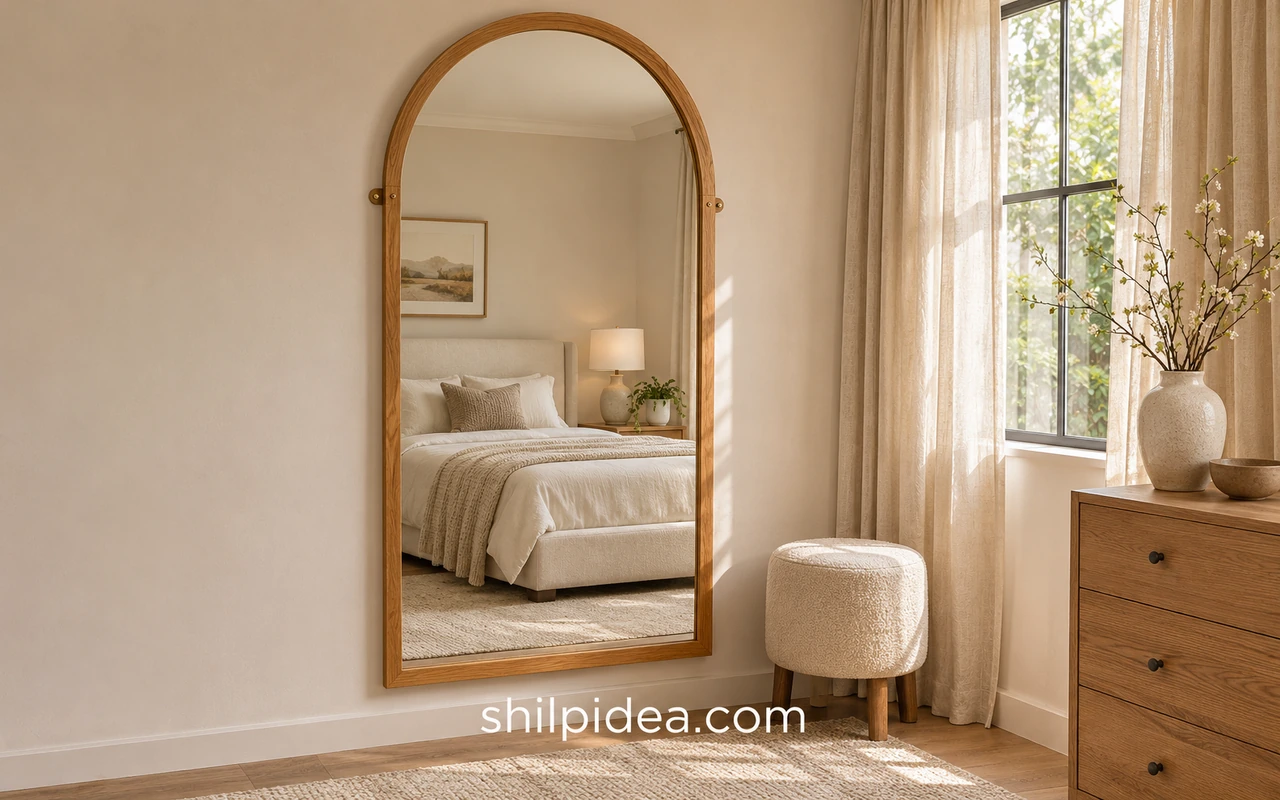
A large mirror works best when its placement is useful as well as attractive. In a bedroom, that might mean a clear dressing view; in a hallway, it could be a last check before leaving without blocking the route through.
These styling ideas compare shapes, furniture pairings and practical positions. Start with your bedroom layout before choosing the mirror’s size.
Check what the glass will reflect, how doors open and where people stand. These interior ideas can help you connect a new mirror with the furniture and finishes already in your home.
1. A Tall Arch Between Bedroom Openings

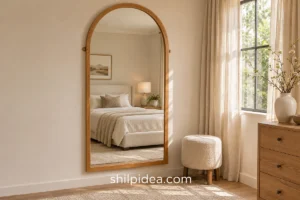
A tall arched mirror turns a plain strip of bedroom wall into a useful dressing spot. The soft top works with the warm beams and pale finishes, while the clear area in front keeps the reflection usable. Check the mirror from where you actually stand to get dressed. A beautiful shape matters less if furniture or an opening door blocks your view.
2. An Oversized Arch Above a Slim Console
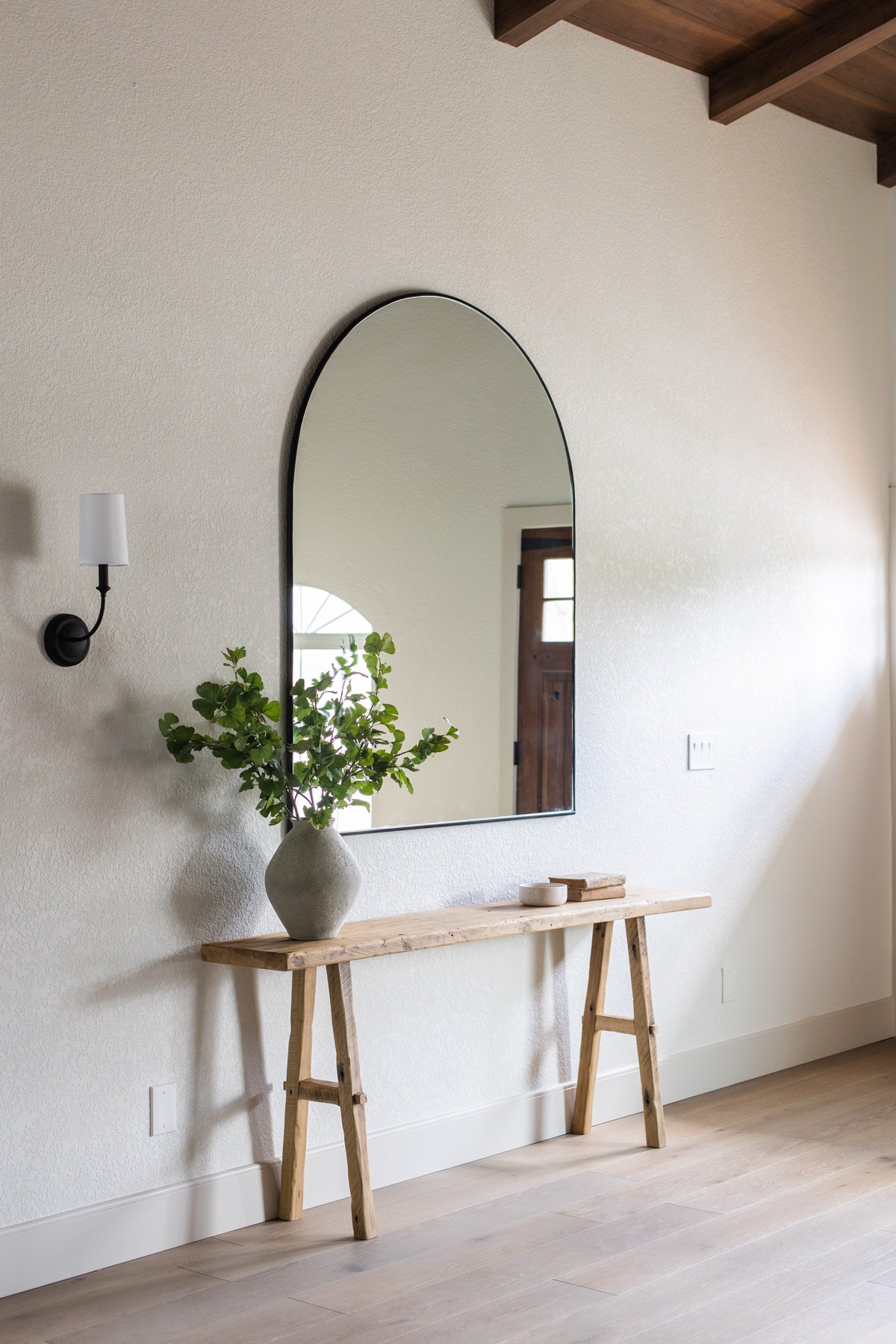
A wide arched mirror balances a long, narrow console without adding much visual bulk. Its simple edge lets the console’s wood texture stand out. This works in an entrance hall where floor space is needed for movement. Tape out both shapes on the wall before choosing sizes, then leave enough room for useful objects on the console without hiding most of the reflective surface.
Get the tutorial: An Oversized Arch Above a Slim Console by Jenna Sue Design.
3. A Rectangular Mirror Above an Entry Bench

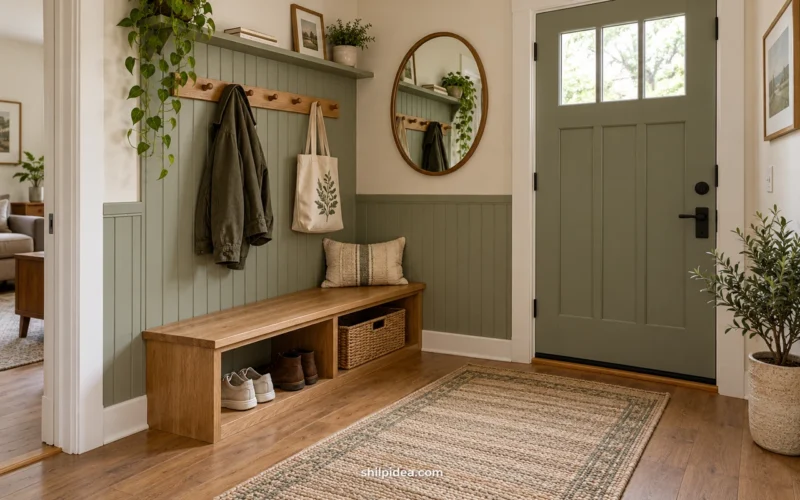
Pairing a tall mirror with a low bench creates two useful functions in one hallway zone. The bench gives people a place to sit, while the mirror stays clear above it. Keep the seating and mirror centered as a group, then check that bags and shoes will not spill into the walking route. Repeat one finish from nearby door hardware for a connected look.
4. An Ornate Floor Mirror in a Moody Bedroom

A substantial vintage-style frame can hold its own against dark paneling and rich textiles. Place it where the reflected window or room view contributes to the composition, rather than pointing it toward storage piles. Let the frame be the decorative feature and keep adjacent accessories restrained. Darker schemes can still feel comfortable; compare blue bedrooms when planning a deeper palette.
5. A Guest-Room Mirror on the Side Wall

A full-length wall mirror gives overnight guests a dressing view without taking space from the bedside table. Here, the light frame works with pale walls and the nearby art arrangement. Mount it at a height that suits the people using the room, and leave a clear standing area. Keep hooks or luggage storage nearby only if they will not interrupt the reflection or damage the glass.
See the original room: A Guest-Room Mirror on the Side Wall by Bless’er House.
6. Arched Mirrors Behind Bedside Tables

A tall mirror behind a nightstand brings height to a bedside composition and reflects the lamp and room beyond. The arched frame gives the arrangement a decorative outline, so the furniture below can stay simple. If you borrow this placement, check glare from the bed before fixing it. Keep mirrors securely wall-mounted and avoid placing breakable glass where a headboard or moving furniture can strike it.
Get the tutorial: Arched Mirrors Behind Bedside Tables by Bless’er House.
7. An Entry Mirror Linked to Staircase Details
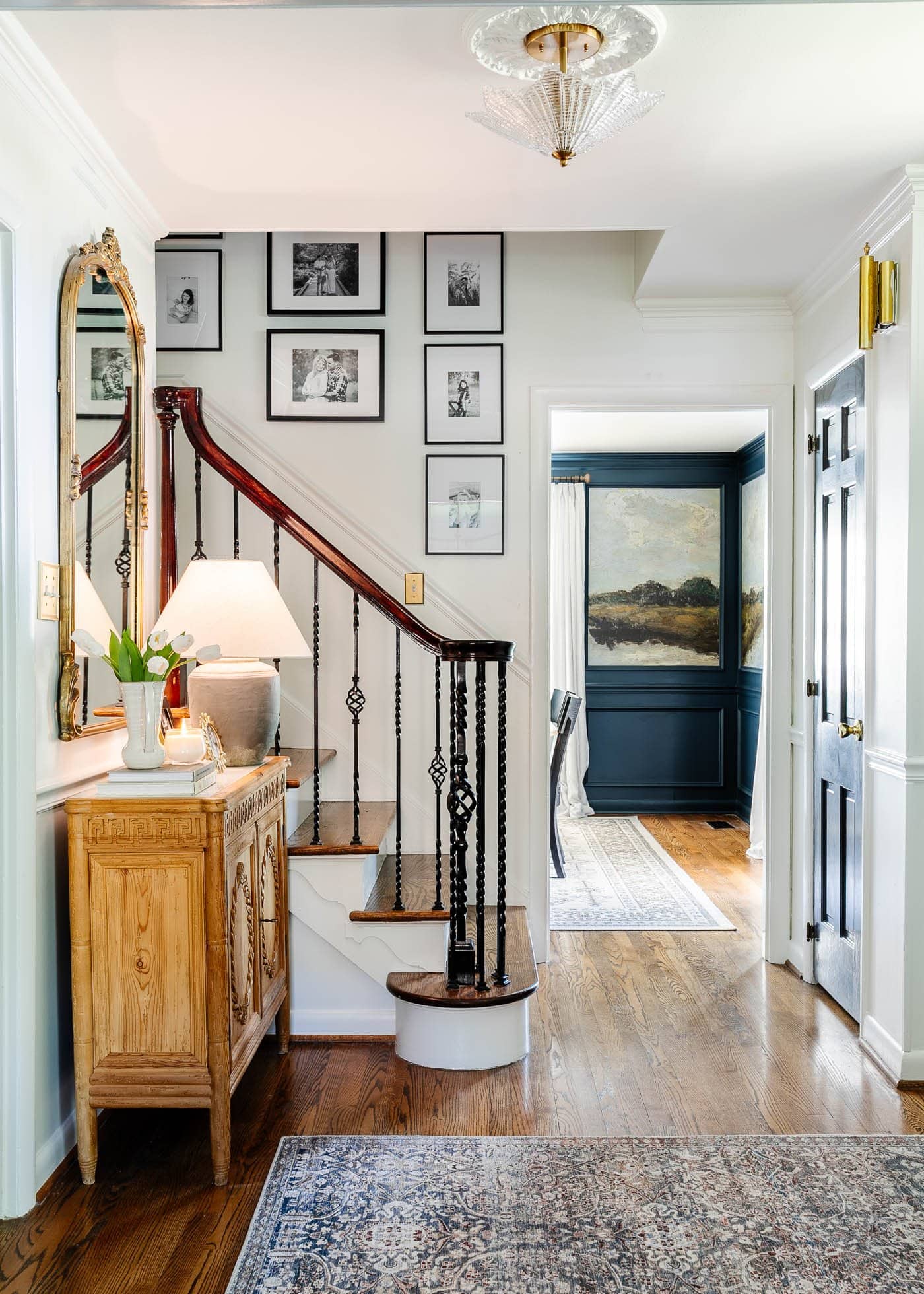
A framed mirror above a hallway cabinet can connect the entrance to the staircase without filling every wall. In this example, the wood furniture and traditional details give the reflective surface context. Check the view from the front door and from the stairs before choosing the position. Keep the console practical, with a small landing space for keys instead of an uninterrupted row of ornaments.
See the original room: An Entry Mirror Linked to Staircase Details by Bless’er House.
8. A Wide Full-Length Mirror Beside a Clothing Rail

A broad mirror beside open clothing storage turns one corner into a dressing zone. The generous width is useful when you can step back comfortably, and a slim frame keeps the arrangement from becoming visually heavy. Measure the standing area as well as the glass. An open rail and mirror also reflect whatever is stored nearby, so edit that zone to the things you regularly use.
9. A Dark Frame Beside a Bedroom Dresser

A black-framed mirror creates a clear vertical line beside a dresser. The dark frame repeats the furniture’s visual weight, while the reflected bed keeps the mirror connected with the room. This is worth considering for small bedroom layouts where the dresser wall needs to serve several purposes. Keep the dresser drawers and the walking route fully usable when deciding exactly where it belongs.
10. A Narrow Wall-Mounted Dressing Mirror
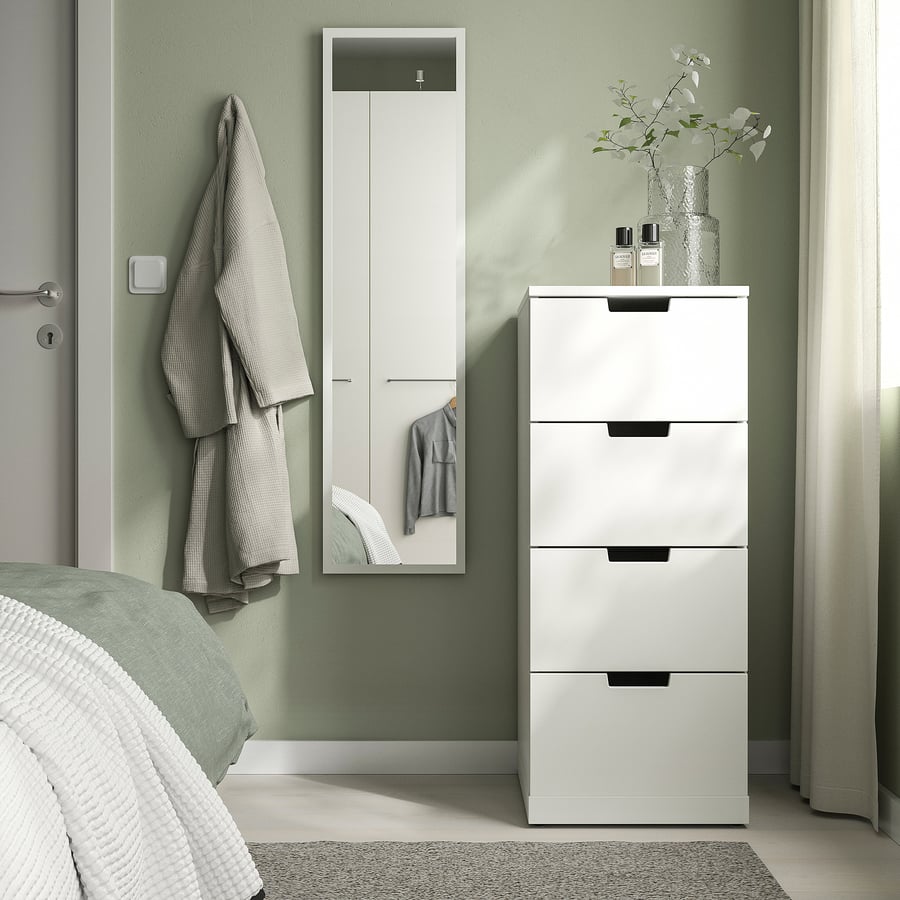
A narrow mirror uses a small wall section beside the bed without needing a freestanding support. The light frame blends with the pale finishes, leaving the rest of the room visually quiet. Check the viewing distance before settling for the narrowest option: a very tight corner may not give a comfortable full-length view. Keep hooks for robes to the side rather than directly in front of the glass.
11. A Large Round Mirror Above a Dresser

A broad round mirror softens the rectangle of a chest of drawers. Its wood rim adds warmth while the simple surface leaves room for a few useful objects below. Keep the dresser styling low enough to preserve a clear face-level reflection. A plant can sit to one side, but check that its leaves do not cover the glass or drop water onto the frame when watered.
12. A Freestanding Wood Mirror with Space Behind It
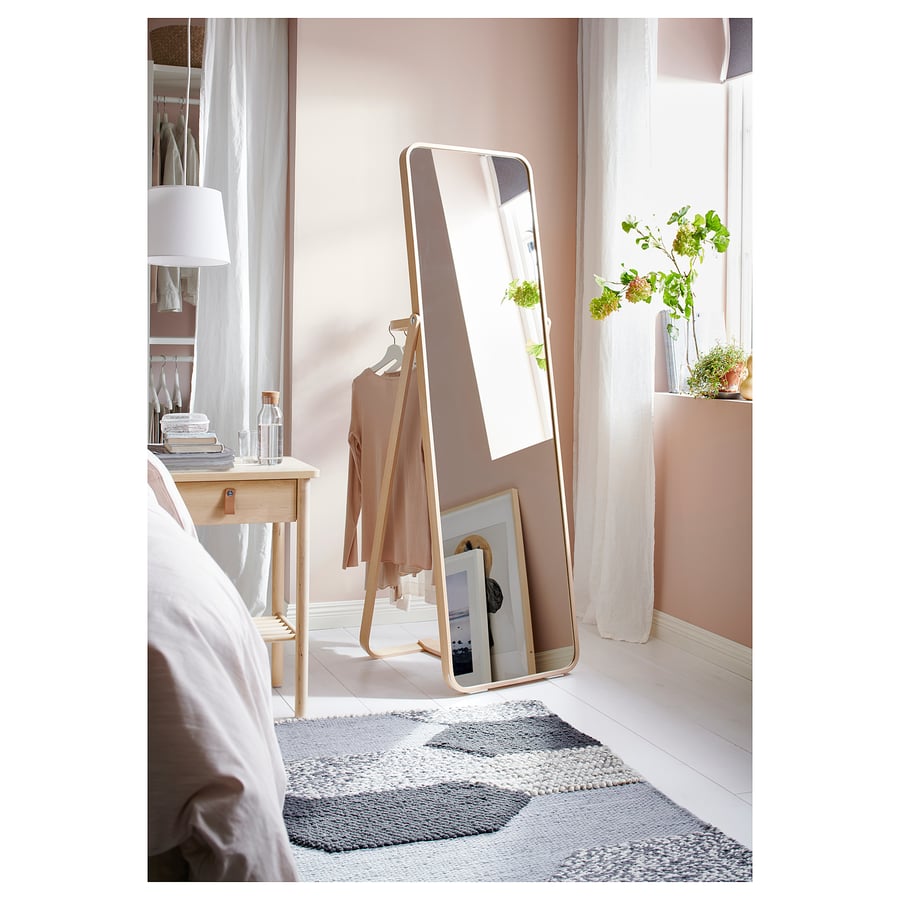
A standing mirror can create a dressing spot without occupying a full wall, provided the room has space for its base. This style also has a rail behind it for clothing. Check the product’s footprint and installation instructions, including any required securing hardware. Keep the area around the feet clear; the support needs room to work and should not become part of a busy hallway path.
13. A Dressing Mirror with a Decorative Metal Crest
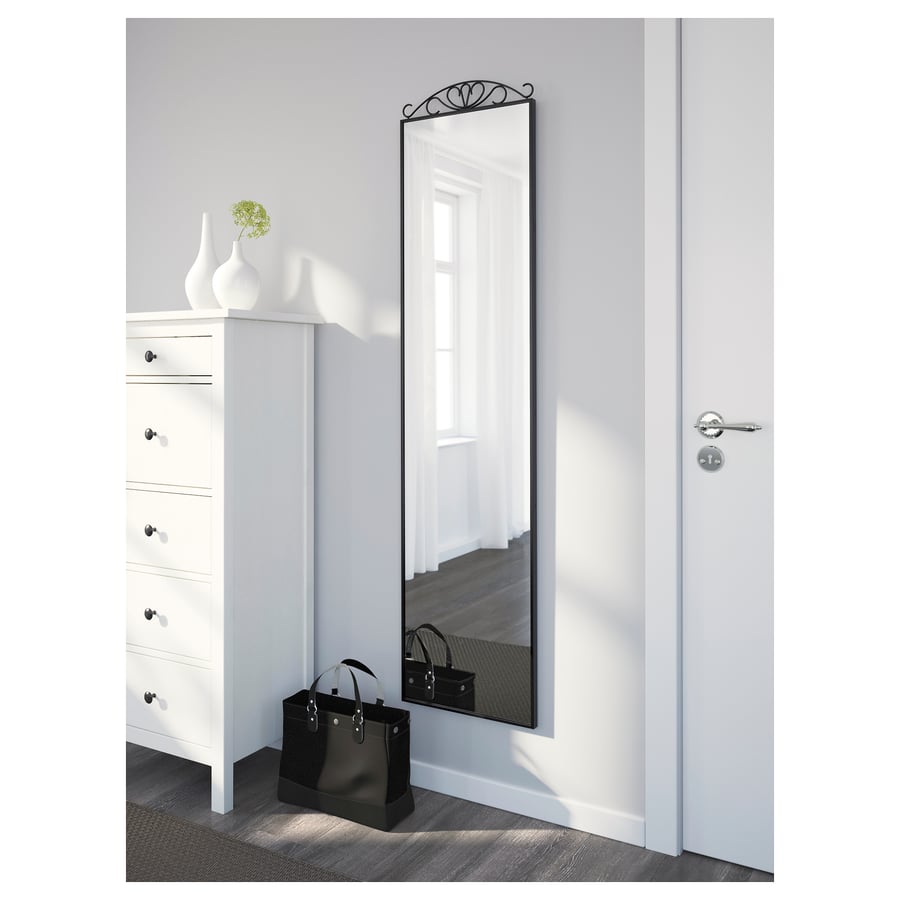
A decorative crest gives a simple full-length mirror more character without surrounding it with additional artwork. The dark metal detail can connect with a lamp, curtain rod or handle elsewhere in the room. Keep the accessories beside it low and practical. This is a useful compromise when a plain rectangle feels too spare but a broad ornate frame would overwhelm the available wall.
14. A Colored Frame as the Dresser Accent
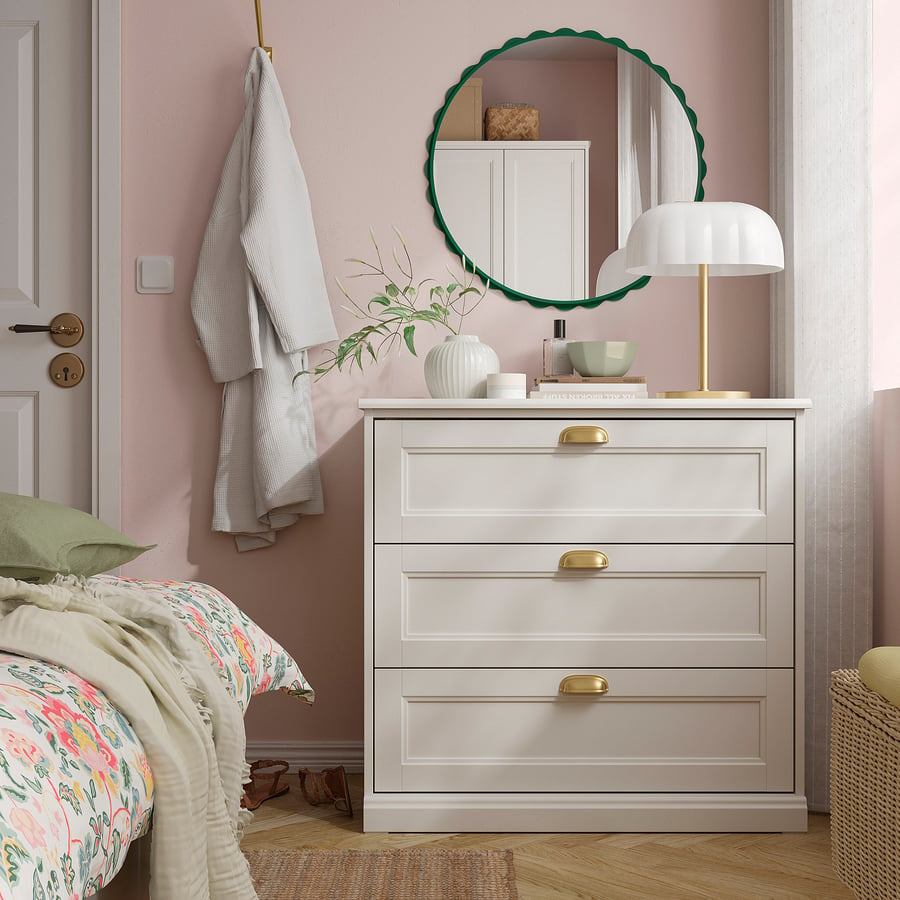
A colored mirror frame can supply the main accent above a pale dresser. Here, the green outline contrasts with pink walls and patterned bedding without needing another large artwork. Borrow a color already used in the room so the mirror feels connected. For a quieter palette, these sage bedroom ideas show ways to repeat green with softer neutral surroundings.
15. A Hallway Mirror Beside the Door
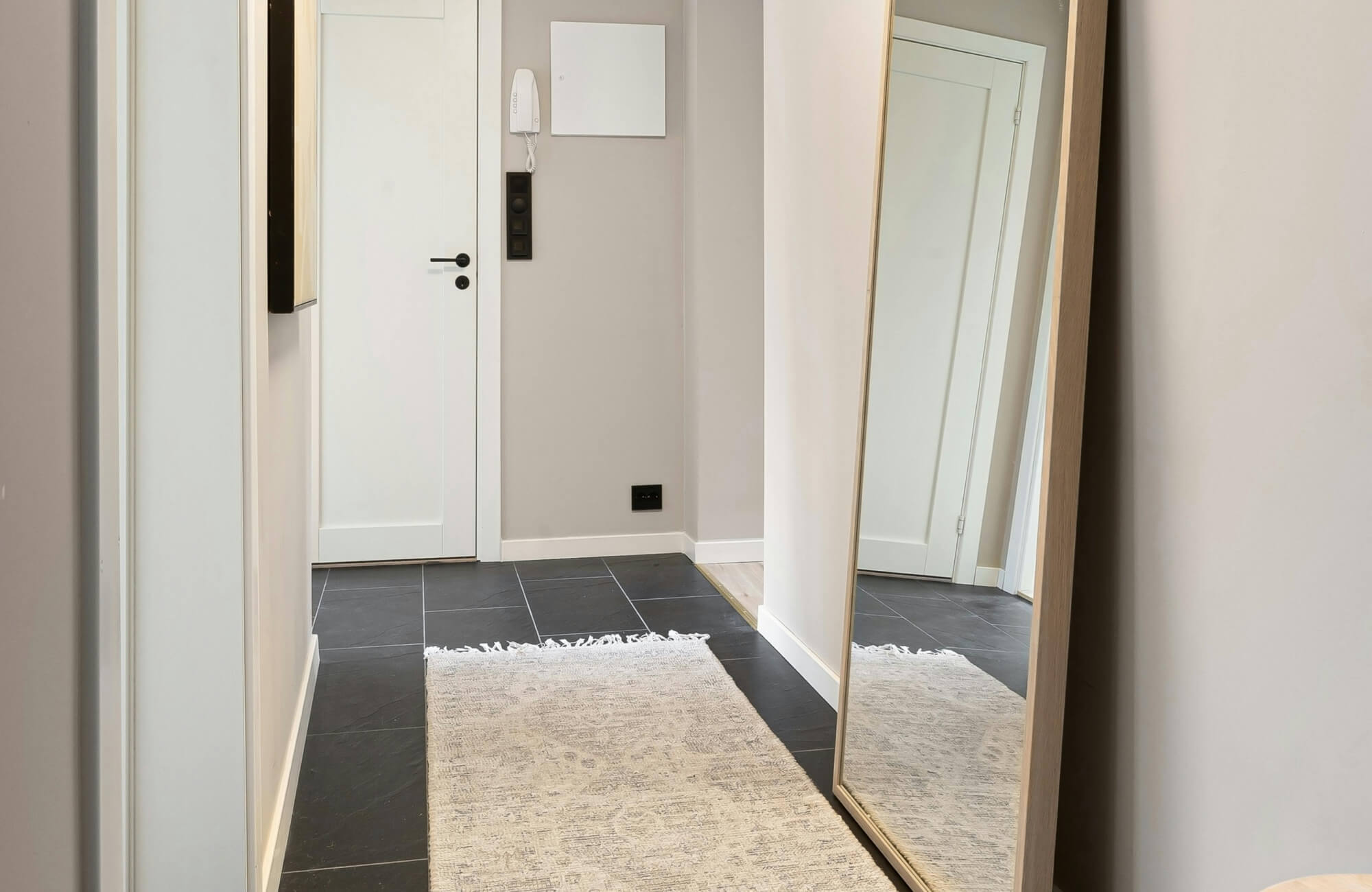
A long mirror beside the entrance offers a last check before leaving while keeping the doorway visible. Leave enough clearance for the door handle, coat sleeves and people passing with bags. A slim frame is useful where the hall is already narrow. If the example is shown leaning, follow your own mirror’s instructions for wall attachment or anti-tip restraint rather than relying on its weight alone.
16. A Slim Oval Beside the Bed
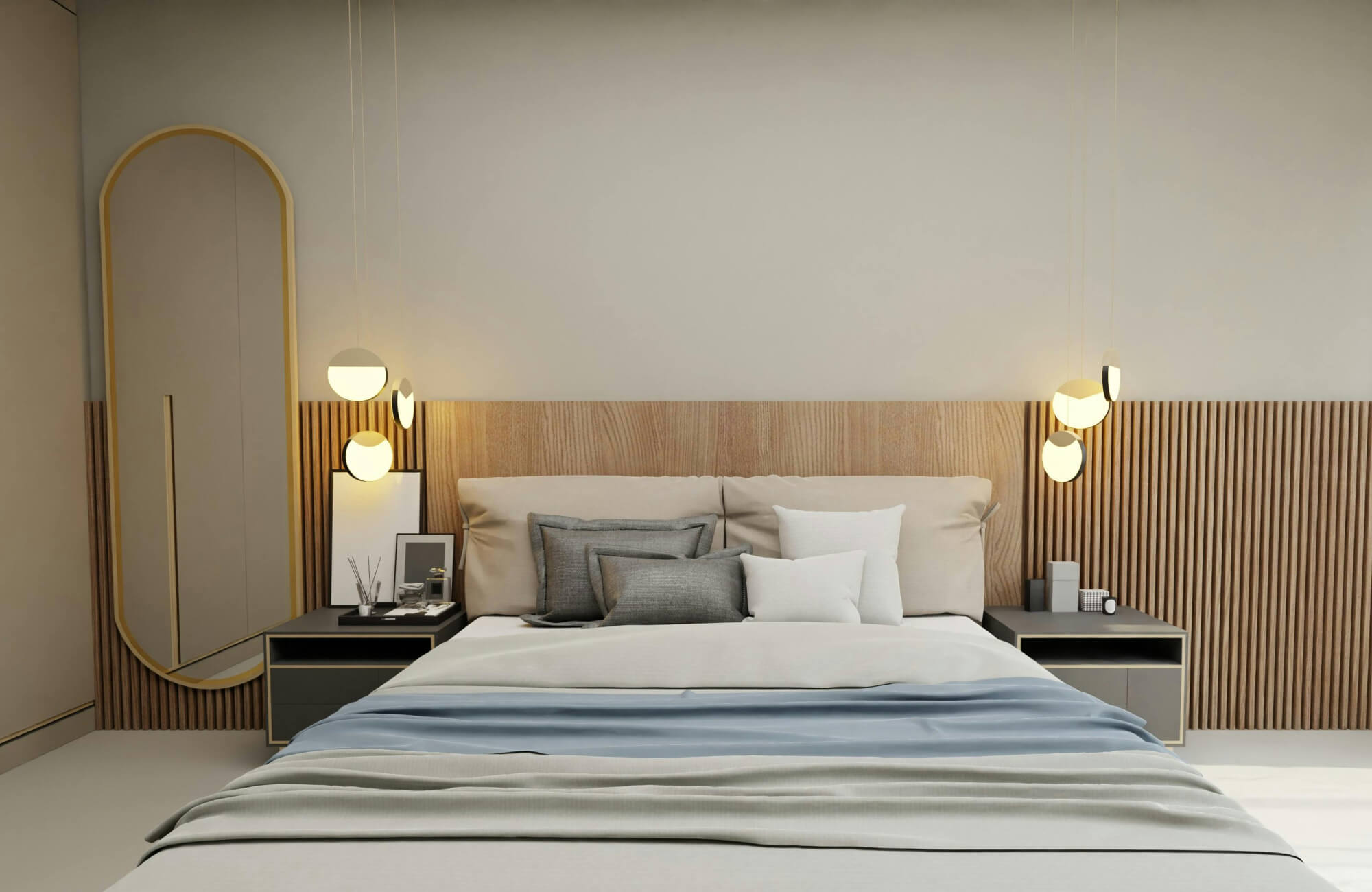
An elongated oval introduces a soft outline on a bedroom side wall. It can echo rounded lighting or upholstered furniture without taking over the headboard wall. Stand in the dressing area and sit on the bed to check both reflections before mounting. Keep light fittings and cords separate from the glass edge, and choose a position that will stay clear when bedding or curtains move.
17. A Mirror Along a Wardrobe-Lined Hall
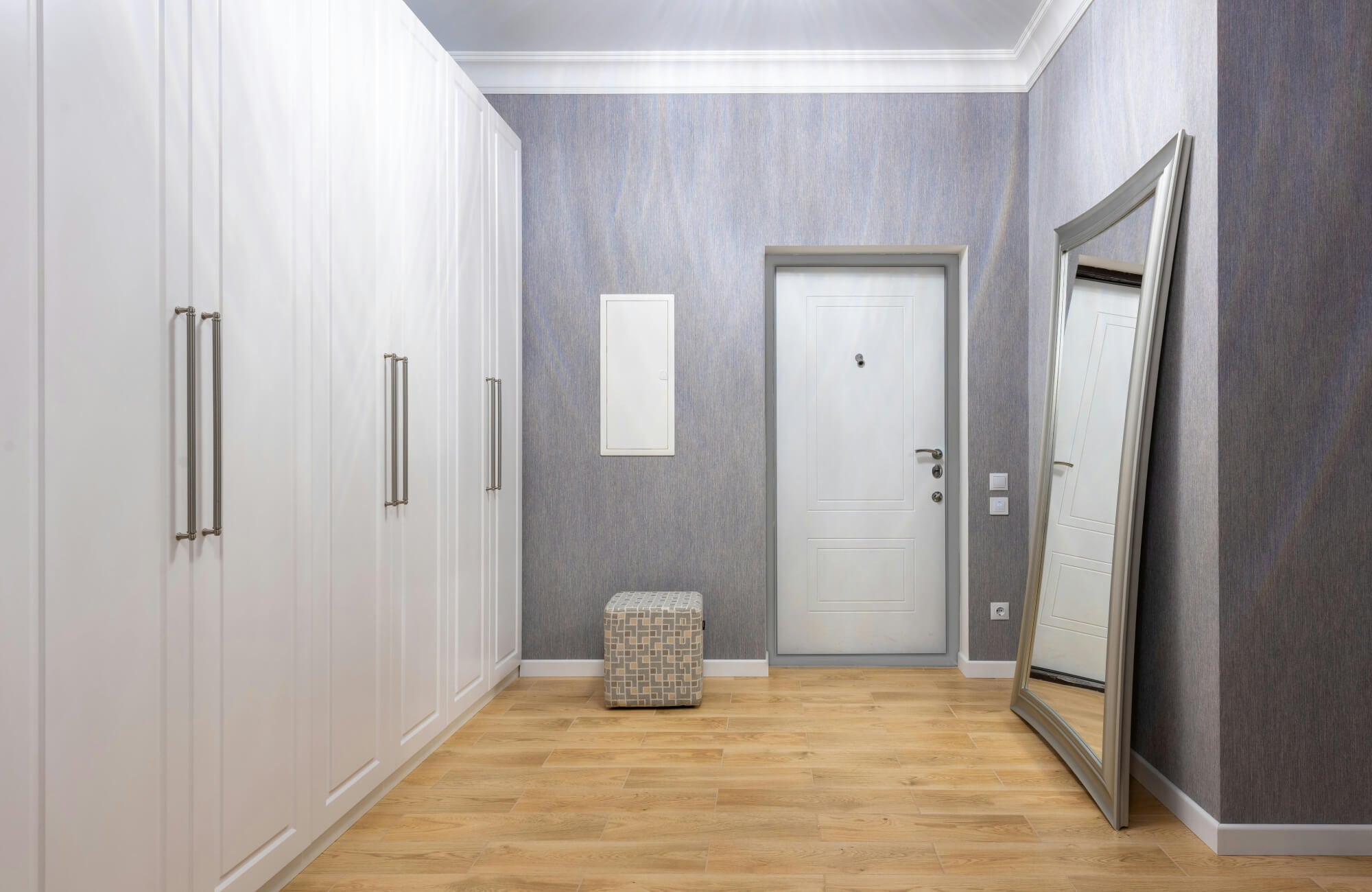
A long mirror can give a storage-lined hallway a clear visual destination, but the walking space still comes first. Position it outside the swing of wardrobe and entrance doors. The frame can repeat the cabinetry or trim without matching every finish exactly. Check the hall from both directions; a reflection of an open closet or crowded shoe area may make the space feel busier rather than calmer.
18. Mirrored Wardrobe Doors Instead of Another Wall Piece
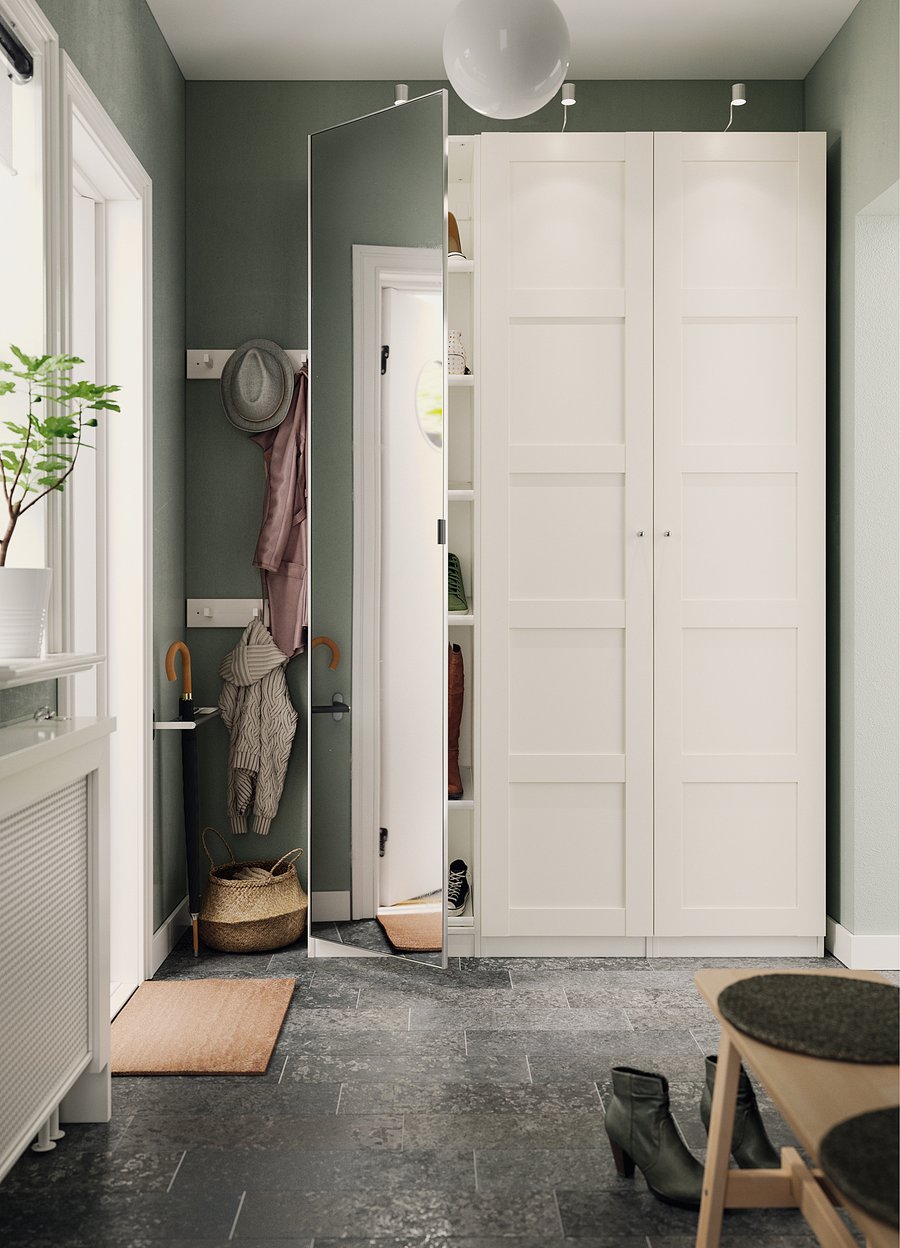
Mirrored wardrobe doors combine clothing storage with a dressing view, leaving other walls available for furniture or artwork. Choose doors designed for the wardrobe system and follow its fitting instructions. Before committing, consider the view when the doors are closed and whether the reflection faces a window, bed or circulation route. This option works best when the storage layout already suits the room.
19. A Window-Side Mirror with a Clear Standing Area
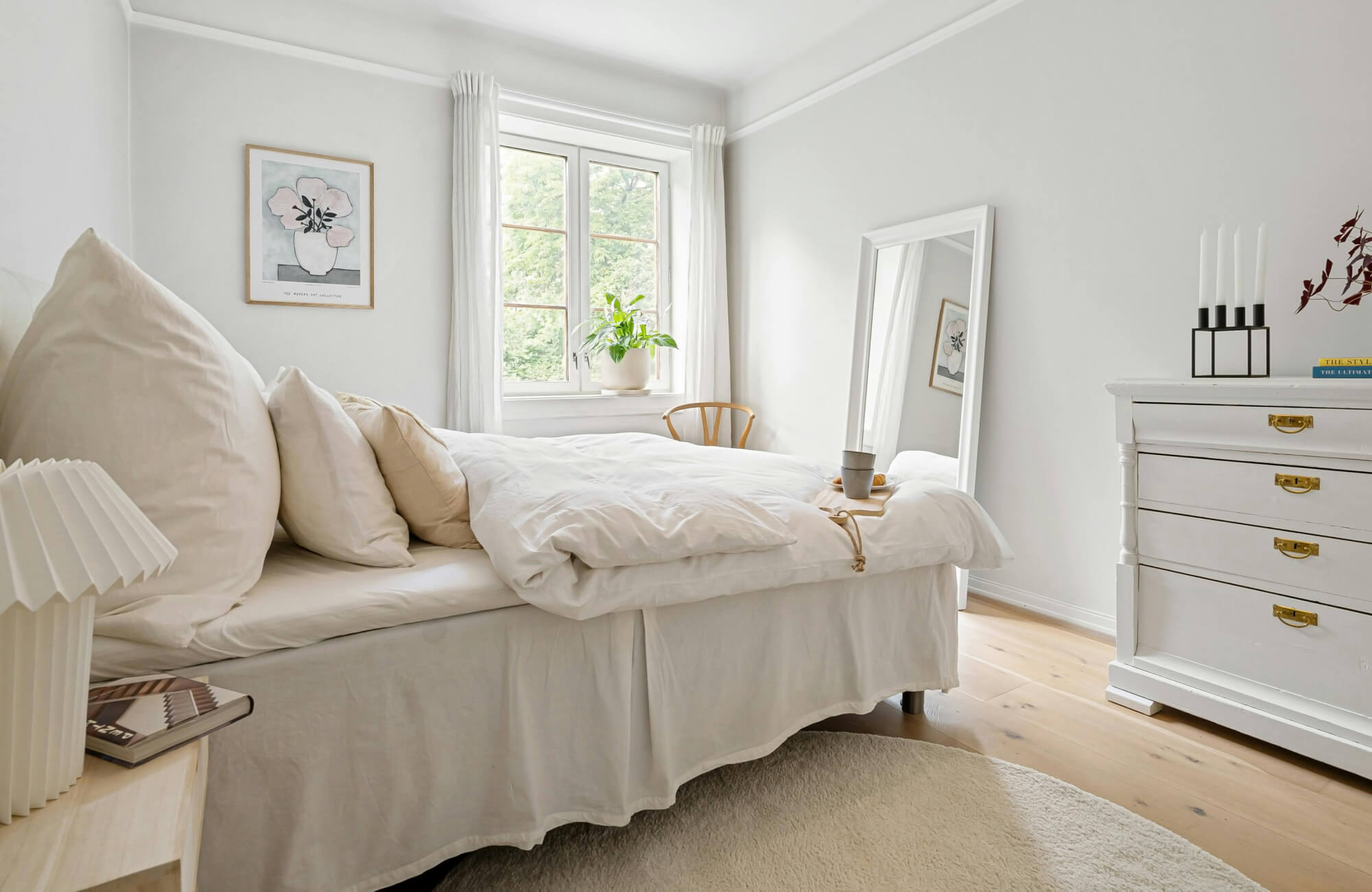
A mirror near a bedroom window gives a dressing corner a useful relationship with daylight. Check the angle at different times of day to avoid an uncomfortable bright reflection. Keep the floor clear enough to stand back and use it properly, rather than squeezing a tall vase into every gap. A few indoor plants can soften a nearby surface without covering the mirror.
Check Size, Reflection and Secure Installation
Use painter’s tape to mark the proposed mirror outline, then check the view from standing and seated positions. Measure drawer clearance, door swings, baseboards and the space needed for a freestanding support. A larger reflection does not create additional floor area, so keep the furniture layout comfortable first.
Use the mounting method specified for the exact mirror and wall construction. Floor mirrors may still need restraint; do not assume leaning glass is secure by itself. Have a qualified installer handle heavy pieces or uncertain walls, and keep large breakable mirrors away from likely impact zones. Follow the manufacturer’s instructions for any mirror mounted on a door or wardrobe.
Build a Comfortable Room Around Your Mirror
Once the mirror has a useful position, choose the surrounding details with the reflection in mind. A tidy dresser, a clear walkway and a few repeated colors often do more than additional ornaments. Look at the room directly and through the glass before adding more furniture. These related collections can help you refine the layout, palette and nearby displays.
- Bedroom Layouts for More Comfortable Spaces
- Sage and Cream Bedroom Styling Ideas
- Blue Bedrooms for a Calm Retreat
- Indoor Plants for Thoughtful Home Displays
- Creative Details for Welcoming Home Interiors
Where would a large mirror be most useful in your home: beside the wardrobe, above a dresser or near the entrance? Share your room and preferred shape in the comments. If you have moved a mirror recently, tell us which change made the reflection or walking space work better.


















0 Comments