19 Pressed-Leaf Art Ideas for Simple Botanical Walls
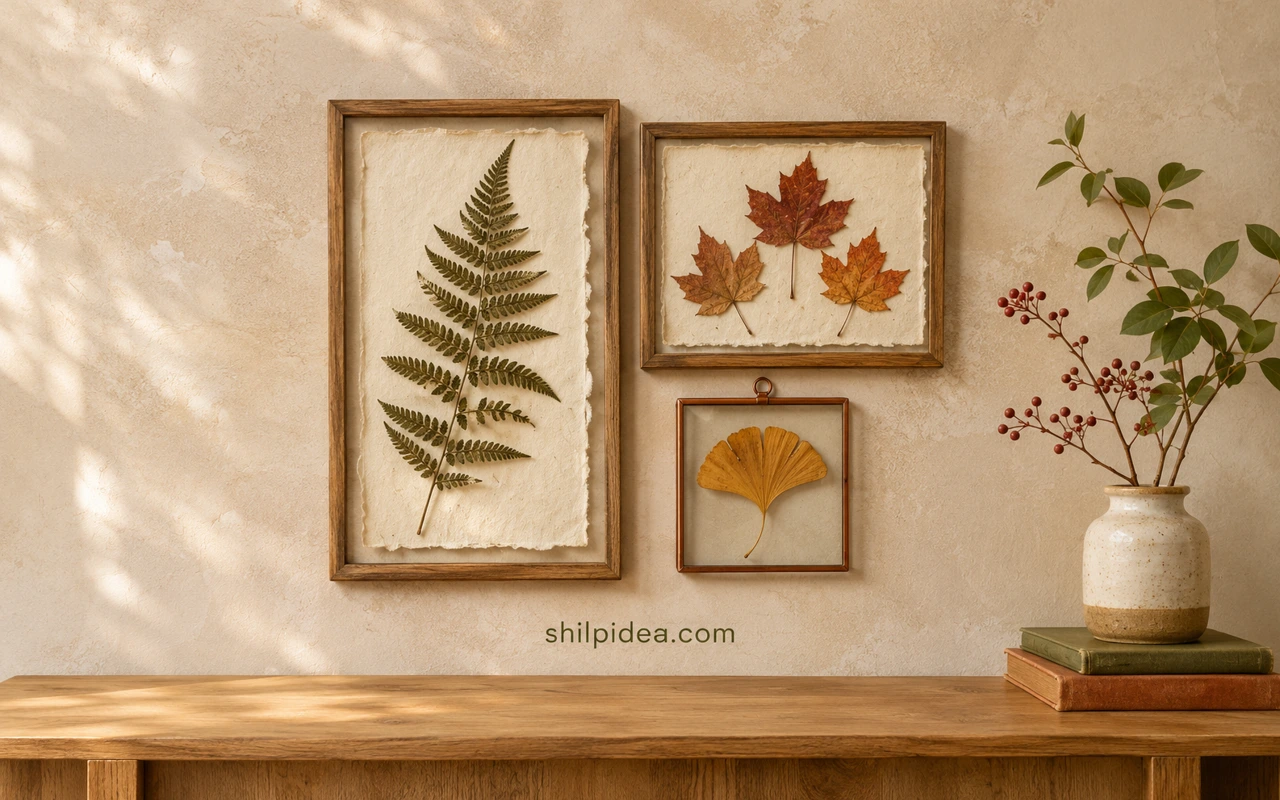
Pressed leaf wall art gives familiar shapes a fresh role at home. A single fern, a handful of maple leaves, or a carefully arranged botanical pattern can bring natural detail to a quiet corner without overwhelming the room.
These displays suit the warm textures in our forest room ideas, from pale wood frames to simple floating glass.
Pair a favorite arrangement with indoor plant displays, or let the framed foliage stand on its own.
1. One Bold Leaf with Room Around It
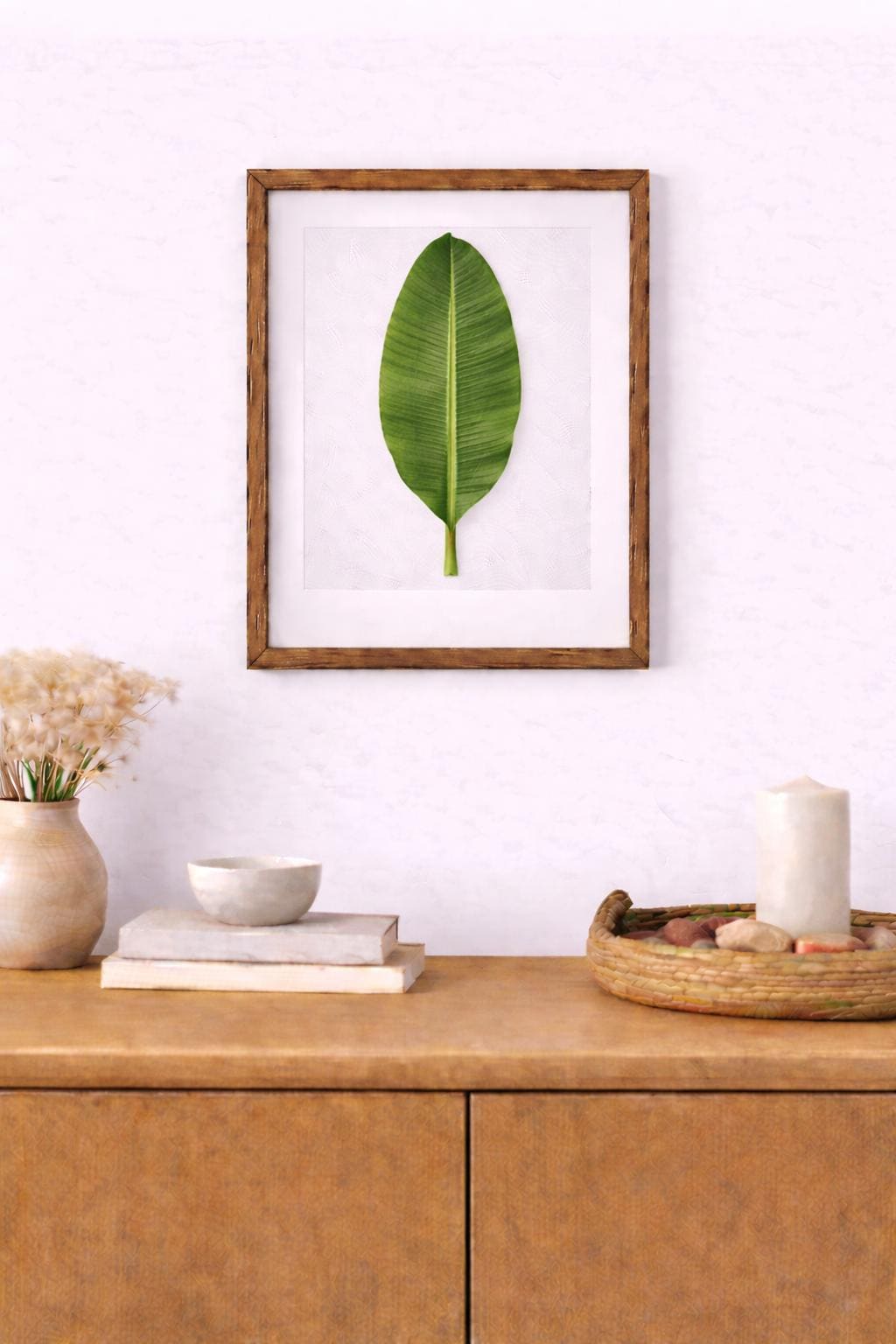
A single broad leaf can carry an entire wall display when its outline is given enough space. Here, a tall wooden frame follows the leaf’s upright shape, while the pale backing makes the central vein easy to see. Try this approach above a narrow console or beside a doorway. Keep nearby accessories low so the framed specimen remains the clearest shape in the arrangement.
2. Three Ginkgo Fans in a Floating Frame
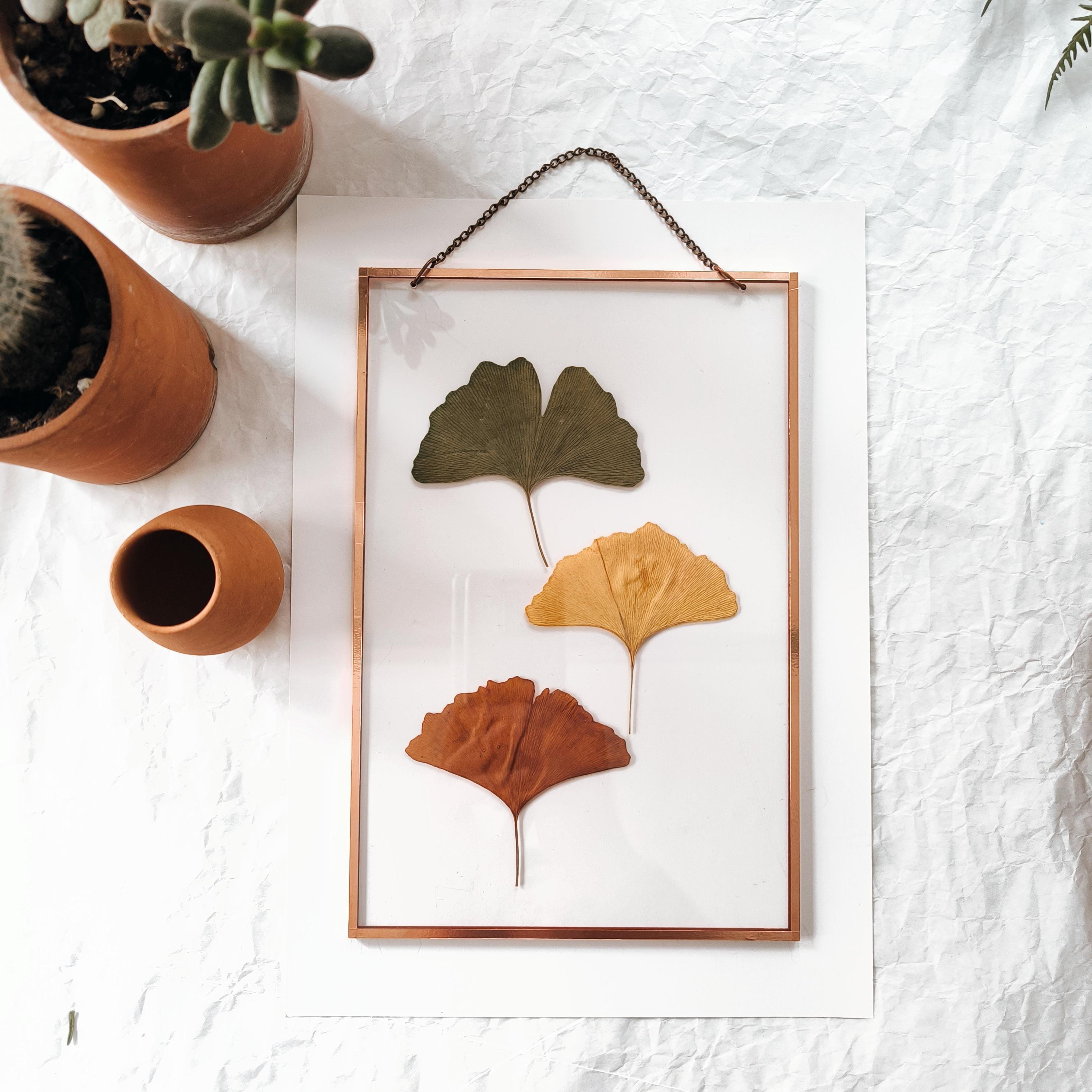
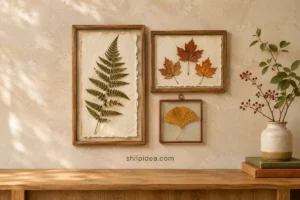
Three fan-shaped leaves create a gentle rhythm without filling every inch of the glass. Their staggered positions make the arrangement feel less rigid than a straight row. A slim copper edge provides definition while allowing the wall behind to remain visible. Choose a plain backdrop for this treatment; patterned wallpaper can compete with the fine stems and transparent spaces between the leaves.
3. A Small Herbarium Grid Behind Clear Panels
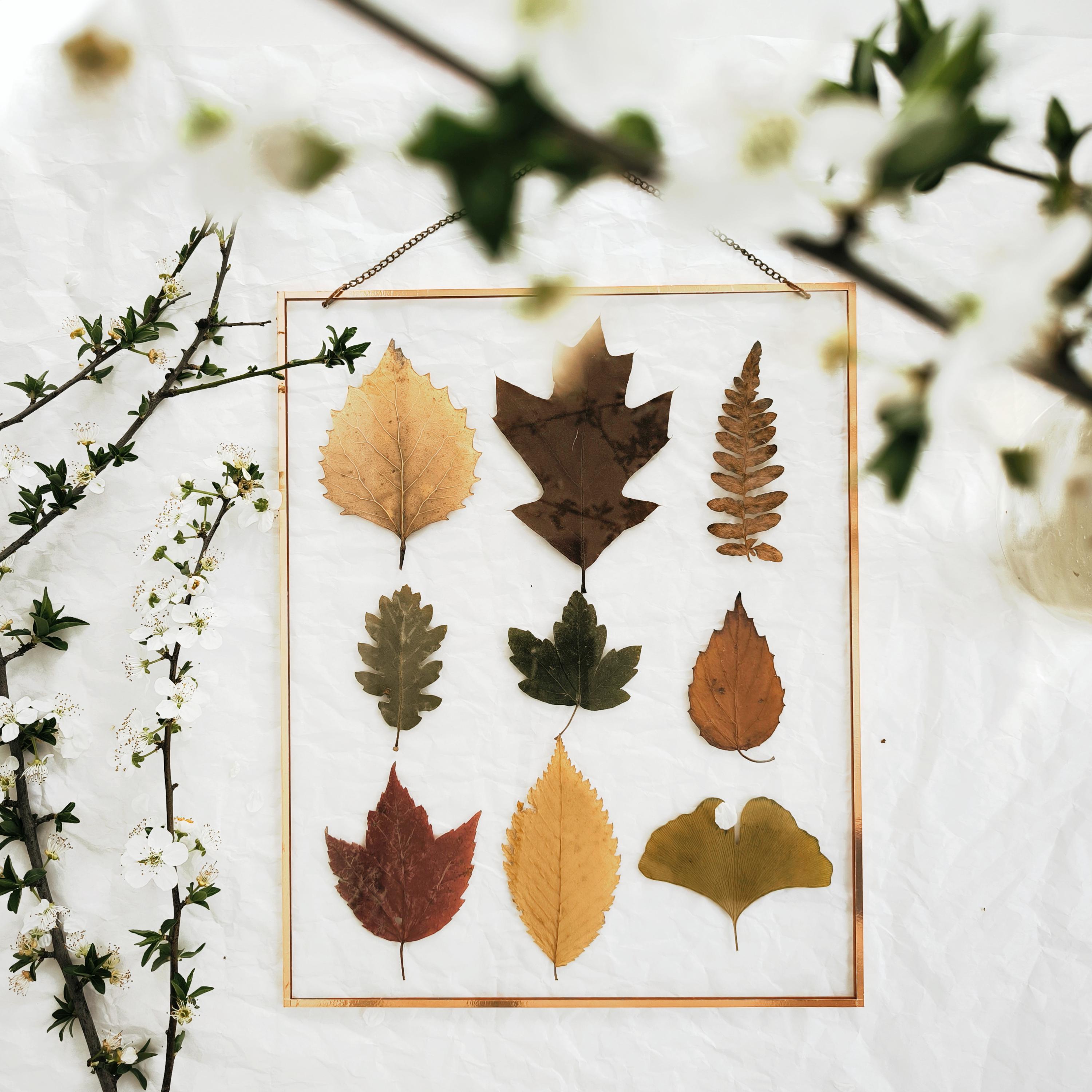
A grid turns a handful of different leaves into a collection that feels intentional. The individual shapes remain separate, making the contrast between pointed, rounded, and lobed edges part of the design. Leave a fairly consistent gap around each specimen. This is especially effective when you enjoy collecting different foliage but want a display that feels orderly rather than scattered.
4. A Fern Gallery That Follows the Staircase
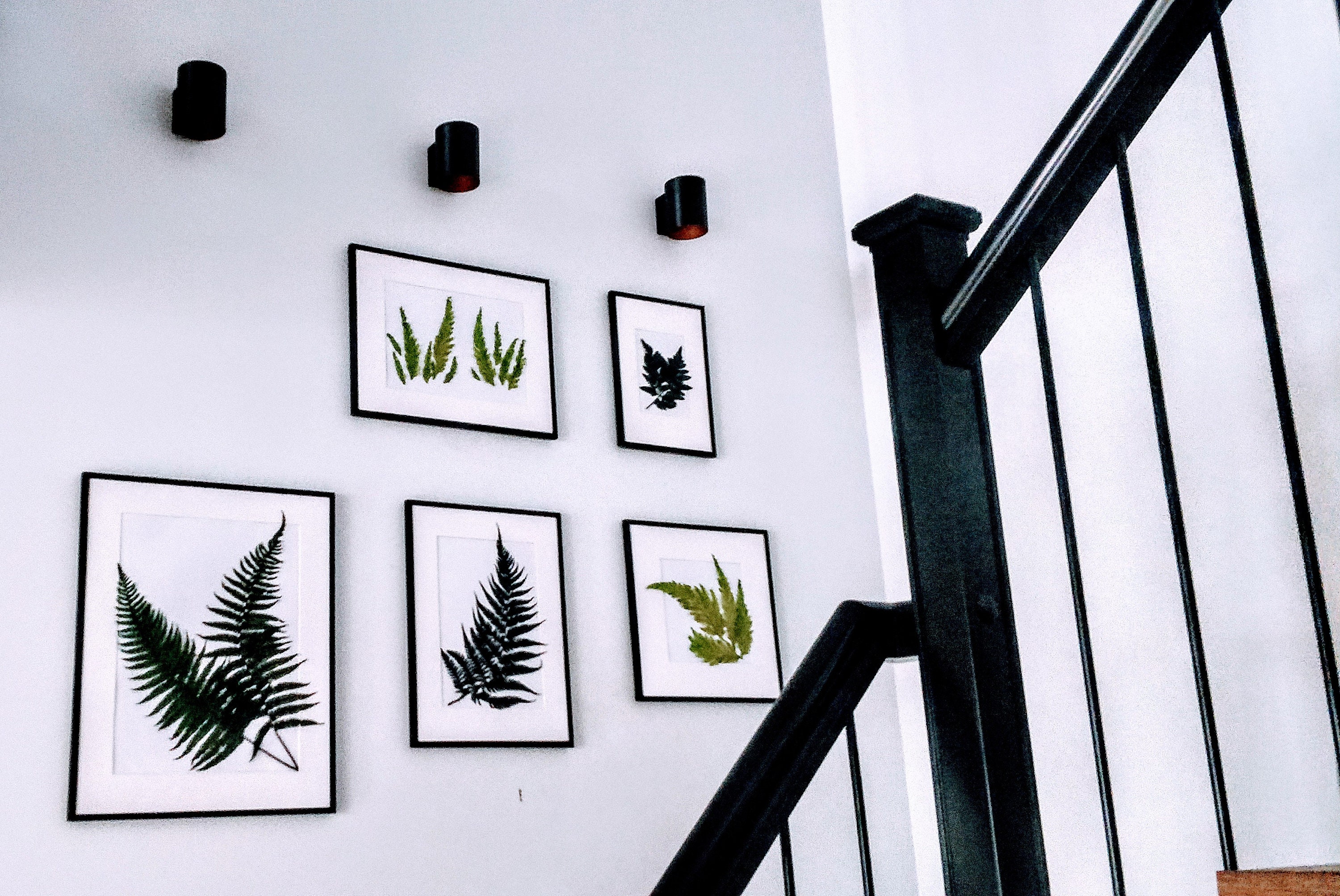
A group of frames can stretch the botanical theme beyond one small picture. In this staircase arrangement, different fern silhouettes share dark frames and pale backings, which help the collection feel connected. Plan the overall outline of the group before deciding where each frame belongs. A gentle rise works with the stairs, while varied frame sizes prevent the display from looking like a rigid office grid.
5. A Long Fern Suspended in Glass
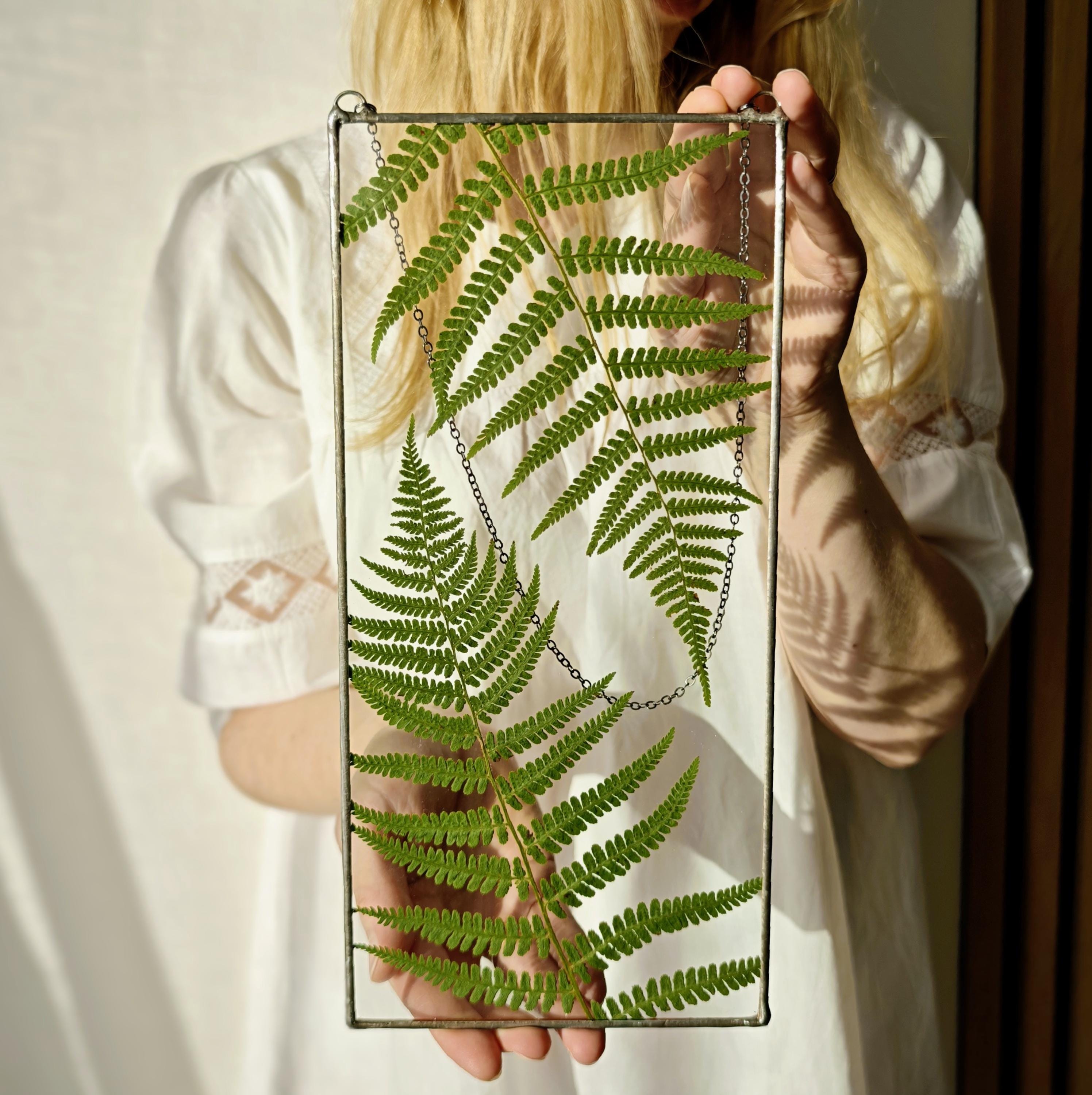
A long floating frame allows a fern’s stem and fine leaflets to become the main event. The transparent border gives the greenery a lighter appearance than a solid mat would. Place this style where the outline reads clearly against a calm wall, rather than in direct sun. Before hanging, check the frame’s closure and hanger so the delicate botanical display is securely supported.
6. A Wide Sampler of Different Leaf Shapes
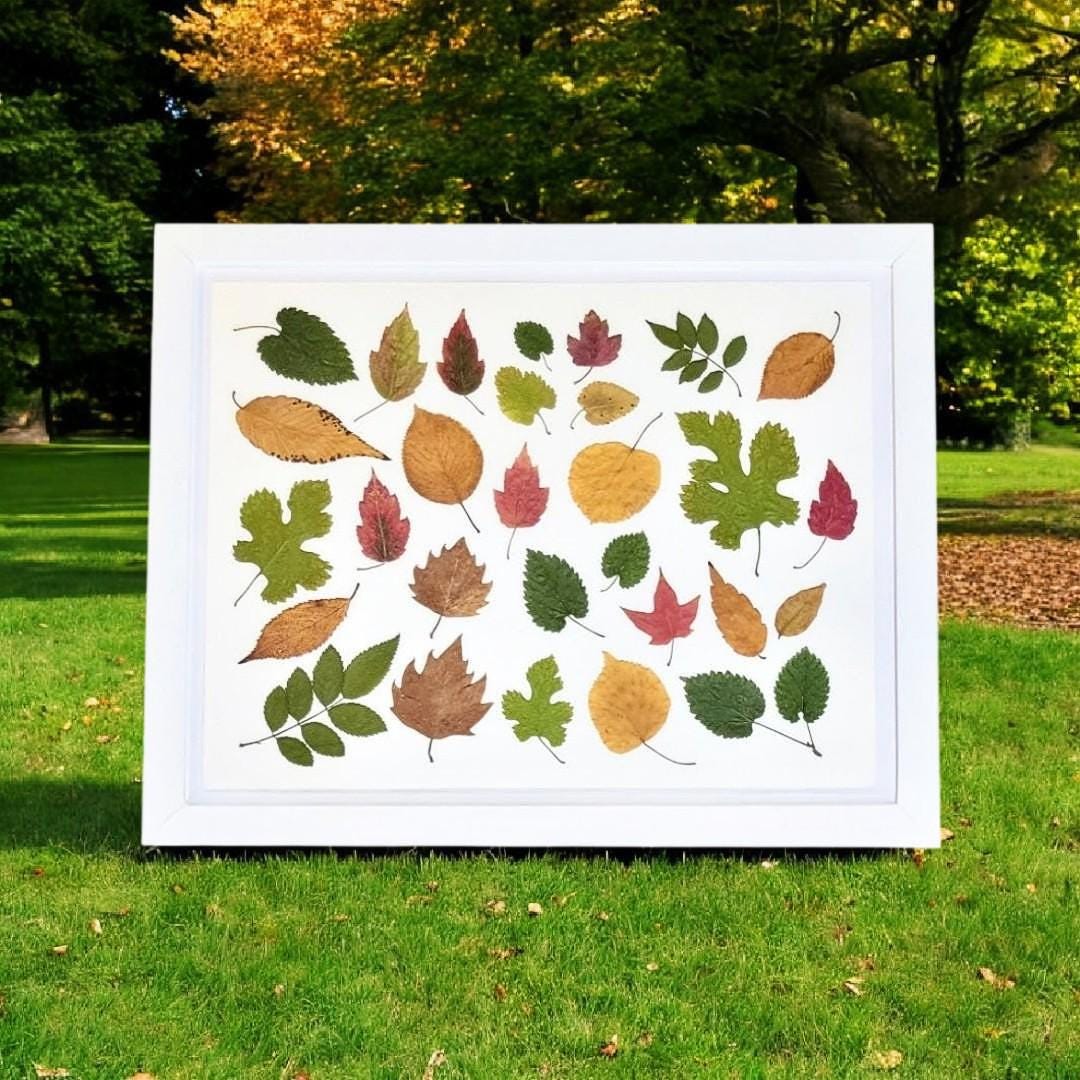
A generous square frame gives a mixed collection room to spread out. Small leaves create pauses between larger specimens, while repeating a few shapes helps the arrangement feel connected. Think of it as a visual field guide without needing to add labels. A wide white margin keeps the many colors from becoming overwhelming and lets the silhouette of each leaf remain easy to appreciate.
7. Ferns Embedded in Handmade Paper

When foliage sits within textured handmade paper, the backing becomes part of the artwork. The uneven surface softens the crisp lines of the frame and gives the overlapping fern shapes a tactile quality. Keep surrounding finishes simple so the paper can be noticed. Natural wood, a woven basket, or a quiet ceramic piece can support the look without repeating a busy botanical pattern elsewhere.
8. An Intact Maple Branch with a Broad Mat
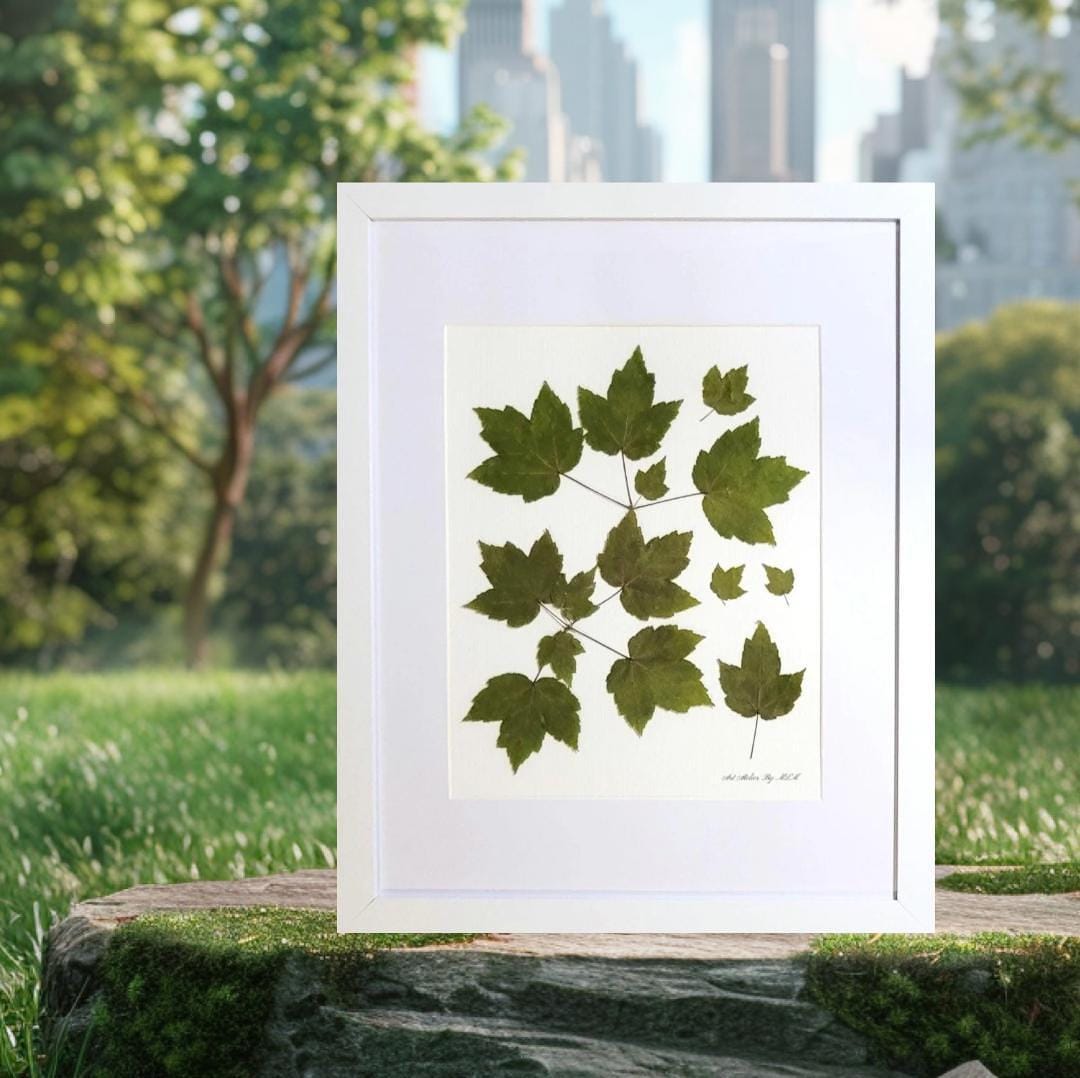
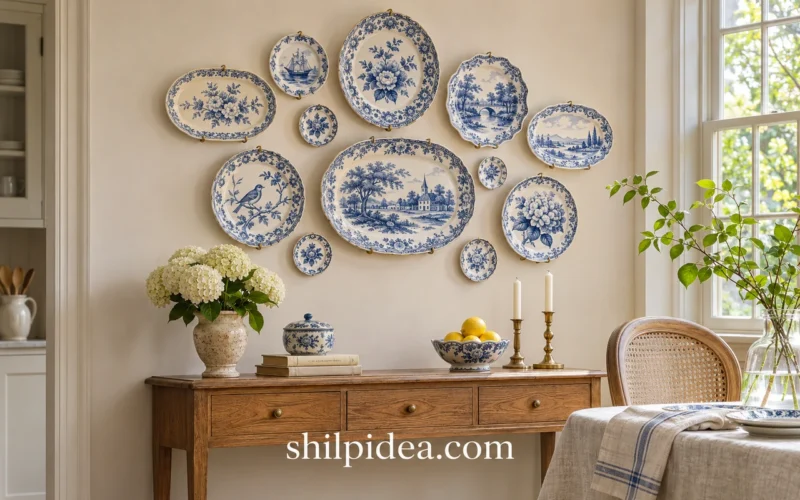
An intact branch creates a different feeling from a collection of separate leaves. The connecting stems give the composition direction, so the eye can follow how each leaf belongs to the same structure. A broad white mat helps contain that organic outline. This makes a calm companion to plate wall arrangements, particularly when you want to mix botanical and collected objects across a room.
9. Three Narrow Fern Panels in a Row

Slender frames can make a botanical display work in a space where a large picture would feel too heavy. These long fern panels emphasize vertical lines, and the repeated format supplies a clear rhythm. Hang them with even gaps so they read as one group. The idea can also suit the wall above a compact shelf; our wooden shelf ideas offer related display inspiration.
10. A Radiating Fern Composition
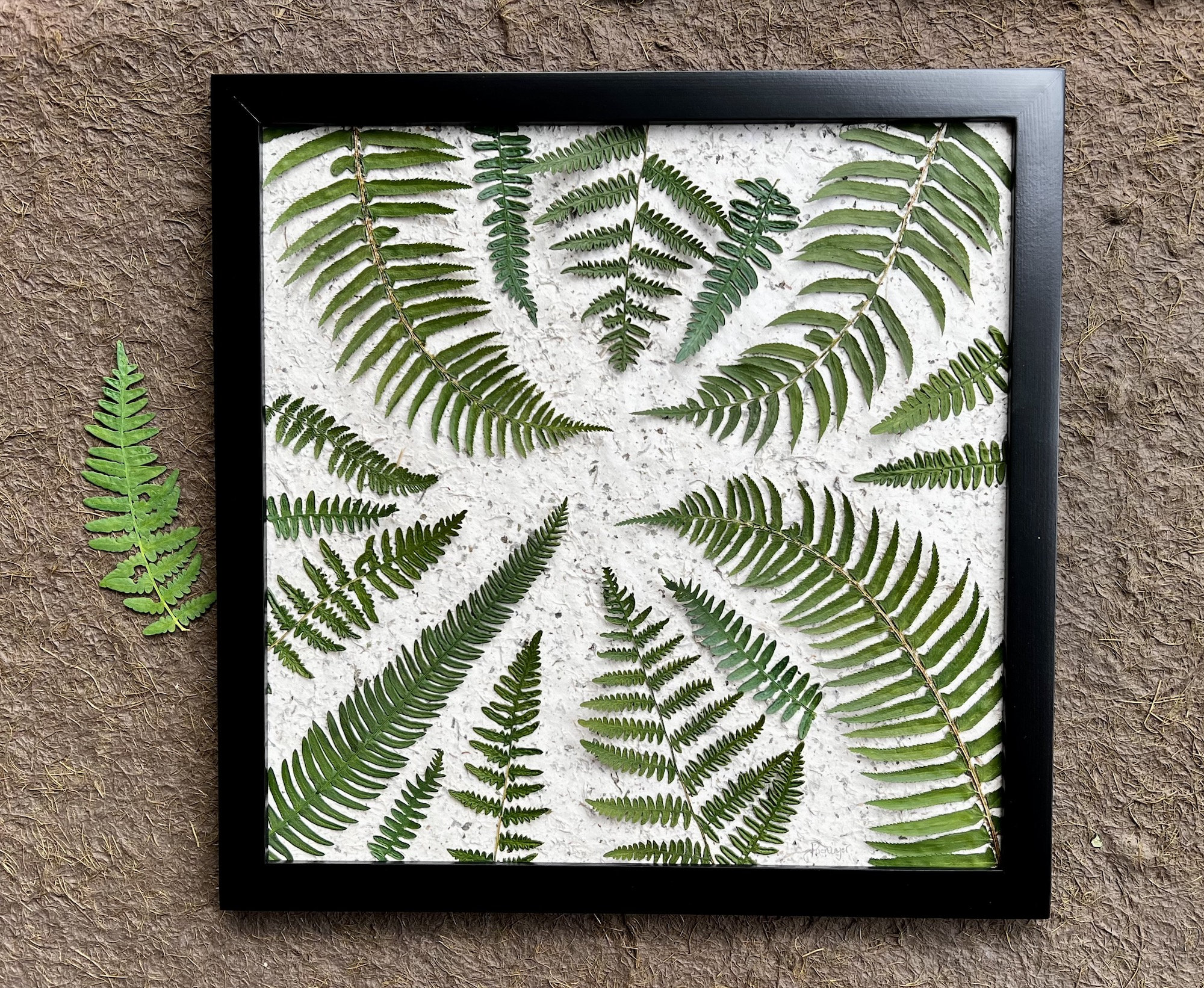
Fern fronds can become a pattern when their stems point toward a shared center. Here, the leaves spread outward inside a square frame, creating movement without needing a drawn border. Let some fronds differ in length so the arrangement feels organic. A pale backing reveals the spaces between the leaflets, while a simple outer frame prevents the detailed center from competing with ornate molding.
11. A Tall Japanese Maple Study
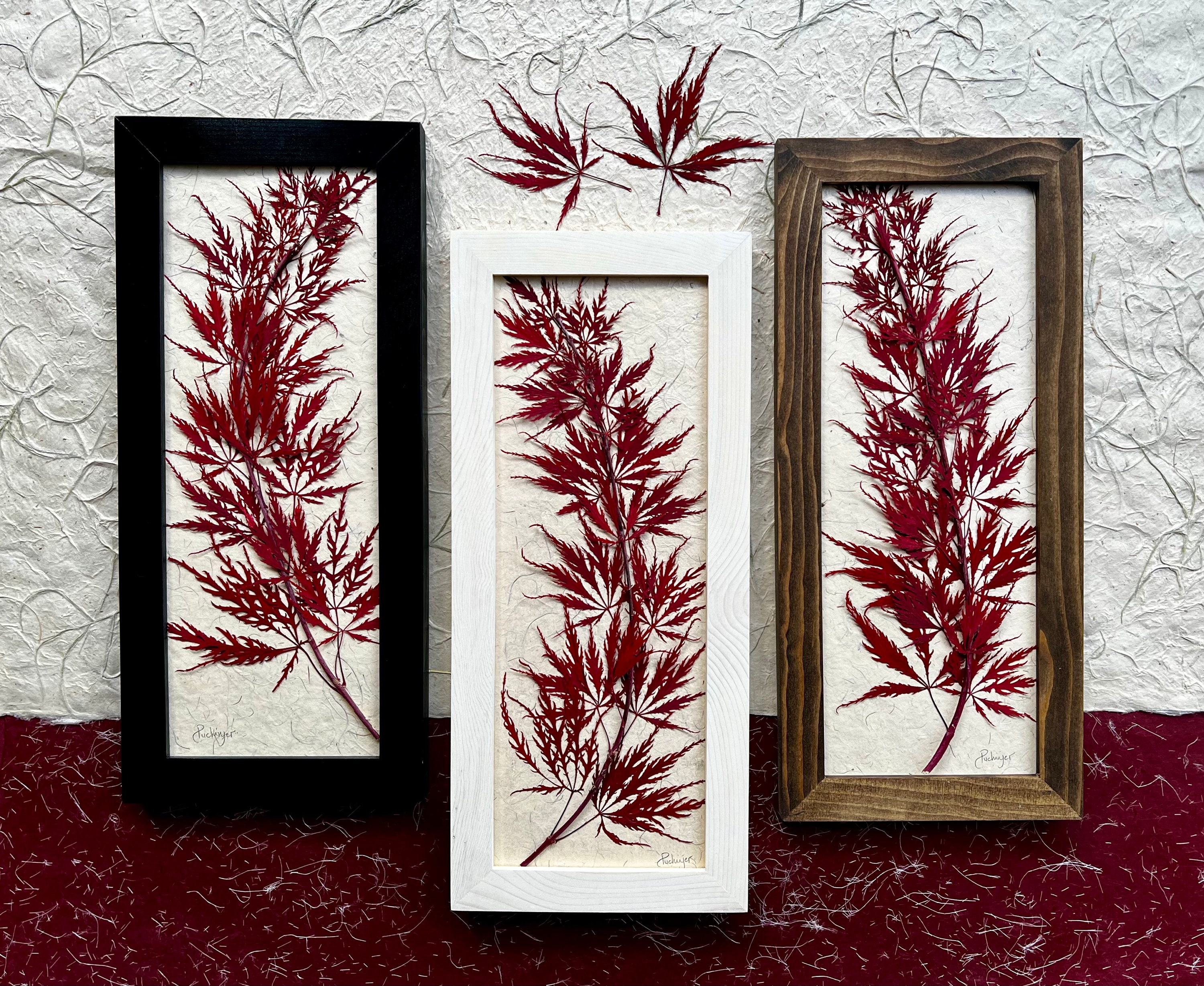
Fine, pointed leaves bring a different rhythm from broad maple shapes or feathery ferns. A tall, narrow format follows the upward movement of these stems, making the piece useful beside a bookcase or on a slim wall section. Keep the nearby palette restrained so the delicate branching remains visible. The attraction is the natural structure, rather than a need to fill the entire backing.
12. A Maple Leaf with Small Clover Accents
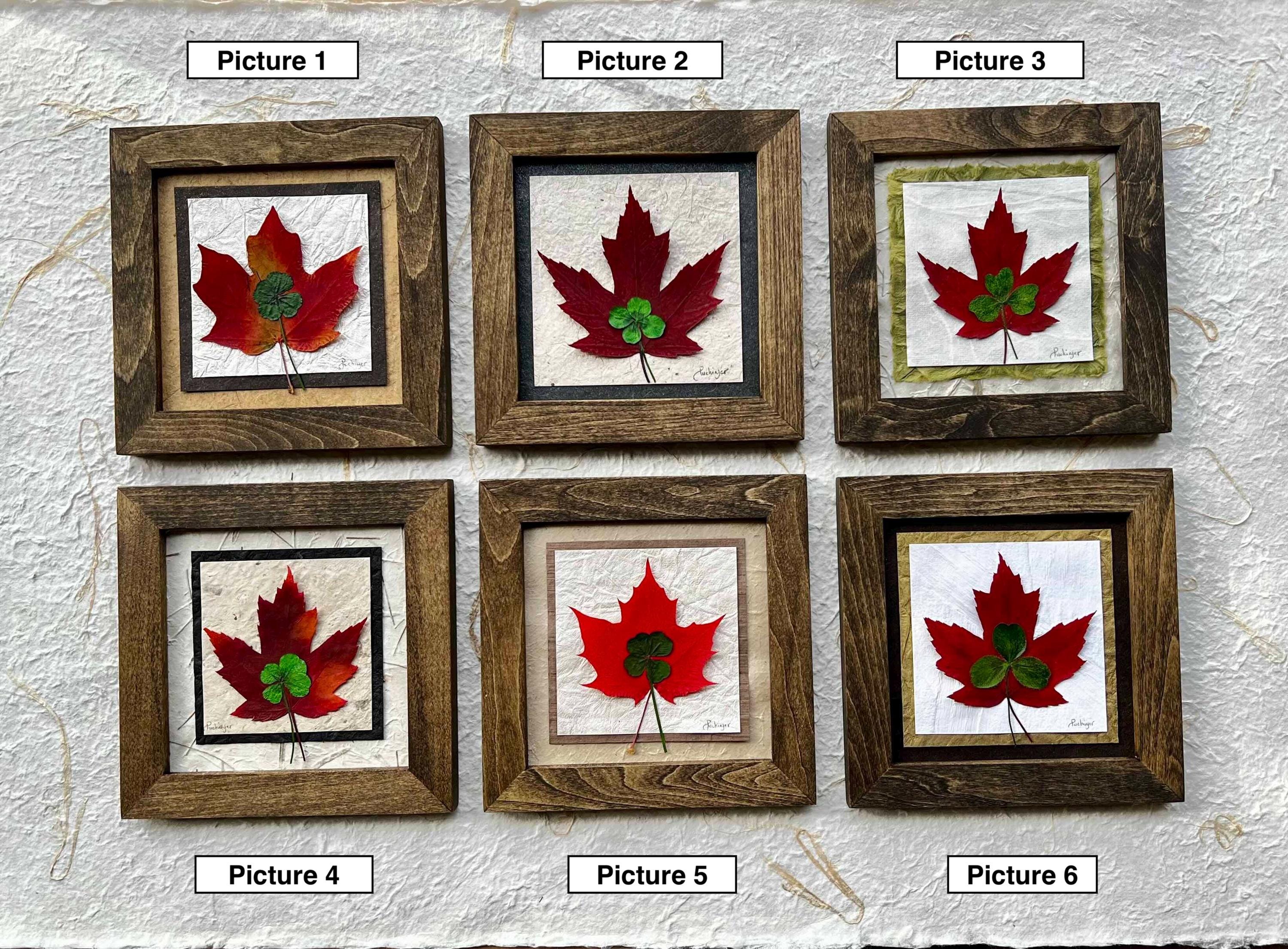
One large maple leaf can feel more personal when paired with a much smaller botanical detail. The clover accents in these matted pieces introduce a second scale while keeping the central leaf easy to recognize. A compact square frame works well in a small gallery or near family photographs. Choose a generous mat rather than a crowded decorative border if you want the leaf to retain its presence.
13. A Canadian Flag Interpreted with Real Leaves

A recognizable motif can turn a botanical specimen into a keepsake. Here, a red maple leaf sits in the center while layered red foliage creates the side panels of a Canadian flag. The pale middle section keeps the symbol readable. It is a thoughtful direction for a travel memory or a personal connection to a place, with natural differences in the leaves adding texture to the familiar design.
14. A Dark Botanical Medley with a Wide Border

A dark backing can make pale stems and small leaf shapes stand out clearly. The mixed specimens here are separated by open areas, while a broad light border keeps the overall piece from feeling too dense. Look at both the empty spaces and the leaves when planning a similar composition. For another way to enjoy detailed foliage, explore botanical embroidery and its different treatment of plant forms.
15. A Matched Pair Above a Reading Corner

Two botanical frames can create a generous wall arrangement without becoming a full gallery. In this reading corner, shared frame proportions and dark backings connect the pieces, while their individual leaf arrangements provide variety. Center the pair over the furniture grouping rather than automatically across the entire wall. The space between the frames should feel deliberate, with enough separation that each composition can still be enjoyed on its own.
16. Crisp Circles Cut from Layered Botanicals

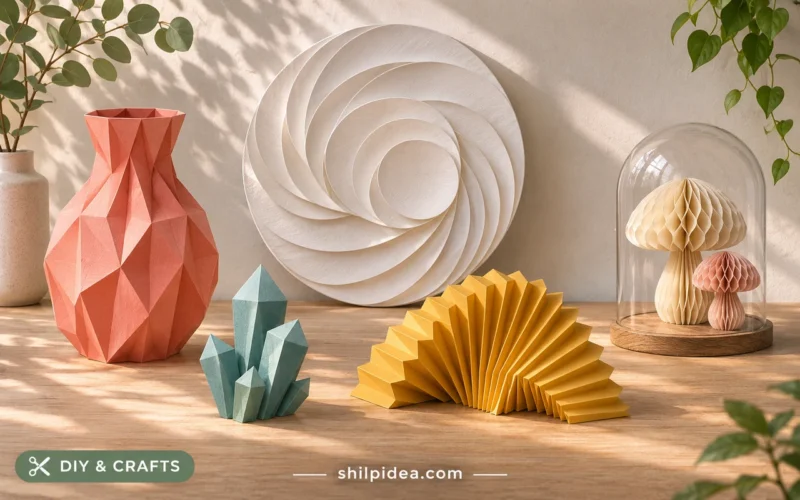
Circular shapes give this leaf composition a graphic structure that differs from a traditional specimen display. The straight edges of the rectangular frame contrast with the rounded sections inside it. Small spaces between the circles let the pale backing participate in the pattern. This approach suits someone drawn to both natural texture and geometric organization, much like the shape-led arrangements in our paper sculpture ideas collection.
17. A Leaf-and-Petal Mandala in Clear Glass

Leaves can share the spotlight with petals in a symmetrical botanical design. In this floating frame, the green shapes help define the center and corners, while colorful petals provide the softer details. The repeated directions give a mixed collection a clear structure. Keep the wall behind quiet enough for the transparent areas to remain visible; the glass should feel like open space around the arrangement rather than another competing layer.
18. An Open-Center Wreath of Autumn Leaves

A leaf wreath offers a wall display without the straight edges of a picture frame. Overlapping leaves create a continuous ring, and the open center allows the wall texture to remain part of the design. Let a few different silhouettes show around the outside instead of aiming for a perfect manufactured circle. This seasonal direction pairs naturally with the resourceful material choices in Claire Armstrong’s work.
19. A Tiny Landscape Built from Leaf Silhouettes
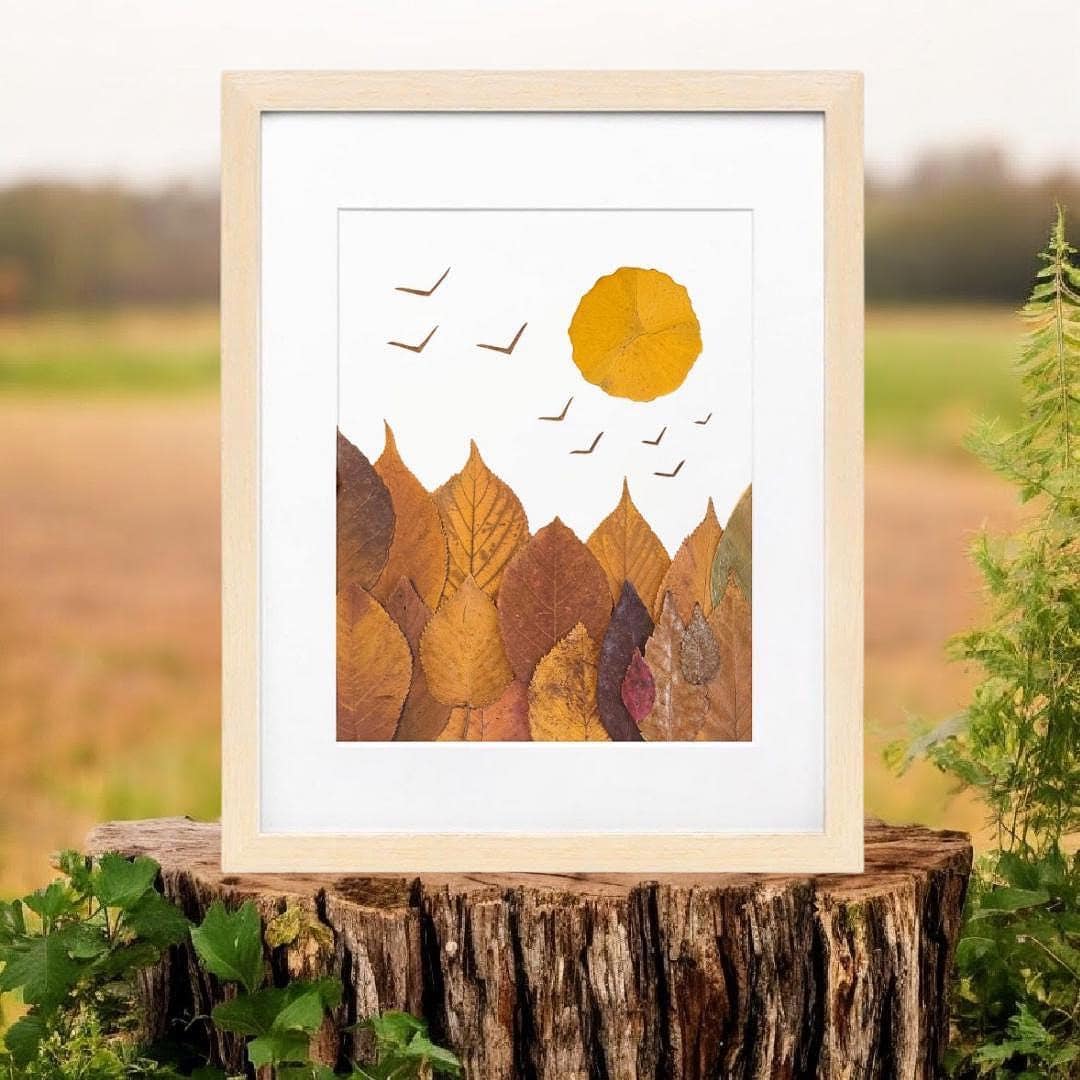
Leaves do not have to appear as specimens. In this small landscape, upright shapes suggest a wooded horizon, while a round yellow leaf becomes the sun and simple bird accents complete the scene. The wide mat helps separate the imagined view from its surroundings. Keep the composition restrained so the natural veins remain visible and the picture still feels connected to its botanical materials.
Give Your Favorite Leaf Shapes a Place on the Wall
Start with the display that suits your wall and the leaves you already enjoy. One strong silhouette can be enough, while a small gallery offers room for a growing collection. Compare the frame, backing, and surrounding space as one arrangement. Wherever you place the finished piece, keep fragile botanical materials protected and choose a position away from harsh direct sunlight.
- Forest Living Rooms with Natural Textures
- Indoor Plant Displays for Your Home
- Creative Interior Ideas for Personal Spaces
- Eggshell White Walls with Warm Accents
- Living Wall Displays for Small Balconies
- Wooden Crate and Pallet Shelf Ideas
Which leaf arrangement would you choose for your own wall? Share your favorite idea in the comments.













0 Comments