18 Apricot Wall Color Ideas for Warm Rooms
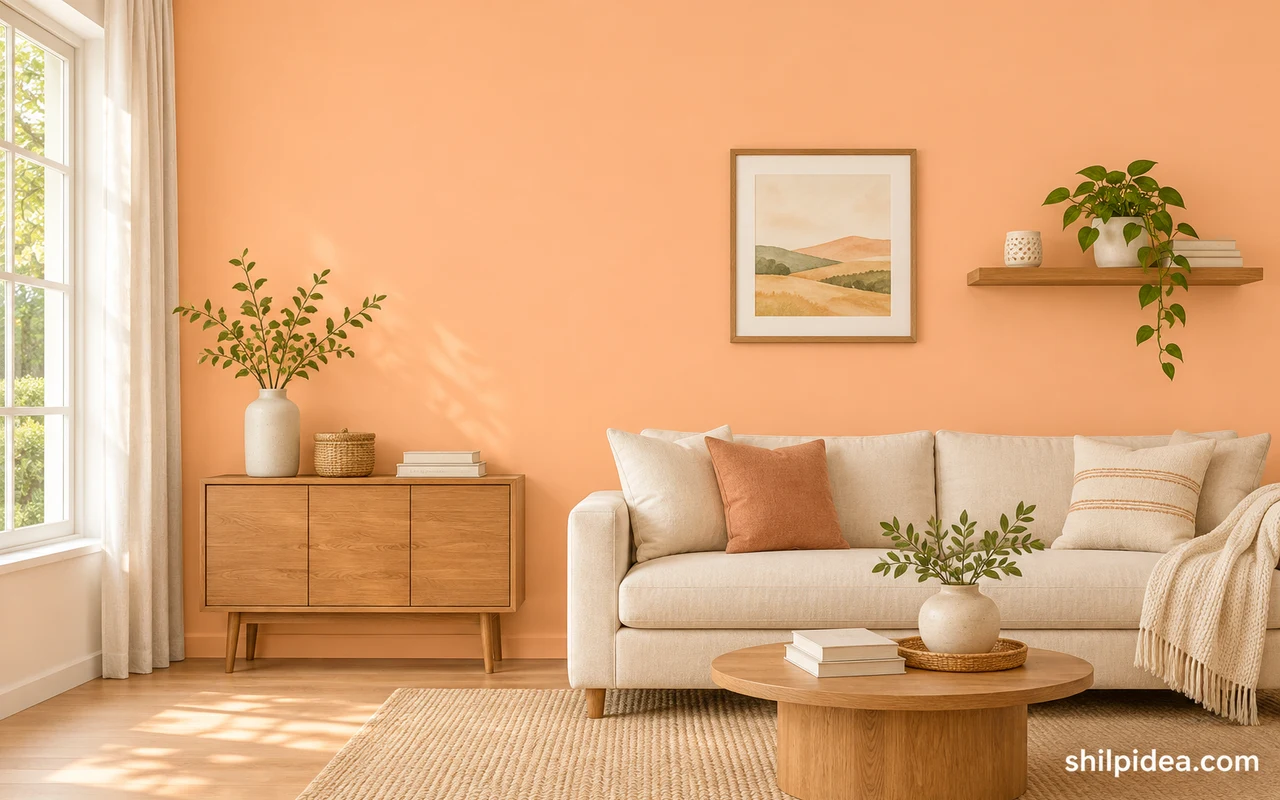
Apricot wall color can warm up a room even if you keep the furniture you already own. Some shades look like soft peach in daylight, while others lean pink or orange.
Try a sample beside your flooring and again under your living room lighting. Then decide whether you want the color across the room or on a single wall.
These ideas show apricot beside wood, brass, dark tile, and deep green. If you’re choosing paint for a kitchen, check the new shade with your kitchen wall decor and cabinet finishes.
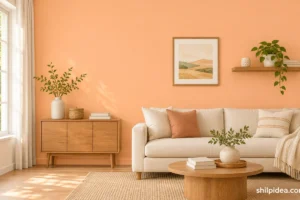
1. Pair Soft Apricot with a White Slipcover

A white slipcovered sofa gives soft apricot walls a clean edge. Repeat the warmth in a coral cushion or a small group of botanical prints. Leave a few patches of white on the wall and sofa so the color can read on its own. This works well when you want warmth without swapping the big furniture. A simple family photo wall can use the same pale frames.
2. Use Brass and Apricot at a Double Vanity

Apricot gives this vanity a warm backdrop for brass lights and pale counters. Try your wall sample between the mirrors where the fittings will reflect it. Natural wood below can bridge the color and the white sink. Keep the frames thin so the wall color still shows around the arches.
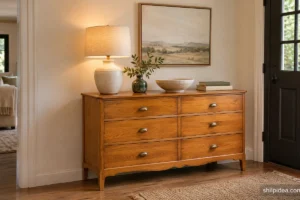
3. Warm a Bedroom Corner with a Rattan Pendant

A soft peach wall brings out the grain of a vintage dresser. Pair it with a woven shade so the light has a warmer texture after dark. Leave space around both pieces to see their shapes. This approach suits a small area beside the bed where a big change in furniture would be awkward.
4. Carry Apricot Through a Hallway and Door

Painting the door close to the wall color makes the hall feel connected from end to end. A geometric runner introduces pattern without breaking up the walls. Check the sample at both ends of the hallway because the light can change over a short distance. Pale wood gives the color an easy transition at the floor.
5. Add Green Leaves to a Peach Sitting Room

A bright plant picks up the warm tone of the wall without trying to match it. Place the pot where you can see the leaves clearly against the paint, then leave some space around the silhouette. A pale timber surface or basket can soften the transition at floor level. Try different plant heights before settling on one.
6. Pair Apricot Pink with a Dark Counter
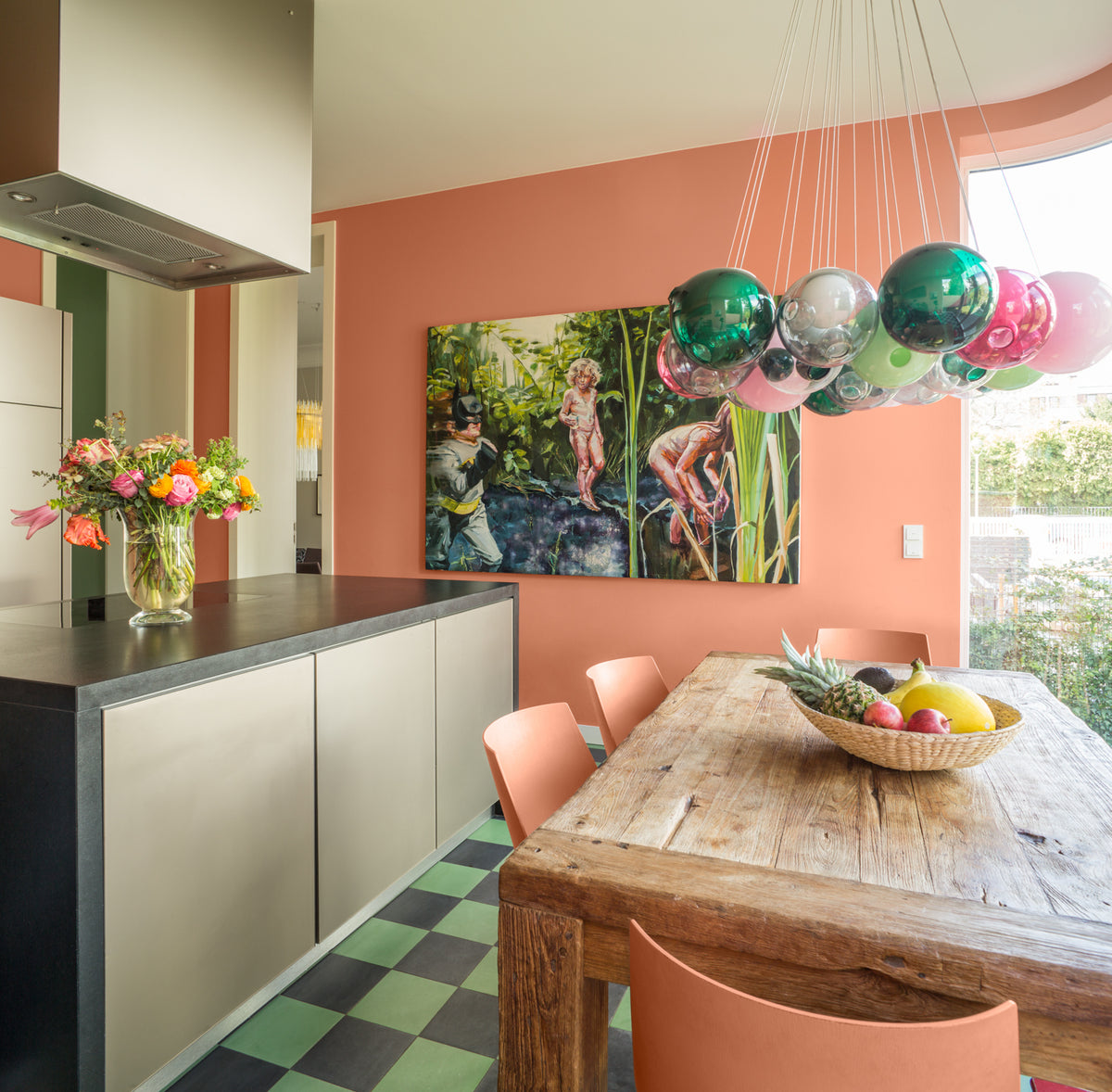
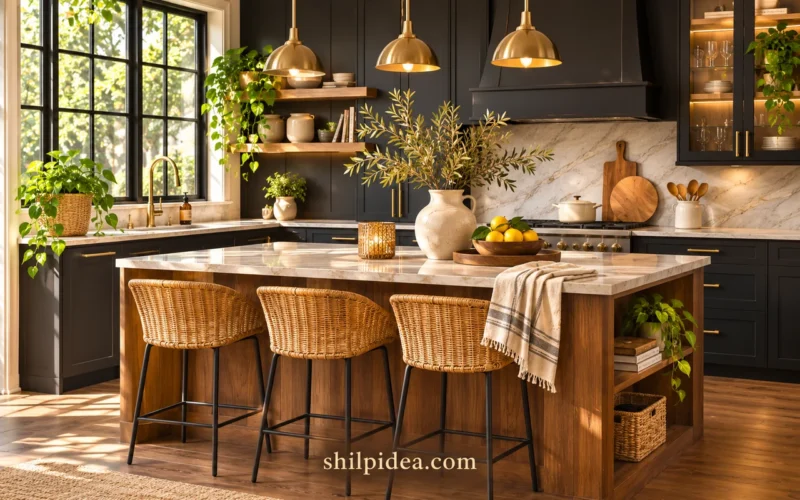
A black countertop gives apricot pink a clear place to stop, which helps the wall color feel deliberate. Repeat the warmth at the dining table with wood or a seat in a related shade. A single vase or bright piece of fruit is enough on the counter. Let the stronger colors stay separated by some open space. For another texture above the counter, browse kitchen wall decor.
7. Bring the Wall Color Up onto the Ceiling

Using a similar peach tone on the ceiling can make a compact dining workspace feel more enclosed. Keep the curtains light so daylight still reaches the table, and test the color overhead before committing. A gray pendant brings some definition without adding another warm shade. This is easiest to judge from the chair you use most. Check your sample under soft living room lighting before painting the whole ceiling.
8. Highlight a Plant Alcove with Matte Peach
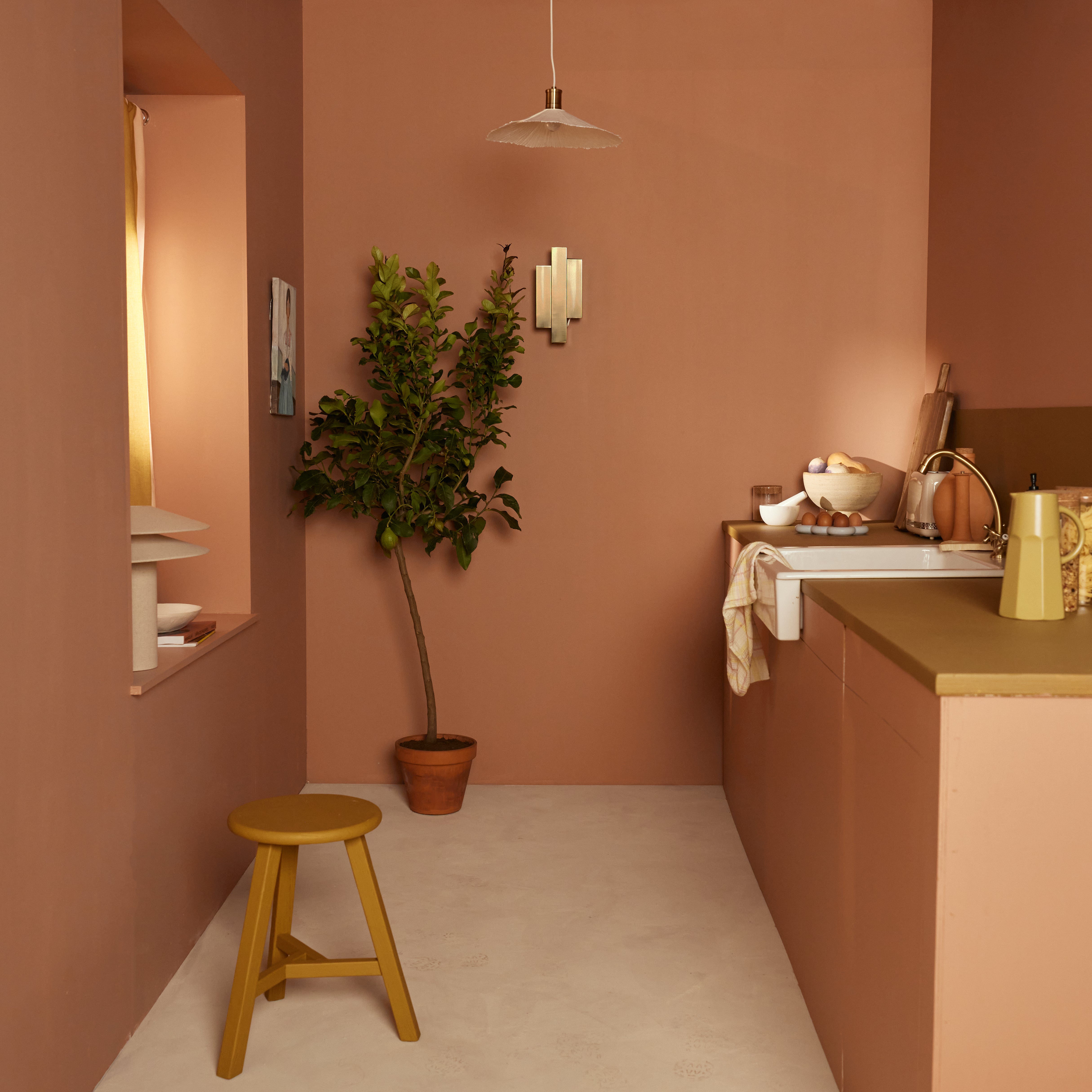
A shallow alcove is a good place to try apricot because the light often changes at the inside corners. Put one tall leafy plant against it and keep the surrounding floor clear. A small mustard accent can echo the orange undertone. Choose a quiet finish outside the alcove so the recess remains the focal point.
9. Put Charcoal Seating in Front of Soft Peach
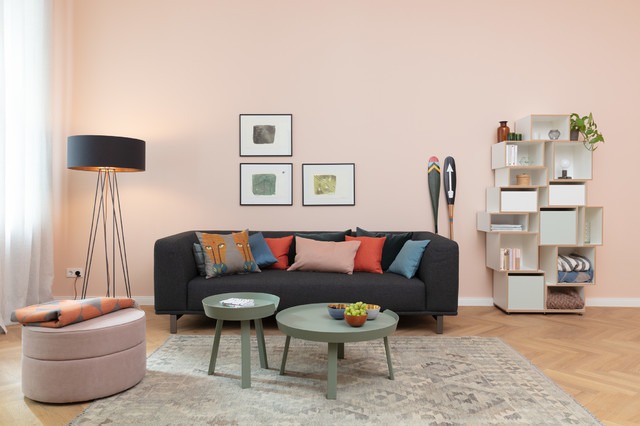
Charcoal provides a deep contrast to pale peach without adding another strong color family. Pick one cushion that carries both the wall tone and the darker sofa color. Leave one arm or side of the sofa free of extra pattern. The dark upholstery and light wall are enough to define the sitting area.
10. Use Small Mosaic Tile Beside Apricot Paint

A fine mosaic pattern makes a useful transition from peach paint to a white counter. Pick a simple mirror and faucet so the texture stays visible. Test paint chips alongside the tile when the bathroom light is on. The combination reads differently when the room is lit from a mirror rather than a window.
11. Repeat a Stripe in an Apricot Dining Room

A red-and-white stripe gives a pale apricot dining room one brighter pattern to work around. Keep the table simple and use a few chair colors drawn from the same warm range. Try the stripe on a removable cloth or cushion first. You can change it later without losing the calm foundation of the painted walls.
12. Set Peach Walls Above Dark Geometric Tile
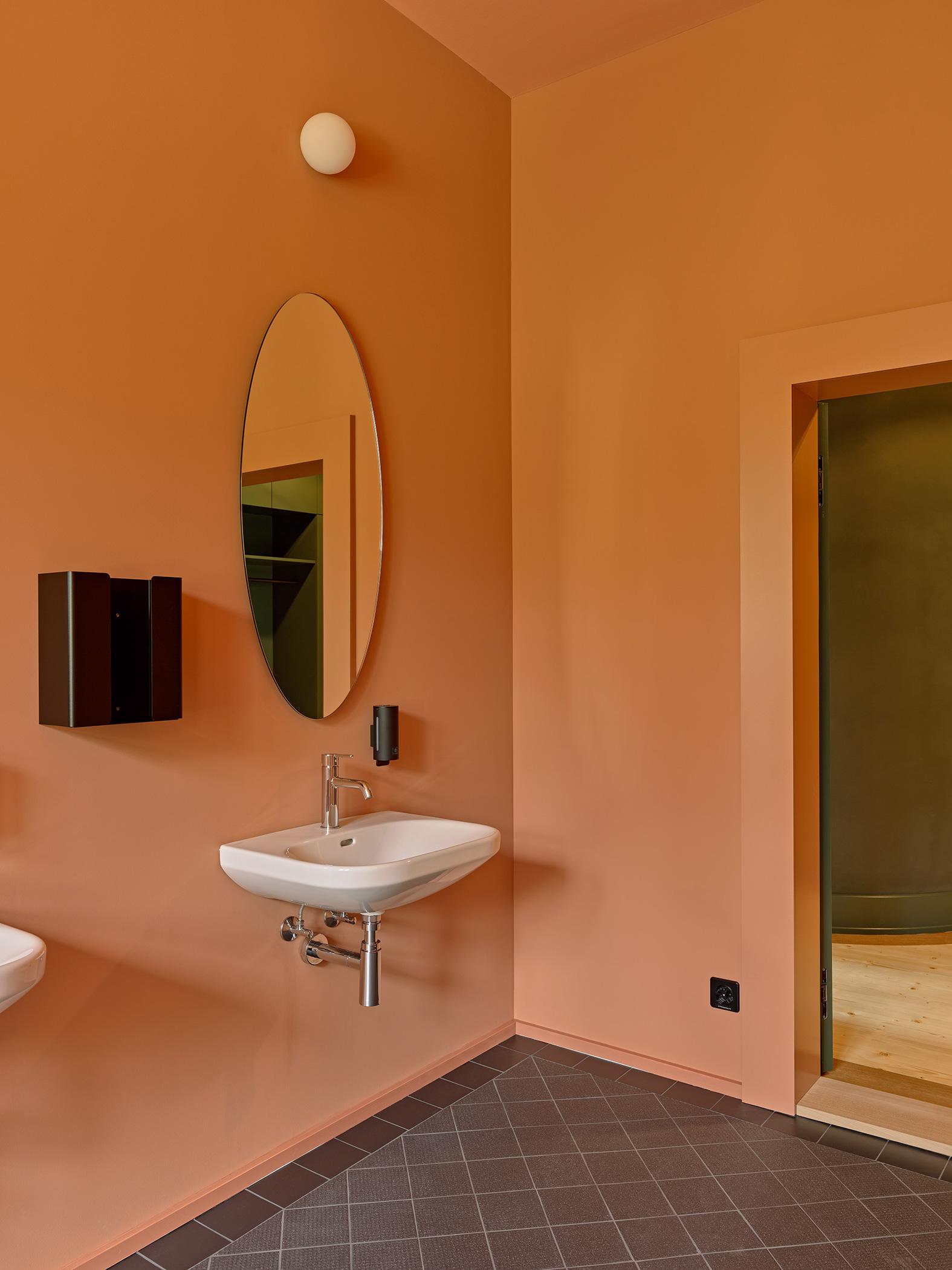
Dark geometric tile anchors the lower half of this bathroom. The peach paint gives the eye a place to rest above the pattern. A small white sink and simple metal fittings leave both finishes visible. When borrowing the idea, keep a paint sample near the floor so you can check whether its warmth clashes with the tile.
13. Put a Cane Sideboard Against Light Apricot
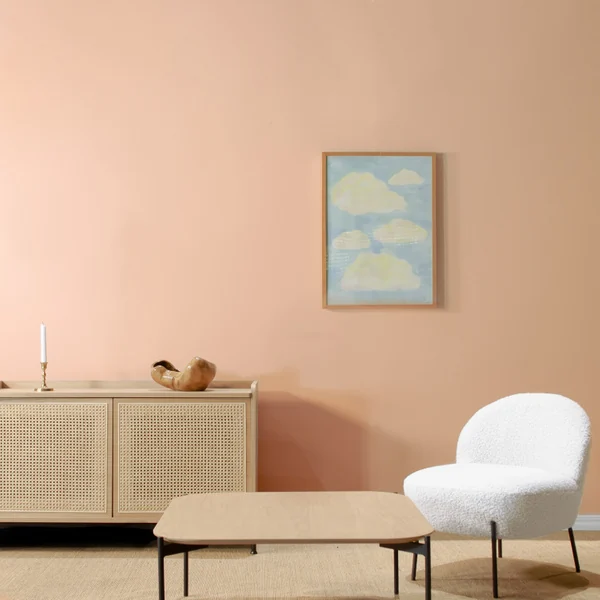
A cane front gives a light apricot wall texture without requiring much color contrast. Use one wooden bowl or ceramic piece on top so the furniture still looks open. Step back before adding another object. If the paint is subtle, light from the side can reveal the grain and the weave more clearly than overhead lighting alone.
14. Warm Up a Kitchen with Apricot and Red Brown

Red-brown wood or cabinetry makes pale apricot feel grounded. Choose a wall tone soft enough to sit beside the darker surfaces without looking like an exact match. Test the combination close to the counters, where reflected light can shift both colors. A light dish or towel can break up the warm tones in a useful spot.
15. Set a Deep Green Sofa Against Soft Apricot
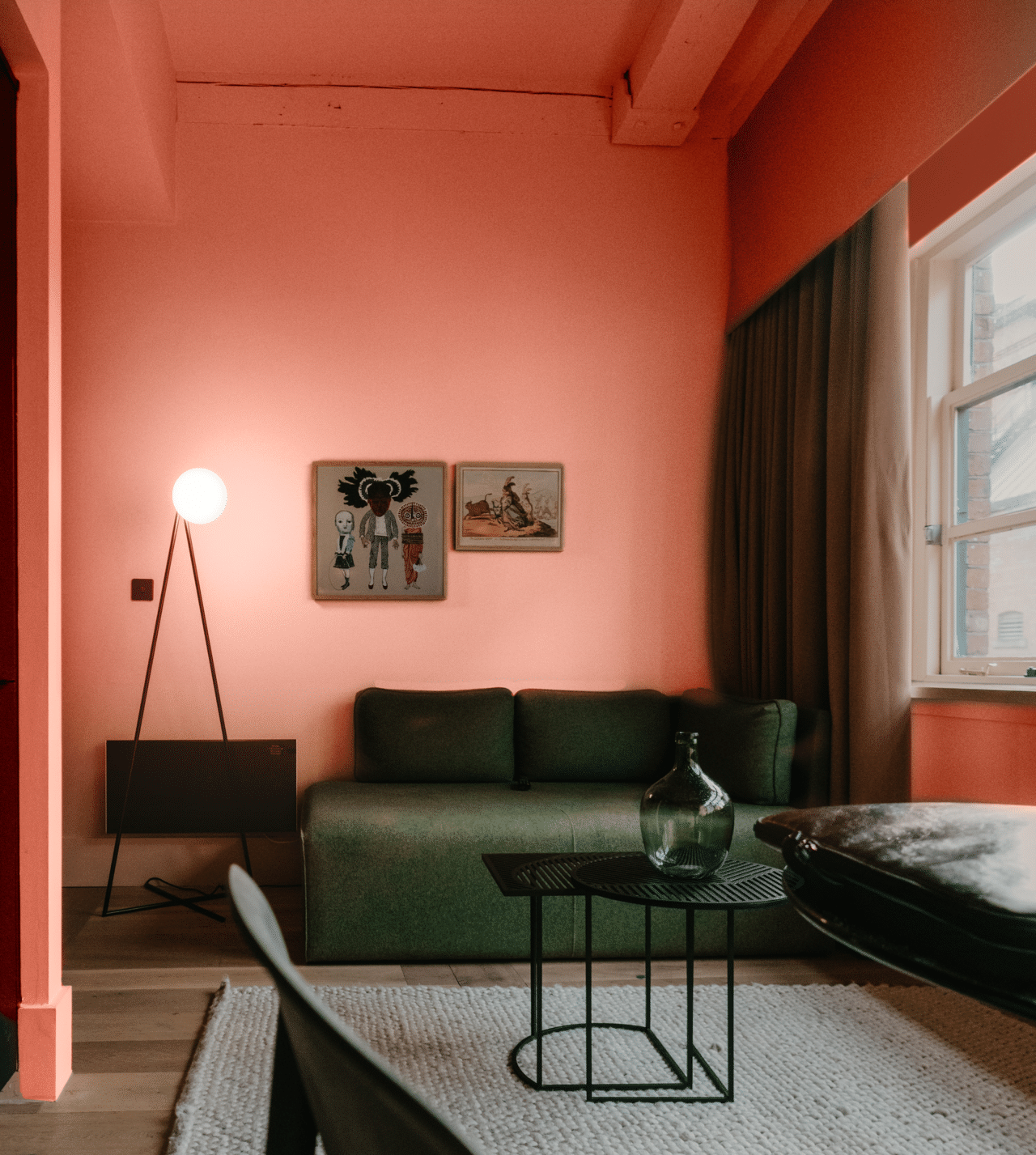
A deep green sofa gives pale apricot walls a defined edge. Start with one substantial piece and keep the smaller furniture dark or neutral so the two colors stand out. If your sofa is already a different color, hold a green cushion against a painted sample board to see how the pairing looks in daylight and lamplight.
16. Mix Cane and Bouclé in a Peach Dining Corner

A pale wood table gives several seat textures a common reference. Use cane where you want light to pass through and bouclé for a softer surface. Keep the wall a gentle apricot so the mix feels balanced. If the nook is small, leave one side of the table less crowded to make the different chair shapes easier to see.
17. Use Black Lines to Outline Apricot Walls
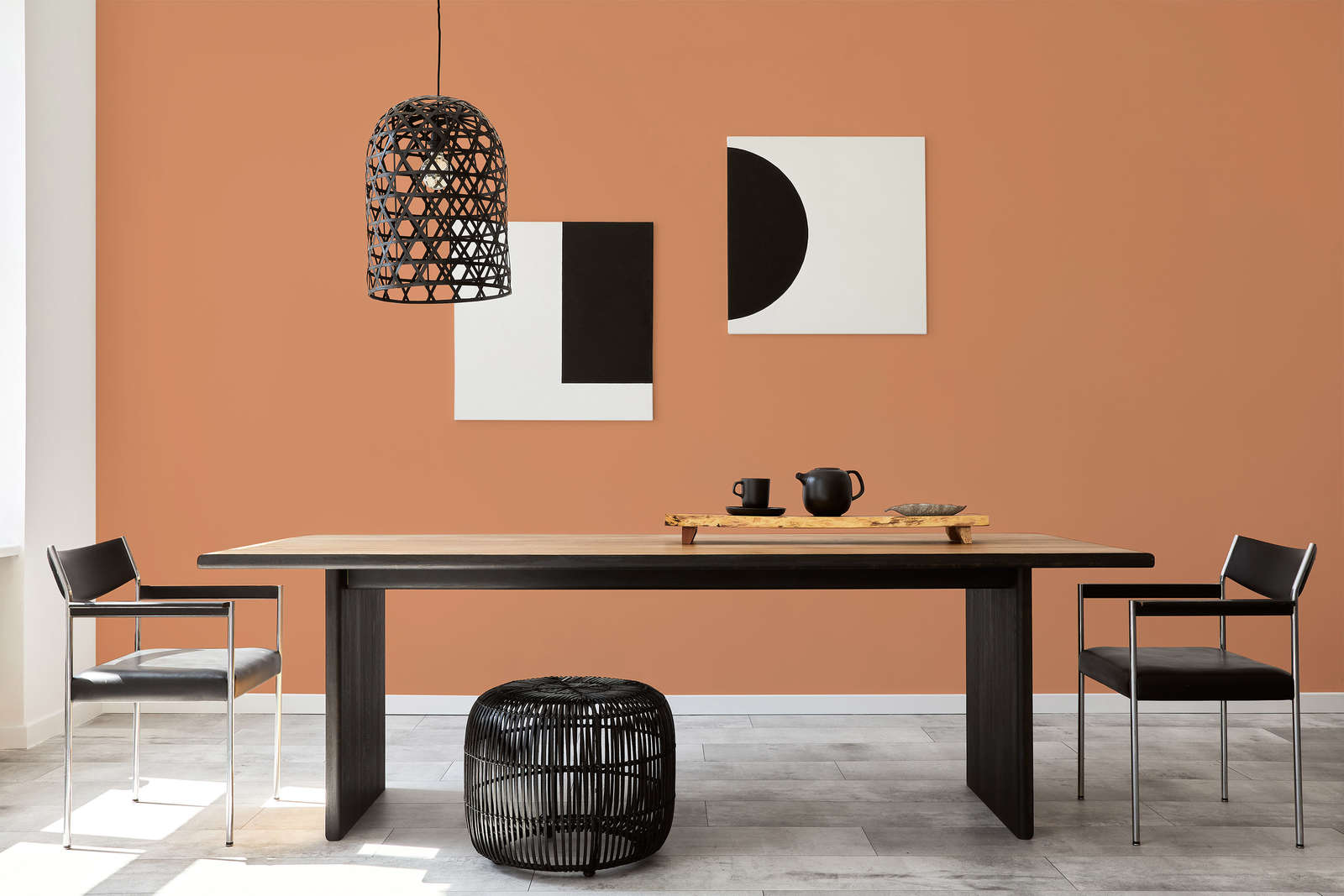
Thin black chair frames give a warm wall some definition without darkening the whole dining area. Choose a timber table that keeps the floor and wall connected. A single black object on the table is enough to carry the lines upward. This combination works best when there is visible space between the chair legs and the wall.
18. Let Tall White Trim Frame Peach Walls
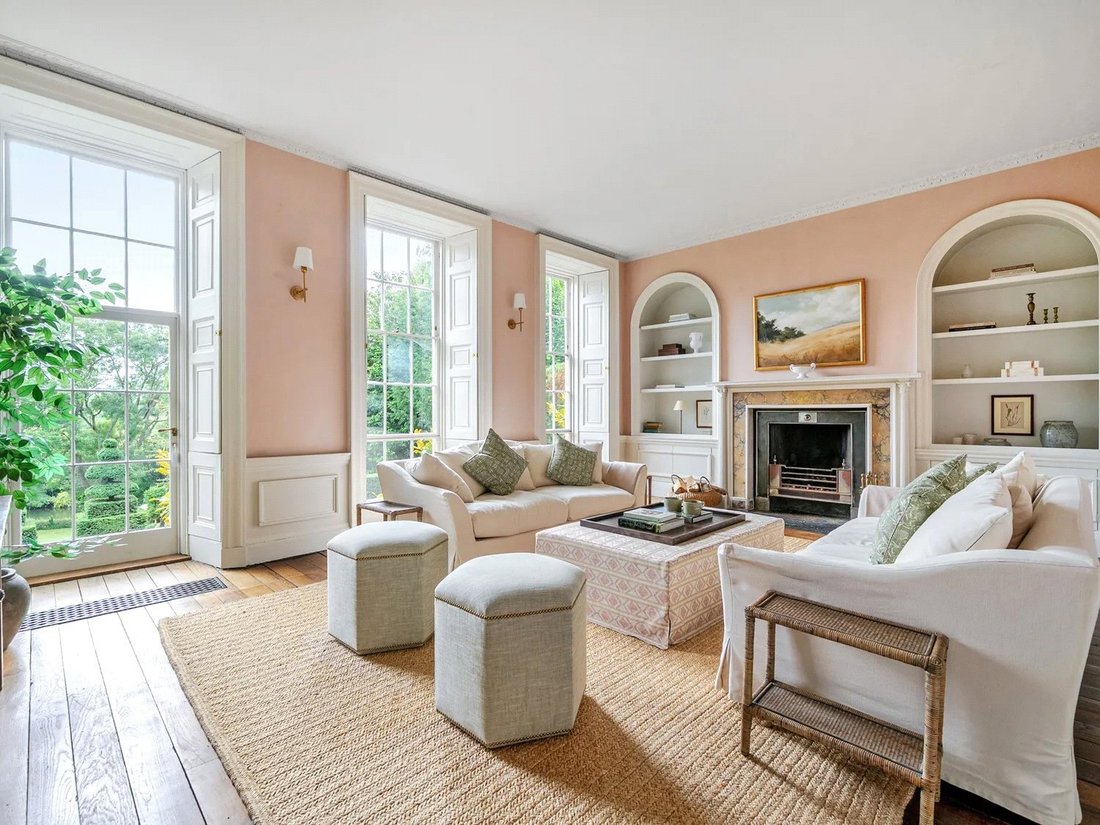
Pale trim makes the wall color easier to see beside tall windows. Repeat the white in one larger furnishing or textile, then let the peach fill the wall between the openings. If your room has less daylight, try a smaller sample around one window first. A little difference between trim and wall can show off the shape of the opening.
More Wall and Room Styling Ideas
Once you know where the apricot looks its best, choose a detail that brings out its undertone. A timber frame, a natural shade, or a small group of prints may be all the room needs. These projects can help you choose what to add next.
- Hygge Living Rooms with Soft Lighting
- Kitchen Wall Decor Beyond the Backsplash
- Staircase Photo Walls for Family Memories
- Minimalist Patio Layouts with Clean Lines
Where would you try apricot first? Tell us in the comments which room you’d paint and whether you’d pair it with wood, green, or a darker accent.




















0 Comments