22 Montessori Floor Bed Room Ideas for Kids
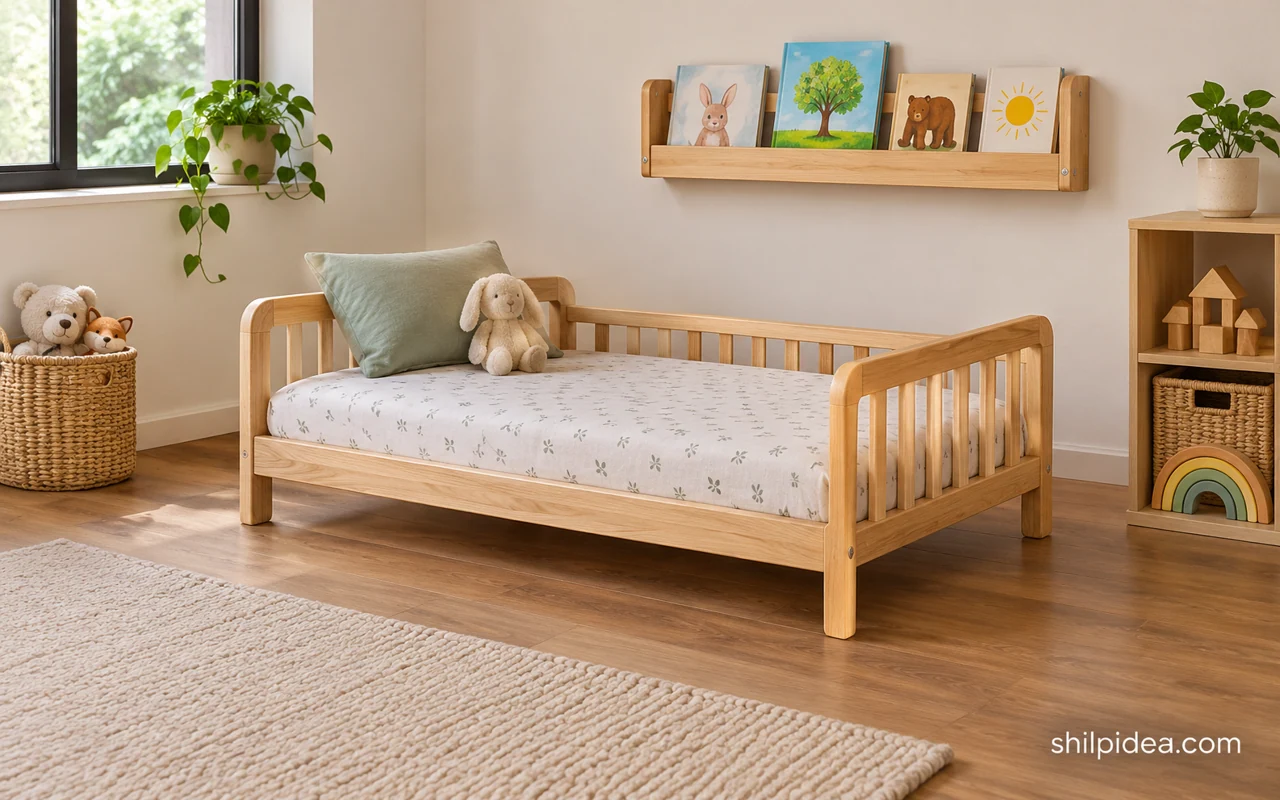
A low bed changes how a child uses a room. It can leave more room to play, bring favorite books within reach, and make bedtime routines easier to organize.
Start with the route from the doorway to the bed. Keep furniture out of the way and borrow craft storage ideas for a separate, simple place to put away daytime activities.
Build the rest of the room around how your child actually plays. A small shelf with recycled preschool activities can work well across the room from a clear, quiet sleep area.
1. Leave an Open Lane Between Bed and Play

Separate the bed from the play corner with a clear stretch of floor. This helps a small room feel calmer at bedtime and gives active play a defined home during the day. Use a clear route to the door. These ideas are for age-appropriate children’s rooms. For infants, follow the CPSC safe sleep guidance and use a product intended for infant sleep.
2. Keep Favorite Books by the Bed

A built-in bookcase keeps the bedtime selection close without asking a narrow room to fit another piece of furniture. Set out just the books your child reaches for regularly and keep heavier items off the upper shelves. Choose a bed and mattress that match the maker’s specifications. Keep the opening clear so getting up does not mean stepping around a stack of books.
3. Use White Storage to Quiet a Busy Wall
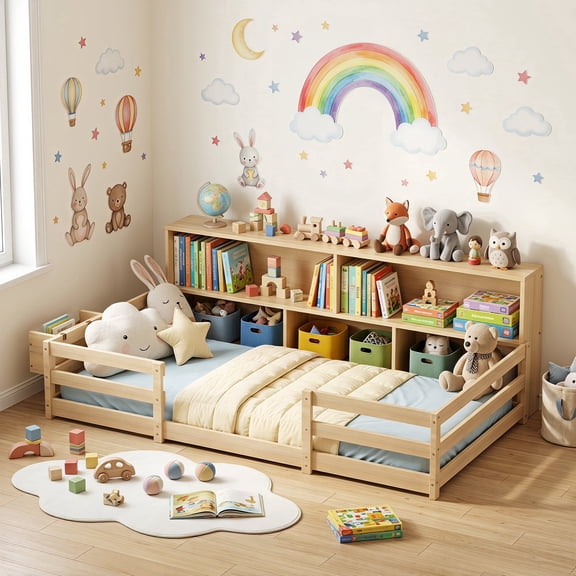
A white bed with built-in storage can blend into a pale wall and make colorful book covers easier to see. Try arranging the bedtime favorites at one end and storing the rest somewhere else. Keep the openings easy to inspect and clean. A short visual boundary such as a plain change in wall color can give the sleeping spot an identity of its own.
4. Use Beige to Tie Together Two Wood Tones

A beige bed can sit between pale wood flooring and darker wooden shelves without calling attention to the differences. Repeat the same warm shade once more on a wall or in a washable floor covering outside the sleep zone. When you look at possible layouts, leave enough clearance for the intended access side and for cleaning around the bed frame.
5. Make Natural Pine the Main Material

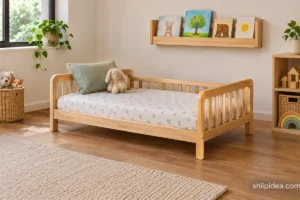
Natural pine has visible grain that can give a simple bedroom a little warmth. Start with the bed frame and repeat the tone on one other piece, such as a bookcase positioned away from the sleep area. A wall color slightly lighter than the wood keeps the frame visible. Pick a separate spot for paper wall hangings if the room needs more color. Leave a clear section of wall for future interests and changing artwork.
6. Give a Wider Bed a Place for Books
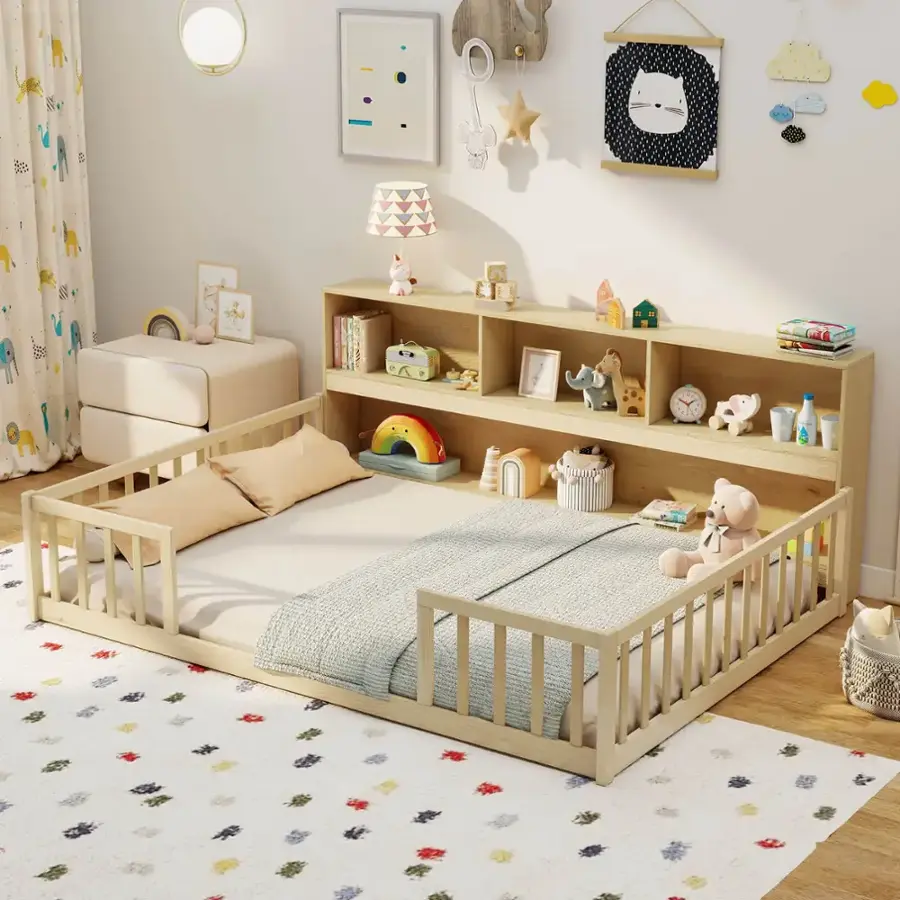
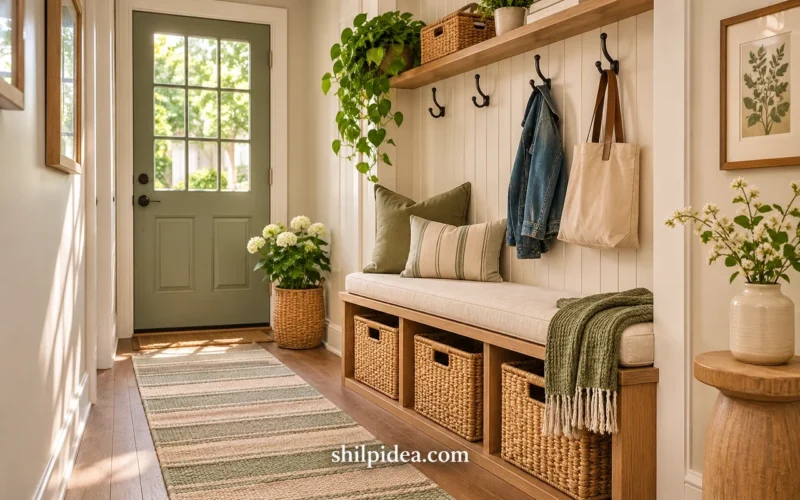
A wider bed can feel calmer when nearby storage is concentrated in one piece. Use a built-in bookcase to display a short rotation and keep the rest of the wall open. Measure the frame’s full footprint before ordering, including the shelving. If the room feels tight, retain a clear route to the door. Borrow ideas from these small entryway layouts for keeping everyday items out of narrow routes.
7. Paint a Soft Green Bed Wall

A muted green wall gives natural wood something gentle to stand against. Try a sample next to the frame in daylight and again with the room’s evening lights on. Add a second warm material elsewhere, such as a washable play mat in a separate activity area. Let the color do most of the decorating and keep the wall around the bed uncluttered.
8. Repeat One Mint Tone in the Room

One shade of mint can connect several corners without making them look identical. Try it on a wall panel near the low bed and again on a storage bin or reading seat. If a room photo shows styling that conflicts with your child’s bed instructions, use the color palette as inspiration and follow the instructions for what belongs in the actual sleep space.
9. Set Up Two Matching Beds for Siblings
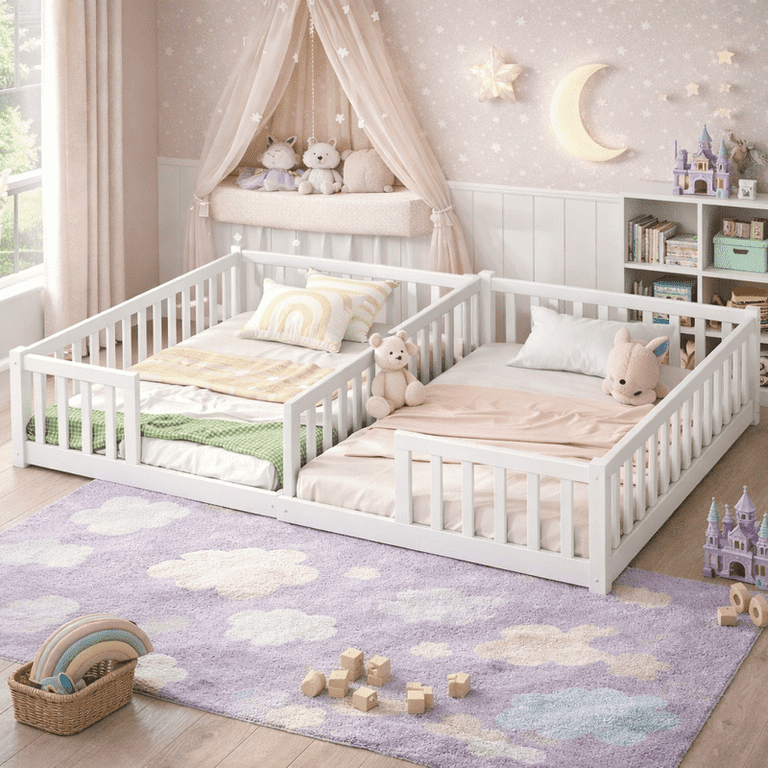
Two matching low beds can make a shared bedroom feel fair while leaving room for small individual choices. Let each child choose one wall color accent or a picture for their side. Plan the path to both beds and preserve the access and clearance specified by the maker. A shared storage shelf works best where neither child has to walk through the other’s sleep space.
10. Choose White Frames for a Shared Palette
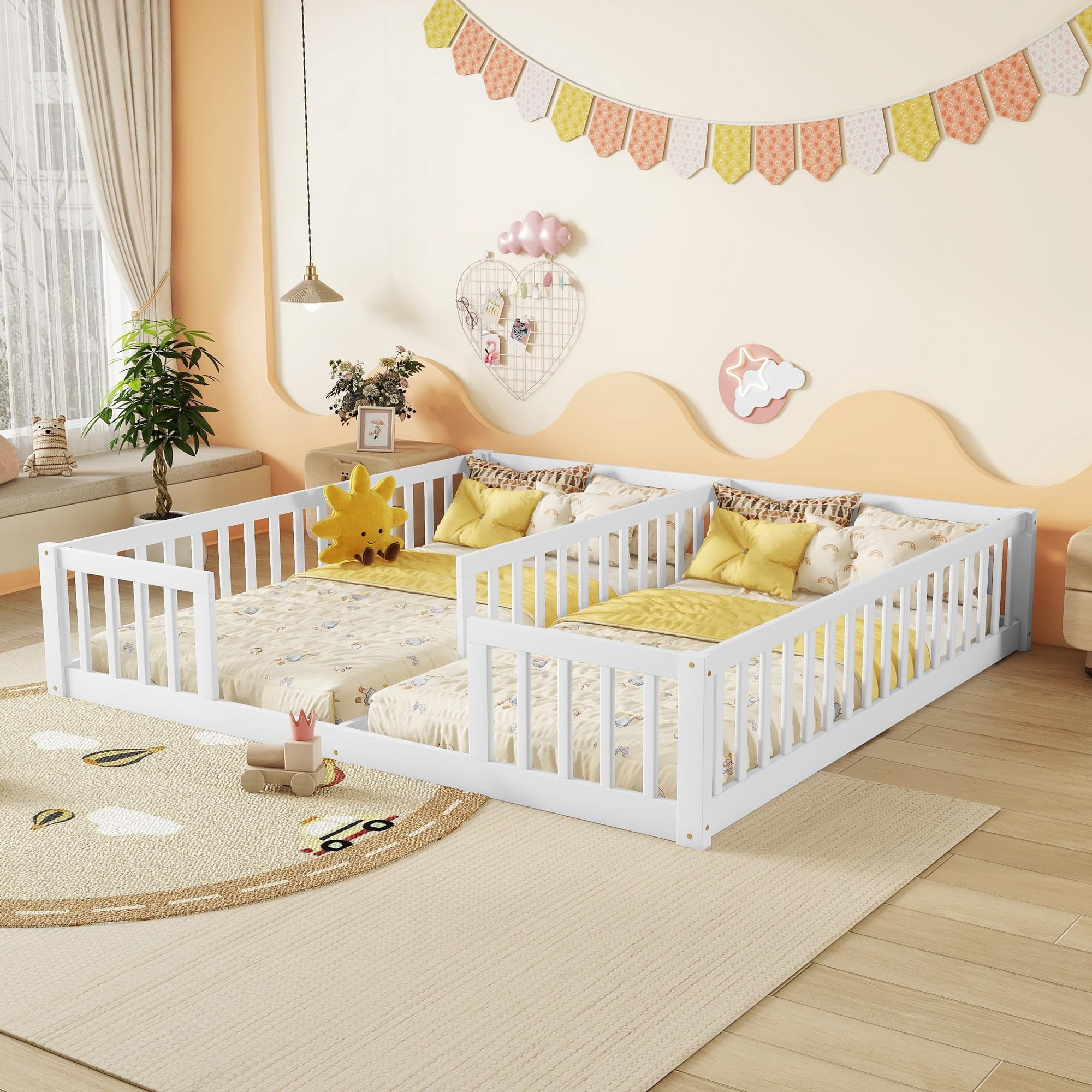
White frames can tie together two different tastes. Give each child a separate color for items elsewhere in the room, such as a labeled storage basket or a washable cushion at the reading corner. Keep the sleeping surfaces and frames set up as directed. With the big furniture color settled, personal choices are easier to change when interests shift.
11. Try Gray Frames in a Bright Shared Room
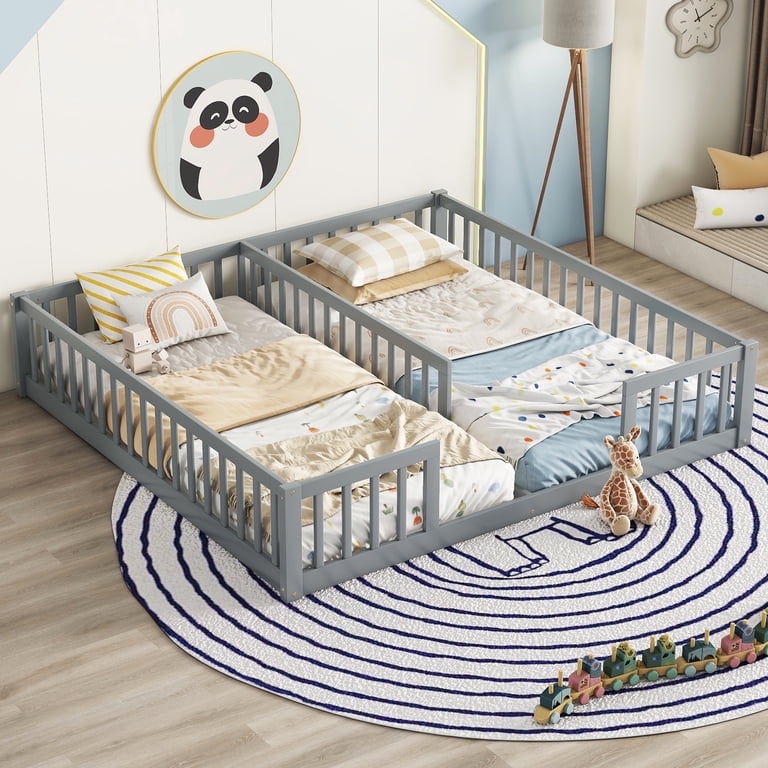
Gray frames can ground a bedroom that gets a lot of daylight. Keep surrounding walls light and use one accent color per child for areas away from the beds. Before committing to a double layout, mark both footprints on the floor. Check closet doors, drawer travel, and the walking route when the room is in use rather than judging the space empty.
12. Pick a Natural Poplar Frame With a Clear Opening
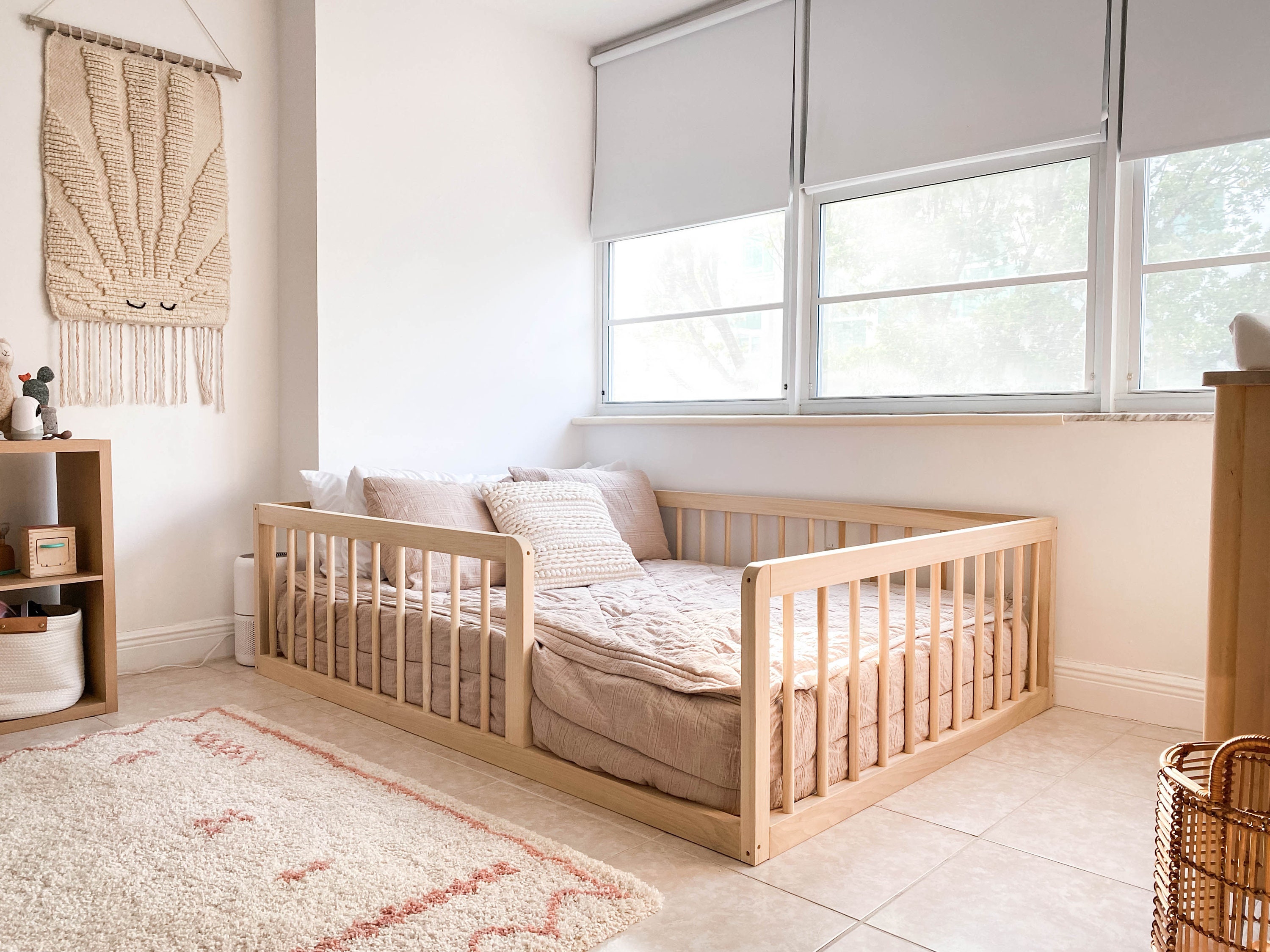
A simple frame with a defined opening gives the room a clear point of entry. Position that side toward open floor where it’s easy to reach. Compare the required mattress size and clearance against your exact model. Keep the floor alongside the opening free of storage boxes, draped fabrics, and any play accessories that tend to move around during the day.
13. Keep the Single Bed Visually Light

A single low wooden frame keeps the room’s footprint simple. Put the busiest play storage on another wall and give the bed an uncomplicated backdrop. A large object such as a desk or wardrobe often looks more balanced on the far side of the room. Keep tall furniture anchored according to manufacturer directions and place cords well away from the child’s reach.
14. Use the Bed as a Starting Point for a Transition

A room may only need one big change when a child is ready to move out of a crib. Keep a familiar book spot and retain colors the child knows. Check the CPSC toddler bed guidance and the intended age, mattress size, and setup for your model. Choose an age-appropriate product before arranging the rest of the room.
15. Plan a Small Bedroom Around the Bed Footprint

The usable space around a floor bed matters as much as the size of the bed itself. Mark the proposed frame and the doorway swing with painter’s tape, then walk the usual bedtime route. Leave enough open floor to move comfortably. A reading nook or play shelf can go in the remaining corner after the room’s main route is clear.
16. Let a Simple Pine Frame Work With Colorful Walls
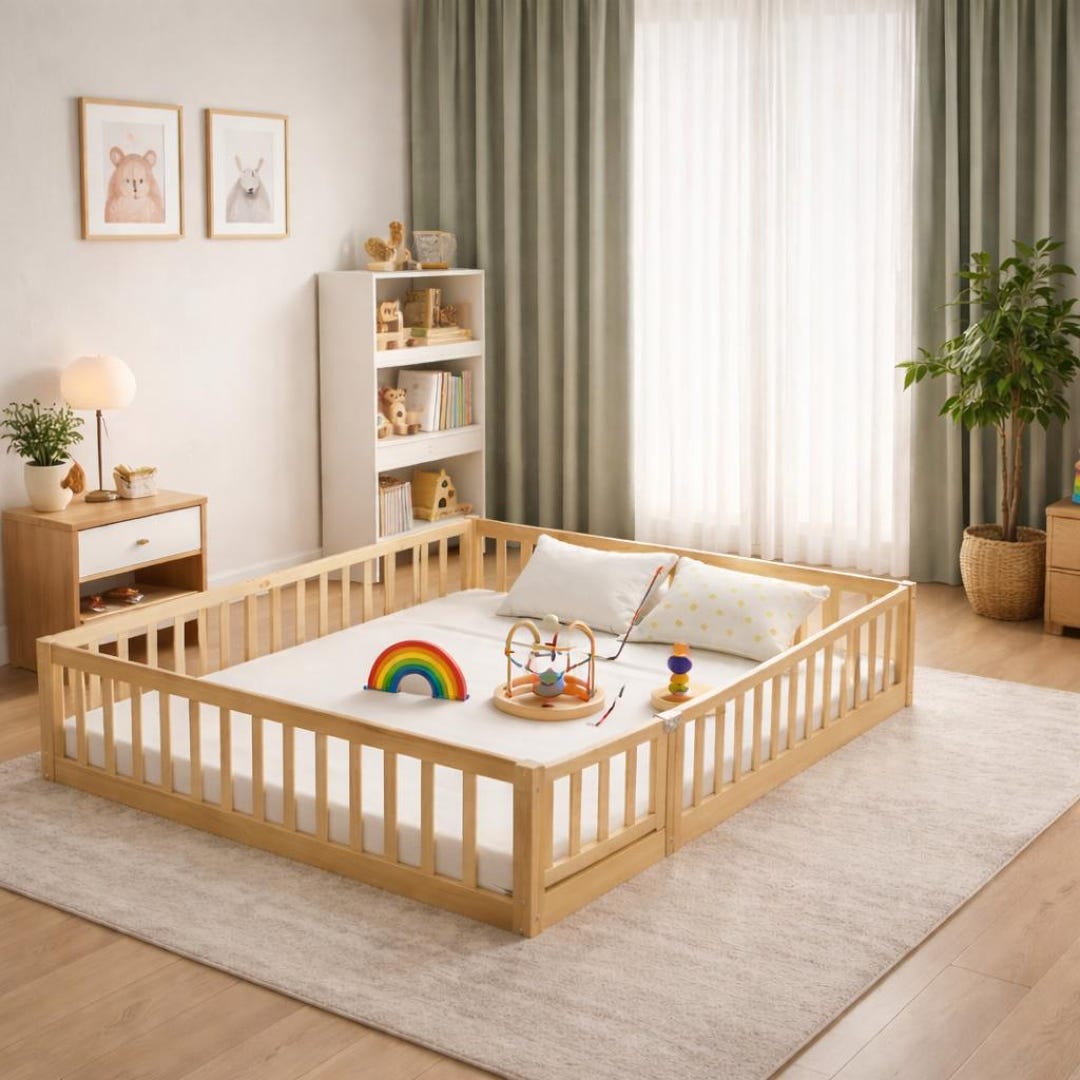
A natural pine frame is easy to keep as wall colors change. Make the paint or artwork the most colorful feature and leave room for the grain of the wood to show. If a child wants a strong color, try it on a single wall or reading spot. This gives the room a clear theme without committing the furniture to a short-lived interest.
17. Create a Separate Corner for a Bedtime Story

A reading corner can feel like part of the bedtime routine even if it’s across from the bed. Add a small selection of picture books and a fixed place to sit. Leave the path between the two open and use a warm light for the corner, positioned with cords out of reach. Put the books away before moving over to the sleep space.
18. Put a Book Rotation Across From the Bed

If a bed frame has limited storage, put a small rotation of books where the child can find them independently. Choose a few covers with different colors so it’s easy to spot a favorite. Keep the bookcase secure and away from the sleep surface. Keep the rotation short enough that the shelf is straightforward to tidy at the end of the day.
19. Give Daytime Crafts Their Own Landing Spot

A tray for paper and large, age-appropriate art supplies helps keep a low bed from becoming the room’s default surface. Store the tray away from the bed and bring it to a small table when it’s time to make something. Use simple paper projects as inspiration for what to display on a wall elsewhere in the room.
20. Hang a Changeable Art Display Away From the Bed

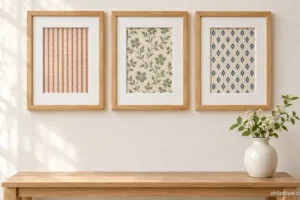
Use a separate wall to celebrate drawings and small projects. That makes it easy to update the room without placing frames, cords, or other objects within reach from the bed. Choose a display system intended for the wall and keep small hardware out of reach. Start with two pieces so swapping in the next drawing only takes a moment.
21. Make the Window Side Easy to Reach for Adults

Try placing the bed on an interior wall so an adult can reach window coverings without leaning over the bed. Keep window cords out of reach and use CPSC childproofing guidance when setting up the room. You can still let daylight define a nearby play or reading space with an open stretch of floor and low storage.
22. Reserve One Open Patch for Play
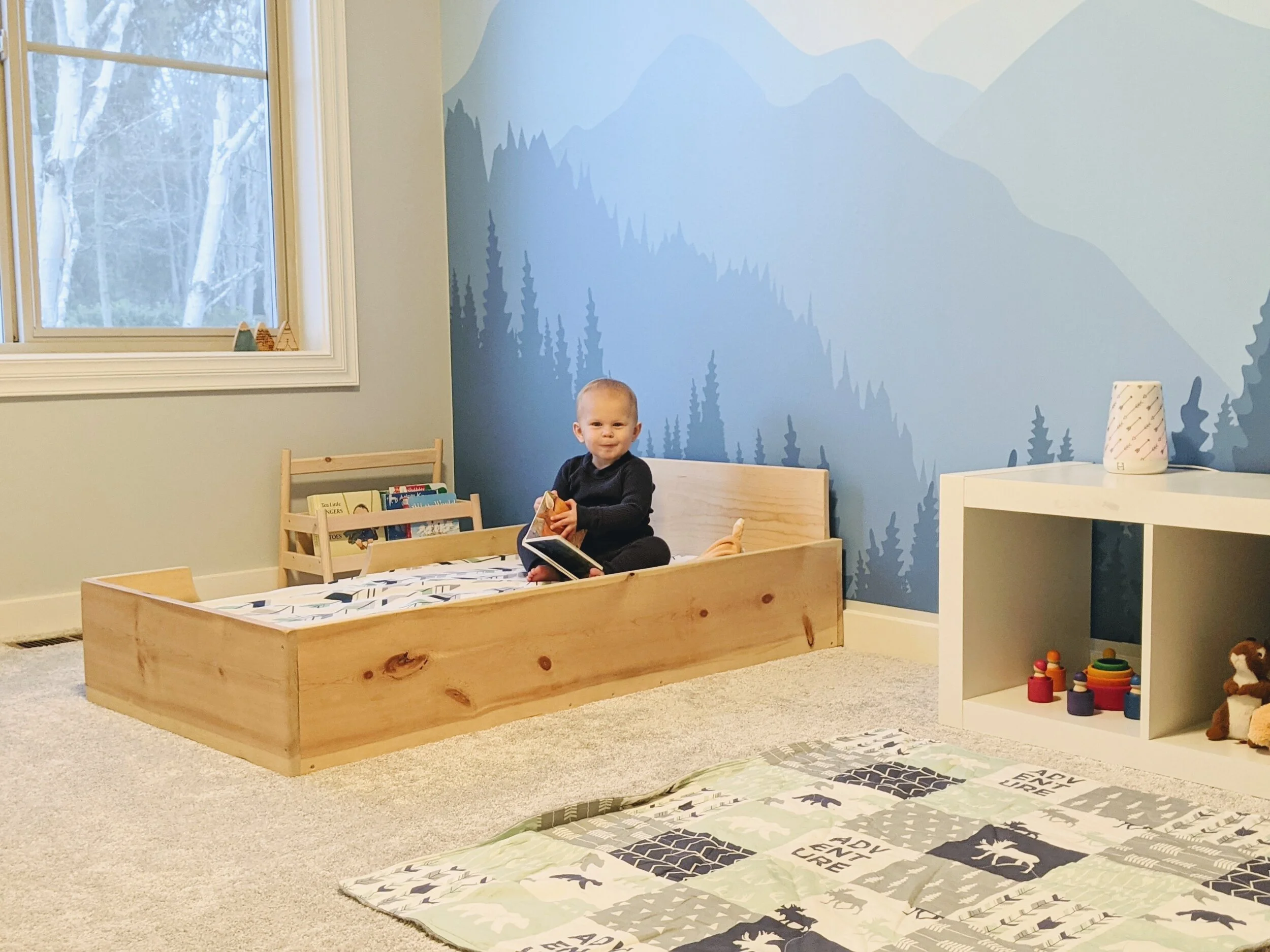
Leave one piece of floor free instead of filling every corner with storage. A child can bring over a book, a puzzle, or an activity and put it away again before bed. Keep the clear zone out of the main walking path where possible. Draw inspiration from small craft spaces and set up only the supplies that fit comfortably.
Set Up the Rest of the Room
Once the bed and walking route are set, choose one activity or display area to work on next. A small reading corner or an easy-to-tidy craft spot can give the room a purpose beyond bedtime.
- Organize a Small Craft Corner
- Try Recycled Preschool Craft Activities
- Make Simple Paper Wall Hangings
Which part of the room would you set up first, the reading spot or the open floor beside the bed? Share your layout in the comments and tell us what you need it to do on an ordinary morning. If you’ve already redone a small shared room, we’d love to hear how you kept the walking route clear.




























0 Comments