18 Gray Floor Color Combinations for Different Rooms
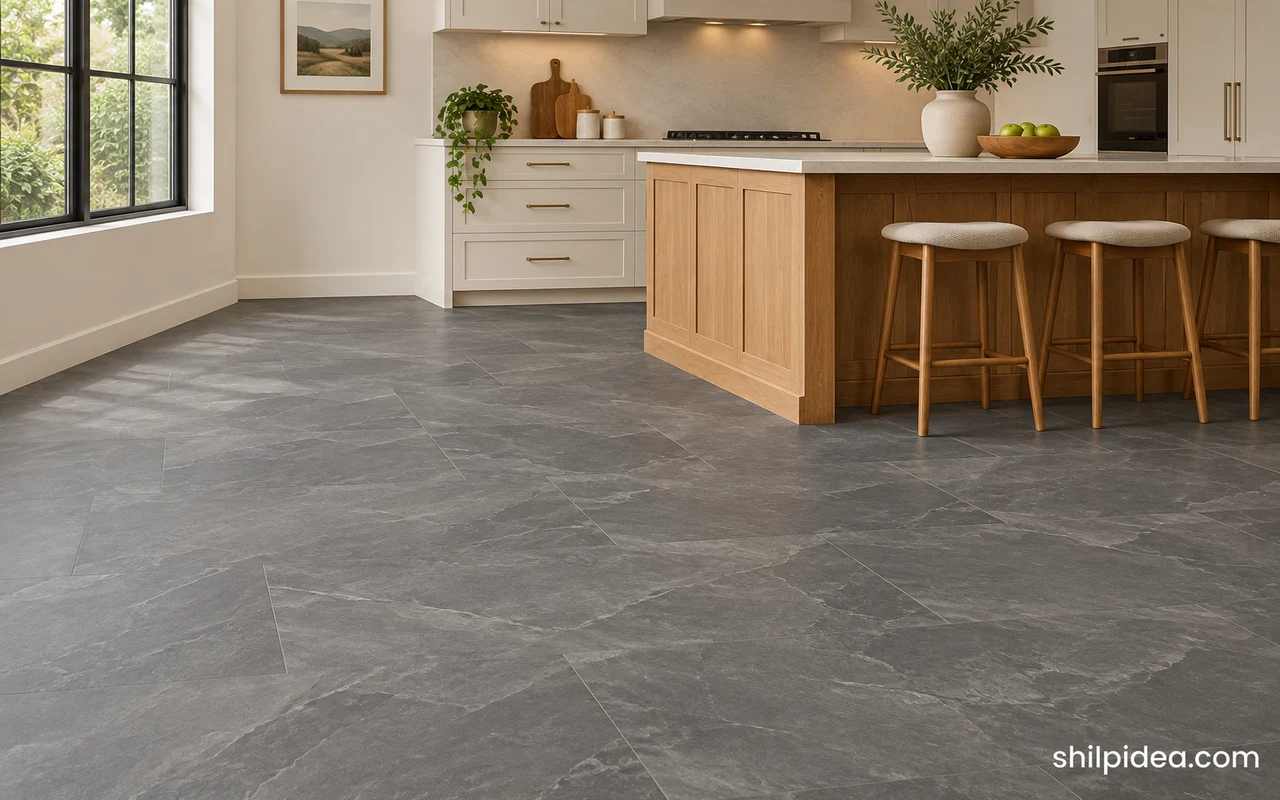
Gray floor color combinations can make a room feel warmer, brighter, or more defined. Start with the shade of your floor and look at the finishes that are already in the room.
Test a sample beside your sofa or cabinets before adding a new color. A timber detail and soft living room lighting can change how cool the gray looks at different hours.
The examples cover light tile, concrete-look porcelain, and darker slate tones. For kitchens, check your flooring alongside the kitchen wall decor so the two surfaces work together.
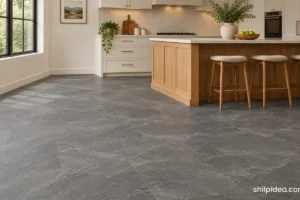
1. Pair Gray Stone with Pale Oak
Light oak warms the stone floor without making it disappear. Let the same gray family continue onto the backsplash, then use a pale counter to keep the transition crisp. If you have an island, try a wood front on the side facing the room so the contrast reads before you reach the kitchen. For the space above the counter, explore kitchen wall decor.
2. Use White Seating on Polished Concrete

White upholstery gives polished concrete a light counterpart. A substantial timber table keeps the combination from feeling bare and gives the room something warm at its center. Keep the table a little lower than the seat cushions so the view across the room stays open, particularly if a fireplace is already the focus.
3. Warm Slate with a Natural Wood Door
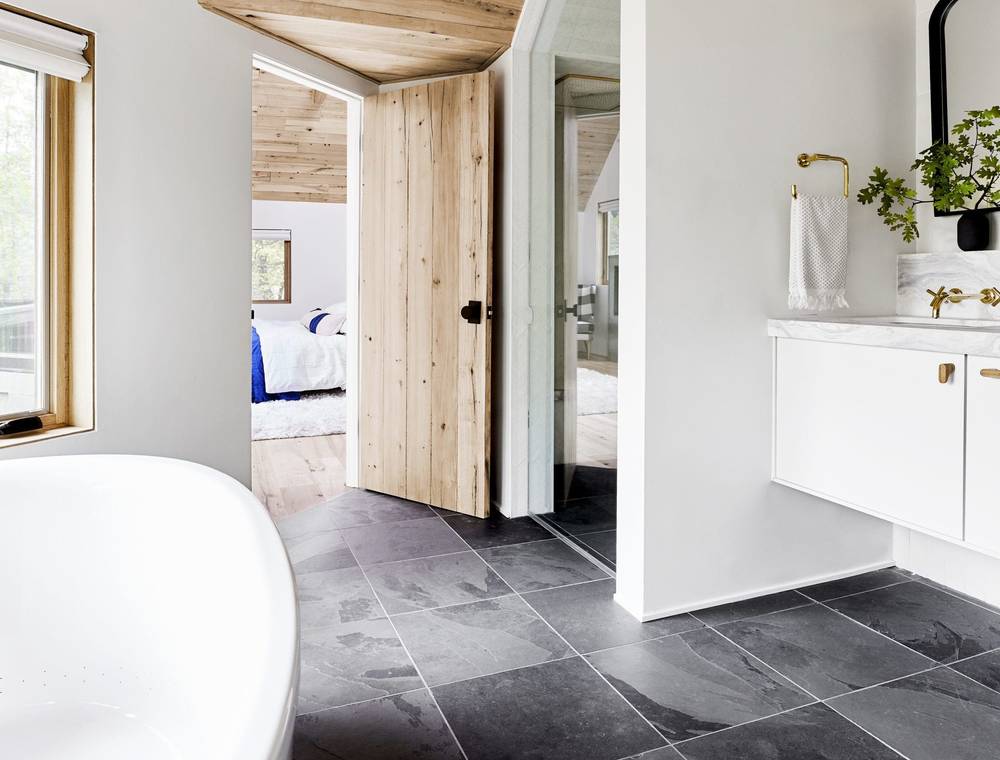
A natural wood door is enough to warm up a slate floor in a compact bathroom. The wood marks the threshold while the slate’s varied surface does the rest. Use a small sample beside your door finish and the nearest wall color to see which grain and gray undertones look comfortable together.
4. Set Light Cabinetry Against a Dark Tile Wall

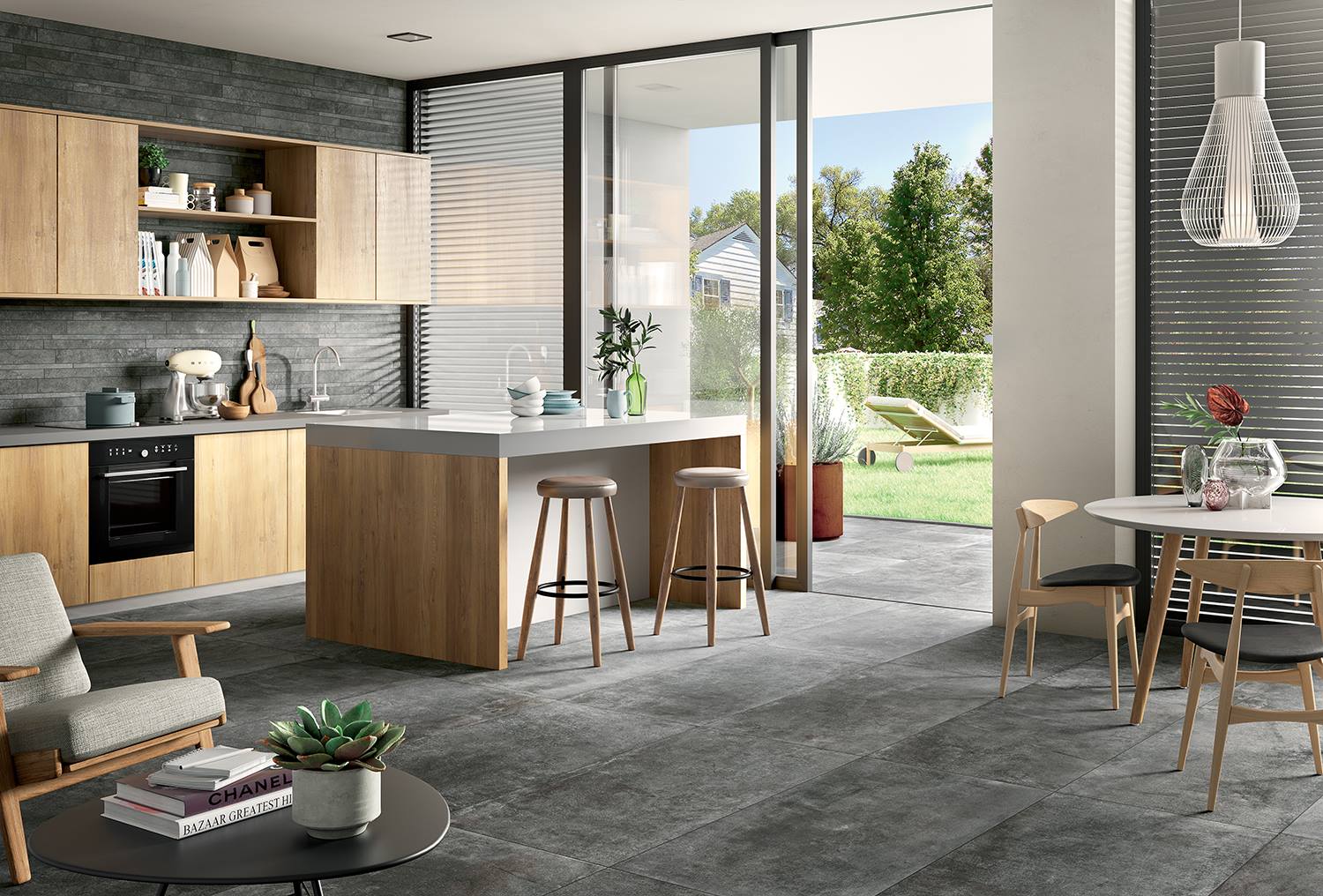
The darker wall gives a gray concrete floor a second point of contrast. A light wood island interrupts the dark surfaces and gives the eye an easy place to land. Keep the counter and hardware simple. With three different materials already in view, repeat one tone in the lighting or stool seats rather than introducing another.
5. Add a Woven Rug to a Cool Gray Floor

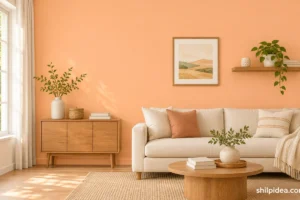
A natural woven rug makes a seating group easier to see on a broad gray surface. Choose a size that catches the sofa’s front legs and leaves a visible band of the gray around it. Beige fabric and a low timber table can repeat the warmth of the weave without hiding the floor’s texture. Try these living room lighting ideas if the rug color changes after dark.
6. Balance Slate Gray with White Shaker Cabinets
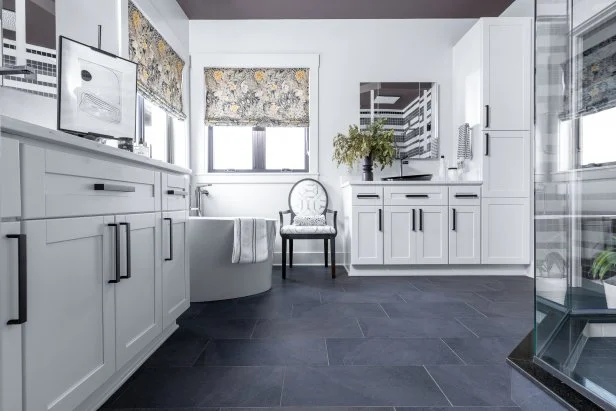
White cabinetry makes the dark floor a deliberate feature. Black hardware can connect the cabinet faces back to the flooring, while a patterned Roman shade gives the palette a softer edge. Check the gray next to the white under the lights you actually use in the evening before settling on a paint color.
7. Use Gray Tile Across an Open Dining Area

A gray floor can connect a dining table to the kitchen when both spaces are in one view. Repeat a warm wood tone in the table and lower cabinets, then give the dining spot its own light or chair shape. This lets the floor connect the zones while the furniture tells you where one activity gives way to the next.
8. Soften Concrete Look Porcelain with Cream

Cream upholstery gives the room a soft edge against concrete-look porcelain. Pick a cream with enough warmth to stand out rather than trying to match the grout. Leave part of the floor visible around the sofa so the combination reads clearly. A small textured cushion can add interest without changing the palette.
9. Put Floral Textiles Over a Slate Gray Floor

A cool gray floor can take a patterned textile without the room feeling too busy. Start with a white bed covering and choose a floral cushion that includes one color from the rest of the room. A darker throw helps the pattern feel anchored, especially when the flooring is visible beside the bed.
10. Use Globe Pendants Above Gray Stone and Oak

A pair of globe pendants gives soft shapes to a room with strong lines in the cabinet fronts and floor. Keep the stools and island within the same wood family so the floor can provide the cool contrast. Check how the lamps reflect on the floor, especially if the tile finish has a little sheen.
11. Pair Pale Furniture with Light Gray Tile

Light gray tile can take the place of white when you want a room to feel open but still have some color. Pale wooden furniture gives it a little warmth. Repeat the floor’s tone in one cushion or chair rather than every surface. A sideboard with open space beneath it keeps more of the tile visible.
12. Continue Slate Between Bedroom and Bath
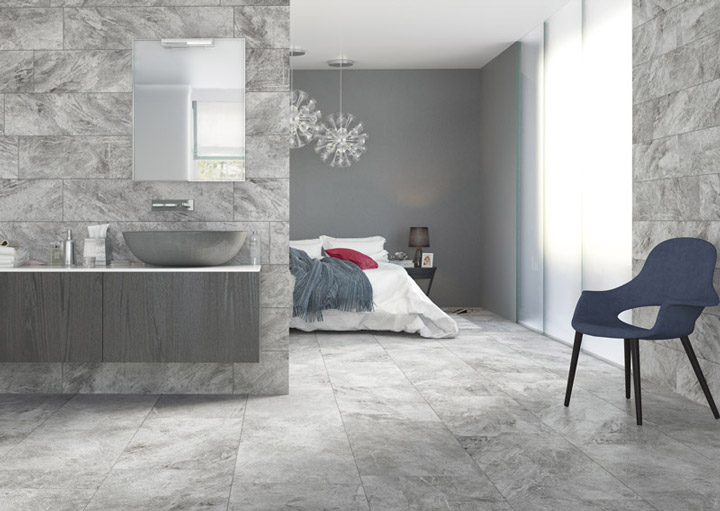
A continuous slate tone makes the floor feel like one surface across the bedroom and bathroom. Give each area its own accent, such as a warm vanity near the sink and softer fabrics near the bed. If you’re only changing color, echo the floor tone in a small detail on the other side of the threshold.
13. Contrast Dark Floor Tile with White Uppers

The darker tile anchors the lower half of this kitchen, while white upper cabinets keep the walls light. Timber fronts bridge the two colors. Try the combination with a simple countertop first and check whether the tile feels heavier at night. One warm detail on the counter can bring the upper and lower halves together.
14. Repeat Beam Tones with a Low Wooden Bench
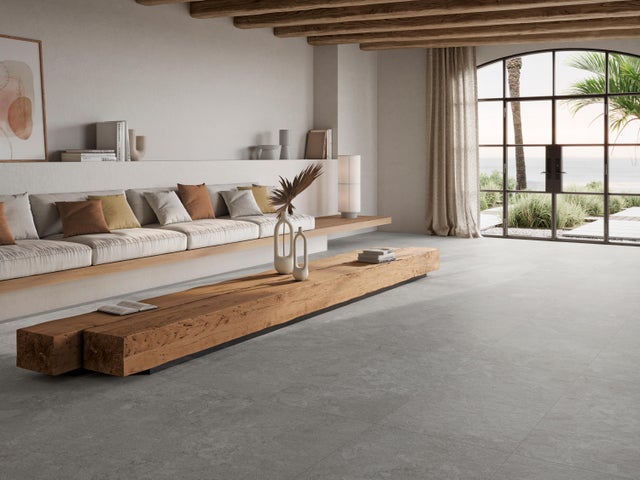
A low timber bench picks up the ceiling beams and gives the gray floor another warm detail at ground level. Place it where the light catches its grain, then leave the floor clear around it. Earth-toned cushions can echo the wood without making the seating and floor feel like parts of the same color block.
15. Float a Timber Vanity over Dark Gray Tile

A floating vanity leaves a strip of dark gray floor visible below the wood. That little gap helps a compact room feel more open. Use white at the sink and keep the mirror frame simple. If you prefer warmer colors, try a towel or small basket that sits between the wood tone and the gray.
16. Repeat Taupe Accents in a Gray Tile Lounge
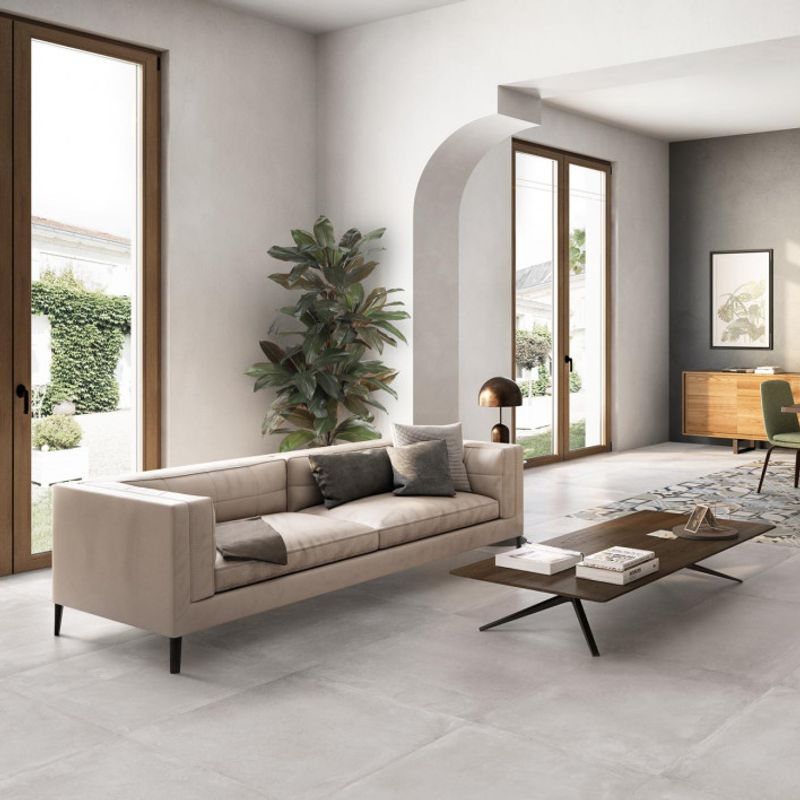
Taupe cushions bring a gentle transition between gray tile and a beige sofa. Try the warmest cushion against the coolest tile sample before adding other colors. The timber table can supply the strongest warmth in the room. Leave the walkways open so daylight from the doors keeps the floor from looking flat.
17. Use a Playful Wall with Dark Gray Vinyl
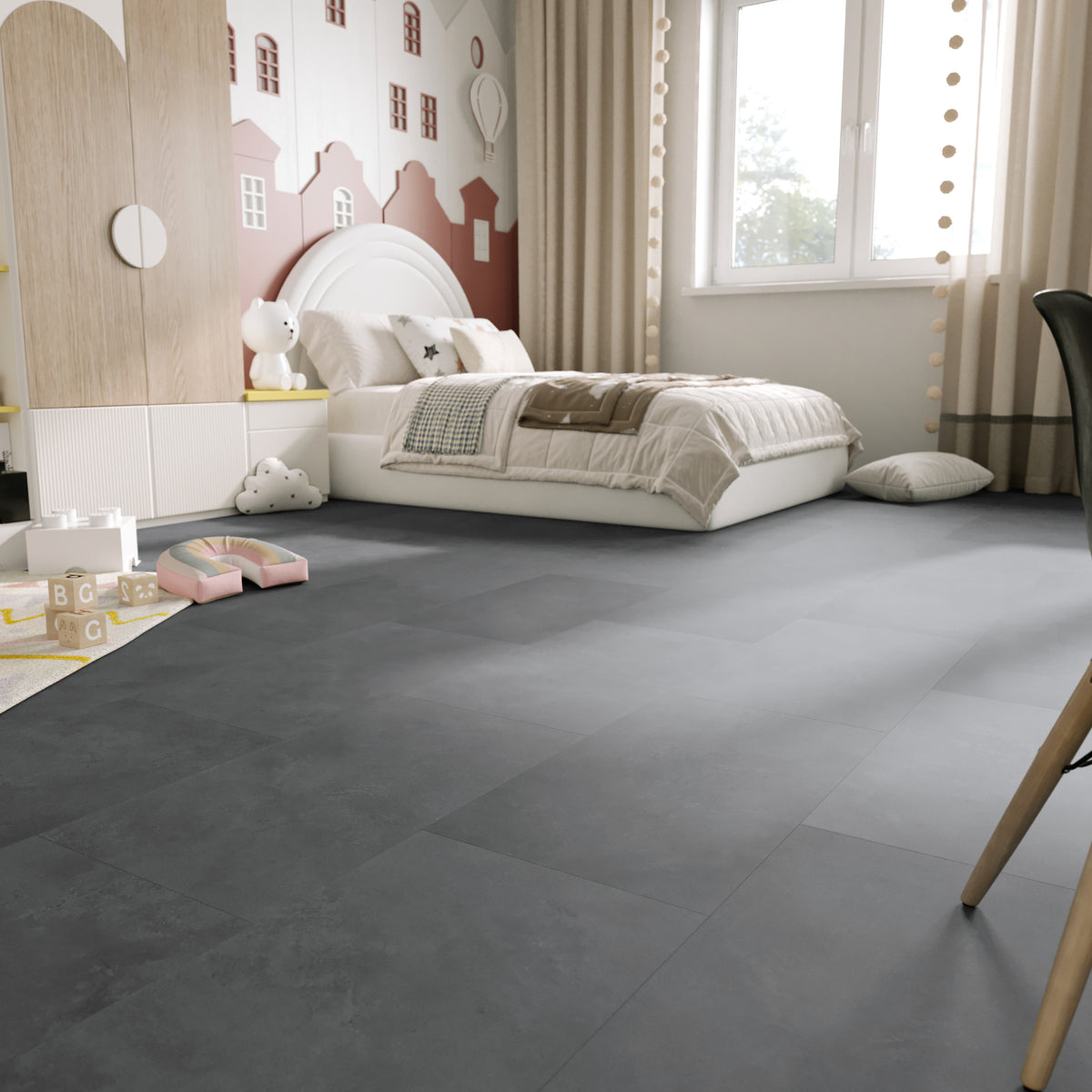
A dark gray floor makes a quiet base for a wall with a larger pattern. Keep the bed frame and bedding simple, then repeat one color from the mural in a cushion. Try the wall sample near the floor in daylight. A narrow stretch of visible gray around the bed gives both patterns room to read.
18. Let the Garden Add Green to a Gray Floor

With a concrete-look floor and large windows, the outdoor view can supply much of the color. A low wood-framed seat repeats the warmth outside without getting in the way of the glass. Start with a single green accent if the view needs an echo indoors. Leave some empty floor close to the doors to keep the transition clear. The same balance of timber and gray works in a minimalist patio layout.
More Ways to Bring Warmth into a Room
Once you know which undertone you’re working with, repeat it in one small detail before changing a whole wall or cabinet. These related projects offer ideas for lighting, wall details, and room layouts that can help you decide where that next change belongs.
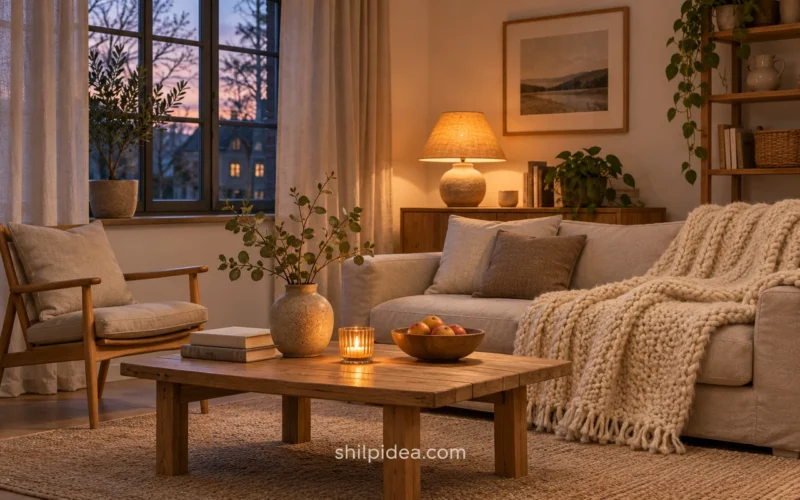
- Hygge Living Rooms with Soft Lighting
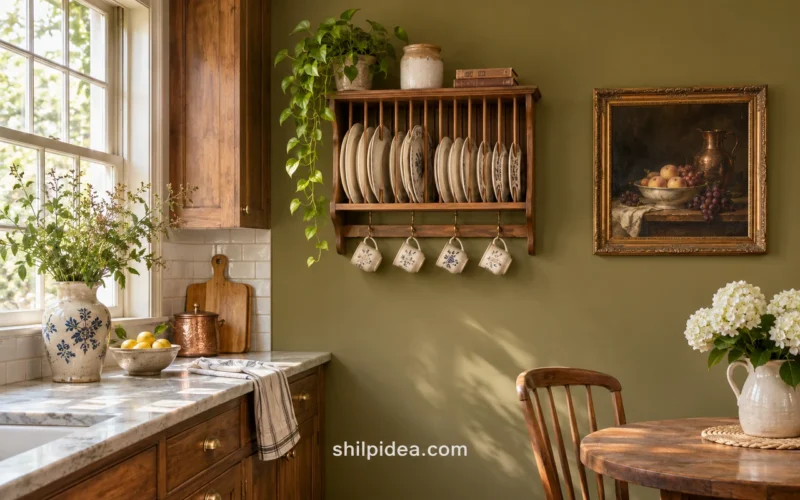
- Kitchen Wall Decor Beyond the Backsplash
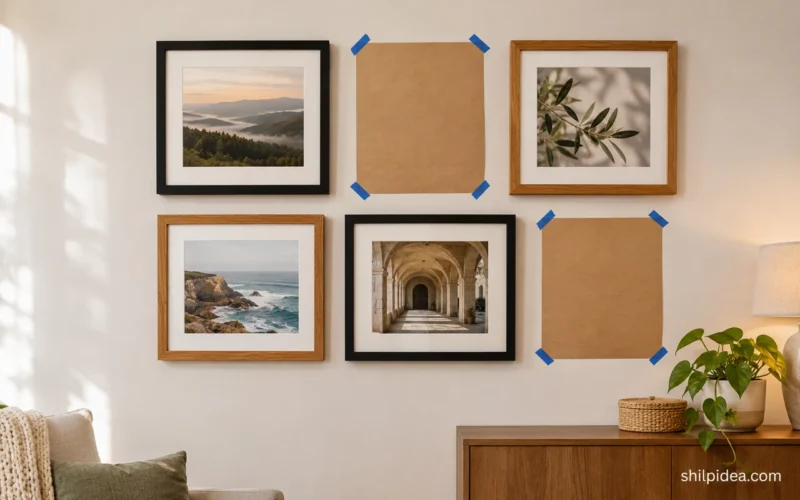
- Staircase Photo Walls for Family Memories
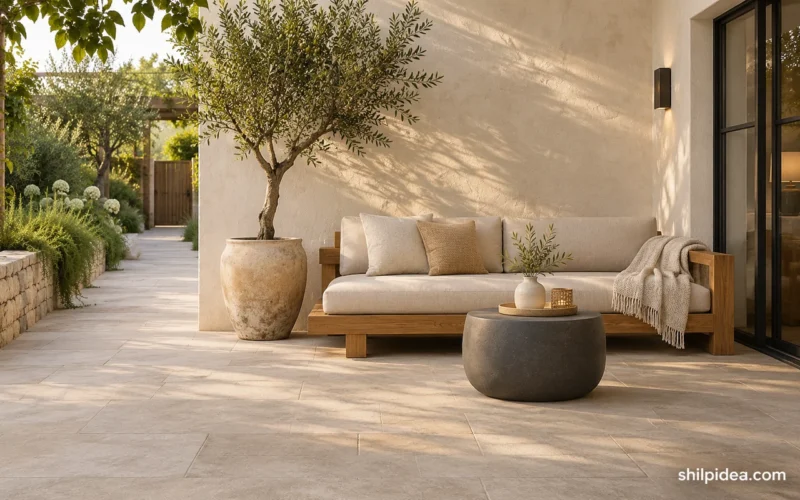
- Minimalist Patio Layouts with Clean Lines
Which combination would you try with your floor? Tell us in the comments what kind of gray you have and which room you’re planning to update.




















0 Comments