19 Winter Entryway Storage Ideas for Boots, Coats and Scarves
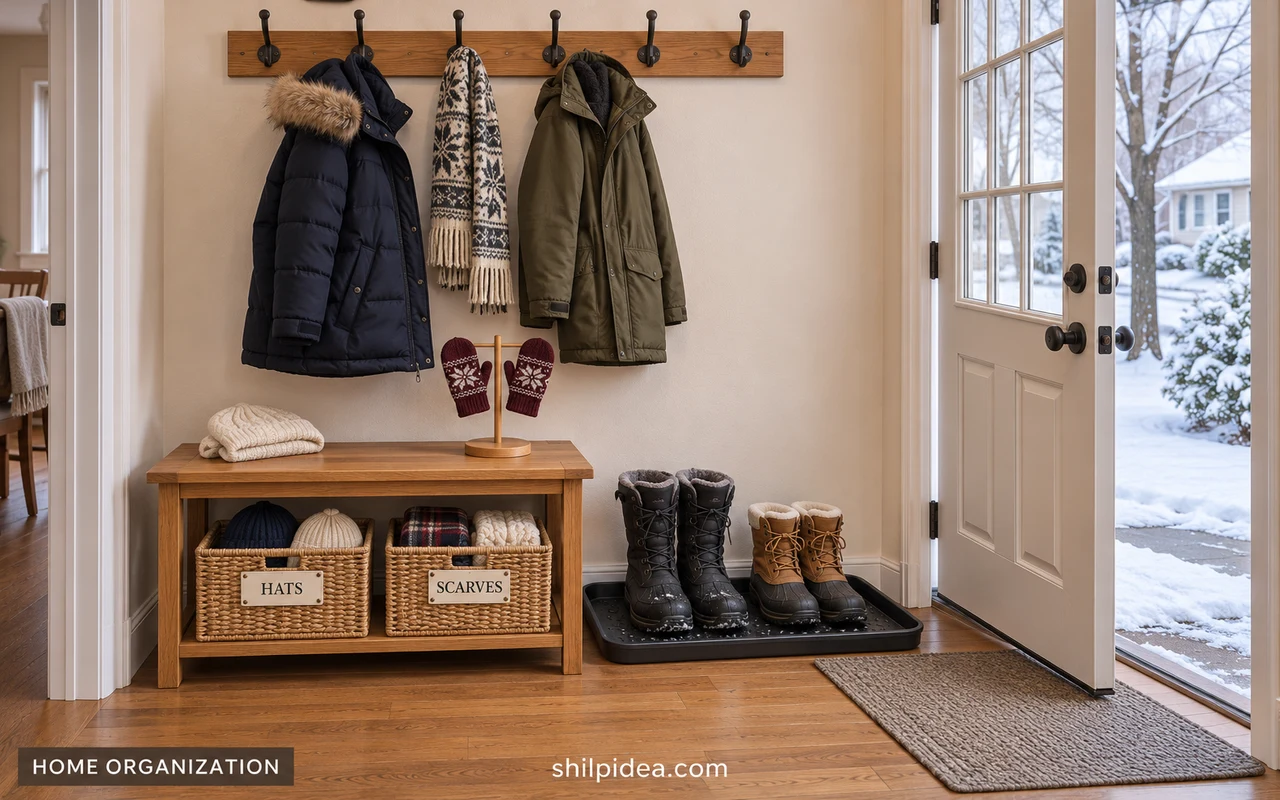
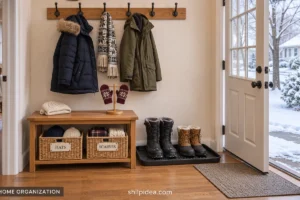
Winter gear takes up more room than a light jacket and a pair of shoes. A useful entryway gives wet boots somewhere to land, coats somewhere to hang and small accessories somewhere to stay together.
If the entrance itself is tight, start with our small corner entryway layouts, then add the winter storage that fits.
These 19 creator projects show different ways to use floor, wall and closet space. Some are drying stations and others hold dry belongings; keeping those jobs separate makes the ideas easier to adapt.
1. A Removable Boot Tray Inside a Wooden Frame
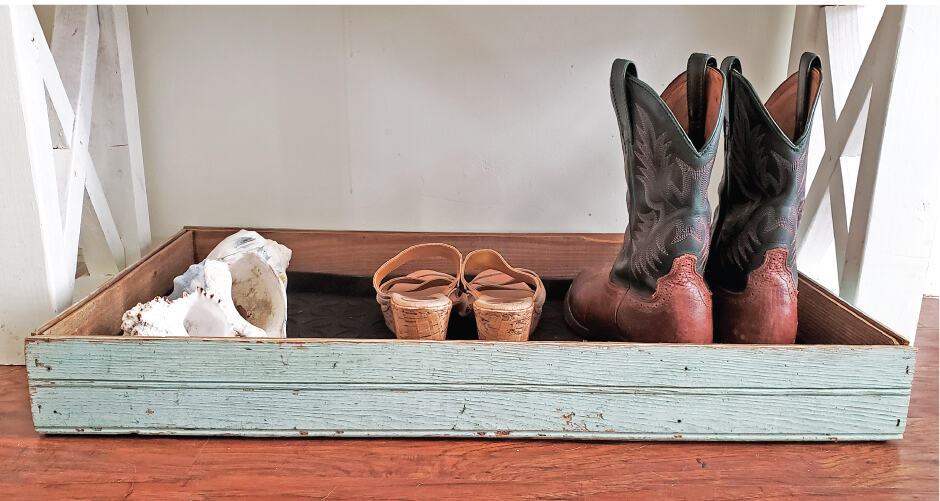
A wooden surround can help a practical boot tray fit the look of the room without asking wood to contain melting snow by itself. Sand Dollar Lane places a plastic tray inside the finished frame. Keep that removable liner as the working surface, and lift it out for cleaning. Measure your largest boots before deciding how wide the surround should be.
See the original project: A Removable Boot Tray Inside a Wooden Frame by Sand Dollar Lane.
2. A Raised Rack Above a Silicone Drip Mat

A rack above a removable mat separates the boot soles from collected moisture. Dunn Lumber’s project adapts a dish-drying rack inside a small wooden frame, keeping the setup compact. Check the rack’s spacing against the shoes you actually use, especially small children’s boots. Empty the mat regularly rather than expecting a drying station to manage an unlimited amount of slush.
See the original project: A Raised Rack Above a Silicone Drip Mat by Dunn Lumber / Todd Dermody.
3. A Pebble-Filled Tray Near the Door

Smooth pebbles add texture to a waterproof tray and create a place for wet boot soles above the bottom surface. This example gives a small entrance one obvious footwear landing zone. Leave enough raised edge to contain water, and make sure the tray stays flat and steady. Pebbles also need cleaning, so choose a size of setup you can comfortably lift and maintain.
See the original project: A Pebble-Filled Tray Near the Door by Rambling Renovators.
4. A Wall-Mounted Peg Rack for Boots
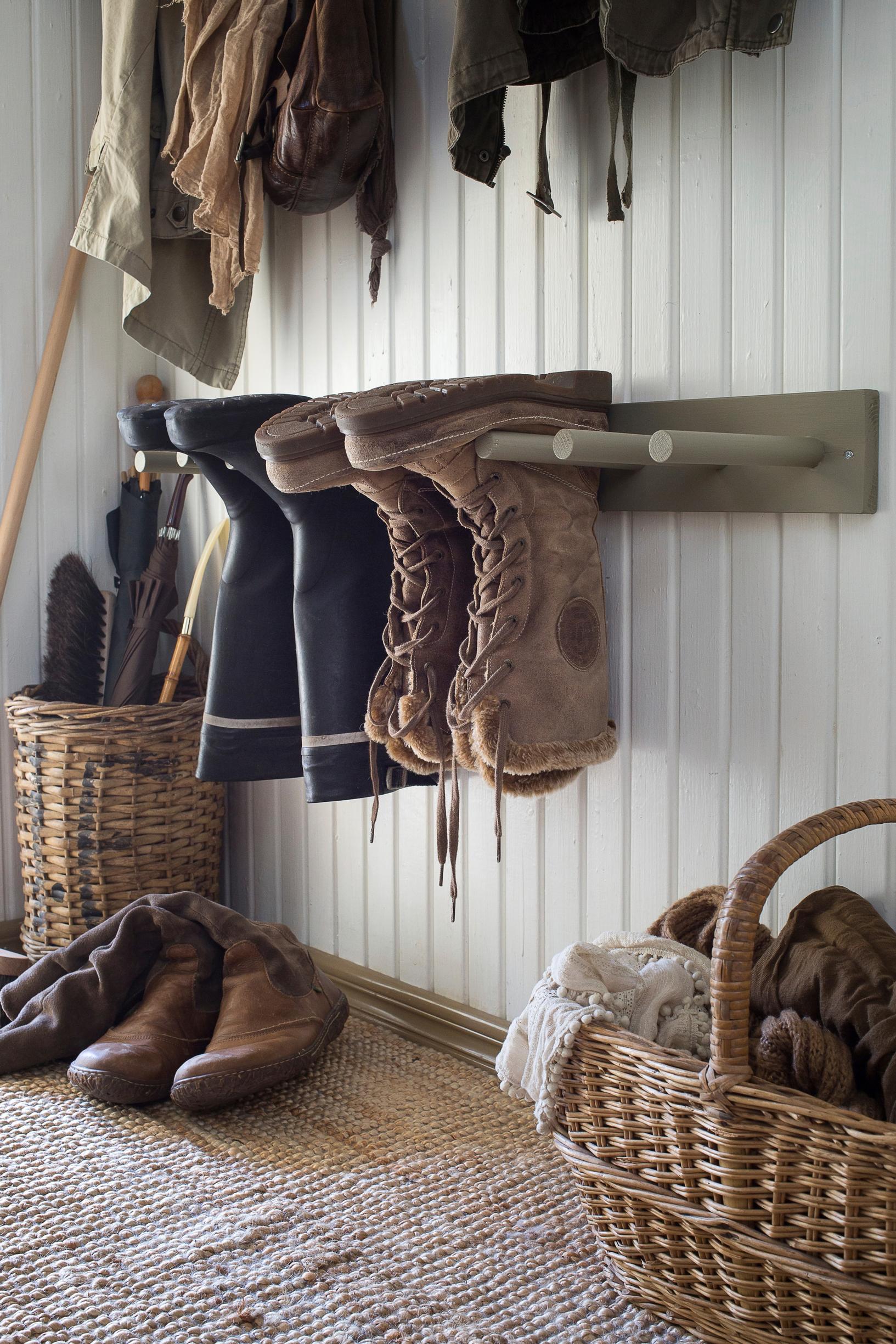
A wall rack can lift boots away from a narrow floor area while keeping pairs together. Maria Meder’s design uses wooden pegs to support the openings, with the boots hanging upside down. Match the peg spacing and mounting height to your footwear rather than treating every boot as the same size. Put a suitable drip-catching surface underneath if the boots arrive wet.
See the original project: A Wall-Mounted Peg Rack for Boots by Maria Meder / Kotona.
5. A Ladder Adapted into Vertical Boot Storage
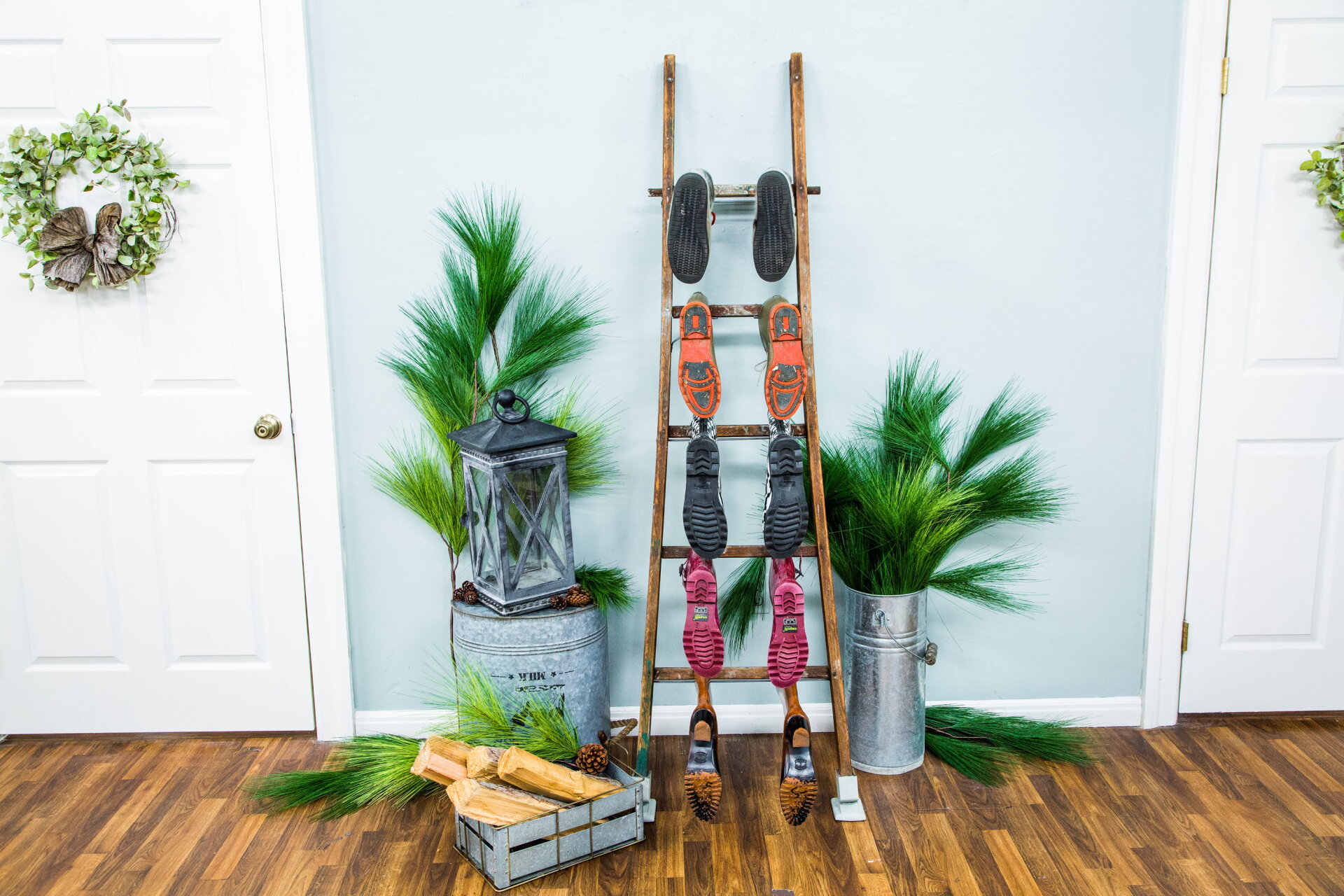
A boot ladder uses height for several pairs instead of spreading them along the wall at floor level. The dowels support inverted boots on different rungs, giving each pair a defined spot. This suits a mudroom corner with enough depth for the footwear to project outward. Secure the ladder appropriately and keep the door swing and main walking path completely clear.
See the original project: A Ladder Adapted into Vertical Boot Storage by Hallmark / Ken Wingard.
6. A Narrow Column of Fabric Storage Pockets

A hanging column of soft pockets makes use of a narrow wall strip for hats and gloves. Josefin Hjortronblad links small fabric bags together with wooden rails, creating a vertical organizer rather than a wide row of baskets. Keep the most-used pockets within reach. Store dry accessories here; very wet mittens need an open drying spot before they are put away.
See the original project: A Narrow Column of Fabric Storage Pockets by Josefin Hjortronblad / IKEA Hackers.
7. A Sewn Pocket Organizer on the Closet Door

A door-mounted fabric organizer gives small accessories their own compartments without taking up the closet floor. Condo Blues makes a custom version with pockets sized for the household’s winter items. Check that the door still closes with the organizer filled, and keep heavy objects out of shallow pockets. Larger scarves may need a deeper compartment than a pair of gloves.
See the original project: A Sewn Pocket Organizer on the Closet Door by Condo Blues.
8. One Labeled Bin Above Each Person’s Coat

A personal bin can keep hats, gloves and scarves from becoming one shared pile. Chas places labeled containers above the coat rail, connecting the accessories with the person’s jacket below. Use the wall’s load capacity and the container’s weight to choose appropriate fixings. Leave the bin easy to remove for cleaning, and avoid packing damp items tightly into it.
See the original project: One Labeled Bin Above Each Person’s Coat by Chas’ Crazy Creations.
9. High and Low Hooks for a Family Entrance

Two hook heights help adults and children use the same wall without putting everything on the floor. The Tidy Dad’s board-and-batten arrangement gives each family member a place to hang a coat. Leave enough space between hooks for thick winter sleeves, not just thin jackets. Our small corner entryway ideas offer related layouts for tighter entrances.
See the original project: High and Low Hooks for a Family Entrance by The Tidy Dad.
10. A Freestanding Mitten Tree for Damp Accessories

A small mitten tree gives gloves and hats somewhere open to rest after outdoor play. The photo shows it beside the footwear zone, so wet pieces do not have to disappear immediately into a basket. Choose a stable stand and leave space around the arms for airflow. Follow the care label for delicate items, and let everything dry before moving it into closed storage.
See the original project: A Freestanding Mitten Tree for Damp Accessories by The Tidy Dad.
11. A Repurposed Wall Rack for Hats and Scarves
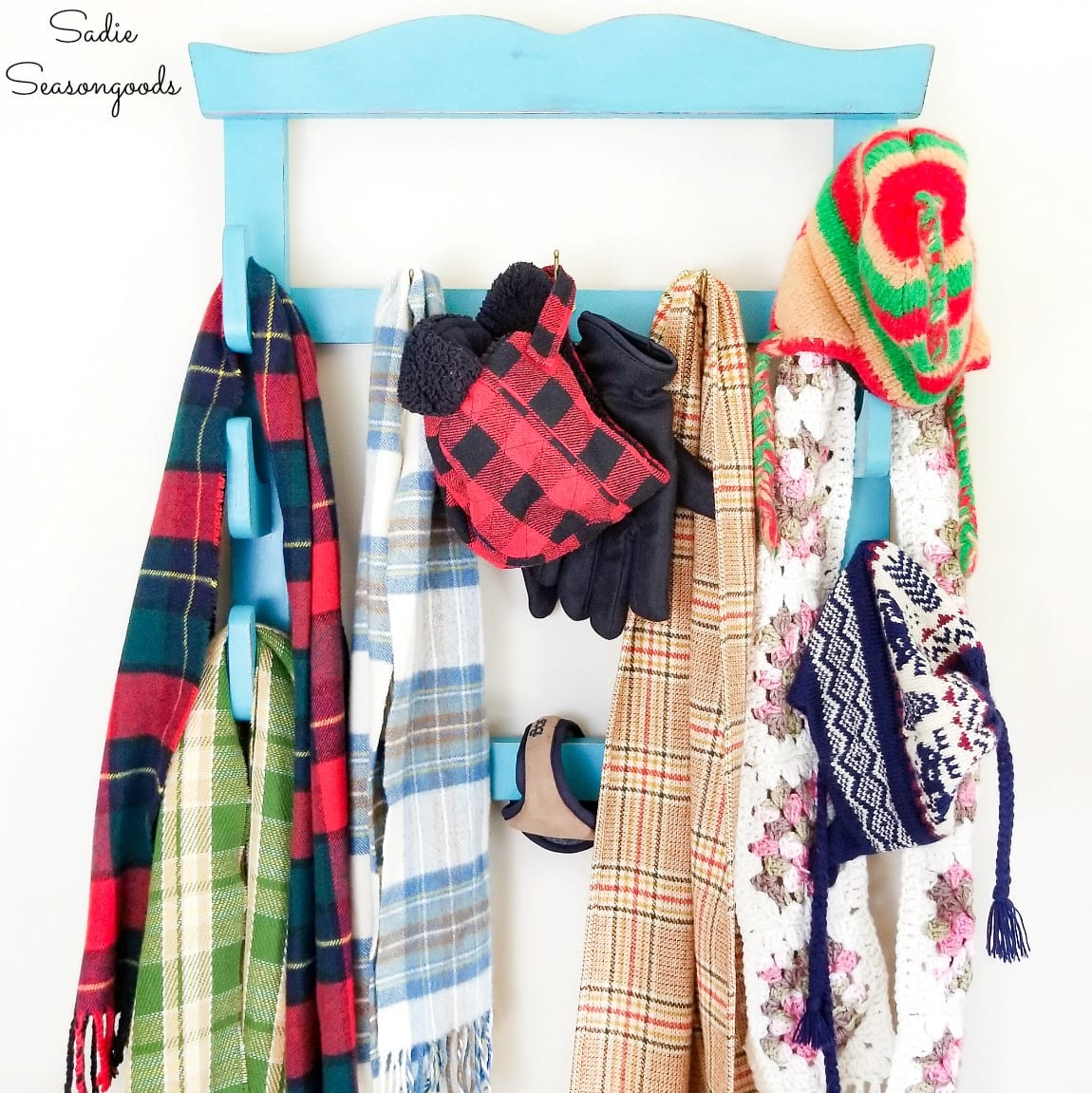
A thrifted rack with projecting arms can hold several winter accessories without needing a deep shelf. Sadie Seasongoods adds hooks to a former display rack and gives it a fresh finish. The useful idea is the combination of arms for draping and small hooks for hanging. Check the condition and wall fixings before trusting a secondhand piece with everyday coats or bags.
See the original project: A Repurposed Wall Rack for Hats and Scarves by Sadie Seasongoods / Sarah Ramberg.
12. A Hanger with Rings for Individual Scarves
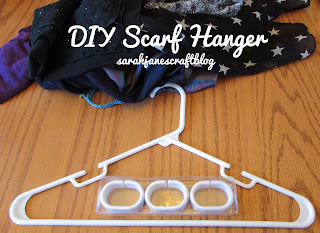
A ring hanger separates scarves so the one you want is easier to find. Sarah Jane’s version uses shower-curtain rings on an ordinary hanger, a compact solution inside the coat closet. The creator notes that loose rings can slide and make the hanger tilt. Keep the load balanced, choose smooth rings that will not snag knits, and avoid overfilling the hanger.
See the original project: A Hanger with Rings for Individual Scarves by Sarah Jane’s Craft Blog.
13. An Overhead Clip Rack for Small Winter Pieces

A hanging ring with clips can hold several small pieces without occupying a bench or shelf. Forest House Farm repurposes a bicycle rim with hanging clothespins for gloves, mittens and socks. In an entryway adaptation, position the rack where it will not obstruct anyone’s head or the doorway. Use secure overhead mounting and keep it well away from heaters and other heat sources.
See the original project: An Overhead Clip Rack for Small Winter Pieces by Forest House Farm.
14. A Removable Dowel Rack for Mittens

Upright dowels keep individual mittens open and separate while they dry. Chris Kauffman’s example sits at a window near the entrance and can be removed when it is no longer needed. It is a different approach from clipping the cuffs, especially for heavier mittens. Use smooth, rounded ends and a secure base so the rack does not tip when a mitten is pulled off.
See the original project: A Removable Dowel Rack for Mittens by Chris Kauffman / White Wood.
15. Wire Baskets Alongside Wall Hooks
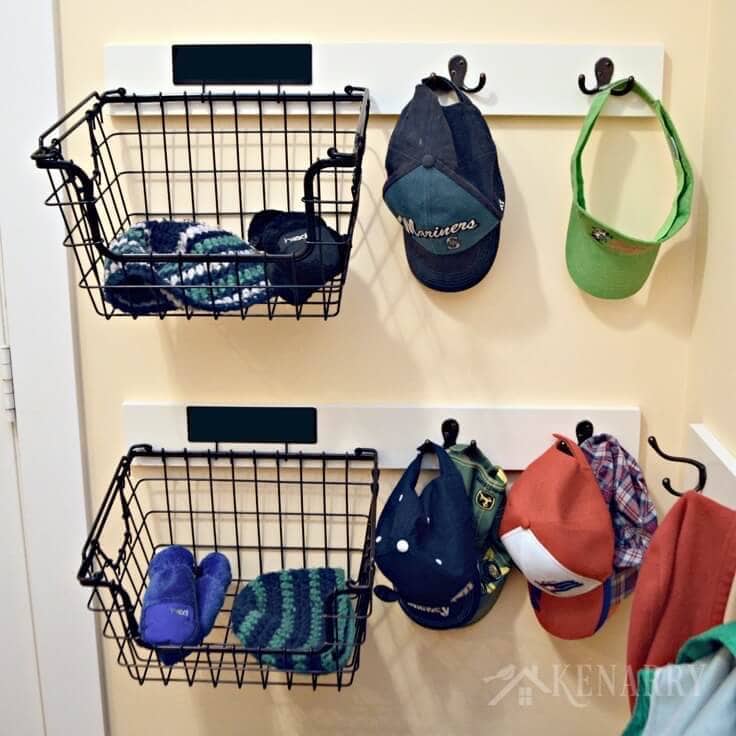
Wire baskets and hooks can share a wall while doing different jobs: hooks hold coats or hats, and baskets contain smaller loose accessories. Kenarry’s example uses two levels to make better use of a slim back hallway. Keep the basket openings reachable and the load modest. For a softer container elsewhere, consider our fabric-covered organizer ideas for dry small items.
See the original project: Wire Baskets Alongside Wall Hooks by Ideas for the Home by Kenarry.
16. A Mudroom Unit with Hooks, Drawers and Upper Storage
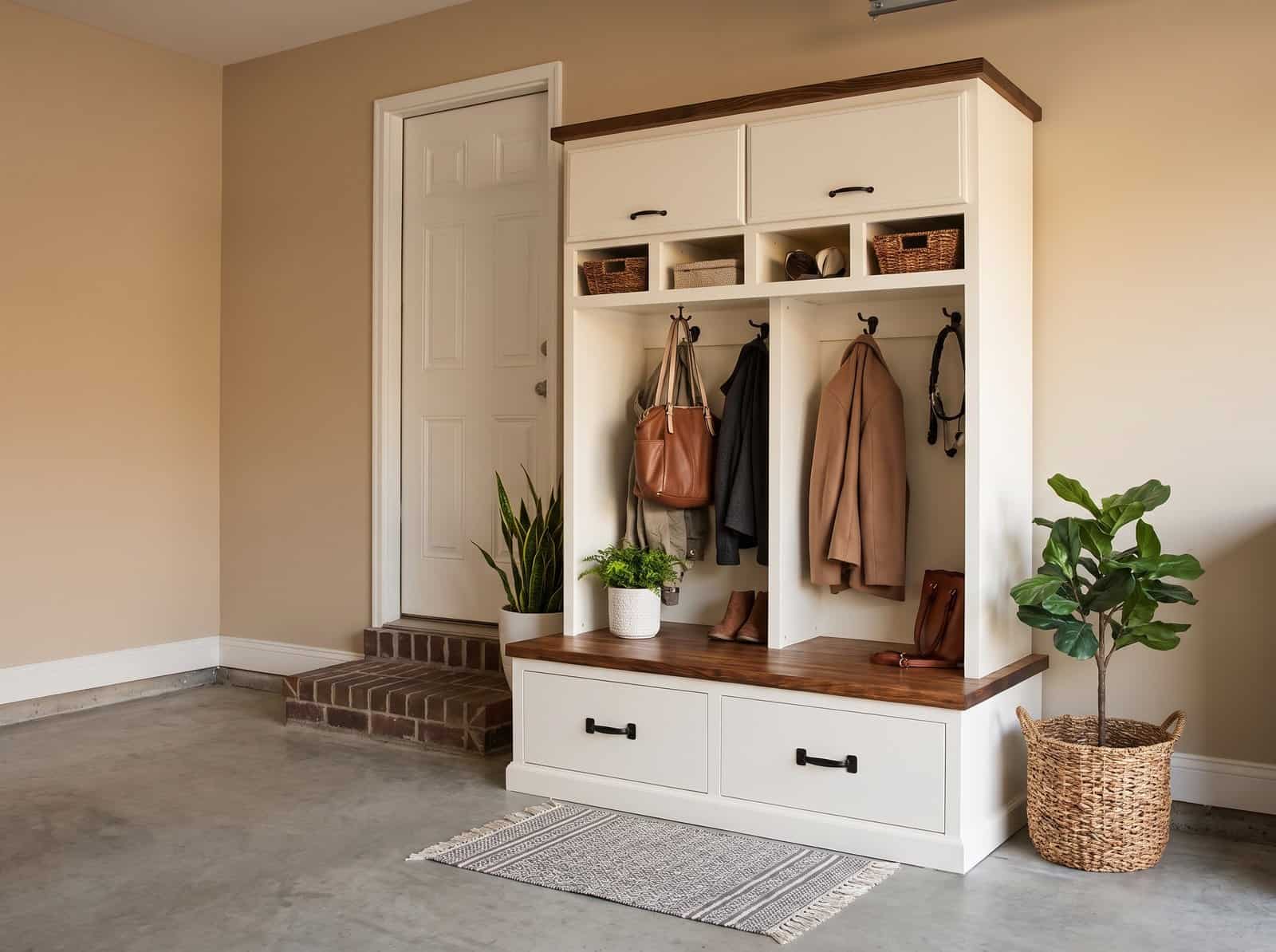
A larger mudroom unit brings hanging space, seating and closed storage into one piece. Rogue Engineer’s design gives frequently used items open bays while drawers and upper cabinets hold other belongings. It is a substantial woodworking project rather than a quick accessory. Measure the available depth before choosing it, anchor tall furniture properly, and keep wet boots on a removable protective surface.
See the original project: A Mudroom Unit with Hooks, Drawers and Upper Storage by Rogue Engineer / Jamison Rantz.
17. A Slim Repurposed Locker for Winter Accessories
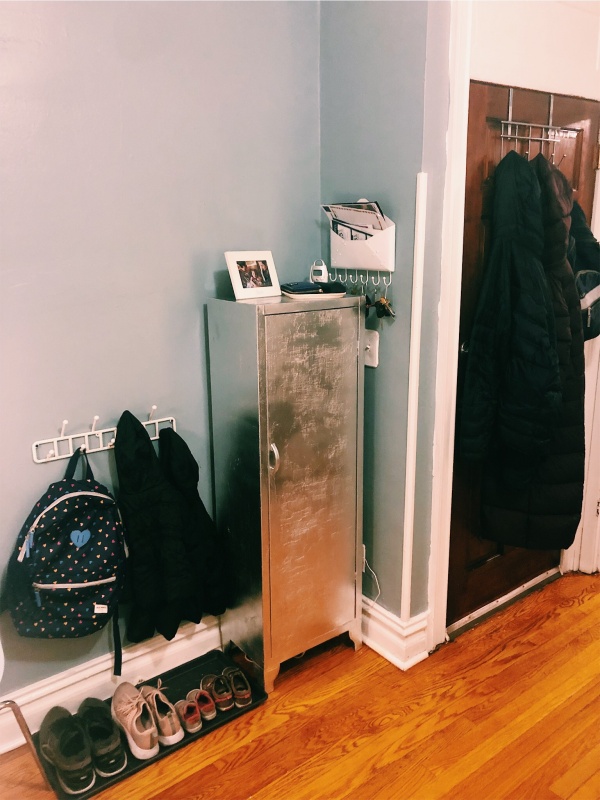
A narrow metal locker can add vertical storage when the front door opens straight into a living space. The Tidy Dad’s apartment example uses a repurposed locker with baskets inside for winter gear. It helps separate accessories from the surrounding hooks and shoe tray. Check that the shelves suit your items, smooth any damaged edges and secure tall storage against tipping.
See the original project: A Slim Repurposed Locker for Winter Accessories by The Tidy Dad.
18. Vertical Shoe Cubbies Inside the Coat Closet

A stack of cubbies uses the height beside hanging coats for dry footwear. Jaime Costiglio’s closet makeover replaces a soft hanging organizer with fixed wooden compartments. Size the openings for the shoes you own; tall winter boots may need a different space. This works best as storage after footwear has dried, with a separate washable landing zone for snowy or muddy arrivals.
See the original project: Vertical Shoe Cubbies Inside the Coat Closet by Jaime Costiglio.
19. A Bench Shelf with Taller Space Underneath

Not every footwear compartment needs to be the same height. A bench shelf can hold shorter dry shoes while the taller space underneath leaves room for baskets or boots. The empty build photo makes this layout easy to see. If you adapt it for winter, protect the lower surface from moisture and leave the seat clear for putting boots on and taking them off.
See the original project: A Bench Shelf with Taller Space Underneath by Jaime Costiglio.
Give Wet Gear and Dry Storage Their Own Places
Choose the first change around the item that causes the biggest pile: boots, coats or small accessories. Keep a clear route through the entrance, check door clearance and use fixings suitable for the wall and load. Once the practical zones work, these storage collections can help you finish the space without filling it with extra furniture.
- Small entryway corners with hooks and shoe storage
- Wooden crate and pallet shelves for storage
- Fabric-covered tubs for small-item organization
- Wall shelf and display ideas
- Cozy minimalist rooms for small homes
Which would make the biggest difference at your door: a boot-drying spot, better coat hooks or a place for all those mittens? Leave a comment with the idea you would try, or share a winter storage trick that already works for your household.
























0 Comments