18 Small Backyard Ideas for Kids to Play and Explore
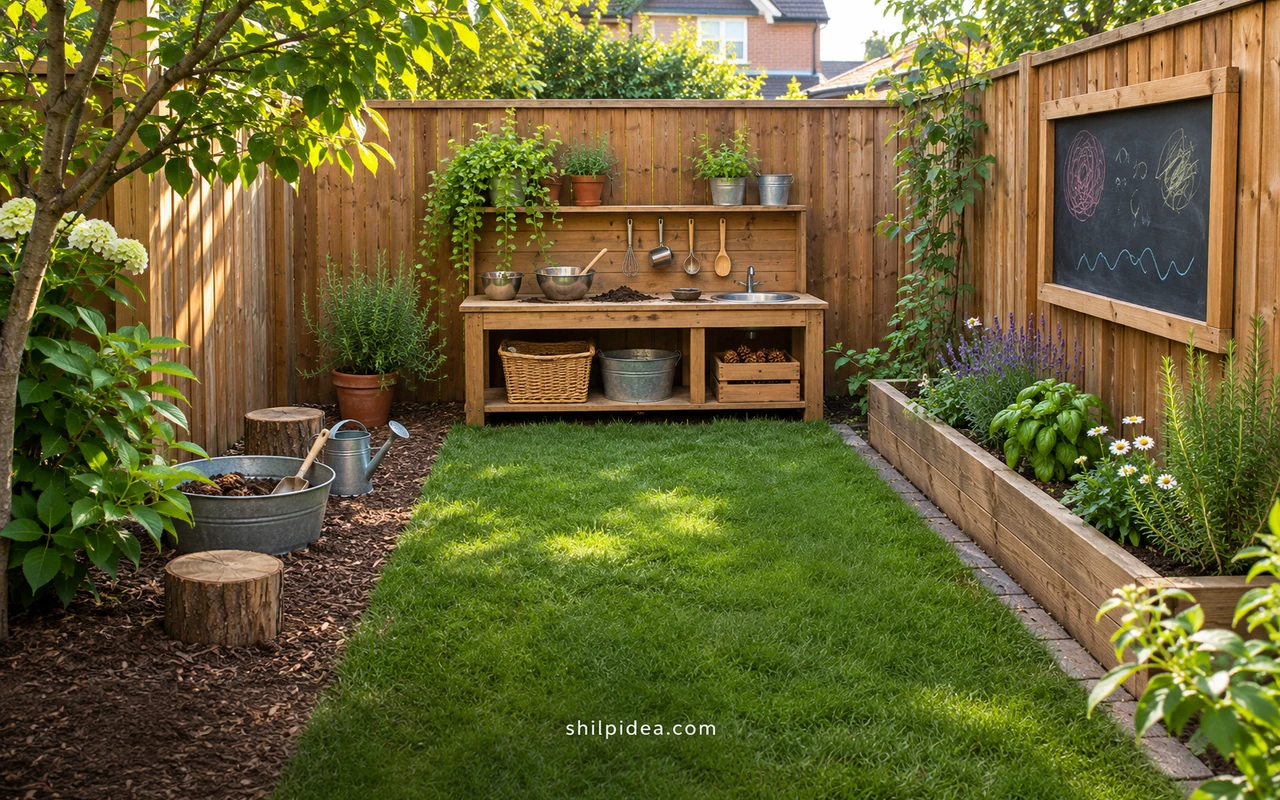
A small backyard can give kids a place to make a mess, try a game, or look after plants. Start with one activity they already enjoy and leave space for everyone to get past it.
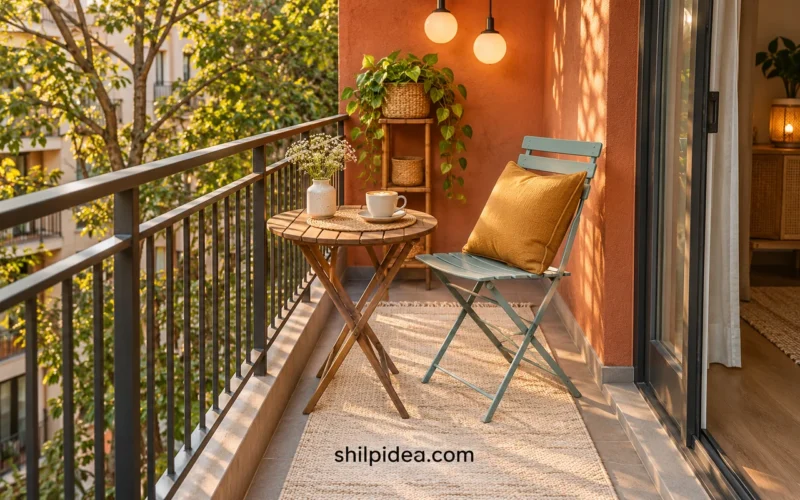
Use the same approach as these small patio layouts and mark the busiest route first. Activities along a fence or on a movable table can leave the middle free.
Think about what will stay outdoors. A planting spot can be as small as a few self-watering bottle planters while a game or an art project can pack away after play.
1. Give a Corner to a Mud Kitchen

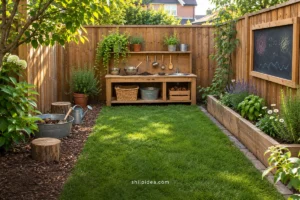
Put a shallow workbench along the side of the yard where children can reach the bowls without standing in the main path. In this project, the sink and pretend stovetop share a single apron, with space below for supplies. One small mixing bowl and a tray to carry the tools back inside are plenty for a narrow yard. egg carton cups can serve as dry pretend dishes and go into recycling after play.
2. Turn the Fence Into an Outdoor Chalkboard

A chalkboard makes use of a fence line that is too narrow for a table. Hang or mount a board made for outdoor use where a child can reach the drawing area from the ground. Give the chalk one small place to live nearby. A clear floor in front makes it easier for two children to draw side by side.
3. Choose a Sandbox With Foldaway Seats

Built-in benches make the edge of a sandbox useful and can fold down across the sand between play sessions. The square footprint suits an awkward corner if there is enough clearance for an adult to operate the cover. Mark the outline on the ground first so you can check the route past it and where the open benches will sit.
4. Make a Water Wall Along One Edge
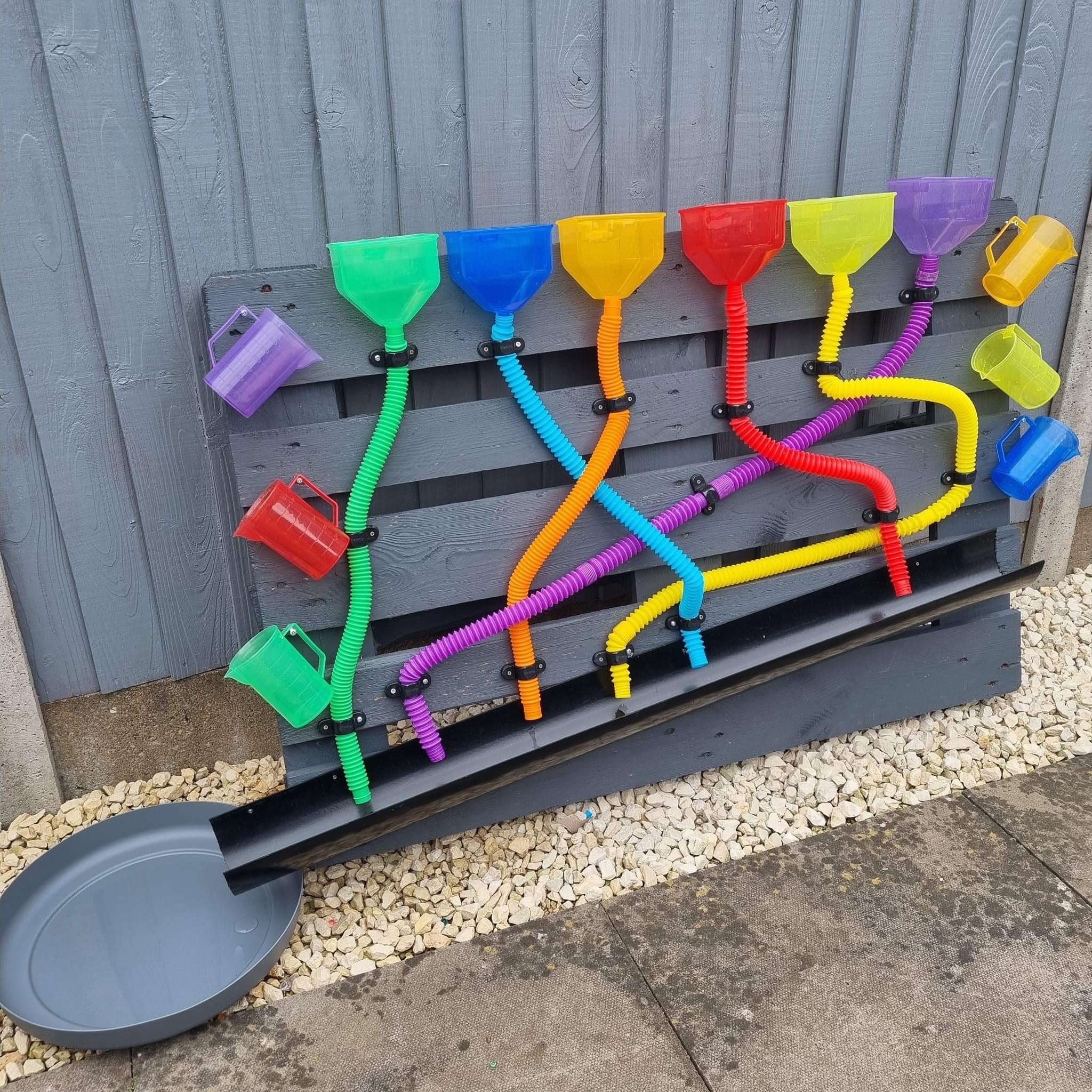
A water wall sends a small pour down several colored routes and uses very little ground space. Put the collection tray underneath the last outlet so children can watch where the water goes. Stay beside young children while they play, and empty the tray and any buckets as soon as play ends. Let the tray dry before storing it.
5. Set Aside a Reachable Planting Bed

Give children a garden bed narrow enough to reach the plants from a path. The low sides in this example let several hands work together. Put an easy job such as watering or filling a small trowel near the closest edge. Leave an adult to check which plants are suitable for the children and conditions in the yard. Use an extra bottle planter project for a plant you want to keep apart from the main bed.
6. Make a Route With Hopscotch Pavers

A short line of numbered pavers makes a game out of a strip that is too little for a separate play area. Start with where the last jump will land and work backward. Use a stable, even surface and keep the jumping route away from stairs, fence posts and furniture. Test the spacing before settling on the final number of squares.
7. Keep a Beanbag Board Ready to Bring Out
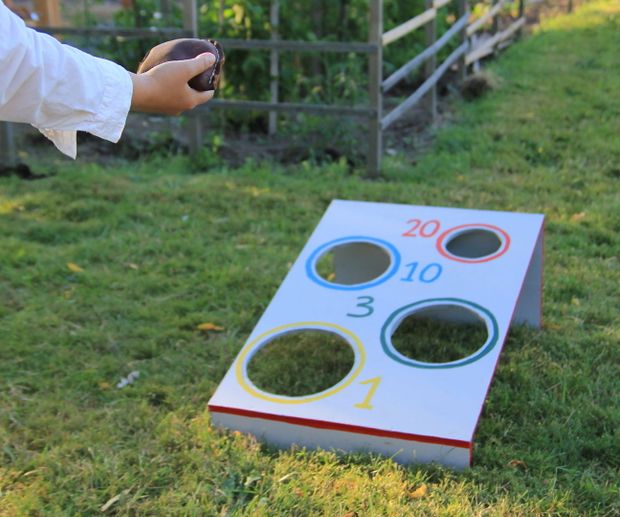
A portable toss board gives the open part of the yard a purpose for an afternoon and can go back in storage afterward. Place a chalk mark or flat marker on the ground for the throw line. If younger and older children want to play together, use two distances so each child has a target they can reach.
8. Turn a Low Window Into a Puppet Stage

A child-height window makes a puppet stage feel like its own activity even where the audience is just two people on a rug. Set the window so performers have room behind it and spectators leave the path clear. A tabletop stage offers the same play idea in a tighter yard. Use a stable stage that suits the children’s ages.
9. Pair Sand and Water in One Small Table
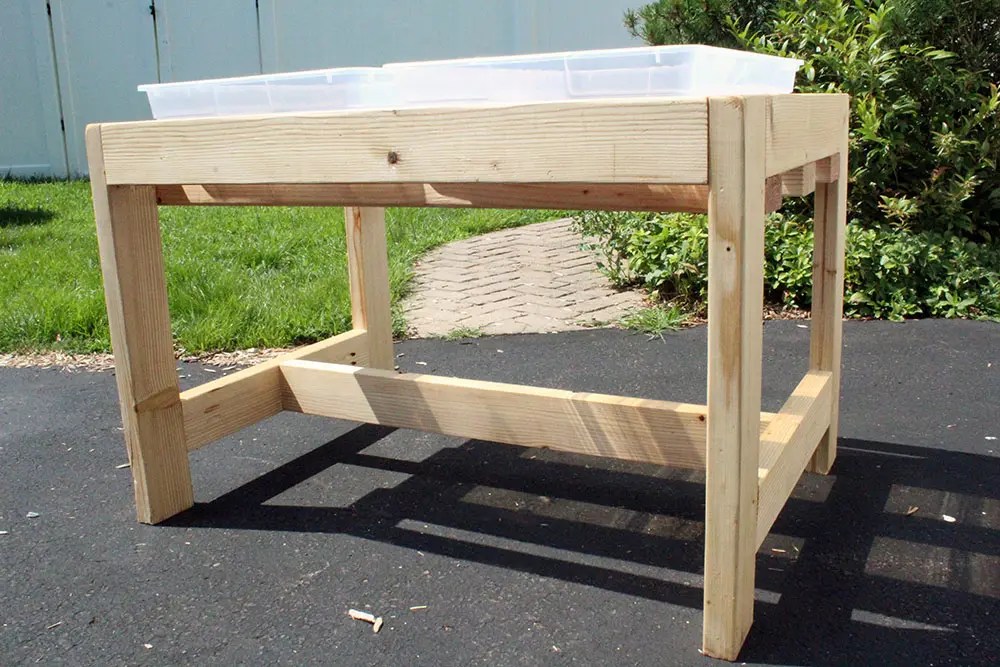
Two removable trays let you offer sand and water at the same station. Keep the table where an adult can sit close to it and a child can play without crossing a busy part of the yard. A few tools serve both activities, so a little basket will do. Empty any water trays right after supervised play.
10. Build a Tiny Garden in One Bowl

A wide pot gives a tiny garden all the space it needs. Choose a focal point such as a miniature house and let the child make a route to it from one side. Keep the bowl where you can reach it to water the plants. For children who mouth objects, set aside small pebbles and accessories.
11. Make a Small Frame for Nature Art

A small weaving frame makes a good one-afternoon activity at a garden table. Children can tuck long grass, leaves or other adult-approved pieces through the frame and change the arrangement as they go. Work together to choose a few fallen pieces you recognize. Photograph the finished frame before putting the garden material back outside. On rainy days, layered paper flowers give kids another way to experiment with plant shapes.
12. Give a Playhouse Its Own Small Footprint

A compact playhouse can define the edge of a small yard and leave the middle open. The project photo shows how a simple roof gives the play area a clear footprint. Face the entrance toward a spot where an adult can see it, and measure the space around the door before choosing a design. A ground-level playhouse suits a yard without room for stairs.
13. Draw a Tic-Tac-Toe Grid on the Patio

A simple tic-tac-toe grid gives two children something to play without setting up a big board. Use washable sidewalk chalk on a suitable surface and give each player a different symbol. Draw the first grid just off the route through the yard. If you want to use a patio door nearby, put the grid where the door still opens freely.
14. Make a Movie Corner That Packs Away

Make a small movie corner with furniture you can pull away from the wall after the show. Use a removable screen and put a low seat or cushion where children can see it without blocking the path back to the door. Coil the equipment out of the walkway when the movie ends.
15. Use a Climbing Panel as Part of a Play Set

A climbing panel built into a larger frame shares space with the rest of a play set, but its usable footprint includes space around it. If you have room for a play set, compare age limits, clearances and surfacing with the manufacturer’s instructions and home playground guidance. Choose a single ground-level activity if those clearances use up the whole yard.
16. Put a Sound Station Against the Fence

A sound wall puts a few things to tap in one place and can leave the ground below it free. Choose a few sturdy, smooth pieces with different sounds and have an adult secure them to an appropriate surface. Try the station at the quietest useful spot in the yard so children can play without taking over the seating area.
17. Make a Low Balance Route Beside the Lawn

A low balance route gives children a place to slow down and practice placing one foot in front of the other. Keep the approach and exit clear so nobody has to step over other toys to reach the beam. For a tight yard, test the layout first with a line of sidewalk chalk, which needs no equipment or storage.
18. Give Toy Cars a Narrow Roadbed

A road for small toy cars makes a strip of yard useful without creating a path children have to run down. Keep the track at an edge that can still be reached without stepping into a planted bed. Add a short loop or pullout so two children can play without having to reach across each other all the time.
Check How the Yard Will Work During Play
Walk the route to the door with the toys in place. If you plan to use a raised play structure, check the manufacturer’s age ranges and setup requirements and read the CPSC’s home playground handbook. For water play, follow the American Academy of Pediatrics’ water safety guidance and empty containers as soon as the activity ends.
Leave Room for the Next Backyard Activity
Choose a spot where you can see the activity and where children can reach it without crossing a busy path. Then decide what needs to stay put and what you can carry in at night. The projects below give you ways to use a small planting area, bring a craft outdoors, or leave room for seating near play.
- Plan a Calm Patio Layout
- Make a Self-Watering Bottle Planter
- Make Projects With Egg Cartons
- Shape a Layered Paper Bouquet
Which activity would your kids try first, and where would it fit? Share your layout in the comments. If you’ve already made a play spot in a tight yard, tell us what you’re glad you left room for.











0 Comments