25 Calming Blue Kitchen Decor Ideas You Will Love
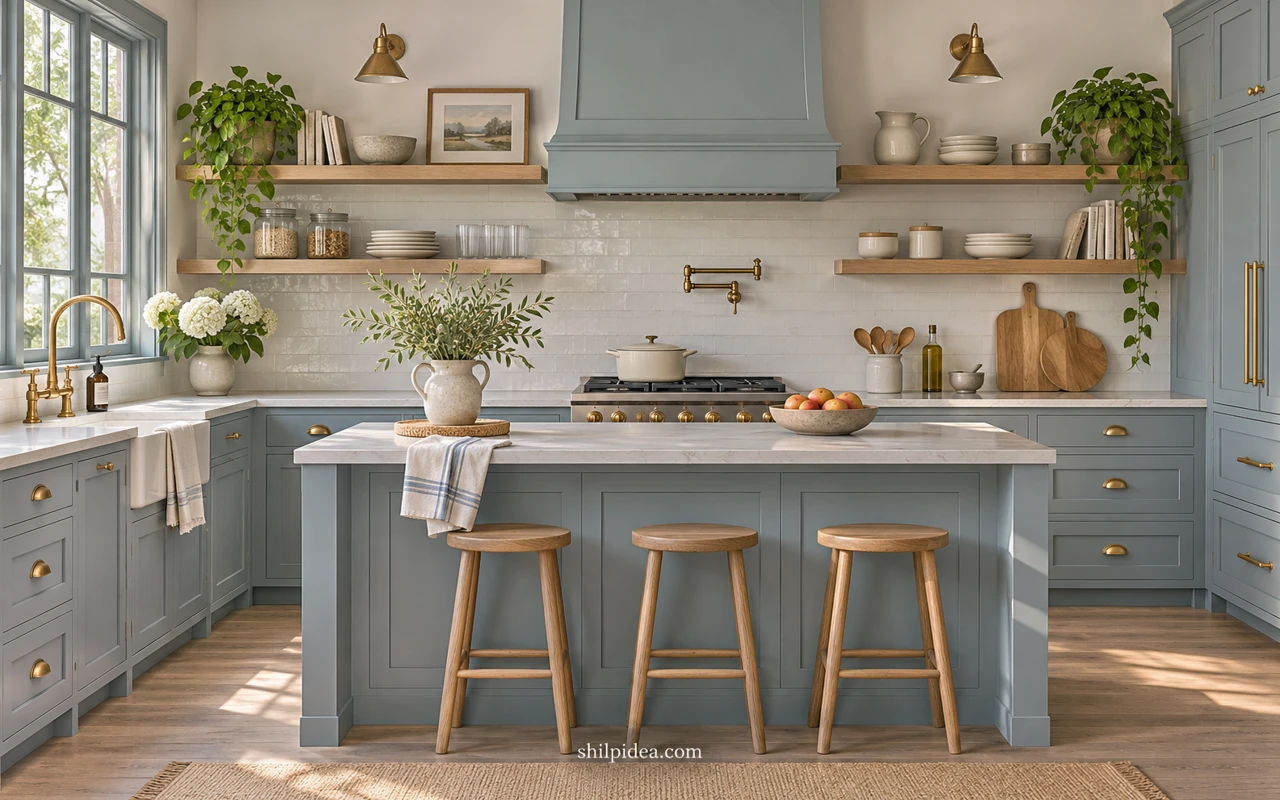
Blue can make a kitchen feel settled when it works with the room’s light and the pieces you already plan to keep. It can be as small as a painted island or as generous as a wall of cupboards.
Start with your wood tones, counter and backsplash. These timeless kitchen ideas offer other ways to combine finishes.
Explore 25 examples with details you can borrow at different scales. If you like the warmth of wood with blue, see these natural wood accents.
1. Keep the Blue on the Island
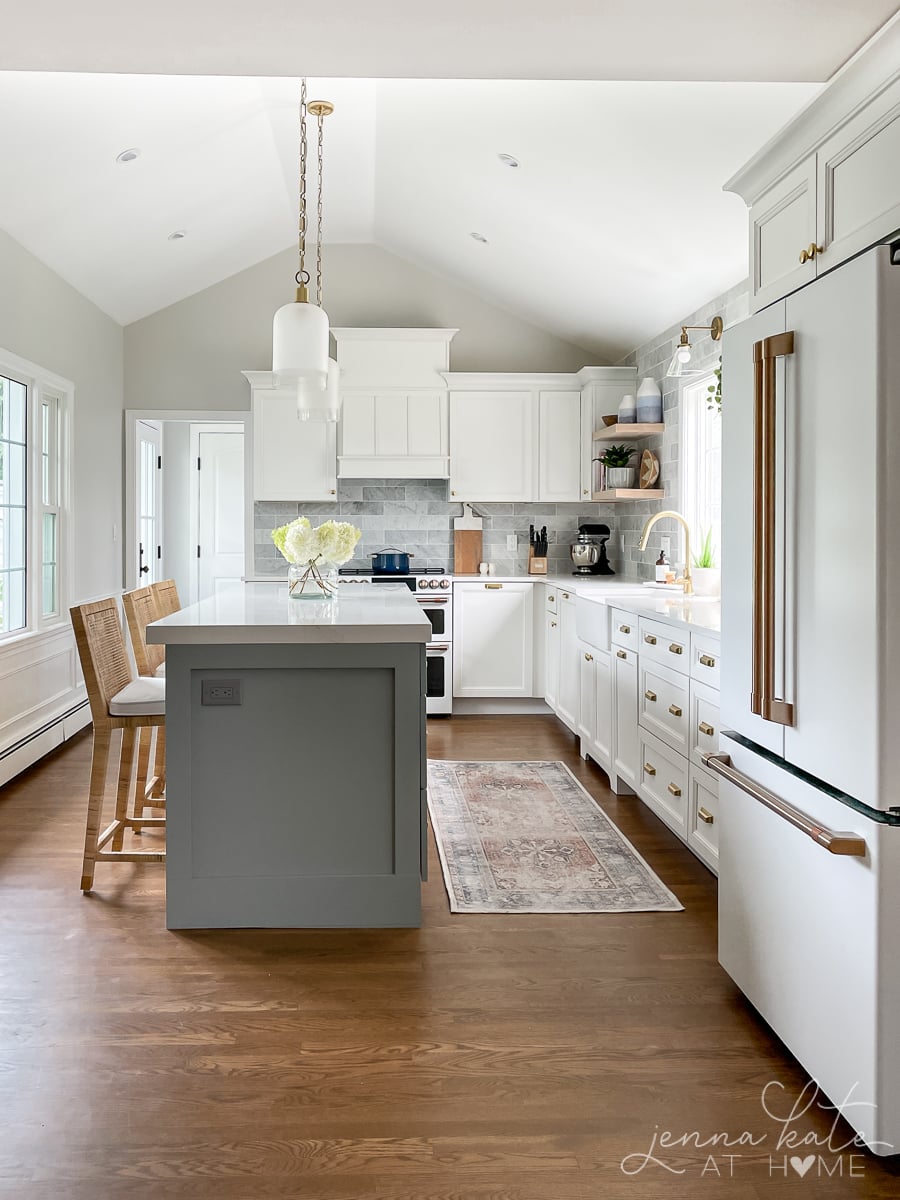
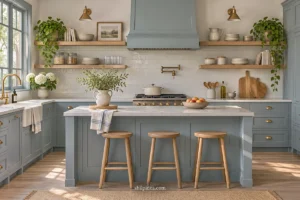
An island is a good place to introduce blue when you already like the cabinets around the walls. The white perimeter and ceiling make the island stand out while the worktop connects it with the rest of the kitchen. Try a blue-gray sample on the island end, where the light and shadows can look different from a painted wall.
2. Carry Island Color Into the Pantry
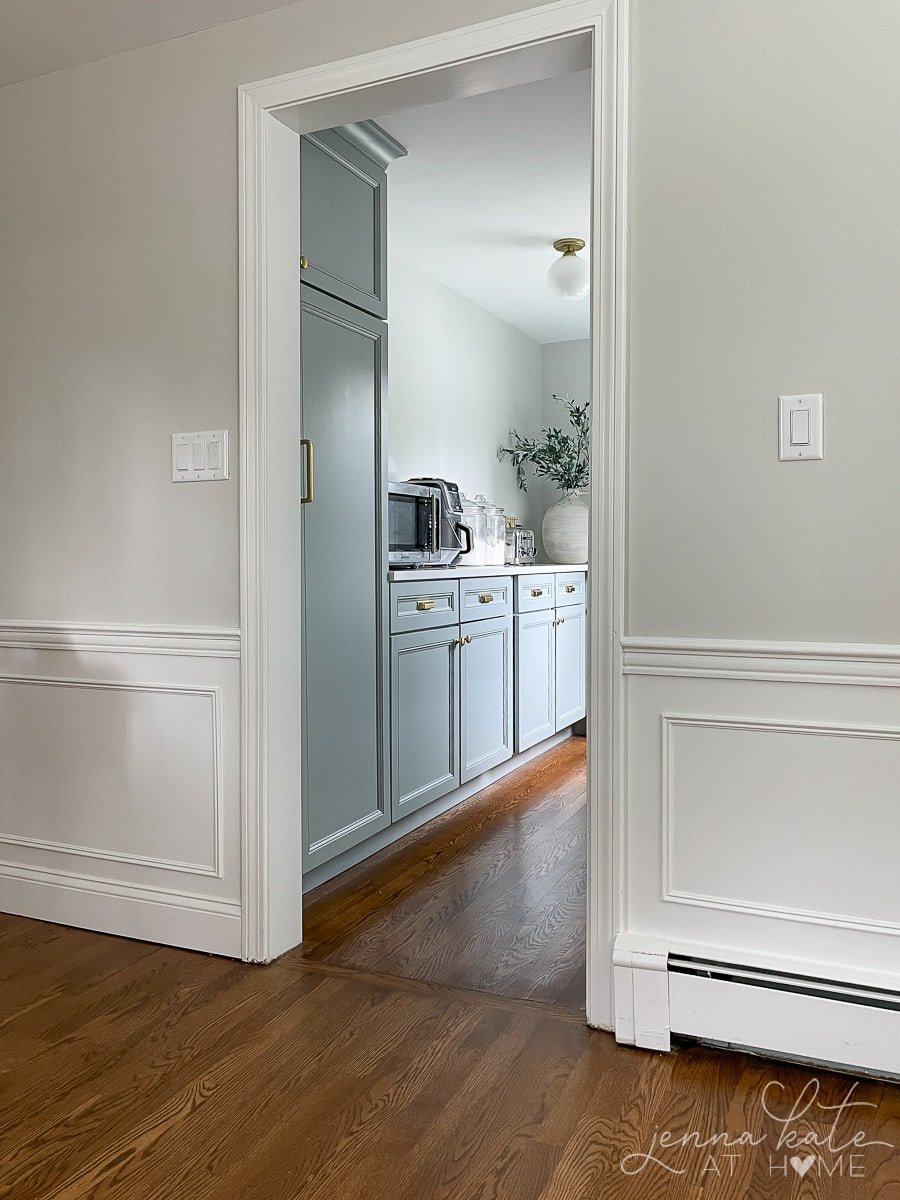
Repeat the island color on a pantry cupboard to give two nearby spaces a connection. Keep the wall surfaces simple, then let a few everyday items show on open shelves. If a full repaint feels too big, try the color on the pantry doors or drawer fronts first. Compare both rooms at the times you use them most.
3. Pair Blue With Tile That Reaches the Ceiling
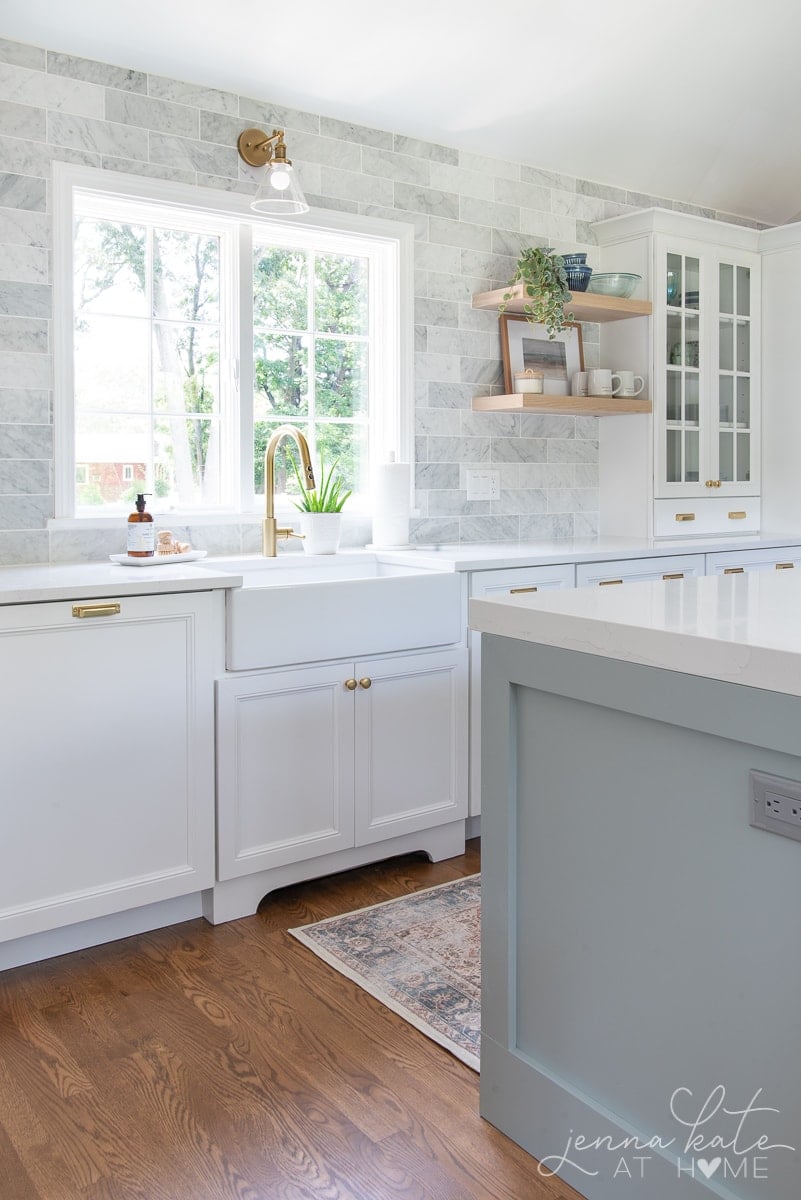
Pale tile extending up to the ceiling can give a nearby blue cabinet or island a quiet backdrop. The small grout lines add rhythm without introducing another large area of color. Test a tile and paint sample beside each other with your usual lights on. Repeat the tile's softer tones in the counter or grout for a more gradual transition.
4. Pick Frosted Glass for the Island Lights
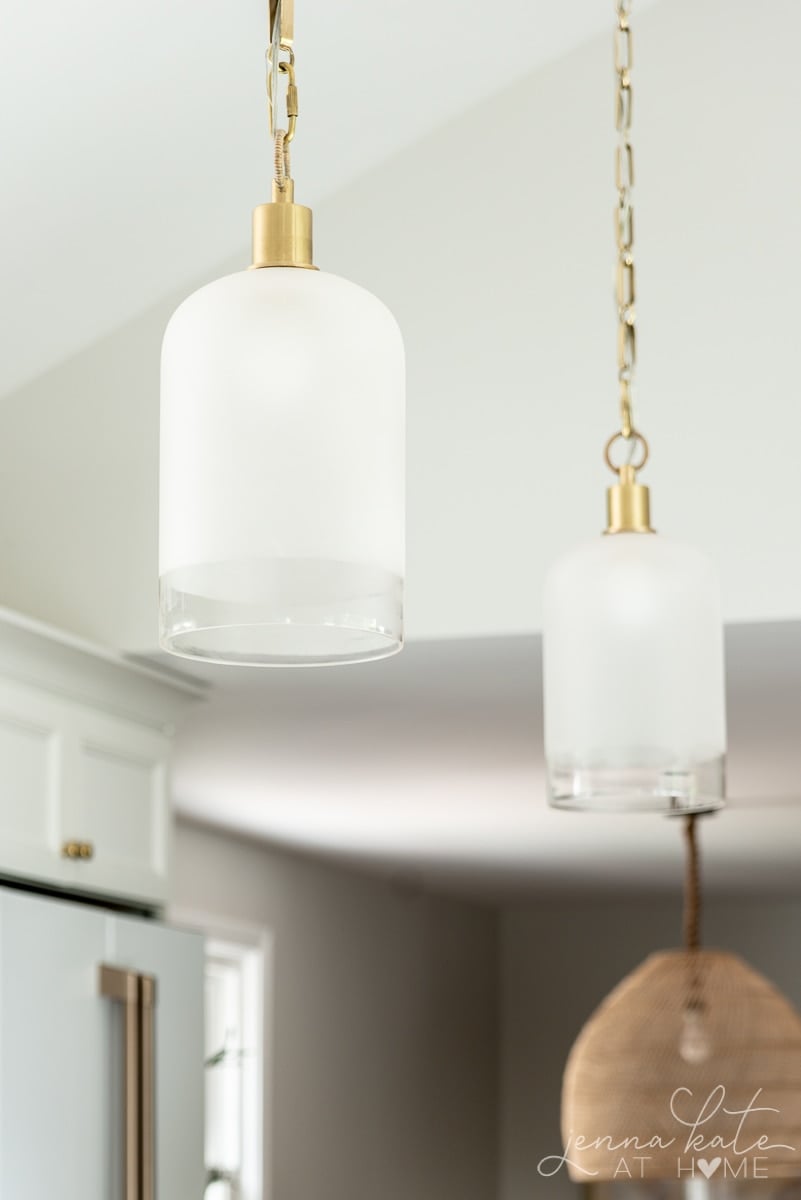
Frosted pendants can soften the look of a kitchen island, especially when dark cabinetry already gives the room a defined outline. Their pale shades repeat the countertop without making a strong pattern. Compare the proportion of the shades with the length of your island. Look at them from the main doorway, seated at the island and while standing at the counter.
5. Run the Same Blue Along the Island and Cooker Wall
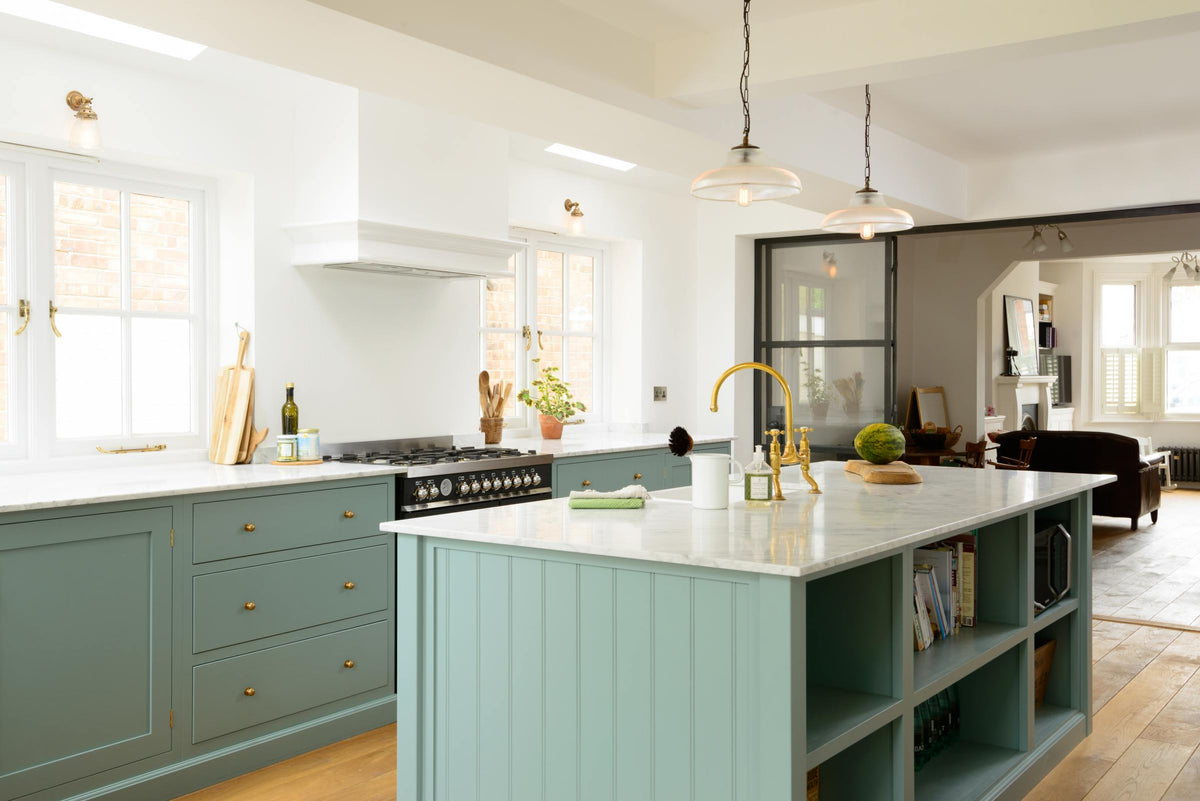
Keeping the same blue on a long cabinet run and on the island gives the room a clear thread. Here, pale counters and the hood interrupt the color so both sides can read separately. Choose one place to change the texture, such as a stone counter or a small wood accent, then compare the cabinet color on both the sunlit and darker sides.
6. Set a Vintage Dresser Beside Tall Blue Cabinets

A freestanding dresser gives a fitted run a useful break. The dresser's shape makes it feel furniture-like even when it sits close to full-height cabinets. Match its scale to the empty wall and use it for things you reach for outside the main cooking zone. A small lamp or a group of bowls can give it a second purpose.
7. Let a Glass Divider Frame the Kitchen
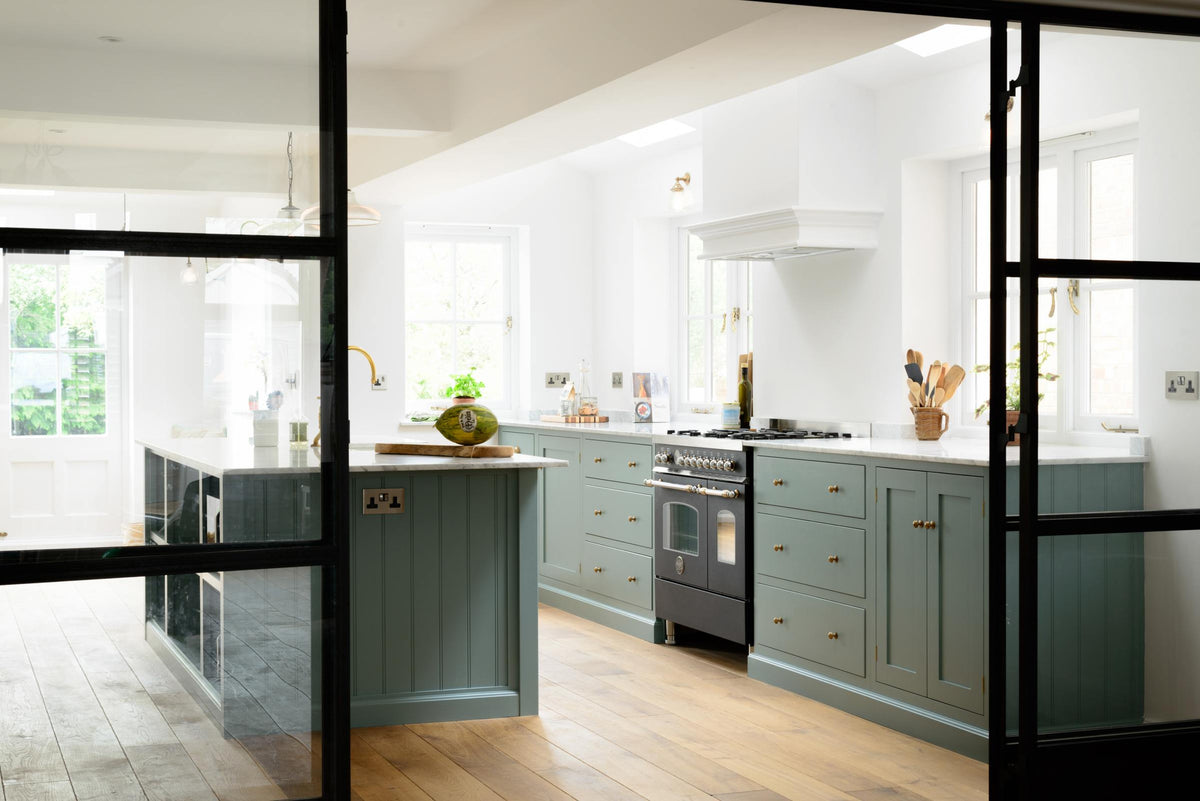
A glass divider can define the kitchen while letting its blue color show from the next room. The dark frame adds shape without filling the view with another solid surface. Bring a cabinet paint card into the adjoining room to see it at a distance. If your room already opens straight into the kitchen, a dark frame around an existing opening can give a similar outline.
8. Give a Fluted Sink a Soft Blue Backdrop
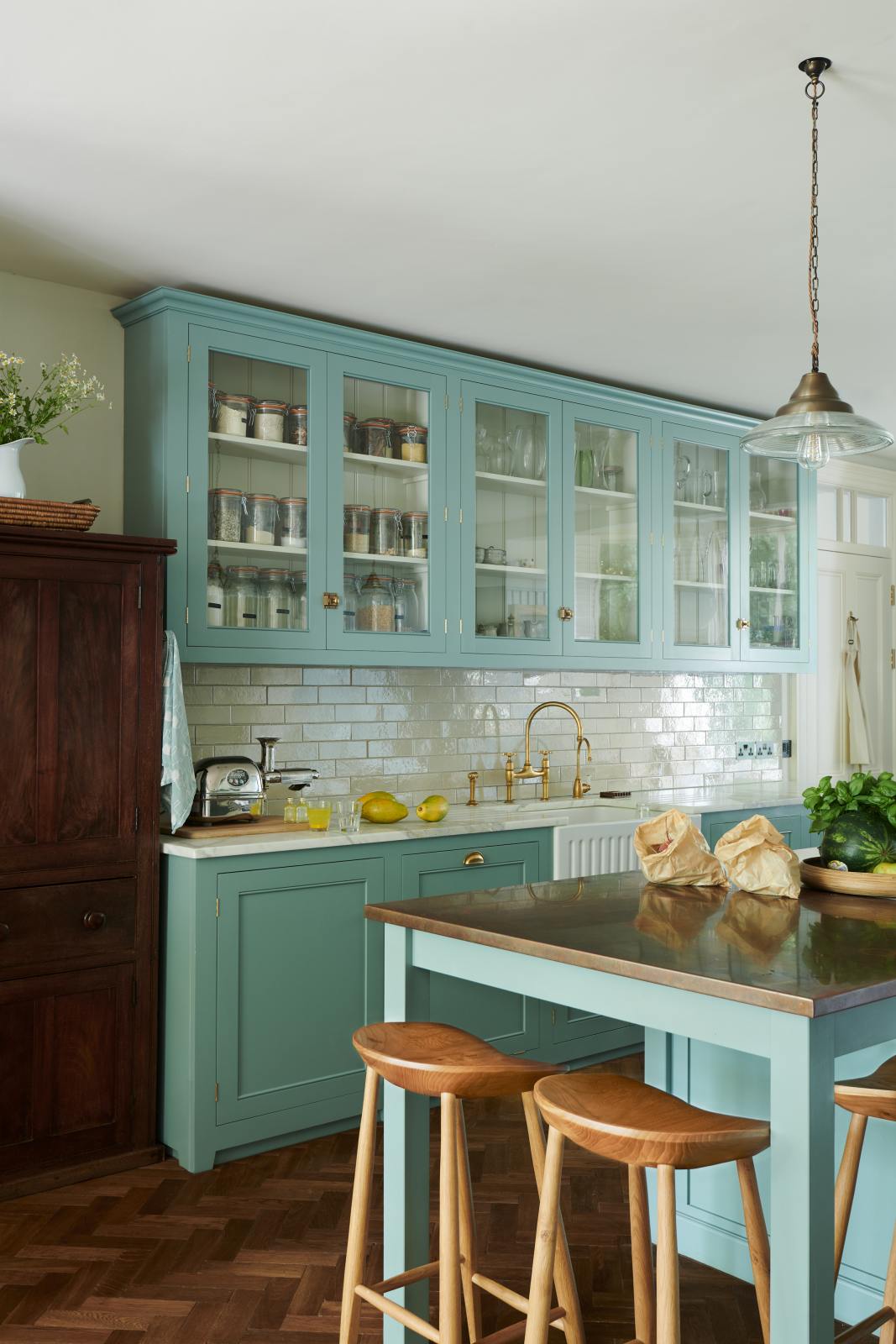
A fluted apron front gives the sink a decorative edge even when the cabinet doors are quiet. Pair a pale sink with muted blue so the narrow ribs remain visible in changing light. If you already have a flat apron front, try the same combination of light sink, darker cabinet and a solid cloth nearby to bring out the contrast.
9. Display Everyday Dishes Behind Glass
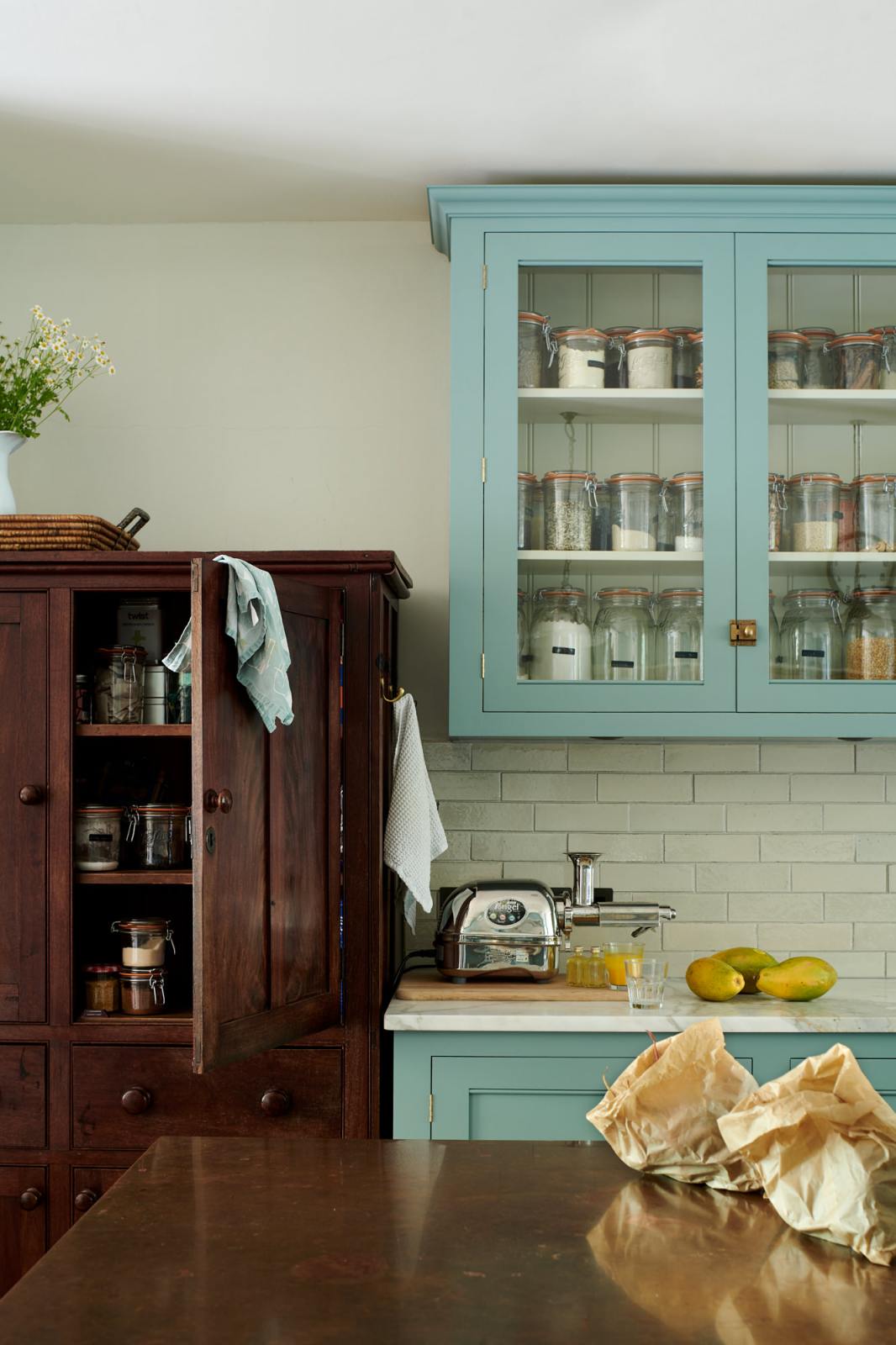
Glass-front cupboards let light catch the edges of dishes above deep blue lower cabinets. Put the pieces you use often on the easiest shelves to reach, and group pieces that share a color to keep the view calm. You do not need a matching set. Leave a little space between stacks and store less orderly supplies behind solid doors.
10. Warm the Sink Area With a Copper Basin
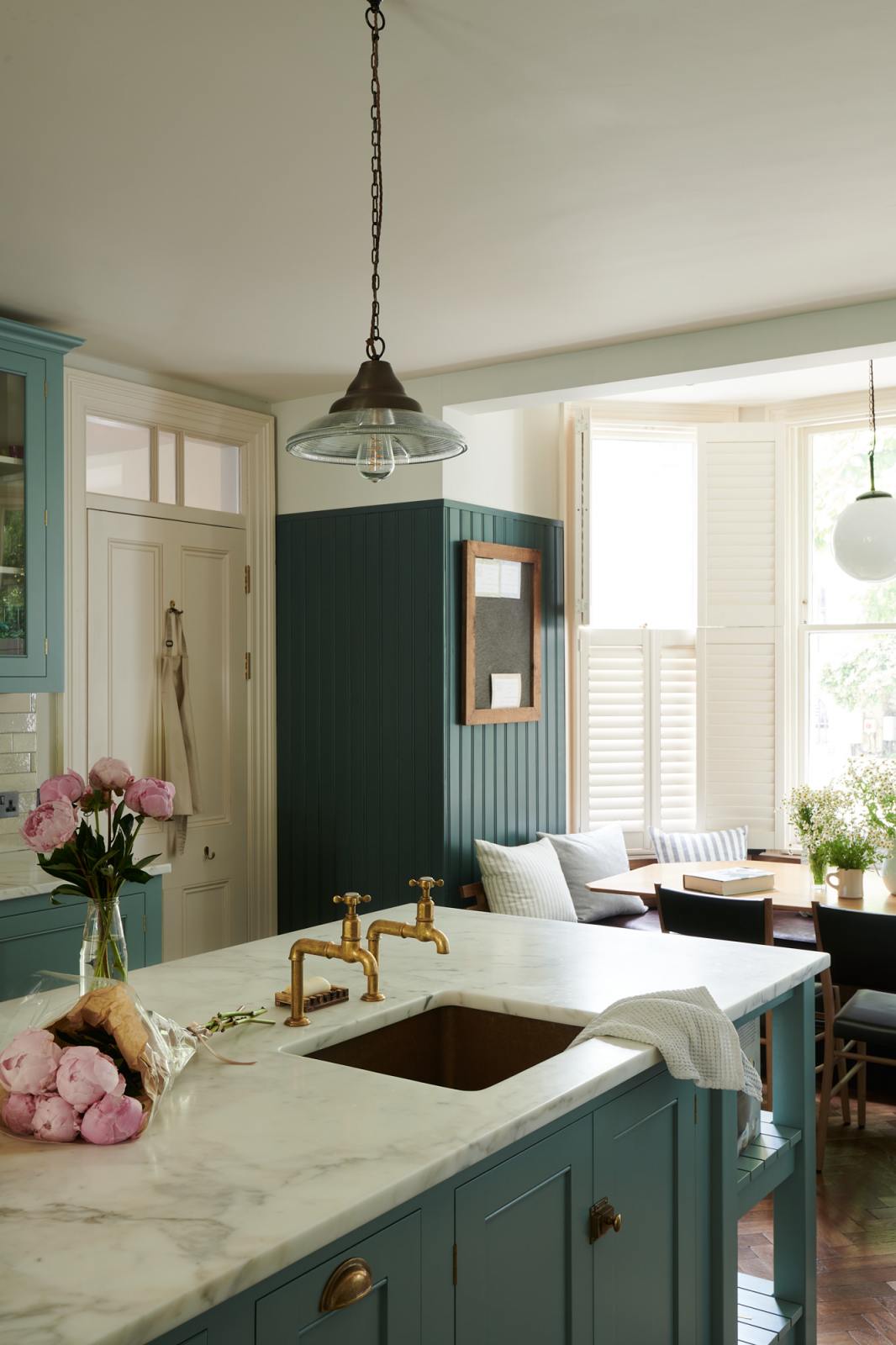
A small copper basin introduces warmth where pale stone and blue cabinetry meet. Keep nearby accessories simple to let the metal's color read. If you are keeping an existing sink, a copper-colored tray or bowl can bring a small warm note to the worktop. For any basin finish, check care directions before choosing it for a heavily used prep area.
11. Use Cream Instead of Bright White on the Worktop

A cream counter softens the edge of a dark blue cabinet run. In this pairing, the pale wall keeps the color grounded near the floor and the cabinet details stand out. Compare the counter sample against both the blue and your wall paint, because a warm cream can change the look of an otherwise cool blue in evening light.
12. Treat a Tall Navy Cupboard Like Furniture
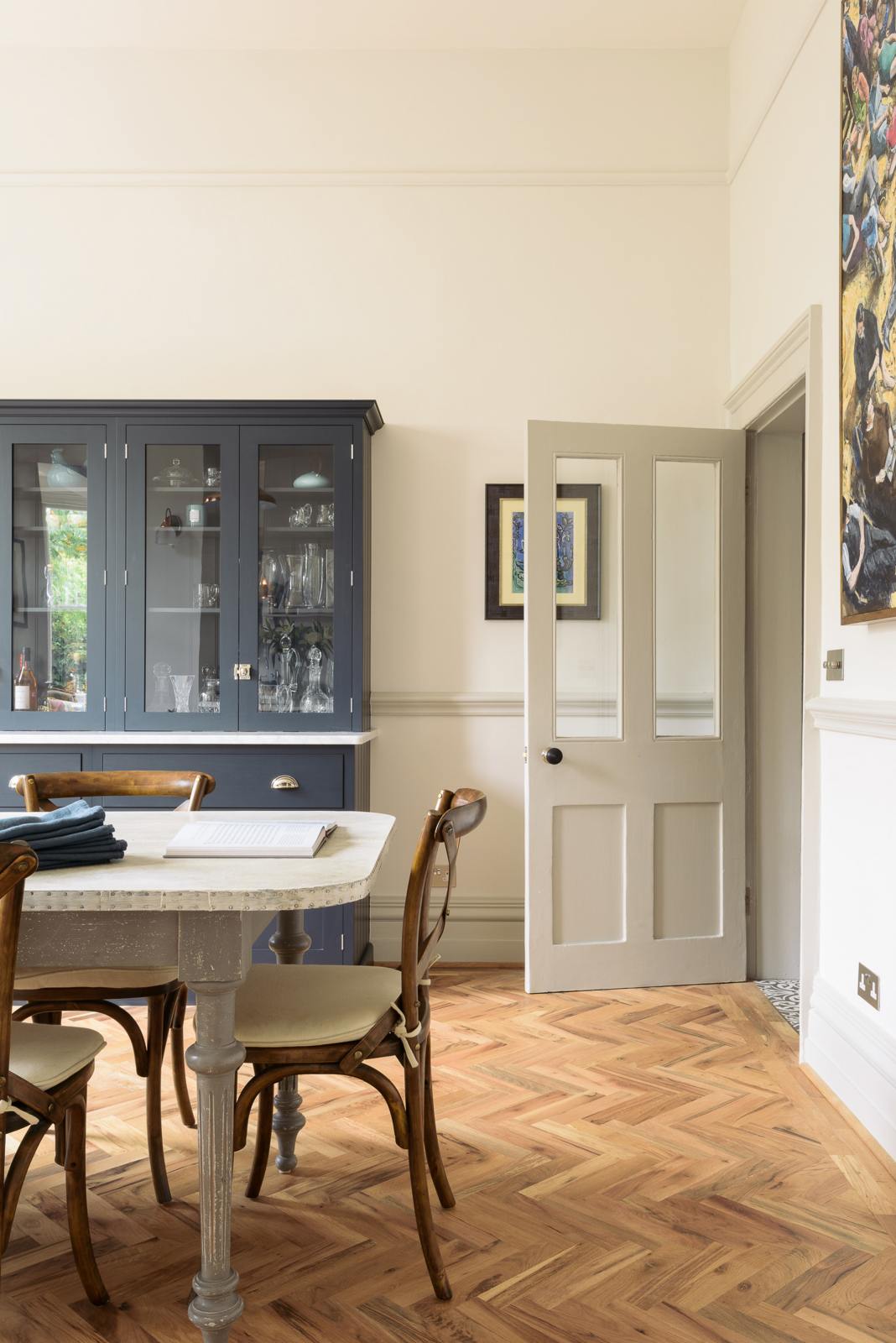
A tall cupboard in a dining area can echo the kitchen color and hold linens or serving pieces where you use them. Set it against a plain wall so the doors and handles can be seen. Take measurements with the cupboard doors open and chairs pulled out. A short piece can do the same job when the room is narrow.
13. Use the Window to Light Deep Blue Cabinets
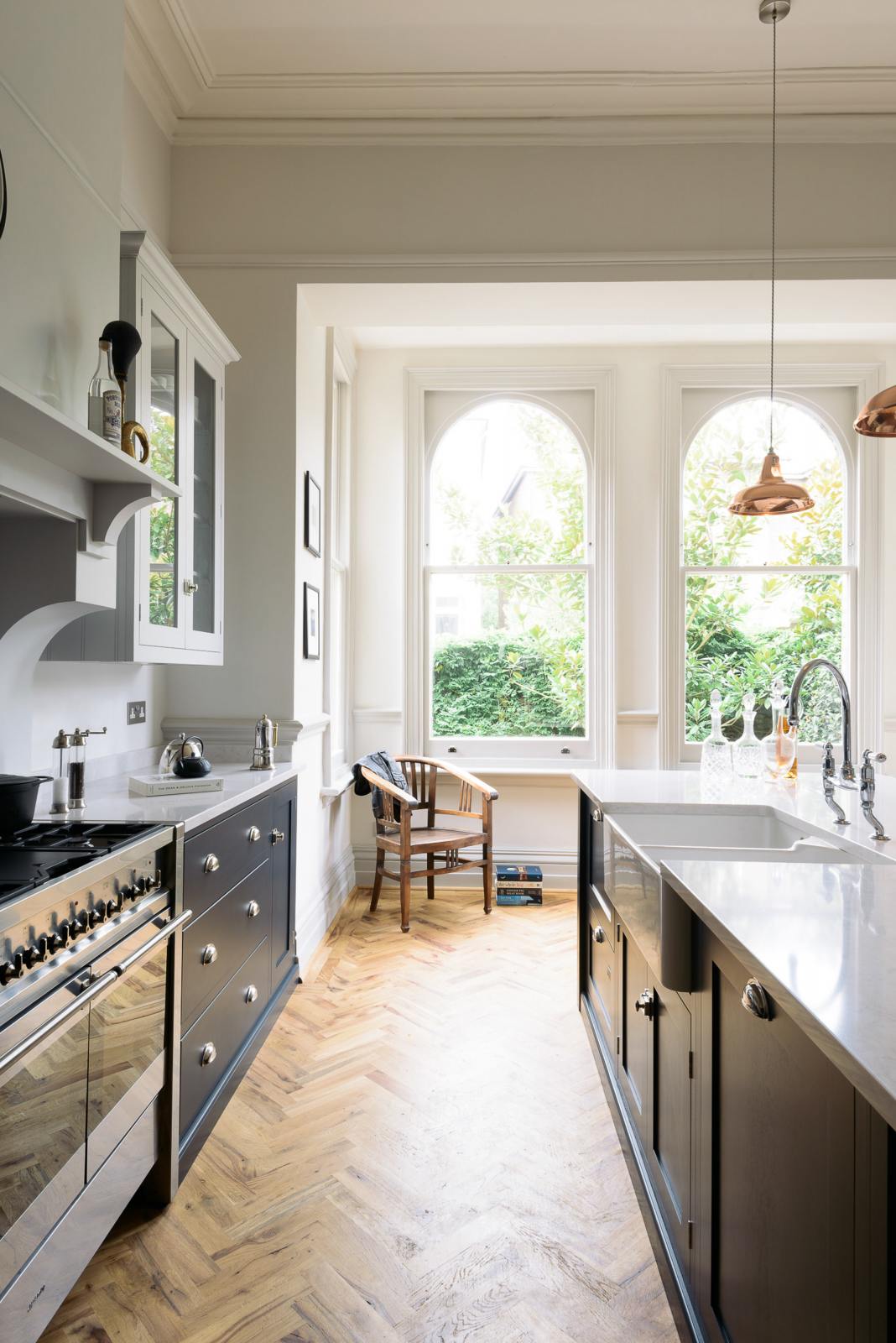
Deep blue can look softer where natural light reaches it from the side. Notice how the cabinet color changes across the island and compare painted boards beside your own window over the course of a day. Leave enough light around the color to see the detail of each door, especially if you plan a dark finish on several surfaces.
14. Give a Small Prep Nook an Oak Worktop

An oak worktop brings a warm surface near a blue kitchen. Use it where the wood's upkeep fits how you work, and check product guidance if the surface sits beside a sink. A matching oak board or tray can bring in the color with a smaller commitment. Keep just a few pieces by the tap so the corner stays useful.
15. Let Overhead Light Open Up a Dark Palette
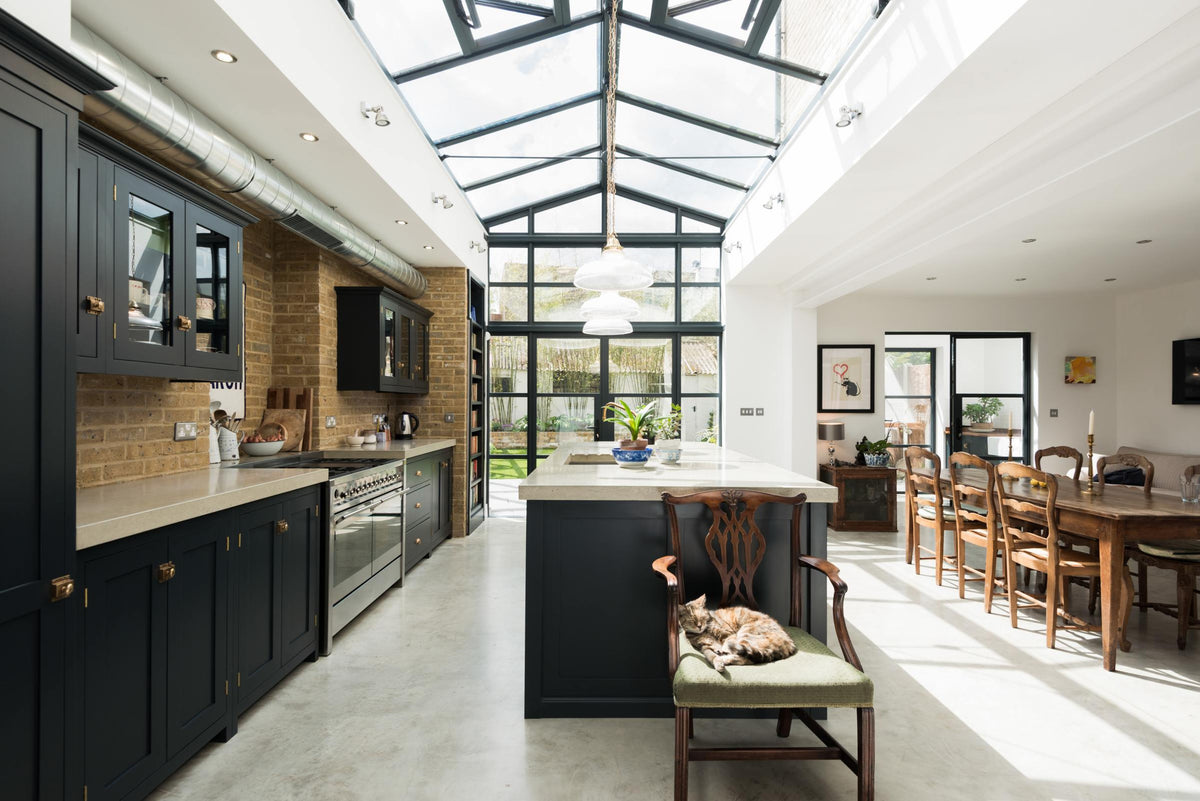
Natural light from overhead gives deep blue cabinets the room to show their color. If your kitchen has a skylight, compare how the cabinet finish looks directly underneath it and outside the bright area. In rooms without overhead daylight, try a smaller blue run and test it under existing task lamps before deciding how much color to use.
16. Layer Dark Stone With a Pale Backsplash
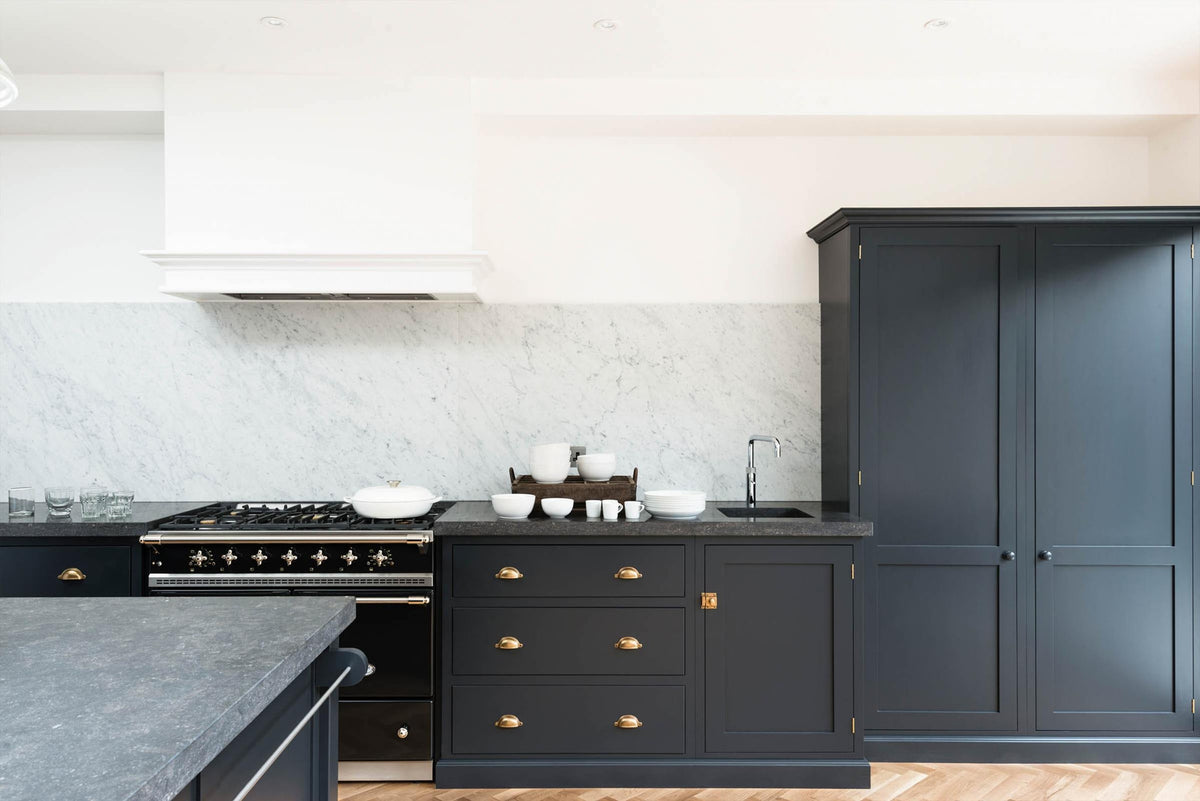
A dark stone worktop can sit quietly against blue cupboards when the wall behind it is lighter. The separation helps the work surface read without framing every edge in white. Put the two samples in the same orientation they will have in the room. Compare the stone's care needs and try a lightly patterned pale surface to break up the dark areas.
17. Repeat a Small Blue Detail Near the Dining Area
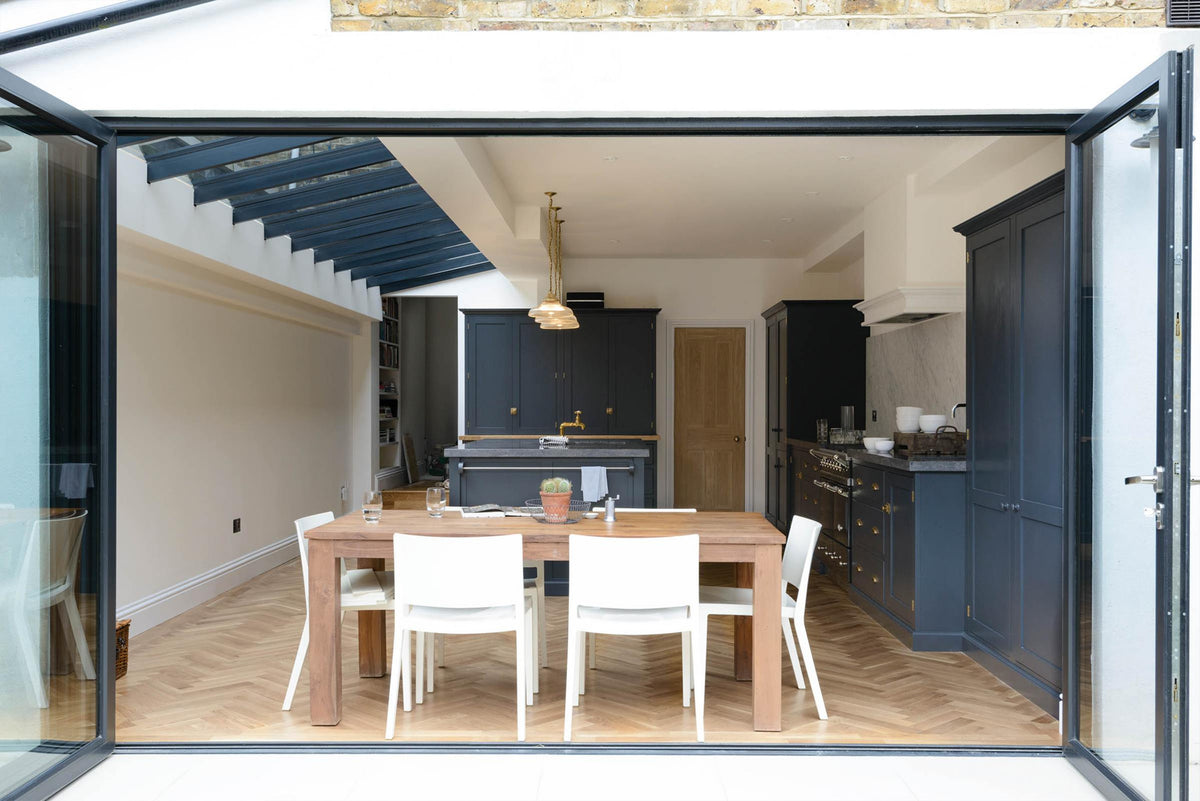
When a dining table looks directly into the kitchen, one small blue detail can link the two spaces. Try a painted chair, a pitcher or a napkin color that is close to the cabinetry without matching it precisely. Check what the combination looks like from the doorway as well as from the table. Leave the other dining pieces simple to keep the color readable.
18. Try Muted Turquoise With Warm Neutrals
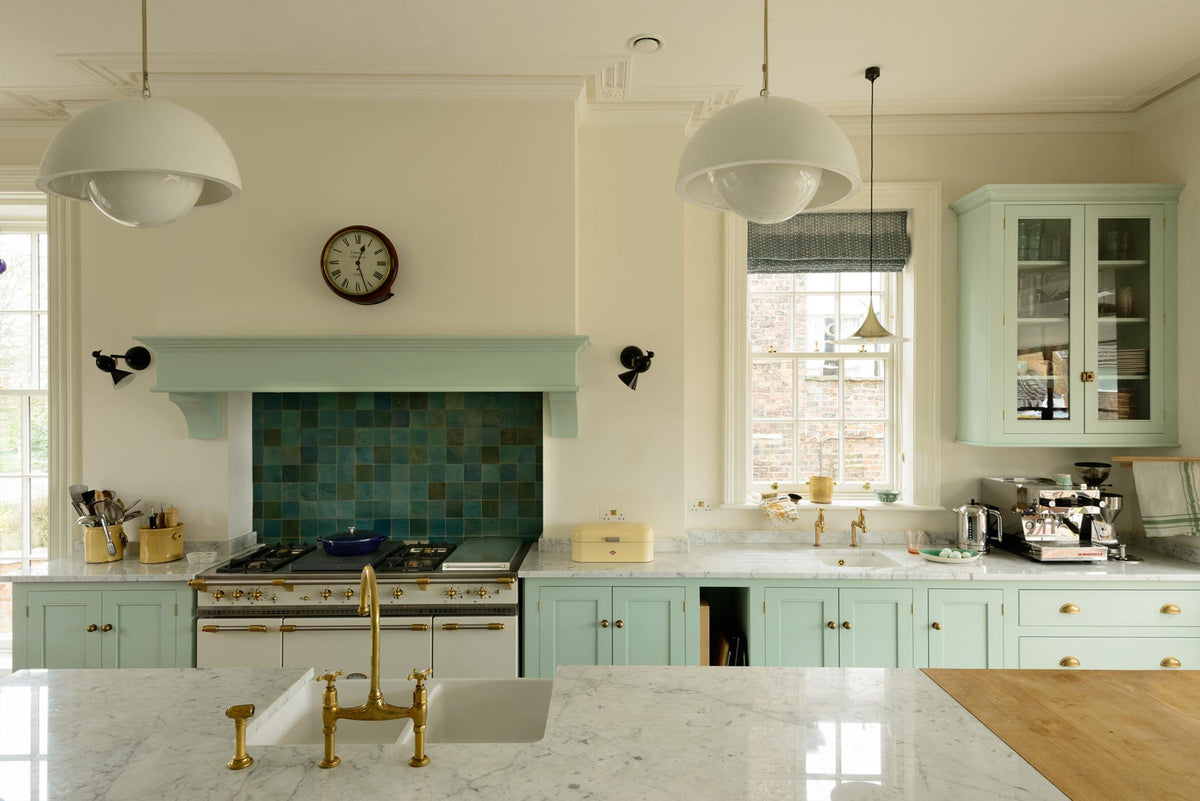
A blue-green cabinet color brings a different feel than navy while still working with pale stone and muted walls. Pick a quieter turquoise if the room has several surfaces competing for attention. Put a sample by any warm floor or table you plan to keep. The contrast is easiest to judge when the colors sit together in the actual room.
19. Make Tall Pantry Storage Part of the Color Scheme
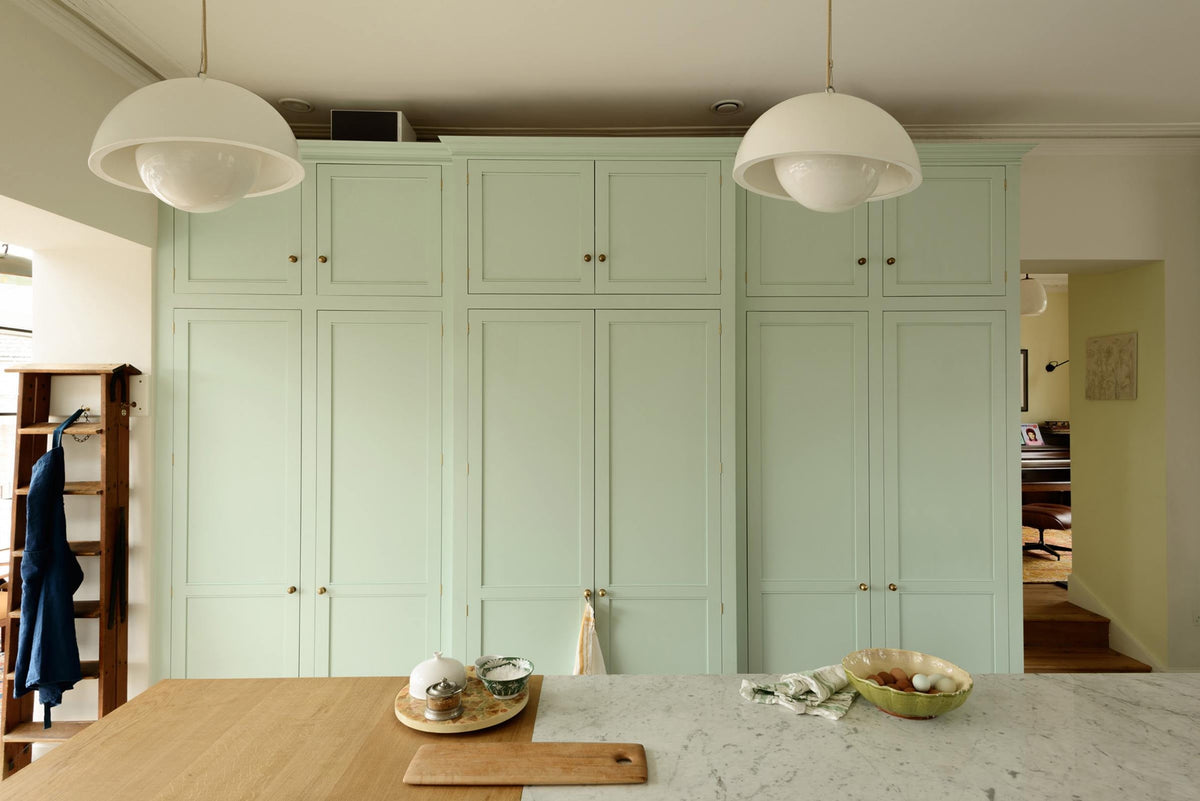
Full-height cupboards make blue feel more continuous than a row of small cabinets divided by wall color. The wood ladder breaks that vertical run with a warmer shape. If you borrow the idea without a ladder, repeat the wood in a lower shelf or handle. Keep the things you use daily at a comfortable height and reserve the highest space for occasional pieces.
20. Make a Small Coffee Station in the Pantry
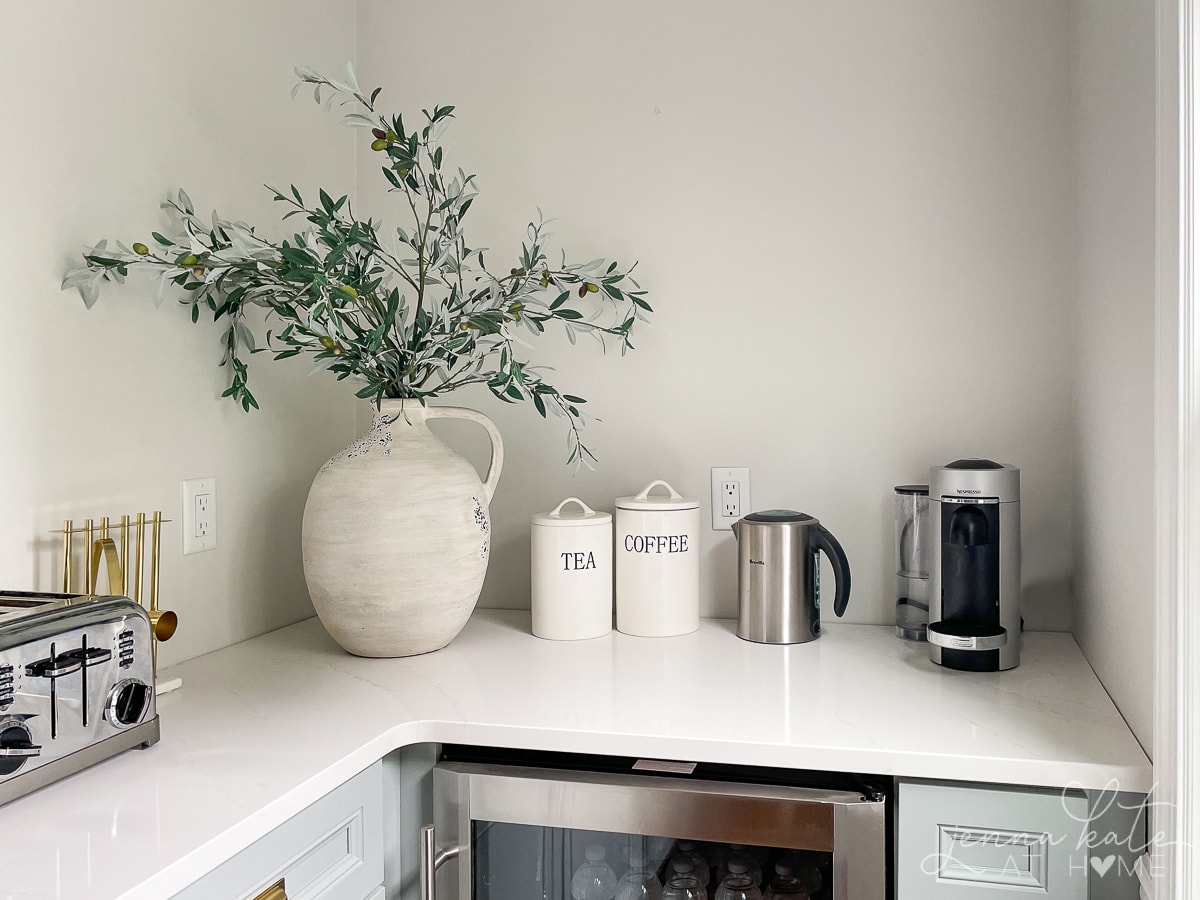
Give the coffee or tea supplies a spot at one end of a pantry counter. Arrange brewing tools so the appliance and mug can sit out while you use them. A pale counter gives familiar jars and mugs a clear background against the blue below. Leave some empty worktop for a cup or tray and use shelves for items you need less often.
21. Bring Warm Wood In With Cutting Boards
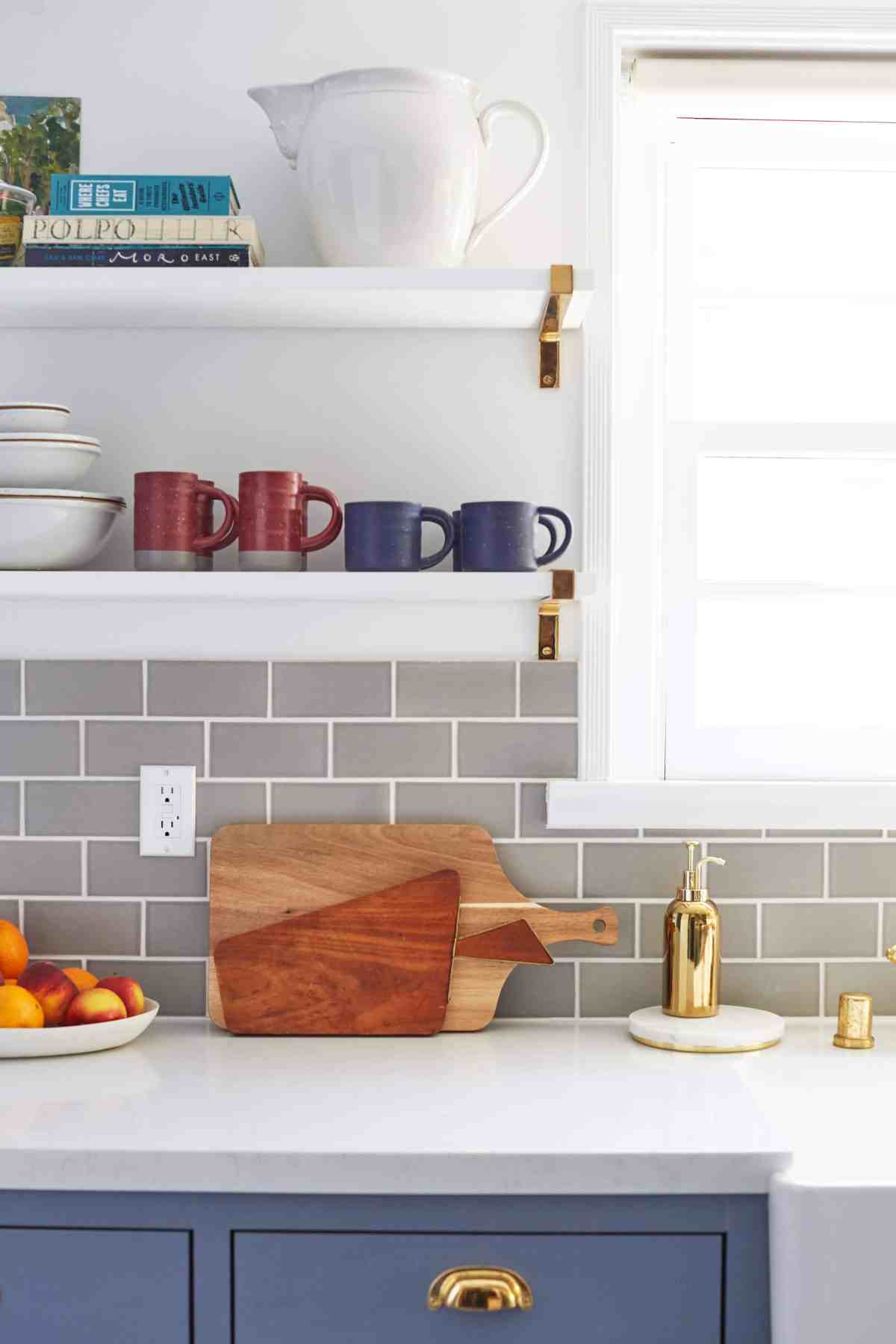
A few cutting boards bring warm color into a blue kitchen without changing the cabinets or countertop. Choose boards you use and keep them where they can dry properly before you put them away. A simple shape leaves the grain to do most of the work. Keep the arrangement away from the heat and leave enough counter space to work.
22. Soften a Blue Island With Woven Seats
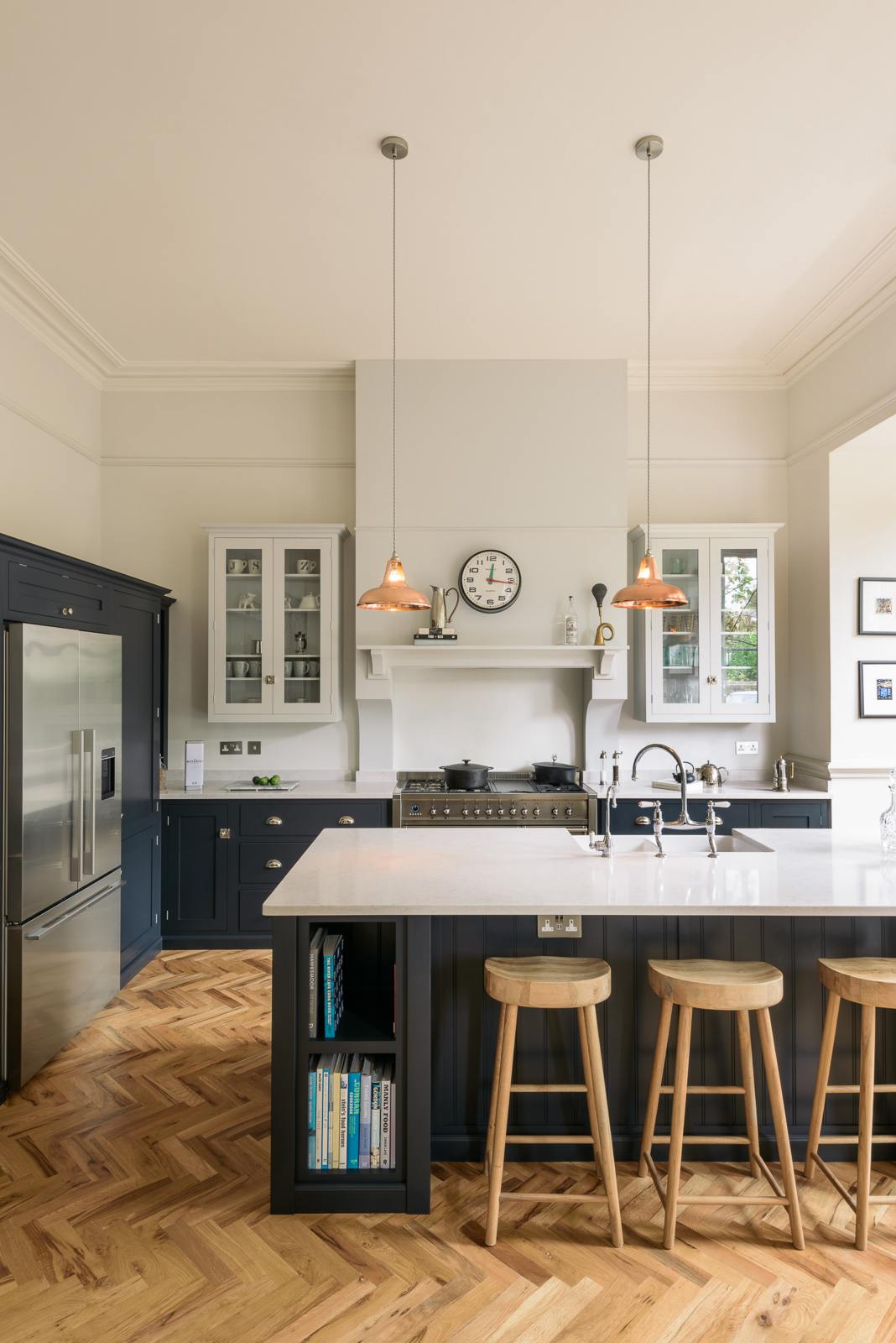
Woven seats bring a lighter texture next to a dark island and let the seating feel like part of the decor. Compare the height of the stools to the underside of your actual counter, then see how far they need to pull forward. Keep enough room to pass behind a seated guest. The woven texture works even if the stools have plain frames.
23. Let Inset Doors Supply the Detail
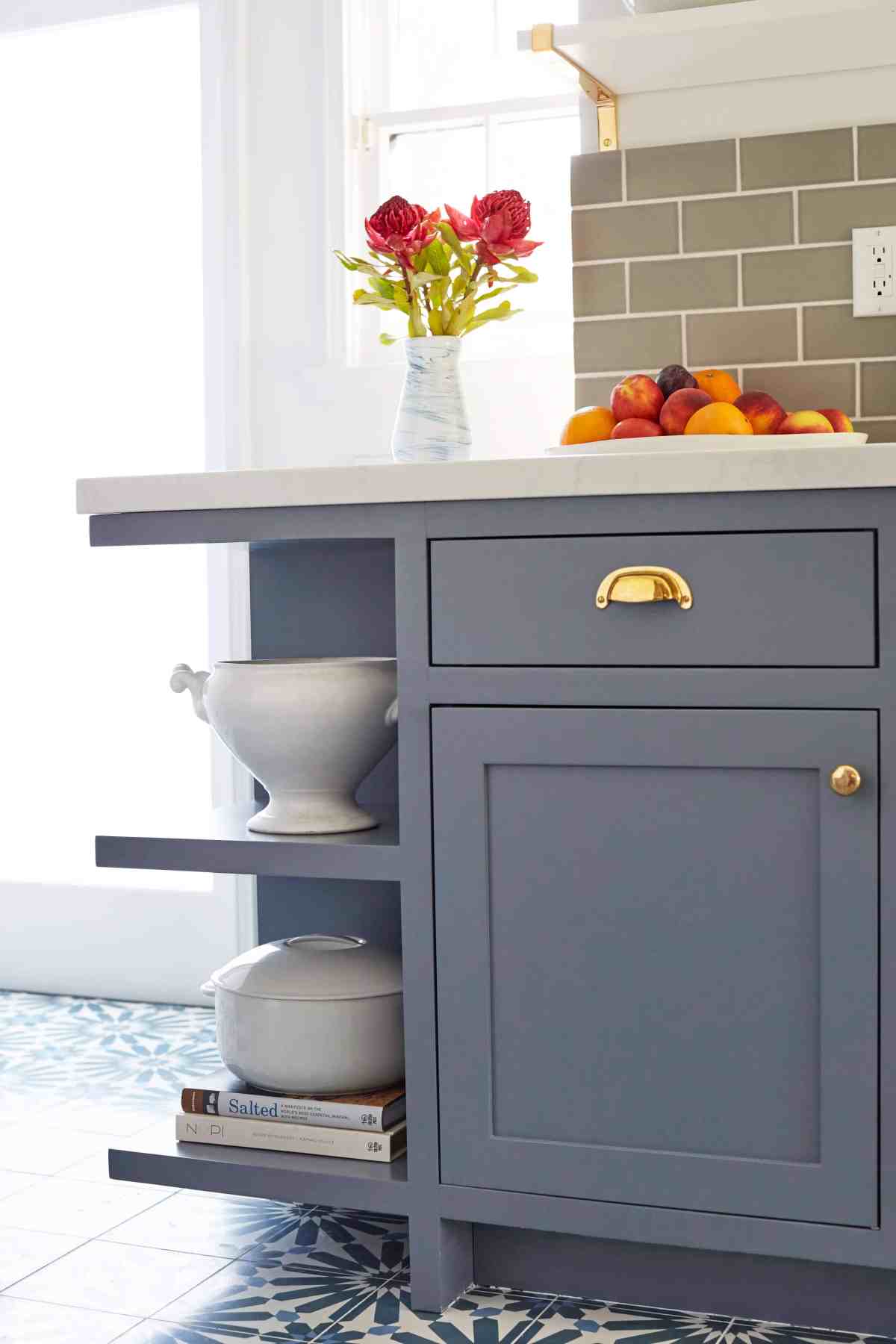
Inset doors add a slim shadow line that shows clearly in blue. Keep nearby trim simple to give that narrow shape room to stand out. When repainting an existing cabinet, check that your chosen finish does not obscure grooves or interfere with how the doors close. View a sample beside the existing handles to see if the contrast feels right.
24. Keep Open Shelves Simple
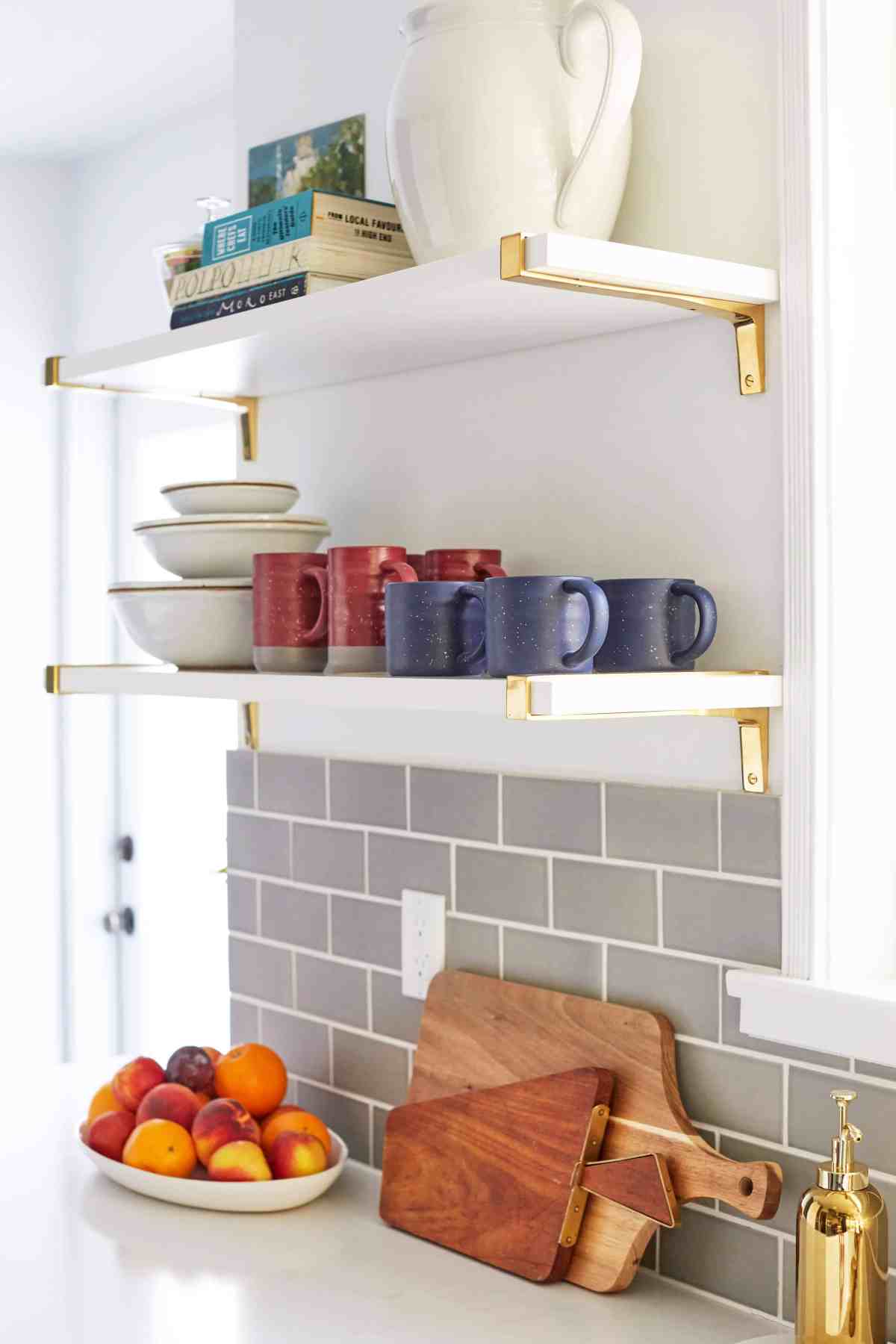
An open shelf can give blue cupboards a little breathing space. Put everyday cups or bowls in small groups rather than filling the full length. Repeat a shade already in the counter or wall, and keep taller pieces apart so the shelf still feels usable. Choose objects you can reach easily and clean the shelf whenever you wipe down the nearby counter.
25. Use Brass to Add Warmth at the Sink
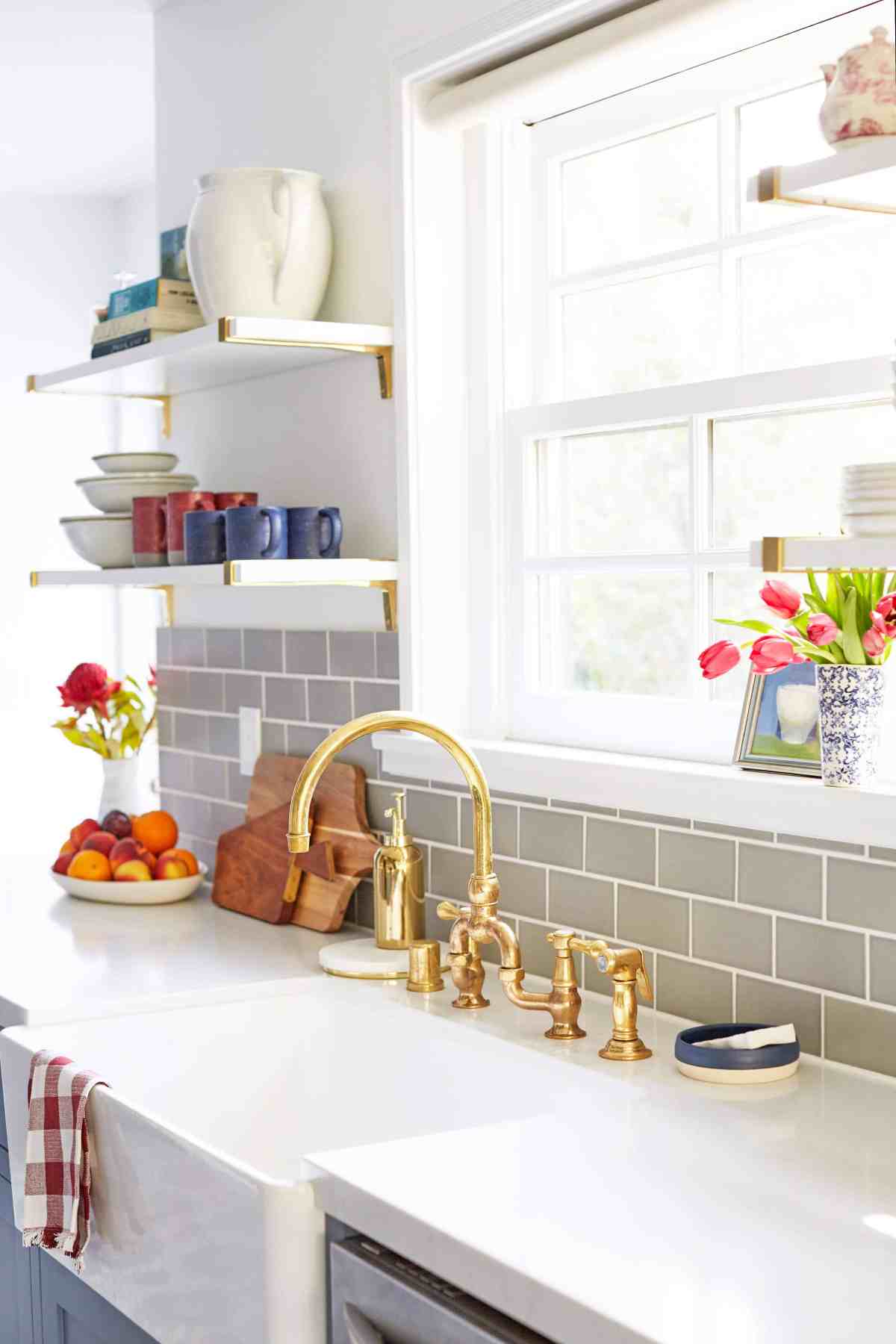
Warm brass gives a small area of the kitchen a distinct highlight against blue. Try the finish first on a few existing handles if you want to see how it reads in different lighting. Keep the rest of the sink area quiet so it does not need several different metal finishes. Compare the manufacturer's care instructions if you are choosing a new tap.
Test Blue in the Light You Actually Use
Move a large painted sample between the island, the wall and any tall cupboard. Look at it in daylight and again under the task lights you normally use. Leave the samples beside the finishes that will stay, such as the floor and counter, until you see a combination you like at both times.
Choose One Place to Start With Blue
You can build the look a piece at a time. Choose a place you see every day, such as the end of an island or the dish cabinet, and try your chosen shade there. A small test makes it easier to see which wood, brass and tile finishes you want to keep around it.
Where would you try blue in your kitchen first: on a small accessory, a cabinet, or the wall? Tell us in the comments what shade you’d choose and how it looks next to the finishes you already have.











0 Comments