18 Front Entry Decoration Ideas for a Welcoming Home
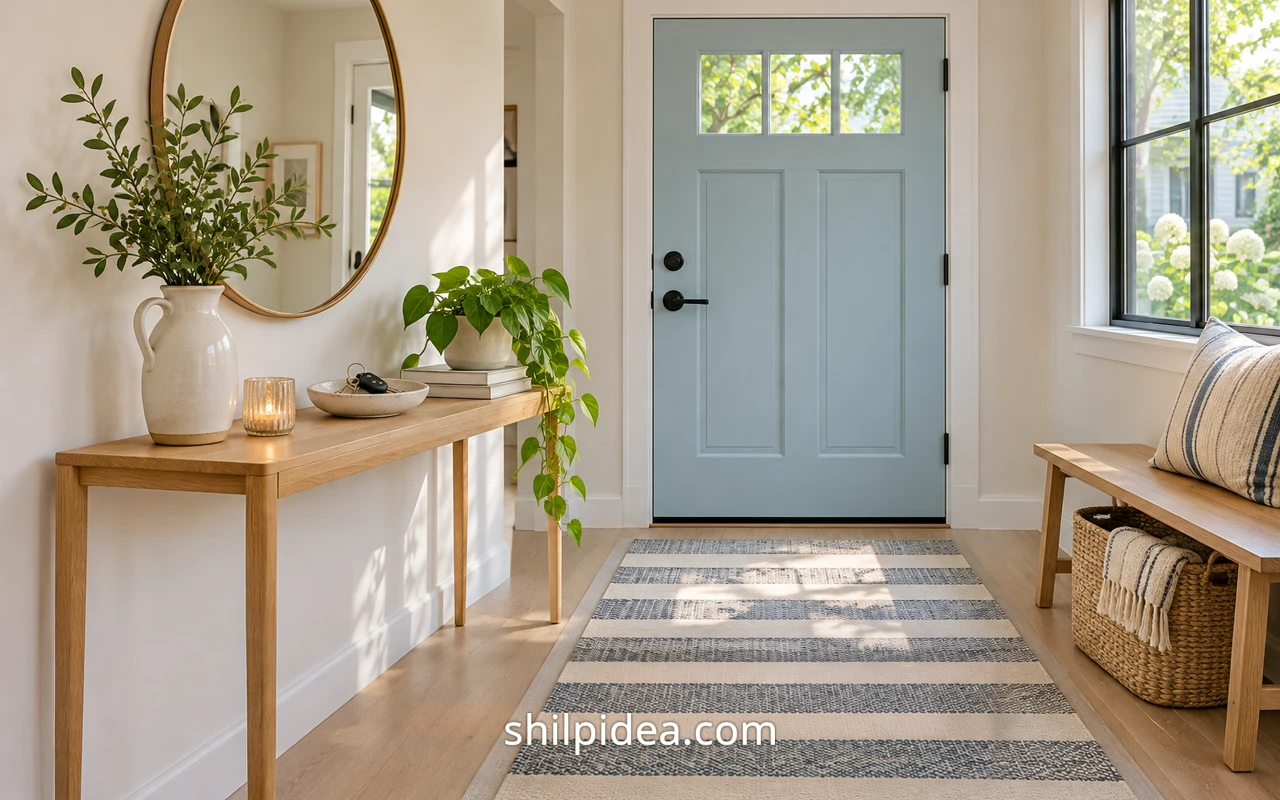
The space just inside your front door has to work hard. It catches keys, shoes and bags, yet it can still feel calm and welcoming when each item has a place.
Start with the path through the room, then look at these small entryway corners for ways to put the edges to work.
These 18 ideas cover furniture, lighting and finishing details. If seating is your priority, compare these mudroom bench ideas before choosing a size.
1. Use a Slim Console as a Drop Zone

The wood console in Ryan’s entryway has enough surface for daily essentials without filling the wall. Measure its depth against the path from the door to the next room. Set a shallow tray at the end you naturally reach first, then leave the rest of the surface open for whatever you carry in that day.
2. Hang a Mirror Above a Glass Console

A mirror above a cabinet brings another layer of light and gives you a place to check your coat before leaving. In this Young House Love foyer, a simple frame sits above a slim glass table with two woven baskets underneath. Choose the mirror height by testing the reflection while standing in the entry. Use hardware rated for its weight. Explore these hallway mirror styling for more ways to plan the space.
3. Hide Shoes in a Shallow Cabinet

A shallow cabinet keeps shoe storage close to the door when a deep bench would crowd the hall. IKEA keeps the cabinet top free enough for a few decorative objects. Check that the compartments can open fully while someone stands in front, and secure the cabinet to the wall as directed. Store wet footwear separately until it dries.
4. Build a Bench Under the Window

The DIY Playbook places a bench beneath a window where tall storage would block the daylight. Drawers below hold shoes or seasonal supplies, while the seat gives people room to get ready. Leave a little space at the front for feet and drawer access. A washable cushion makes this spot more comfortable and easier to maintain.
5. Give a Rail of Hooks a Painted Backdrop
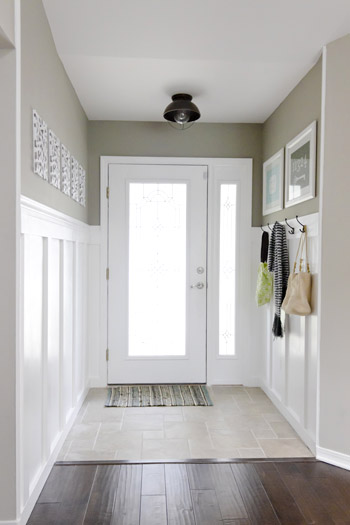
Jenna Sue uses board and batten to make a row of hooks feel like part of the entry. The divided wall gives coats and bags a clear place to go. Hold a bag against the planned hook height before fixing anything. A smaller row of sturdy hooks works just as well if the walkway is narrow.
6. Repeat the Door Color Inside
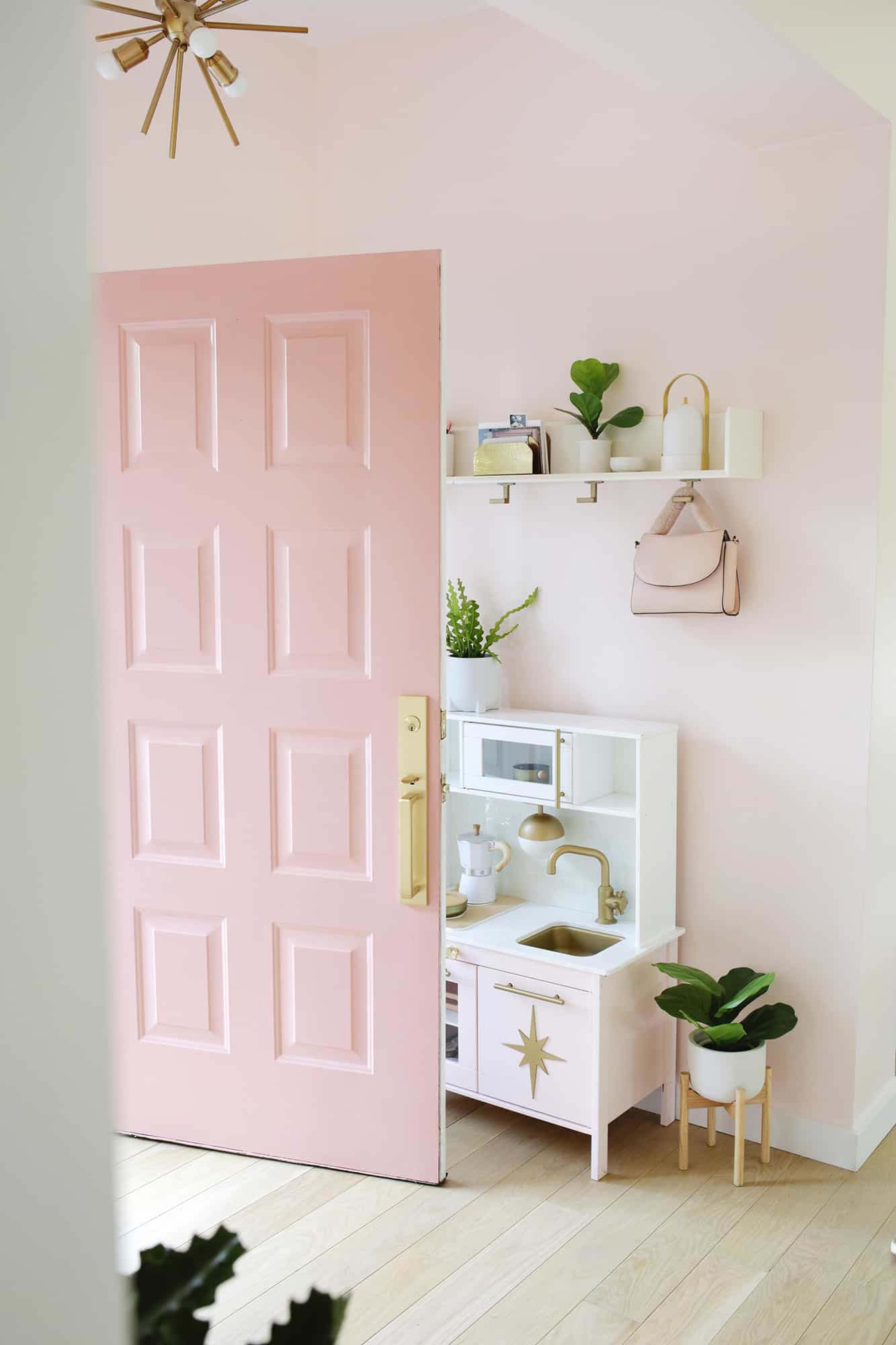
Laura Gummerman carries pink from the door into the interior, making the two surfaces feel connected. Try the color on the inside face of your own door before committing to the whole hall. Check the sample in morning light and again under the light you use at night. Pick a single trim color to give the shade a clean edge.
7. Use a Pendant to Mark the Foyer

A capiz pendant gives the Young House Love foyer a focal point overhead, leaving the floor clear. Compare a fitting’s width with the doorway and the ceiling height, then check clearance at the door swing and stairs. Softly diffused light makes the approach more comfortable. Have a qualified installer handle any wiring work required for a new fixture.
8. Anchor the Hall with a Flatwoven Runner

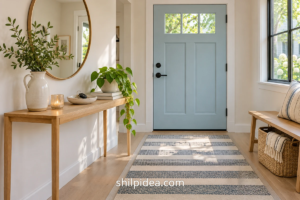
A flatwoven runner adds warmth along the direction people walk. IKEA’s example shows an underlay that helps the rug stay put. Measure from the door sweep to the first step or turn, allowing the rug to finish before either edge. Use a slip-resistant underlay suitable for the floor and shake out grit before it wears the weave. Explore these narrow room ideas for more ways to plan the space.
9. Give Incoming Mail One Basket

A small basket on the drop zone keeps envelopes together and makes them easy to carry elsewhere. The DIY Playbook gives mail a designated place beside everyday objects. Choose a basket just wide enough for the usual envelope size, then empty it as part of your weekly routine. A wall pocket can do the same job in an especially tight hall.
10. Gather Daily Accessories on a Pegboard

A pegboard puts several small storage jobs on one vertical surface. IKEA uses clip holders and shelves for everyday items. Set one section aside for things that must leave with you the next morning. Keep the lowest accessories clear of passing shoulders and change the arrangement if frequently used items turn out to be awkward to reach.
11. Swap Open Shoe Piles for a Woven Storage Bench

A woven bench adds texture while giving bulky items a concealed home. The pair shown by IKEA leaves space for rugs and hooks elsewhere in the hall. A single bench can work in a tighter entry. Give the lid room to open fully and keep its interior for dry gear you can find without digging through a jumble.
12. Turn a Tray into a Personal Display

In Ryan’s entry, a wood tray holds a few objects connected to his interests. Keep the size small enough to lift in one motion when the console needs cleaning. If the tray also catches keys, create a clear corner for them. A ticket, photo or little keepsake can add personality without using the whole surface.
13. Add Height with a Branch in a Vase

The Young House Love entry uses a branch to lift the eye above the console. A single stem lets the outline show without crowding the mirror or artwork behind it. Choose a vase with a broad base and position it away from bags and elbows. Use a short arrangement when your surface sits close to the doorway.
14. Light Open Shelves from Above

The DIY Playbook uses a slim picture light above walnut shelves, bringing a warm highlight to a practical corner. Borrow the placement when a lamp would take up too much of the counter. Put one or two objects in the light and leave room between them. Check for reflections if framed pictures sit directly under the fixture.
15. Put Guest Hooks Behind the Door
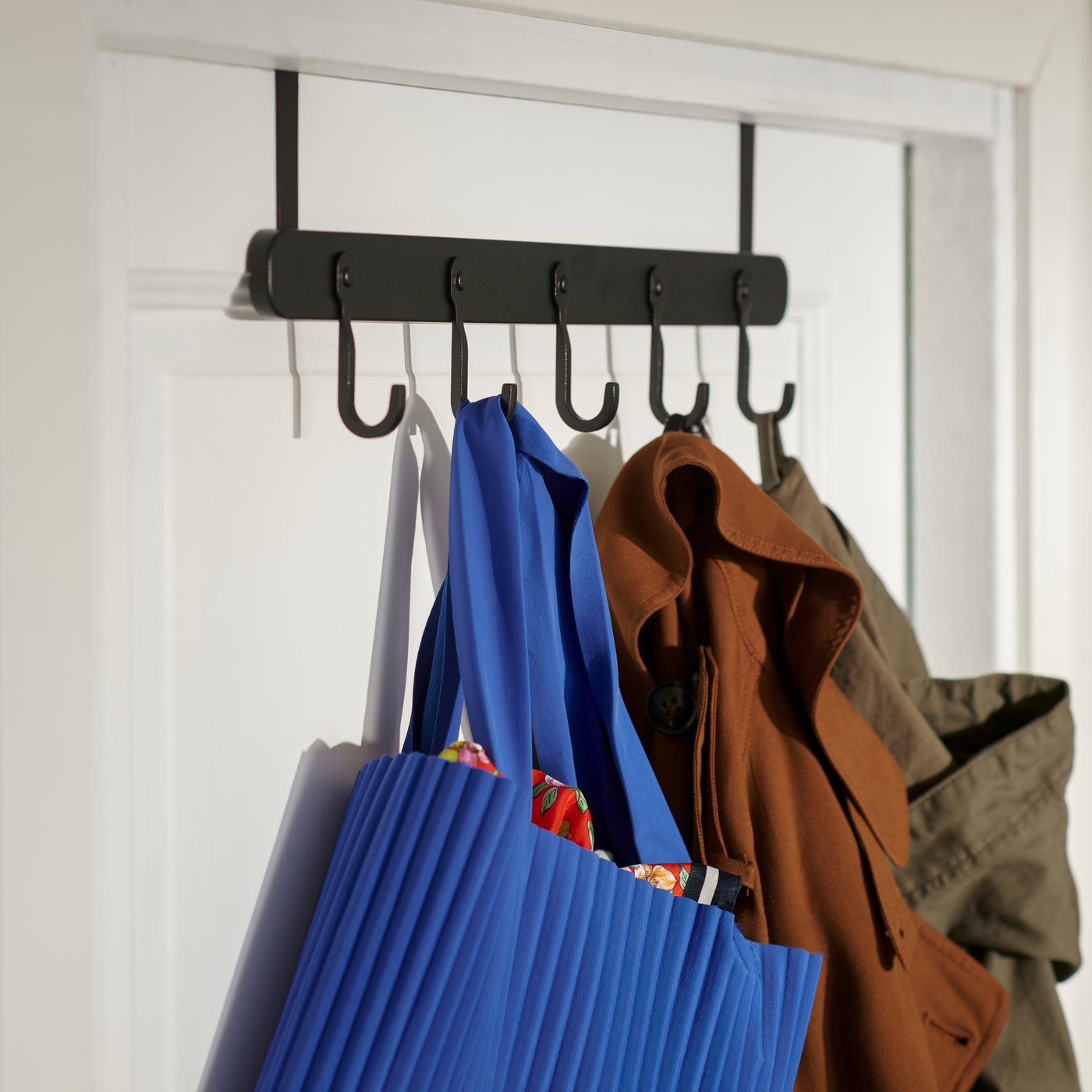
A back-of-door rail uses a small patch of space that often goes unused. IKEA’s hooks make room for coats without taking up a wall. Open the door completely before you settle on a rack and check that the hooks and clothing clear the wall and hinges. Keep the rail lightly loaded so the door stays easy to operate.
16. Use Decorative Knobs as Wall Hooks

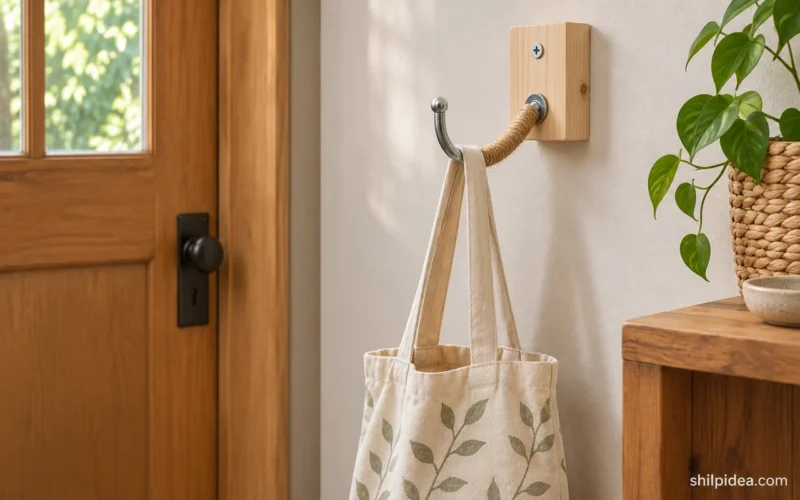
Individual knobs can bring a little pattern to one wall while holding light items. A Beautiful Mess shows how they can serve as hooks without a separate rail. Space the knobs around what you hang most often and use fasteners suited to your wall. Put heavy bags on hooks designed for their weight and keep fragile decorations away from that spot.
17. Add Texture with Cane Cabinet Panels

Cane fronts give this DIY Playbook cabinet a lighter look beside solid shelves. The project uses the open weave where equipment needs ventilation. If borrowing the appearance, match the pattern to the scale of the cabinet and follow any clearance requirements for devices inside. For ordinary storage, use a backing or baskets when you want to hide smaller items.
18. Give a Blank Entry Wall a Small Art Group
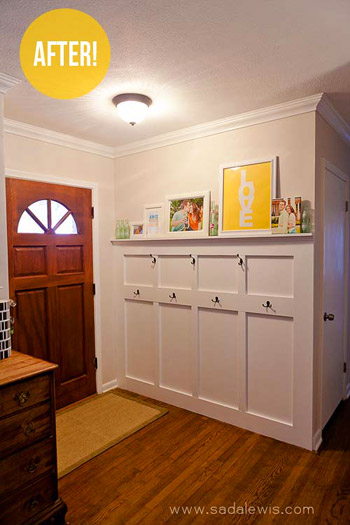
Sada’s entry, shared by Young House Love, gives a bare wall a focal point with a compact display. Arrange frames on the floor first and keep the group narrower than the furniture below. Repeat one frame finish and vary the subjects. Leave room around light switches and everyday hooks so the decorative arrangement works with the route through the hall.
Make the First Few Steps Feel Welcoming
Try one change where it will help most. A small tray can solve the daily search for keys, while a runner or mirror can give the same area more warmth. Check your arrangement on a busy weekday and move anything that gets in the way. These related ideas can help you finish the entry with the space you already have.
- Small Corner Entryway Storage Ideas
- Wall Mounted Entryway Mail Pocket
- Mudroom Benches for Narrow Entryways
- Large Mirror Styling for Hallways
- Ways to Open a Narrow Room
Which part of your entry is hardest to keep clear? Share the detail you would try first and how much space you have beside the door.





0 Comments