18 Stair Spindle Ideas for a Fresh Staircase
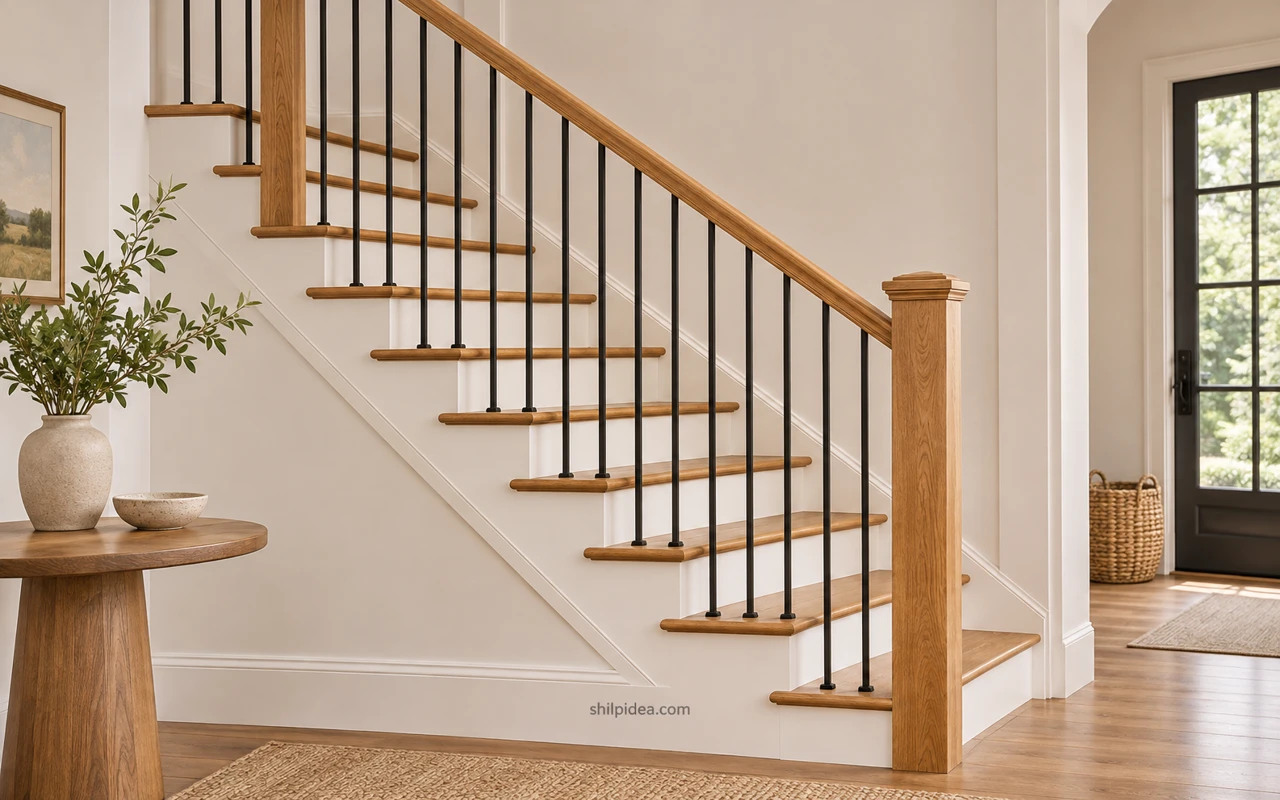
Stair spindles are small pieces that can change how an entire hallway looks. Their shape and finish affect the way the rail reads from the front door and from the landing.
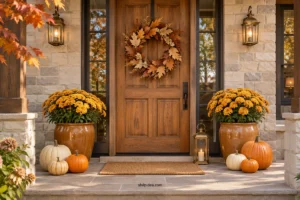
Look at your handrail, treads and trim together. These front entry decoration ideas can help you decide how prominent the staircase should be.
Here are 18 ways to compare the details, from straight iron to shaped wood. Use these natural wood accents if you want to repeat a finish nearby.
1. Keep White Spindles Under a Dark Handrail

A dark handrail gives white spindles a clear top edge. It also helps the slope of the staircase stand out against a pale entry wall. If the rail and spindles are in good condition, compare paint samples on the two pieces before deciding on a finish. Look at them from the bottom step as well as from the other side of the room.
2. Use Turned Spindles at an Open Landing

Turned spindles make a repeated pattern that’s easy to see beside a stairwell opening. Keep the paint close to the trim color if you want their curves to feel quiet. Look from the floor below before choosing a profile for an open landing. Curves that look subtle close up can read more strongly when you see a whole row at once.
3. Pair a Woven Runner With High-Contrast Spindles

A woven runner brings softer texture to stairs with a strong contrast between the rail and spindles. Choose a quiet color if you want the upright shapes to remain clear. Compare the runner against both the risers and the stair edge before choosing it. Let a stair professional check the fitting and stability when you have a turn or unusual tread shape.
4. Keep Gallery Frames Clear of the Railing Profile

Use the blank wall to carry a gallery while the spindles give the staircase a simpler pattern. Try paper outlines to see how the frames look where they overlap the view through the rails. Keep the most prominent art above the rail line from the main approach. Check that frames leave the handrail area clear of protruding edges.
5. Use a Volute to Finish a Traditional Rail
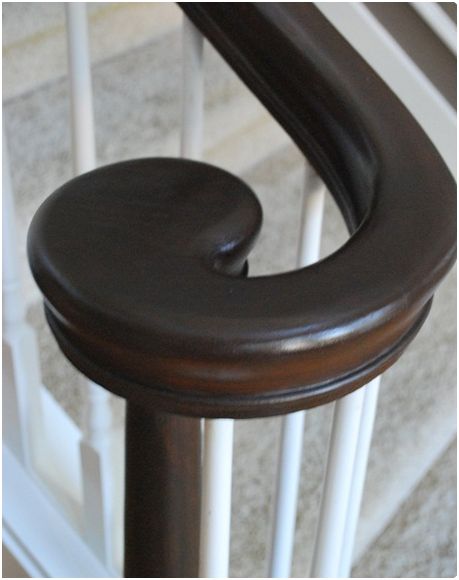
A curved rail end can give a stair with turned spindles a strong first detail. Keep the visible finish consistent across the curved piece and main handrail so the curve reads as part of the staircase. This treatment needs room at the bottom. Compare the shape with a simpler return if the entry gets crowded when people arrive together.
6. Repeat the Rail Color on the Treads
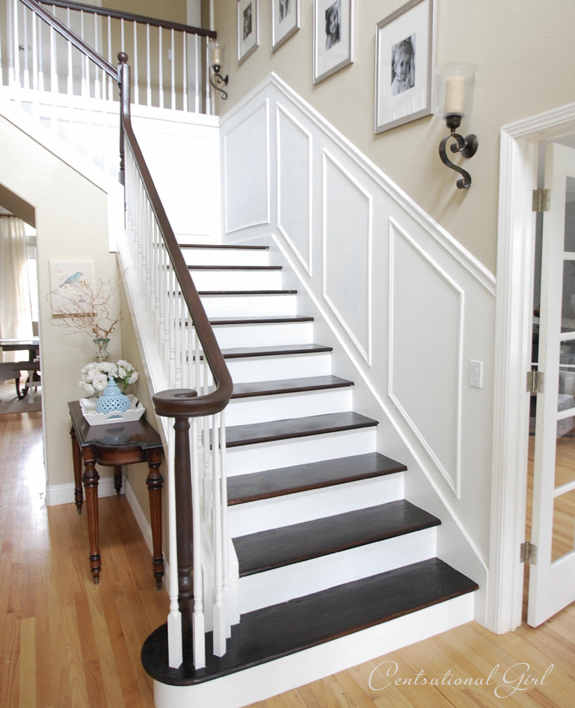
Repeating a darker rail finish on the treads can tie a staircase together. The white risers and spindles separate the darker finishes so each step still has a visible edge. Compare the color from the hall and under the stair lighting. Use a finish made for stair traffic and take the condition of the original surfaces into account before refinishing them.
7. Keep Metal Spindles Slim and Straight

A simple straight metal profile creates a thin outline against a light wall. It suits a kitchen-to-entry sightline where you already have patterns or furniture in view. Compare a satin finish with a matte sample to see which looks quieter in your light. Take professional advice on fitting and spacing when the guard itself needs replacing.
8. Use Decorative Iron Sparingly in a Straight Run
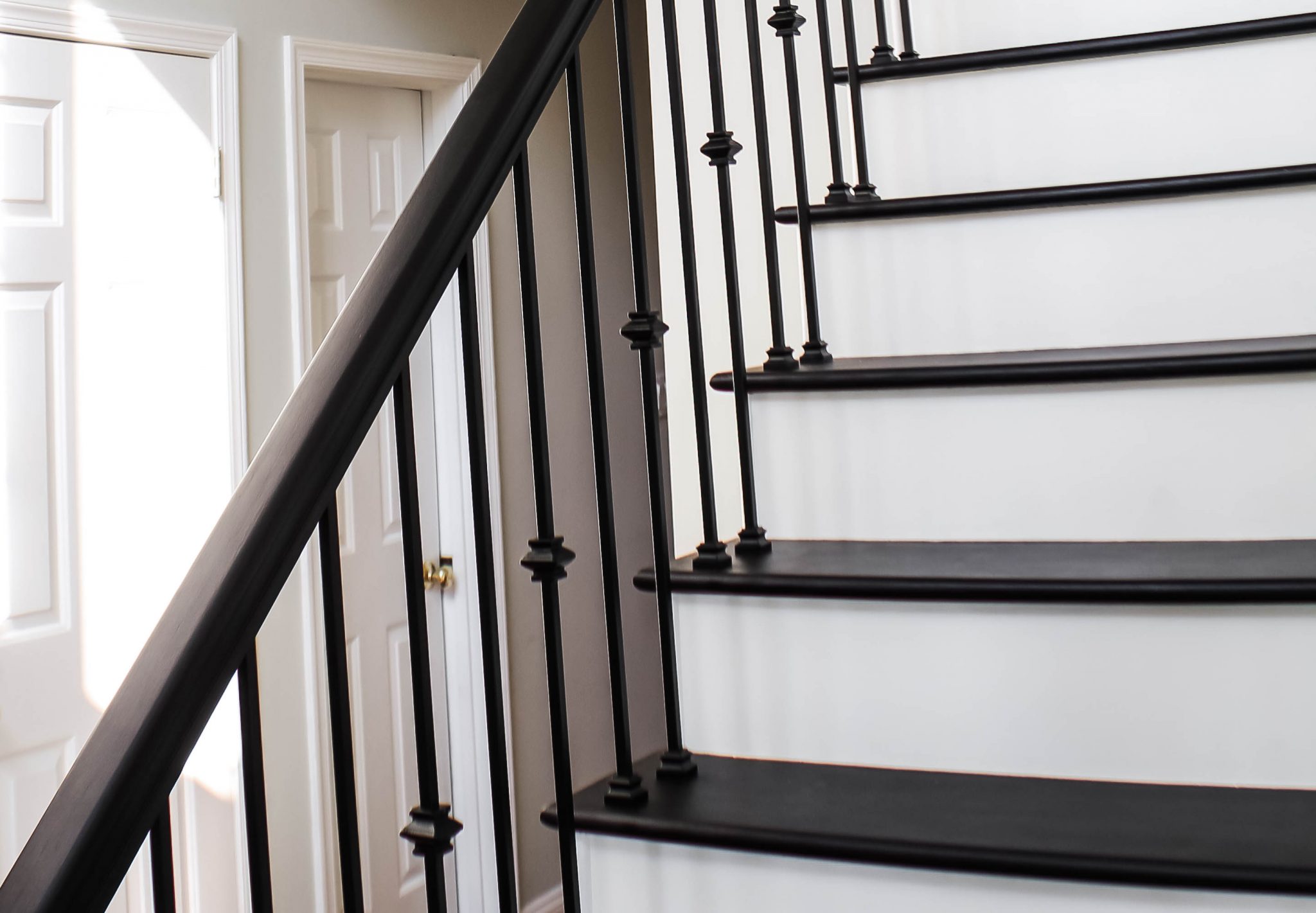
A single decorated baluster among straighter profiles can give the rail a rhythm. Mark up a photo of the run before selecting parts so you can see where the accents will sit above the steps. Match the finishes if you want the outlines to be the main difference. Have a stair specialist check that the chosen combination works with the system and local requirements.
9. Coordinate the Wall Rail With the Balustrade

When a staircase has a wall rail on one side and spindles on the other, repeat one material or tone across both. A pale wood wall rail can pick up a matching cap across the open side. Bring samples together in the room because wood tones shift in shadow. Keep brackets and rails suitable for the system and clear to grip.
10. Try a Mission-Style Oak and Iron Combination

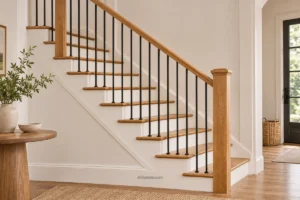
A square-edged oak staircase gives plain iron spindles a warm frame. The wide surfaces show the grain in a way that can feel more settled than a very dark or shiny finish. Compare the oak with nearby flooring, then decide where the two should match closely and where a small difference is fine. Let the wood frame do the decorative work.
11. Use a Box Newel to Frame the First Step

A broad square newel gives a light run of metal spindles a clear beginning. Choose the post shape with the handrail and bottom tread in view so its edges look deliberate together. A plain wood face often shows enough detail by itself. If the newel is on the main traffic route, check the approach for out-of-scale trim or projections.
12. Carry a Straight Spindle Pattern Across a Landing
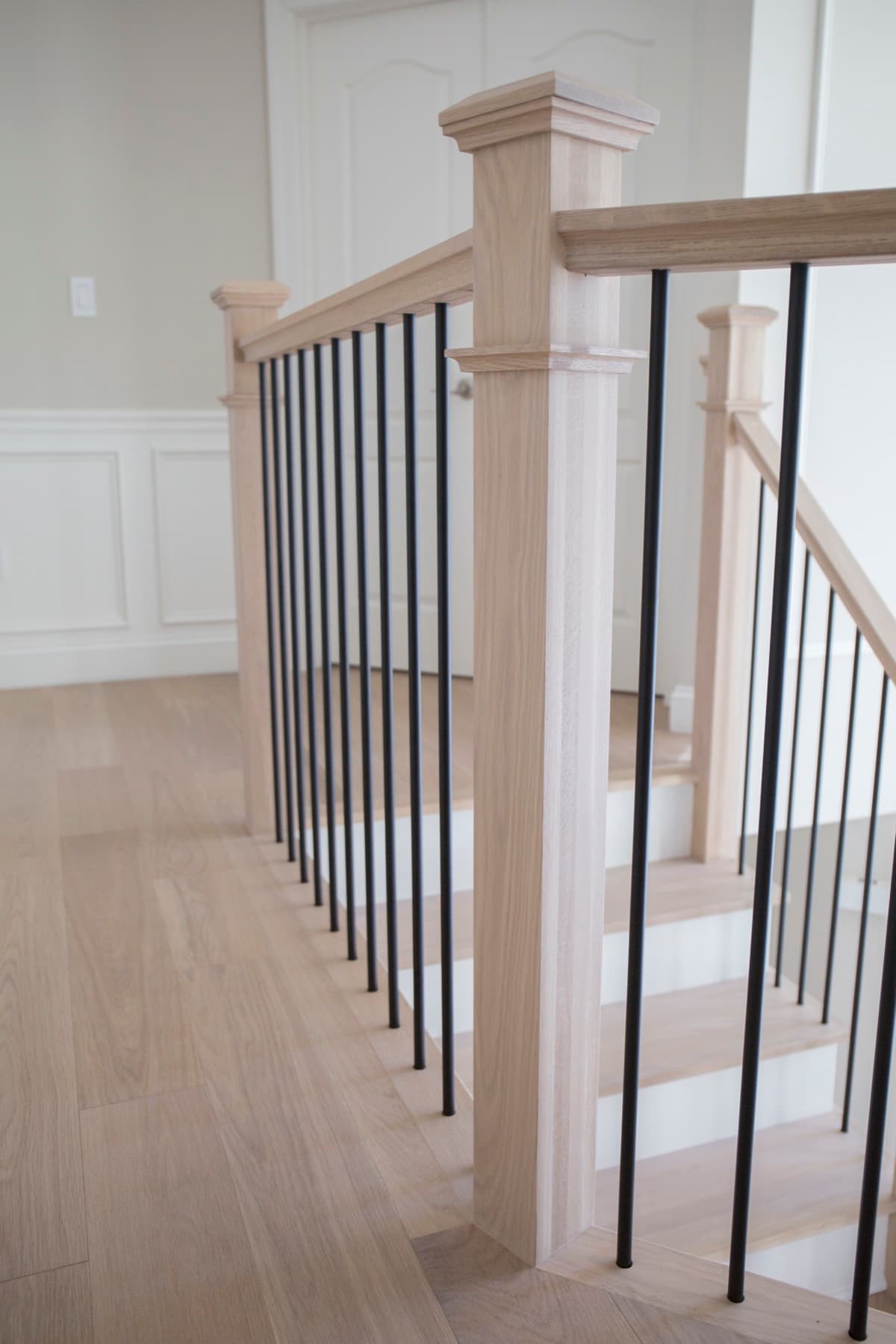
Repeating straight black spindles across an upper landing continues the pattern from the main run. Use the longer landing view to judge whether the dark lines will feel too prominent from the floor below. A light post gives each stretch of railing a visual stopping point. Keep the profile consistent and have the whole guard assessed if you are planning to alter it.
13. Choose a Chamfered and Fluted Profile

Chamfered edges and narrow flutes add shadow without the rounded outline of a turned spindle. Look at a real sample under the lighting you use in the hall, because shallow grooves can disappear under flat light. A clear finish shows grain and detail together. If you prefer paint, choose a sample that lets you still see the edges of the grooves.
14. Choose Plain Square Timber

A plain square timber spindle gives a wooden stair a cleaner line while keeping the warmth of solid wood. It can work alongside detailed trim because its shape is already quiet. Look at it next to the rail and newel rather than as an isolated sample. If you want wood grain to be the focal point, keep the profiles on nearby parts simple too.
15. Add a Single Basket Spindle as an Accent

A single basket gives an iron spindle a small open detail that shows up against a pale wall. Use the profile sparingly if the rest of the entry already has a lot of pattern. Compare how the detail looks looking up from the hall and straight across from the landing. Check the installation options for the actual baluster before ordering a set.
16. Use a Double Twist for a Narrower Accent

A double twist puts detail along the shaft while keeping its silhouette narrower than many basket styles. Repeat the finish on your straight spindles if you want the twists to look like occasional accents. Hold a sample against the wall color because very dark backgrounds can hide the shape. Keep the pattern clear where both the upper and lower runs are visible together.
17. Use Natural Wood With Chamfered Edges
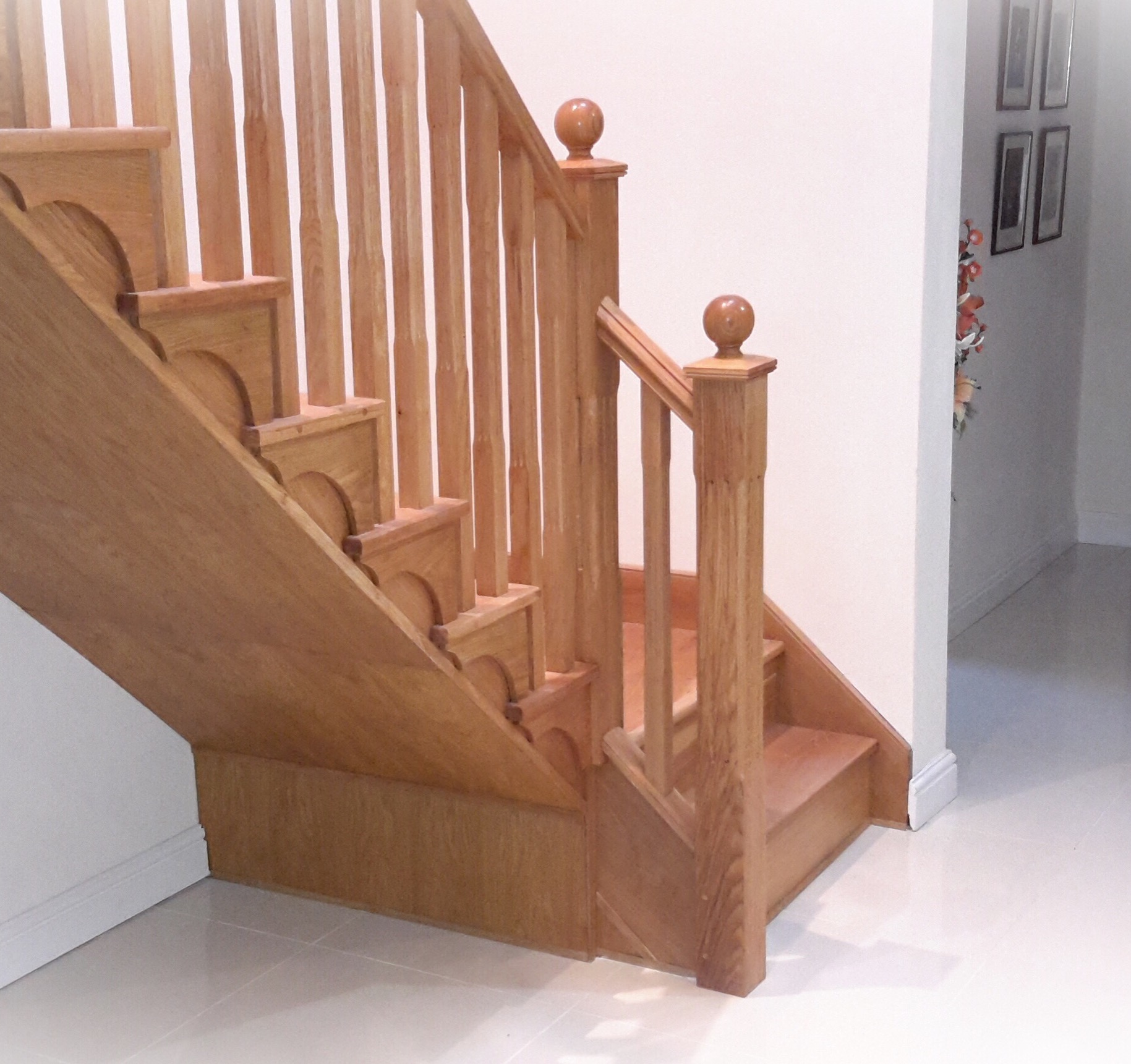
A chamfer on a timber spindle lets light catch the edge without adding a turned profile. Pair it with a simple finish if you want the grain to remain visible. Notice how the spindles meet the rail and compare that shape with the newel cap. You can keep one piece decorative while making the shapes on the other components a little quieter.
18. Refresh an Existing Oak Stair With Dark Paint
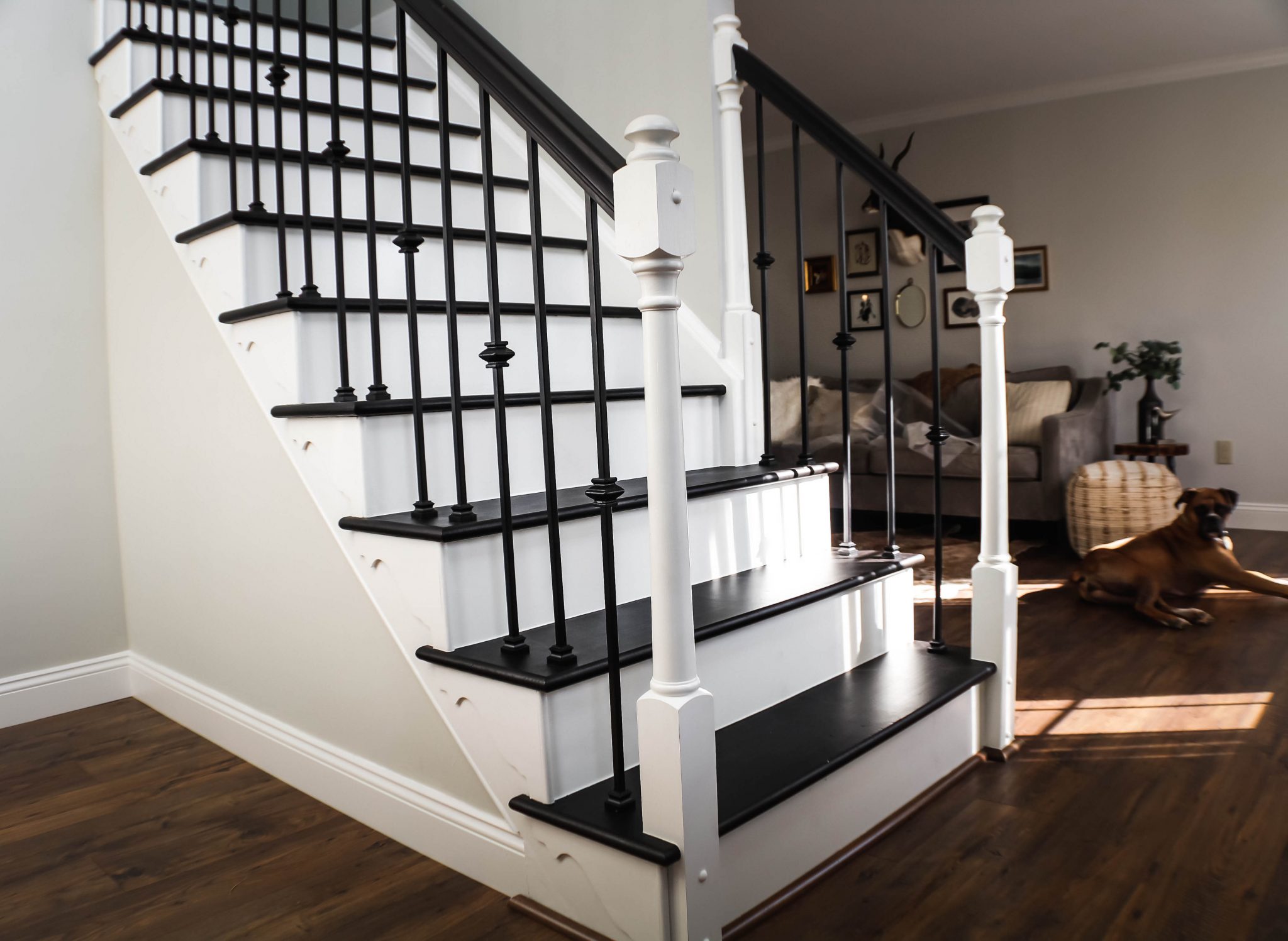
Start by looking at what is worth keeping on an existing oak staircase. A dark painted finish can change how the wood and rail read without introducing another decorative profile. Try the color on a sample first, especially if the hall gets little daylight. Have an unstable railing repaired before cosmetic work and choose finishes suitable for the surfaces you are coating.
Check the Guard Before Choosing a New Profile
The pictures show visual choices. Before changing a railing or guard, ask a qualified stair professional what is required for your home. Check the rules adopted where you live, including those on openings and handrails. The International Residential Code is a US model reference. Requirements can vary with location and stair type.
Compare a Spindle Sample at the Bottom and Landing
Pick two profiles and view them where the rail meets the wall, then take them to the landing and look again. Notice which profile fits the scale of the newel and shows enough detail in your hallway light. A simple photo from each angle can help you compare the finish before making a choice.
- Small Entryway Corner Storage Ideas
- Wall-Mounted Entryway Mail Pocket
- No-Sew Lampshade Cover From Fabric
What would you change first about your stair spindles: the finish, the shape, or how they pair with the handrail? Tell us in the comments which detail you’d test on a sample before committing to the whole staircase.













0 Comments