26 Relaxing Patio Layout Ideas for Outdoor Living
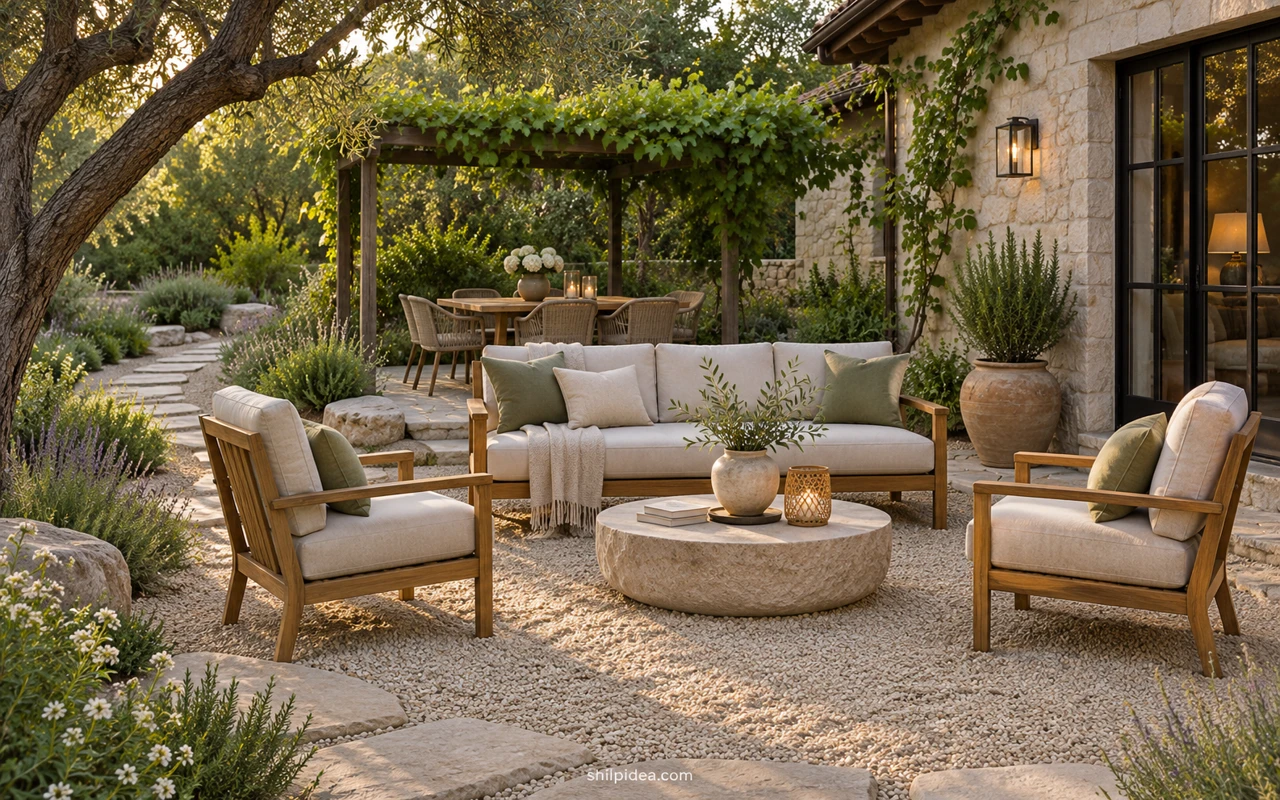
A relaxing patio is easy to move through and gives you a place to sit as soon as you step outside. Start with the route between the house and garden, then decide where you want people to pause.
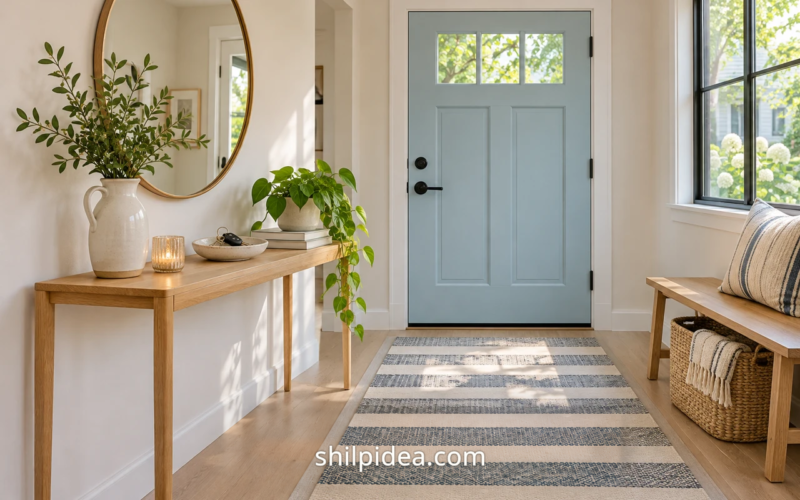
Notice where afternoon sun and neighboring windows fall before you decide where to sit. Keep the entry clear as you do indoors. These front entry ideas offer ways to use the edges of a space.
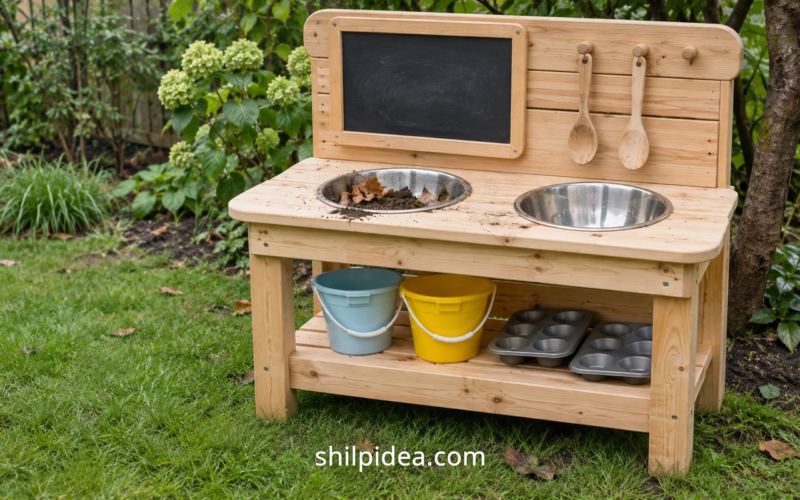
Here are 26 layouts and details to try, from a compact dining nook to separate garden zones. If the yard is shared with children, explore these outdoor play ideas.
1. Lead Into the Patio With a Planted Path
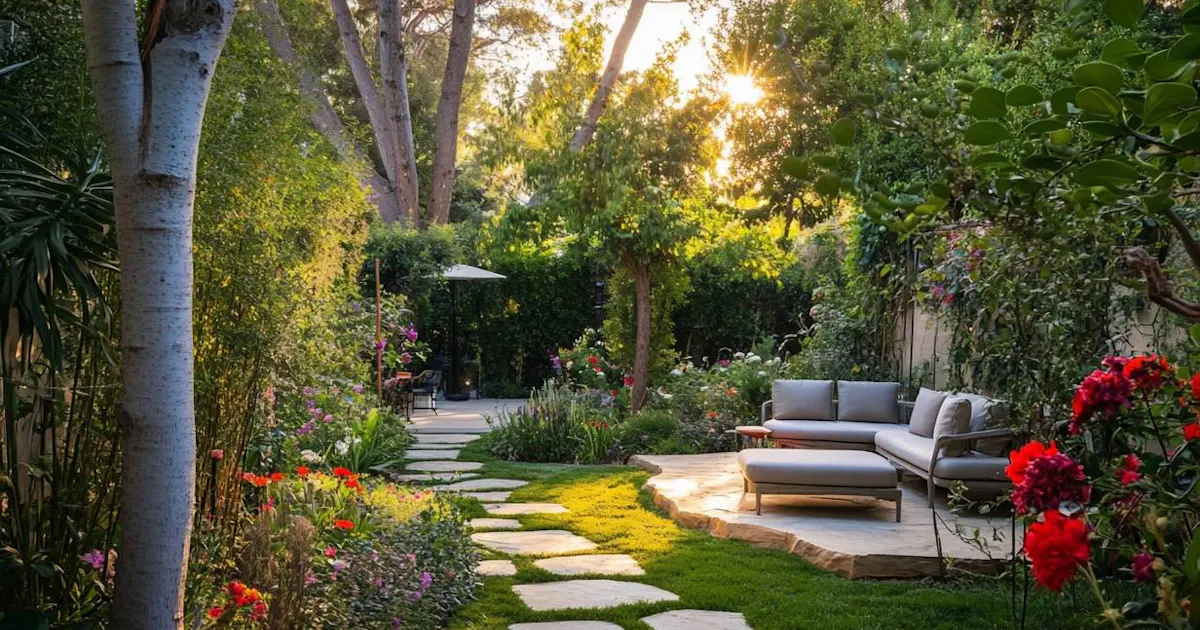
A planted path helps the patio feel like part of the garden. Keep the paving wide and easy to see where people carry food or walk at dusk. Let plants soften the sides while leaving the middle open. For a smaller yard, place your largest pots just beyond the entrance so they frame the route without squeezing the doorway.
2. Keep an Open Lawn Between Outdoor Rooms
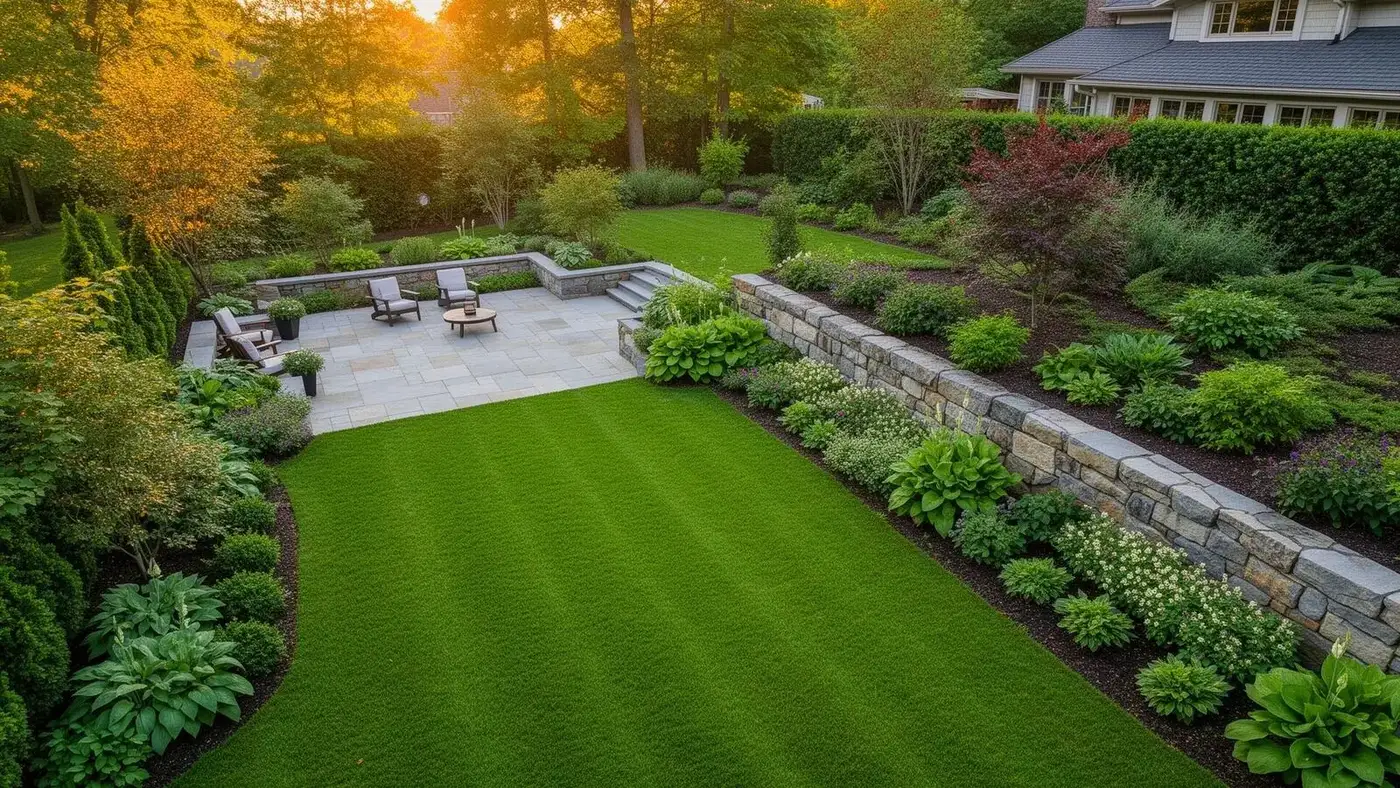
Leave a central patch of lawn open when several terraces or seats share the same yard. The open area gives you a place to look and a clear route between outdoor corners. Put heavier furniture on hard surfaces at the edge. If your lawn is small, use a straight route between the house and the far seating area to keep the yard easy to cross.
3. Turn Two Sofas Toward a Shared Table
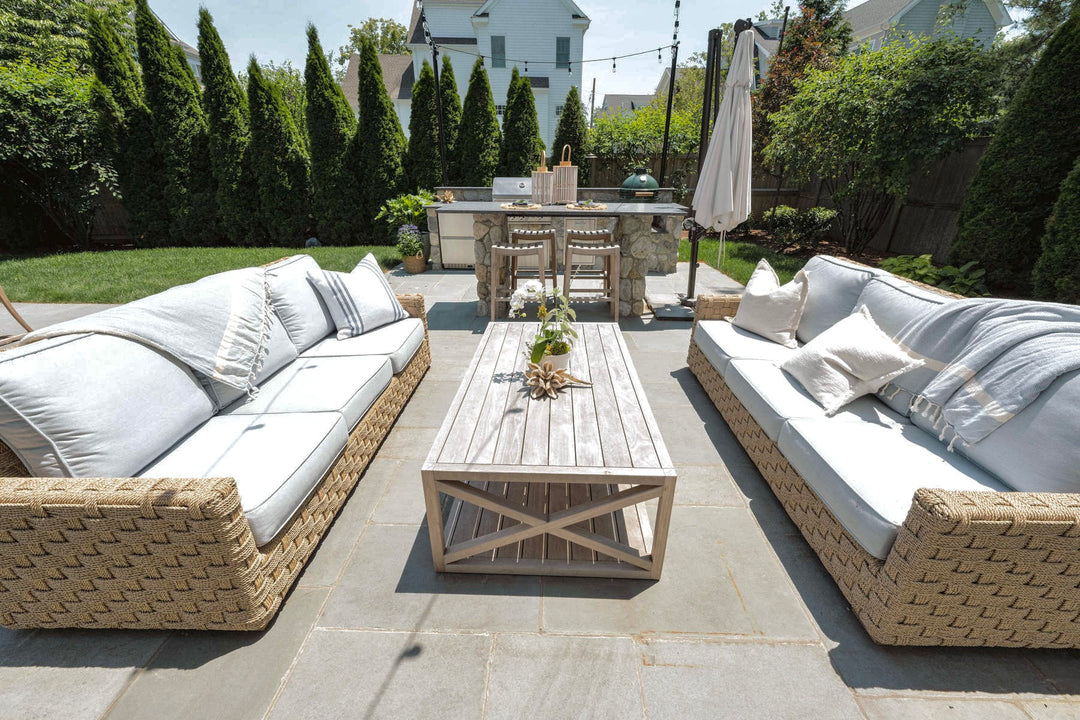
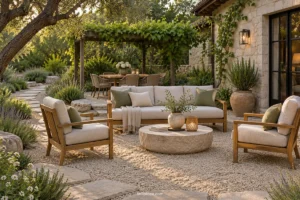
Two sofas can make a patio feel like a living room when their seats face across low tables. Leave the end closest to the door open so guests can join from the side. Check the distance between the seats and tables with someone sitting down. A single sofa and lighter chairs can give a narrower patio a similar conversation layout.
4. Fit a Nesting Table Beside a Seat
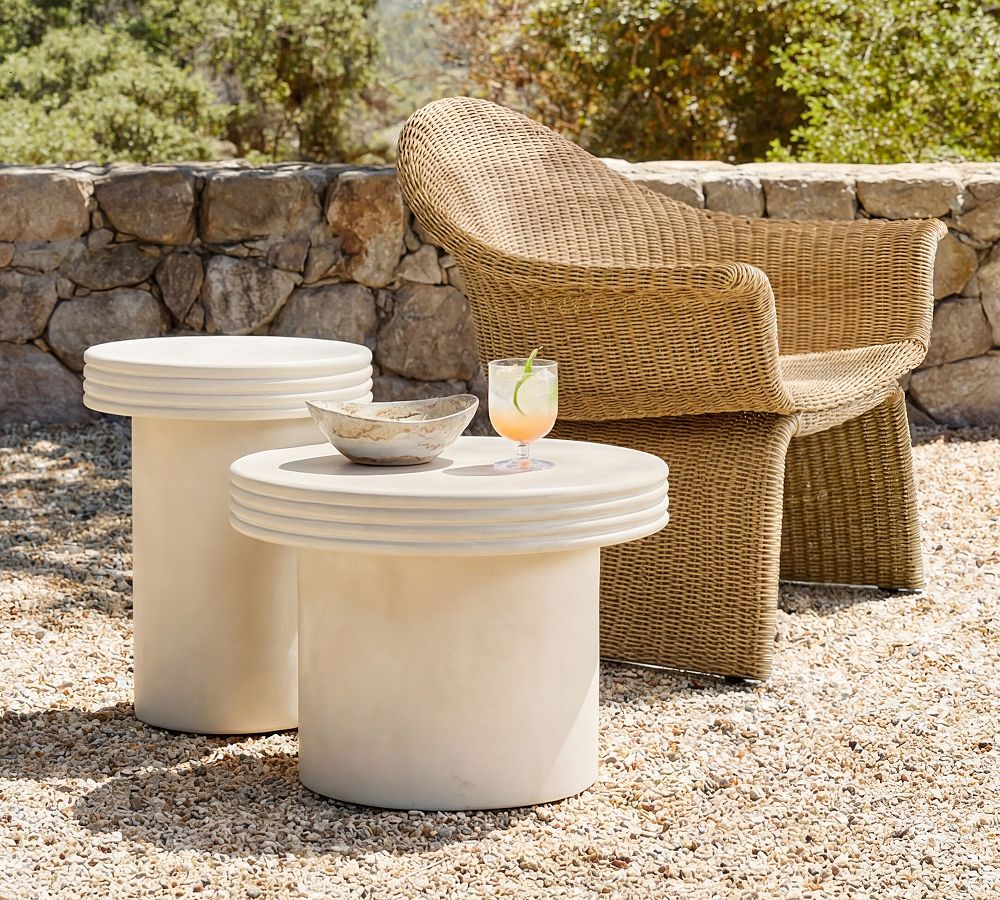
Nesting tables make sense in a small seating area that sometimes needs more surfaces. Keep the higher table next to the chair and pull the smaller one out when guests arrive. Check the height with the actual seat cushions in place. The tables should tuck together without narrowing the path around the seating or protruding into the doorway.
5. Mark a Small Seating Area With an Outdoor Rug

A rug can make the seating area easier to recognize on a broad deck. Pick one sized to connect the main seats without crossing the route to the door. A low edge is useful where people step on and off the rug. If the patio gets heavy rain, choose a rug and underlay that can drain and be lifted for cleaning.
6. Group Planters Where the Deck Meets the Garden
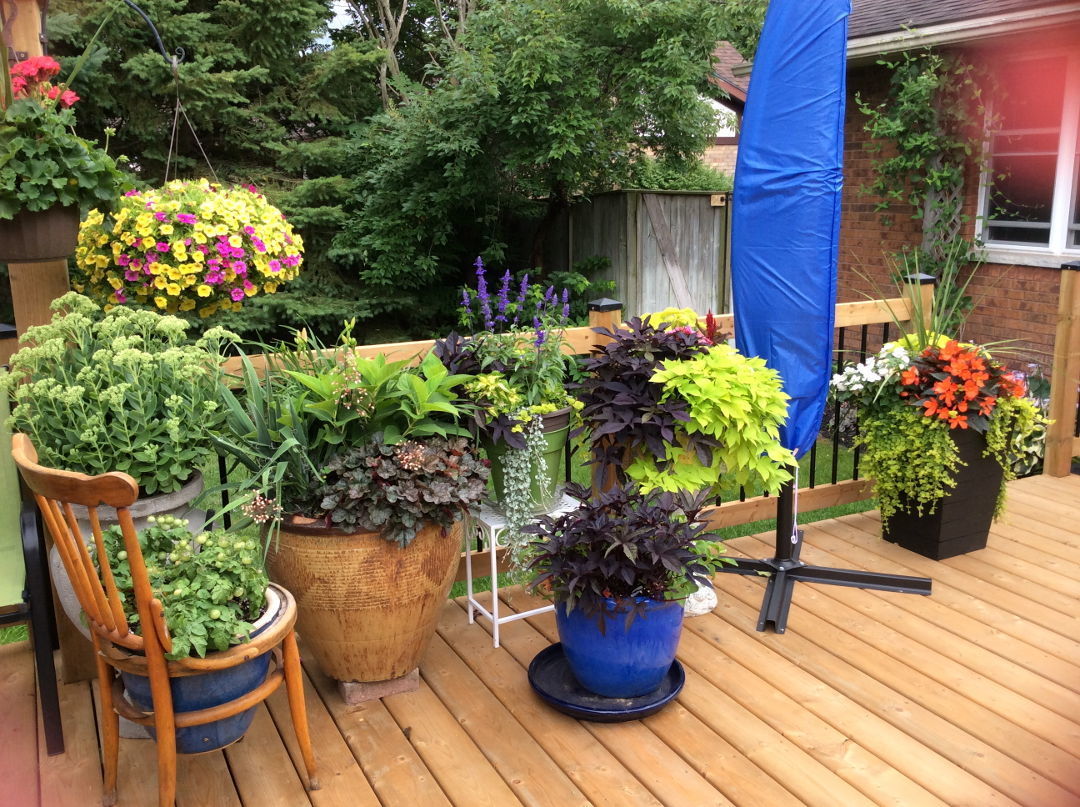
A few pots near the edge give the deck a planted boundary. Use different heights on one side and keep the entry side open. Choose pots you can tend without moving the furniture and leave room for the plants to fill out. On an exposed deck, compare the size and weight of the pots with the wind and drainage conditions.
7. Give the Sofa a View Across the Patio
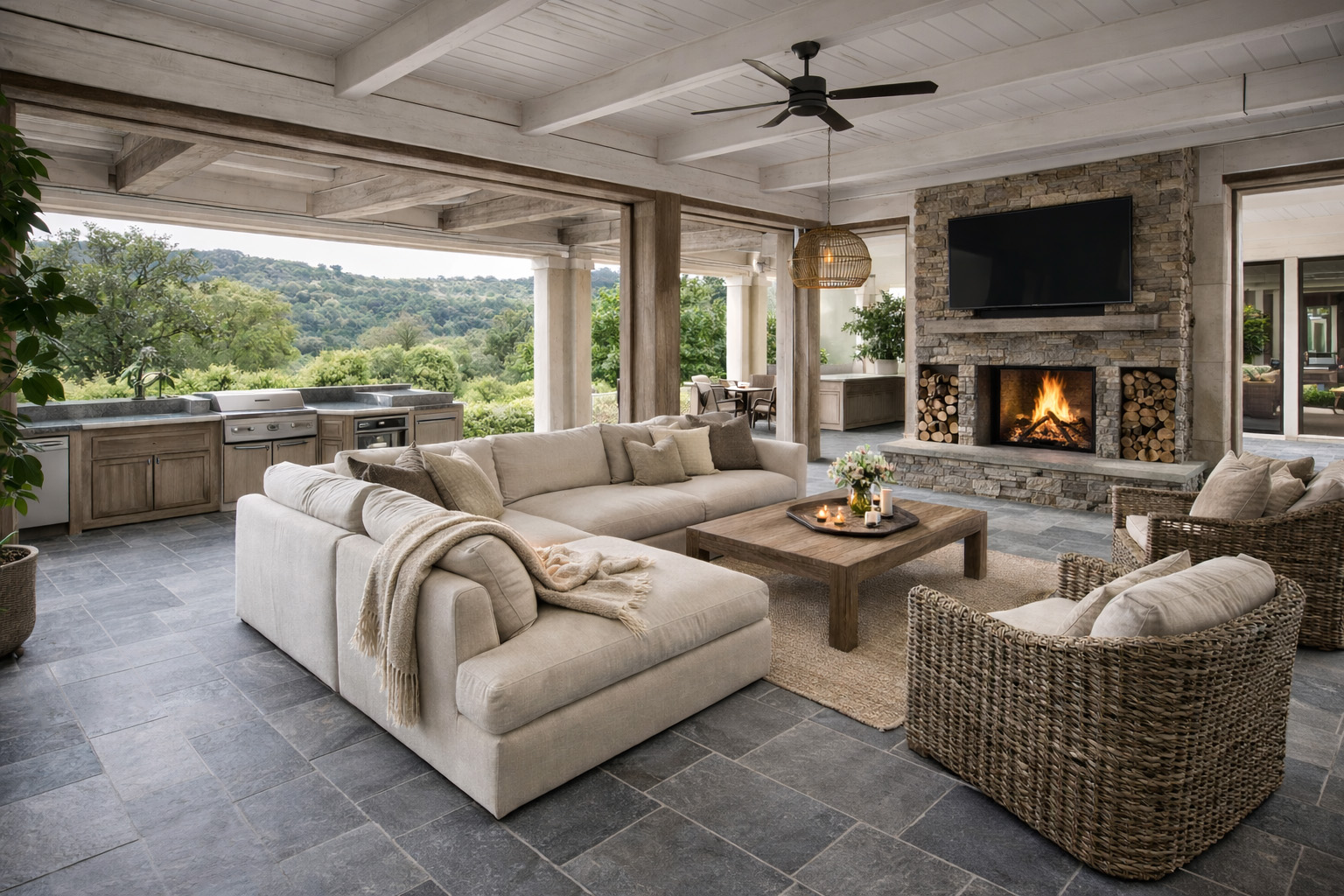
Choose the view first when a sheltered patio has a fixed focal point. Aim the largest seat toward it and place secondary seats at angles that still work for conversation. Leave the most direct path from the house outside the group. If your focal point is a garden instead of a wall, turn the chairs to keep the view open.
8. Save a Corner for a Hanging Seat
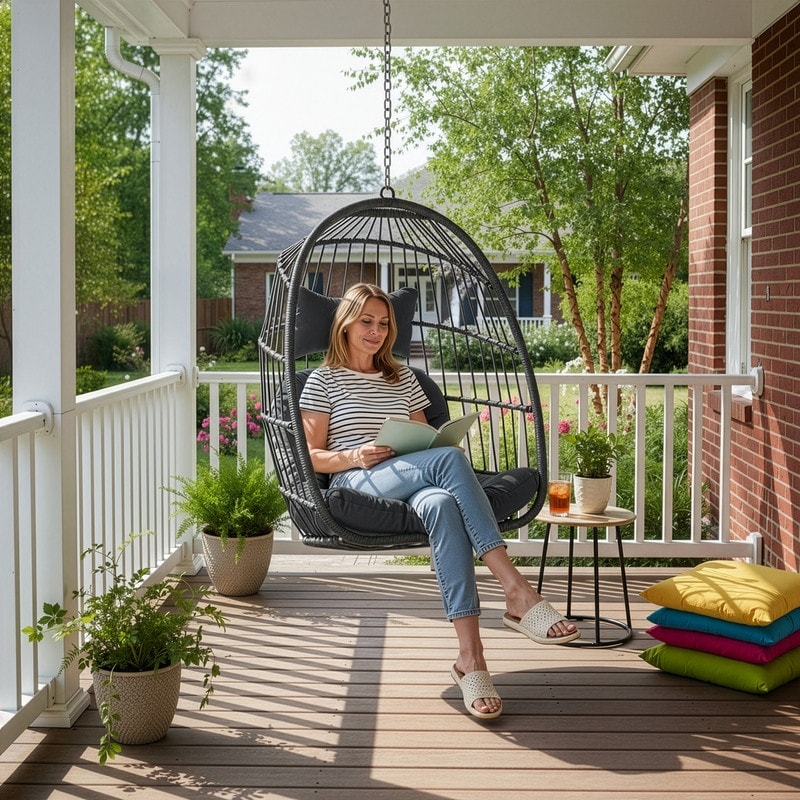
Hanging chairs need their own zone because they move as people get in and out. Set them beyond the path to the house and leave an open area in front. Use hardware and supports rated for the chair and its occupants and have a professional confirm the mounting. A freestanding chair with a stable base can work where a ceiling mount is impractical.
9. Angle One Chair Toward the Main Group
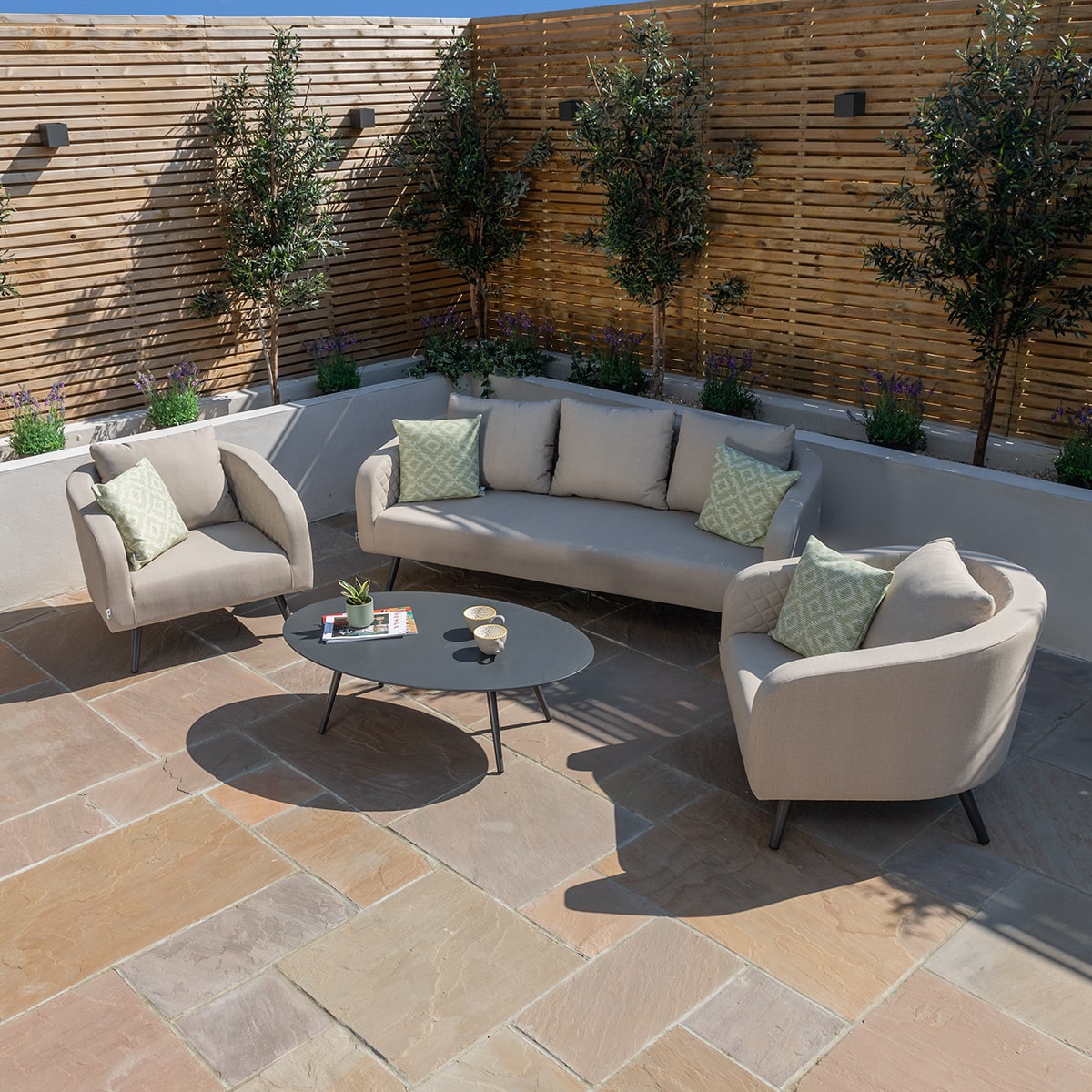
Turn a single chair slightly inward to join a larger seating group. The angle makes it easier to see the other seats while leaving room at the outside edge to enter. Move the chair into place before buying a coffee table so you can check the gap. Keep any seating clear of appliance or fireplace areas according to their installation instructions.
10. Place a Bistro Table by the Kitchen Door
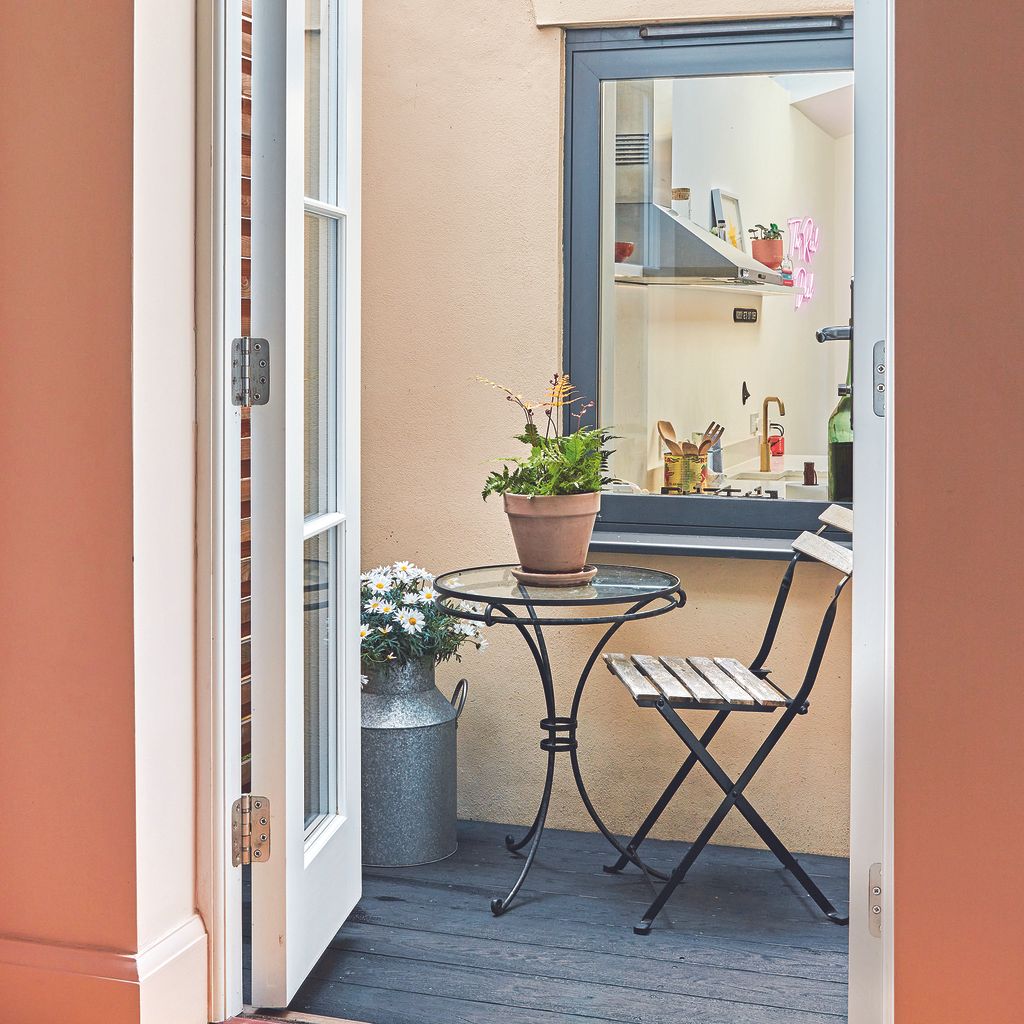
A bistro table close to the kitchen makes a quick breakfast easy to bring outside. A round top gives the chair backs room to turn when space is tight. Fit the table beside the door opening instead of directly across it. Test the layout with both chairs pulled out and a tray in your hands before deciding how wide the table should be.
11. Give a Serving Cart Its Own Parking Spot
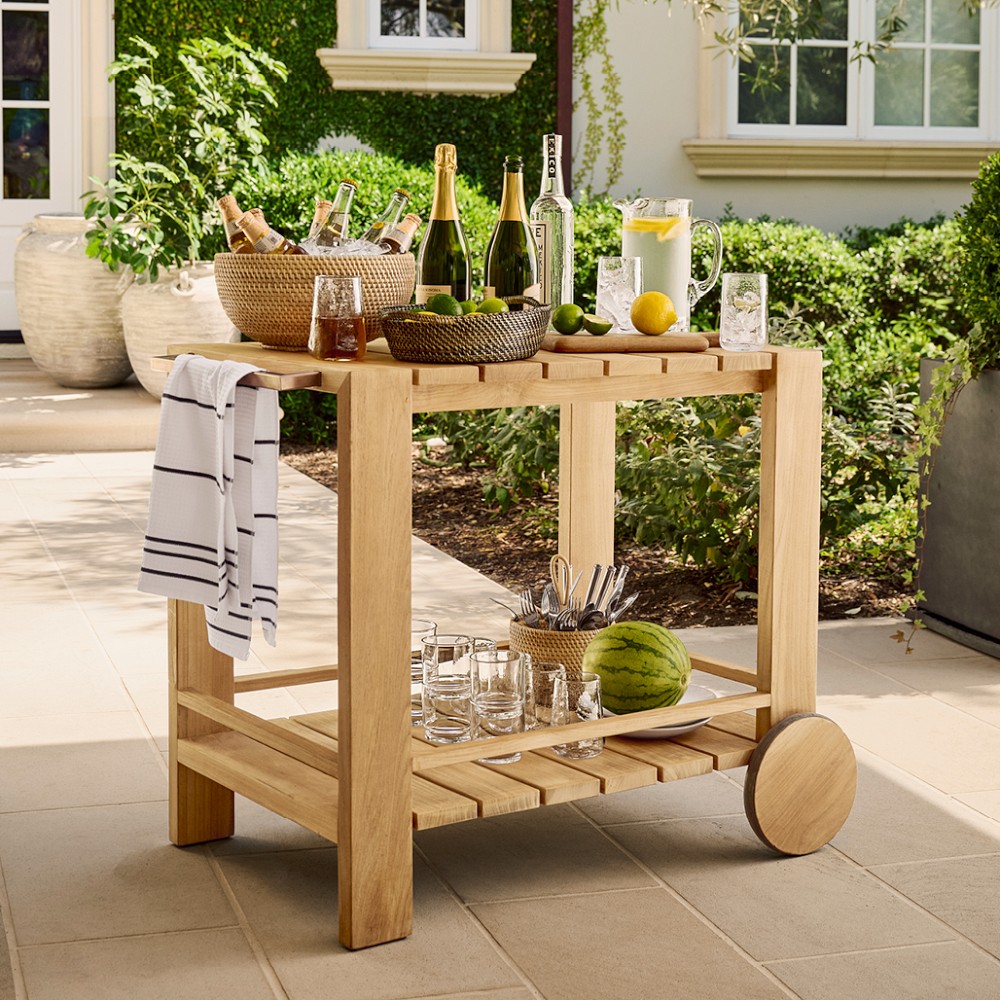
An outdoor cart can hold drinks or serving dishes while the table stays free for eating. Park it where people can reach it without entering the cook’s space or crossing behind moving chairs. Check the cart's surface is level and its wheels can lock if it has them. Bring items that need shelter back inside when you finish.
12. Leave Room Along the Window Wall
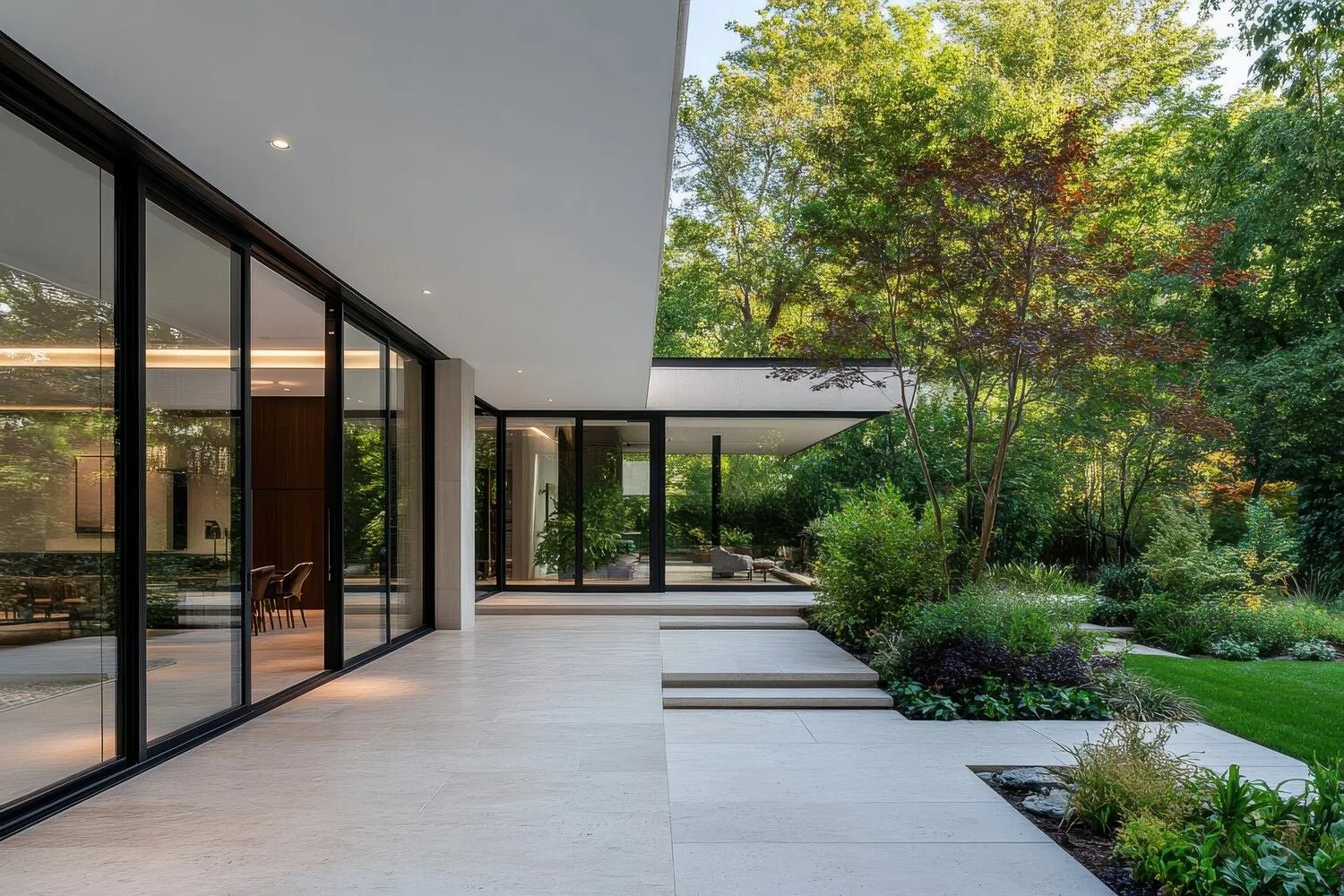
Even a pretty seat can get annoying when it sits on the way to the garden. Keep a clear route along the part of the patio people use to pass through. Use a row of smaller pots along the outer edge if the wall side serves as the main path. Look at the space with the doors open before placing furniture.
13. Put Adjustable Shade Over Outdoor Dining
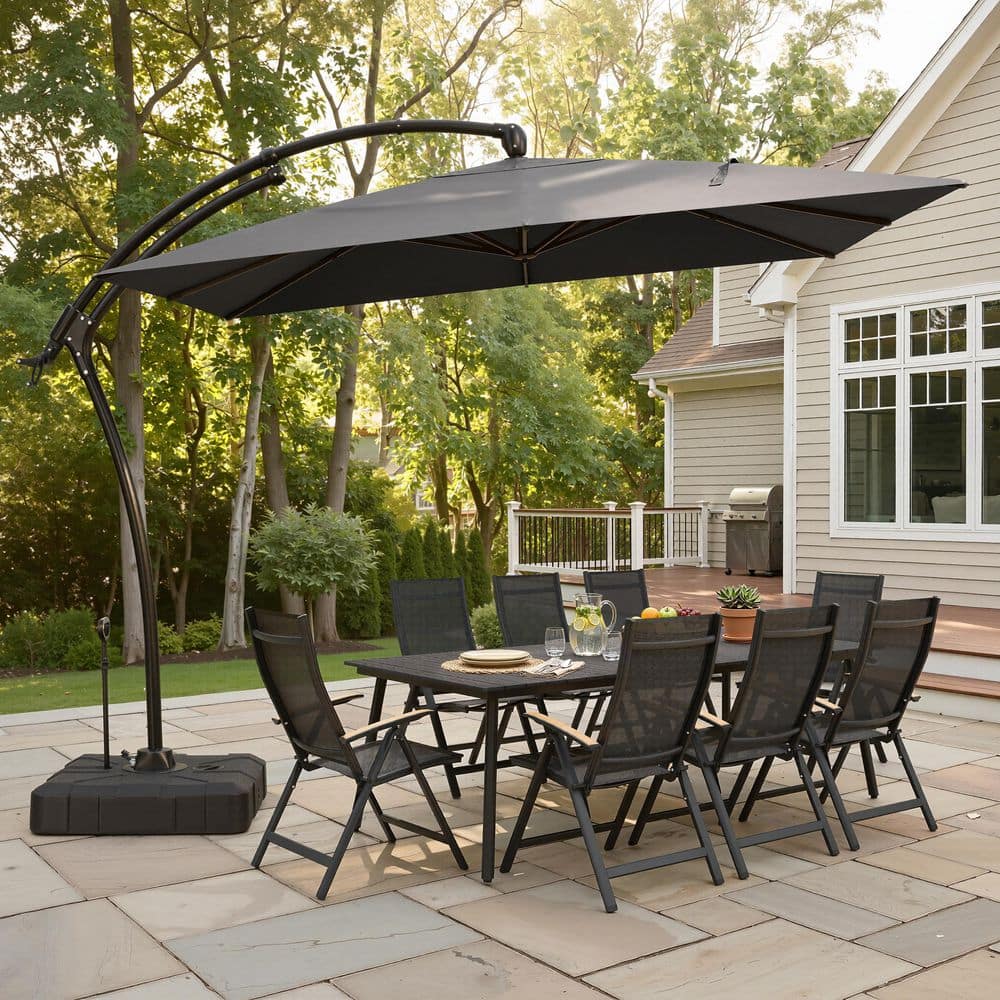
Place the eating area where you can shade it when you tend to sit there. A movable umbrella is useful when the afternoon shade changes sides. Allow room for the base and choose a position that lets people approach all the chairs. Follow the umbrella’s instructions for its stand and close it or remove it as directed in windy weather.
14. Use the Wall Edge for a Small Dining Display
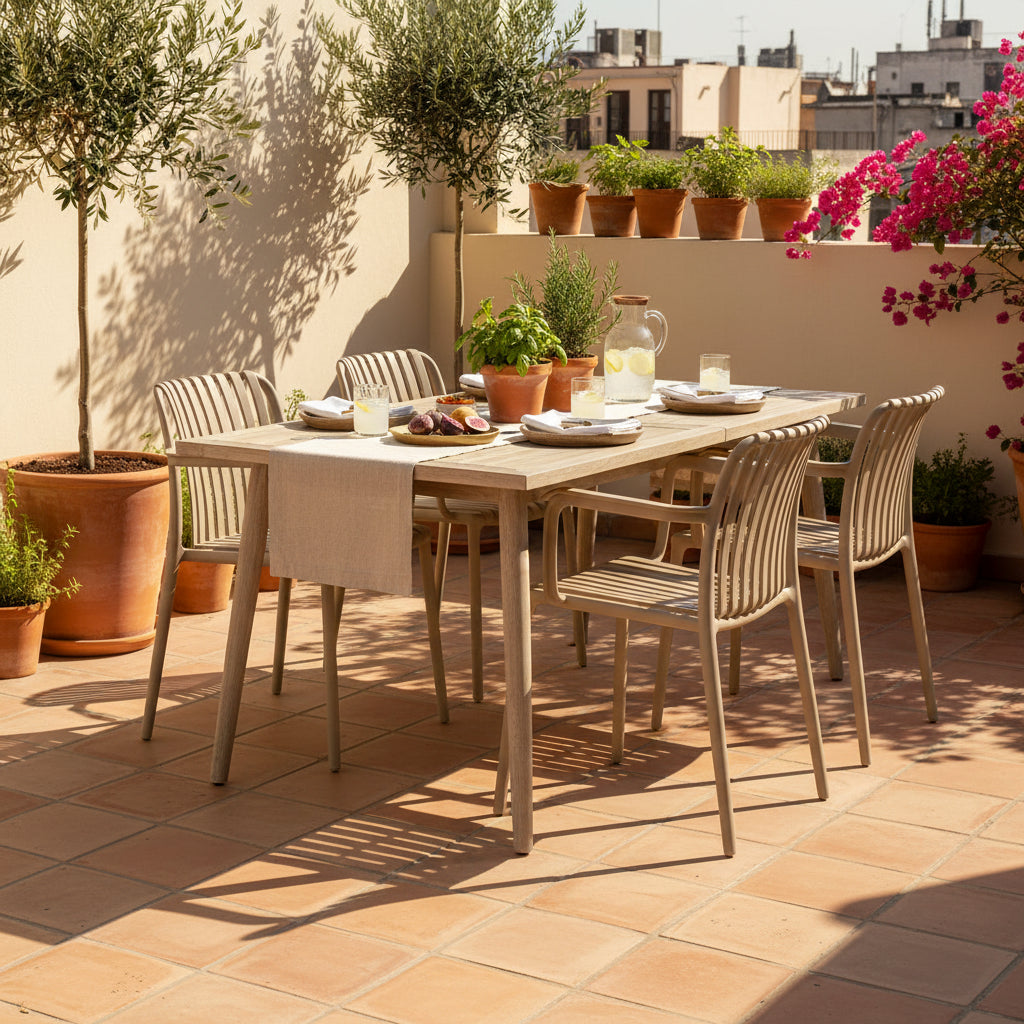
Set a few dishes or plants along the less-used side of an outdoor meal area so the traffic edge stays clear. A tray can move the pieces together when it is time to serve. Keep the center of the table low enough for people to see across it. Bring a watering can around the table once to check that the planters are within reach.
15. Choose Chairs That Keep a Long Table Visually Light
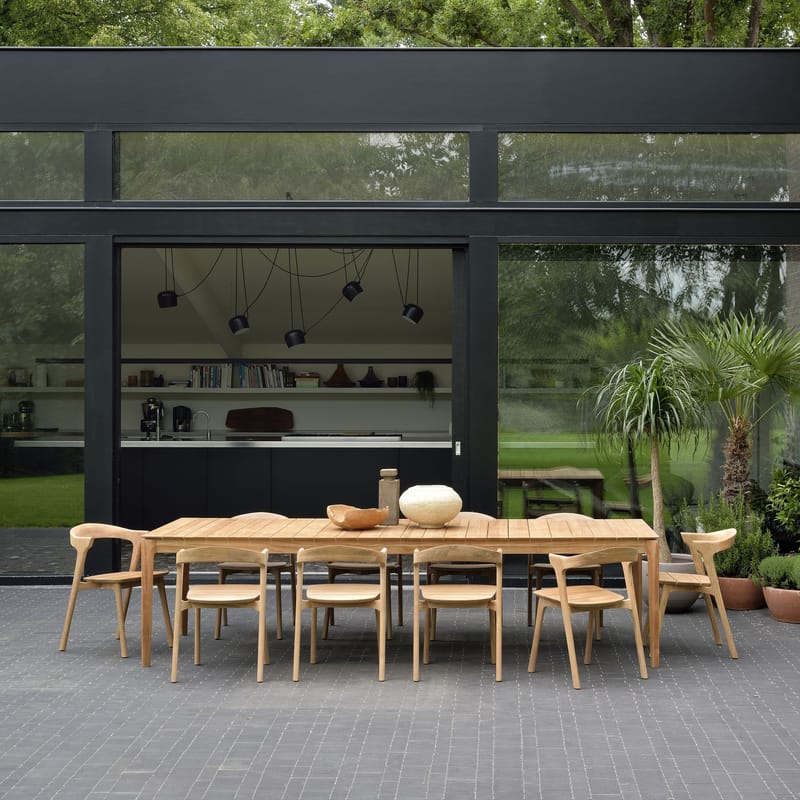
Open chair backs can help a long table feel less solid when it sits in front of windows or a garden view. Arrange the chairs so they can tuck in after dinner and compare the width of the route on both sides. For a table that seats many guests, look for a useful gap at one end for serving and clearing.
16. Plan Outdoor Zones From Above
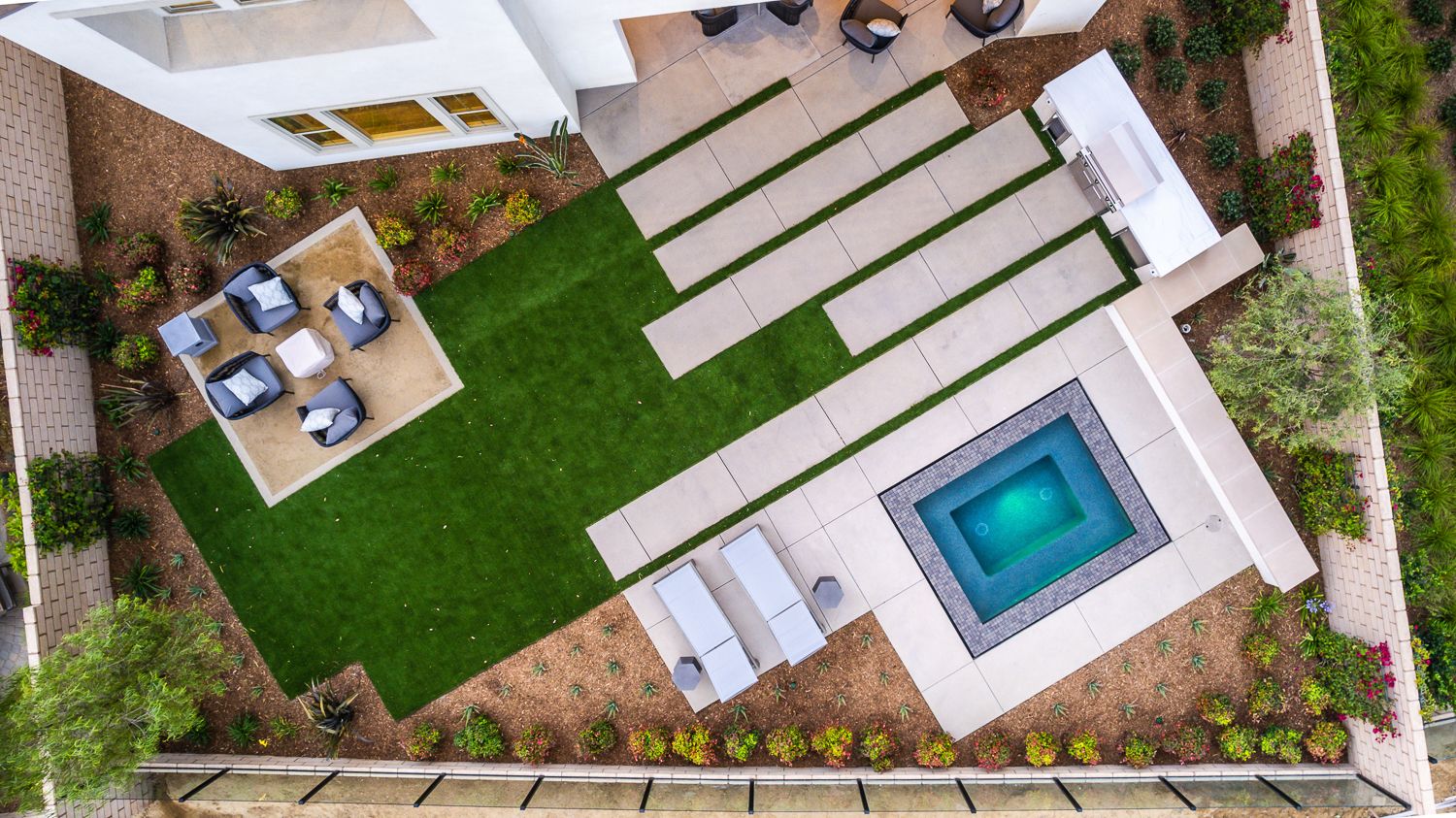
A simple overhead sketch makes it easier to see how the patio connects with the rest of the yard. Mark the doors and paths before placing seating and dining on the drawing. Give each zone enough space for the way you use it. Then test the most frequent trip, such as carrying plates outside, at full size before shifting heavy pieces.
17. Separate the Poolside Seats From the Garden Route
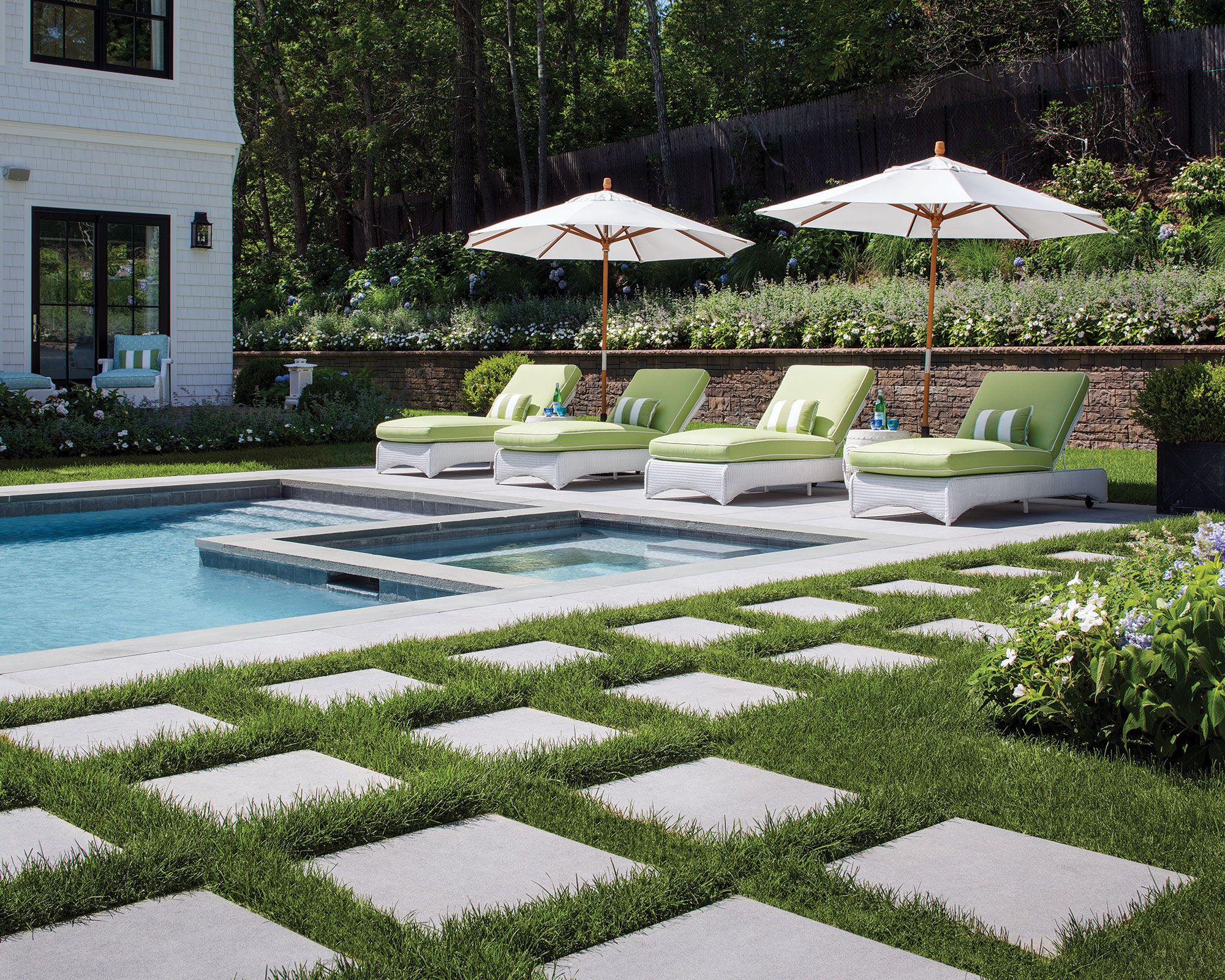
Make the poolside seating a distinct destination so people passing through the garden do not have to walk between loungers. Place the seats where their backs and footrests can move without blocking the route. Keep required pool access and barriers clear. A small side table can give each seat a useful drop spot without adding a large shared surface.
18. Use Steps to Signal a New Zone

A change in level can separate a patio from planting or another outdoor area. Leave the top and bottom of the steps clear so arrivals can see where to land and turn. Where an existing route needs improvement, look at how it works after dark and in wet weather. Choose suitable lighting and leave the first tread free of containers.
19. Put the Sofa Against the Least-Used Edge

On a compact patio, setting the largest piece along the least-used edge can open the center for movement. Add a chair that is light enough to pull in when someone visits. Test the setup without the table first to see how the seats work together. Then choose a table that lets the main route stay clear even when people are seated.
20. Make a Dining Nook Beside Greenery
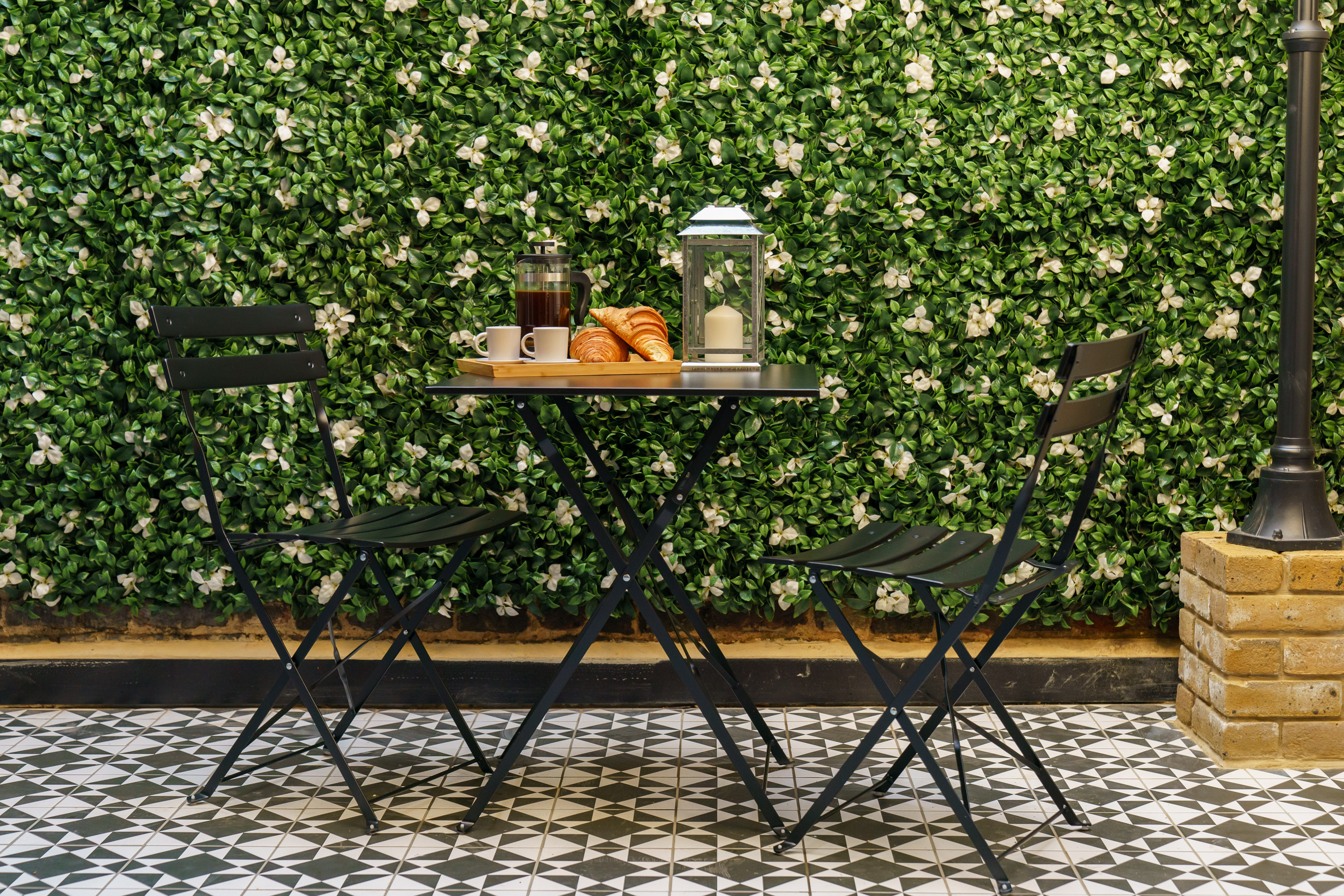
Set a modest table beside an existing hedge or planted edge to give the dining nook a backdrop. Leave room to pull out the chairs and to care for the plants. A round table fits nicely when the route bends around it. Choose a few chairs easy to move so the same area can open up when you need more space.
21. Use a Slatted Wall for Small Planters
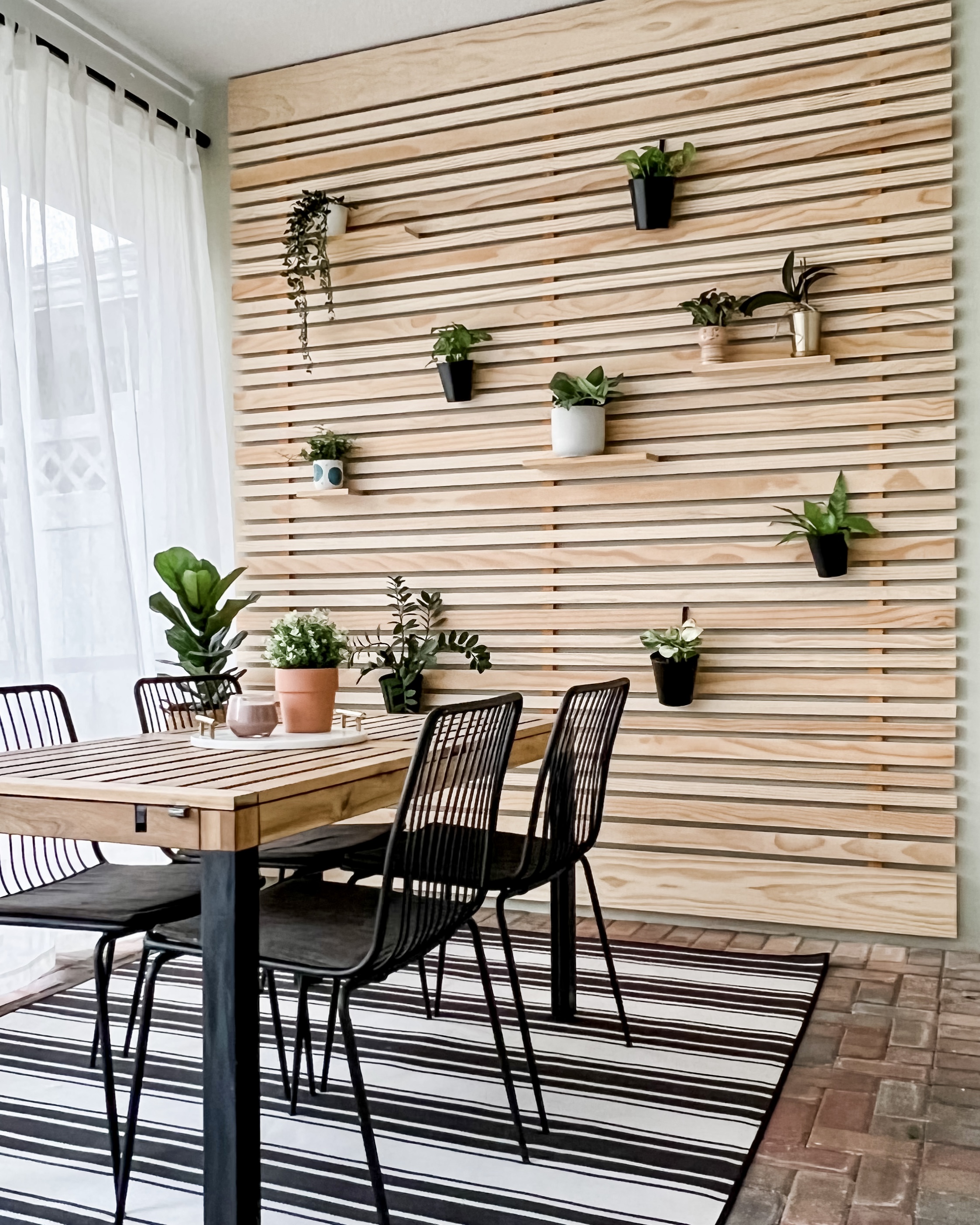
Clip small planters to a slatted wall beside the table to leave room for chairs to slide out. Place the pots where you can reach them from the side, with a tray below any that drain over the dining area. Check that the hooks can hold the pots when the soil is wet. Leave one slat empty at eye level so the display feels open.
22. Add Small Seats You Can Move
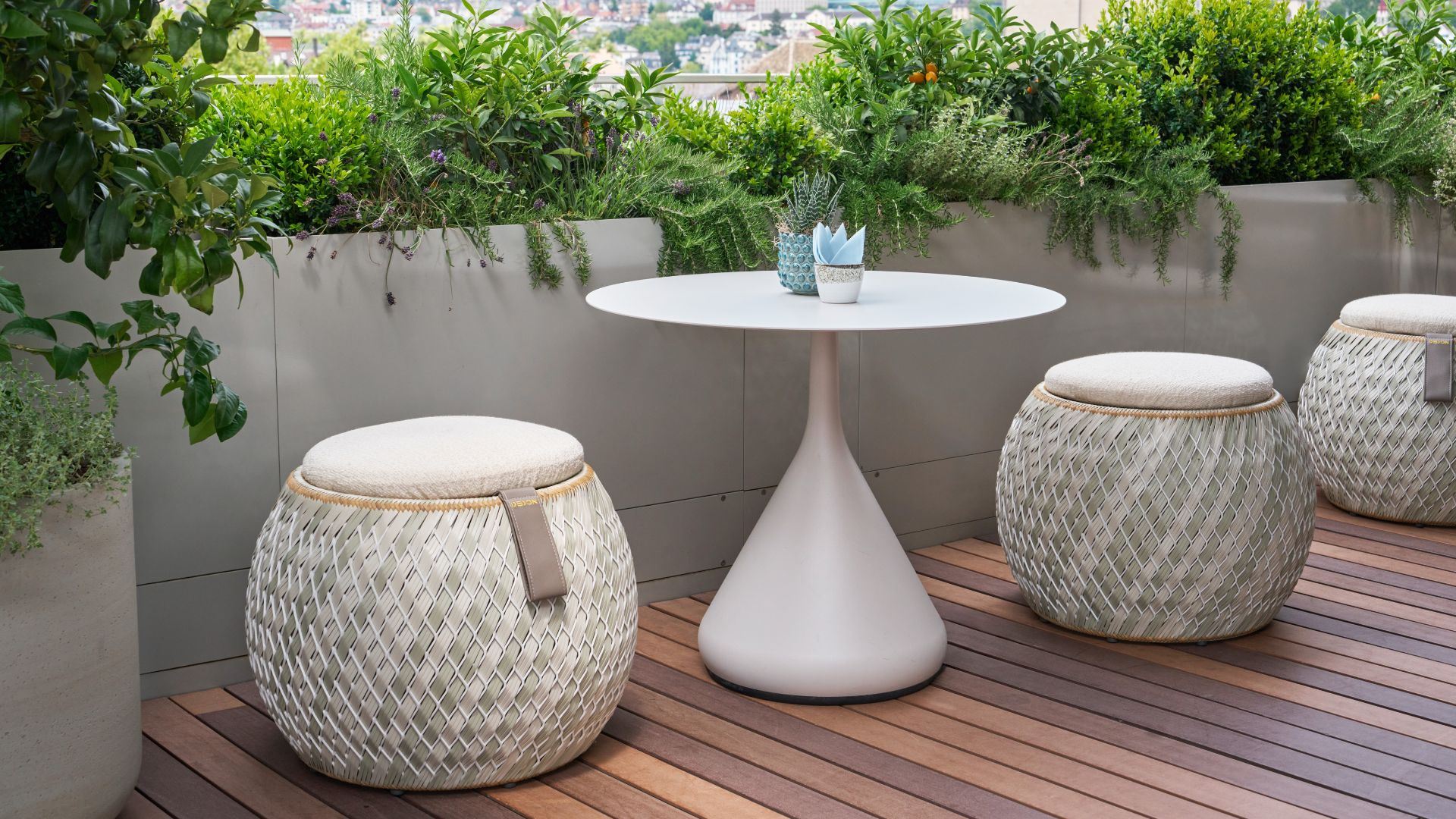
A movable stool or outdoor pouf gives a tight patio a flexible seat. Keep it near the edge while the space is being used for dinner, then move it toward the conversation when guests finish eating. Pick a stable seat that suits the surface and can be stored nearby. One or two smaller pieces are easier to shift than extra full-size chairs.
23. Give the Lounge a Pergola Boundary
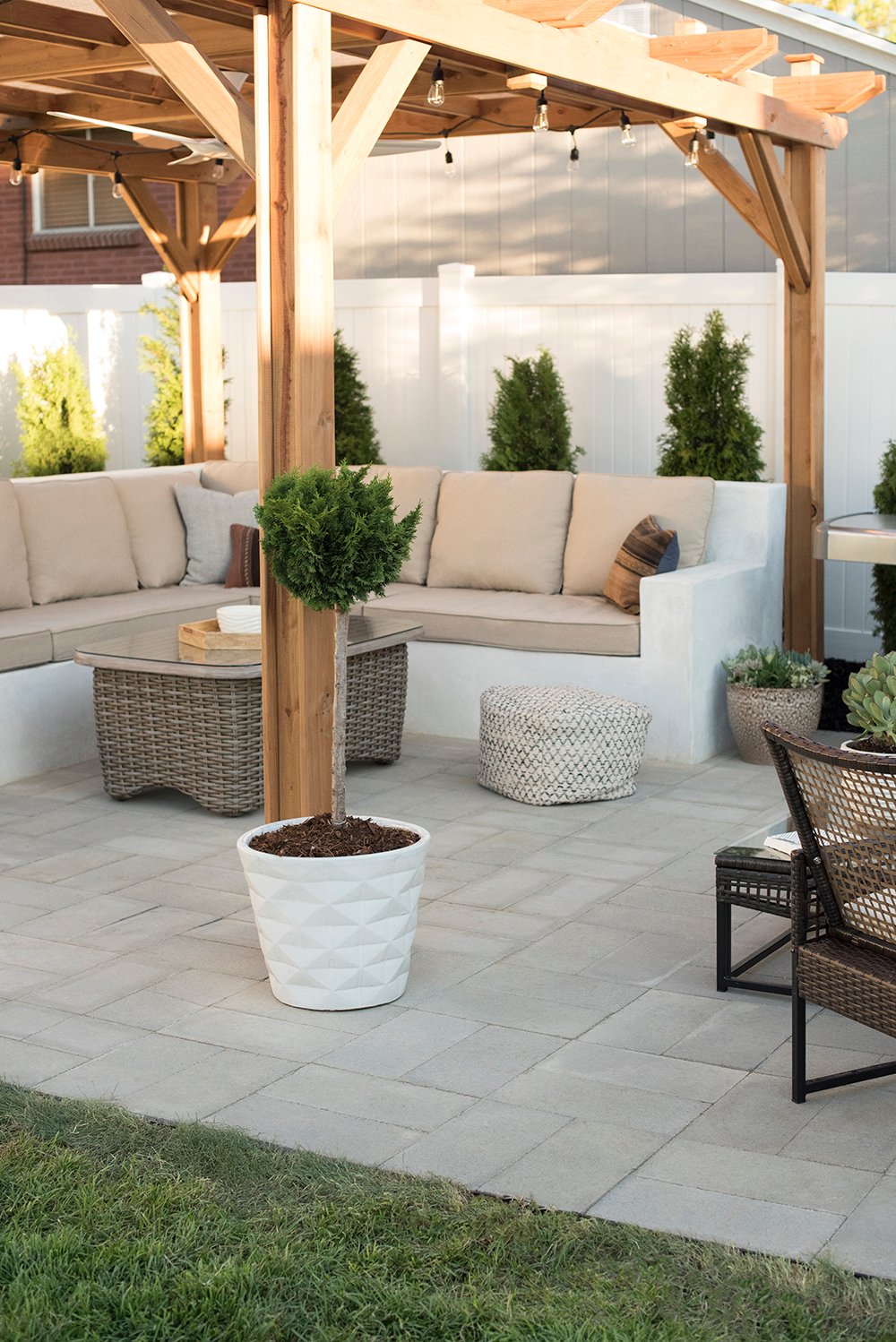
A pergola can give the lounge a clear outline when it shares an open space with the lawn. Put your seating within the frame but keep access between the posts clear. Plan where shade will fall during the time you use the patio. If you add screening or fabric, check the structure and products for suitability in wind and rain.
24. Keep the Grill at the Edge of the Social Area
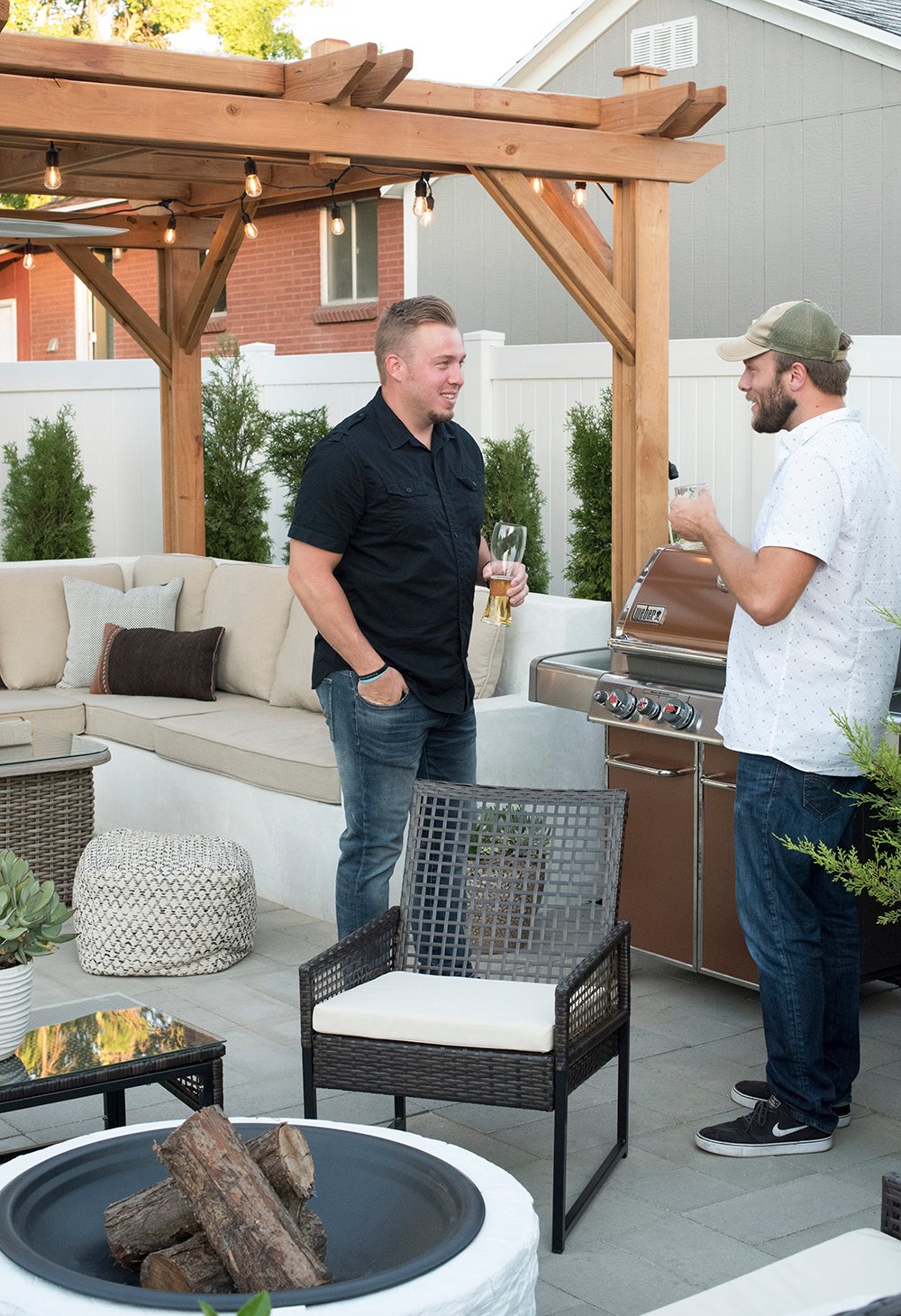
Putting the grill on the edge of the patio lets the cook stay in the conversation while keeping service separate from the chairs. Choose a position that follows the manufacturer’s outdoor placement and clearance directions. Give food a separate landing spot and leave room for someone to supervise the grill. Keep regular walking routes clear of the working area.
25. Place Four Seats Around One Low Focal Point

A four-chair group gives each seat a clear place while leaving gaps to move through. For a fire table, plan the layout from the manufacturer's clearance requirements first and keep combustibles out of that area. A low coffee table can anchor the same layout if you prefer an unheated center. Keep an entry gap from the most-used approach.
26. Let Swivel Chairs Serve Two Views

A swivel chair can face the conversation and then turn toward a garden view. Put it where the base stays level and allow space for its full sweep. Test the layout with the chairs turned in both directions and avoid placing a side table where it interrupts their movement. Limit the number of swivel seats when the patio also serves as a route to the yard.
Take a Walk Through the Layout
Set the chairs where they will actually be used, swing the door open and follow the route to the yard. If adding a grill or fire feature, follow the product and local requirements and check the US Fire Administration’s outdoor fire guidance before choosing its location.
Start With the Patio Zone You Use Most
Choose the activity you come outside for most often and give it the easiest place to use. Put a table near the kitchen for everyday meals or give a chair the best view for a quiet break. Then add only as much furniture as your walking routes and storage space can comfortably support.
- Climbing Philodendron Display Ideas
- Natural Thanksgiving Table Ideas
- Small Entryway Corner Storage Ideas
What do you want your patio layout to make room for: meals, quiet mornings, or conversations? Tell us in the comments where you’d put the first seat and how you’d keep the route to the door clear.








0 Comments