20 Most Beautiful Rustic Office Decor Ideas You Should See
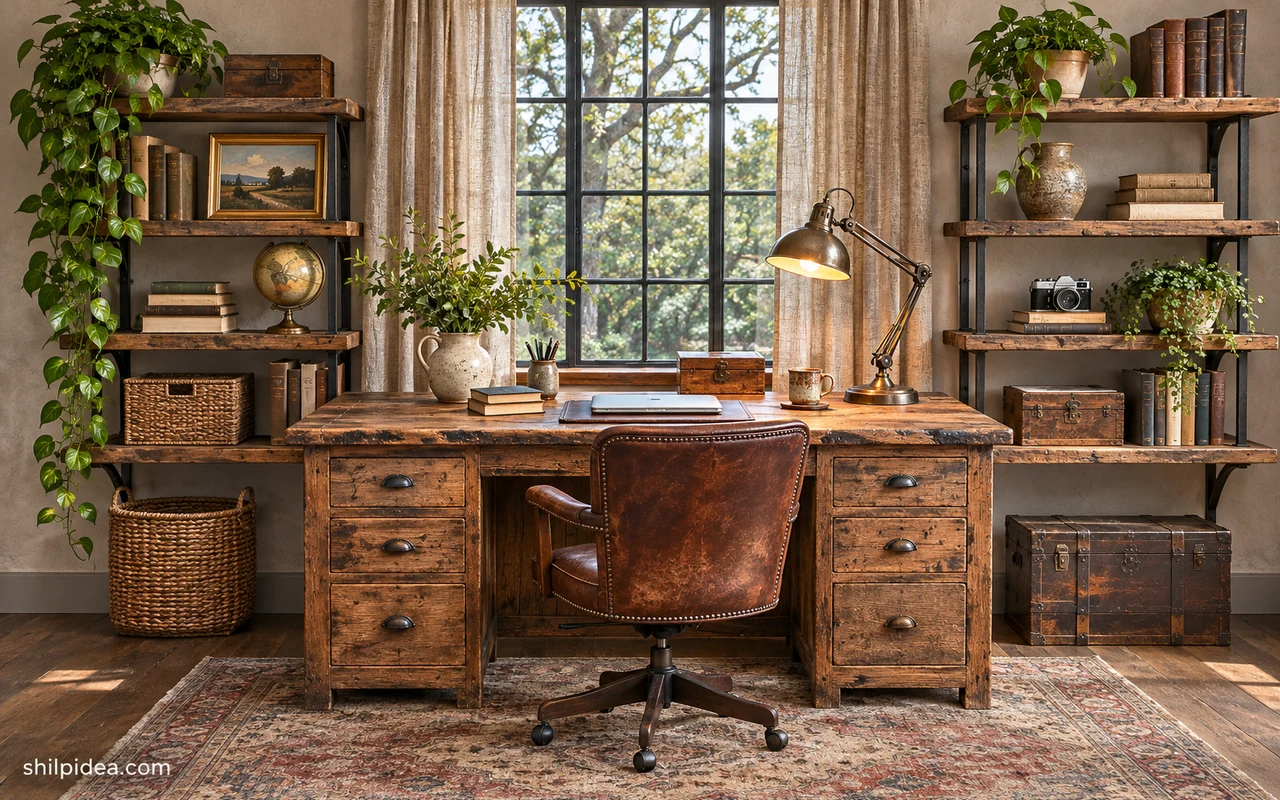
A rustic home office can feel warm and still give you room to get things done. Start by deciding where you need clear space for reading, writing, and using a screen.
Wood grain, simple linen, and a few well-placed shelves create character without crowding the desk. Borrow a finish from these wood wall decor ideas if the surrounding walls feel bare.
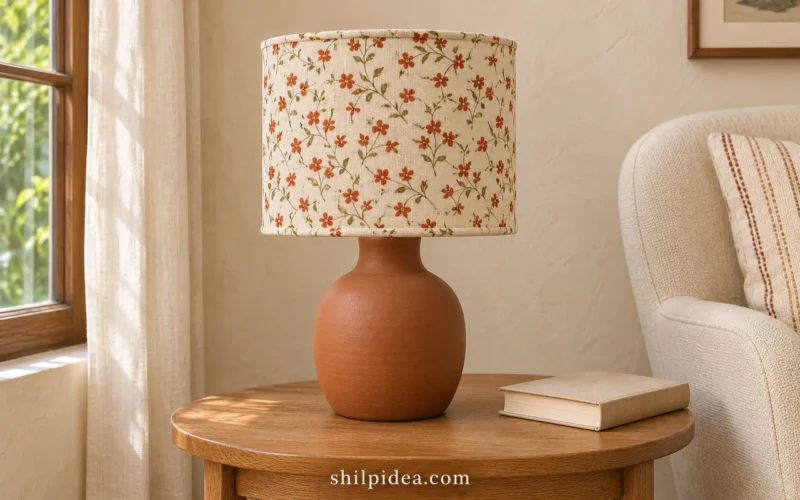
These 20 ideas look at desks, lighting, walls, and storage in a different way. For a small textile update, pair one idea with this no-sew lampshade cover.
1. Let a Slim Oak Desk Show Its Grain

A narrow oak desktop gives a small office a warm surface without taking up much visual space. Keep the center clear and group the lamp and stationery at one end.
Shilpidea tip: Check the depth against your keyboard before choosing a similar desk.
2. Hang Reclaimed Pine Shelves Above the Worktop
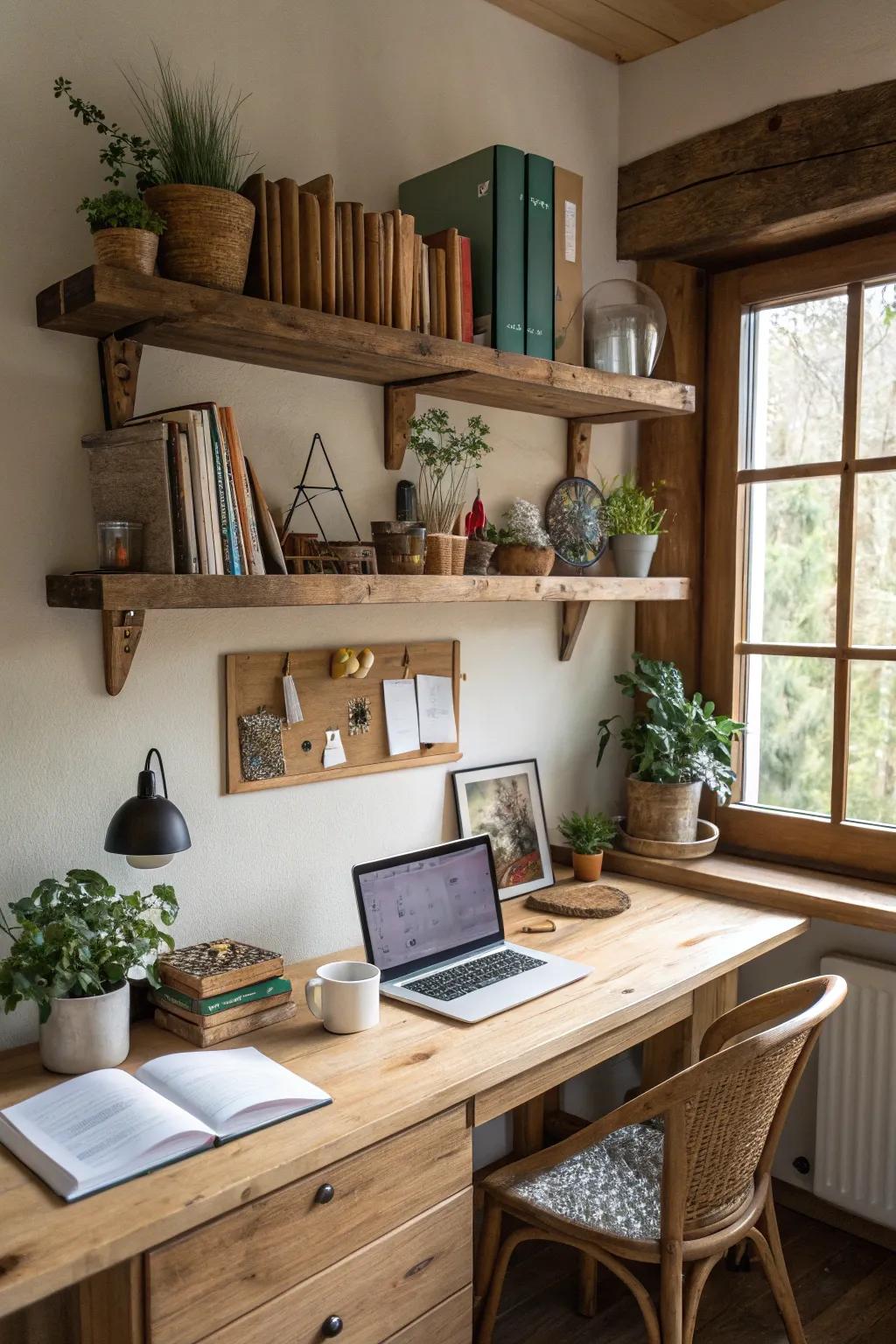
A pair of open shelves makes room for necessities without requiring another piece of furniture. Put the objects you use most on the lower shelf, and leave a gap between groups so the boards stay visible. Match brackets and anchors to the wall and the expected load.
Shilpidea tip: Test the placement from a seated position before installing.
3. Tuck a Console Desk Into a Window Nook

A shallow console can use a spare window nook as long as it leaves room for your legs and work surface. Choose a chair that slides in fully and keep the window latch accessible. Check for screen reflections before settling on the angle.
Shilpidea tip: A small wall light can free up room on the narrow desktop.
4. Build Storage Into the Desk Wall
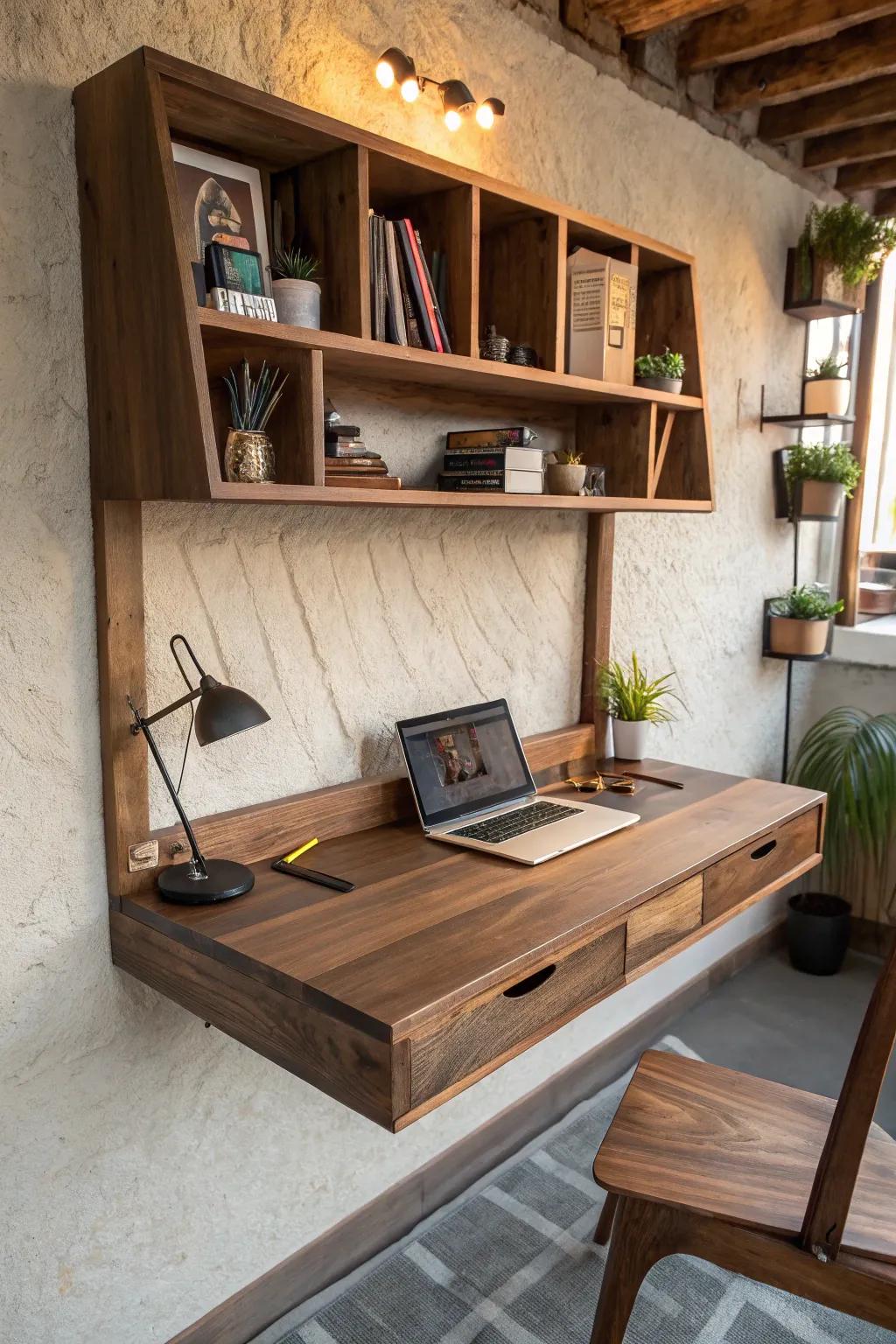
Shelves above a wall-mounted desk keep everyday supplies within reach. Reserve the shelf just above the worktop for small items and leave the central space clear for a screen.
Shilpidea tip: Measure seated eye level before deciding shelf height.
5. Support a Weathered Desk With Slim Cabinets
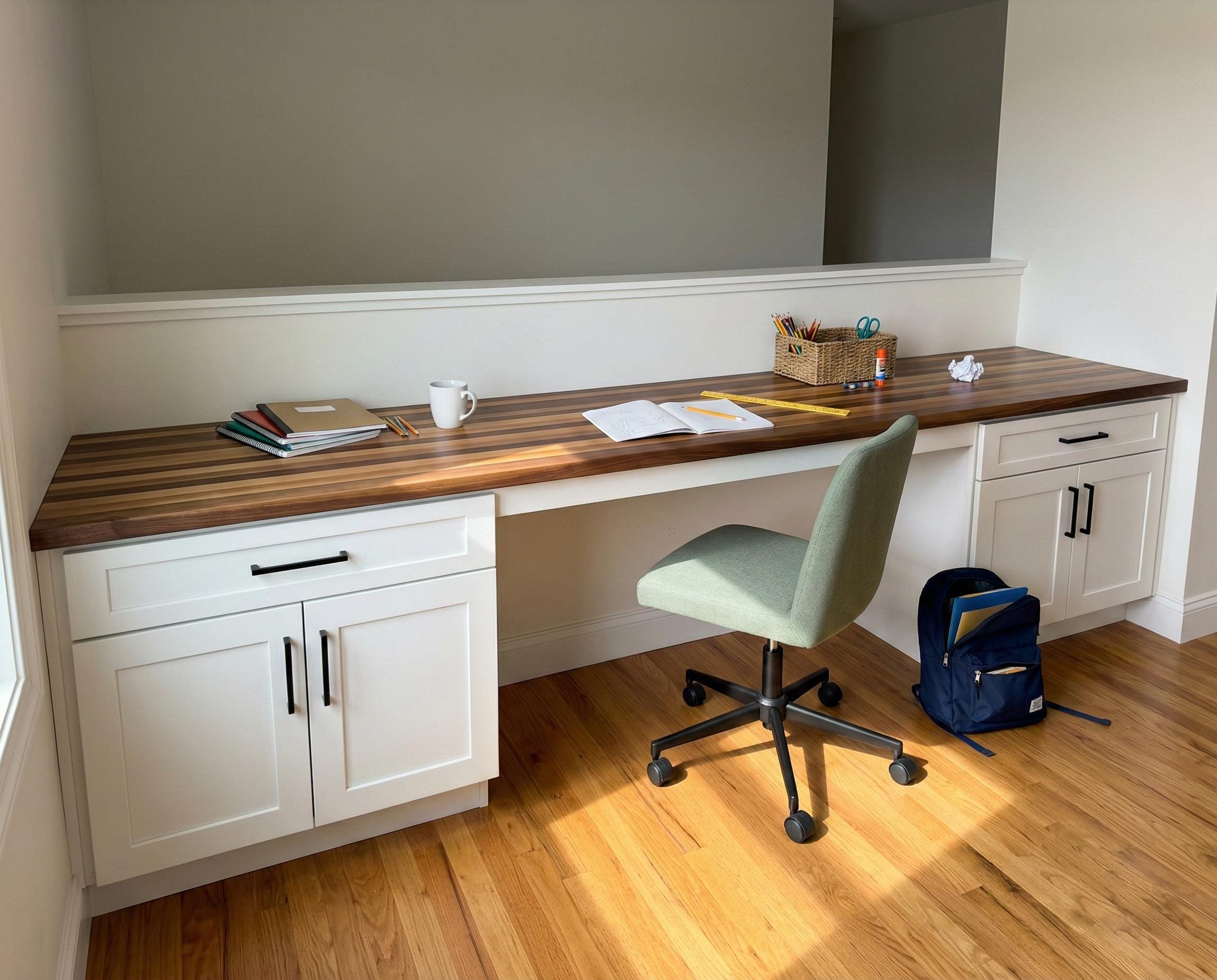
Matching cabinet bases provide covered storage at both ends of a long wooden desktop. Test the distance between them with your chair before building so your knees and chair arms clear the sides. Keep the cable path open behind the cabinets.
Shilpidea tip: If you use old bases, inspect the condition and level them before attaching the worktop.
6. Use a Pine Desk With Built-In Drawers

Recycled pine gives this drawer desk its warmth. Give each drawer a job before moving supplies in.
Shilpidea tip: Store the items you use during a call in the nearest one so you can find them without clearing the worktop.
7. Ground the Chair Area With a Woven Rug
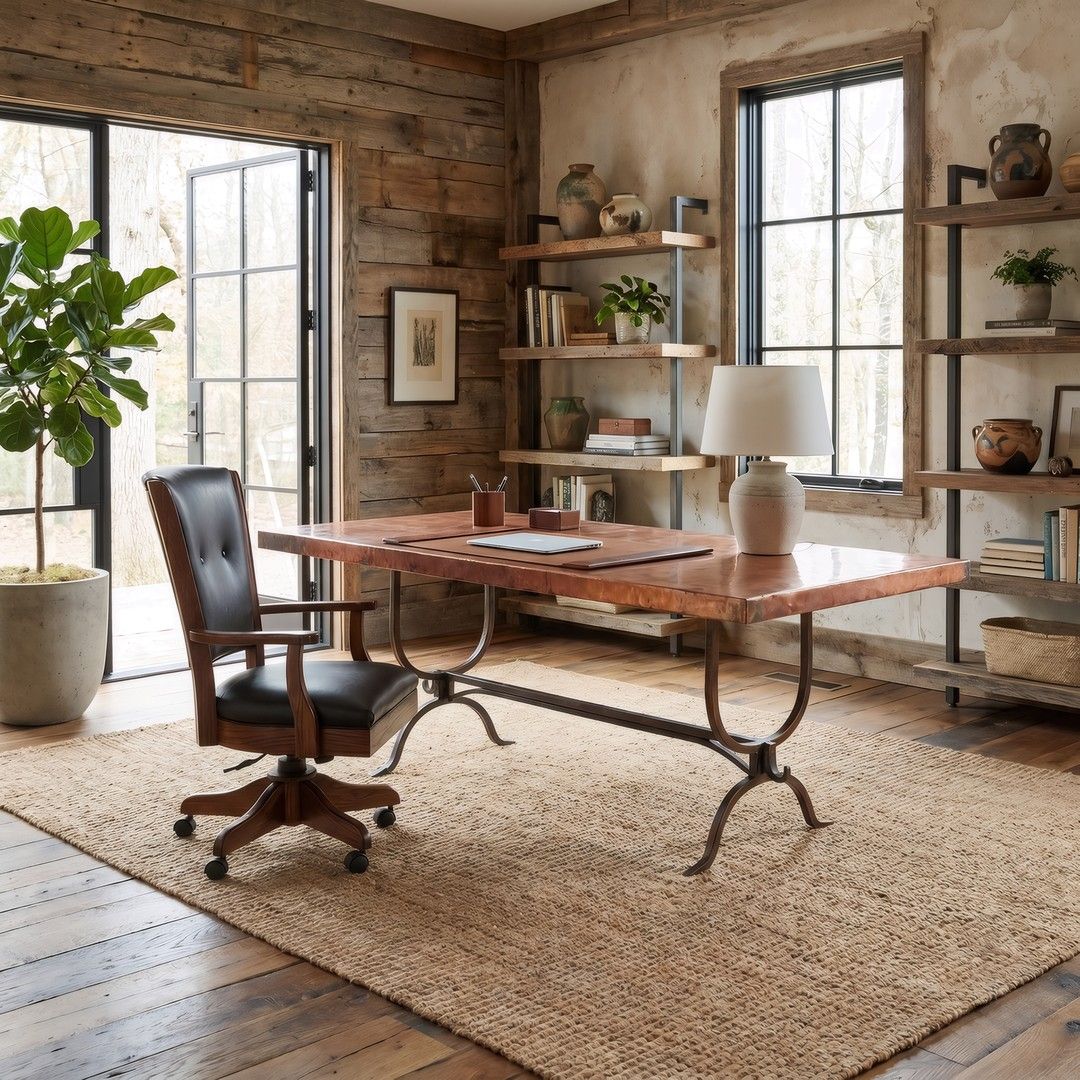
A woven rug can bring warm color into a room with plain walls. Before you buy, size the rug so the chair stays on the same surface when you pull back from the desk. Choose a low pile near a rolling chair or use a fixed chair with suitable floor protection.
Shilpidea tip: Keep the rug corners flat.
8. Pair a Wood Worktop With a Muted Wall
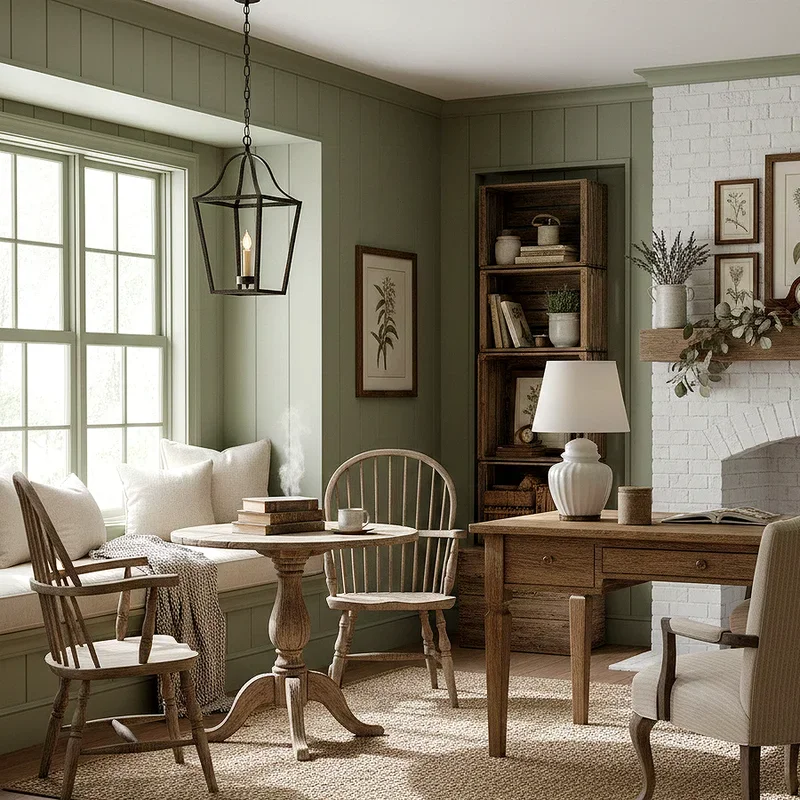
Carry one quiet wall color behind the desk so the wood grain stays visible. Test a paint swatch beside the actual desk in morning and evening light.
Shilpidea tip: A pale lamp or small basket can break up a darker corner.
9. Organize Tools on a Wooden Pegboard

Pegboard keeps scissors, cords, and tape within reach and off the worktop. Make a quick paper template for the layout and try it from your chair so each hook is reachable. Leave blank holes between groups so the tool handles do not tangle.
Shilpidea tip: Choose appropriate fixings for the board and its planned load.
10. Make a Linen Pinboard With an Oak Frame
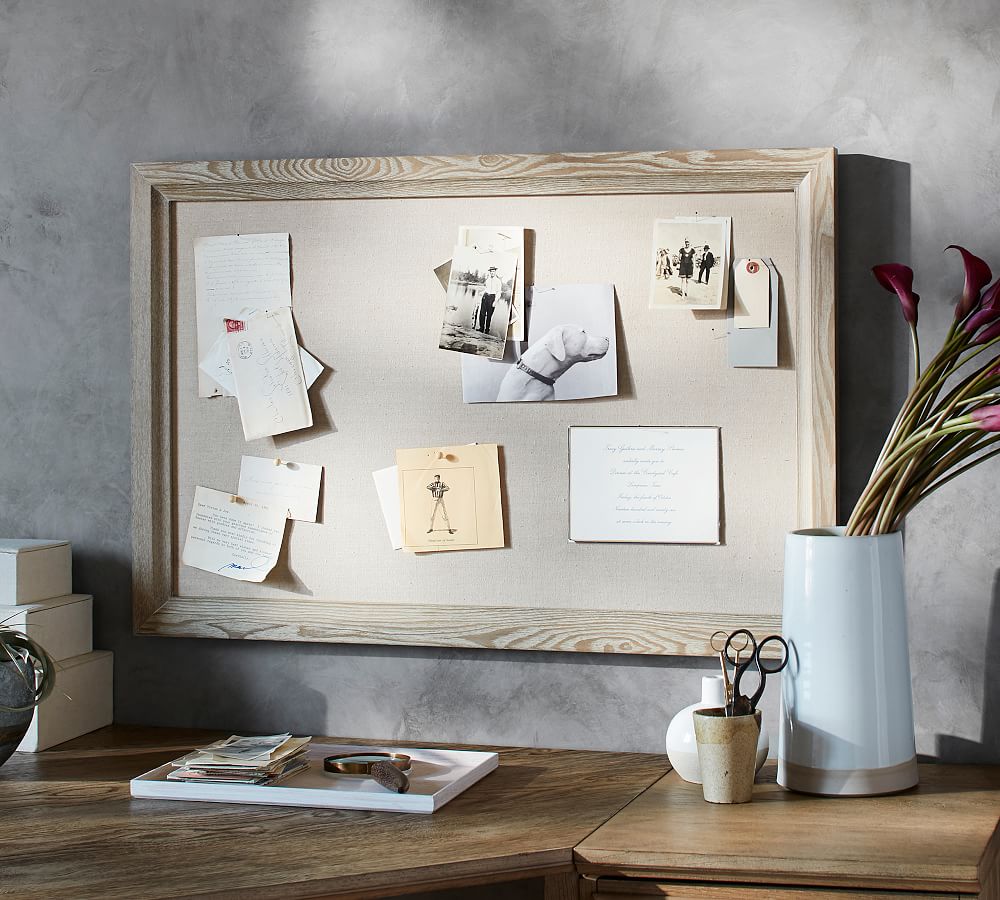
Use one framed board to collect loose samples, notes, and swatches. A linen surface softens the wall while oak repeats the worktop color. Put current notes at eye level and reserve the edges for slower projects.
Shilpidea tip: Leave a blank strip at the bottom so a new note has a place to go without covering older work.
11. Sharpen the Look With a Black Task Lamp
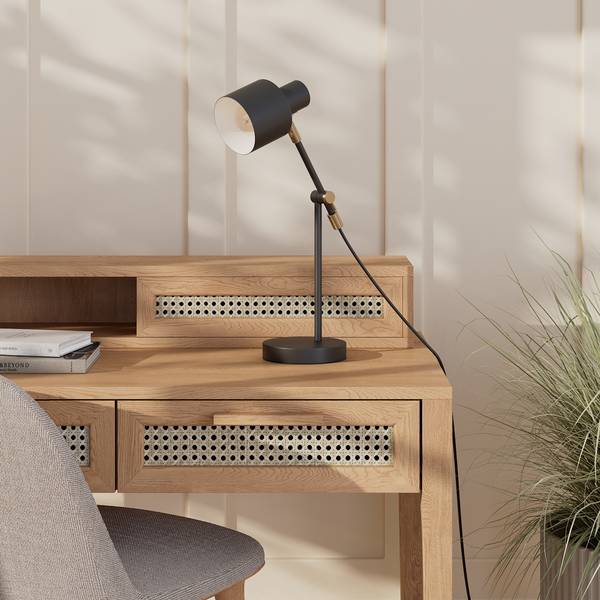
A black lamp gives a wood desk a clear outline, especially when both sit against a pale wall. Pick a movable head so you can aim light at paper without pointing it at your eyes. Repeat the finish once in a handle or tray.
Shilpidea tip: That small echo is usually enough to pull the workspace together.
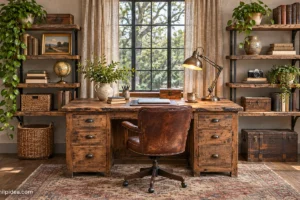
12. Pair Weathered Wood With a Leather Chair

Warm leather furniture can sit naturally next to visibly worn timber. Check the height and support of the chair first, then look at how its color changes beside the desk. A small rug or pad can protect your floor if the legs move often.
Shilpidea tip: Keep the surrounding tabletop open so the two textures have room.
13. Soften a Timber Workspace With Linen Curtains
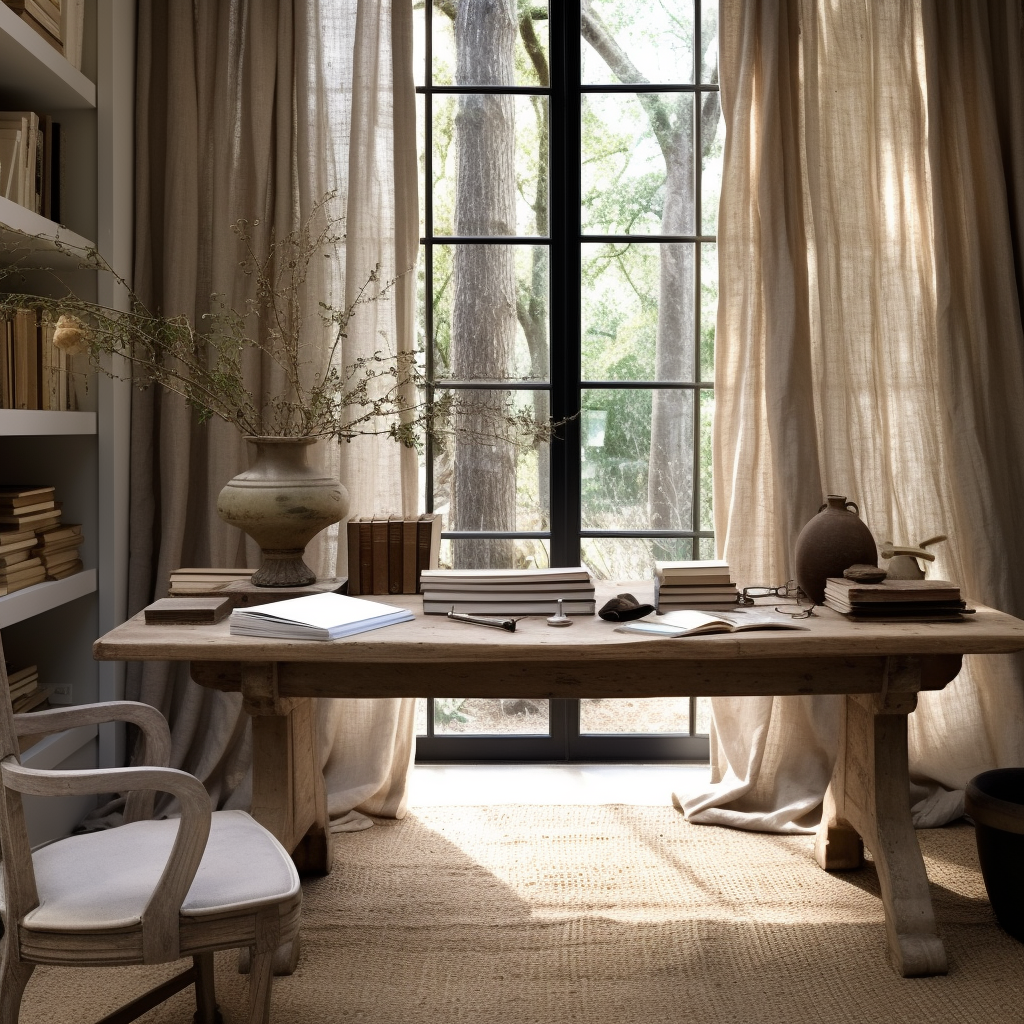
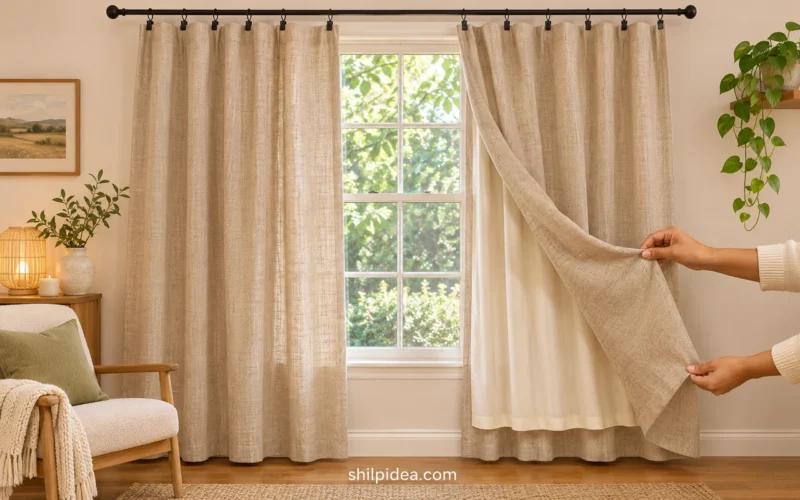
Plain linen curtains balance a room with several dark wood pieces. Hang them clear of the desk drawers so they can fold when open. See whether a liner is necessary at the time you do most of your screen work.
Shilpidea tip: On a narrow wall, choose a rod that lets the curtain gather past the window edge.
14. Frame Two Vintage Botanical Pages

A pair of botanical prints adds pattern without using up the desktop. Hang them where the monitor will not cover the lower edges, and use matching frames to keep the pair coherent. Repeat a small shade from the prints in a cup or desk mat.
Shilpidea tip: For a busy wall, choose simple matting and leave space around the pair.
15. Gather Supplies in a Farmhouse Hutch
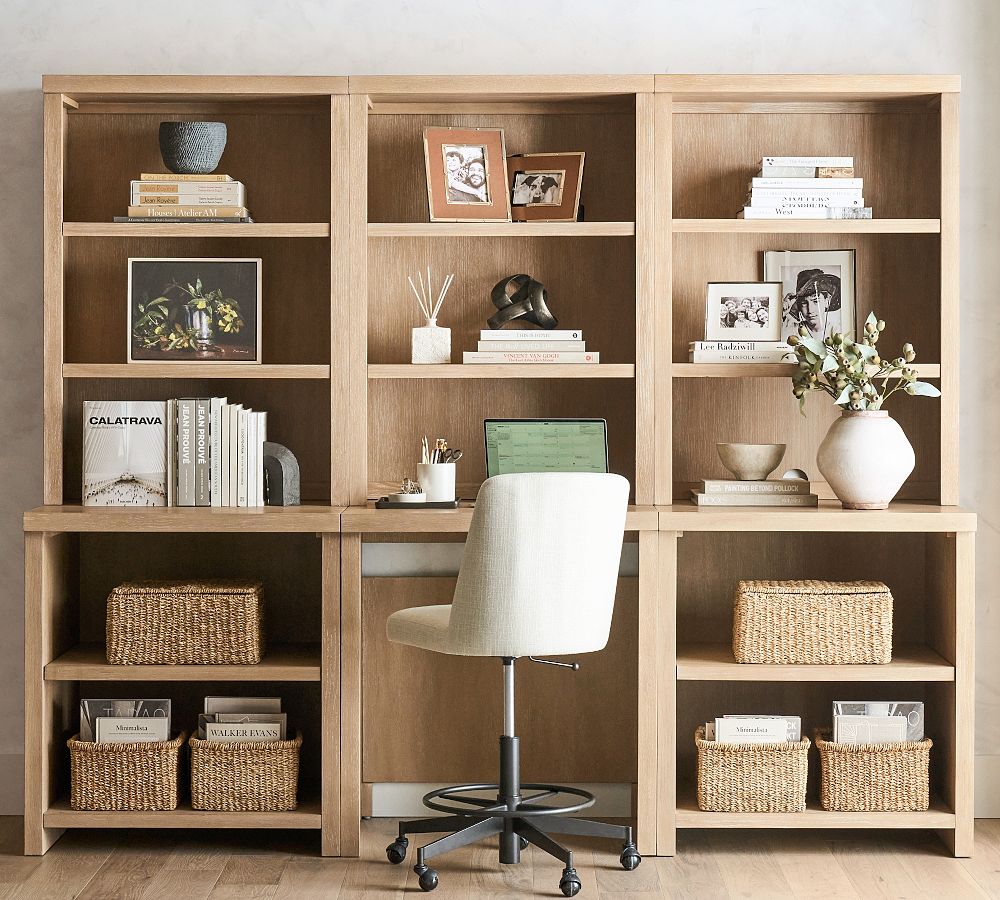
A hutch turns the wall above a desk into usable storage. Keep the open section around the screen clear, then reserve the side compartments for things you reach for daily.
Shilpidea tip: Check monitor and cable clearance before choosing a unit.
16. Keep One Plant Near the Window
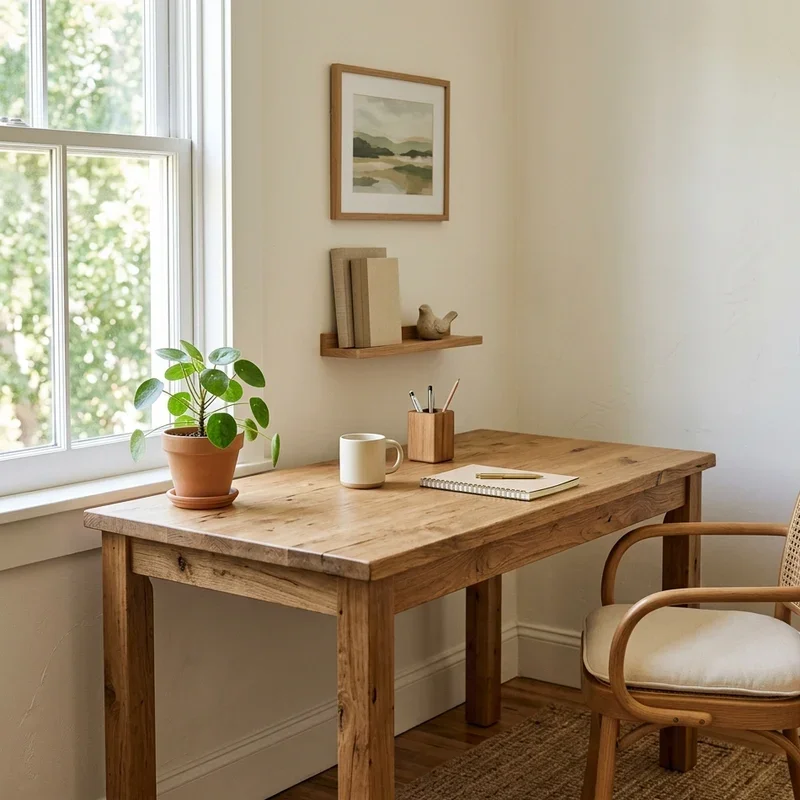
A plant on the window ledge carries some color into a rustic office without crowding the work surface. Choose a variety suited to the light and a saucer that shields the sill. Slide it to the side of the window so it does not sit directly behind your screen.
Shilpidea tip: Keep water away from cords and devices.
17. Rest Small Artwork on a Wood Picture Ledge

A ledge lets you swap photos and artwork with less work than rehanging frames. Fit the brackets to the wall and leave enough depth for the frames you plan to use. Set the taller frame behind a smaller one while keeping both firmly on the ledge.
Shilpidea tip: Start with two pieces before adding anything else.
18. Put a Low Storage Bench Behind the Desk
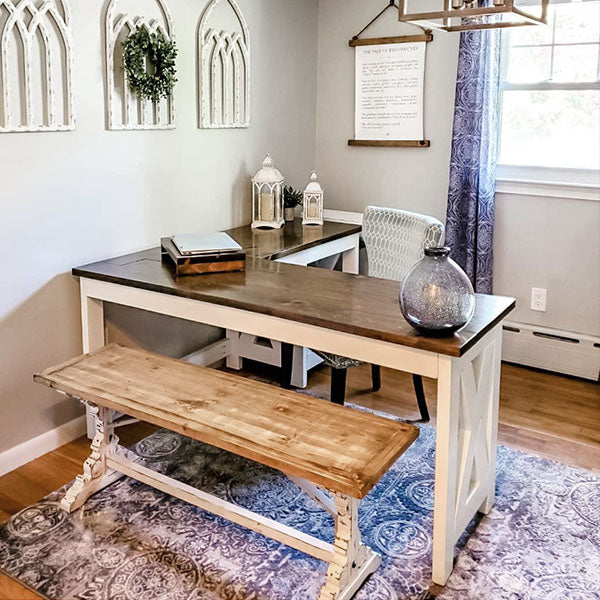
A slim bench behind your desk can catch bags and parcels before they reach your main work surface. Make sure there is enough space to move your chair without knocking into it. Keep frequently opened storage at one end.
Shilpidea tip: Put a shallow basket under the bench for pieces that would otherwise sit in the walkway.
19. Wrap a Wood Desktop Around a Corner
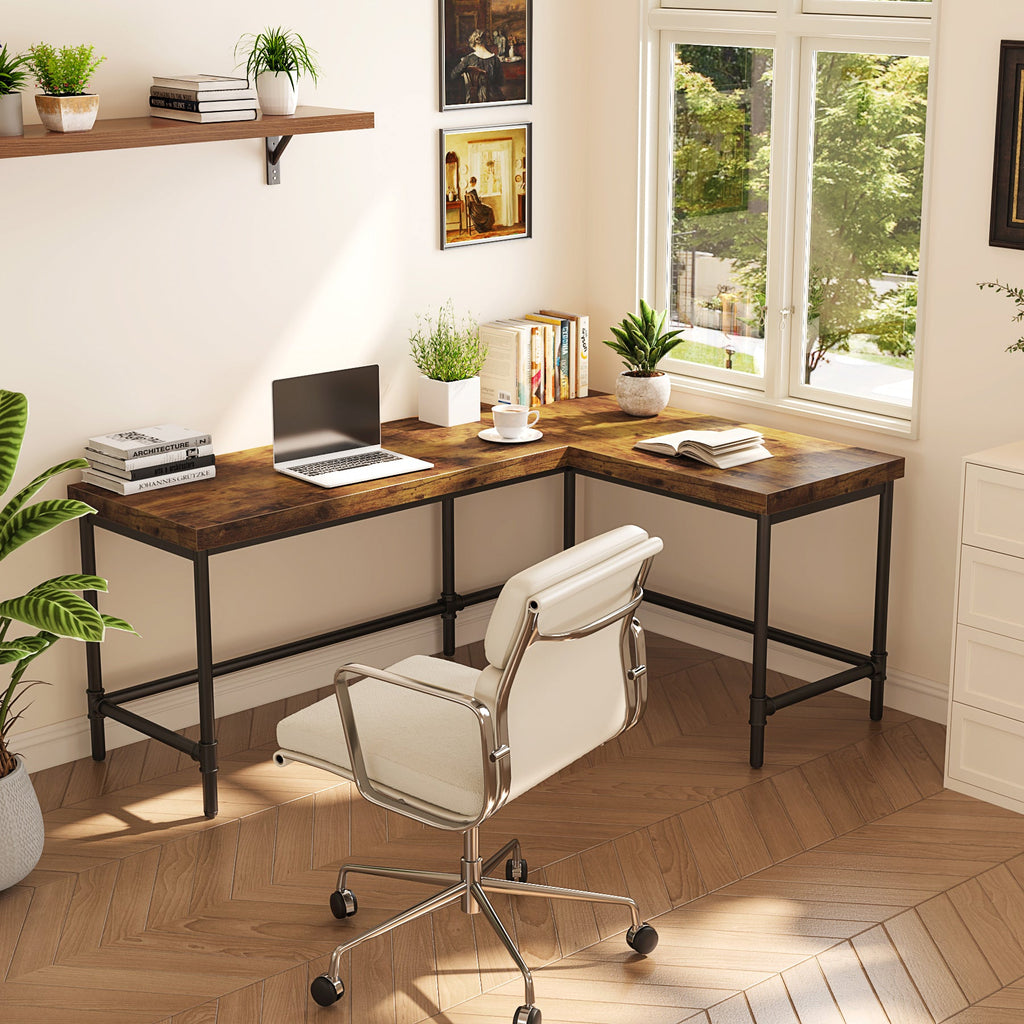
An L-shaped desk separates writing space from the computer without adding another piece of furniture. Choose which side will hold the screen before you position the desk.
Shilpidea tip: Leave enough space behind the corner for plugs and cables.
20. Choose a Writing Desk With Shallow Storage
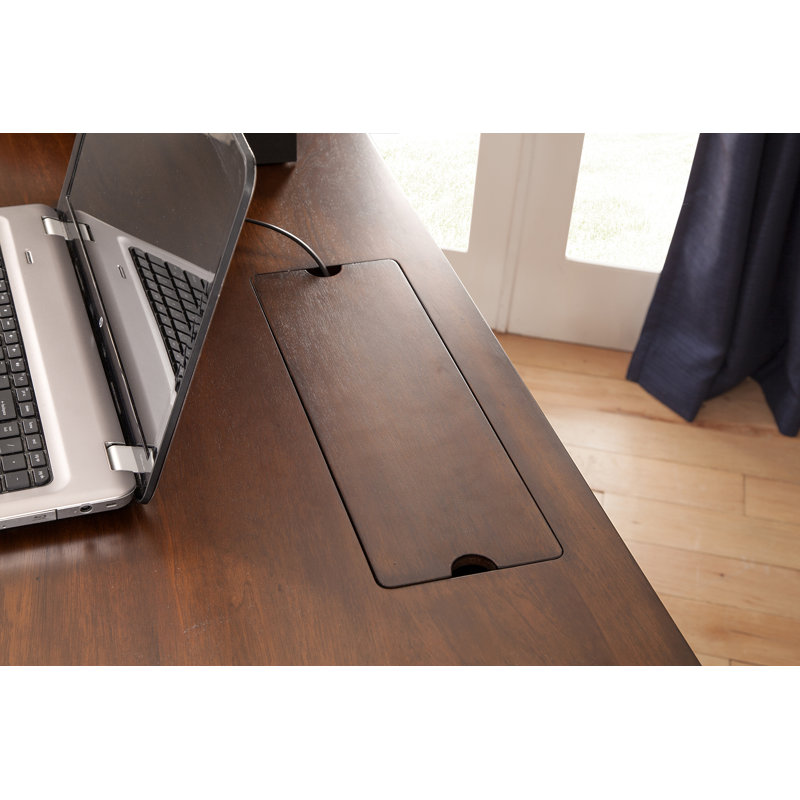
A simple writing desk works well when the room doubles as a living space. Use the shallow drawer for loose notes and charging cords so the top is easy to clear.
Shilpidea tip: Measure knee clearance with the chair tucked in.
Check the Desk From Your Chair
Sit down before you finalize shelf height, light placement, or a new storage piece. Reach for the items you use most and see where they feel natural. Allow enough space for drawers and doors to swing, and leave the walkway and chair path clear of cords.
Start With the Surface You Use Most
Spend a workday noticing where papers and chargers land. Clear that surface first, then choose one change that makes it easier to use. A lamp, basket, or small piece of art can be enough to start. Add larger furniture only after you know how much room remains for your chair and circulation.
Which part of your office would you change first, the desk, the wall behind it or the storage beside your chair? Tell us in the comments which rustic detail would make your workday easier.





















0 Comments