18 Entryway Storage Ideas for a More Welcoming Hall
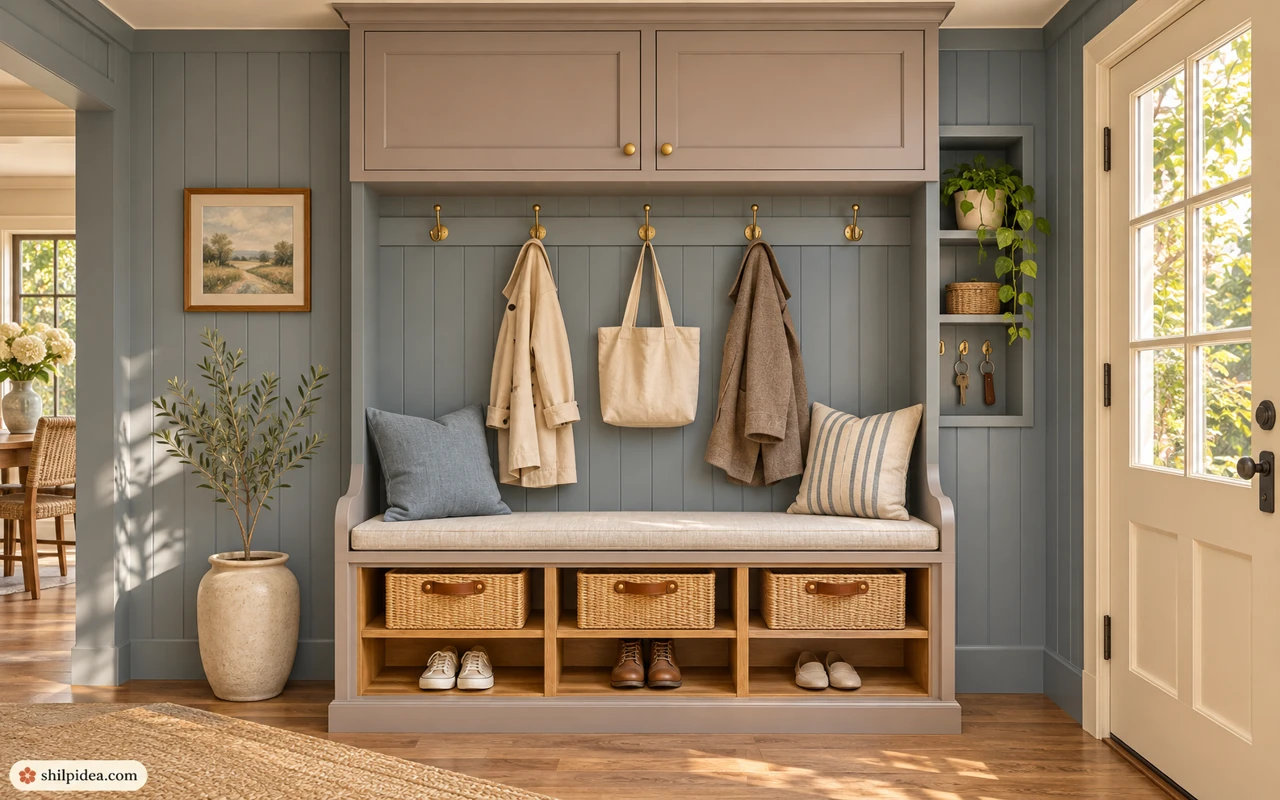
Entryway storage ideas work best when they make it easy to leave in the morning and put things back when you get home. Start with the things that always land on the floor or disappear just before you leave.
A narrow hallway often has room for something shallow or wall-mounted. See these small entryway storage ideas if you only have one corner near the door.
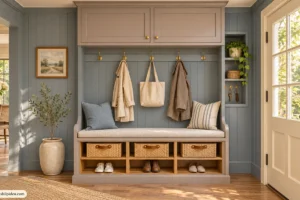
For a household that shares the same entrance, a seat with storage can take on several jobs. Use these mudroom bench and basket ideas to decide whether you need a place for shoes, bags or both.
1. Give Each Person a Labeled Shoe Compartment

Give each person a labeled compartment for their everyday shoes or small grab-and-go essentials. A stack makes good use of a narrow stretch of wall, and the labels give children a clear place to put things back. Check the cabinet depth with its door open and follow the manufacturer’s mounting instructions before choosing the wall.
2. Keep Shoe Boxes Above the Everyday Pairs
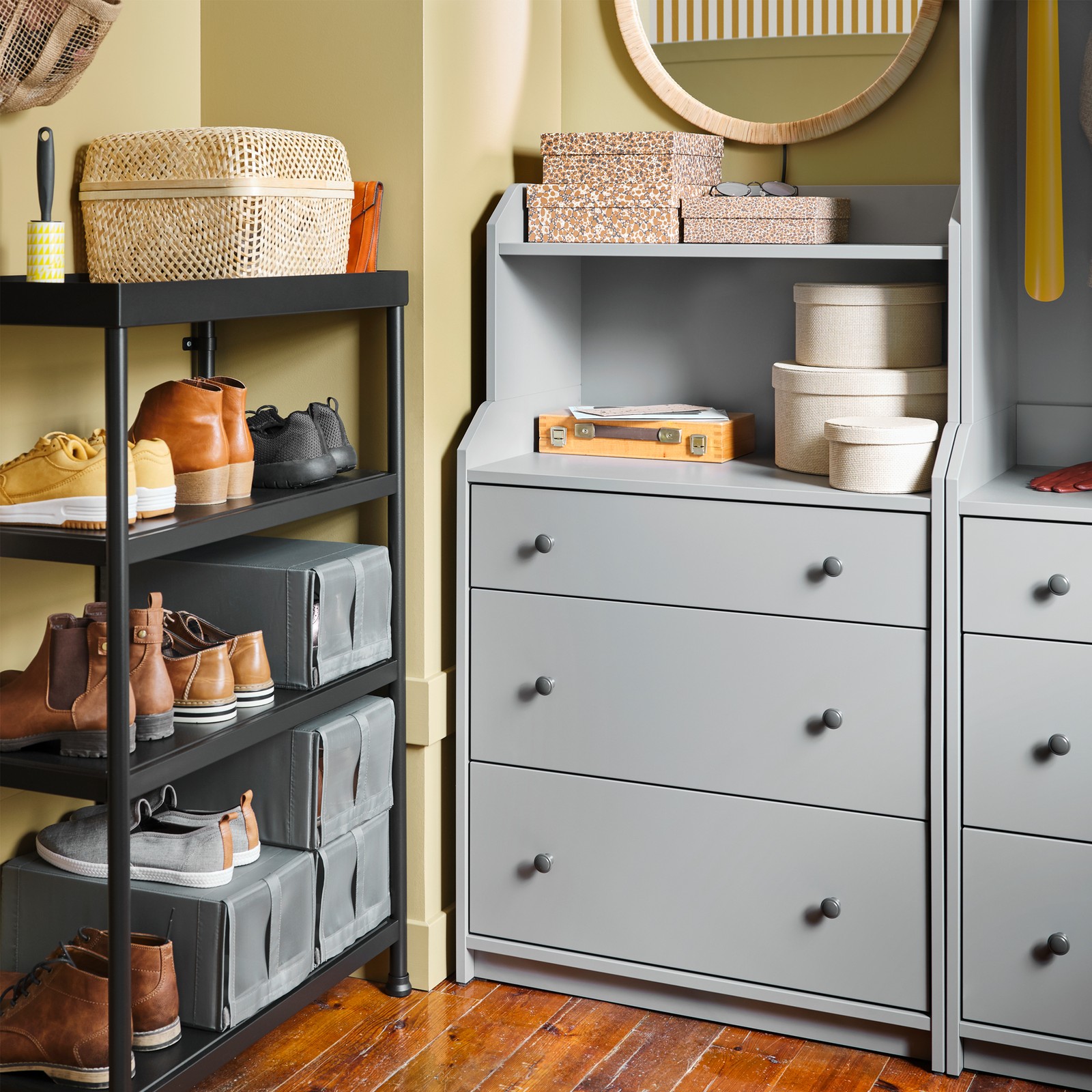
Put frequently worn shoes on the easy-to-reach shelves and stack labeled boxes for occasion pairs above. Bigger shelves let you keep two rows at eye level without shuffling boxes in front of each other. Near the door, start with just one shelf per person and leave some space for the pairs that are in use.
3. Give Two People Their Own Shoe Bench
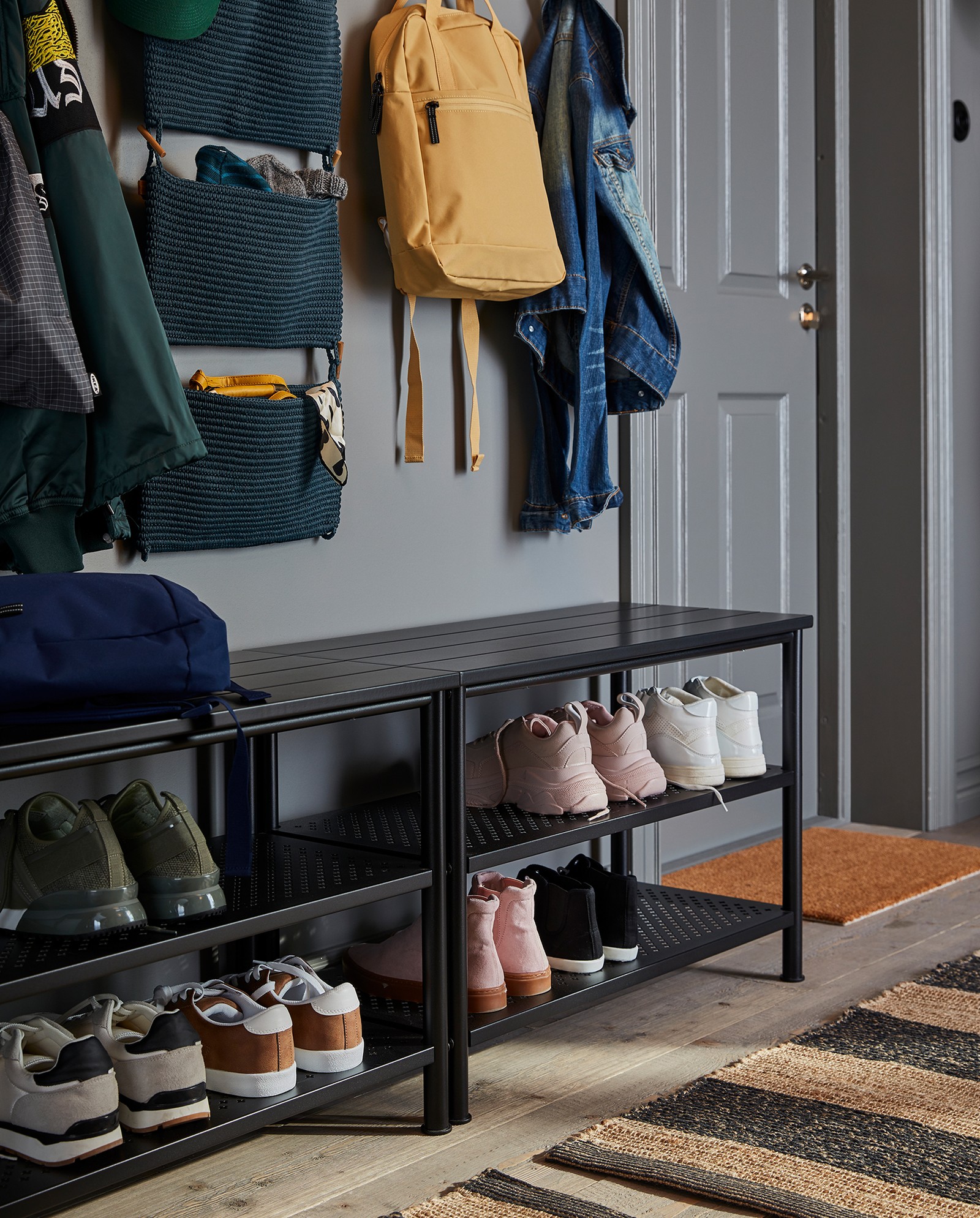
Two benches side by side give children separate places to sit and store shoes. Use one shoe slot for what each person plans to wear tomorrow, leaving the rest free for the pairs in use today. If the hall only has space for one bench, these small mudroom bench ideas show ways to use a shorter seat.
4. Tuck Keys Behind a Folding Mirror

A mirror with folding side panels can hold keys just out of sight. Hang only the current sets on the hooks, leaving a familiar position for each set. Test the swing of the side panels before taking anything off the wall, and use a tray in a closed drawer for spare keys that rarely come out.
5. Give Everyone a Separate Notice Square
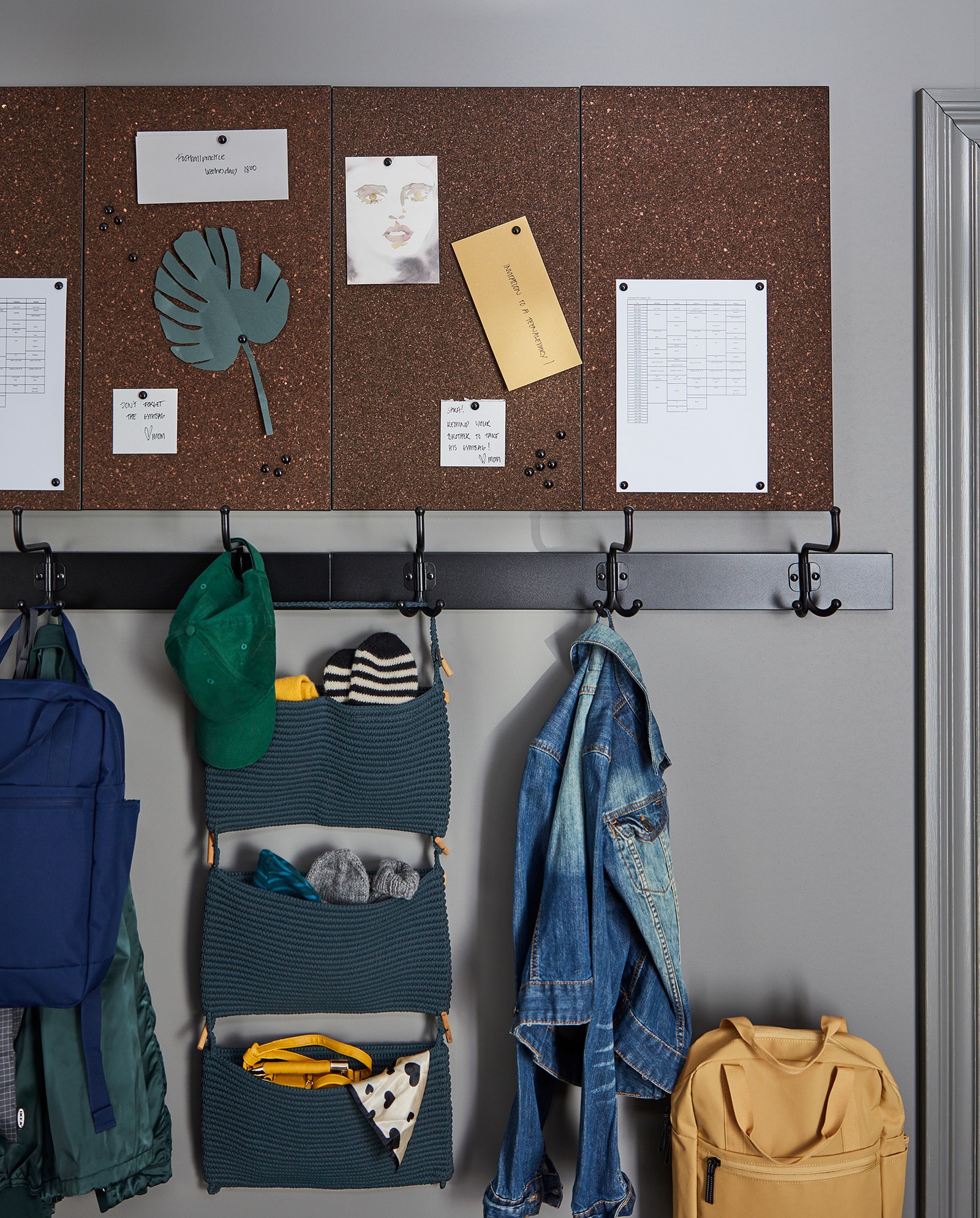
Give each family member a small board for this week’s paperwork. Use top corners for time-sensitive reminders and clear old notes when the week changes. In a narrow hall where only one board fits, divide it with a little colored tape. Pin only the things you need to see leaving the house, such as permission slips or appointment cards.
6. Sort Small Accessories Into Hall Drawers
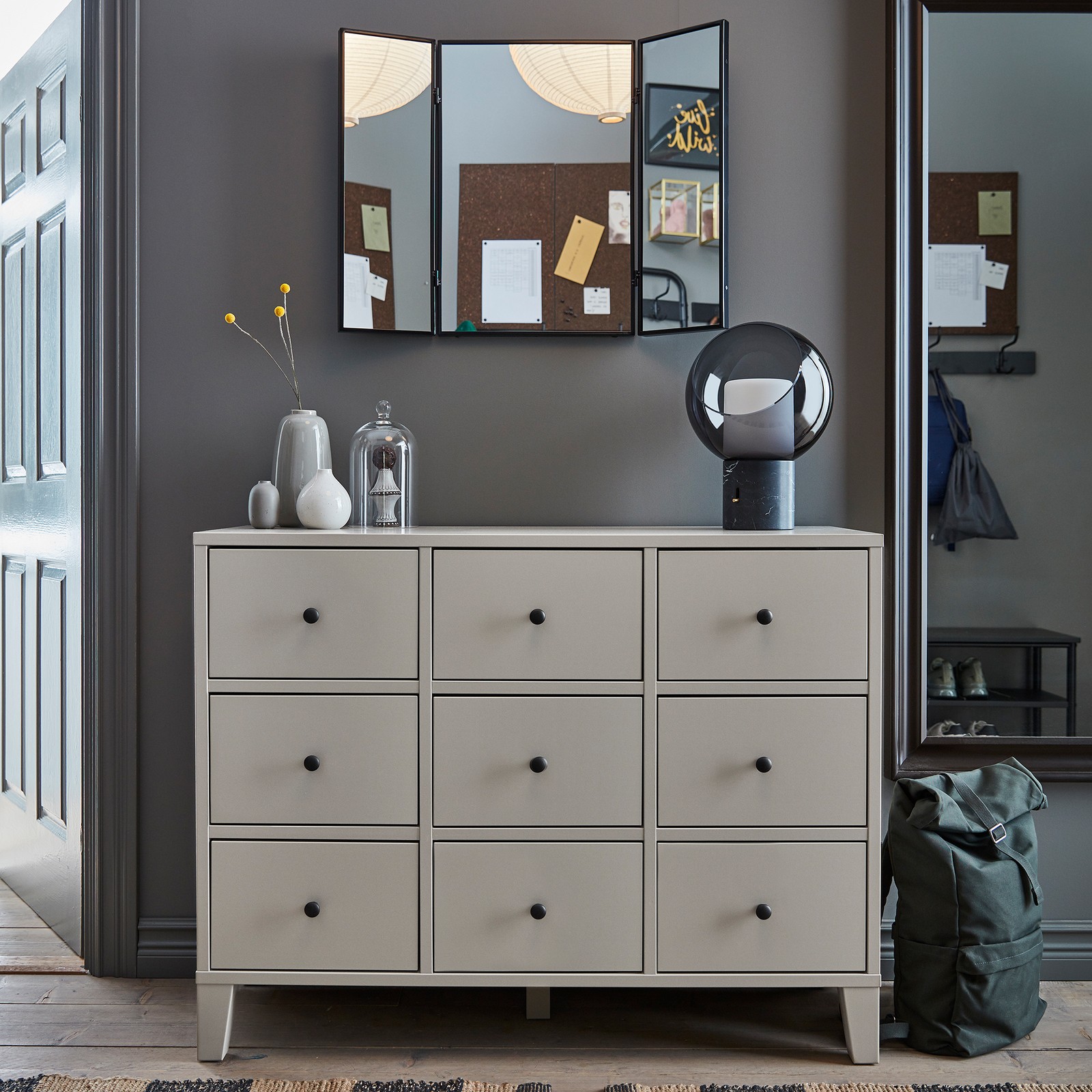
Keep hats, gloves and reusable totes in shallow drawers that open toward clear floor space. Store the things you pick up together in the same drawer and label the inside edge if more than one person uses it. Before adding a chest, measure the hall with its longest drawer open and use the furniture’s recommended wall restraint.
7. Use an Open Wardrobe for This Week’s Layers
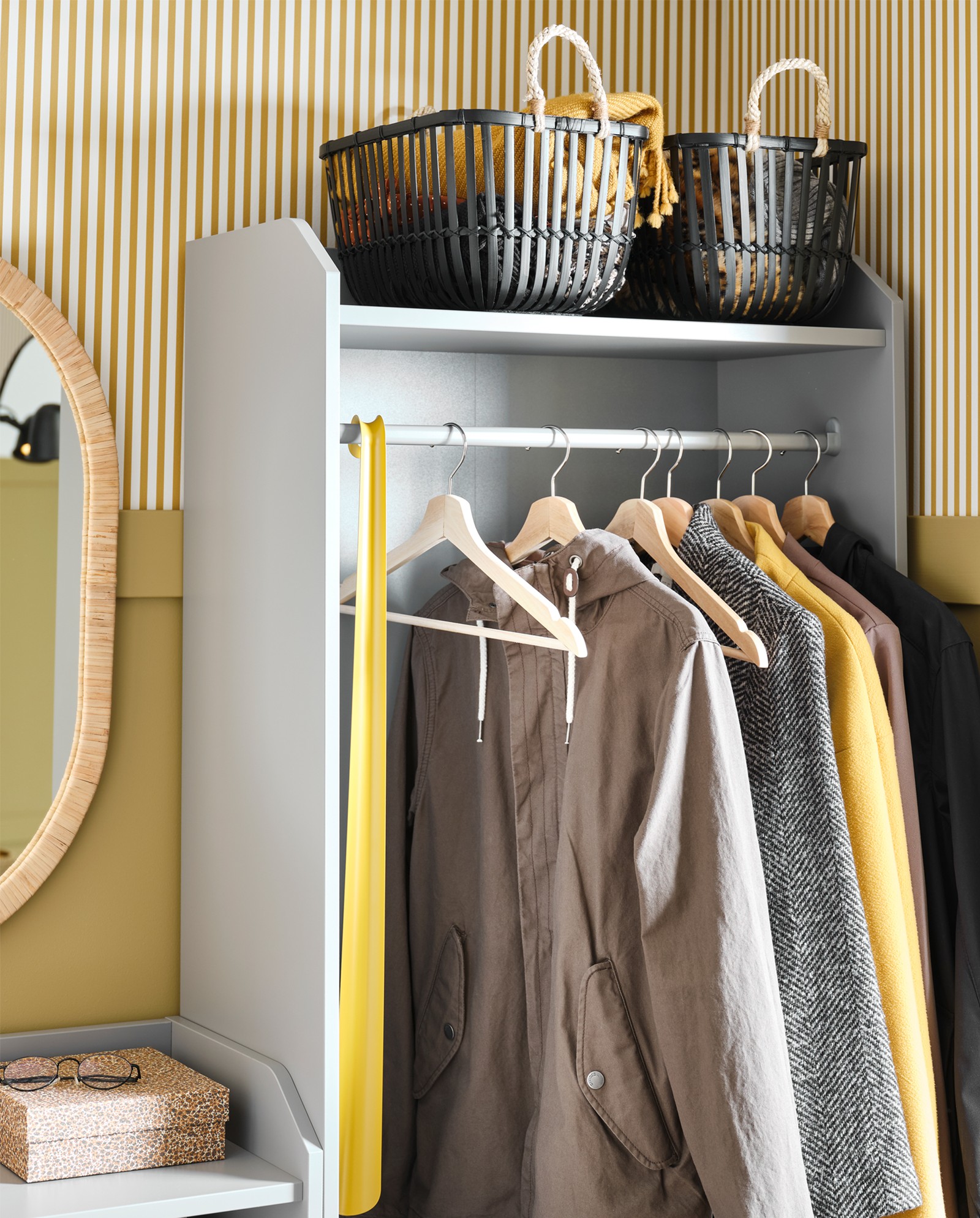
Hang the coats you wear this week on matching hangers, and give scarves or reusable bags a basket on the shelf above. Store the next season’s coats somewhere deeper so hangers can slide freely. These winter entryway storage ideas can help you plan where wet boots and bulky layers go when they take up more room.
8. Float a Small Cabinet to Keep the Floor Clear
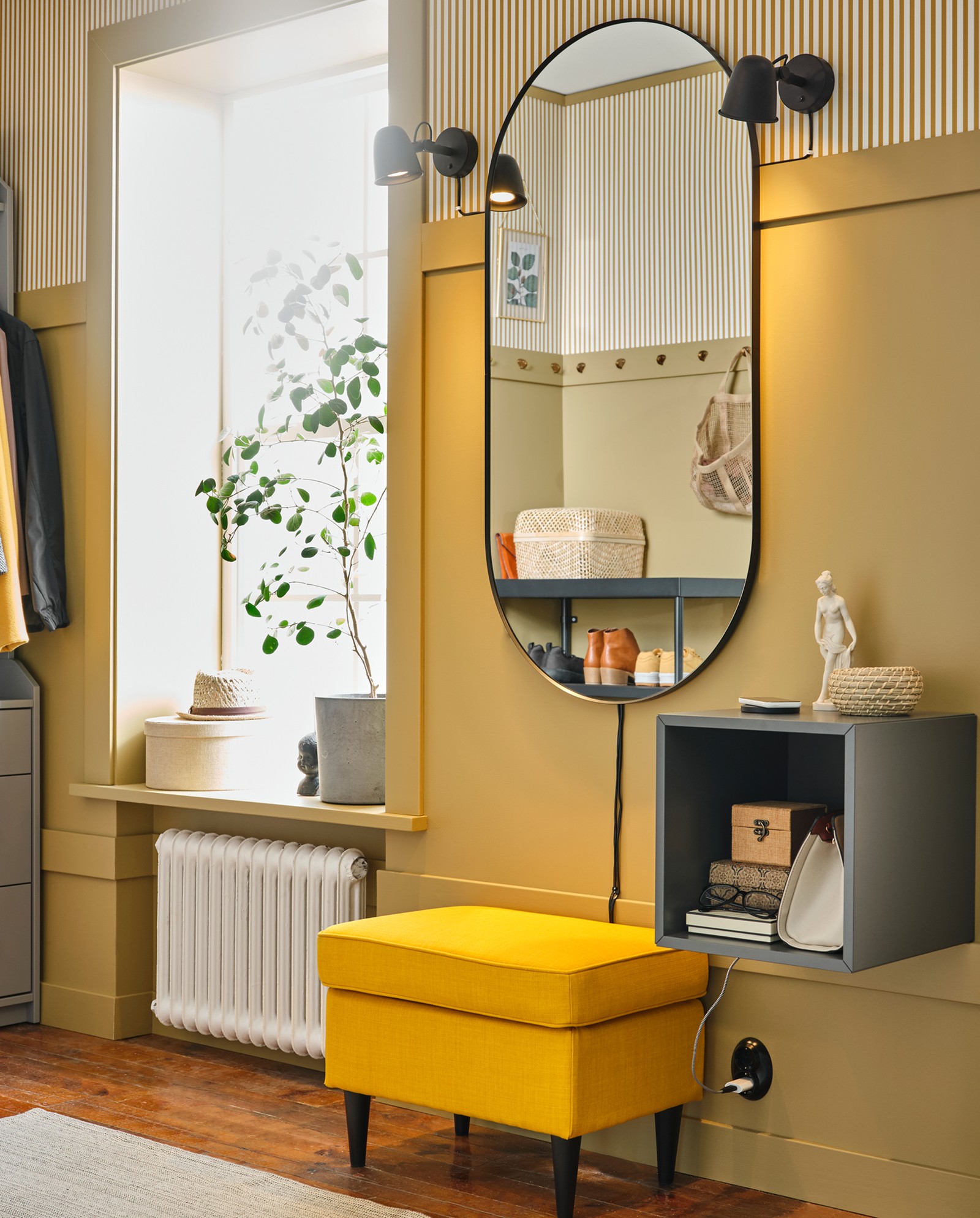
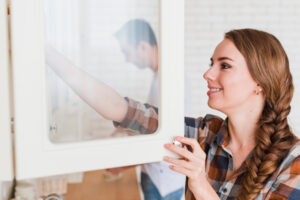
A wall-mounted cabinet creates a shelf for everyday essentials while leaving the floor open, which can help in a narrow hallway. Use a small internal divider for sunglasses and wipes so they stay easy to find. Check the depth with doors open, and mount the cabinet to a suitable wall as the manufacturer directs.
9. Put Hats Above the Bags and Jackets
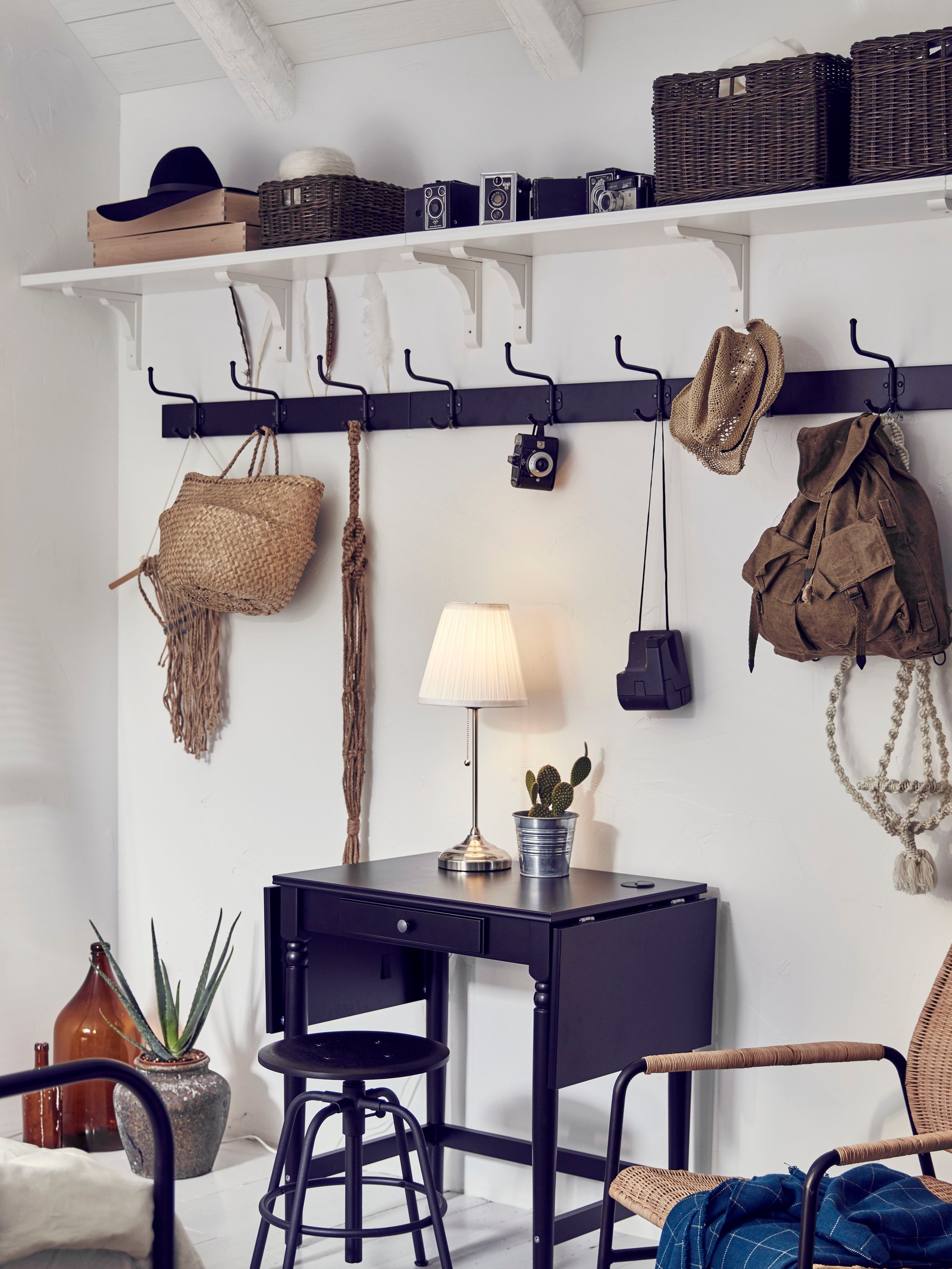
A shelf-and-rail combination puts bulky hats above the hanging wall space instead of mixing them in with bags. Group the hats you want to see together in one bin on top and use the rail for coats or totes that can hang. A little separation makes it easier to grab a bag without pulling down a hat.
10. Sort Scarves on a Loop Hanger
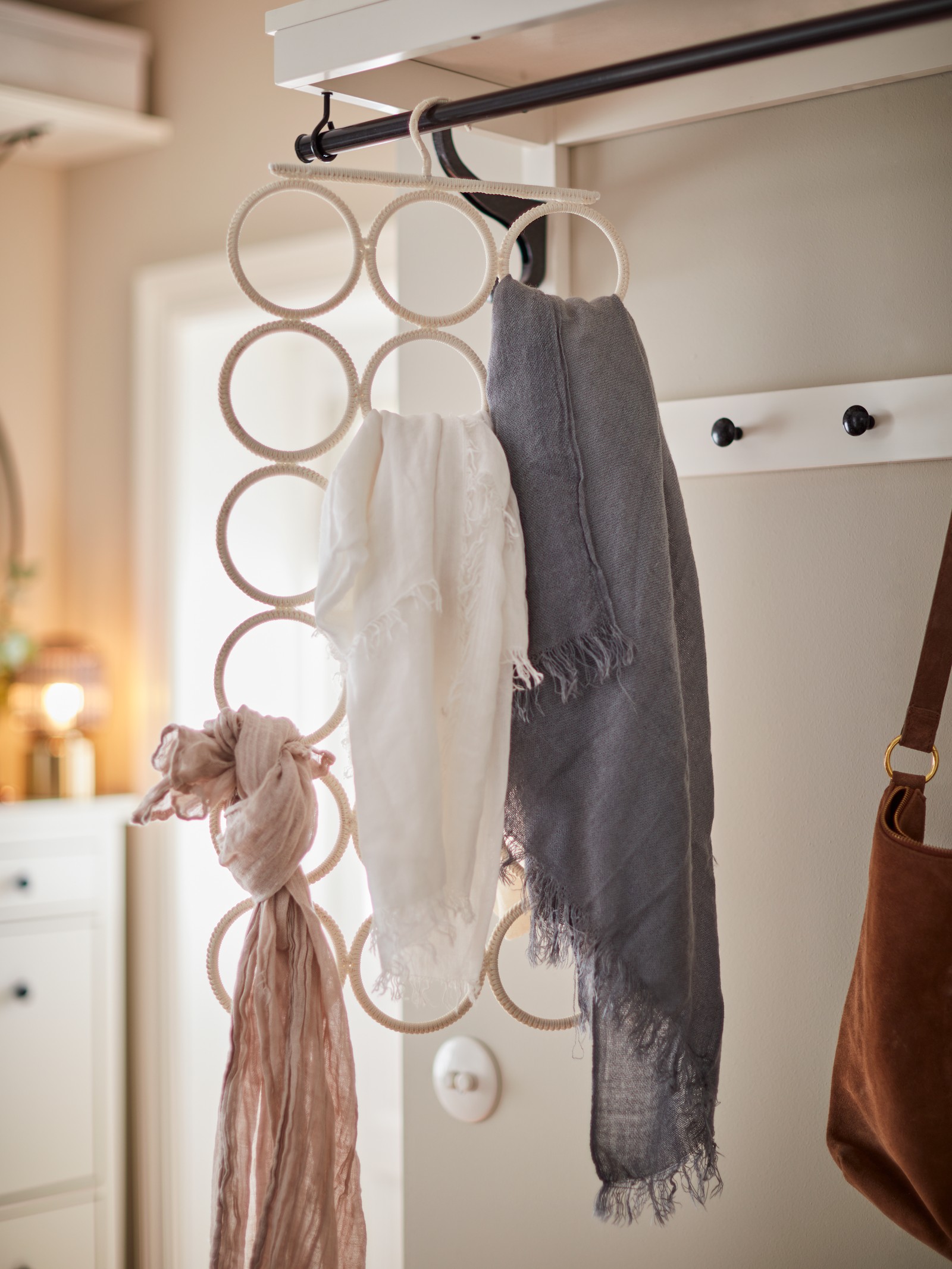
Thread light scarves through the different loops of an accessory hanger so each color remains visible. Let the hanger share a rod with the coats you actually wear that week, with a little space at either end for fabrics to move. When the weather changes, lift the whole group down together and swap in the next set.
11. Use the Space Above a Door for Light Extras
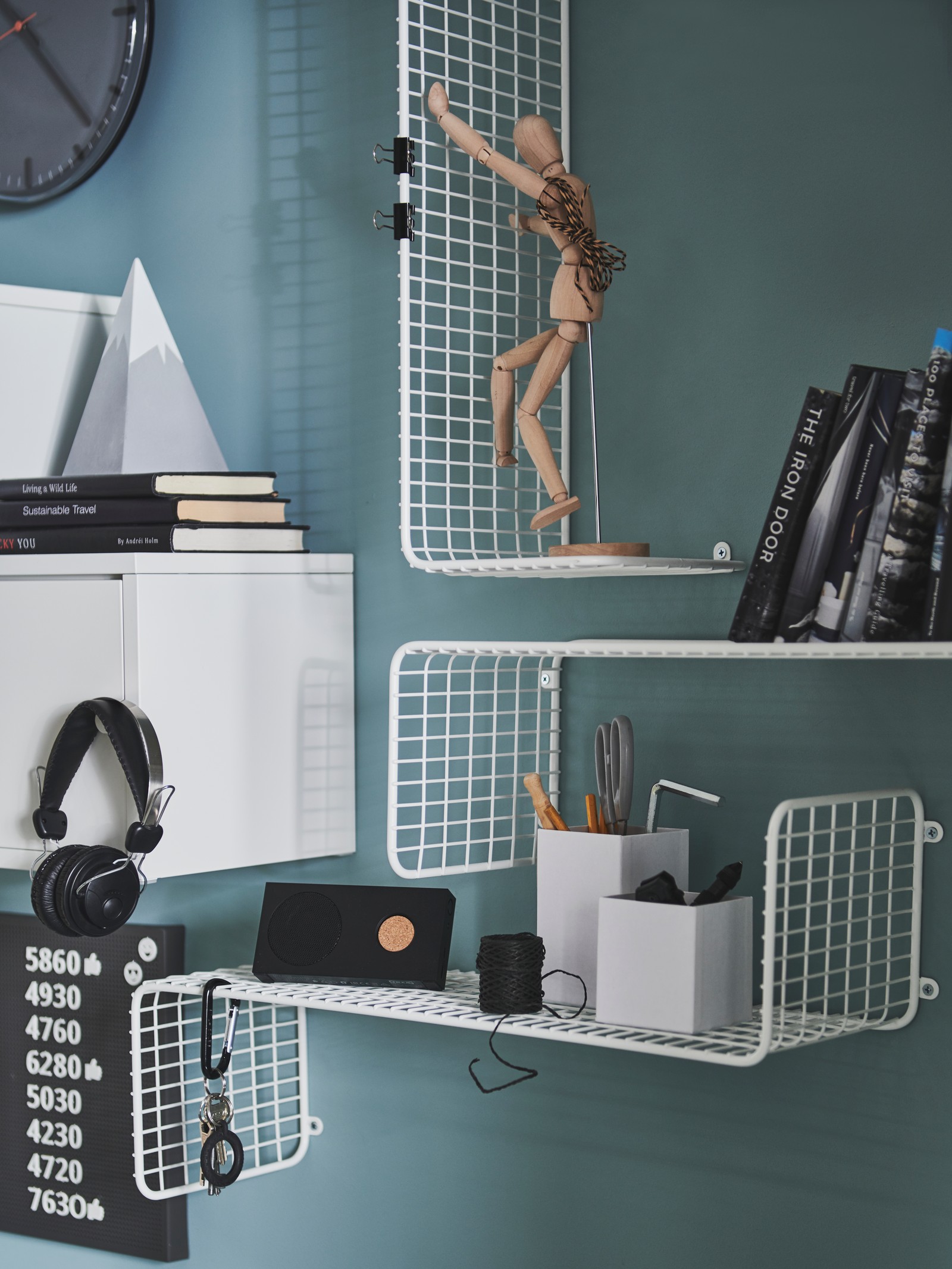
A shallow shelf above a doorway can hold light things you need only occasionally, such as empty gift bags or spare fabric totes. Choose a size and mounting system suited to the wall and keep everything inside lightweight boxes. Label their visible sides so you can tell what is stored there without opening every container.
12. Sort Incoming Mail Into Two Clear Pockets

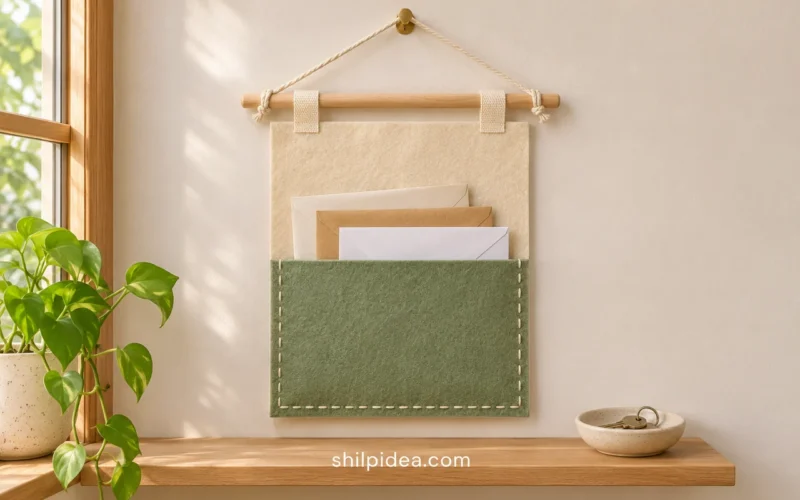
Use one pocket for newly opened mail and a second for pieces someone needs to act on. Keep the pockets fairly shallow so the oldest envelopes stay visible, and clear each one on a regular day. A wall-mounted mail pocket also works in a hall with very little room alongside the door.
13. Turn an Alcove Into a Household Paperwork Desk
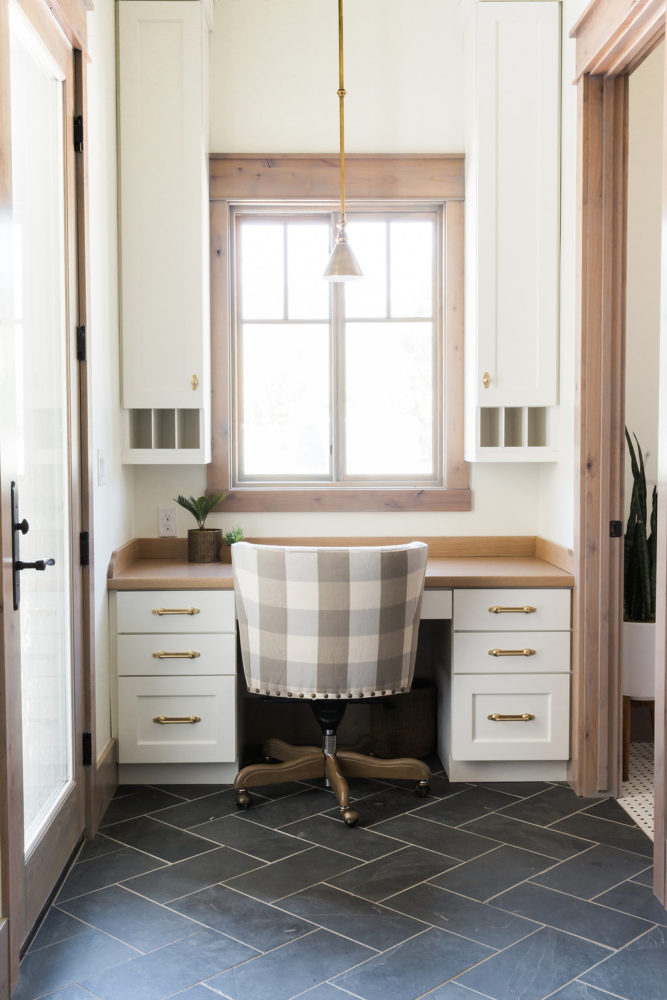
A compact desk near the entry gives adults a place to sign forms, set out tomorrow’s papers or address a return. Keep one handy pen and a shallow tray in the top drawer so the surface stays open. If everyone shares the desk, choose one place for finished papers and empty the tray as you leave the house.
14. Keep Closed Lockers for Bulky Gear
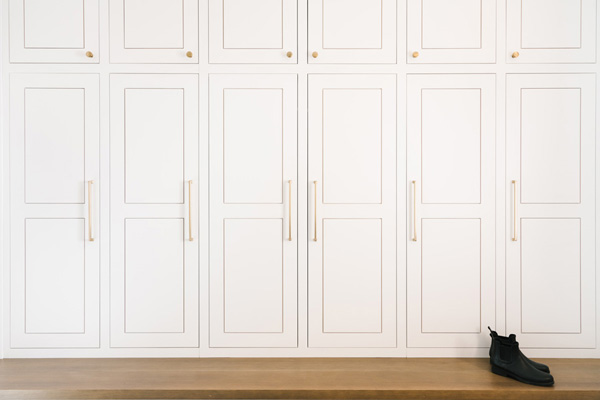
A tall locker with a door handles things that regularly tip out of an open basket, like sports bags or sturdy boots. Pick one separate place for gear that needs to dry before going away. Measure the largest item first, account for the door swing, and use a dedicated lower section for items children put back themselves.
15. Keep an Open Bay for Today’s Bags
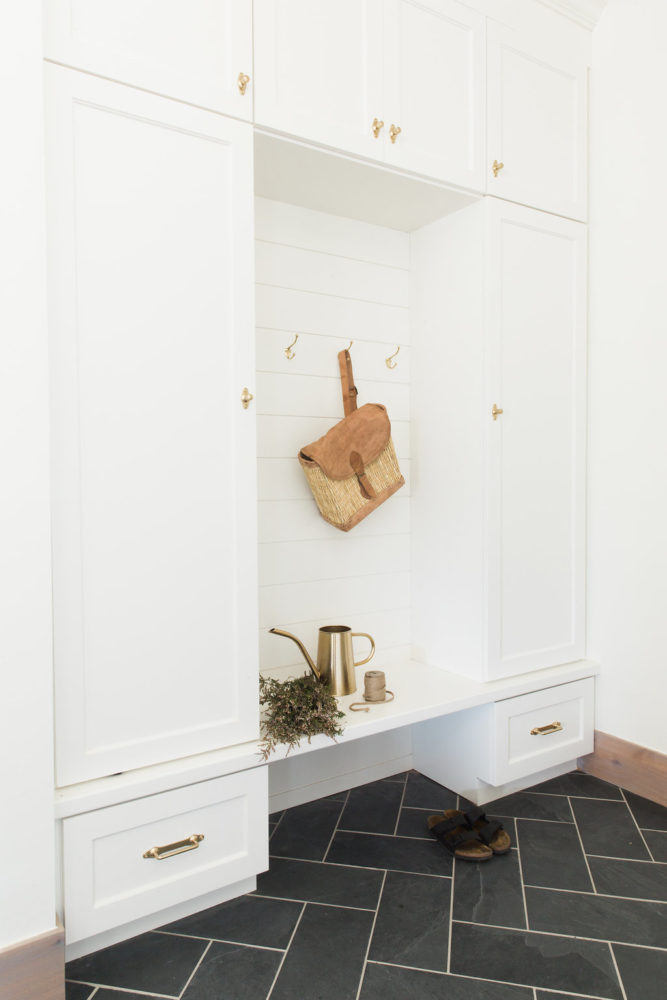
Plan one open bay between closed cabinets for the belongings that come in and out each day. Keep this area only for what you will take tomorrow, then put bulkier gear in the cabinets. Leave enough of the seat clear for putting on shoes. A low bin can collect gloves and hats while keeping room for two bags on the wall.
16. Give School Lunch Gear Its Own Cubby

A basket in a low cubby makes a simple home for lunch boxes and lightweight school bags. Measure the largest bag before buying baskets and leave room to lift the handles out easily. If lunch containers still need to be washed, store them in the kitchen first and leave the hall basket free for things that are ready to go.
17. Catch Pocket Contents in a Long Tray

Start with the pocket contents that repeatedly land in different places. Give them a long shallow tray and stack an acrylic file box on a shelf below it for mail, so it stops covering the tray. The small landing spot can hold sunglasses, keys and earbuds and makes it obvious which little things can go back to another room.
18. Use a Clear Hook on a Smooth Side Panel

A clear hook on the smooth side of a cubby unit gives one bag a private spot without using more wall space. Choose a hook suited to both the surface and the loaded bag’s weight, and follow its application directions. A lightweight tote is an easy starting point if the hook needs to be removable when you move.
Make This at Home: See the clear-hook setup
Set Up a Hall You Can Keep Tidy
Pick a home for the three things you look for most often. Put them along the route you already take through the hall, then try the arrangement for a few mornings. Once that feels natural, give seasonal gear and paperwork more permanent places.
- Use a Small Entryway Corner
- Plan a Mudroom Bench Setup
- Organize Coats and Boots for Winter
- Make a Wall-Mounted Mail Pocket
What piles up first in your entryway? Tell us in the comments which idea would make leaving the house easier.







0 Comments