21 Serene And Luxurious Bathtub In Front Of Window Ideas
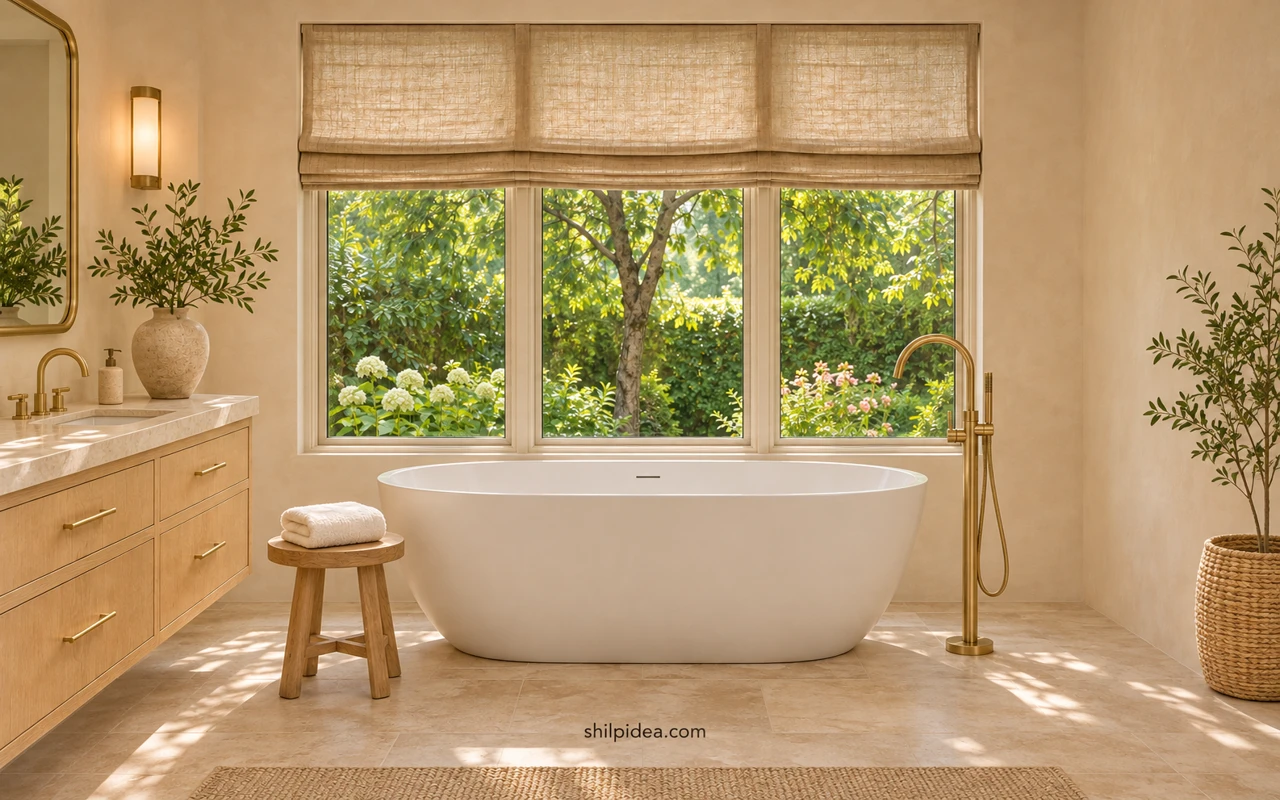
A bathtub in front of a window gives the room a clear focal point and a view to build around. The most useful inspiration balances that picture with privacy, comfortable access and everyday care.
Begin with the shape of your window and the space around the tub. These bathroom storage ideas can help keep towels and essentials within a sensible reach.
The real rooms below show different ways to frame daylight, soften hard surfaces and give the bath its own place. For another direction, explore these colorful bathroom details alongside your preferred layout.
1. Frame a Dark Tub With an Arched Window

An arched window gives a dark bathtub a strong architectural frame. In this room, the pale curtain and marble surround keep the center from feeling too heavy. Borrow the contrast by repeating the dark finish sparingly elsewhere. Check the view from outside before deciding how much of the glass to cover, particularly when the bathroom lights are on after dark.
2. Surround a Wide Window With Collected Art

Small framed pictures make the tub end of this long bathroom feel connected to the rest of the home. The window remains the main shape, while the art fills the surrounding wall. Choose pieces that suit the room’s moisture conditions and keep the arrangement visually balanced. A woven shade adds another texture without introducing a second strong pattern.
3. Soften the Window With Full Drapes

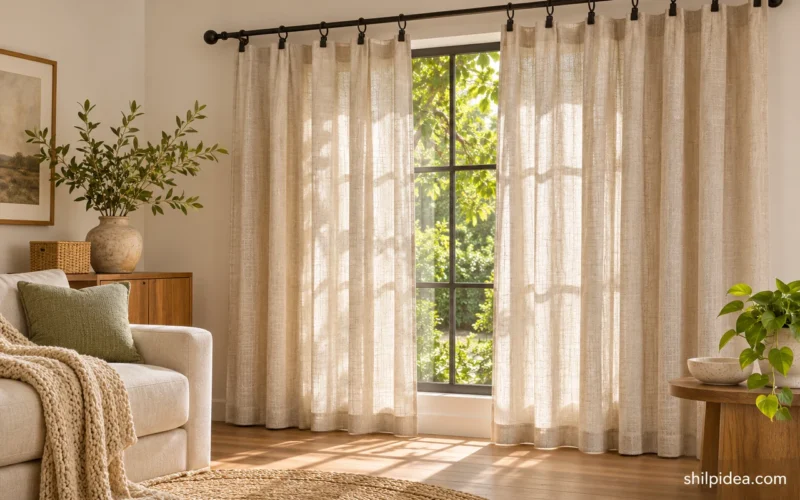
Long pale curtains soften the hard outline of a tub and window. Here, a small turned-leg table adds a darker accent against the light surfaces. Use the idea where the fabric can stay clear of splash and floor moisture. Leave enough room to move the curtains for cleaning, and check whether a separate privacy layer is needed.
4. Balance a Curved Tub Against Black Window Grids

The rounded tub stands out against the straight lines of a black-framed window. Keeping the surrounding colors restrained lets that contrast carry the room. A small side table provides a place for a folded towel without filling the whole perimeter. When adapting the look, check the tub’s real dimensions and the space needed to reach around it comfortably.
5. Add Pattern With a Roman Shade
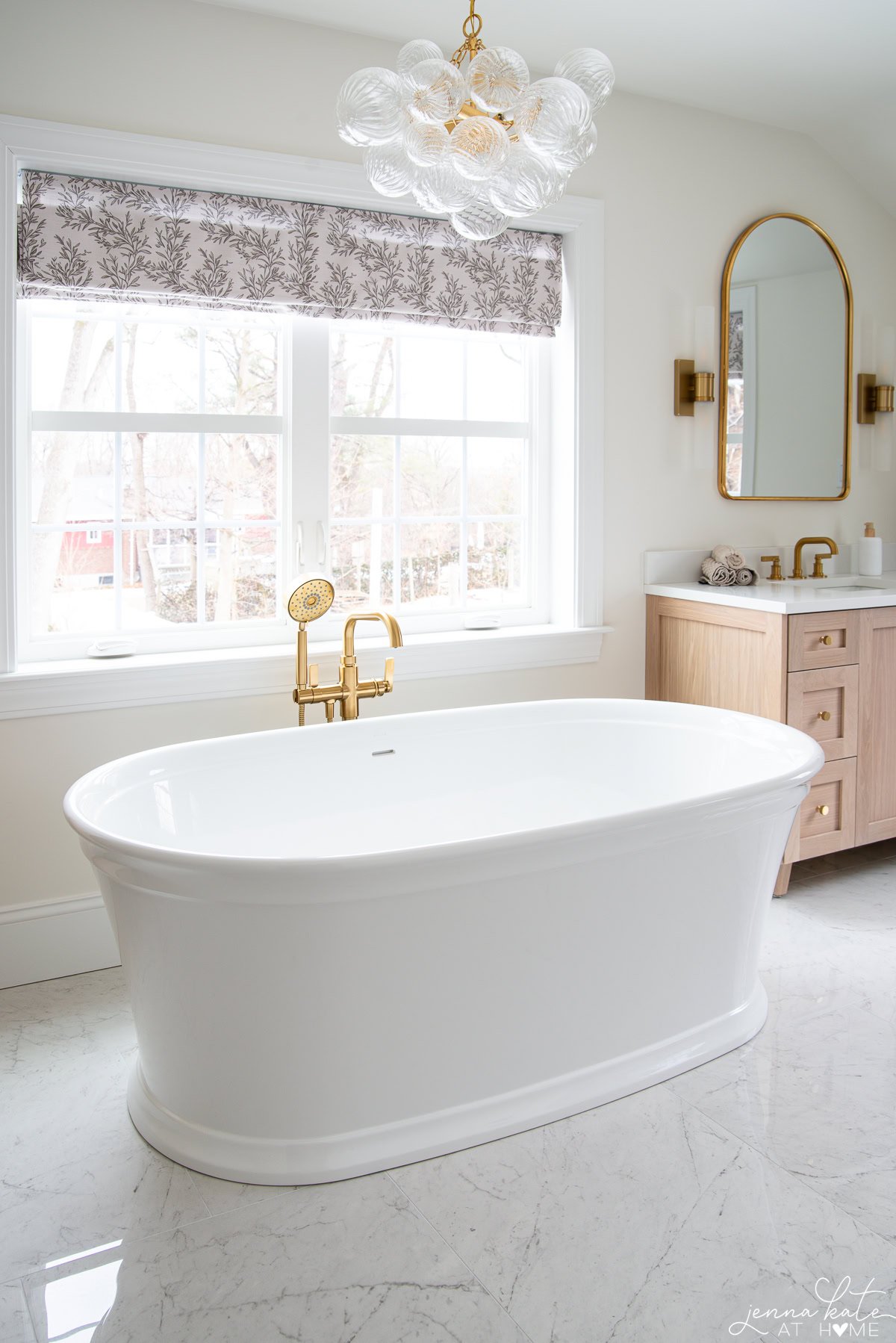
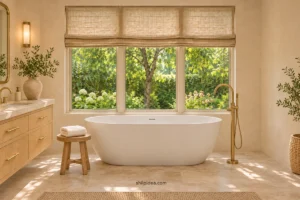
A patterned Roman shade introduces decoration above the tub while leaving the floor area clear. This room keeps the other large surfaces quiet, so the fabric reads as a deliberate accent. Choose a pattern that still looks good when the shade is partly raised. Check the material’s suitability for the room and how easily it can be maintained.
6. Let a Blue Floor Lead Toward the Bath
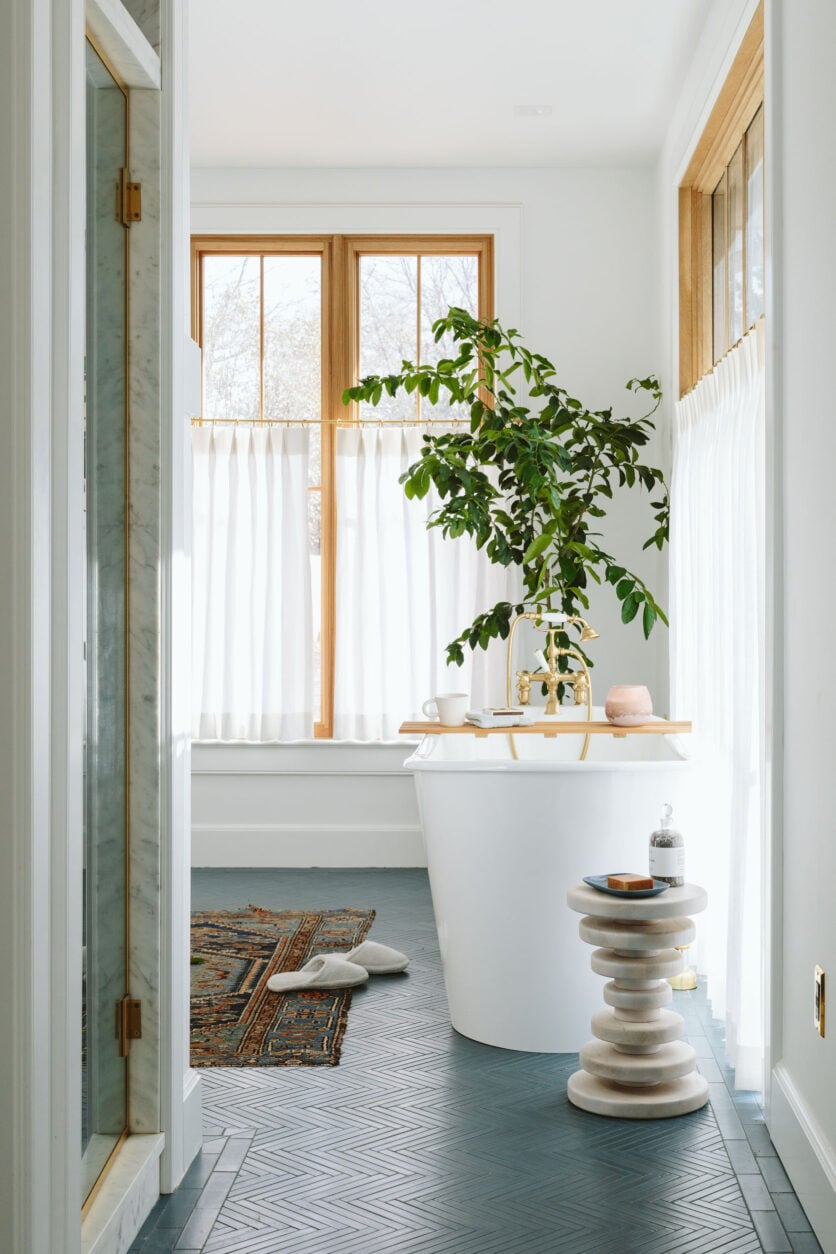
A colored floor can guide the eye toward a pale tub without needing a dramatic wall finish. The blue tile in this room brings depth to an otherwise light setting. Compare floor samples beside the actual tub finish and window light before deciding. Keep the bath accessories simple so the floor color remains a clear part of the composition.
7. Use a Window and Skylight in a Wet-Room Layout
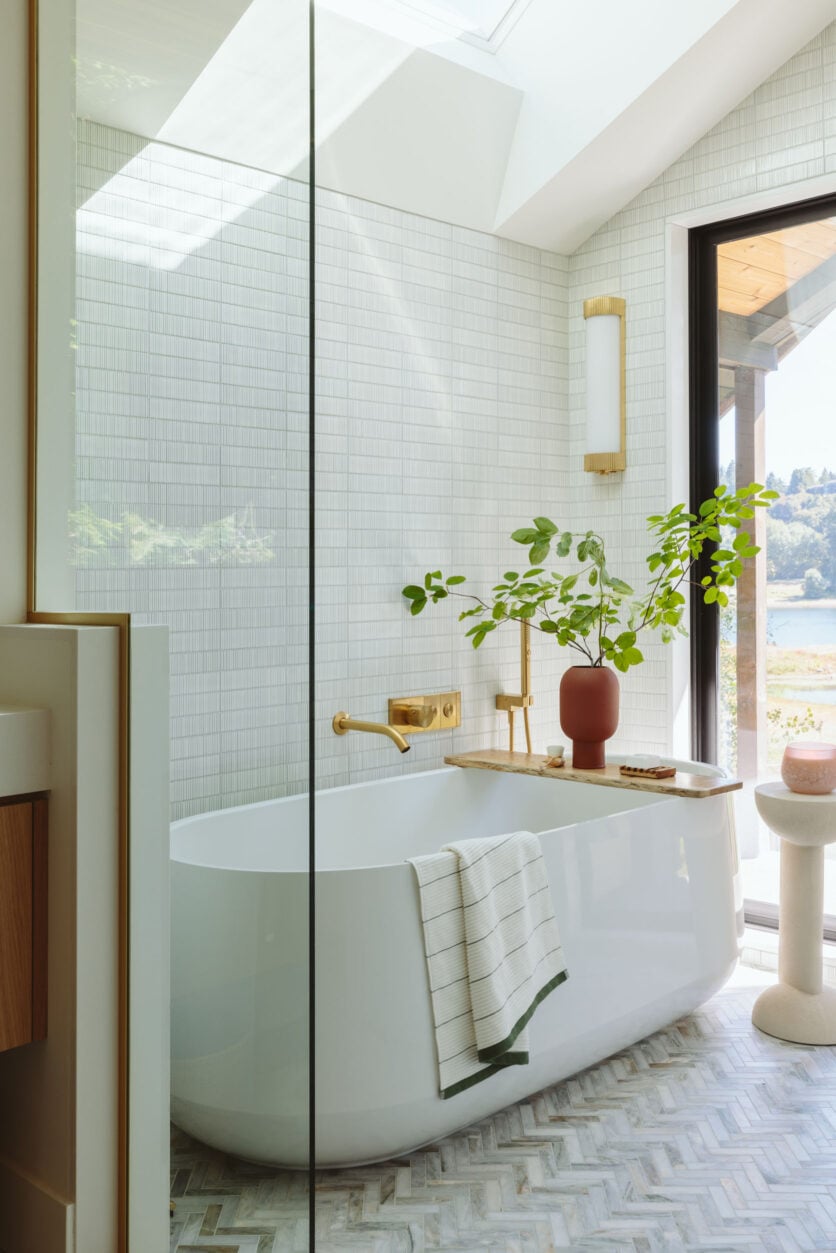
Daylight from two directions makes this tiled bath area feel especially open. The window provides an outward view while the skylight brightens the surfaces above. Borrow the idea as a layout reference rather than an installation plan. A wet-room arrangement needs the glazing, waterproofing, drainage and access resolved together, with the practical requirements guiding the final position of the tub.
8. Pair Olive Walls With a Pale Tub
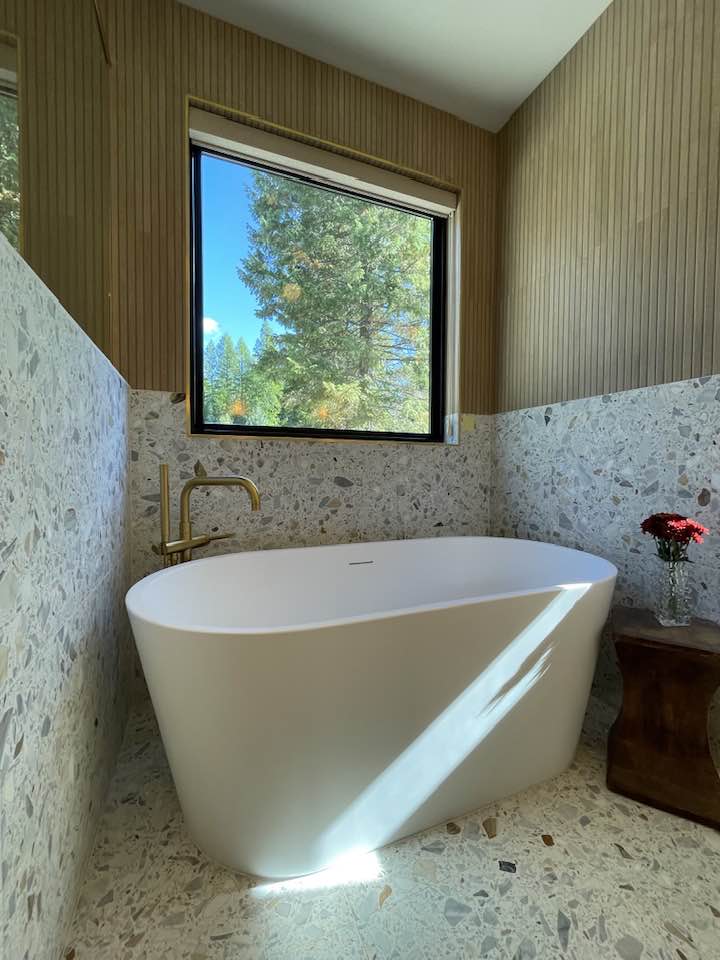
Olive wall color gives a white bathtub a quieter backdrop than bright white alone. The vertical treatment draws attention upward toward the window, while the pale lower surfaces keep the room balanced. Try a large paint sample in the actual daylight before committing. A limited palette works well here because the window view already brings changing color into the room.
9. Give a Built-In Tub a Simple Window Frame
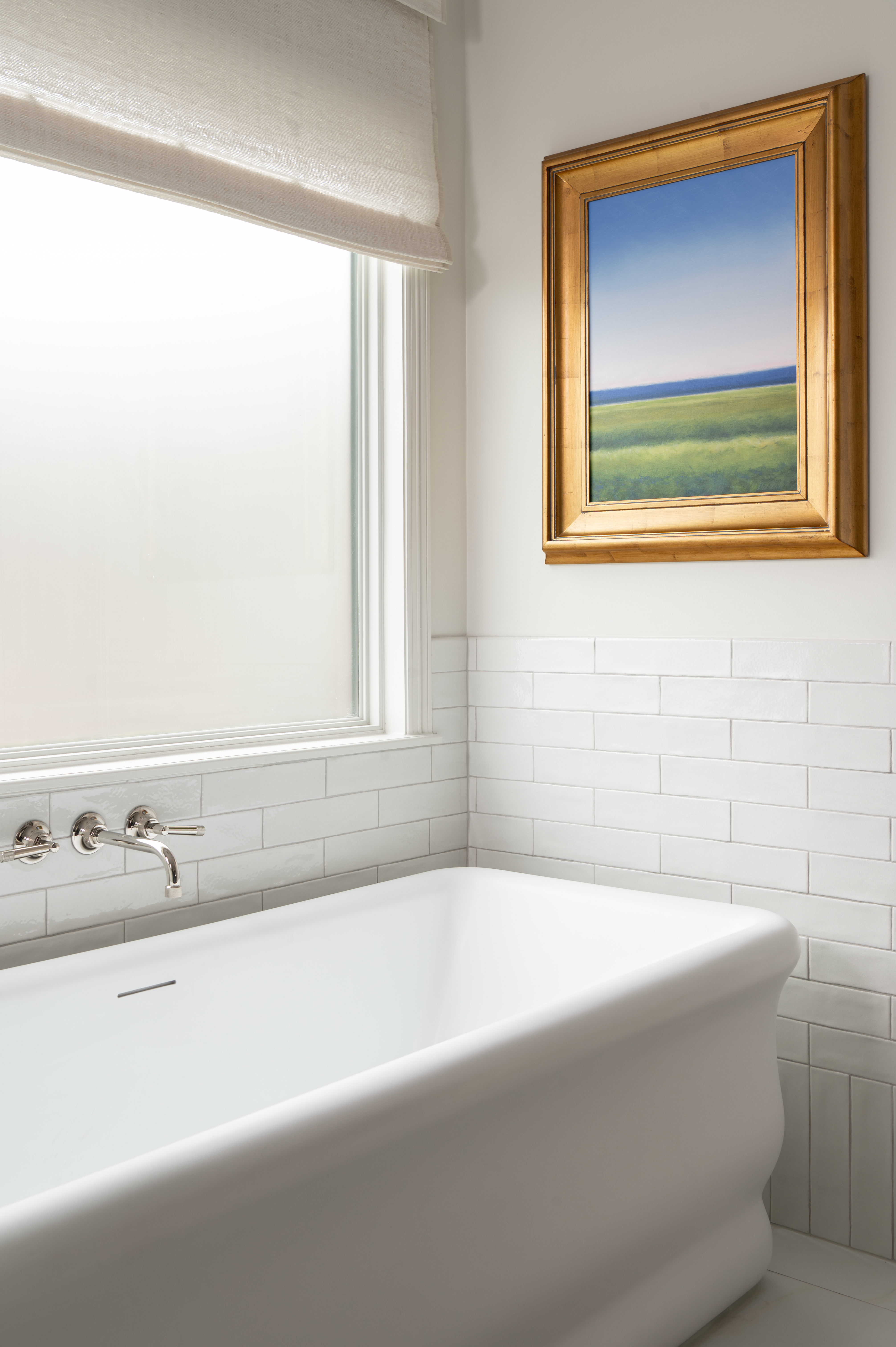
A built-in tub can create a composed window-side corner without a freestanding silhouette. This room uses a woven shade and a small framed landscape to soften the tiled surfaces. Keep the ledge useful rather than crowded with accessories. Plan the window treatment around actual splash exposure, and leave its controls reachable without stretching across the full width of the bath.
10. Make a Compact Tub Fit a Bright Alcove
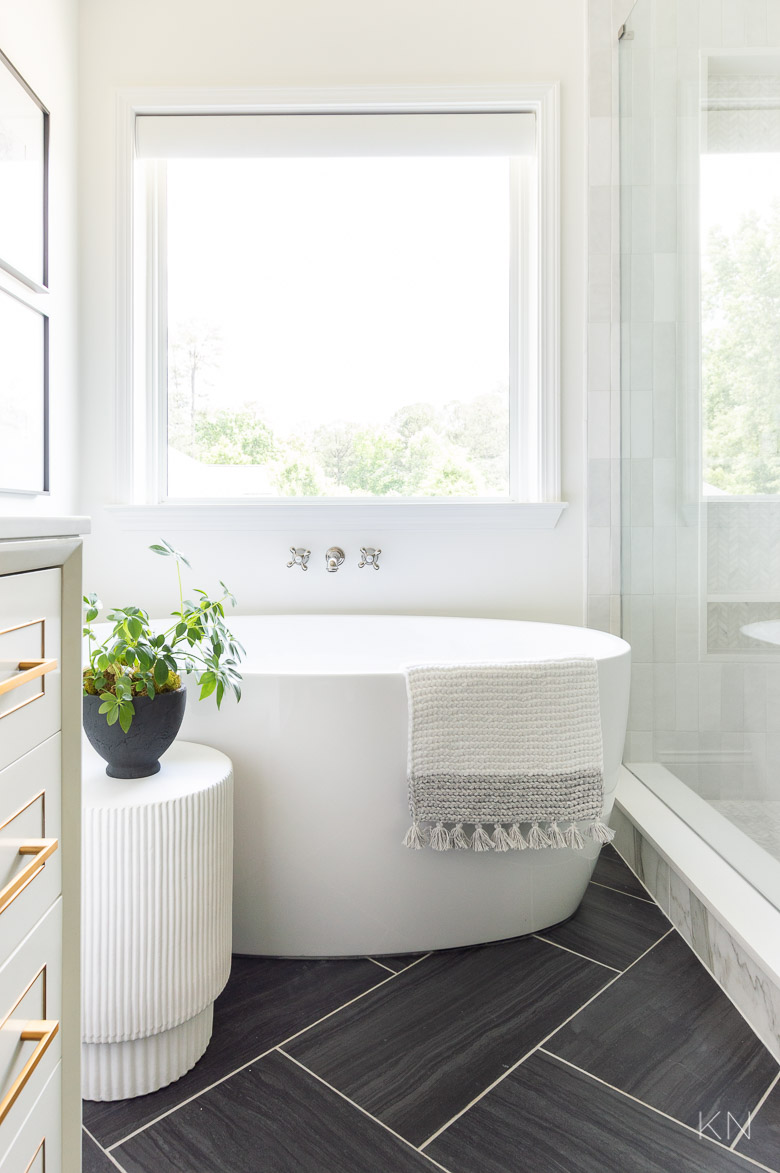
A shorter tub can still make a clear focal point when the alcove is proportioned around it. The light wall and simple window treatment keep this corner visually open, while the dark floor defines the outline. Compare usable bathing dimensions as well as overall length. Allow for cleaning and access around the chosen model before adding decorative pieces beside it.
11. Paint the Window Trim a Strong Dark Color
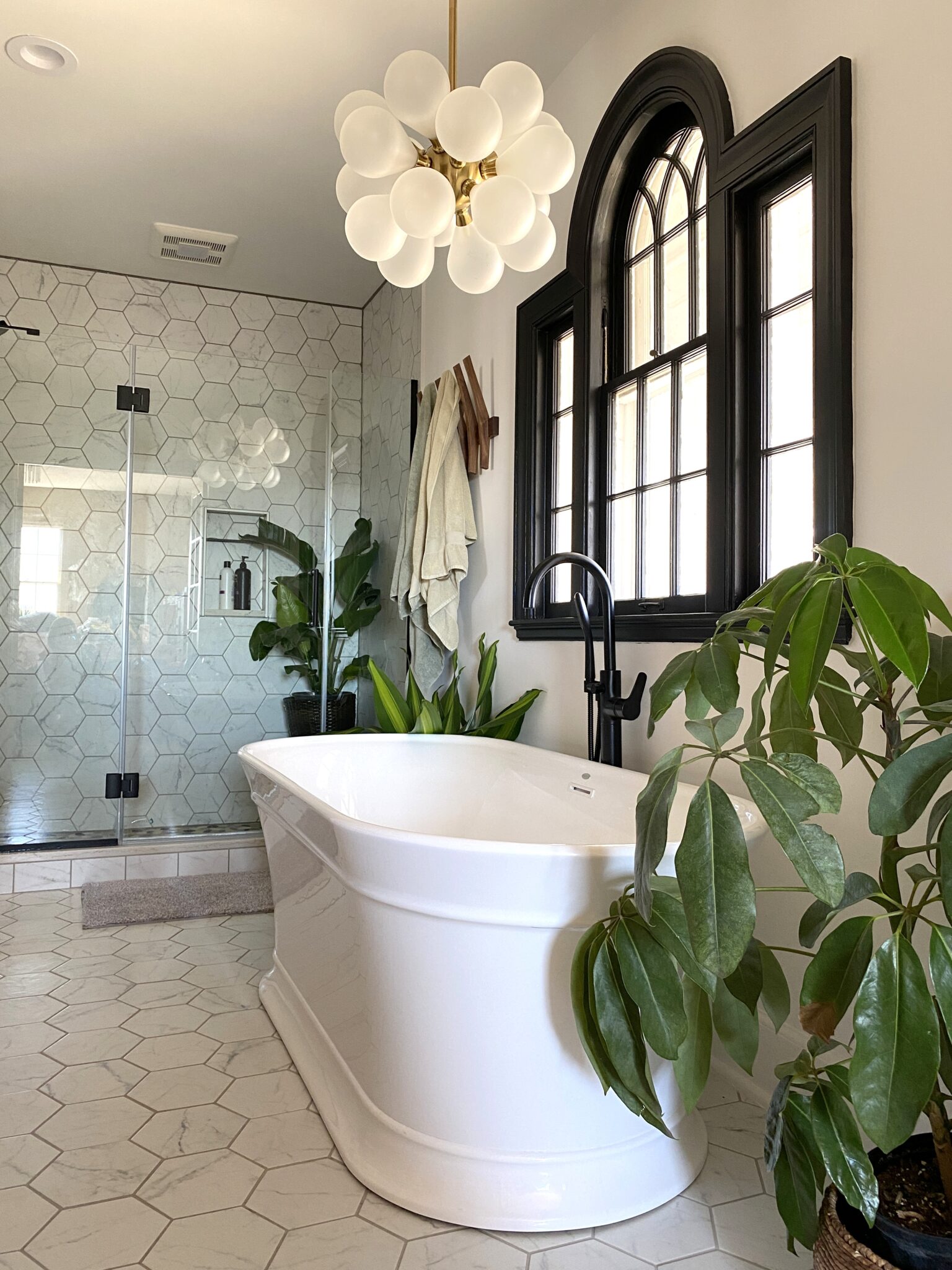
Dark window trim turns an existing opening into a graphic feature. The pale tub stays distinct below it, and the plants soften the transition between the black frame and light walls. Repeat the dark tone in a few small fittings rather than every surface. Choose any nearby plant for the actual daylight and humidity instead of assuming all greenery will thrive.
12. Keep the Tub View Open With a Low Backsplash
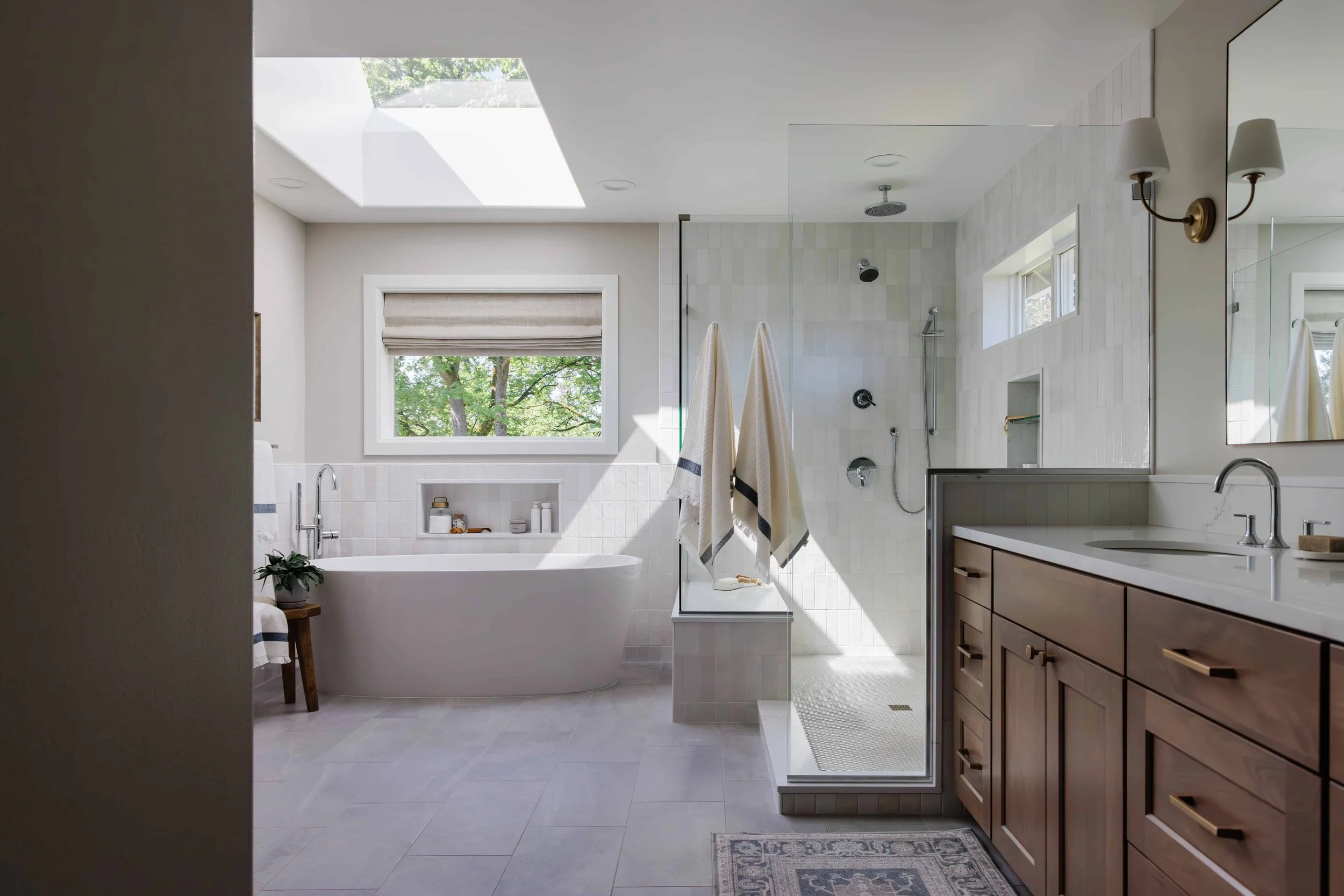
The low tiled surround lets the window remain visible above the bath. Warm wood at the side balances the pale tub and wall, giving the room more depth without a large pattern. Keep the window sill easy to clean and avoid filling it with tall objects. Coordinate the window and surround details with the room’s actual wet-area requirements.
13. Use Small Tile to Define a Built-In Bath
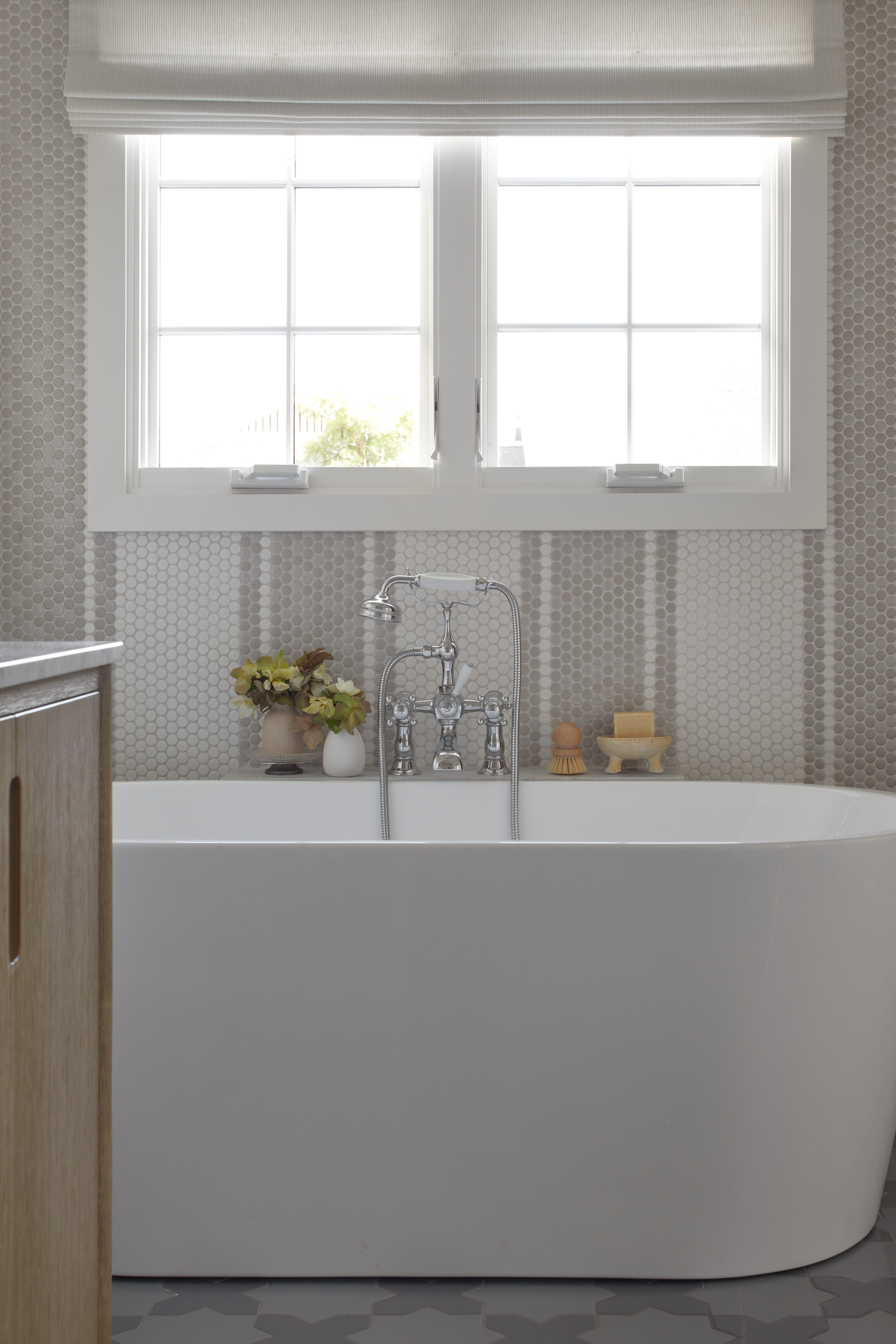
Small tile gives a built-in bath a detailed backdrop while the window keeps the composition light. The repeated pattern is enough decoration on its own, so a few simple accessories are all the ledge needs. Compare tile and grout together before choosing the finish. Plan reachable places for everyday products rather than turning the whole surround into a display shelf.
14. Try Café Curtains Across a Wide Window

Café curtains soften the lower part of a window while leaving daylight above. In this room, the light fabric connects with the pale tub and paneled walls. Check the privacy from the actual neighboring sightlines before copying the height. Keep the rod and curtain arrangement easy to remove for washing, and avoid placing fabric where it will regularly sit in water.
15. Mix a Clawfoot Tub With Dark Wood and Brick
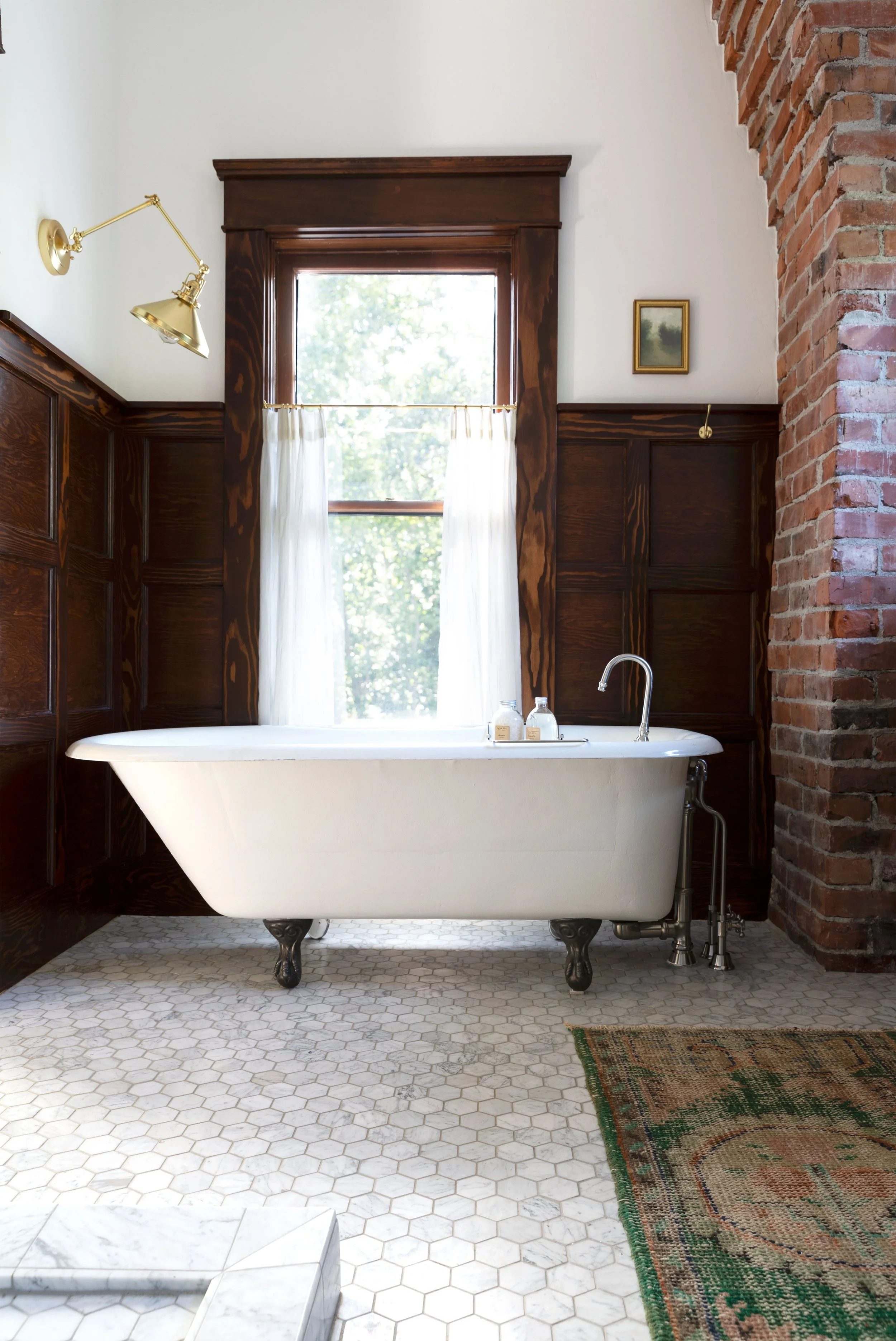
A clawfoot tub feels settled into this room because the dark wood and exposed brick give it an architectural setting. A small rug adds color without covering the whole floor. Borrow the mix of finishes rather than trying to reproduce every antique detail. Keep the area around the feet accessible for cleaning and choose nearby textiles for easy care. Explore rustic wood textures for a related finish elsewhere in the home.
16. Give a Small Tub Nook a Dark Window Outline

A dark outline around the window makes a small tub nook feel intentional. The lighter wall and floor keep the contrast from becoming heavy, while framed art adds a lived-in touch. Limit the number of objects around the rim so the bath stays easy to use. If the room also contains a shower, let the practical splash zone shape the styling.
17. Frame a Landscape With a Wide Grid Window

A broad grid window makes the landscape the room’s largest visual feature. The tub’s stone-like tone and simple outline sit quietly in front of it. Use a restrained palette when the view is already detailed, and keep tall furniture out of the sightline. Privacy still needs checking from every relevant approach, even when the immediate outlook appears open.
18. Place the Tub Beside a Corner View

Corner windows give the bath a view in more than one direction. The simple tub and small wood table keep the surrounding arrangement restrained, allowing the outdoor scene to remain dominant. Think about where you would sit and what you would see before planning the position. A photograph can suggest the mood, but measurements and privacy determine the workable layout.
19. Create a Dramatic Frame With Velvet Curtains
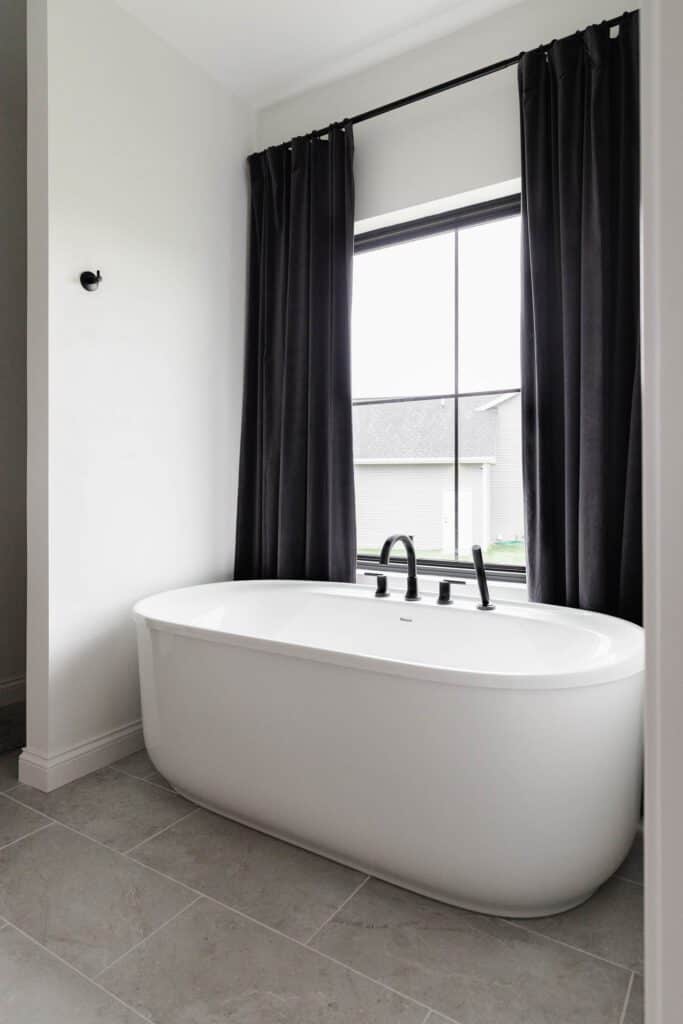
Dark full-length curtains give a window-side bath a more enclosed, room-like feeling. The contrast works best when the tub and other large surfaces stay light. Check that the fabric can hang clear of the bath and floor moisture, and that it can be moved for cleaning. Evaluate privacy with the curtains in the positions you expect to use most.
20. Add a Gingham Cornice Above the Tub

A shaped gingham cornice turns a modest tub window into a decorative focal point. The woven shade below adds texture while the surrounding blue-and-white pattern keeps the room lively. Borrow just one of those elements if your bathroom is smaller or quieter in style. Check the shade’s operation and cleaning access before planning a fitted treatment around it.
21. Give a Tub Alcove a Shiplap Backdrop
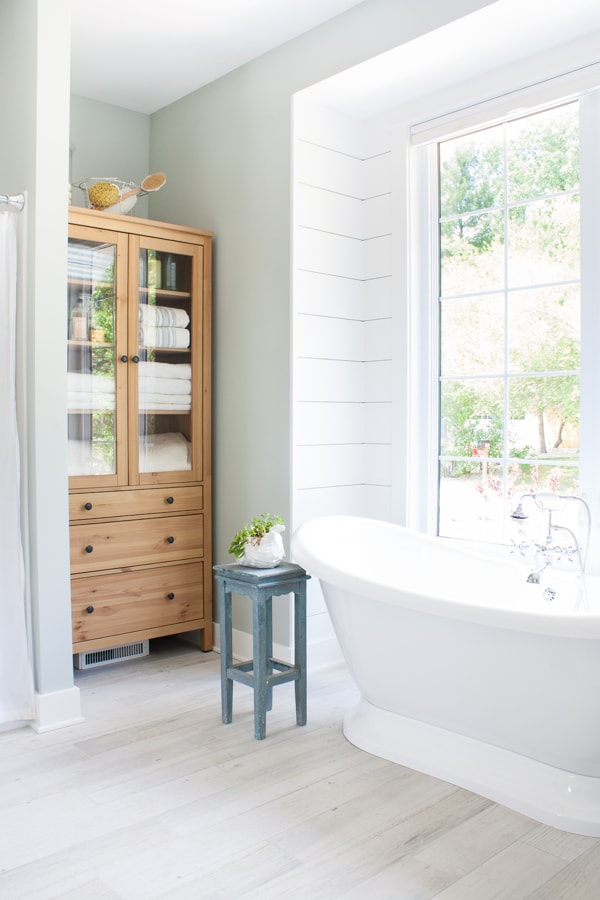
Horizontal shiplap gives this light tub alcove a clear outline and a relaxed cottage character. The window stays central, and the nearby wood storage adds warmth to the pale surfaces. Use the look as a style reference while selecting materials for your room’s actual moisture conditions. Keep enough space beside the tub for a towel and an easy route in and out.
Check the View and Privacy Before Choosing Finishes
Look at the window from outside as well as inside, including after dark when the room is lit. A sheer fabric may soften daylight without providing enough privacy. Keep access for cleaning and window operation in mind, and choose finishes for the actual splash conditions. Have the layout, glazing, waterproofing and any fixtures reviewed by the appropriate professionals before a renovation.
Build the Room Around One Clear Focal Point
Choose the detail that matters most to you: a view, a particular tub shape or a window treatment that makes the room comfortable to use. Keep the surrounding palette simple while you compare options. Measure the real space rather than copying a photograph’s proportions, and plan room for cleaning and movement. Small styling decisions can follow once the layout works.
- Minimalist Home Ideas with Warm Natural Accents
- Small Powder Room Ideas That Make the Space Feel Special
- Gray Floor Color Combinations for Different Rooms
Which window treatment would make your bath feel most comfortable: café curtains, a Roman shade, or full drapes? Tell us in the comments how you’d balance privacy with daylight and which room detail you’d keep simple.


















0 Comments