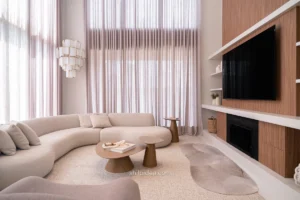
18 Best Ways To Style A Curved Sofa In Your Living Room
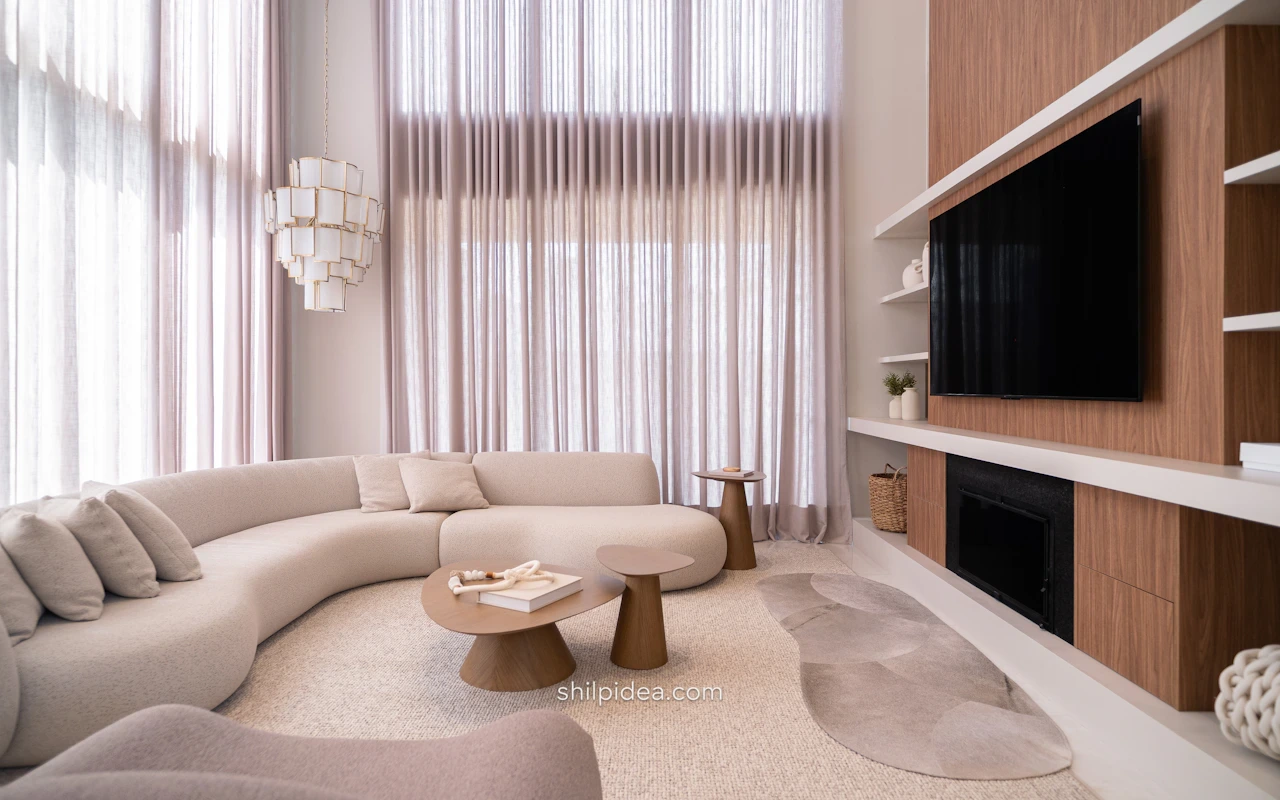
A curved sofa changes the routes through a room as much as it changes the view. Trace the footprint before moving furniture and test the route you take when carrying a tray.
Choose the surface closest to the seats first. These coffee table ideas can help you judge which silhouettes repeat the curve and which give it some contrast.
For a compact room, borrow one move from these small living rooms and try it with what you own. Start with the route through the room, then move on to rugs, tables and light.
1. Float the sofa

Leave a usable passage behind the fullest part of the curve.
Leave painter’s tape on the floor where the back comes closest to the wall. Walk the route with a laundry basket, then try opening any nearby cupboard. A layout that feels generous when you are standing still can feel entirely different on the way through.
2. Face a round coffee table

Check reach from both end seats before settling on a diameter.
A small round top can disappear into the curve visually while leaving the end seats too far away. Set a coaster where each person would naturally put down a mug. If the outer coasters miss the tabletop, give those seats a side table.
3. Try two small tables

Offset the tables so each follows a different part of the curve.
Try one table that slips partly under the other. Separate them for drinks when friends visit and tuck them together when children need floor space. Keep both bases on the same surface so neither wobbles across the rug edge.
4. Anchor the front legs

Choose a rug wide enough that the sofa ends still feel connected.
Draw the rug size on the floor with masking tape. From the doorway, check that the sofa looks anchored at both ends. If a corner curls up where people turn, shift the rug and try the walk again.
5. Balance with a straight console

Put the console on the wall and leave the curved back free.
A slim console gives the room a level surface for keys or a lamp without fighting the curve. Check the side view before buying. A straight top directly behind a deeply bowed back can leave an awkward pocket where small objects disappear.
6. Use angled side chairs

Turn the chairs toward a seated guest rather than the center of the room.
Start with one chair, then sit in it while someone takes the far end of the sofa. Turn the chair until conversation feels comfortable. Mark its front feet before bringing in a second chair or adding a nearby lamp.
7. Create a reading corner

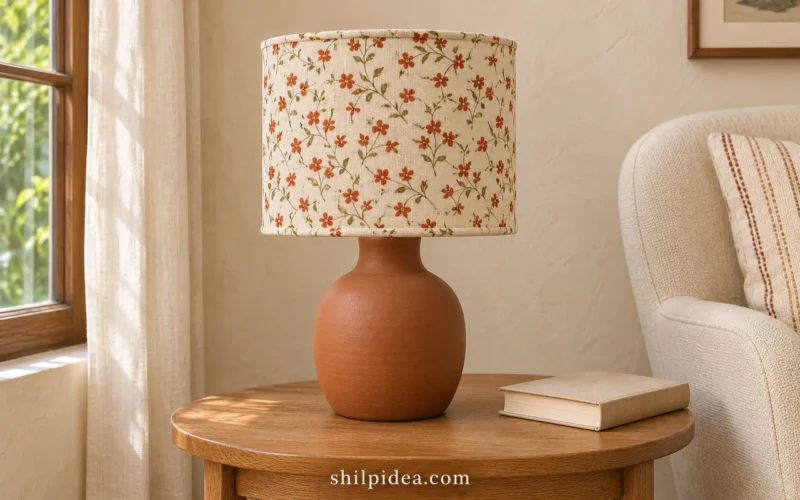
Place a lamp beyond the arm where the shade clears a reader’s shoulder.
Set a book on your lap after dark and look for a shadow from your shoulder. Moving the lamp sideways often works better than choosing a brighter bulb. Keep the switch within easy reach from your favorite seat.
8. Set off a bay window

Allow space to reach curtains and window handles.
Leave a hand’s width to reach behind fabric when testing the position, then adjust for the actual depth of the curtain folds. Open the window or blinds fully. Check that the sofa still looks centered when the curtains are drawn.
9. Follow a rug border

A subtle curved rug can repeat the profile without adding another large object.
A circular rug works especially well when its edge remains visible. Lay a length of cord in a circle before ordering and check the view from each doorway. If only a small crescent shows, try a larger size.
10. Use a rectangular rug

Leave visible rug beyond both sofa ends to frame the arc.
Align the straight sides with the room rather than turning the rug to follow the couch. This leaves a clear visual reference in rooms with angled doorways. Try the same arrangement lengthwise and crosswise before deciding.
11. Choose a low ottoman

Move it between seats and test whether the room still has a clear route.
An upholstered ottoman can soften a room full of hard edges. If it doubles as a drinks surface, test a firm tray before inviting guests. Leave a parking spot where moving the ottoman will not block a door.
12. Balance tall shelving

Keep the opposite wall visually lighter when tall shelves sit behind the sofa.
Keep heavier books and closed storage low. From the sofa, check which shelf sits at eye level and leave that one less crowded. It makes the wall feel lighter without requiring you to empty every shelf.
13. Place art as a group

Center the arrangement over the seating zone and view it from the doorway.
Cut paper templates to the size of the frames and tape them up. Look at the arrangement while seated as well as standing. The arc can make a grouping centered on the wall look off-center over the occupied seats.
14. Layer small cushions

Keep the deepest corner usable and leave some curved backrest visible.
Start with one cushion at each end. Add a lumbar cushion where you actually need support, then sit back. If you have to remove two cushions to sit comfortably, put one on a nearby chair instead.
15. Drape a short throw

Fold it across one arm so the line of the seat remains clear.
A loosely folded throw gives texture without hiding the outline you chose the sofa for. Try a woven cotton throw in a busy family room. Fold the loose edge inward if it regularly slips onto the floor.
16. Light the outer edge

An arched lamp can reach the seats from a base outside the walkway.
Check the lighting from the other side of the room as well as from the seat. A shade that looks beautiful above the sofa can shine into a guest’s eyes. Adjust its height or angle before finalizing the arrangement.
17. Divide an open room

Use the back of the sofa to define the seating area without blocking the main route.
Line up the dividing edge with something visible, such as the end of a dining rug. Keep the main path on one side if possible. That way people heading for the kitchen need not pass between the sofa and its table.
18. Test the conversation distance

Sit in the least-used end seat and adjust the nearest chair until conversation feels easy.
Invite someone to try the room with you before moving the heavy pieces permanently. Pass a cup, reach for the lamp and get up while the other person remains seated. Those small movements reveal more than an overhead layout.
Give Your Curved Sofa a Trial Run
Leave the rug and tables in their proposed spots for an evening. Sit at the far end of the curve with a cup, then walk behind the sofa while someone else is seated. If either move feels awkward, shift the smallest piece first. Once the room works for everyone, take a photo from the doorway so the arrangement is easy to restore.
- Modern Rug Ideas for Living Rooms
- Gallery Wall Layouts With Paper Templates
- Hygge Living Rooms With Soft Textures
- Indoor Olive Trees for Living Room Corners
- No-Sew Curtain Styling for Windows
When you sit at the far end of your curved sofa, can you put down a cup without leaning forward? Leave a comment about the table or chair you moved and how it changed the room.














0 Comments