18 Old Guitar Upcycling Ideas for Home Decor
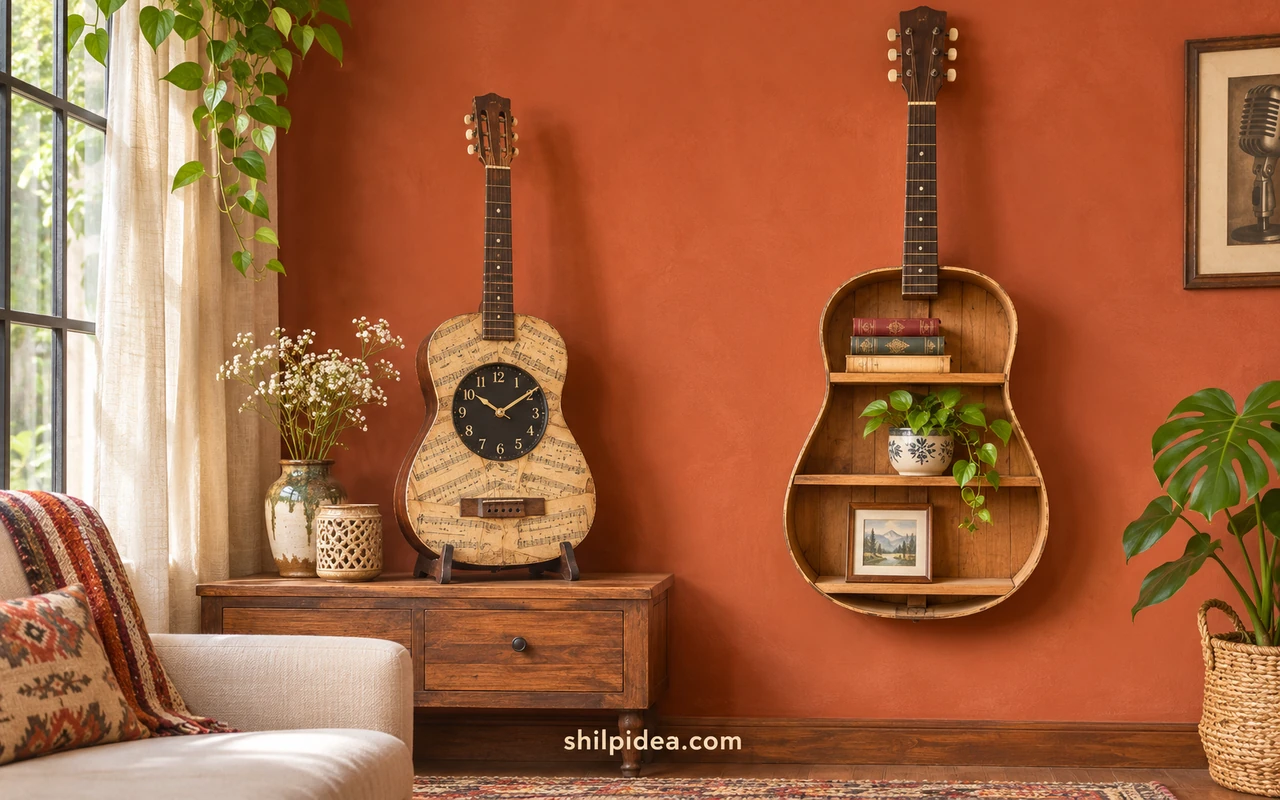
An old guitar can become a useful room feature when it is no longer suitable to play. These 18 upcycling ideas explore instrument bodies and cases, from wall displays to clocks and small decorative projects.
Choose a project that suits the condition of the materials and your skills. Our old suitcase ideas offer more ways to reuse a familiar object without hiding its original character.
For another musical craft direction, explore cardboard guitar crafts. Three retail design references are identified separately from the upcycling count.
1. A Guitar Shelf for a Small Coffee Corner

A hollowed guitar body becomes a compact display for mugs, while a light strand follows the neck above it. The curved outline gives a coffee corner a focal point without needing a wide cabinet. Choose only light decorative items until the shelf supports and wall mounting have been assessed. If adding lights, use a suitable ready-made low-heat LED set and keep the electrical parts accessible.
2. A Floor-Standing Guitar for CDs and Books

Keeping this guitar close to the floor makes its open body useful for a small music collection. The wide lower section provides space for a row of cases, while the neck preserves the familiar instrument shape. A display like this needs a stable support rather than relying on the guitar leaning against furniture. Plan how the inner shelves will carry the contents before loading them.
3. A Table Lamp Built Around a Guitar Neck

The fretted neck and headstock make a recognizable lamp column, with a dark stepped base and a neutral shade balancing the proportions. This is a structural and electrical project, so treat the photo as design inspiration rather than wiring instructions. A qualified person should assess any mains-powered conversion. For a simpler decorative version, use the neck as an unpowered display piece beside an existing lamp.
4. A Bright Wall Niche Inside an Acoustic Guitar

A pale interior and dark wood sides turn this guitar shell into a deep wall niche. Small shelves divide the body into separate places for books, a miniature sculpture and a potted accent. The limited contents keep the outline easy to see. Make paper templates before sizing the shelves, and use supports appropriate for the shell’s condition. Keep a plant in a removable pot so watering does not soak the wood.
Design Reference: A Guitar-Case Jewelry Organizer

This guitar-case-shaped organizer was sold through Pottery Barn Teen; the photograph does not establish that it was made from a discarded instrument case. It is therefore separate from the 18 upcycling ideas. Its useful features are the lined interior, small shelves and hanging points for jewelry. You could borrow that layout when planning a genuine old-case conversion, with suitable reinforcement and wall hardware.
5. A Painted Guitar with Trailing Greenery

The light painted finish makes the dark green leaves stand out against the guitar body. The before-and-after view shows how much a change in surface color can alter the feel of the object. Keep living plants in removable waterproof containers instead of planting directly into an unprotected wooden shell. A sheltered indoor display or an artificial trailing plant is easier to maintain than exposing a delicate instrument body to rain.
Design Reference: Guitar-Head Wall Hooks

These guitar-head-shaped hooks are a retail design reference, with no verified claim that the photographed products were cut from old guitar necks. They sit outside the numbered upcycling collection. The arrangement shows how short musical shapes can create a useful entryway detail. If working with genuine salvaged headstocks, a maker would need to assess the wood, remove sharp string ends and choose appropriate hook attachments.
Design Reference: A Martin Guitar Cocktail Table

The Martin D100 cocktail table uses a guitar-shaped top on a pedestal base. It is a manufactured furniture product, so this photo is separate from the examples of old instruments being reused. Study its recognizable silhouette and compact footprint as a design reference. The old guitar-case table later in this collection offers a documented project using a secondhand musical accessory instead of a new themed tabletop.
6. A Collected Plant Display with Upcycled Instruments
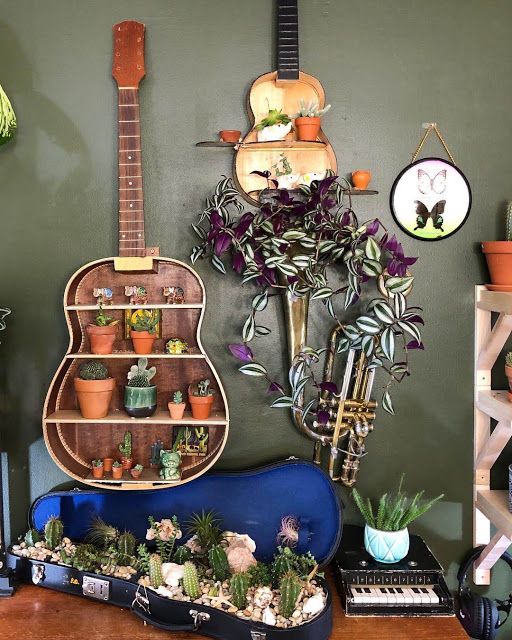
The guitar shelf forms part of a larger arrangement of plants and repurposed musical objects. Small pots sit inside the open body, while the surrounding pieces turn the wall into a collection rather than a single isolated accent. The ReFab Diaries identifies the arrangement with plantsandcollecting. Use removable pots and protect the wood beneath them; choose a display position that meets the plants’ actual light needs.
7. An Inverted Guitar as a Decorative Birdhouse

An upside-down guitar silhouette, a simple pitched roof and a round opening give this piece the appearance of a birdhouse. The photo does not establish suitable nesting dimensions, ventilation, drainage or clean-out access. Treat it as decorative inspiration unless a bird-house design is checked for the intended local species. For indoor use, the same outline could become a musical wall ornament without presenting it as wildlife housing.
8. A Sheet-Music Guitar Clock

Gail Wilson covers an unwanted guitar with sheet music, then adds a clock face and red guitar-pick details. The paper finish keeps the musical connection while changing the surface completely. Her project explains the access needed to replace the battery, an important practical detail for a wall clock. Start with an instrument beyond useful repair and check that the movement’s spindle and hands fit the finished surface.
Follow the Maker’s Method: Make a Sheet Music Clock
9. A Sculptural Light Made from Guitar Layers

Kokozoid separates a broken guitar into suspended layers, turning its curves into a sculptural hanging light. This is an advanced construction reference with sparse written instructions, not a beginner electrical guide. The spacing between the layers is what creates the effect. Anyone adapting the design should have its suspension and electrical components assessed by a qualified professional, or explore an unpowered hanging sculpture using the same outline.
10. An Old Guitar Case Turned into a Table
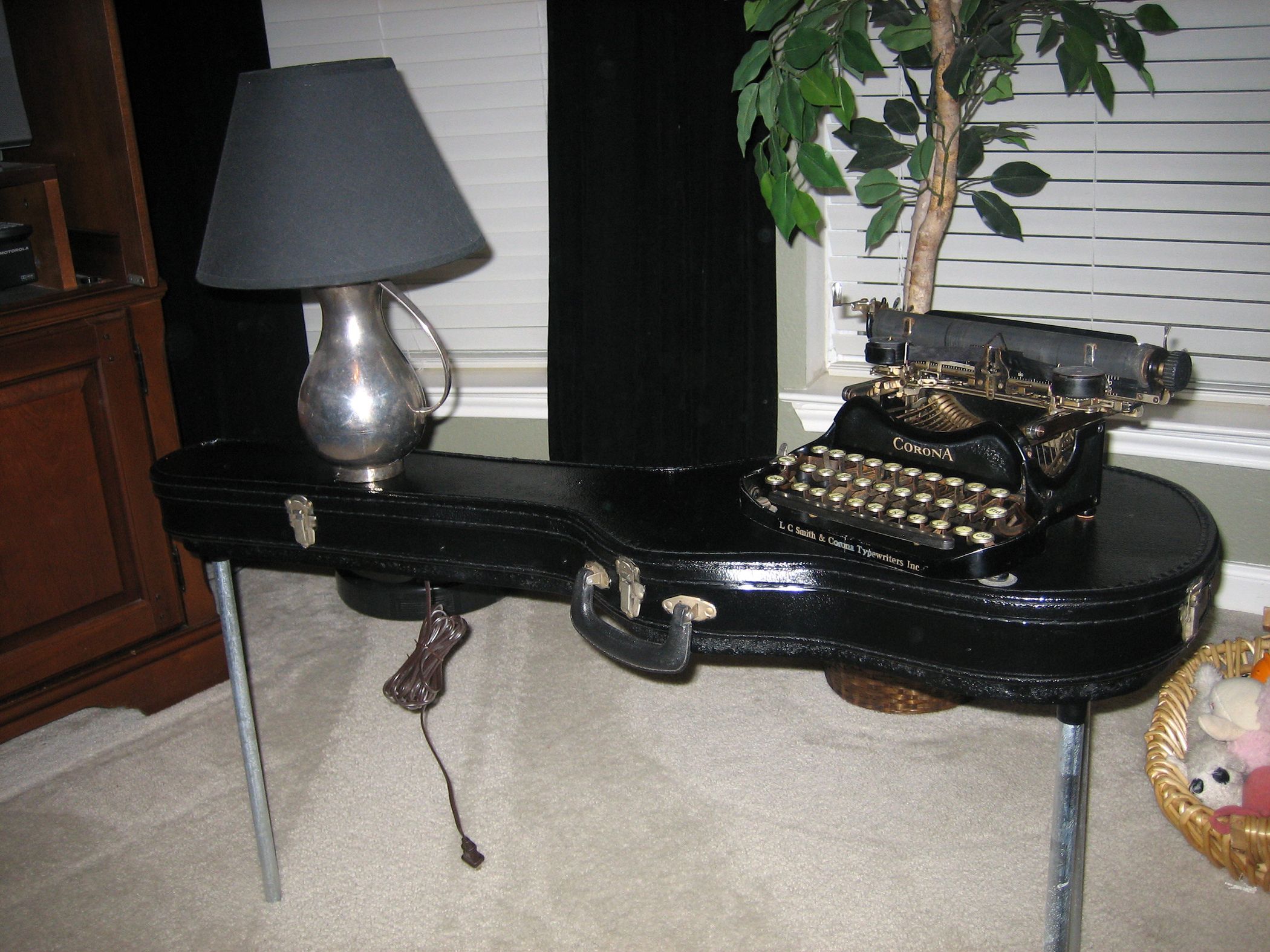
Instructables maker knife141 reinforces a secondhand guitar case with a separate base before adding legs. The closed case keeps its handle and latches, giving the table a strong connection to its earlier use. The tutorial also addresses support inside the lid, rather than treating thin case material as a strong tabletop. Read the full build and check the finished piece for stability before putting objects on it.
Follow the Maker’s Method: Build a Guitar Case Table
11. An Electric Guitar Coat Rack

Repurposing Junkie adds hooks to an electric guitar so the instrument can hold everyday items. The body remains a decorative feature, while the neck extends the familiar shape upward. This approach suits a workshop or music room, but the instrument itself is not evidence of a load rating. Inspect the wood and hardware, use suitable wall fixings, and keep the first items light until the mounting has been assessed.
Follow the Maker’s Method: Create an Electric Guitar Rack
12. A Storage Box Made from a Guitar Body
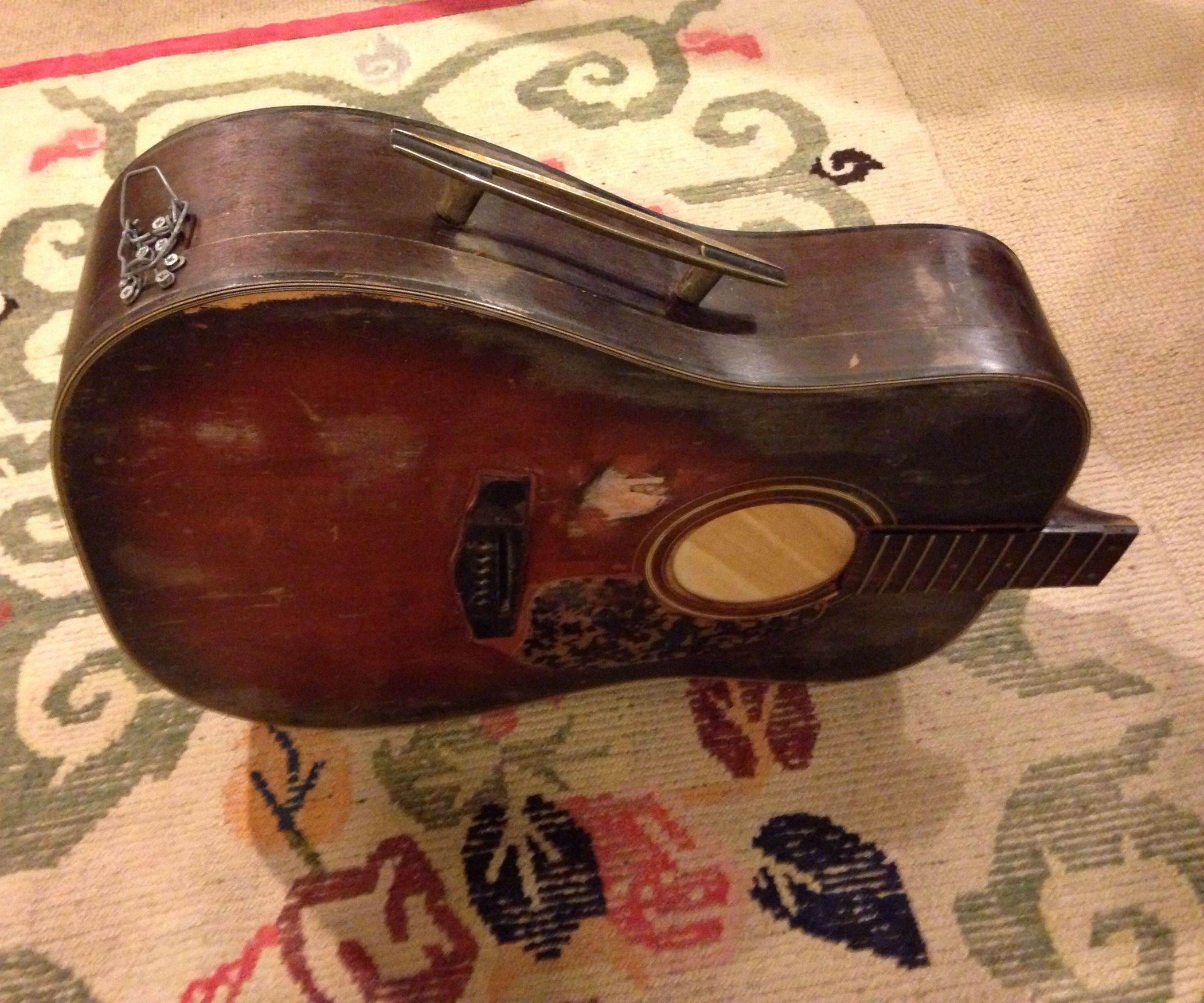
This project uses the acoustic guitar body itself as a small suitcase-style storage box. The shortened neck and familiar curved shell keep the instrument recognizable, while the opening body gives it a practical new purpose. It is a woodworking conversion rather than a quick surface decoration. Review the maker’s project before cutting, and decide what lightweight items the finished box will hold.
Make This at Home: Make a Guitar Body Suitcase
13. A Guitar Covered in Colorful Mosaic Art
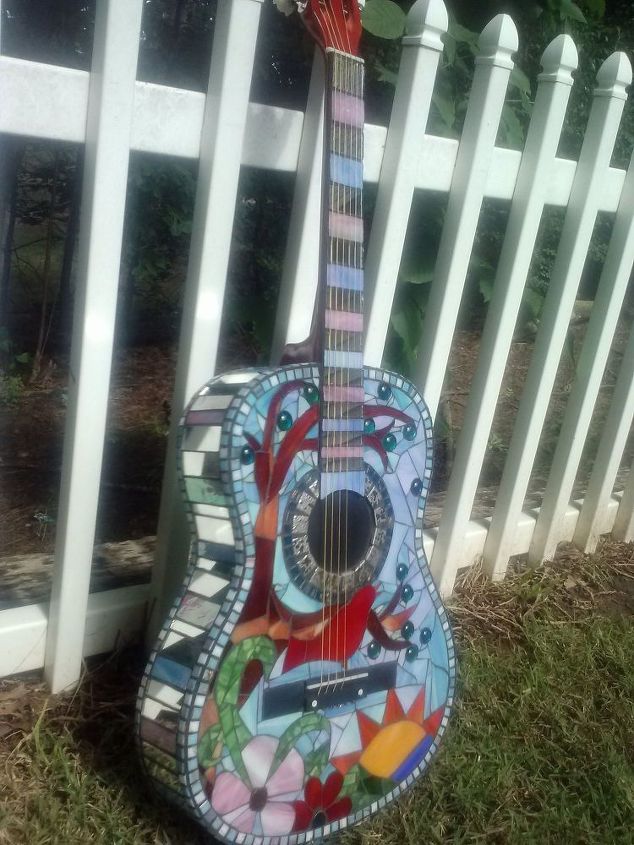
Kackie3’s Hometalk project gives an inexpensive guitar a colorful mosaic surface, with curved motifs following the body. The result works as a decorative object even when the instrument is no longer intended to play. Choose a pattern that leaves the guitar shape readable from across the room. Follow the maker’s preparation and fixing method, and consider the extra weight of mosaic materials when deciding how to display it.
Follow the Maker’s Method: Decorate a Guitar with Mosaic
14. A Compact Wall Shelf with a Retained Guitar Front

Dremel’s project keeps the recognizable upper front and neck while opening the lower body for a small display shelf. That makes a different silhouette from removing the whole face of the guitar. Its guide includes fitted supports, cutting and sanding stages, so review the sequence before choosing tools. Use a damaged instrument with sound remaining structure, and mount the finished shelf for its actual weight and intended contents.
Make This at Home: Build a Compact Guitar Shelf
15. A Guitar Shelf with a Reused Veneer Back

Tania at Little Vintage Cottage reuses the removed front veneer to reinforce the guitar’s thin back, then fits small plywood shelves inside. A printed label covers an existing hole and gives the natural wood interior a finished detail. This approach makes useful work of material taken from the same instrument. Read the guide’s notes on checking the original internal braces before adding shelves, and position hanging hardware on a sound structural area.
Follow the Maker’s Method: Reuse Veneer for Guitar Shelves
16. A Wine-and-Glass Display Inside a Guitar

Franklin Guitar Works converts a repurposed acoustic guitar into a wine display with places for a bottle and hanging glasses. The product page identifies the reused instrument, so this is a documented maker example rather than a guitar-shaped new rack. Glass and full bottles add weight quickly. Treat the listing as inspiration, with reinforcement and stability designed for the actual contents if commissioning or making a similar piece.
17. An Old Guitar Turned into a Speaker

Daniel McGregor gave a broken guitar a new role by combining its body with speakers from an old boombox. The two speaker cones sit prominently in the guitar front, so the instrument remains the main visual feature. This maker example suits a music room or workshop display. Treat the photographs as inspiration, and have any electrical conversion assessed by someone with suitable experience before attempting a working version.
18. A Guitar Shelf with Concealed LED Lighting

BillSin opens an acoustic guitar body and fits wooden shelves inside it, turning the instrument into a display for small cameras. A light strip follows the inside edge and emphasizes the curved outline. The tutorial covers the shelf build and finish as well as the lighting. Keep displayed objects light, use a suitable ready-made low-voltage LED set, and choose supports for the finished piece’s actual weight.
Follow the Maker’s Method: Build an Illuminated Guitar Shelf
Give the Right Guitar a New Role
Check whether an instrument can still be repaired, donated or played before planning a permanent conversion. For a guitar that is genuinely beyond use, choose a project that fits its remaining structure. Shelves, hooks and furniture need suitable supports; decorative lighting needs appropriate electrical assessment. Start with the smallest transformation that achieves the look you want, and keep the finished piece practical for its room.
- Old Jeans Upcycling Ideas for Your Home
- Old Chair Back Upcycling Ideas
- Old Leather Belt Furniture Ideas
- Old Suitcase Upcycling Ideas
- Cardboard Guitar Crafts for Kids
Which old guitar upcycling idea would you try first? Tell us in the comments what caught your eye and what you’d change with the supplies or space you have. Share a tip if you’ve already tried something similar.

























0 Comments